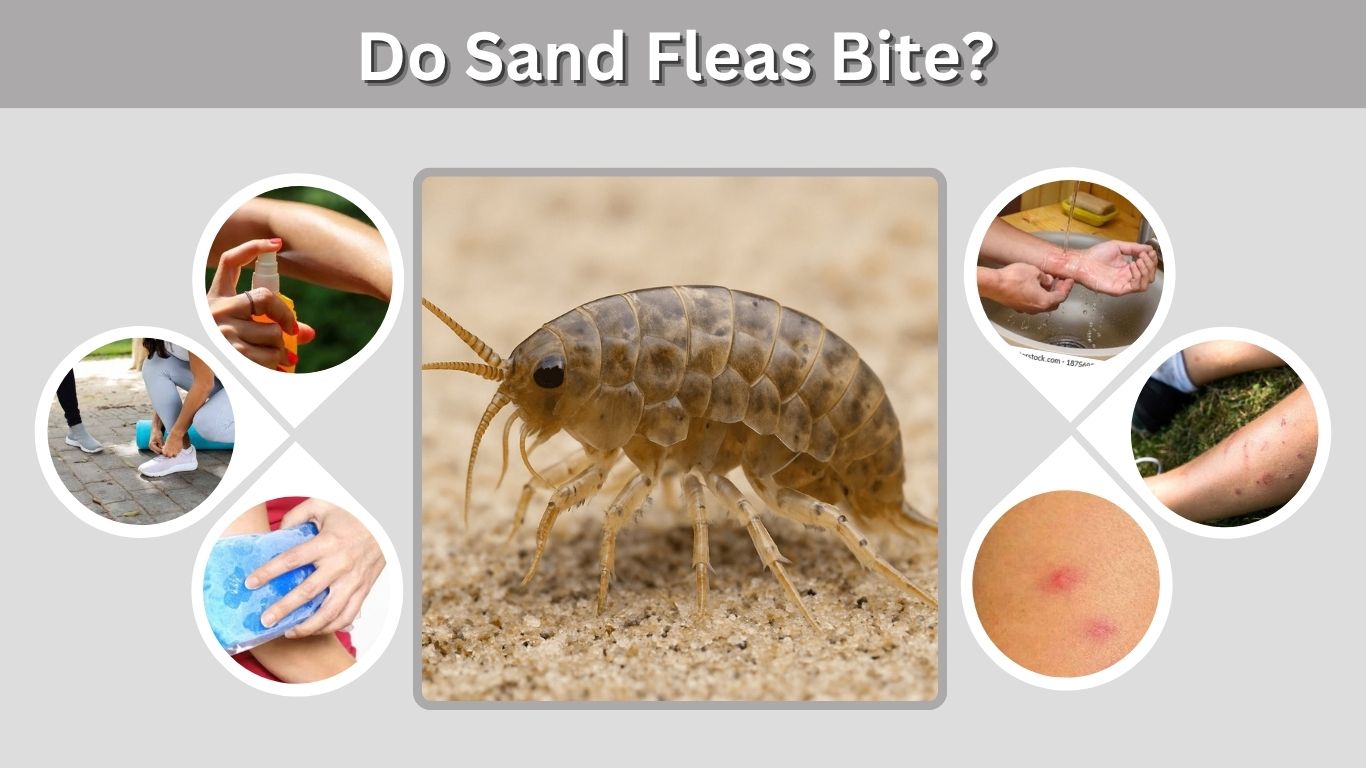
Do sand fleas bite humans, or are these tiny beach creatures harmless? The answer depends on what people mean by sand fleas. Some are harmless crustaceans that live along sandy shorelines, while others are blood-feeding insects capable of causing itchy bites and skin problems. Beachgoers sometimes confuse sand fleas with biting midges or sand flies, making identification difficult. Understanding which creatures actually bite can help you recognize symptoms, protect your skin, and avoid unnecessary treatment. This guide explains sand flea bites, their causes, symptoms, and prevention.
Do Sand Fleas Really Bite Humans?
Yes, some sand fleas bite humans, but not every creature called a sand flea is capable of biting. The term describes different animals, including harmless beach crustaceans and parasitic fleas. Some beach bites are actually caused by biting midges or sand flies. Identifying the correct animal is essential because their feeding habits and health risks differ significantly.
Which Sand Fleas Bite Humans?
- Chigoe Fleas (Tunga penetrans): True parasitic fleas that feed on blood. Fertilized females can burrow into human skin.
- Sand Flies: Tiny blood-feeding insects that can cause itchy bites. They are not true sand fleas.
- Biting Midges: Also called no-see-ums, these small flies commonly bite people around beaches and coastal environments.
- Sand Hoppers: Small, jumping crustaceans that generally do not bite humans.
- Mole Crabs: Commonly called sand fleas on American beaches, these small crustaceans do not bite or sting people.
The distinction matters because true chigoe flea infestations can require medical treatment, while harmless beach crustaceans do not.
Why Do Sand Fleas Bite?
True parasitic sand fleas feed on blood to survive and reproduce. Both male and female chigoe fleas take blood meals, but fertilized females can penetrate the skin and remain embedded while producing eggs.
Biting midges and certain sand flies also consume blood, primarily to support egg development.
Harmless sand hoppers and mole crabs feed on organic material or particles in sand rather than human blood.
What Do Sand Flea Bites Look Like?
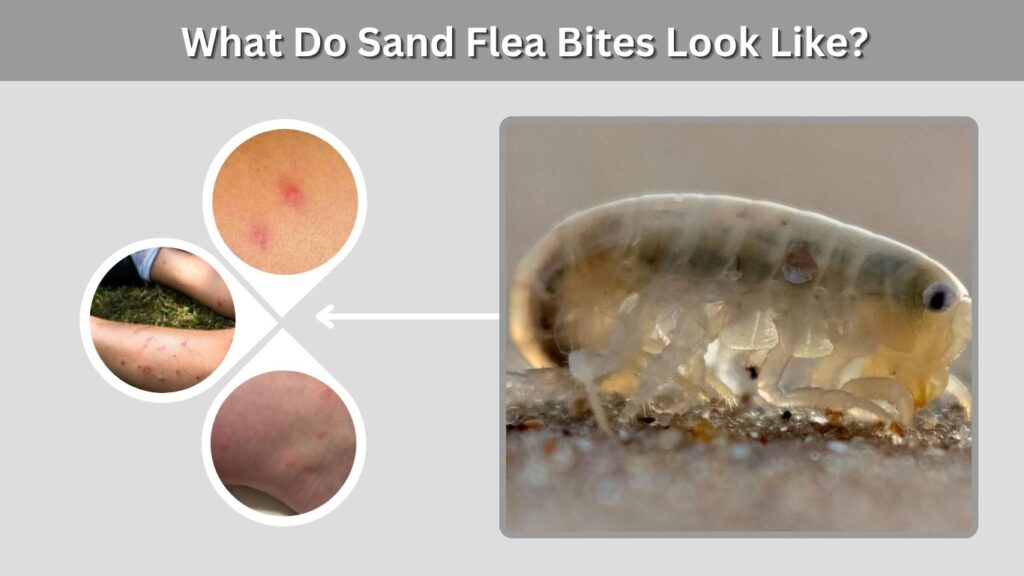
Sand flea bites can appear differently depending on the organism responsible. Biting midges commonly cause small, itchy red bumps, while embedded chigoe fleas may produce raised lesions with pale surrounding skin and dark central openings. Location, travel history, and the appearance of the skin are useful clues, although bites cannot always be identified by appearance alone.
Common Symptoms of Sand Flea Bites
- Small red bumps or irritated patches.
- Persistent itching around the affected area.
- Localized swelling and tenderness.
- Clusters of bumps, occasionally appearing in lines.
- Burning or stinging sensations.
- Small blisters in some individuals.
- A pale raised lesion with a dark central opening in cases of tungiasis.
These symptoms can resemble mosquito, flea, bed bug, or other insect bites, so appearance alone does not confirm the cause.
Where Do Sand Fleas Bite?
Bites from beach-dwelling biting insects may occur on exposed skin, particularly around the ankles, legs, arms, and feet.
True chigoe flea infestations most commonly affect the feet, especially between the toes, around the nails, and on the soles.
Embedded female chigoe fleas cause a condition called tungiasis, which can lead to inflammation and secondary infection without appropriate treatment.
When and Where Do Sand Fleas Bite?
Biting activity depends on the species, environmental conditions, and time of day. Some biting insects are most active during the early morning or evening, while others feed whenever suitable hosts are available. Sandy coastal environments can contain several similar-looking organisms, making it difficult to identify the source of bites without examining the insect.
Do Sand Fleas Bite at Night?
Biting midges and sand flies are often most active around dusk, at night, or during early morning hours, depending on the species.
True chigoe fleas are associated with contaminated sandy soil and may attach when a person walks or rests barefoot in affected areas.
Do Sand Fleas Bite in the Water?
Sand fleas generally do not bite people while they are swimming in open water.
Mole crabs live in wet beach sand and surf zones, but they do not feed on human blood.
People who experience itching after swimming may be reacting to other organisms, such as jellyfish larvae or aquatic parasites, rather than sand fleas.
Do Sand Fleas Bite in Florida?
People visiting Florida beaches may encounter biting midges, sometimes called no-see-ums, which can cause itchy skin reactions.
Mole crabs found along Florida’s sandy beaches are harmless to humans.
The parasitic chigoe flea responsible for tungiasis is not established in the United States, although travelers can acquire the condition in affected tropical regions.
How to Treat Sand Flea Bites
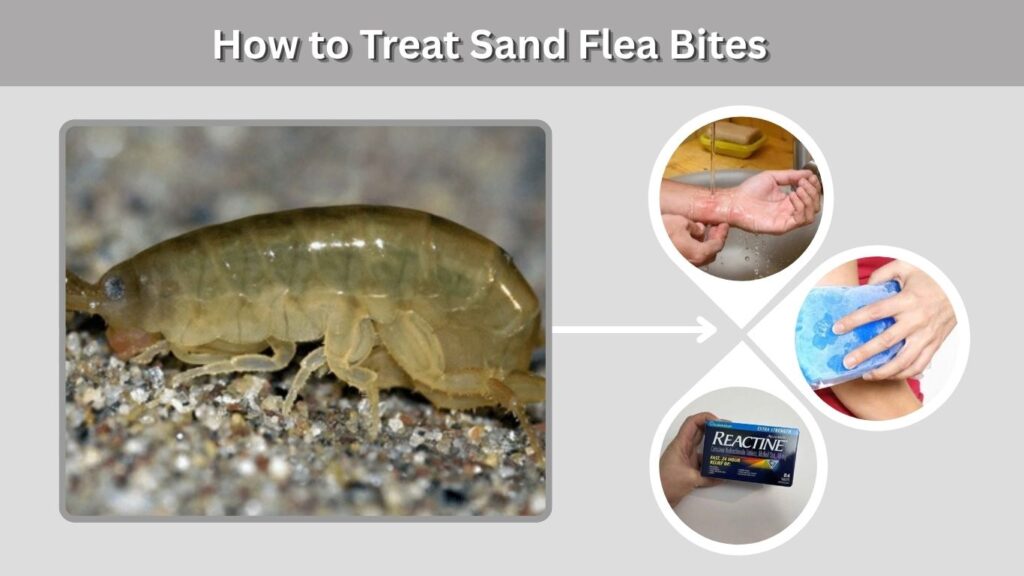
Treatment for sand flea bites depends on whether the problem involves a surface bite or an embedded parasite. Most uncomplicated bites from biting midges improve with basic skin care, but tungiasis requires professional medical evaluation. Scratching irritated skin can increase the risk of infection, so appropriate treatment and careful observation are important.
Home Treatment for Minor Bites
- Clean the area: Wash affected skin gently with soap and water.
- Apply a cold compress: Use a cool, damp cloth for 10–15 minutes to reduce discomfort.
- Reduce itching: Consider calamine lotion or an appropriate over-the-counter anti-itch cream.
- Avoid scratching: Scratching can damage the skin and introduce bacteria.
- Consider antihistamines: An oral antihistamine may relieve itching when used according to the label.
- Monitor symptoms: Watch for increasing redness, warmth, swelling, or drainage.
When Should You See a Doctor?
Seek medical evaluation if a lesion develops a dark central opening surrounded by pale, swollen skin, particularly after visiting an area where tungiasis occurs.
Do not attempt to dig an embedded flea out with a needle or other unsterilized object. Professional removal or other medical treatment may be necessary.
Increasing pain, pus, spreading redness, or fever can indicate infection.
How to Prevent Sand Flea Bites
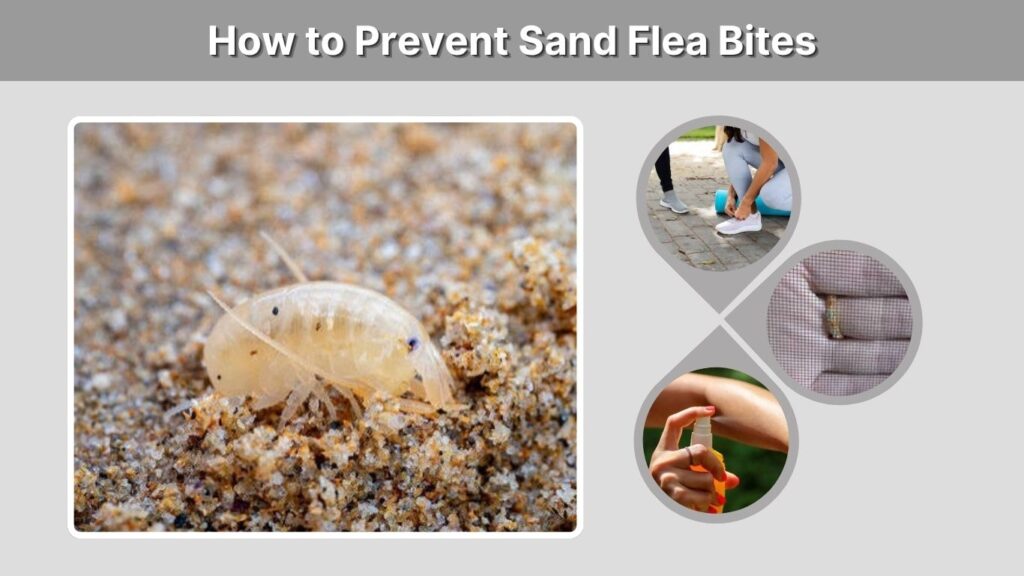
Preventing sand flea bites begins with understanding which biting organisms occur in your destination. Simple measures such as wearing protective clothing, applying suitable insect repellent, and avoiding heavily infested areas can reduce exposure. Travelers visiting regions where tungiasis occurs should take additional precautions to protect their feet from contact with contaminated sandy soil.
Tips to Avoid Sand Flea Bites
- Wear protective footwear: Use closed-toe shoes when walking in areas where chigoe fleas occur.
- Apply insect repellent: Choose an EPA-registered repellent appropriate for the biting insects present.
- Cover exposed skin: Wear long pants and socks when practical.
- Avoid peak biting periods: Limit exposure during dusk and dawn where biting midges or sand flies are active.
- Use suitable screens: Fine-mesh screens can reduce exposure to very small biting flies.
- Keep pets protected: Use veterinarian-recommended flea prevention and inspect pets regularly.
Can Sand Fleas Bite Dogs and Cats?
True parasitic chigoe fleas can affect dogs, cats, and other mammals in regions where they occur.
Ordinary pet fleas may also bite animals that visit beaches, although these are different from harmless sand hoppers or mole crabs.
Dogs and cats with persistent scratching, swollen paws, or unusual skin lesions should be examined by a veterinarian.
FAQs
Sand flea bites can be confusing because the term refers to several unrelated creatures. Some people develop itchy bumps after visiting beaches, while others notice unusual lesions around their feet. The following questions explain common concerns about bite timing, affected body areas, individual reactions, and whether all beach sand fleas can actually bite.
1. Do All Sand Fleas Bite?
No. Harmless sand hoppers and mole crabs do not bite humans. True parasitic sand fleas, including Tunga penetrans, feed on blood and can cause tungiasis. Biting midges and sand flies are different insects sometimes mistakenly called sand fleas.
2. Why Do Sand Fleas Bite Some People and Not Others?
Biting insects may respond differently to body heat, odor, carbon dioxide, clothing, and environmental conditions. Additionally, people vary in their skin reactions, meaning one individual may develop noticeable itching while another experiences little irritation.
3. Do Sand Fleas Bite Through Clothes?
Biting midges may reach exposed skin through loose clothing openings, and very thin fabrics may provide limited protection. Tightly woven clothing offers better coverage. True chigoe fleas primarily infest areas that contact contaminated soil, especially unprotected feet.
4. Do Sand Flea Bites Appear in Clusters or Lines?
Yes, some bites from small blood-feeding insects may appear in clusters or occasionally lines. However, the pattern alone cannot reliably distinguish sand flea bites from mosquito, ordinary flea, or bed bug bites.
5. Do Sand Fleas Bite During the Day?
Yes, depending on the organism. True parasitic sand fleas may attach when people contact infested soil, while biting midges and sand flies have species-specific activity periods. Some bite during daylight, while others are more active around dawn, dusk, or nighttime.