
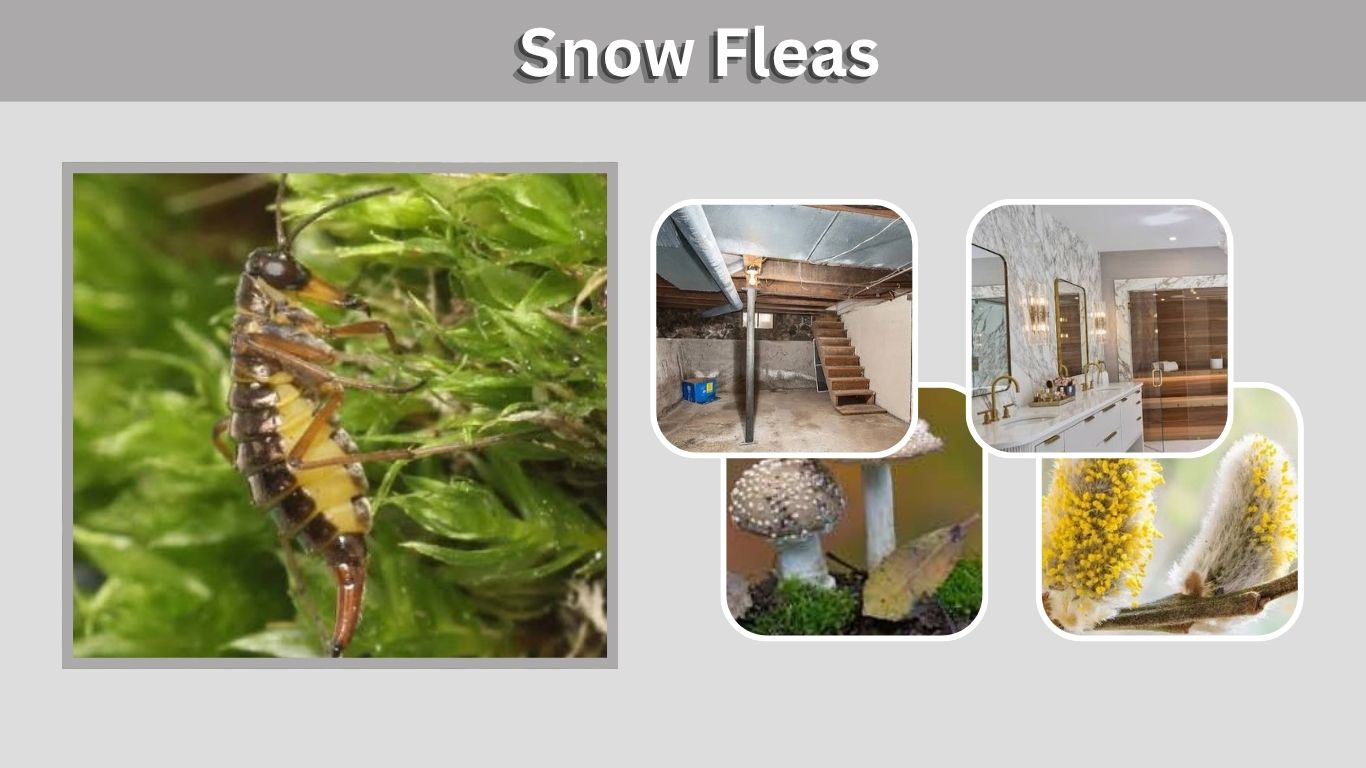
Have you ever noticed tiny black bugs jumping across fresh snow during winter? These unusual creatures are commonly called snow fleas, but they are not actually fleas. They are harmless, cold-tolerant springtails that play an important role in nature. Although their sudden appearance can be surprising, snow fleas rarely cause problems. Understanding what snow fleas look like, where they live, and how to get rid of them can help you manage their presence around your home.
What Are Snow Fleas?
Snow fleas are tiny, wingless arthropods belonging to a group called springtails, scientifically known as Collembola. One well-known species is Hypogastrura nivicola, commonly observed on snow during warmer winter days. Unlike actual fleas, these creatures do not feed on blood or depend on animals for survival. Instead, they consume fungi, algae, and decomposing organic materials.
Are Snow Fleas Real Fleas?
Despite their name, snow fleas are not true fleas. They belong to a different group of arthropods and have completely different feeding habits.
True fleas are parasitic insects that feed on blood, while snow fleas are primarily decomposers. The name comes from their remarkable ability to jump and their visibility on snowy surfaces.
Snow Fleas vs. Fleas: Key Differences
| Feature | Snow Fleas | True Fleas |
| Classification | Springtails | Parasitic insects |
| Color | Dark blue, gray, or black | Reddish-brown |
| Food | Fungi and organic matter | Blood |
| Human bites | No | Yes |
| Pet infestation | No | Yes |
| Habitat | Moist soil and leaf litter | Animals and their surroundings |
| Winter activity | Often visible on snow | Can survive in protected areas |
What Do Snow Fleas Look Like?
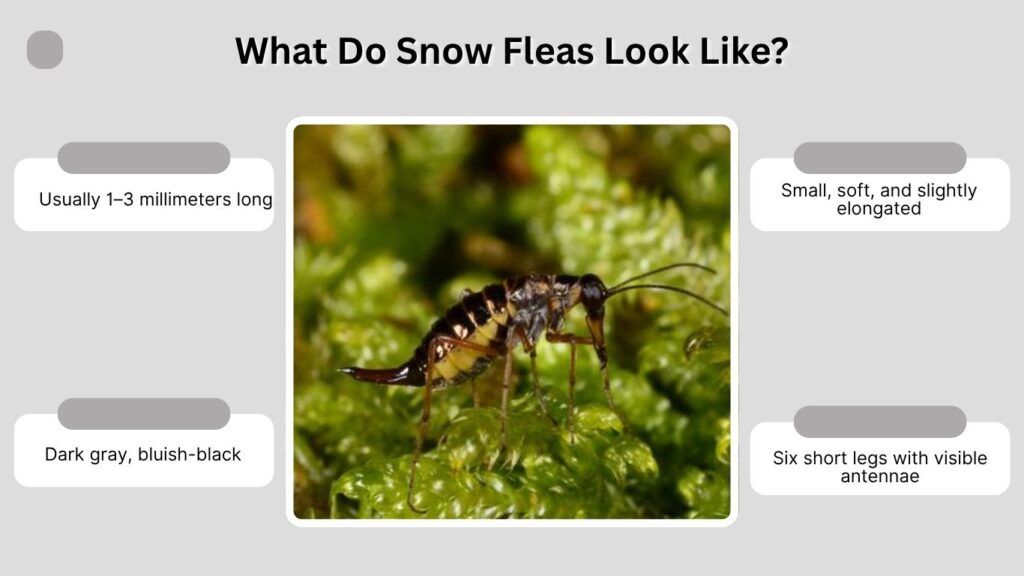
Snow fleas are extremely small, typically measuring around 1–3 millimeters long. Their dark coloration makes them particularly noticeable against white snow. They have soft, somewhat elongated bodies, short antennae, and six legs. When hundreds gather together, they may resemble black pepper, dirt particles, or soot scattered across the snow.
How to Identify Snow Fleas
Common identification features include:
- Size: Usually 1–3 millimeters long.
- Color: Dark gray, bluish-black, or nearly black.
- Body: Small, soft, and slightly elongated.
- Legs: Six short legs with visible antennae.
- Movement: Quick jumping or hopping when disturbed.
- Location: Snow surfaces, moist soil, leaf litter, and decaying vegetation.
Do Snow Fleas Jump or Fly?
Snow fleas jump but cannot fly because they do not have wings. Their jumping ability comes from a specialized forked structure called a furcula, located beneath their abdomen.
When released, this appendage acts like a spring, launching the animal into the air. This movement helps snow fleas escape predators and travel across their environment.
Where Do Snow Fleas Come From?
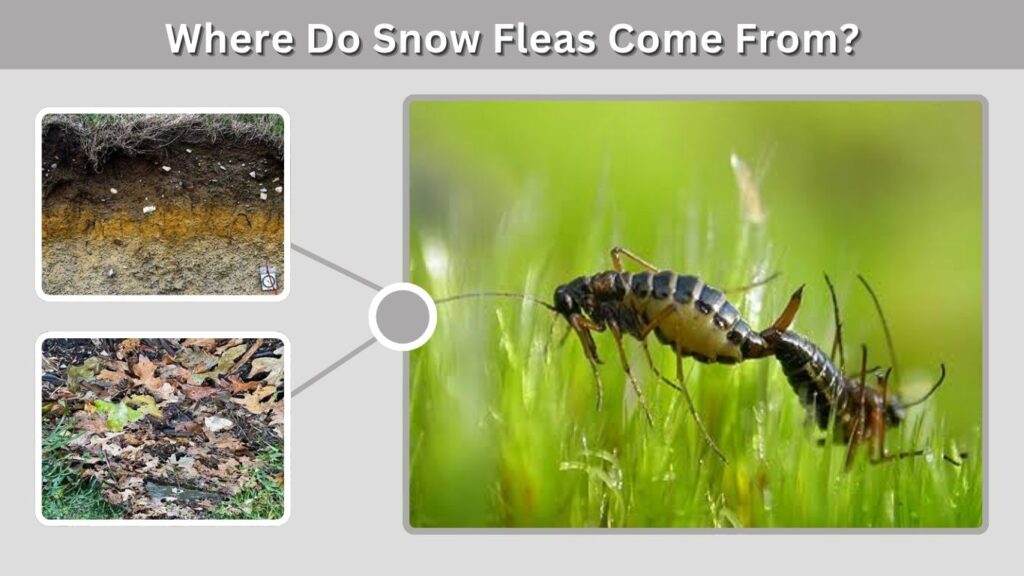
Snow fleas generally originate from soil, decomposing leaves, and other damp outdoor environments. They live beneath vegetation, inside forest litter, and around rotting wood throughout much of the year. During warmer winter days, they move toward the snow surface, making populations that usually remain hidden suddenly visible to people.
Where Do Snow Fleas Live?
Snow fleas prefer environments containing moisture and decomposing organic matter. Common habitats include forest floors, garden soil, compost, fallen leaves, and areas around tree trunks.
They may also appear near sidewalks, foundations, and melting snowbanks. Their natural habitat provides moisture, shelter, and a continuous supply of microscopic food.
Snow Fleas in Michigan, Maine, and Other States
Snow fleas are especially noticeable in colder regions, including Michigan, Maine, Minnesota, Wisconsin, Colorado, and other northern states.
They are also found in Canada, where snowy winters provide ideal conditions for observing them. Springtails occur in warmer states such as Texas, Florida, Arizona, and California, although the snow-associated species may be less conspicuous in areas with little snowfall.
What Do Snow Fleas Eat?
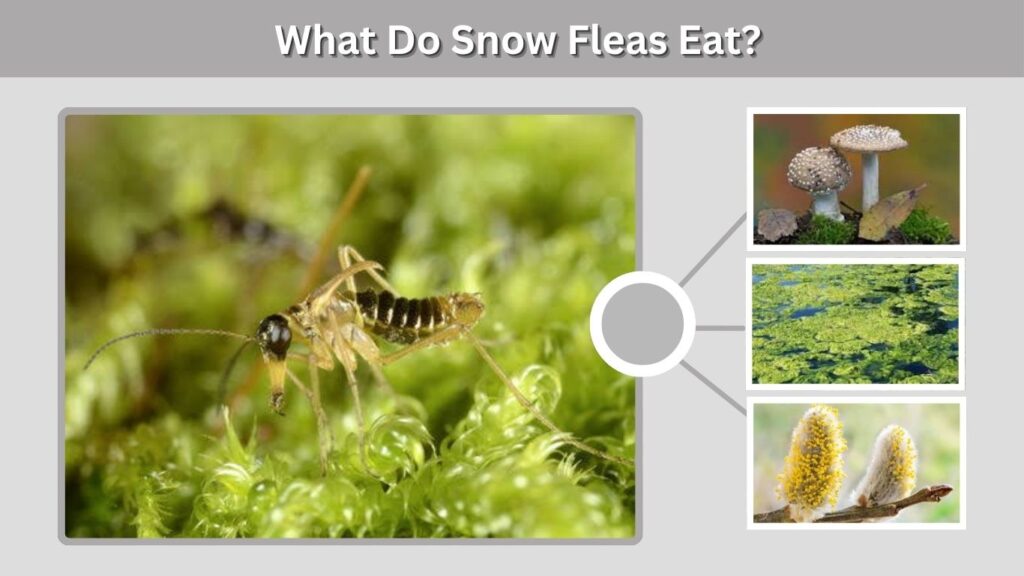
Snow fleas primarily feed on microscopic fungi, algae, bacteria-associated organic matter, pollen, and decomposing plant materials. Their diet makes them beneficial components of healthy soil ecosystems. By breaking down organic debris and feeding on microorganisms, they contribute to natural nutrient cycling and decomposition.
Unlike true fleas, snow fleas do not require blood meals and have no reason to seek human or animal hosts.
Do Snow Fleas Bite Humans or Dogs?
Snow fleas do not bite humans, dogs, cats, or other pets. Although they can jump similarly to parasitic fleas, their mouthparts are adapted for feeding on microorganisms and organic material rather than piercing skin. They are not known to transmit diseases to people or pets, making them largely harmless outdoor creatures.
Are Snow Fleas Harmful to Humans?
Snow fleas are not poisonous or venomous, and they cannot establish parasitic infestations on human skin.
Their presence usually indicates damp surroundings rather than a health hazard. If you experience itchy bites after encountering small jumping bugs, investigate other possible causes, particularly true fleas.
Can Dogs Get Snow Fleas?
Dogs may encounter snow fleas while walking through snowy forests, gardens, or damp grassy areas. A few springtails might accidentally land on their fur, but they cannot live or reproduce as parasites on dogs.
If your dog experiences persistent scratching, red skin, or hair loss, consult a veterinarian to check for genuine fleas or other skin problems.
Snow Fleas in the House: Why Do They Appear?
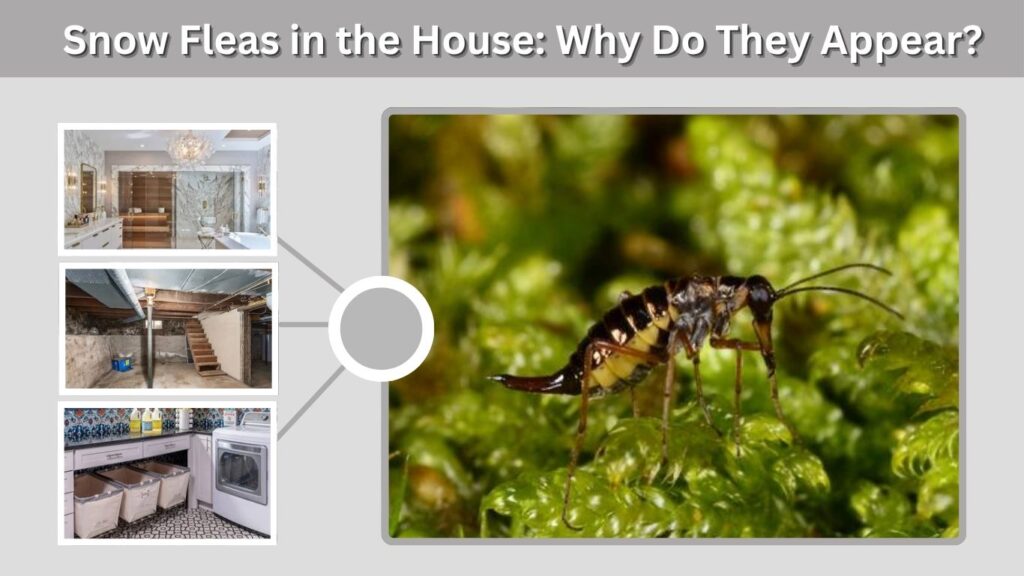
Finding snow fleas or similar springtails inside a house usually indicates excess moisture. These tiny creatures sometimes enter buildings through gaps around windows, doors, foundations, or plumbing openings. They may also arrive in damp potting soil. Most cannot survive for long inside a dry home, but persistent moisture can support populations.
Snow Fleas in Bathrooms and Basements
Bathrooms, basements, laundry rooms, and crawl spaces provide moisture that springtails require for survival.
Leaking pipes, condensation, wet flooring, and poor ventilation can create suitable habitats. If small jumping bugs repeatedly appear near drains or windows, inspect these areas for hidden moisture problems.
Can Snow Fleas Live in Your Bed?
Snow fleas do not naturally inhabit mattresses or bedding because they cannot feed on human blood. They may occasionally wander onto a bed, but dry bedding is unsuitable for long-term survival.
Repeated discoveries of bugs in bedding should prompt careful identification rather than an assumption that they are snow fleas.
How to Get Rid of Snow Fleas in the House
Getting rid of snow fleas indoors usually does not require chemical pesticides. Since springtails depend heavily on moisture, correcting damp conditions is generally the most effective long-term solution. Cleaning visible populations may provide immediate relief, but addressing the underlying moisture source prevents repeated appearances and helps maintain a healthier indoor environment.
Effective Ways to Remove Snow Fleas
- Reduce indoor humidity: Use a dehumidifier or improve ventilation in damp rooms to create conditions unsuitable for springtails.
- Repair plumbing leaks: Check sinks, pipes, faucets, and basement walls for moisture problems.
- Vacuum visible springtails: Remove small groups from floors, window frames, and other indoor surfaces.
- Seal entry points: Close cracks around doors, windows, foundation openings, and utility penetrations.
- Adjust houseplant watering: Allow appropriate drying between watering sessions and avoid continuously waterlogged potting soil.
- Remove mold and damp debris: Clean affected surfaces and eliminate decaying materials that provide food.
How to Get Rid of Snow Fleas Naturally
Natural control mainly involves drying damp surfaces, improving airflow, and removing excess organic debris.
Avoid relying on essential oils, vinegar, or homemade pesticide mixtures. These treatments generally do not correct the moisture conditions responsible for springtail activity and may damage surfaces or irritate pets.
How to Get Rid of Snow Fleas Outside
Outdoor snow fleas are generally beneficial and rarely need treatment. Their populations naturally decrease on exposed surfaces when conditions become warmer and drier. If large numbers accumulate around entrances, patios, or building foundations, simple environmental changes can reduce their presence without disrupting the surrounding ecosystem.
Outdoor Prevention and Control
Remove excessive piles of wet leaves, keep mulch from accumulating against exterior walls, and improve drainage near the foundation.
Direct downspouts away from the building and avoid unnecessary watering around entryways. These measures reduce springtail-friendly conditions while preserving the beneficial organisms living elsewhere in the yard.
Snow Fleas in Winter, Spring, and Summer
Snow fleas are often associated with winter, but they can remain present in their natural habitats throughout the year. Their remarkable cold tolerance allows certain species to become active during mild winter weather. Seasonal changes mainly affect how visible they are rather than determining whether they exist.
Snow Fleas in Winter and Early Spring
Snow fleas become especially noticeable during winter thaws and early spring snowmelt. Some produce specialized antifreeze proteins that help them tolerate freezing conditions.
Large gatherings of moving black specks can appear on snow near trees, wooded paths, and garden beds.
Snow Fleas in Summer
Snow fleas and other springtails continue living in moist soil and leaf litter during summer, although they are much harder to notice.
They typically remain beneath vegetation, mulch, and decaying organic material, where humidity protects them from drying out.
Does Snow Kill Fleas?
Snow and cold temperatures can reduce the survival of exposed true fleas, but winter weather does not guarantee their elimination. Actual fleas can survive in protected environments, including heated homes, sheltered animal resting areas, and suitable developmental stages. Snow fleas, meanwhile, are naturally adapted to colder conditions and may remain active during winter thaws.
Can True Fleas Survive in Snow?
Exposed true fleas are vulnerable to prolonged freezing conditions, but snow itself does not reliably kill every flea or developmental stage.
Warm indoor environments can support flea activity throughout winter. Pet owners should therefore follow veterinarian-recommended flea prevention rather than assuming cold weather eliminates the risk.
FAQs
1. Are Snow Fleas Dangerous?
No. Snow fleas are harmless springtails that do not bite, sting, transmit known diseases, or damage household structures. Large populations may appear alarming, but they are generally beneficial decomposers.
2. How Long Do Snow Fleas Live?
Springtail lifespans vary depending on the species, temperature, moisture, and food availability. Many can live for several months under suitable conditions. Their survival becomes difficult when their surroundings become excessively dry.
3. Can Snow Fleas Live in Water?
Some springtails can float or move across the surface of water because of their water-repellent bodies. However, snow fleas are primarily terrestrial organisms and do not normally live permanently underwater.
4. Are Snow Fleas Harmful to Plants?
Snow fleas generally do not harm healthy plants. They primarily consume fungi and decompose organic material. While certain other springtail species occasionally damage delicate seedlings, snow fleas are mostly beneficial to soil health.
5. Why Are There So Many Snow Fleas on Snow?
Snow fleas often emerge in large numbers during mild winter weather when the snow begins melting. Their dark bodies become highly visible against the white surface, making even ordinary populations appear unusually abundant.
