
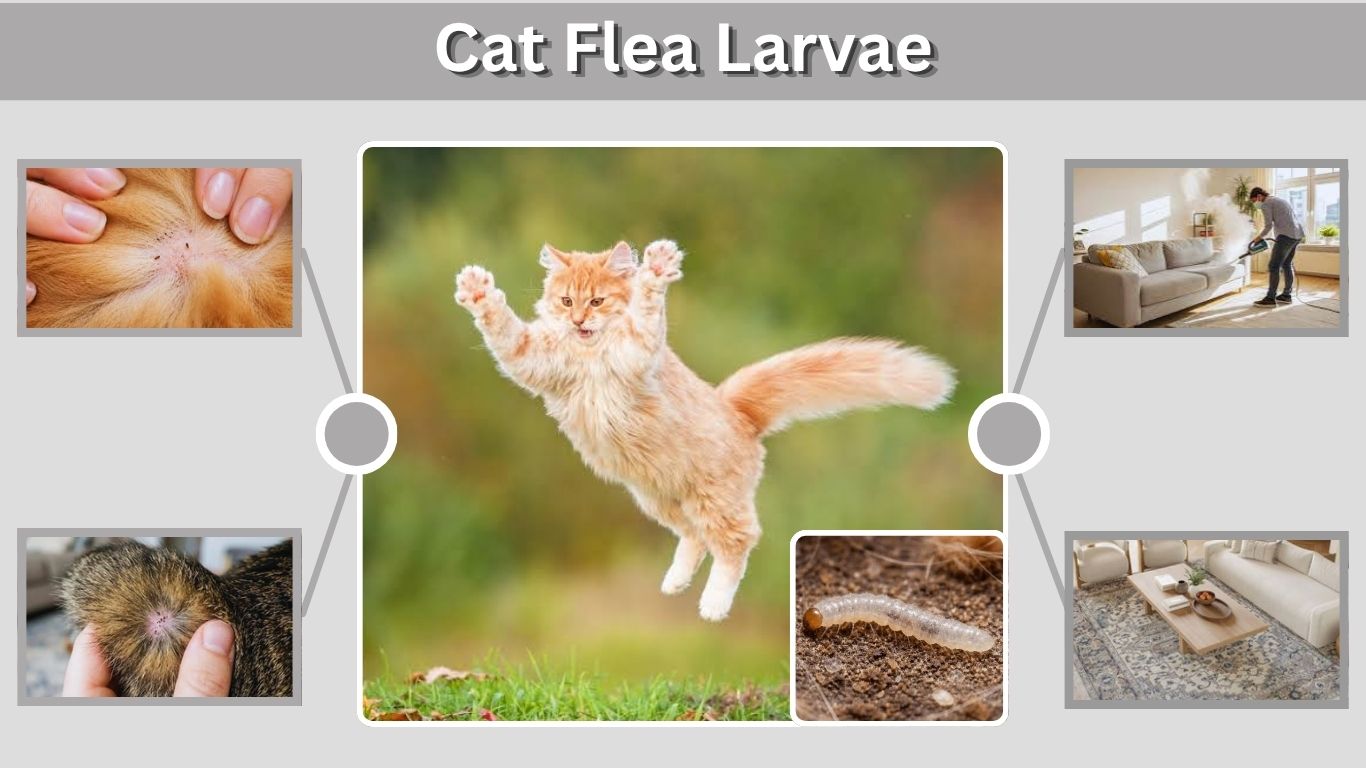
Cat flea larvae are tiny, worm-like insects that develop in pet bedding, carpets, furniture, and other protected areas around your home. Although adult fleas live on cats and feed on their blood, the larvae usually develop away from their hosts. Understanding what cat flea larvae look like, where they hide, and how they grow is essential for controlling flea infestations. This guide explains their identification, size, life cycle, common hiding places, and effective treatment methods to protect your cat and prevent future infestations.
What Are Cat Flea Larvae?
Cat flea larvae are the immature stage of the cat flea, scientifically known as Ctenocephalides felis. They emerge from eggs laid by adult female fleas and develop in the surrounding environment. Unlike adult fleas, larvae cannot jump or bite animals. Instead, they crawl through protected areas, feeding on organic debris and flea dirt until they are ready to pupate.
Cat Flea Larvae Identification
Cat flea larvae have a distinct appearance that makes them different from adult fleas, eggs, and other household insects.
Identification features:
- Size: Usually 2–5 millimeters long when fully developed.
- Color: White, creamy, or translucent, sometimes with a dark digestive tract.
- Body shape: Slender, elongated, segmented, and worm-like.
- Head: Small, with a darker head capsule.
- Legs: Completely legless, unlike adult fleas.
- Movement: Crawl and wriggle rather than jumping.
- Body covering: Fine hairs or bristles are visible under magnification.
Their pale coloration makes them difficult to notice on light-colored bedding or among carpet fibers.
How Big Are Cat Flea Larvae?
Cat flea larvae are extremely small, especially immediately after hatching. Newly emerged larvae are typically around 1–2 millimeters long, while mature larvae may reach approximately 5 millimeters.
Although visible to the naked eye, their small bodies make identification difficult without magnification.
A magnifying glass can help distinguish flea larvae from carpet beetle larvae, fly maggots, and other tiny household insects.
Cat Flea Eggs and Larvae Life Cycle
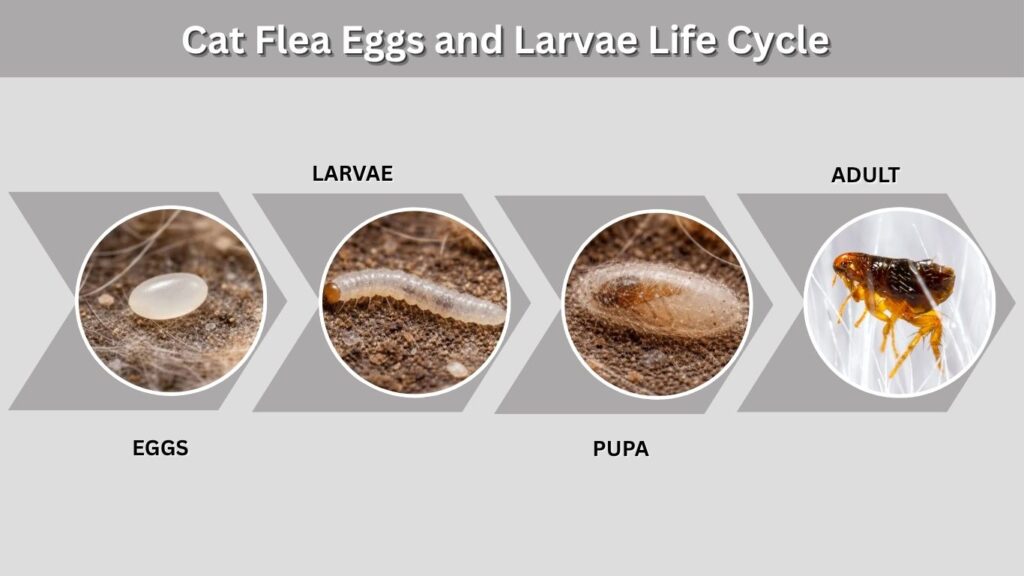
Cat fleas undergo complete metamorphosis, developing through four stages: egg, larva, pupa, and adult. Each stage has different feeding habits and environmental requirements. Understanding this development is important because eliminating adult fleas does not necessarily destroy the eggs, larvae, and pupae already present around your home.
From Flea Eggs to Larvae
Adult female cat fleas lay eggs while living on their hosts. The smooth, whitish eggs fall from the cat’s fur into bedding, carpets, and nearby surfaces.
Depending on temperature and humidity, the eggs generally hatch within 1–10 days.
After hatching, the larvae begin feeding and seeking protected locations. They usually develop for approximately 5–20 days under favorable conditions before spinning cocoons and entering the pupal stage.
What Do Cat Flea Larvae Eat?
Cat flea larvae primarily consume flea dirt, which consists of blood-rich droppings produced by adult fleas.
They also feed on certain organic materials found in household dust and debris.
Unlike adult fleas, larvae do not obtain blood directly from cats or humans. Their dependence on flea dirt explains why they frequently develop in areas where infested animals spend considerable time.
Do Flea Larvae Live on Cats?
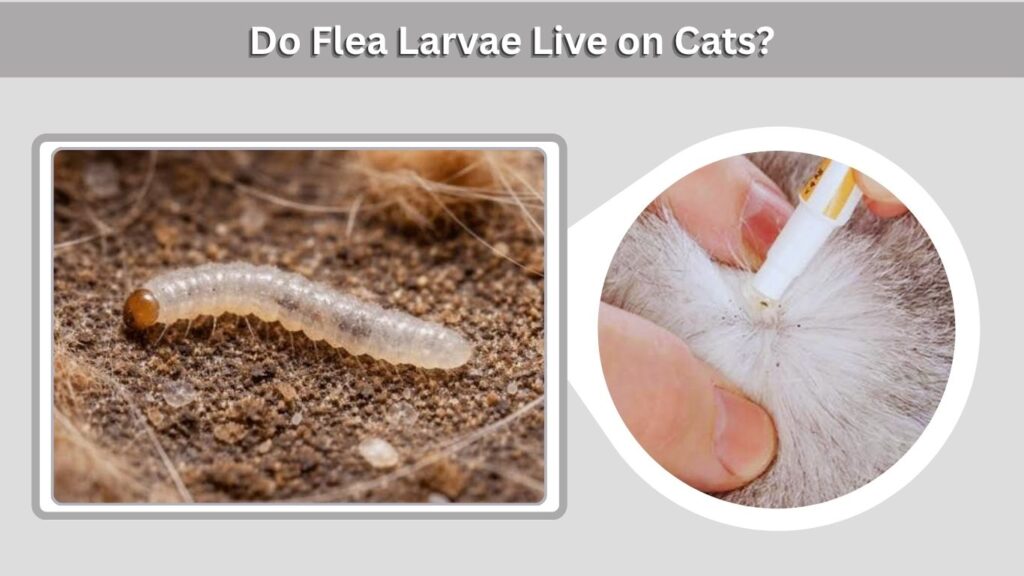
Cat flea larvae do not normally live on cats because they are adapted to developing in protected environmental locations. Adult fleas remain on the host to feed and reproduce, while their eggs fall into surrounding areas. Consequently, finding larvae directly on a cat’s skin or fur is uncommon.
Flea Larvae on Cat Fur
If you notice tiny white worms moving through your cat’s fur, they are not necessarily flea larvae.
Adult fleas are much more likely to remain on the animal. Flea larvae generally move away from exposed surfaces and seek dark environments.
Examine suspicious material carefully and consult a veterinarian if you cannot identify it.
Flea Larvae on Cat Skin
Cat flea larvae do not normally infest the skin or burrow underneath it.
However, adult fleas can cause itching, redness, irritation, and flea allergy dermatitis.
If your cat develops sores, extensive hair loss, or significant skin inflammation, veterinary examination is important to determine the underlying cause.
Where Do Cat Flea Larvae Live?
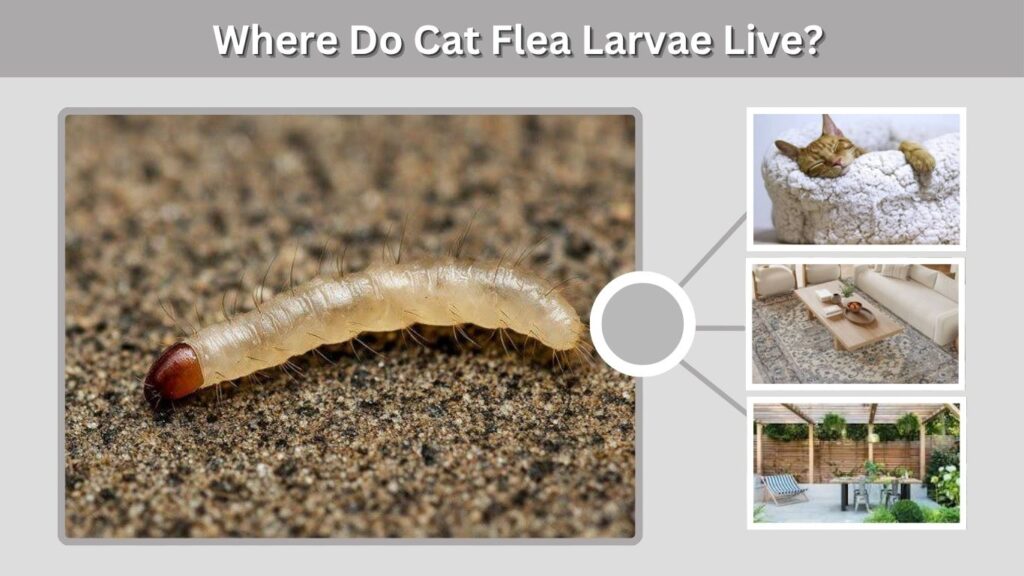
Cat flea larvae prefer dark, relatively humid locations with sufficient organic material for feeding. They avoid direct sunlight and commonly develop where adult flea eggs accumulate. Pet sleeping areas, floor coverings, and sheltered furniture spaces are among the most likely locations.
Cat Flea Larvae on Beds
Cat flea larvae may appear on beds when infested cats regularly sleep there.
Flea eggs can fall onto sheets, blankets, and mattresses before hatching. The emerging larvae may move into bedding folds or nearby protected areas.
Regular washing and vacuuming help eliminate immature fleas and reduce the possibility of infestation.
Cat Flea Larvae in Carpets
Carpets provide suitable hiding places because their fibers offer protection from light and disturbance.
Larvae commonly develop beneath furniture, along baseboards, and around pet resting areas.
Deep vacuuming is particularly important because eggs and larvae can collect below the visible carpet surface.
Cat Flea Larvae in Cat Bedding
Pet bedding is another common location for flea development.
Flea eggs and adult flea droppings fall from the cat’s body while it rests. These materials accumulate in bedding and provide favorable conditions for newly hatched larvae.
Washing pet bedding in hot, soapy water regularly helps interrupt their development.
Signs of Cat Flea Larvae Infestation
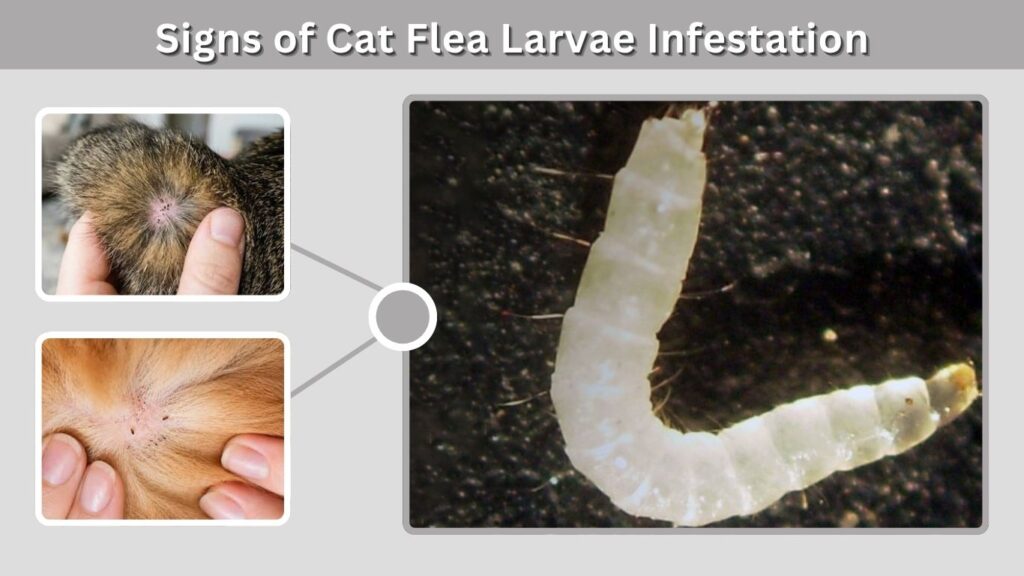
Cat flea larvae are difficult to detect directly because they remain hidden and avoid light. Their presence is usually associated with an active or recent adult flea infestation. Examining your cat and its sleeping areas can reveal evidence that fleas are reproducing nearby.
Common Signs to Look For
- Adult fleas: Small, reddish-brown insects moving rapidly through the cat’s fur.
- Flea dirt: Dark particles resembling ground pepper in fur or bedding.
- Excessive scratching: Frequent itching caused by adult flea bites.
- Skin irritation: Redness, scabs, or hair loss associated with flea sensitivity.
- Tiny larvae: Pale, worm-like insects in bedding, carpeting, or protected corners.
- Recurring fleas: New adult fleas appearing despite previous treatment.
These signs suggest flea activity, although microscopic examination may be necessary to confirm the identity of suspected larvae.
Are Cat Flea Larvae Harmful?
Cat flea larvae do not bite or directly parasitize animals, but their presence indicates that fleas may be reproducing nearby. Once larvae become adults, they can feed on cats and cause discomfort. Heavy adult flea infestations may also contribute to anemia, particularly in young or vulnerable kittens.
Do Cat Flea Larvae Bite?
No, cat flea larvae cannot bite cats or humans.
Their mouthparts are adapted for consuming organic debris rather than piercing skin.
Adult fleas, however, feed on blood and can cause itching, allergic reactions, and irritation.
Cat Flea Larvae vs. Tapeworm Segments
Small moving objects near a cat’s anus or in its feces may be confused with flea larvae.
However, white or cream-colored pieces resembling grains of rice are more characteristic of tapeworm segments.
Cats can acquire certain tapeworms by swallowing infected adult fleas during grooming.
If worm-like material appears in your cat’s feces, around its anus, or in vomit, consult a veterinarian for identification and appropriate treatment rather than assuming it is flea larvae.
How to Get Rid of Cat Flea Larvae
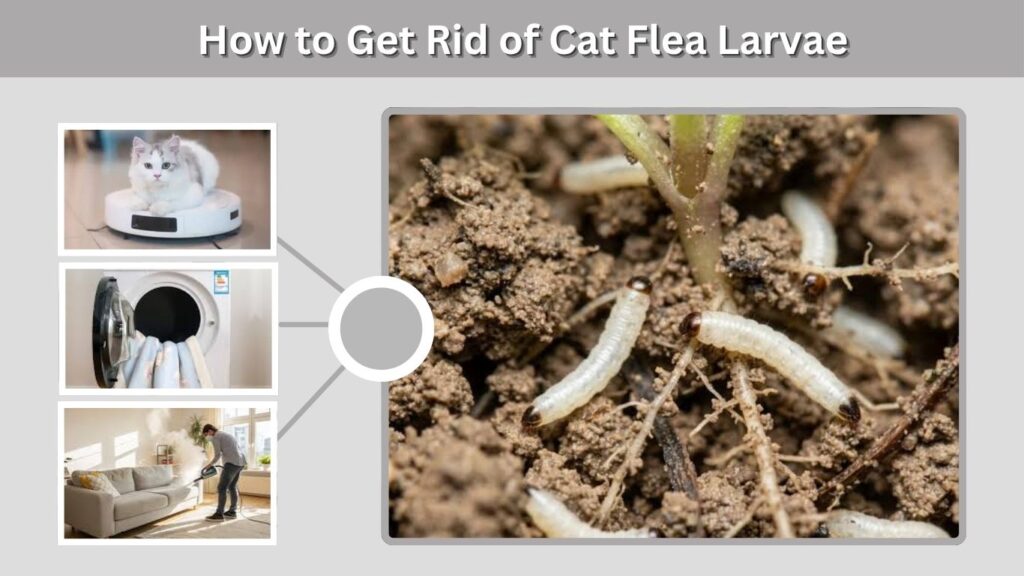
Eliminating cat flea larvae requires treating the adult fleas living on your cat and removing immature fleas from the surrounding environment. Treating only the animal may not stop an infestation because eggs, larvae, and pupae can remain hidden around the home.
Treating Fleas on Cats
Veterinarian-recommended flea treatments help eliminate adult fleas and reduce new egg production.
Depending on the product, treatment may include topical medications, oral preventives, or properly approved flea collars.
Some products also contain ingredients that interfere with flea egg development.
Always use treatments specifically approved for cats and appropriate for their age and weight. Dog flea medications containing permethrin can be extremely dangerous to cats.
Removing Cat Flea Larvae From Your Home
Several practical cleaning methods help control immature fleas.
- Vacuum regularly: Clean carpets, furniture, and areas where your cat frequently rests.
- Wash bedding: Launder pet blankets, sheets, and washable fabrics using suitable hot-water settings.
- Steam-clean suitable surfaces: Heat can help kill flea eggs and larvae when it reaches them.
- Clean furniture: Vacuum cushion seams, upholstery, and protected spaces.
- Consider targeted treatment: Use appropriately labeled insect growth regulators when necessary.
- Repeat cleaning: Continue vacuuming as adult fleas may emerge from surviving pupae.
Household flea control may take several weeks because flea pupae are relatively resistant to environmental treatments.
How to Prevent Cat Flea Larvae
Preventing flea larvae involves limiting adult flea reproduction and maintaining clean household environments. Consistent flea protection is especially important for cats that spend time outdoors or share their homes with other animals.
Effective Prevention Tips
- Use veterinarian-approved flea prevention throughout the recommended treatment period.
- Wash cat bedding frequently to remove eggs and debris.
- Vacuum carpets and upholstered furniture regularly.
- Inspect your cat’s fur for fleas and flea dirt.
- Treat other household pets with species-appropriate flea protection.
- Maintain clean indoor and outdoor resting areas.
Even indoor cats can encounter fleas, so regular inspection remains worthwhile.
FAQs
1. Can You See Cat Flea Larvae?
Yes, cat flea larvae are visible to the naked eye. However, their small size, pale color, and tendency to hide make them difficult to notice without magnification.
2. Are Cat Flea Larvae Black?
No, cat flea larvae are generally white, cream-colored, or translucent. Their digestive tract can appear dark after feeding on adult flea droppings.
3. Can Cat Flea Larvae Live in My Bed?
Yes, larvae can develop in bedding or nearby protected locations when flea eggs fall from an infested cat. Regular laundering and environmental cleaning help reduce their numbers.
4. Do Cat Flea Larvae Live in Cat Poop?
Cat flea larvae do not normally develop inside cat feces. Worm-like objects found in cat feces may be intestinal parasite material or other insect larvae and should be properly identified.
5. What Kills Cat Flea Eggs and Larvae?
Thorough vacuuming, hot-water washing, appropriate steam cleaning, and properly labeled flea-control products can eliminate or disrupt developing fleas. Treating adult fleas on the cat is also essential.
