
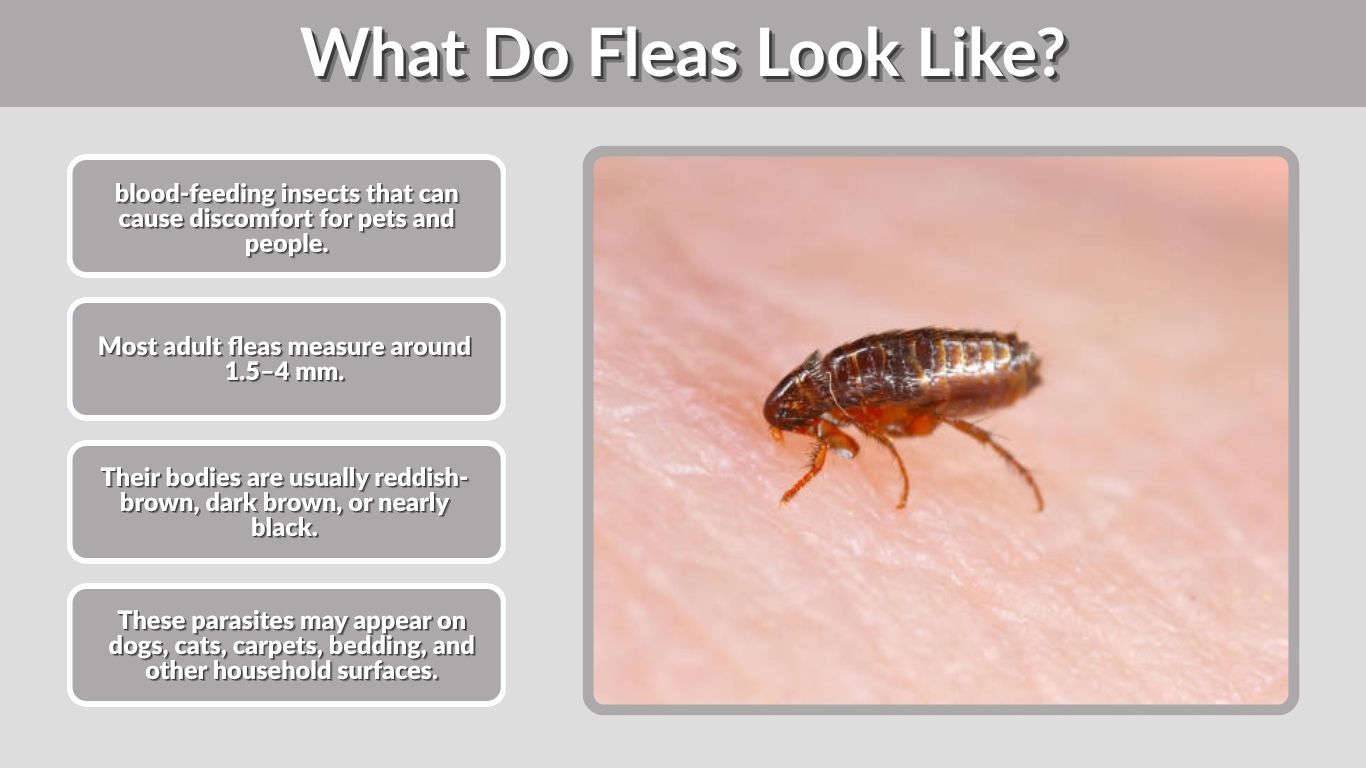
Fleas are tiny, blood-feeding insects that can cause discomfort for pets and people. However, their small size and quick movements often make them difficult to identify. Understanding what fleas look like can help you recognize an infestation before it becomes serious. These parasites may appear on dogs, cats, carpets, bedding, and other household surfaces. This guide explains how to identify fleas by their size, color, and body shape, along with the appearance of flea eggs, larvae, bites, and other signs of an infestation.
What Do Fleas Look Like to the Human Eye?
Adult fleas are tiny, wingless insects with narrow, flattened bodies and powerful jumping legs. Most common pet fleas measure approximately 1.5 to 4 millimeters long, making them visible without magnification. Their dark coloration sometimes makes them resemble moving dirt or pepper flakes, especially against animal fur. Looking closely at their shape and movements helps distinguish them from other household pests.
Physical Characteristics of Fleas
- Size: Most adult fleas measure around 1.5–4 mm.
- Color: Their bodies are usually reddish-brown, dark brown, or nearly black.
- Shape: Fleas have narrow, oval bodies flattened from side to side.
- Legs: Six legs, including enlarged hind legs adapted for jumping.
- Wings: Fleas have no wings and cannot fly.
- Body surface: Their tough exoskeletons have tiny backward-pointing bristles.
What Do Fleas Look Like Up Close?
Under magnification, fleas have small heads, piercing mouthparts, segmented abdomens, and powerful hind legs. Their flattened bodies allow them to travel between animal hairs without becoming easily dislodged.
Unlike many crawling insects, fleas can suddenly jump considerable distances relative to their body size. This rapid movement is one of their most recognizable characteristics.
What Do Fleas Look Like on Dogs?
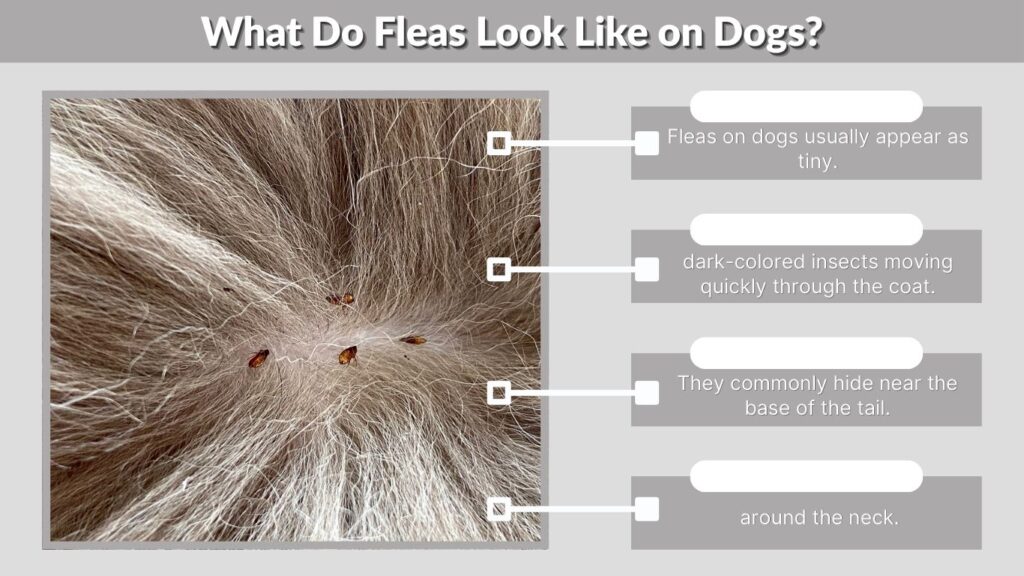
Fleas on dogs usually appear as tiny, dark-colored insects moving quickly through the coat. They commonly hide near the base of the tail, around the neck, along the belly, and between the hind legs. Dogs with thick or dark fur can be especially difficult to inspect because fleas may disappear beneath the hair before you notice them.
Signs of Fleas on Dog Skin
Apart from finding live fleas, owners may notice excessive scratching, chewing, irritated skin, or small areas of hair loss. Some dogs develop flea allergy dermatitis, which produces particularly intense itching.
Another important sign is flea dirt, which consists of digested blood passed in flea droppings. It appears as tiny reddish-black specks. When placed on a damp white paper towel, flea dirt produces reddish-brown staining.
What Do Fleas Look Like on Cats and Kittens?
Fleas on cats closely resemble those found on dogs. In fact, the cat flea (Ctenocephalides felis) is the most common flea species affecting both animals in many regions. These parasites have dark, flattened bodies and move rapidly through fur.
How to Identify Fleas on Cats
Cats frequently groom themselves, sometimes removing visible fleas before their owners discover an infestation. You may notice frequent licking, scratching around the neck, or small crusted bumps along the back.
Use a fine-toothed flea comb to inspect the fur around the tail and neck. On kittens, fleas look similar to those on adult cats, although their small bodies make detection challenging.
Young kittens are particularly vulnerable to blood loss from heavy infestations. Veterinary advice is important because many flea treatments are unsuitable for very young animals.
What Do Flea Eggs, Larvae, and Baby Fleas Look Like?
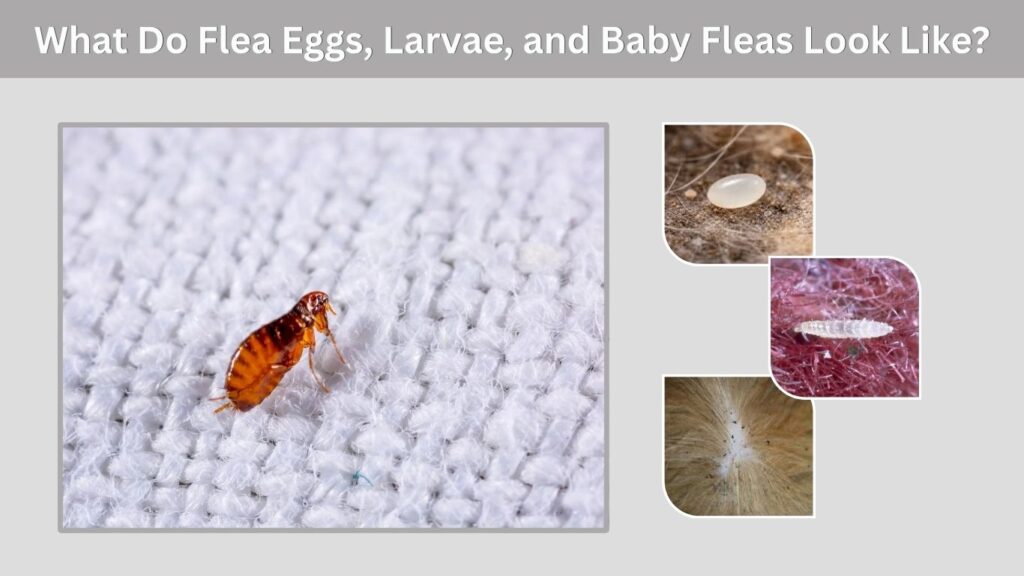
Fleas pass through four developmental stages: egg, larva, pupa, and adult. Each stage has a different appearance, making identification more complicated than simply searching for jumping insects. Eggs and larvae are particularly difficult to detect without careful inspection because they frequently develop in carpets, bedding, and other sheltered areas.
What Do Flea Eggs Look Like?
Flea eggs are tiny, oval, and pearly white, usually measuring approximately 0.5 millimeters long. They resemble miniature grains of salt.
Female fleas lay eggs on their hosts, but the eggs readily fall into carpets, bedding, upholstery, and other areas where pets rest.
What Do Baby Fleas Look Like?
Baby fleas in the larval stage look like tiny, pale, worm-shaped creatures rather than miniature adult fleas. They have no legs, avoid light, and feed on organic material, including flea dirt.
The pupal stage develops inside a protective cocoon that can collect dust and surrounding debris. Eventually, a fully formed adult flea emerges and searches for a host.
What Do Fleas Look Like in Your House?
Fleas inside homes can appear as tiny jumping insects or dark specks moving across floors and fabrics. Their eggs and immature stages are often hidden in areas where pets frequently sleep or spend time. Recognizing signs around household surfaces is important because fleas do not spend their entire life cycle on an animal.
What Do Fleas Look Like on Beds and Bedding?
Adult fleas on light-colored bedding appear as tiny reddish-brown or black insects. You might notice sudden jumping movements when disturbing blankets or sheets.
Flea eggs are much smaller and harder to recognize. Dark flea dirt may also collect on bedding used by infested pets.
What Do Fleas Look Like on Carpets?
Carpet fibers provide sheltered spaces where flea eggs and larvae can develop. Adult fleas may jump from carpets when disturbed.
Common household signs include:
- Tiny dark insects jumping near floors or furniture.
- Black or reddish-brown specks in pet bedding.
- Small white flea eggs collected among carpet fibers.
- Increased itching among pets or household members.
These signs suggest a possible infestation, although direct identification is preferable.
What Do Flea Bites Look Like on Humans and Pets?
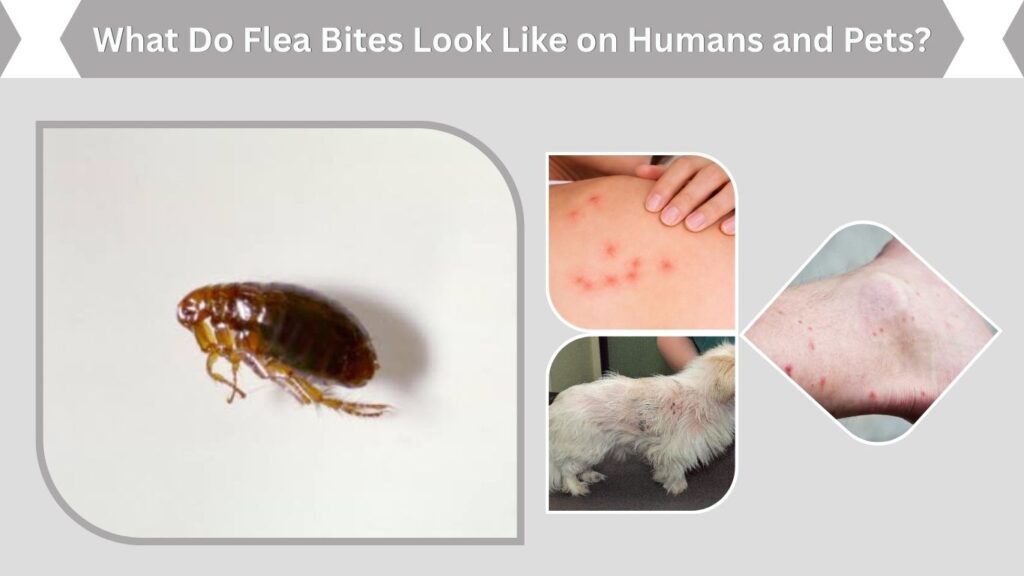
Flea bites commonly produce small, itchy, raised bumps that may appear red, pink, or darker than the surrounding skin. Their appearance varies with skin tone and individual sensitivity. On humans, bites frequently occur around the ankles, feet, and lower legs, especially after exposure to flea-infested environments.
How to Recognize Flea Bites
Flea bites sometimes develop in small groups or clusters. They may have a visible central puncture, although this is not always noticeable.
On dogs and cats, bites can cause redness, scratching, inflammation, and irritation. Some animals experience severe allergic reactions to flea saliva.
Bite appearance alone cannot reliably confirm fleas because mosquitoes, bed bugs, and other causes of skin irritation may produce similar symptoms.
Fleas vs. Bed Bugs vs. Ticks: Key Differences
Fleas, bed bugs, and ticks can look similar at first glance, particularly when they are small and dark-colored. However, their body structure, movement, and preferred environments offer useful identification clues. Fleas are recognizable by their jumping ability, whereas bed bugs crawl and ticks typically attach themselves to a host while feeding.
| Feature | Fleas | Bed Bugs | Ticks |
| Shape | Narrow, flattened sideways | Broad, oval, flattened | Rounded or oval |
| Color | Reddish-brown | Brown to reddish-brown | Brown, black, or gray |
| Movement | Jump and crawl | Crawl | Crawl |
| Adult legs | 6 | 6 | 8 |
| Common location | Pets and their surroundings | Beds and furniture | Animals and outdoor vegetation |
How to Identify Fleas and Prevent an Infestation
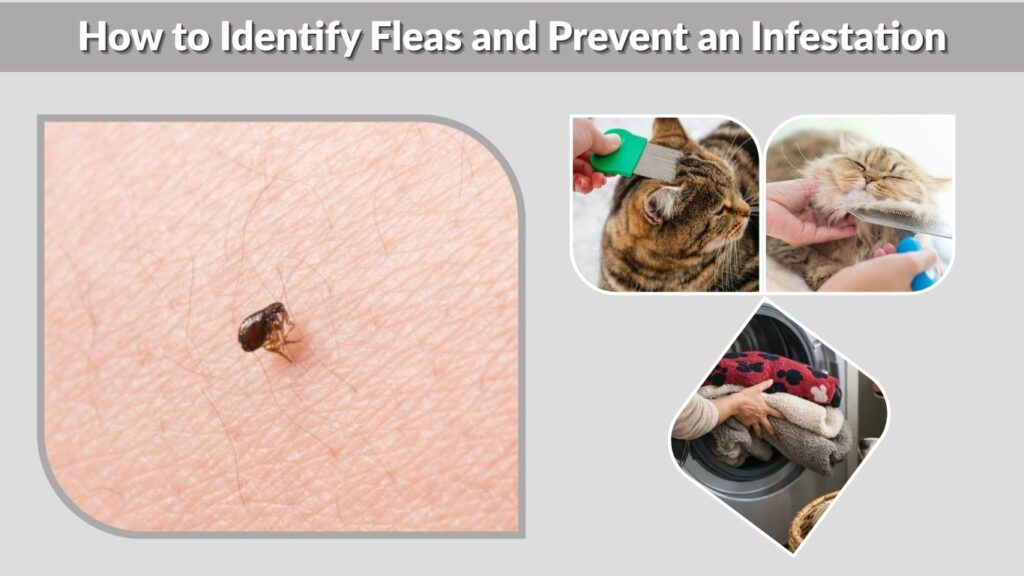
Discovering fleas early makes them easier to manage. Begin by examining pets and their favorite sleeping areas. Since eggs and larvae develop away from the animal, inspecting only the pet may overlook a developing infestation.
Steps to Check for Fleas
- Inspect pet fur: Separate the hair and examine the skin, particularly around the tail and neck.
- Use a flea comb: Brush through the coat and examine collected debris on white paper.
- Check flea dirt: Moisten suspicious dark specks to look for reddish staining.
- Examine the home: Inspect carpets, furniture, and pet bedding for insects and eggs.
What to Do After Finding Fleas
If fleas are confirmed, consult a veterinarian about an age- and species-appropriate flea control treatment. Treating all relevant household pets and cleaning their environment are important for breaking the flea life cycle.
Regular vacuuming, washing pet bedding, and consistent veterinary-recommended prevention can help reduce future infestations.
FAQs
1. Can You See Fleas With the Naked Eye?
Yes. Adult fleas are visible without magnification, although their small bodies and rapid movements make them difficult to spot.
2. What Do Dead Fleas Look Like?
Dead fleas usually resemble live fleas but remain motionless. Their bodies may appear curled, flattened, or dried out, often retaining a dark reddish-brown color.
3. What Do Fleas Look Like on Humans?
Fleas appear as tiny dark insects that may briefly crawl or jump onto human skin. They can bite people but generally do not remain on humans like they do on furry animal hosts.
4. What Do Sand Fleas Look Like?
The name “sand flea” describes different organisms depending on the region, including beach-dwelling crustaceans and true parasitic fleas. Their appearances vary, so they should not automatically be confused with ordinary cat or dog fleas.
5. Are Flea Eggs Visible to Humans?
Flea eggs can be seen with careful inspection, particularly against dark surfaces. However, their approximately 0.5-millimeter size makes them easy to overlook.
