
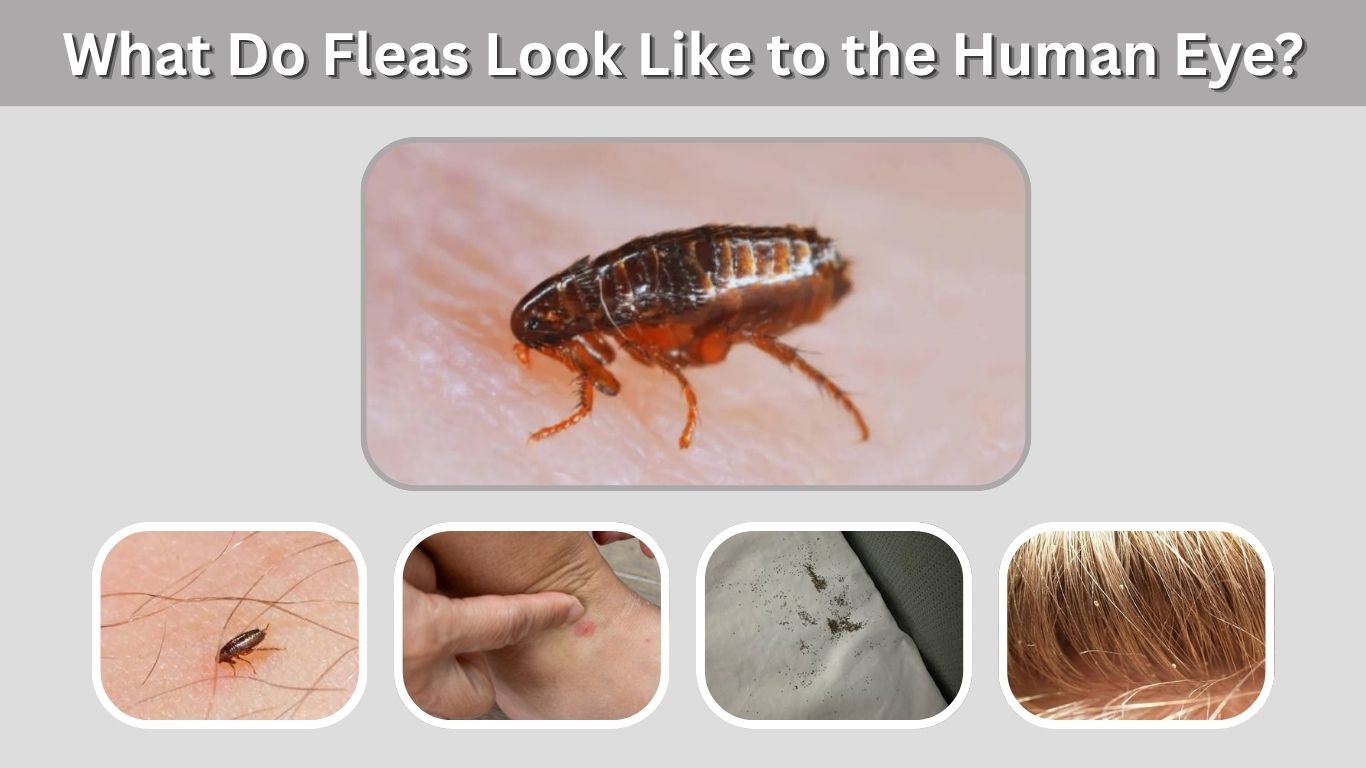
Fleas are tiny, blood-feeding insects that can be difficult to recognize without close inspection. Their small size, dark coloration, and quick movements often make them look like moving specks of dirt. However, adult fleas are visible without magnification, and their distinctive body shape can help you identify them. Understanding what fleas look like to the human eye is especially useful when checking pets, bedding, carpets, or skin. This guide explains their size, color, appearance, life stages, and the differences between fleas and other common household insects.
What Do Fleas Look Like to the Human Eye?
Adult fleas appear as tiny, dark brown or reddish-brown insects measuring approximately 1–4 millimeters long, depending on the species. They are visible to the naked eye but can be difficult to recognize because they move quickly. Their narrow, flattened bodies help them travel through animal fur, while their strong hind legs allow them to jump.
Physical Characteristics of Fleas
- Size: Approximately 1–4 millimeters long.
- Color: Reddish-brown, dark brown, or almost black.
- Body shape: Narrow, oval, and flattened from side to side.
- Legs: Six legs, including powerful hind legs.
- Wings: Fleas are wingless and cannot fly.
- Movement: They crawl quickly and can jump suddenly when disturbed.
What Do Fleas Look Like Up Close?
Under magnification, fleas have segmented bodies, small heads, and specialized mouthparts for piercing skin and feeding on blood. Their bodies are covered with tiny backward-pointing bristles that help them move through fur.
Their hind legs are noticeably larger than their other legs, giving them the ability to jump many times their body length. This jumping behavior is an important identification clue.
What Do Human Fleas Look Like?
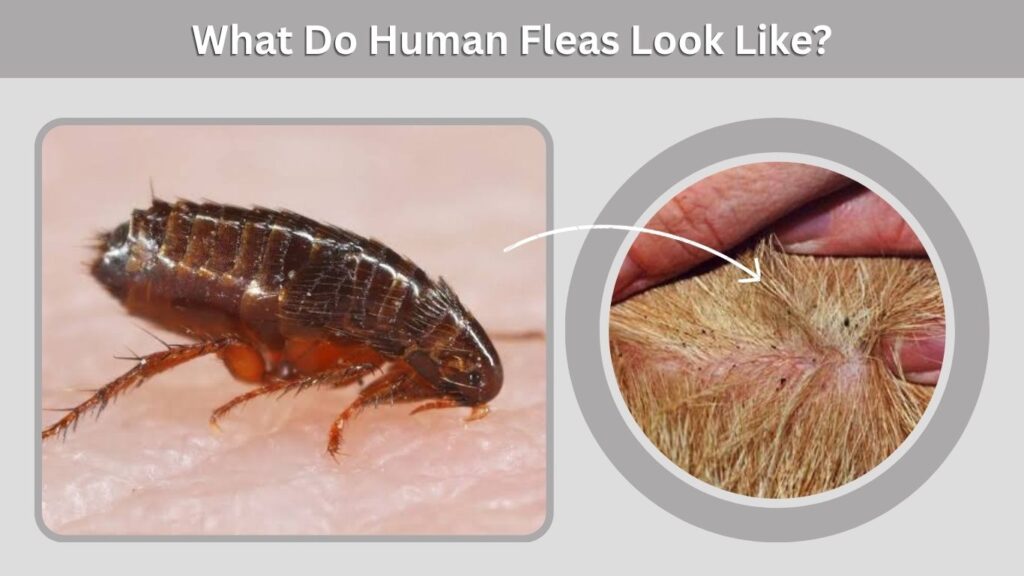
Human fleas closely resemble other flea species, appearing as tiny, brown, wingless insects with narrow bodies. The true human flea, Pulex irritans, typically measures approximately 2–3.5 millimeters long. Although its name suggests that it exclusively feeds on people, this species can also infest several other mammals, including pigs, dogs, and cats.
Appearance of Human Fleas
Human fleas have rounded heads, flattened bodies, and powerful jumping legs. Unlike cat and dog fleas, they lack certain comb-like rows of spines near their heads.
These differences are difficult to recognize without magnification. To the naked eye, human fleas generally look like other small, brown fleas.
What Do Cat and Dog Fleas Look Like to the Human Eye?
Cat fleas and dog fleas are similar in appearance, making them difficult to distinguish without microscopic examination.
Cat fleas, scientifically known as Ctenocephalides felis, are the most common fleas found on both cats and dogs in many regions. They can also bite people.
Dog fleas, Ctenocephalides canis, have similar reddish-brown bodies and enlarged jumping legs. Differences in head shape and specialized spines help experts distinguish these species.
What Do Fleas Look Like on Human Skin and Hair?
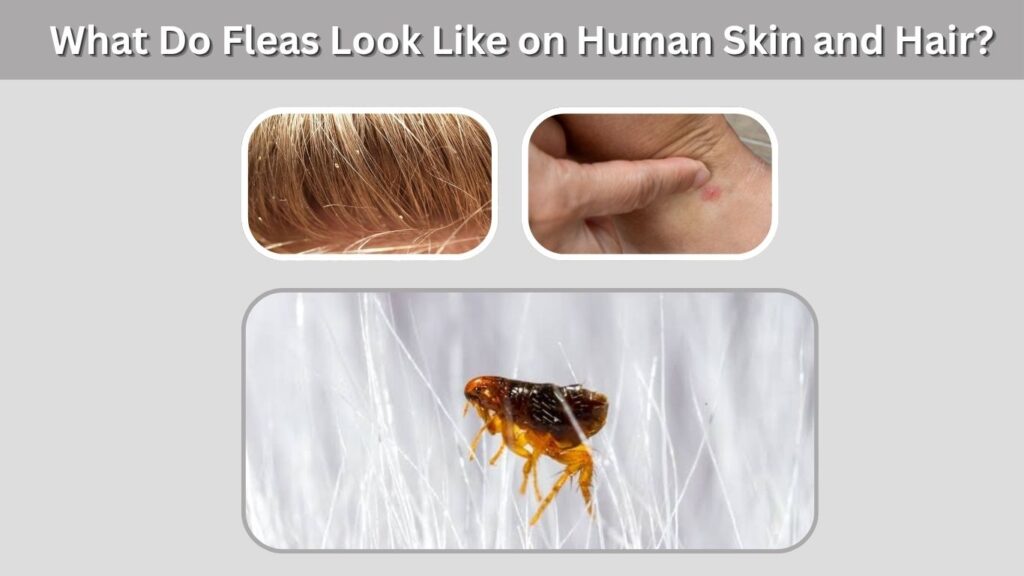
Fleas on human skin usually appear as tiny, dark insects moving or jumping across the surface. They commonly bite exposed areas, particularly the ankles and lower legs. Unlike head lice, most fleas do not establish permanent populations in human hair. Instead, they typically prefer furry animal hosts and sheltered environments.
What Do Fleas Look Like on Human Skin?
On light skin, fleas may appear as dark brown or black moving specks. Against darker skin, their appearance can be harder to distinguish.
Fleas generally do not remain attached to human skin after feeding. They may bite, crawl briefly, and jump away.
What Do Fleas Look Like in Human Hair?
Fleas can occasionally enter human hair, particularly after contact with infested animals or environments. However, they are not adapted to living and reproducing on the human scalp like head lice.
If insects repeatedly appear in your hair, consider whether they may be lice rather than fleas.
Head lice crawl and attach their eggs firmly to hair shafts, while fleas jump and generally do not remain in human hair.
What Do Baby Fleas, Eggs, and Dead Fleas Look Like?
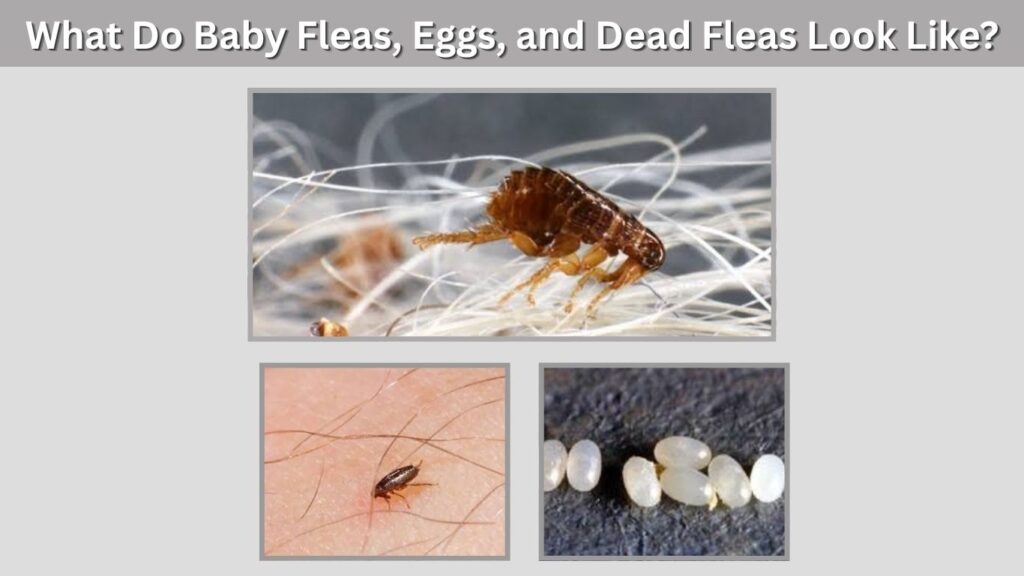
Fleas undergo four developmental stages: egg, larva, pupa, and adult. Each stage looks different, and not all are easily visible to the human eye. Adult fleas are the most recognizable stage because they jump and feed on blood. Eggs and larvae are smaller or less conspicuous and usually develop in protected surroundings.
What Do Flea Eggs Look Like to the Human Eye?
Flea eggs are tiny, oval, and pearly white. They measure approximately 0.5 millimeters long and resemble miniature grains of salt.
Female fleas lay eggs on animal hosts, but these eggs commonly fall into carpets, bedding, and furniture.
What Do Baby Fleas Look Like?
Newly hatched flea larvae look like tiny, pale, segmented worms rather than miniature adult fleas. They have no legs and cannot jump.
Flea larvae usually develop in dark, protected areas where they feed on organic debris and adult flea droppings.
What Do Dead Fleas Look Like?
Dead fleas resemble living adults but remain motionless. Their bodies may appear curled, dried, or flattened.
They generally retain their brown or reddish-brown coloration, although decomposition and environmental conditions can change their appearance.
What Do Flea Bites Look Like on Humans?
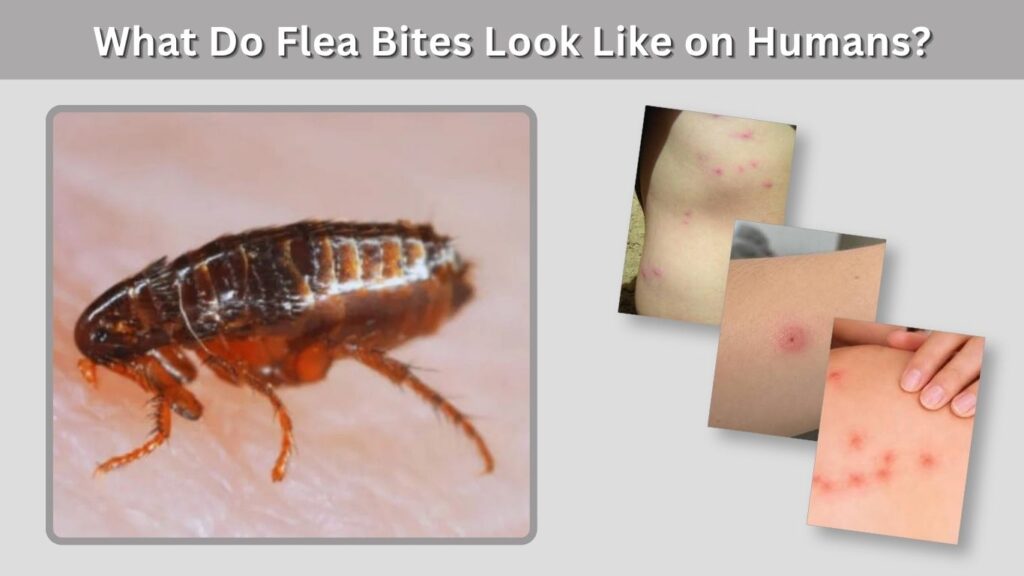
Flea bites commonly produce small, itchy bumps that may appear red, pink, brown, or darker than the surrounding skin. Their appearance depends on skin tone and individual sensitivity. Bites frequently occur around the feet, ankles, and lower legs, although other exposed areas can also be affected. Some people experience only mild irritation, while others develop more noticeable reactions.
Common Signs of Flea Bites
- Small bumps: Raised, irritated spots on the skin.
- Itching: Mild to intense irritation around the bite.
- Clusters: Several bites appearing close together.
- Redness or discoloration: Skin changes surrounding the affected area.
- Swelling: Localized inflammation in sensitive individuals.
How Are Flea Bites Different From Other Insect Bites?
Flea bites are commonly concentrated around the ankles and lower legs, while bed bug bites can occur on various exposed areas during sleep.
However, bite appearance alone cannot reliably identify the responsible insect.
If you develop severe swelling, signs of infection, fever, or other concerning symptoms after a suspected flea bite, seek medical advice.
Fleas vs. Lice vs. Bed Bugs: Visual Differences
Fleas, lice, and bed bugs can appear similar because all are small, wingless insects associated with humans or animals. However, their body structures and movements provide useful identification clues. Fleas jump using enlarged hind legs, lice crawl through hair or clothing, and bed bugs generally hide near sleeping areas.
| Feature | Fleas | Head Lice | Bed Bugs |
| Size | 1–4 mm | 2–3 mm | 4–7 mm adults |
| Color | Brown to reddish-brown | Grayish or tan | Brown to reddish-brown |
| Body shape | Flattened sideways | Elongated and flattened | Broad, oval |
| Movement | Jump and crawl | Crawl | Crawl |
| Typical location | Pets and surroundings | Human scalp hair | Beds and furniture |
How to Identify Fleas Without Magnification

Identifying fleas without a magnifying glass requires careful observation. Their small size makes them difficult to notice, but their movements and preferred hiding places provide clues. Checking pets and household surfaces under bright lighting can help reveal adult fleas, eggs, and flea dirt.
Steps to Identify Fleas
- Check your pets: Examine fur around the neck, belly, and tail base.
- Use a flea comb: Collect insects and debris from animal fur.
- Inspect bedding: Look for dark insects and tiny white eggs.
- Watch for jumping: Fleas may suddenly leap when disturbed.
- Examine flea dirt: Dark specks that produce reddish staining on damp white paper suggest flea droppings.
How to Prevent Fleas in Your Home
Regular vacuuming, washing pet bedding, and maintaining veterinarian-recommended flea prevention can reduce the risk of infestation.
Inspect pets frequently, especially after exposure to animals or environments where fleas may be present.
If an infestation develops, treating the affected pets and their environment together is usually necessary for effective control.
FAQs
1. Can You See Fleas With the Naked Eye?
Yes. Adult fleas are visible without magnification. They usually look like tiny dark insects, although their rapid movements make them difficult to examine.
2. What Color Are Fleas to the Human Eye?
Most adult fleas appear reddish-brown, dark brown, or almost black. Their appearance can vary slightly with species and lighting conditions.
3. Can Fleas Live in Human Hair?
Fleas may occasionally enter human hair, but they generally do not live or reproduce there. Persistent scalp infestations are more likely to involve head lice.
4. Can You See Flea Eggs Without a Microscope?
Yes, but they are extremely small. Flea eggs look like tiny, white, oval particles approximately 0.5 millimeters long.
5. What Do Sand Fleas Look Like to the Human Eye?
The term “sand flea” refers to several different organisms. Some are tiny beach-dwelling crustaceans, while others are true fleas, such as Tunga penetrans. Their sizes and appearances differ depending on the organism.
