
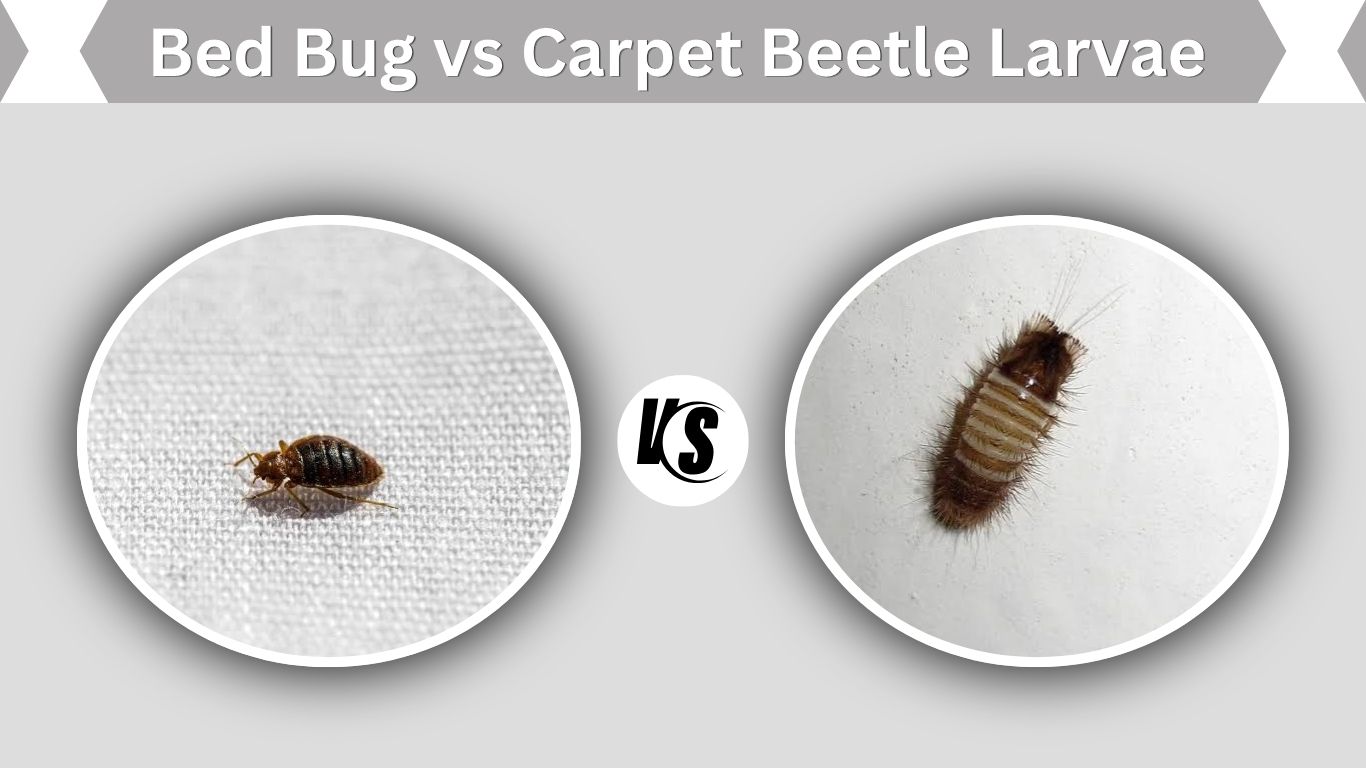
Bed bug vs carpet beetle larvae identification can be confusing because both pests may appear around beds, carpets, furniture, and clothing. Although they sometimes share similar hiding places, their appearance, feeding habits, and effects on humans are very different. Bed bugs feed on blood and cause bites, while carpet beetle larvae damage natural fabrics and may trigger allergic skin reactions. Understanding these differences helps homeowners identify infestations correctly, choose effective treatments, and prevent unnecessary pest control expenses. This guide compares their appearance, behavior, shed skins, and infestation signs.
Bed Bug vs Carpet Beetle Larvae: Quick Comparison
Bed bugs and carpet beetle larvae belong to different insect groups and have different life cycles. An important distinction is that bed bugs do not have a larval stage. Young bed bugs are called nymphs, while carpet beetles develop through a true larval stage.
| Feature | Carpet Beetle Larvae | Bed Bug Nymphs |
| Body shape | Elongated, oval, or carrot-shaped | Flat and oval |
| Color | Brown, tan, or striped | Pale yellow to reddish-brown |
| Body texture | Hairy and bristly | Smooth |
| Typical size | Around 2–7 mm, varies by species | Around 1–4.5 mm |
| Food source | Wool, fur, feathers, organic debris | Human and animal blood |
| Human bites | Do not bite | Bite to obtain blood |
| Skin effects | Allergic irritation from hairs | Itchy bite reactions |
| Common locations | Carpets, closets, baseboards | Mattresses, bed frames, furniture |
| Shed skins | Hairy and segmented | Thin, pale, and oval |
The easiest identification method is examining body shape and texture. Carpet beetle larvae appear fuzzy, while bed bug nymphs resemble miniature adult bed bugs.
What Do Bed Bug Nymphs and Carpet Beetle Larvae Look Like?
Physical appearance is one of the most reliable ways to distinguish carpet beetle larvae from young bed bugs. Both insects are small, but their bodies have noticeable structural differences when examined closely.
Carpet Beetle Larvae Appearance
Carpet beetle larvae resemble tiny, hairy caterpillars. Depending on the species, they may have oval, elongated, or tapered bodies covered with bristles.
Common identification features include:
- Body shape: Elongated, segmented, or carrot-shaped.
- Color: Light brown, dark brown, or tan with darker bands.
- Body hairs: Dense bristles and sometimes a prominent tail tuft.
- Movement: Slow crawling across carpets, walls, and furniture.
- Size: Typically several millimeters long, depending on species and maturity.
Varied carpet beetle larvae often appear banded and fuzzy. Black carpet beetle larvae generally have more elongated bodies with distinctive hairs near their rear ends.
Bed Bug Nymph Appearance
Bed bug nymphs are small, wingless insects that resemble miniature adult bed bugs. They have flattened, oval bodies with six visible legs and two antennae.
Newly hatched nymphs are pale or nearly transparent. After feeding on blood, their bodies may become noticeably reddish. As they mature, they develop a darker yellow-brown appearance.
Unlike carpet beetle larvae, bed bug nymphs do not have dense body bristles or caterpillar-like shapes. Their flat bodies allow them to hide inside narrow cracks and mattress seams.
Carpet Beetle Larvae vs Bed Bug Bites
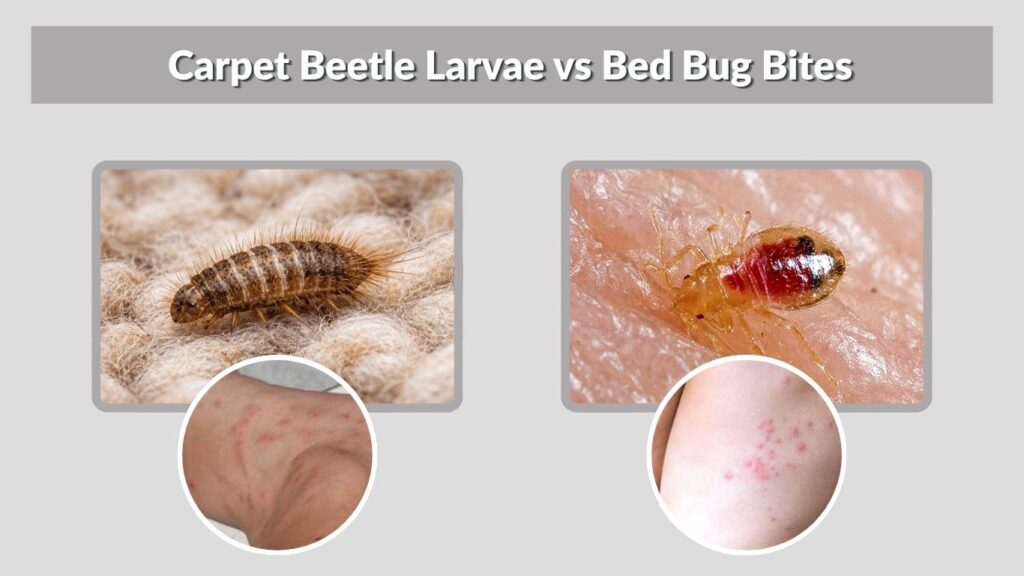
One major difference between carpet beetle larvae and bed bugs involves their effects on human skin. Both may be associated with itching, but they cause irritation through different mechanisms.
Do Carpet Beetle Larvae Bite Humans?
Carpet beetle larvae do not bite humans or feed on blood. However, their tiny bristly hairs may trigger allergic contact dermatitis in sensitive individuals.
These reactions can include itching, redness, small bumps, or irritated skin patches. Because the symptoms sometimes resemble insect bites, people may mistakenly believe they have bed bugs.
Exposure may occur through contaminated clothing, upholstered furniture, or bedding containing larval hairs.
What Do Bed Bug Bites Look Like?
Bed bugs bite humans to obtain blood meals. Their bites may cause itchy, raised bumps that sometimes develop in clusters, lines, or irregular patterns.
Bed bug bites commonly appear on exposed areas, including the arms, legs, neck, and face. However, reactions vary considerably between individuals.
Some people develop noticeable irritation, while others show no visible reaction. Therefore, the appearance or arrangement of skin marks alone cannot confirm a bed bug infestation.
Carpet Beetle Larvae vs Bed Bug Shed Skins
Both pests shed their outer coverings while developing, but their discarded skins look different. Examining these materials can provide useful evidence when living insects are difficult to locate.
Carpet Beetle Larvae Shed Skins
Carpet beetle larvae leave behind brownish, segmented skins with visible hairs or bristles. These discarded coverings often resemble empty, dried-out versions of the larvae.
They commonly accumulate beneath furniture, inside closets, near carpet edges, and around stored natural-fiber materials. Several shed skins in one location may indicate ongoing larval activity.
Bed Bug Shed Skins
Bed bug nymphs shed their exoskeletons as they grow through five developmental stages. Their discarded skins are generally pale yellow, translucent, and shaped like miniature bed bugs.
They may retain recognizable legs and antennae. These skins are frequently discovered along mattress seams, inside box springs, around headboards, or within furniture joints.
Finding smooth, oval shed skins alongside dark fecal spots strongly suggests bed bug activity, although examining an actual insect provides better confirmation.
Where Do Bed Bugs and Carpet Beetle Larvae Hide?
Although both insects may appear in bedrooms, they usually choose hiding places for different reasons.
Common Carpet Beetle Larvae Hiding Places
Carpet beetle larvae prefer protected locations containing suitable food materials. Typical hiding places include:
- Under carpets, rugs, and upholstered furniture.
- Inside closets containing wool or fur clothing.
- Along baseboards where hair and lint accumulate.
- In storage boxes containing feathers or natural fabrics.
- Near dead insects or animal nesting materials.
These larvae may occasionally appear on mattresses or walls, but their presence does not necessarily mean they are feeding there.
Common Bed Bug Hiding Places
Bed bugs generally remain close to sleeping or resting hosts. They often hide in mattress seams, box springs, bed frames, headboards, and nearby furniture.
They may also occupy cracks in walls, gaps behind baseboards, and spaces around picture frames. As infestations increase, bed bugs can spread farther from beds into adjacent rooms or furniture.
Unlike carpet beetle larvae, their hiding behavior is primarily associated with accessing blood meals.
Signs of Bed Bug vs Carpet Beetle Larvae Infestation
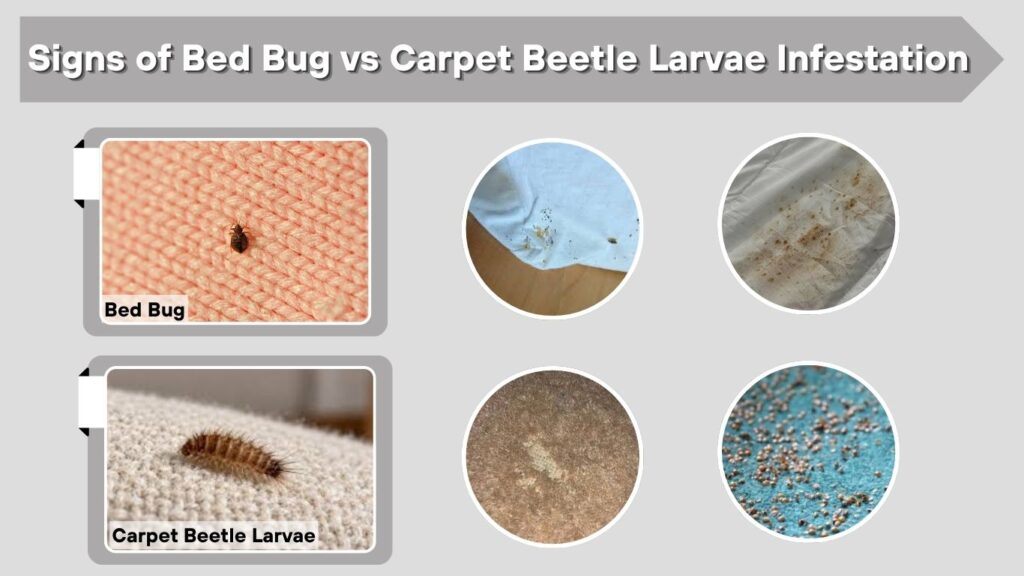
Recognizing infestation evidence helps distinguish the pests without relying entirely on insect appearance.
Carpet beetle larvae commonly cause irregular holes in wool clothing, damage to rugs, and deterioration of other animal-based materials. Homeowners may also notice hairy shed skins or larvae crawling near baseboards.
Bed bug infestations produce different clues, including dark fecal spots, reddish stains on bedding, shed nymph skins, and occasionally visible live insects near sleeping areas.
Carpet beetle larvae do not produce the characteristic dark blood-digestion spots associated with bed bugs. Similarly, bed bugs do not consume wool or create feeding holes in clothing.
When identification remains uncertain, collect a specimen or take a clear close-up photograph for an experienced pest identification professional.
How to Get Rid of Bed Bugs and Carpet Beetle Larvae
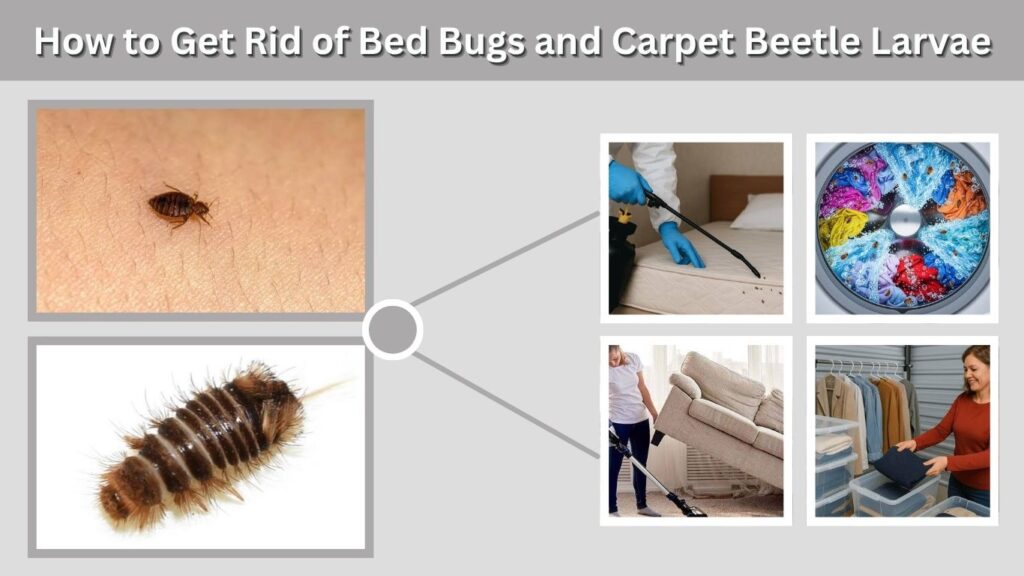
Effective treatment depends on which pest is present. Although cleaning helps control both insects, their food sources, behavior, and infestation patterns require different approaches.
Carpet Beetle Larvae Treatment
Carpet beetle larvae management focuses on removing contaminated materials and eliminating food sources.
- Vacuum thoroughly: Clean carpets, baseboards, closets, furniture edges, and hidden spaces.
- Wash affected fabrics: Launder suitable textiles using appropriate hot-water or dryer settings.
- Inspect natural fibers: Examine wool clothing, rugs, fur, feathers, and stored materials.
- Remove organic debris: Eliminate accumulated pet hair, lint, and dead insects.
- Store fabrics securely: Keep cleaned seasonal clothing in sealed containers.
Persistent infestations may require professional inspection or carefully targeted insecticide treatment.
Bed Bug Treatment
Bed bugs usually require more extensive management because they hide in narrow spaces and can survive for extended periods without feeding.
Clothing and bedding that tolerate heat can be placed in a clothes dryer on high heat for 30 minutes. Vacuuming, appropriate steam treatment, mattress encasements, and monitoring devices can also support control.
Severe infestations often require professional pest management using integrated treatment methods. Household insecticide applications should always follow product labels, and unapproved chemicals or improvised heating methods should be avoided.
How to Prevent Bed Bugs and Carpet Beetle Larvae
Preventing these pests requires different household practices. Carpet beetle prevention emphasizes cleanliness and fabric protection, while bed bug prevention focuses on inspection and avoiding accidental introduction.
For carpet beetles, regularly vacuum secluded areas, clean woolens before storage, and remove lint, pet hair, and dead insects. Inspect susceptible fabrics periodically for developing damage.
For bed bugs, examine secondhand furniture before bringing it home and inspect luggage after traveling. Checking mattress seams and nearby furniture for visible insects, shed skins, or fecal spots can help detect problems early.
FAQs
1. Are Bed Bug Larvae and Carpet Beetle Larvae the Same?
No. Bed bugs develop through egg, nymph, and adult stages, while carpet beetles have egg, larval, pupal, and adult stages. Their appearance, feeding habits, and treatment requirements are different.
2. Can Carpet Beetle Larvae Be Mistaken for Bed Bugs?
Yes. Small carpet beetle larvae found in bedrooms are sometimes mistaken for young bed bugs. However, carpet beetle larvae have hairy bodies, while bed bug nymphs are smooth and flattened.
3. Can Carpet Beetle Larvae Live in Your Bed?
Yes. Carpet beetle larvae may appear in beds containing feathers, wool, hair, or accumulated organic debris. However, they do not feed on human blood or actively seek people as food sources.
4. How Can You Tell Bed Bug Shells From Carpet Beetle Shells?
Bed bug shed skins are pale, thin, and oval, with recognizable legs. Carpet beetle larval skins are usually brownish, elongated, segmented, and covered with visible bristles.
5. Which Is Worse, Bed Bugs or Carpet Beetle Larvae?
Bed bugs generally create greater direct human discomfort because they feed on blood and can cause persistent bites. Carpet beetle larvae mainly damage natural materials and may cause allergic skin irritation.
Bed bug vs carpet beetle larvae identification can be confusing because both pests may appear around beds, carpets, furniture, and clothing. Although they sometimes share similar hiding places, their appearance, feeding habits, and effects on humans are very different. Bed bugs feed on blood and cause bites, while carpet beetle larvae damage natural fabrics and may trigger allergic skin reactions. Understanding these differences helps homeowners identify infestations correctly, choose effective treatments, and prevent unnecessary pest control expenses. This guide compares their appearance, behavior, shed skins, and infestation signs.
Bed Bug vs Carpet Beetle Larvae: Quick Comparison
Bed bugs and carpet beetle larvae belong to different insect groups and have different life cycles. An important distinction is that bed bugs do not have a larval stage. Young bed bugs are called nymphs, while carpet beetles develop through a true larval stage.
| Feature | Carpet Beetle Larvae | Bed Bug Nymphs |
| Body shape | Elongated, oval, or carrot-shaped | Flat and oval |
| Color | Brown, tan, or striped | Pale yellow to reddish-brown |
| Body texture | Hairy and bristly | Smooth |
| Typical size | Around 2–7 mm, varies by species | Around 1–4.5 mm |
| Food source | Wool, fur, feathers, organic debris | Human and animal blood |
| Human bites | Do not bite | Bite to obtain blood |
| Skin effects | Allergic irritation from hairs | Itchy bite reactions |
| Common locations | Carpets, closets, baseboards | Mattresses, bed frames, furniture |
| Shed skins | Hairy and segmented | Thin, pale, and oval |
The easiest identification method is examining body shape and texture. Carpet beetle larvae appear fuzzy, while bed bug nymphs resemble miniature adult bed bugs.
What Do Bed Bug Nymphs and Carpet Beetle Larvae Look Like?
Physical appearance is one of the most reliable ways to distinguish carpet beetle larvae from young bed bugs. Both insects are small, but their bodies have noticeable structural differences when examined closely.
Carpet Beetle Larvae Appearance
Carpet beetle larvae resemble tiny, hairy caterpillars. Depending on the species, they may have oval, elongated, or tapered bodies covered with bristles.
Common identification features include:
- Body shape: Elongated, segmented, or carrot-shaped.
- Color: Light brown, dark brown, or tan with darker bands.
- Body hairs: Dense bristles and sometimes a prominent tail tuft.
- Movement: Slow crawling across carpets, walls, and furniture.
- Size: Typically several millimeters long, depending on species and maturity.
Varied carpet beetle larvae often appear banded and fuzzy. Black carpet beetle larvae generally have more elongated bodies with distinctive hairs near their rear ends.
Bed Bug Nymph Appearance
Bed bug nymphs are small, wingless insects that resemble miniature adult bed bugs. They have flattened, oval bodies with six visible legs and two antennae.
Newly hatched nymphs are pale or nearly transparent. After feeding on blood, their bodies may become noticeably reddish. As they mature, they develop a darker yellow-brown appearance.
Unlike carpet beetle larvae, bed bug nymphs do not have dense body bristles or caterpillar-like shapes. Their flat bodies allow them to hide inside narrow cracks and mattress seams.
Carpet Beetle Larvae vs Bed Bug Bites
One major difference between carpet beetle larvae and bed bugs involves their effects on human skin. Both may be associated with itching, but they cause irritation through different mechanisms.
Do Carpet Beetle Larvae Bite Humans?
Carpet beetle larvae do not bite humans or feed on blood. However, their tiny bristly hairs may trigger allergic contact dermatitis in sensitive individuals.
These reactions can include itching, redness, small bumps, or irritated skin patches. Because the symptoms sometimes resemble insect bites, people may mistakenly believe they have bed bugs.
Exposure may occur through contaminated clothing, upholstered furniture, or bedding containing larval hairs.
What Do Bed Bug Bites Look Like?
Bed bugs bite humans to obtain blood meals. Their bites may cause itchy, raised bumps that sometimes develop in clusters, lines, or irregular patterns.
Bed bug bites commonly appear on exposed areas, including the arms, legs, neck, and face. However, reactions vary considerably between individuals.
Some people develop noticeable irritation, while others show no visible reaction. Therefore, the appearance or arrangement of skin marks alone cannot confirm a bed bug infestation.
Carpet Beetle Larvae vs Bed Bug Shed Skins
Both pests shed their outer coverings while developing, but their discarded skins look different. Examining these materials can provide useful evidence when living insects are difficult to locate.
Carpet Beetle Larvae Shed Skins
Carpet beetle larvae leave behind brownish, segmented skins with visible hairs or bristles. These discarded coverings often resemble empty, dried-out versions of the larvae.
They commonly accumulate beneath furniture, inside closets, near carpet edges, and around stored natural-fiber materials. Several shed skins in one location may indicate ongoing larval activity.
Bed Bug Shed Skins
Bed bug nymphs shed their exoskeletons as they grow through five developmental stages. Their discarded skins are generally pale yellow, translucent, and shaped like miniature bed bugs.
They may retain recognizable legs and antennae. These skins are frequently discovered along mattress seams, inside box springs, around headboards, or within furniture joints.
Finding smooth, oval shed skins alongside dark fecal spots strongly suggests bed bug activity, although examining an actual insect provides better confirmation.
Where Do Bed Bugs and Carpet Beetle Larvae Hide?
Although both insects may appear in bedrooms, they usually choose hiding places for different reasons.
Common Carpet Beetle Larvae Hiding Places
Carpet beetle larvae prefer protected locations containing suitable food materials. Typical hiding places include:
- Under carpets, rugs, and upholstered furniture.
- Inside closets containing wool or fur clothing.
- Along baseboards where hair and lint accumulate.
- In storage boxes containing feathers or natural fabrics.
- Near dead insects or animal nesting materials.
These larvae may occasionally appear on mattresses or walls, but their presence does not necessarily mean they are feeding there.
Common Bed Bug Hiding Places
Bed bugs generally remain close to sleeping or resting hosts. They often hide in mattress seams, box springs, bed frames, headboards, and nearby furniture.
They may also occupy cracks in walls, gaps behind baseboards, and spaces around picture frames. As infestations increase, bed bugs can spread farther from beds into adjacent rooms or furniture.
Unlike carpet beetle larvae, their hiding behavior is primarily associated with accessing blood meals.
Signs of Bed Bug vs Carpet Beetle Larvae Infestation
Recognizing infestation evidence helps distinguish the pests without relying entirely on insect appearance.
Carpet beetle larvae commonly cause irregular holes in wool clothing, damage to rugs, and deterioration of other animal-based materials. Homeowners may also notice hairy shed skins or larvae crawling near baseboards.
Bed bug infestations produce different clues, including dark fecal spots, reddish stains on bedding, shed nymph skins, and occasionally visible live insects near sleeping areas.
Carpet beetle larvae do not produce the characteristic dark blood-digestion spots associated with bed bugs. Similarly, bed bugs do not consume wool or create feeding holes in clothing.
When identification remains uncertain, collect a specimen or take a clear close-up photograph for an experienced pest identification professional.
How to Get Rid of Bed Bugs and Carpet Beetle Larvae
Effective treatment depends on which pest is present. Although cleaning helps control both insects, their food sources, behavior, and infestation patterns require different approaches.
Carpet Beetle Larvae Treatment
Carpet beetle larvae management focuses on removing contaminated materials and eliminating food sources.
- Vacuum thoroughly: Clean carpets, baseboards, closets, furniture edges, and hidden spaces.
- Wash affected fabrics: Launder suitable textiles using appropriate hot-water or dryer settings.
- Inspect natural fibers: Examine wool clothing, rugs, fur, feathers, and stored materials.
- Remove organic debris: Eliminate accumulated pet hair, lint, and dead insects.
- Store fabrics securely: Keep cleaned seasonal clothing in sealed containers.
Persistent infestations may require professional inspection or carefully targeted insecticide treatment.
Bed Bug Treatment
Bed bugs usually require more extensive management because they hide in narrow spaces and can survive for extended periods without feeding.
Clothing and bedding that tolerate heat can be placed in a clothes dryer on high heat for 30 minutes. Vacuuming, appropriate steam treatment, mattress encasements, and monitoring devices can also support control.
Severe infestations often require professional pest management using integrated treatment methods. Household insecticide applications should always follow product labels, and unapproved chemicals or improvised heating methods should be avoided.
How to Prevent Bed Bugs and Carpet Beetle Larvae
Preventing these pests requires different household practices. Carpet beetle prevention emphasizes cleanliness and fabric protection, while bed bug prevention focuses on inspection and avoiding accidental introduction.
For carpet beetles, regularly vacuum secluded areas, clean woolens before storage, and remove lint, pet hair, and dead insects. Inspect susceptible fabrics periodically for developing damage.
For bed bugs, examine secondhand furniture before bringing it home and inspect luggage after traveling. Checking mattress seams and nearby furniture for visible insects, shed skins, or fecal spots can help detect problems early.
FAQs
1. Are Bed Bug Larvae and Carpet Beetle Larvae the Same?
No. Bed bugs develop through egg, nymph, and adult stages, while carpet beetles have egg, larval, pupal, and adult stages. Their appearance, feeding habits, and treatment requirements are different.
2. Can Carpet Beetle Larvae Be Mistaken for Bed Bugs?
Yes. Small carpet beetle larvae found in bedrooms are sometimes mistaken for young bed bugs. However, carpet beetle larvae have hairy bodies, while bed bug nymphs are smooth and flattened.
3. Can Carpet Beetle Larvae Live in Your Bed?
Yes. Carpet beetle larvae may appear in beds containing feathers, wool, hair, or accumulated organic debris. However, they do not feed on human blood or actively seek people as food sources.
4. How Can You Tell Bed Bug Shells From Carpet Beetle Shells?
Bed bug shed skins are pale, thin, and oval, with recognizable legs. Carpet beetle larval skins are usually brownish, elongated, segmented, and covered with visible bristles.
5. Which Is Worse, Bed Bugs or Carpet Beetle Larvae?
Bed bugs generally create greater direct human discomfort because they feed on blood and can cause persistent bites. Carpet beetle larvae mainly damage natural materials and may cause allergic skin irritation.
