
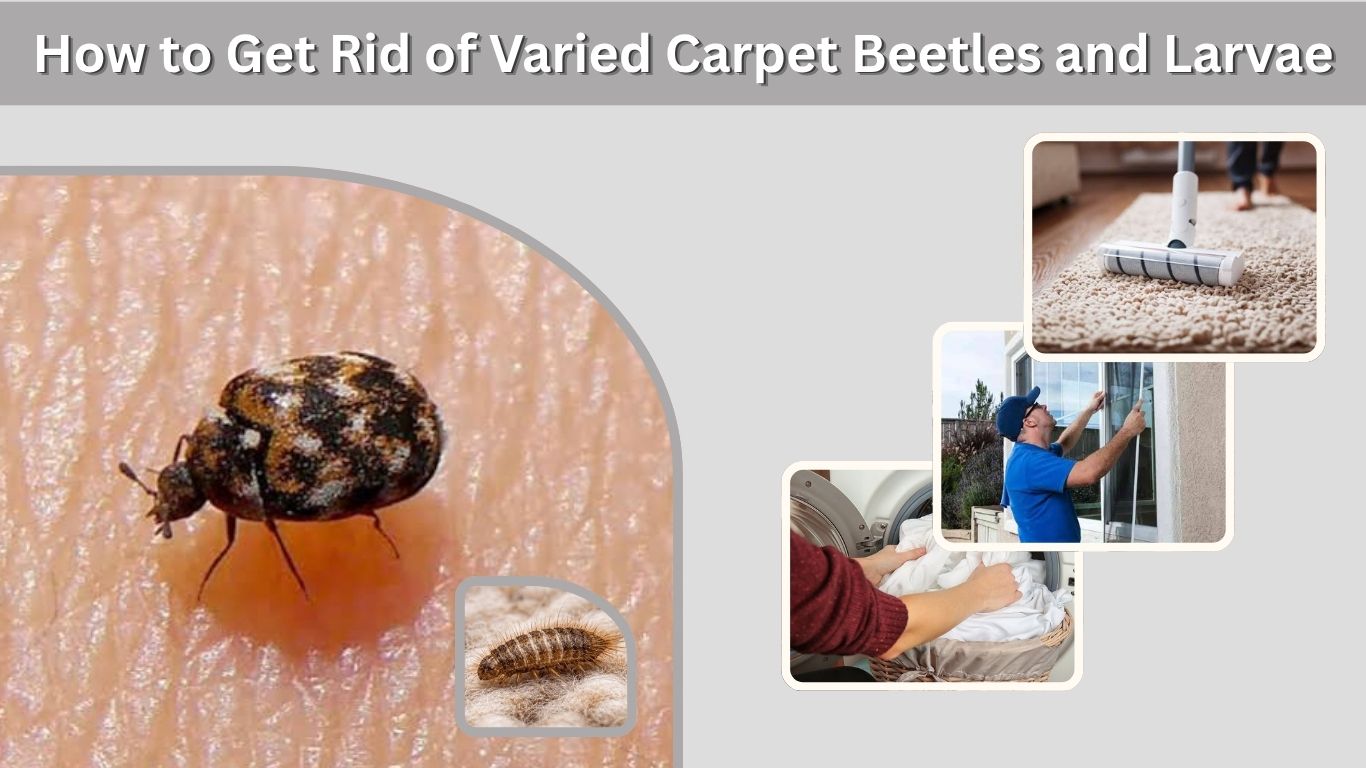
Varied carpet beetles are small household pests that can damage carpets, clothing, upholstery, and other natural materials. Although adult beetles are relatively harmless, their larvae feed on animal-based fibers and can cause significant damage when left untreated. Learning how to get rid of varied carpet beetles requires identifying their hiding places, removing infested materials, and cleaning affected areas thoroughly. Fortunately, several effective methods can eliminate these pests without relying heavily on chemicals. This guide explains how to remove varied carpet beetles, control their larvae, and prevent future infestations.
What Are Varied Carpet Beetles?
Varied carpet beetles (Anthrenus verbasci) are tiny insects belonging to the Dermestidae family. Adult beetles commonly appear near windows, while their larvae prefer dark, undisturbed locations. They can enter homes through open doors, windows, flowers, and infested household items. Understanding their appearance and behavior helps identify infestations before extensive damage occurs.
How to Identify Varied Carpet Beetles
Adult varied carpet beetles have distinctive physical characteristics that distinguish them from other household insects.
- Size: Adults typically measure 2–3 mm long.
- Color: Their bodies display irregular patterns of white, brown, yellow, and black scales.
- Shape: They have small, rounded or oval bodies.
- Movement: Adults can fly and frequently gather around windows.
- Larvae: They have brownish, hairy bodies with distinctive bristles.
Adult beetles primarily feed on pollen and nectar, while larvae consume natural fibers and animal-derived materials.
Signs of a Varied Carpet Beetle Infestation
Early detection makes carpet beetle removal much easier. Common warning signs include:
- Small, irregular holes in wool clothing or carpets.
- Brown, hairy larvae hiding beneath furniture.
- Shed larval skins in closets and drawers.
- Adult beetles crawling around windowsills.
- Damaged rugs, blankets, upholstery, or stored fabrics.
- Accumulations of larvae around carpet edges and baseboards.
Finding a single adult beetle does not necessarily indicate an established infestation. However, repeated sightings of larvae or damaged fabrics suggest active breeding.
How to Get Rid of Varied Carpet Beetles in Your House
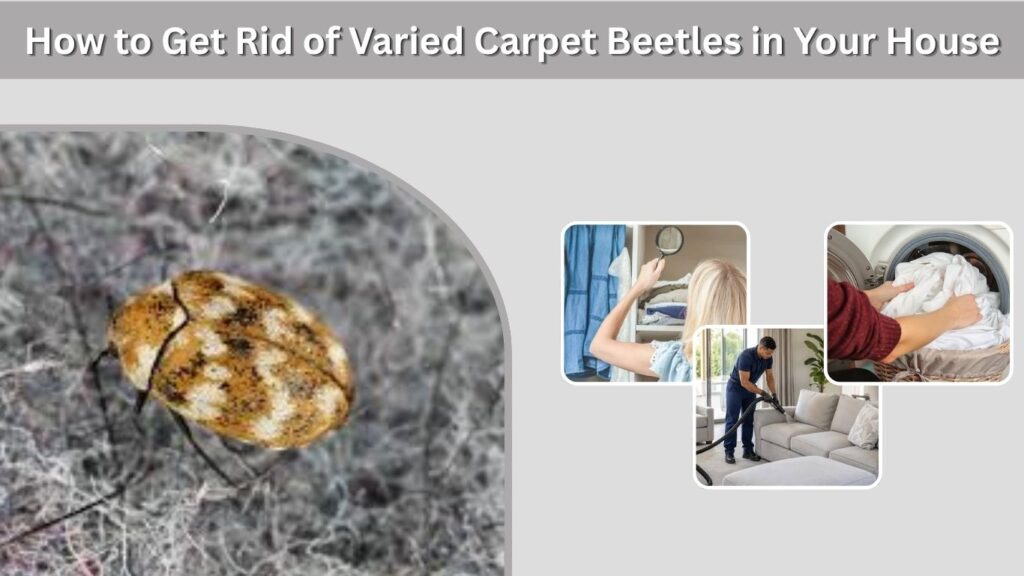
The most effective way to eliminate varied carpet beetles is to combine thorough cleaning, fabric treatment, and removal of breeding sources. Since larvae often hide in inaccessible areas, treating only visible adults rarely solves the problem. Follow these steps to target different stages of the beetle’s life cycle.
1. Locate the Source of the Infestation
Begin by identifying where carpet beetles are feeding and reproducing. Their larvae prefer dark spaces containing dust, hair, dead insects, or natural fabrics.
Inspect these locations carefully:
- Beneath beds, sofas, and heavy furniture.
- Along carpet edges and baseboards.
- Inside closets and storage boxes.
- Behind curtains and upholstered furniture.
- Around heating vents and floor cracks.
- Inside stored wool blankets and clothing.
Pay particular attention to areas that remain undisturbed for extended periods. Removing the original breeding source is essential for successful control.
2. Vacuum Carpets and Furniture Thoroughly
Vacuuming is one of the easiest and most effective methods for removing varied carpet beetles.
Use a vacuum cleaner with a crevice attachment to clean carpet edges, furniture seams, baseboards, and hidden corners.
Vacuum slowly to collect larvae, eggs, shed skins, and food debris. Move lightweight furniture to reach areas underneath.
Repeat cleaning frequently while the infestation continues. Immediately empty the vacuum container or dispose of the vacuum bag outside the house to prevent collected insects from escaping.
3. Wash Infested Clothing and Fabrics
Varied carpet beetle larvae frequently infest wool clothing, blankets, curtains, and other natural textiles.
Wash suitable items using hot water when their care labels permit. Heat helps destroy eggs, larvae, and adult beetles.
For delicate fabrics, professional dry cleaning is an effective alternative.
Clean clothing before returning it to closets or drawers. Avoid mixing treated garments with potentially infested materials.
4. Freeze Items That Cannot Be Washed
Freezing provides another useful method for eliminating varied carpet beetles from delicate belongings.
Place affected items inside sealed plastic bags and put them in a freezer. For a typical household freezer, keeping items frozen for approximately two weeks provides a conservative treatment period, especially for thicker objects.
After freezing, inspect and gently clean the items to remove dead insects and shed skins.
Freezing is particularly useful for delicate textiles and certain collectible items that cannot tolerate washing.
5. Remove Food Sources and Infested Materials
Varied carpet beetle larvae survive by consuming animal-based materials and organic debris.
Remove accumulations of pet hair, feathers, lint, dead insects, and food residues.
Discard heavily infested items when cleaning cannot restore them. Inspect old bird nests or other animal remains in appropriate areas, since these can support carpet beetle populations.
Removing these food sources helps interrupt the infestation and reduces the likelihood of reinfestation.
How to Get Rid of Varied Carpet Beetle Larvae
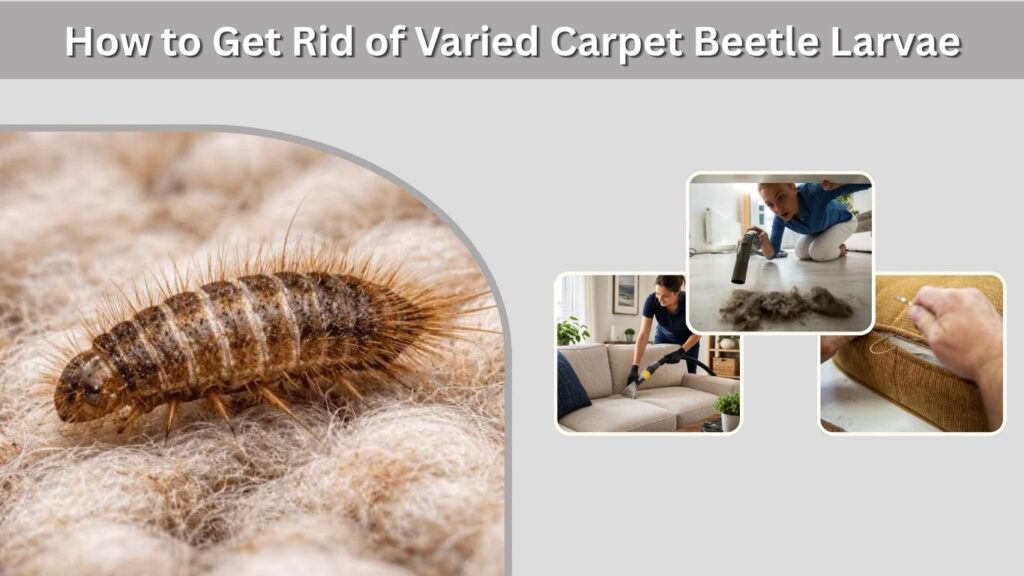
Eliminating larvae is particularly important because they cause most household damage. Unlike adults, larvae remain hidden in carpets, clothing, furniture, and storage areas for extended periods. Their development can take many months, making repeated inspections necessary even after visible adult beetles disappear.
Target Hidden Larvae
Varied carpet beetle larvae avoid light and usually hide close to their food sources.
Focus on these areas:
- Carpet backing and rug edges.
- Upholstered furniture seams.
- Closets containing natural-fiber clothing.
- Dusty corners beneath furniture.
- Storage containers holding wool or feathers.
Remove accessible larvae with vacuuming, and treat infested fabrics through appropriate laundering, dry cleaning, or freezing.
Remove Shed Skins and Eggs
Larvae shed their skins repeatedly as they grow. These empty skins often accumulate near feeding locations and can resemble living insects.
Vacuum affected areas carefully, including cracks and furniture seams. Cleaning removes accessible eggs and larvae while reducing organic debris that supports their development.
Continue inspecting treated areas because previously hidden individuals may remain.
How to Get Rid of Varied Carpet Beetles in a Car
Varied carpet beetles can occasionally infest cars, particularly when hair, food debris, or natural fibers accumulate inside. Larvae may hide beneath seats, inside upholstery seams, or around carpet edges. Effective removal usually requires detailed interior cleaning rather than simply spraying insecticides.
Clean the Entire Vehicle Interior
Follow these steps to eliminate carpet beetles from your car:
- Remove floor mats and vacuum both sides thoroughly.
- Clean beneath seats and around seat mounting points.
- Vacuum upholstery seams and carpet edges.
- Remove food crumbs, pet hair, and other organic debris.
- Wash removable fabric accessories according to their care instructions.
- Inspect the trunk and storage compartments.
- Repeat cleaning and monitor for additional larvae.
Avoid using household insecticides inside vehicles unless the product label specifically permits that application. Professional automotive detailing may help when insects remain hidden in difficult-to-reach locations.
How to Prevent Varied Carpet Beetles From Returning
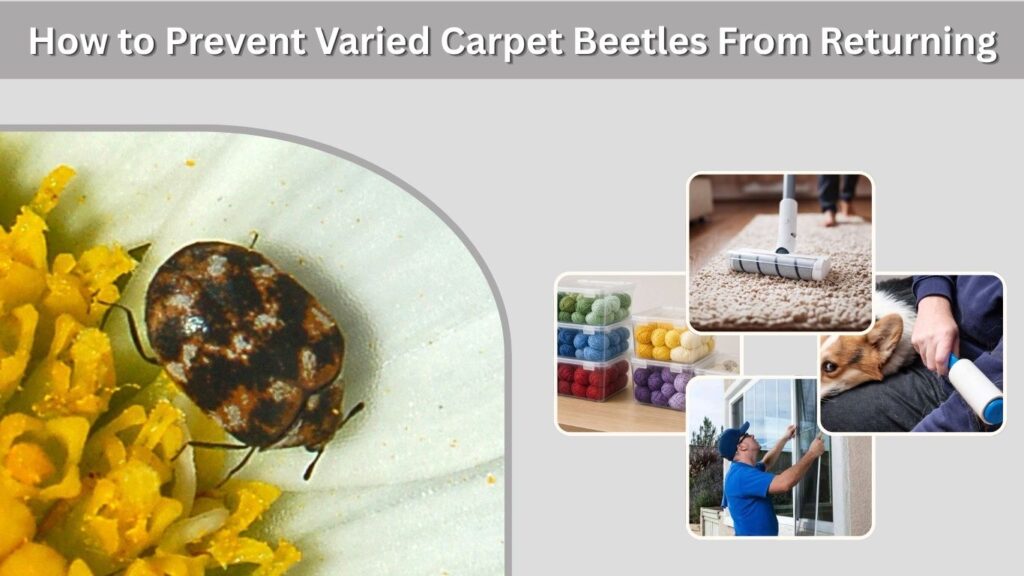
Preventing varied carpet beetles involves reducing food sources, protecting vulnerable belongings, and limiting entry points. Even after treatment, adult beetles can enter through open windows or arrive on flowers and used furniture. Consistent housekeeping and proper storage provide effective long-term protection.
Maintain a Regular Cleaning Routine
Use these preventive measures:
- Vacuum carpets, furniture, and baseboards regularly.
- Remove pet hair and dust from hidden corners.
- Wash clothing before placing it into long-term storage.
- Store wool, silk, and other vulnerable materials in airtight containers.
- Inspect secondhand furniture before bringing it indoors.
- Repair damaged window screens.
- Check fresh flowers for adult beetles.
- Inspect stored fabrics periodically for larvae or shed skins.
Clean, properly stored belongings are much less likely to develop damaging infestations.
Use Natural Prevention Methods Carefully
Some homeowners use cedarwood or essential oils to discourage carpet beetles. However, these products do not reliably eliminate an established infestation.
Cedar products may lose their effectiveness over time, and essential oils are not substitutes for proven treatment methods.
Regular vacuuming, laundering, and sealed storage remain more dependable approaches for long-term prevention.
When Should You Use Insecticides for Varied Carpet Beetles?
Insecticides are generally unnecessary for small infestations when cleaning and removing food sources successfully controls the insects. However, persistent infestations may require targeted treatment.
Choose only products specifically labeled for carpet beetles and the intended application area. Follow all safety instructions, and never spray clothing, bedding, or other personal items unless the label explicitly permits it.
Avoid relying on foggers, which often fail to reach larvae hidden inside materials.
If larvae continue appearing despite thorough cleaning, consider hiring a licensed pest control professional. A professional can inspect inaccessible locations and identify hidden breeding sources.
UC IPM+2
FAQs
1. What is the fastest way to get rid of varied carpet beetles?
The fastest approach combines thorough vacuuming, removing infested materials, and washing or dry cleaning affected fabrics. Target areas where larvae hide rather than focusing only on adult beetles. Continued inspection is necessary because some insects may remain concealed.
2. Does vinegar kill varied carpet beetles?
Vinegar may kill some beetles through direct contact, but it is not a reliable treatment for eggs or hidden larvae. It can help clean certain surfaces, but vacuuming, laundering, and removing breeding sources are more effective for controlling infestations.
3. Can varied carpet beetles live in mattresses?
Varied carpet beetle larvae can occasionally occur in mattresses, particularly where natural fibers, feathers, hair, or organic debris accumulate. They do not feed on human blood. Vacuum mattress seams and inspect nearby bedding if you suspect an infestation.
4. How long does it take to get rid of varied carpet beetles?
Small infestations may improve after several thorough cleaning sessions, while established infestations can require weeks or longer to control. The duration depends on hidden breeding sources, the number of larvae, and how consistently affected areas receive treatment.
5. Will varied carpet beetles go away on their own?
Varied carpet beetles may disappear when suitable food sources are no longer available, but established infestations rarely resolve reliably without intervention. Hidden larvae can survive for extended periods. Removing infested materials, vacuuming regularly, and protecting vulnerable fabrics provide more dependable results.
