
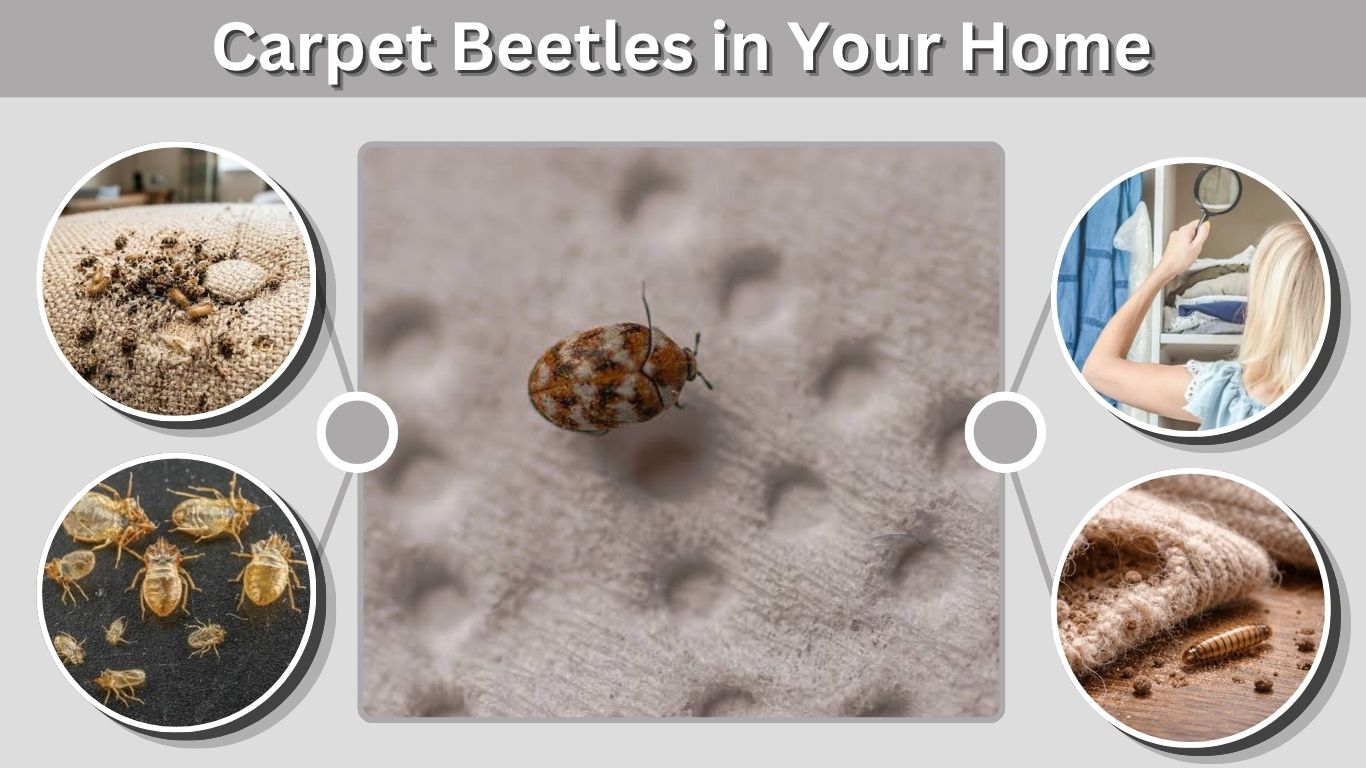
Finding carpet beetles in your home can be concerning, especially when you notice damaged clothing, tiny larvae, or adult beetles near windows. These insects can enter even well-maintained houses through open doors, fresh flowers, or infested belongings. While adults usually feed on pollen, larvae consume wool, feathers, pet hair, and other organic materials. Understanding where carpet beetles come from and what attracts them is the first step toward controlling an infestation. This guide covers identification, home treatments, insecticide options, and practical ways to prevent their return.
What Are Carpet Beetles in the Home?
Carpet beetles are small household insects belonging to the Dermestidae family. Common species include varied carpet beetles, black carpet beetles, and furniture carpet beetles. They frequently occur around carpets, furniture, closets, and windows. Although adult beetles are relatively harmless, their larvae can damage fabrics and other animal-based household materials.
How to Identify Carpet Beetles
Adult carpet beetles typically measure 2–5 millimeters long, depending on the species. They have oval or rounded bodies that may appear black, brown, or covered with multicolored scales.
Carpet beetle larvae are elongated, brownish, and covered with noticeable hairs. They usually remain hidden in dark areas, feeding on suitable materials until they mature.
How Do Carpet Beetles Get Into Your Home?
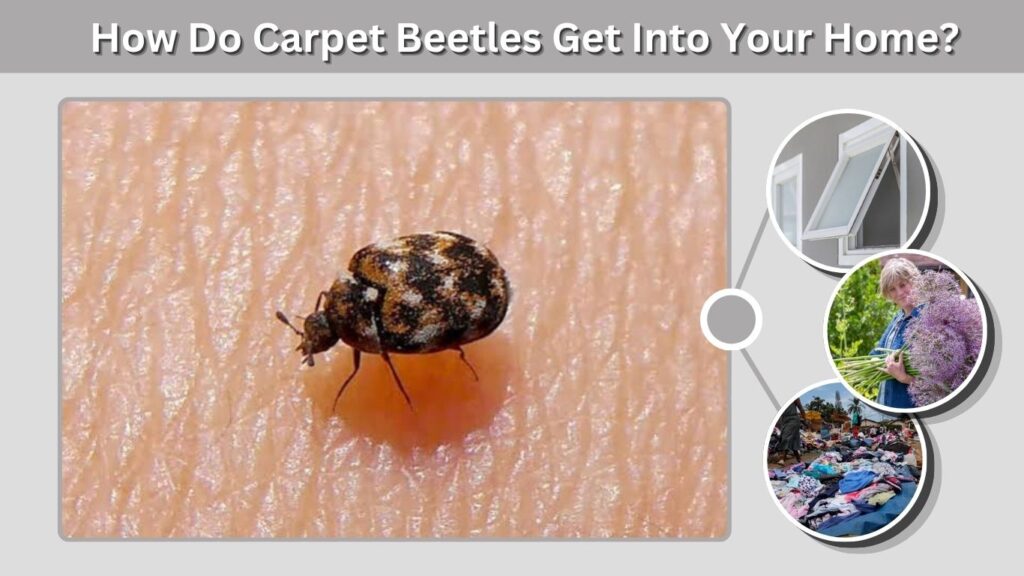
Carpet beetles enter homes through several routes, often without homeowners noticing. Adult beetles can fly, allowing them to move through open windows and doors. They may also arrive on plants, furniture, clothing, or other household items. Understanding these entry points helps reduce the chances of future infestations.
Common Ways Carpet Beetles Enter Homes
Carpet beetles commonly enter through:
- Open windows: Flying adults enter through unscreened openings.
- Doors: Beetles move indoors when exterior doors remain open.
- Fresh flowers: Adults feeding on pollen may arrive on cut flowers.
- Secondhand furniture: Infested upholstery can introduce larvae or eggs.
- Used clothing: Stored wool garments may carry carpet beetle larvae.
- Wall openings: Small gaps around vents and building structures permit entry.
- Bird nests: Nearby nests may support populations that eventually enter buildings.
Can You Bring Carpet Beetles Home?
Yes, carpet beetles can accidentally travel on clothing, bags, blankets, and furniture.
Eggs or larvae may remain concealed inside fabric folds, seams, or upholstery. Inspecting secondhand belongings and cleaning them before storage reduces the risk of introducing these insects.
What Causes Carpet Beetles in Homes?
Carpet beetle infestations develop when females find suitable locations for laying eggs. Their larvae require food sources such as wool, fur, feathers, dead insects, or accumulated organic debris. Homes containing these materials may support populations even when regular cleaning occurs.
Why Carpet Beetles Are Attracted to Your House
Carpet beetles are attracted to environments containing suitable larval food. Wool carpets, stored blankets, pet hair, and dead insects can provide nutrients for developing larvae.
Dark, undisturbed spaces also create favorable conditions. Closets, storage rooms, and areas beneath furniture allow larvae to feed without frequent disturbance.
Are Carpet Beetles Common in Homes?
Carpet beetles are relatively common household insects in many regions. Adults may occasionally enter buildings without establishing an infestation. Finding one beetle near a window does not necessarily indicate a serious problem.
Do All Homes Have Carpet Beetles?
No, not every home has carpet beetles. Although these insects are widespread, there is no reliable universal percentage showing that they occur in every household.
Carpet beetles can appear in clean homes because adults enter from outdoors. However, persistent infestations are more likely when suitable food sources remain available.
Signs of a Carpet Beetle Infestation in Your Home
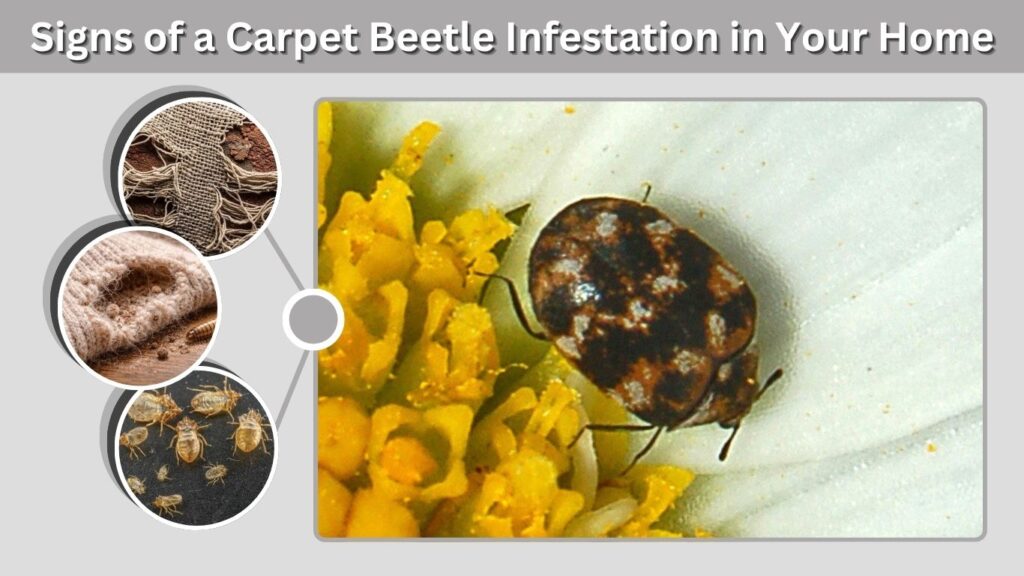
Recognizing an infestation early can prevent damage to valuable belongings. Adult beetles are often more visible than larvae, but finding larvae or feeding damage provides stronger evidence of an active household infestation.
Common Warning Signs
Watch for these signs:
- Adult beetles: Small oval insects gathering around windows.
- Hairy larvae: Brownish larvae beneath furniture or inside closets.
- Fabric holes: Irregular damage to wool sweaters and carpets.
- Shed skins: Empty larval coverings around stored belongings.
- Upholstery damage: Worn areas on natural-fiber furniture.
- Repeated sightings: Larvae appearing regularly in the same location.
Where Carpet Beetle Larvae Hide
Carpet beetle larvae prefer concealed locations near suitable food.
They commonly hide beneath sofas, along carpet edges, inside drawers, behind baseboards, and among stored clothing.
Accumulated pet hair, lint, and dead insects can support larvae in otherwise unexpected locations.
How to Get Rid of Carpet Beetles in Your Home
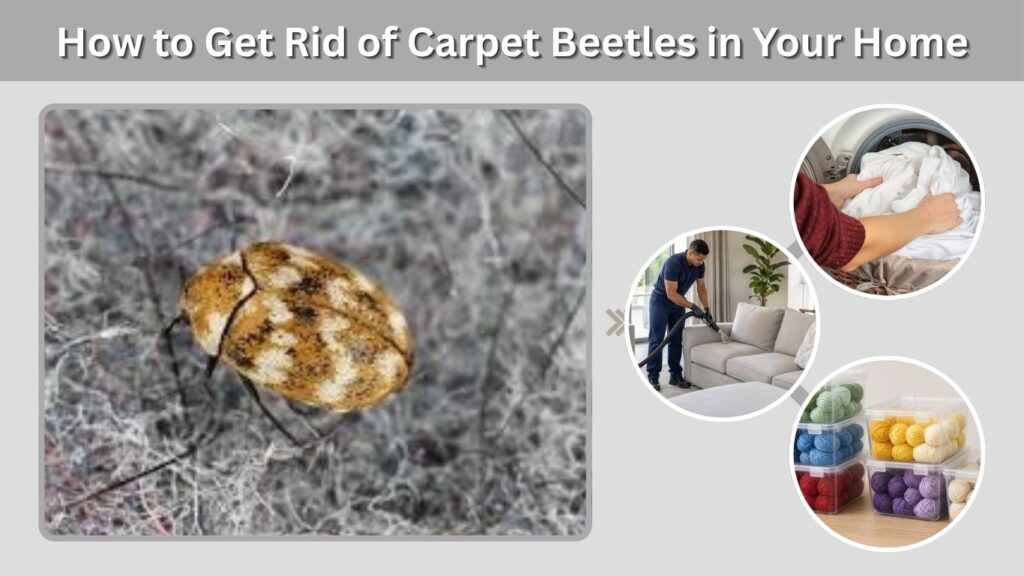
Effective carpet beetle treatment requires eliminating larvae, removing food sources, and cleaning breeding locations. Killing visible adult beetles alone rarely solves an established infestation. Combining physical removal with proper fabric treatment provides the most dependable approach.
Step-by-Step Carpet Beetle Home Treatment
Follow these steps:
- Locate the infestation: Inspect carpets, furniture, closets, and storage areas for larvae.
- Vacuum thoroughly: Clean carpets, baseboards, furniture seams, and hidden corners.
- Remove organic debris: Eliminate pet hair, lint, feathers, and dead insects.
- Wash affected clothing: Use hot water when permitted by fabric care instructions.
- Dry-clean delicate items: Professionally treat wool, silk, and other vulnerable materials.
- Discard heavily infested belongings: Remove materials that cannot be cleaned effectively.
- Monitor treated areas: Continue inspecting for larvae and fresh fabric damage.
How Long Does Home Treatment Take?
Small infestations may improve quickly after thorough cleaning and fabric treatment.
However, established infestations can require several weeks or longer because hidden eggs and larvae may remain.
Consistent monitoring helps determine whether additional treatment is necessary.
Home Remedies for Carpet Beetles
Several nonchemical treatments can help control carpet beetles inside houses. Their effectiveness depends on removing infested materials and interrupting the insects’ development. Household substances such as vinegar and baking soda are sometimes recommended, but they are less dependable than proven cleaning methods.
Natural Carpet Beetle Home Treatments
Regular vacuuming, hot-water laundering, and professional dry cleaning can remove or kill carpet beetles at different life stages.
Freezing suitable infested belongings at approximately -18°C for 10–14 days can also be effective.
These methods target larvae and eggs without requiring widespread insecticide application.
Does Vinegar or Baking Soda Kill Carpet Beetles?
Vinegar may help clean certain household surfaces, but it does not reliably eliminate hidden carpet beetle eggs or larvae.
Similarly, baking soda has not been demonstrated to provide dependable carpet beetle control.
Thorough cleaning and removing food sources remain more effective approaches.
Does Ortho Home Defense Kill Carpet Beetles?
Some Ortho Home Defense insecticide formulations are labeled for carpet beetles. However, effectiveness and approved application areas depend on the specific product. Checking the current product label is essential before using any household insecticide.
How to Use Ortho Home Defense for Carpet Beetles
When a formulation specifically lists carpet beetles, it may be appropriate for targeted treatment in permitted locations.
Follow the label’s application instructions, ventilation requirements, and precautions for children and pets.
Never apply household perimeter sprays directly to clothing, bedding, or other surfaces unless the label explicitly allows it.
Carpet Beetle Sprays and Traps From Home Depot
Retailers such as Home Depot may carry insecticide sprays and monitoring traps suitable for household pests.
Choose products that specifically list carpet beetles on their labels rather than relying on general insect claims.
Sticky traps can monitor adult activity, but they cannot reliably eliminate larvae hidden inside clothing or furniture.
When Should You Call Professional Pest Control?
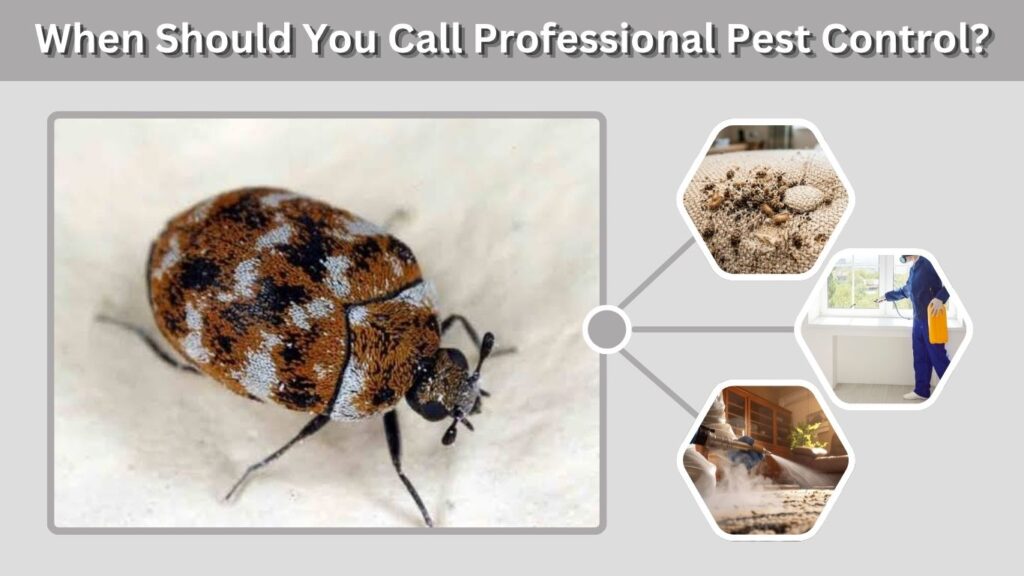
Professional pest control may be necessary when carpet beetles repeatedly appear despite thorough cleaning. Persistent infestations sometimes originate from inaccessible spaces containing bird nests, dead insects, or other organic materials.
How Professionals Treat Carpet Beetles
Licensed pest control technicians inspect likely breeding locations and identify the materials supporting an infestation.
Treatment may involve removing hidden sources, applying appropriately labeled insecticides, and recommending follow-up inspections.
Professional treatment works best when combined with household sanitation and proper storage.
How to Prevent Carpet Beetles From Entering Your Home
Preventing carpet beetle infestations involves limiting entry points and eliminating attractive breeding conditions. Regular cleaning, protective storage, and inspection of incoming belongings significantly reduce the likelihood of recurring problems.
Carpet Beetle Prevention Tips
- Repair damaged window screens and door seals.
- Inspect fresh flowers before bringing them indoors.
- Vacuum carpets, furniture, and closets regularly.
- Remove accumulated pet hair and dead insects.
- Store clean wool and silk clothing in airtight containers.
- Inspect secondhand furniture and garments.
- Keep storage areas clean and organized.
- Monitor previous infestation locations for larvae.
FAQs
1. Can Carpet Beetles Damage Your Home?
Carpet beetle larvae can damage carpets, clothing, upholstery, and other belongings containing animal-based fibers. However, they do not normally damage structural wood or concrete. Most household damage involves natural textiles, stored materials, and occasionally animal-derived decorative items.
2. Do Carpet Beetles Live in Clean Homes?
Yes, carpet beetles can appear in clean homes because adults may enter through windows, doors, or fresh flowers. Cleanliness reduces food sources for larvae but does not completely prevent entry. Regular inspection and proper storage help prevent infestations.
3. Are Carpet Beetles Harmful to Humans or Pets?
Carpet beetles do not bite humans or feed on blood. However, larval hairs may cause skin irritation in sensitive individuals. They are mainly household fabric pests rather than parasites, and most concerns involve damaged belongings and occasional allergic reactions.
4. Can You Completely Get Rid of Carpet Beetles at Home?
Yes, established carpet beetle infestations can often be eliminated through thorough cleaning, removing breeding sources, and treating infested fabrics. However, new adults may enter from outdoors. Continuing preventive measures reduces the risk of another infestation.
5. Why Do Carpet Beetles Keep Coming Back?
Carpet beetles may return when hidden larvae, eggs, or breeding sources remain untreated. Adults can also enter through windows and doors. Inspecting concealed spaces, removing organic debris, and protecting vulnerable fabrics helps reduce recurring household infestations.
