
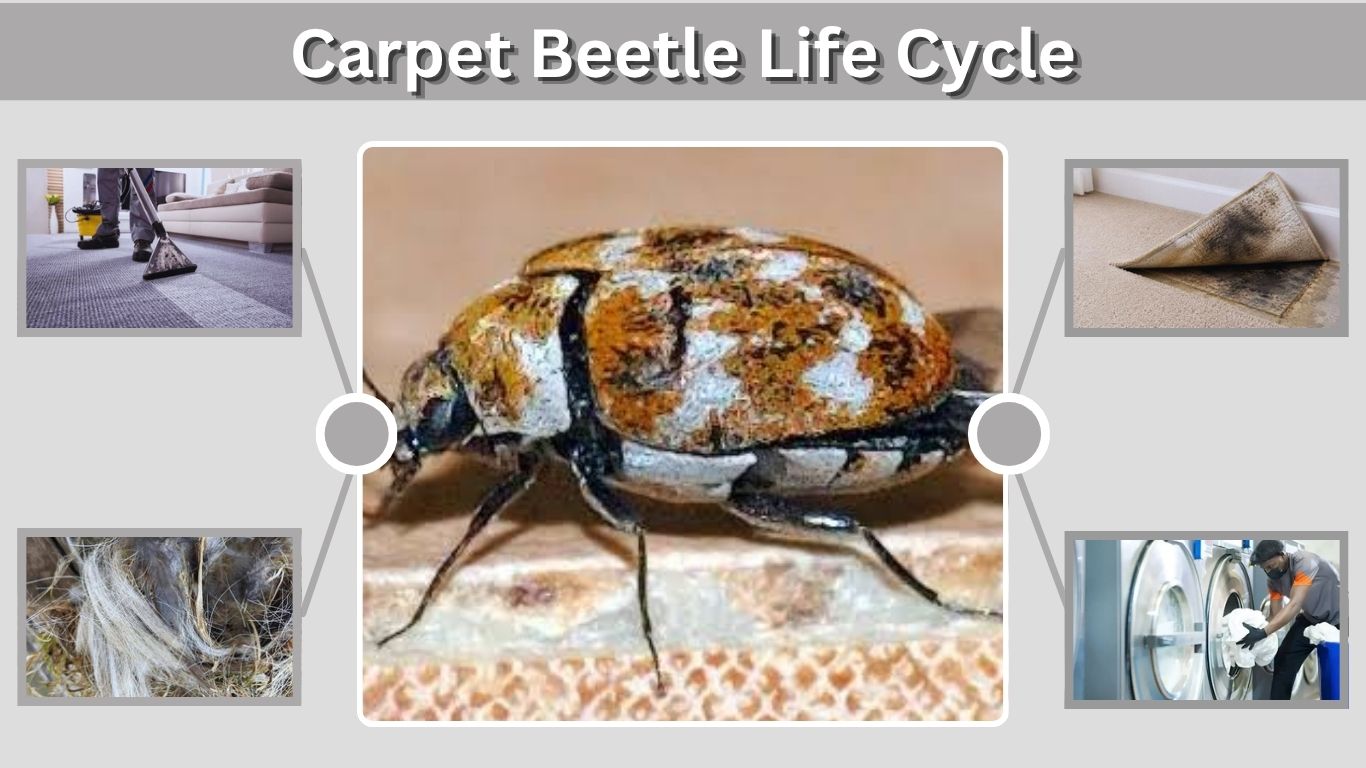
The carpet beetle life cycle includes four developmental stages: egg, larva, pupa, and adult. These small household insects can damage carpets, clothing, furniture, and other natural materials, particularly during their larval stage. Depending on the species and environmental conditions, their complete life cycle may take several months to more than two years. Understanding how carpet beetles develop helps homeowners recognize infestations, identify different stages, and prevent further damage. This guide explains the carpet beetle life cycle, its duration, common species, seasonal behavior, and effective prevention methods.
What Are the Four Stages of the Carpet Beetle Life Cycle?
Carpet beetles undergo complete metamorphosis, developing through four distinct stages before becoming mature adults. Each stage has different physical characteristics, feeding habits, and developmental requirements. Although adult beetles are frequently noticed around windows, their larvae cause most household damage. Understanding these developmental stages makes it easier to identify infestations and interrupt their reproductive cycle.
1. Egg Stage
The life cycle of a carpet beetle begins when a female lays eggs near suitable food sources. Depending on the species, females may lay approximately 30–100 eggs.
Carpet beetle eggs are tiny, oval-shaped, and usually white or cream-colored. Females commonly deposit them in carpet fibers, furniture, closets, and protected cracks.
Eggs generally hatch within 6–20 days, depending on the species and environmental conditions.
2. Larval Stage
The carpet beetle larval stage is the longest and most destructive developmental period.
Larvae have elongated or oval bodies covered with tiny hairs or bristles. Their coloration varies from golden brown to dark brown.
During this stage, larvae feed on wool, fur, feathers, animal hair, and other animal-derived materials.
Larval development can continue for several months or even years. As larvae grow, they repeatedly shed their outer skins through a process called molting.
3. Pupal Stage
After completing larval development, carpet beetles enter the pupal stage. During this period, the insect transforms into its adult form.
Pupation usually occurs in protected locations, sometimes inside the final larval skin. The pupal stage typically lasts around 6–24 days, depending on the species and temperature.
Carpet beetles do not actively feed during pupation.
4. Adult Stage
The final stage begins when a fully developed adult carpet beetle emerges.
Adult beetles are generally small, oval-shaped insects with black, brown, or patterned bodies.
Unlike larvae, many adult carpet beetles feed on flower pollen and nectar. Adults generally survive for several weeks, although longevity varies among species.
After mating, females deposit eggs in suitable locations, beginning another generation.
How Long Does the Carpet Beetle Life Cycle Take?
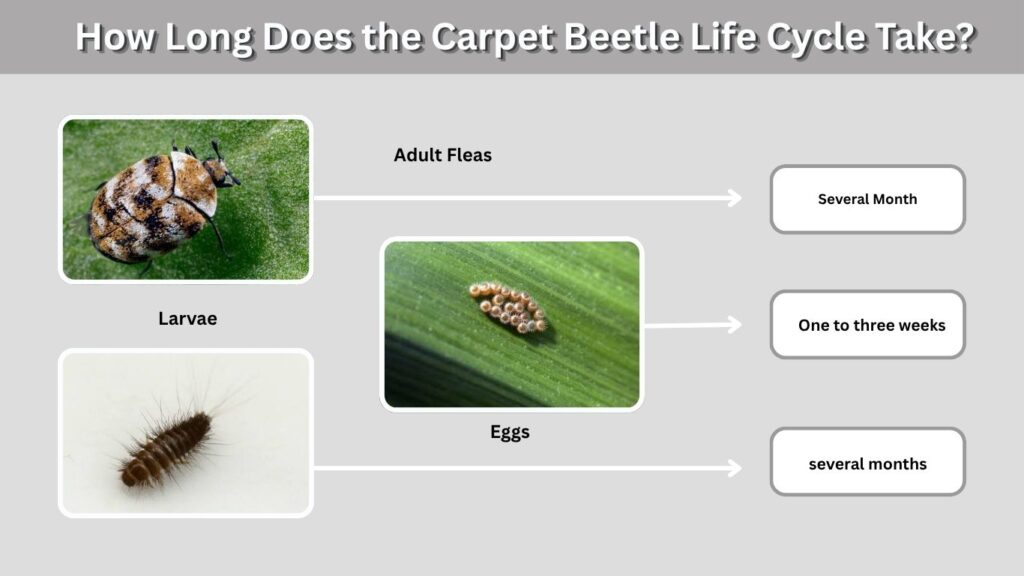
The complete carpet beetle life cycle may last several months to more than two years. Development time depends on the species, temperature, humidity, and food availability. The larval stage accounts for most of this period because larvae undergo multiple molts before pupation. Some species develop relatively quickly, while others remain immature for extended periods.
Carpet Beetle Life Cycle Timeline
Developmental durations vary considerably among species. Eggs commonly hatch within one to three weeks, while pupation often lasts approximately one to three weeks.
Larvae may require several months or longer to mature. Consequently, infestations can continue even when adult beetles are not visible.
Factors Affecting Development
Temperature strongly influences carpet beetle growth. Suitable warmth generally encourages faster development, while cooler environments can slow biological activity.
Food quality also affects larval development. Poor nutrition or unfavorable conditions may extend the time required to reach adulthood.
Carpet Beetle Life Cycle by Species
Different carpet beetle species follow the same four developmental stages, but their appearance and growth rates vary. Identifying the species helps homeowners understand potential infestation patterns and developmental timelines. Several common species inhabit carpets, upholstered furniture, stored clothing, and household storage areas.
Varied Carpet Beetle Life Cycle
The varied carpet beetle (Anthrenus verbasci) has a rounded body with irregular white, yellowish, and brown scales.
Its eggs generally hatch within 10–20 days. Larval development commonly lasts approximately 220–630 days, depending on environmental conditions.
The larvae are frequently called woolly bears because of their hairy appearance.
Black Carpet Beetle Life Cycle
The black carpet beetle (Attagenus unicolor) has a dark, elongated oval body.
Eggs typically hatch within 6–16 days, while larval development may take approximately 166–330 days.
Black carpet beetle larvae are brown and elongated, often featuring a distinctive tuft of hairs at the rear.
Furniture Carpet Beetle Life Cycle
The furniture carpet beetle (Anthrenus flavipes) commonly develops in upholstered furniture, carpets, and other natural materials.
Its eggs generally hatch within 9–16 days. Under favorable conditions, larvae may complete development in approximately 70–94 days.
The pupal stage commonly lasts another 14–17 days before adult emergence.
Brown Carpet Beetle Life Cycle
The brown carpet beetle (Attagenus smirnovi) is a warmth-loving species frequently associated with heated buildings.
Its larval development may take several months, although cooler temperatures and unsuitable food can extend the period.
This species can maintain populations indoors throughout the year when environmental conditions remain favorable.
Carpet Beetle Life Cycle Inside a House
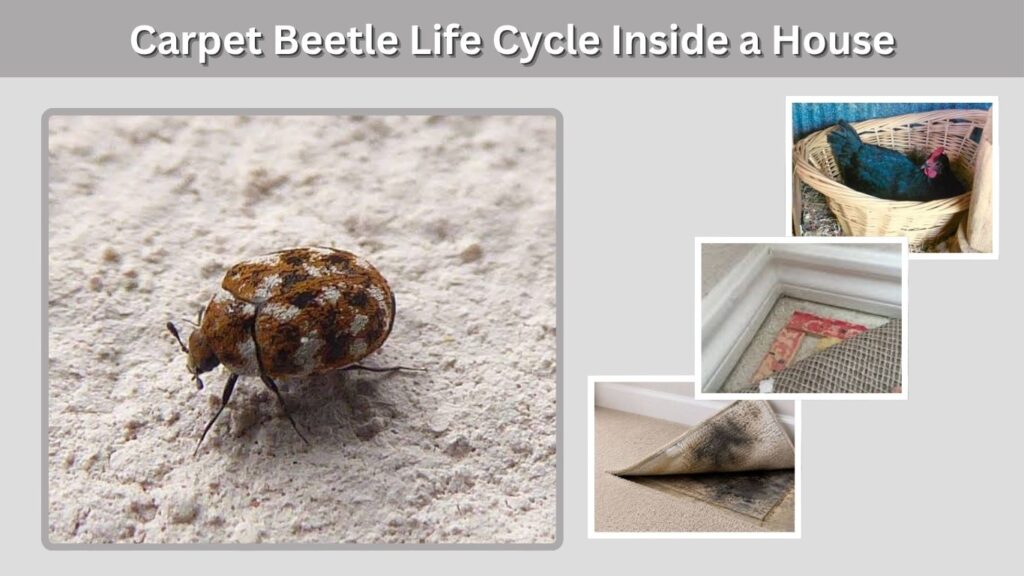
Carpet beetles can complete their entire life cycle indoors when suitable food and protected hiding places are available. Adult females deposit eggs where newly hatched larvae can feed with minimal disturbance. Because larvae prefer dark locations, infestations frequently remain unnoticed until visible fabric damage appears.
Common development locations include:
- Carpet edges: Larvae hide beneath rugs and along baseboards.
- Closets: Stored wool clothing and blankets provide suitable food.
- Upholstered furniture: Larvae develop beneath cushions and inside furniture containing animal-based fibers.
- Attics: Bird nests, dead insects, and animal debris support development.
- Storage boxes: Natural fabrics, feathers, and fur can attract egg-laying females.
How to Identify Different Carpet Beetle Life Cycle Stages
Identifying carpet beetle developmental stages helps determine whether an infestation is active. Eggs are difficult to notice because of their small size, while larvae frequently remain hidden. Adults are easier to detect, particularly near windows and flowering plants.
Common identification signs include:
- Eggs: Tiny white or cream-colored oval structures hidden near food sources.
- Larvae: Small, brown, hairy insects crawling through fabrics or carpets.
- Shed skins: Empty brownish larval casings left after molting.
- Pupae: Developing insects concealed in protected spaces.
- Adults: Small oval beetles appearing on windowsills or indoor surfaces.
Finding live larvae alongside fresh fabric damage is a stronger indication of an active infestation than seeing an isolated adult.
Seasonal Carpet Beetle Life Cycle
The seasonal carpet beetle life cycle varies according to geographical location, species, and indoor temperature. In temperate regions, adult activity commonly increases during warmer months. However, larvae may remain present throughout the year, particularly in heated homes. Seasonal changes influence emergence, reproduction, and developmental speed.
Spring and Summer Activity
Adult carpet beetles frequently emerge during spring and summer. Many visit flowers to feed on pollen and nectar.
Females may enter buildings through open windows or doors and deposit eggs near suitable larval food sources.
Warm conditions can encourage egg hatching and larval development.
Autumn and Winter Development
During autumn and winter, cooler conditions generally slow carpet beetle development.
Some species undergo diapause, a resting period that helps them survive unfavorable conditions.
However, larvae inside heated buildings may continue developing and feeding throughout winter.
Do Carpet Beetles Bite During Their Life Cycle?
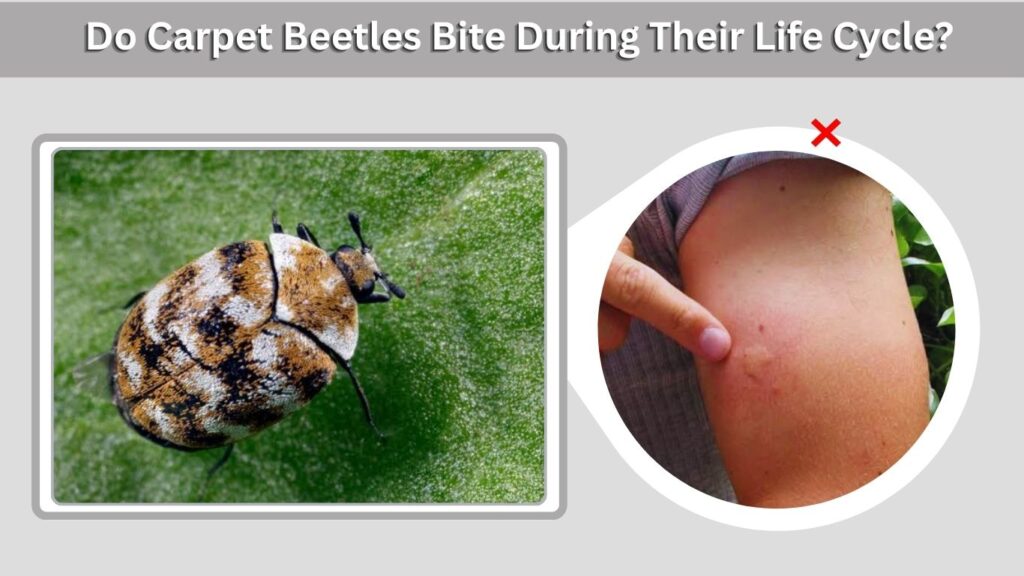
Carpet beetles do not normally bite humans during any developmental stage. However, their larvae possess tiny hairs that can trigger allergic reactions in susceptible individuals.
This reaction, commonly called carpet beetle dermatitis, may produce itching, redness, and small raised bumps resembling insect bites.
The irritation results from contact with larval hairs rather than actual biting.
Removing larvae, shed skins, and contaminated dust can help reduce exposure. Persistent skin irritation should be evaluated by a healthcare professional.
How to Break the Carpet Beetle Life Cycle
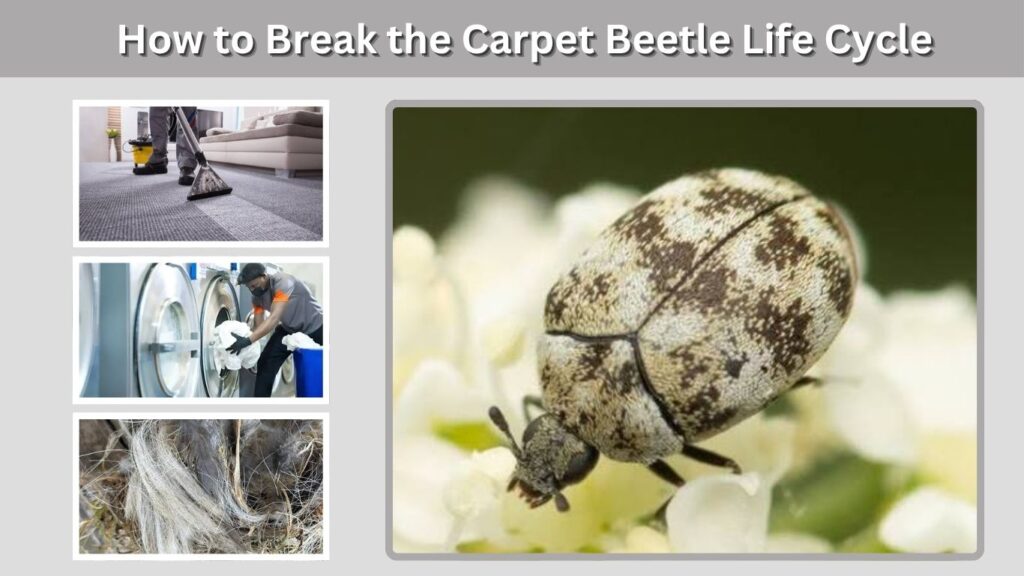
Breaking the carpet beetle life cycle requires removing eggs, larvae, and suitable feeding materials. Eliminating visible adults alone will not resolve an established infestation because hidden larvae may continue developing. Consistent cleaning, careful fabric storage, and regular inspections help interrupt reproduction and reduce future infestations.
Remove Existing Infestations
- Vacuum carpets thoroughly: Clean carpet edges, baseboards, closets, and furniture undersides regularly.
- Wash affected fabrics: Use appropriate hot-water laundering or professional dry cleaning for delicate materials.
- Remove food sources: Eliminate accumulated pet hair, lint, dead insects, and abandoned animal nesting materials.
- Inspect hidden locations: Check furniture, storage containers, and undisturbed corners for larvae and shed skins.
Prevent Future Reproduction
- Store clothing securely: Keep clean wool garments and other vulnerable materials inside sealed containers.
- Inspect household textiles: Examine stored fabrics periodically for new damage or larval activity.
- Seal potential entry points: Repair damaged window screens and close gaps around openings.
- Seek professional treatment when necessary: Persistent infestations may require targeted pest management.
FAQs
1. How long is the complete carpet beetle life cycle?
The complete carpet beetle life cycle can take several months to more than two years, depending on species and environmental conditions. The larval stage typically accounts for most development time, while eggs and pupae usually develop much faster.
2. What is the longest stage of the carpet beetle life cycle?
The larval stage is generally the longest developmental stage. Carpet beetle larvae may feed and grow for several months or longer before pupation. During this period, they repeatedly molt and can cause substantial damage to natural fabrics.
3. Can carpet beetles complete their life cycle indoors?
Yes, carpet beetles can complete their entire life cycle indoors when suitable food sources and protected hiding places are available. Heated homes may support continuous development, allowing different developmental stages to remain present during multiple seasons.
4. What is the woolly bear carpet beetle life cycle?
The woolly bear carpet beetle follows four developmental stages: egg, larva, pupa, and adult. Woolly bear commonly describes the hairy larva of the varied carpet beetle, which may remain in its destructive feeding stage for many months.
5. How can you stop carpet beetles from reproducing?
Stopping reproduction requires eliminating larvae and suitable food sources. Regular vacuuming, cleaning infested fabrics, inspecting furniture, and storing vulnerable textiles securely can interrupt development. Removing hidden infestations prevents surviving beetles from establishing another generation inside the home.
