
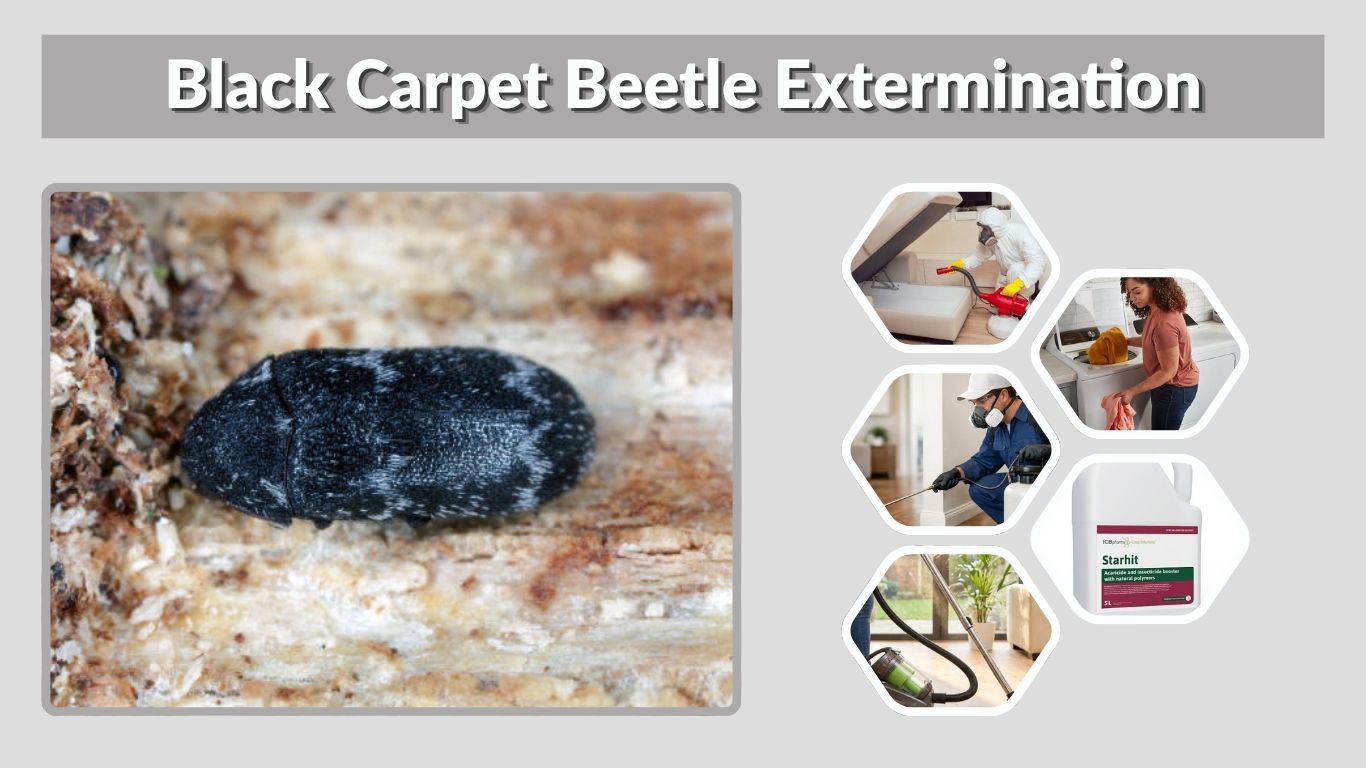
Black carpet beetle extermination is essential when these small household pests begin damaging carpets, clothing, upholstery, and stored fabrics. Although adult beetles are relatively harmless, their larvae feed on natural fibers and organic materials, sometimes causing extensive damage before anyone notices them. Fortunately, both DIY treatments and professional extermination services can help control infestations. Understanding how to exterminate carpet beetles, what professional treatments involve, and how much extermination costs can help you choose the right approach. This guide explains effective removal methods, exterminator services, preparation, and long-term prevention.
What Is Black Carpet Beetle Extermination?
Black carpet beetle extermination involves locating, removing, and controlling beetles at different stages of their life cycle. The black carpet beetle (Attagenus unicolor) commonly infests carpets, stored fabrics, furniture, and areas containing animal-based materials. Effective treatment focuses primarily on larvae because they cause most household damage.
How to Identify Black Carpet Beetles
Adult black carpet beetles are typically dark brown to black, oval-shaped, and approximately 3–5 millimeters long. Their larvae are elongated, brownish, and covered with short hairs, often with a tuft of longer hairs near the rear.
Adults frequently appear near windows, while larvae prefer dark locations such as closets, carpet edges, and spaces underneath furniture. Finding shed larval skins or damaged woolen fabrics may indicate an infestation requiring attention.
Why Black Carpet Beetles Need Treatment
Black carpet beetle larvae feed on wool, fur, feathers, animal hair, and other organic materials. They can remain hidden for extended periods while damaging valuable household belongings.
A single adult beetle does not necessarily require extermination. However, repeated larval sightings, increasing fabric damage, and multiple affected rooms suggest that more thorough control measures may be necessary.
How to Exterminate Black Carpet Beetles at Home
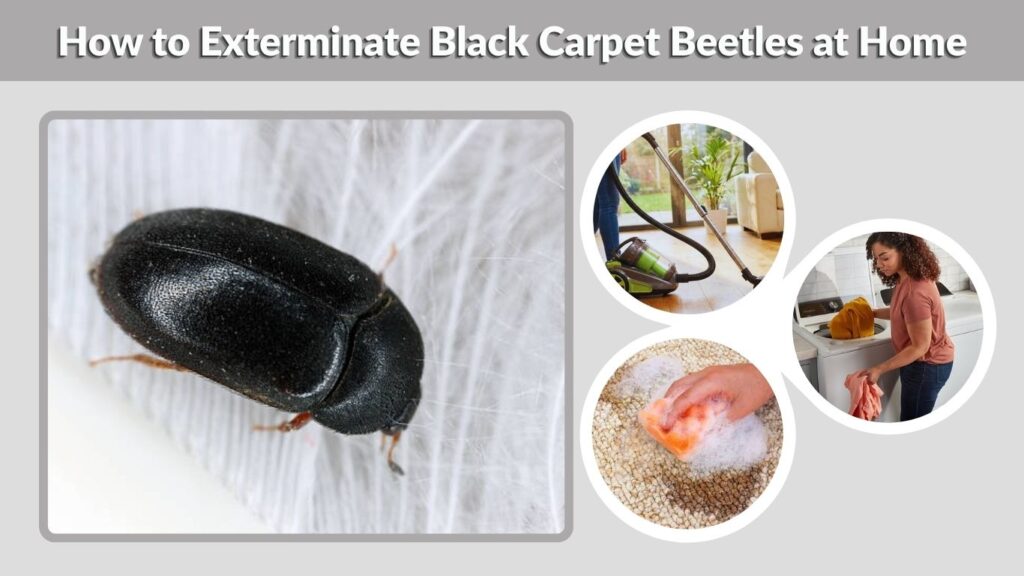
DIY carpet beetle extermination can be effective when infestations are limited and the breeding source is accessible. The most important steps involve thorough cleaning, treating infested fabrics, and removing food sources. Simply killing visible adult beetles rarely solves the problem because developing larvae may remain hidden.
Step-by-Step Carpet Beetle Extermination
Follow these steps to reduce carpet beetle populations:
- Inspect affected areas: Examine carpets, closets, bedding, furniture, and stored natural-fiber materials for larvae.
- Vacuum thoroughly: Clean carpet edges, baseboards, upholstery, and spaces beneath heavy furniture.
- Wash infested fabrics: Use hot-water laundering when permitted by fabric care instructions.
- Dry-clean delicate items: Professionally clean affected wool, silk, fur, or other sensitive materials.
- Remove infested debris: Dispose of accumulated pet hair, lint, dead insects, and other organic materials.
- Discard severely damaged items: Remove materials that cannot be cleaned or treated effectively.
- Monitor regularly: Inspect previously affected locations for additional larvae or fresh fabric damage.
Dispose of vacuum contents promptly to prevent collected insects from remaining inside the equipment.
How to Exterminate Carpet Beetle Larvae
Carpet beetle larvae require particular attention because they are responsible for feeding damage. They often hide inside undisturbed clothing, beneath rugs, and around furniture seams.
Vacuuming, laundering, and professional dry cleaning can eliminate larvae from accessible materials. Steam cleaning may also help when the treated surface tolerates heat and moisture.
When larvae continue appearing despite careful cleaning, a licensed professional may recommend targeted insecticide treatment in appropriate locations.
Professional Carpet Beetle Extermination Process
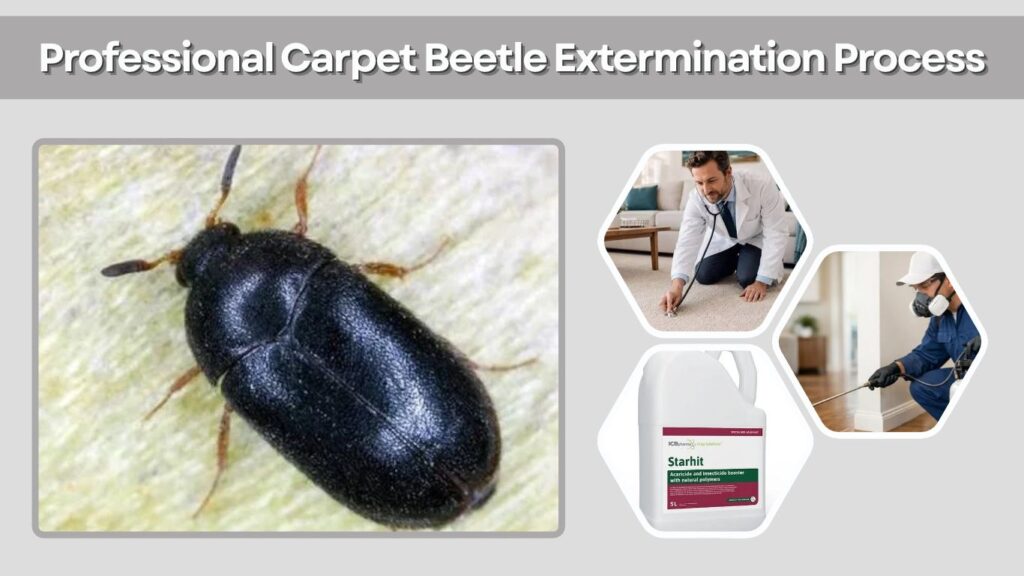
Professional carpet beetle extermination services typically combine inspection, sanitation recommendations, and targeted pest control. Exterminators examine areas where larvae develop rather than treating only visible adults. The exact process depends on the infestation’s severity, property layout, and whether hidden food sources can be located.
Initial Inspection and Identification
An exterminator first identifies the insect and determines whether an active infestation exists. This may involve examining carpets, closets, upholstery, baseboards, and other concealed locations.
The technician also looks for larval skins, damaged materials, and possible breeding sources. An accurate inspection helps avoid unnecessary chemical treatment and directs control efforts toward affected areas.
Targeted Insecticide Treatment
If cleaning and removal are insufficient, professionals may apply an appropriately labeled insecticide to specific cracks, crevices, carpet edges, or other authorized treatment locations.
Treating an entire property is not always necessary. Exterminators should follow product labels and explain precautions for residents and pets.
Insecticides should not be applied directly to bedding, clothing, or other personal items unless specifically authorized by the product label.
Follow-Up Inspection and Monitoring
Some infestations require follow-up inspections to determine whether larvae remain active. The exterminator may recommend additional cleaning, treatment, or removal of overlooked food sources.
Monitoring is particularly important when beetles originate from inaccessible wall cavities, attics, or other hidden locations.
Do You Need an Exterminator for Carpet Beetles?
Not every carpet beetle discovery requires professional extermination. Minor problems can often be controlled through vacuuming, cleaning, and proper storage. However, recurring infestations or extensive damage may justify hiring an experienced exterminator, especially when the breeding source remains difficult to locate.
Signs You Should Call an Exterminator
Consider professional assistance when you notice:
- Numerous live larvae appear in several rooms.
- Repeated carpet beetle activity after thorough cleaning.
- Significant damage to wool carpets, furniture, or stored clothing.
- Larvae emerging from inaccessible wall voids or attic spaces.
- Recurring infestations despite removing affected materials.
- Difficulty identifying where carpet beetles are breeding.
A professional inspection can help determine whether chemical treatment is necessary.
Can an Exterminator Completely Get Rid of Carpet Beetles?
Yes, professional treatment can successfully eliminate an established carpet beetle infestation, especially when the breeding source is located and removed.
However, extermination does not guarantee that new beetles will never enter the building. Continued cleaning and proper storage remain important because adult carpet beetles can arrive from outdoors.
How Much Does Carpet Beetle Extermination Cost?
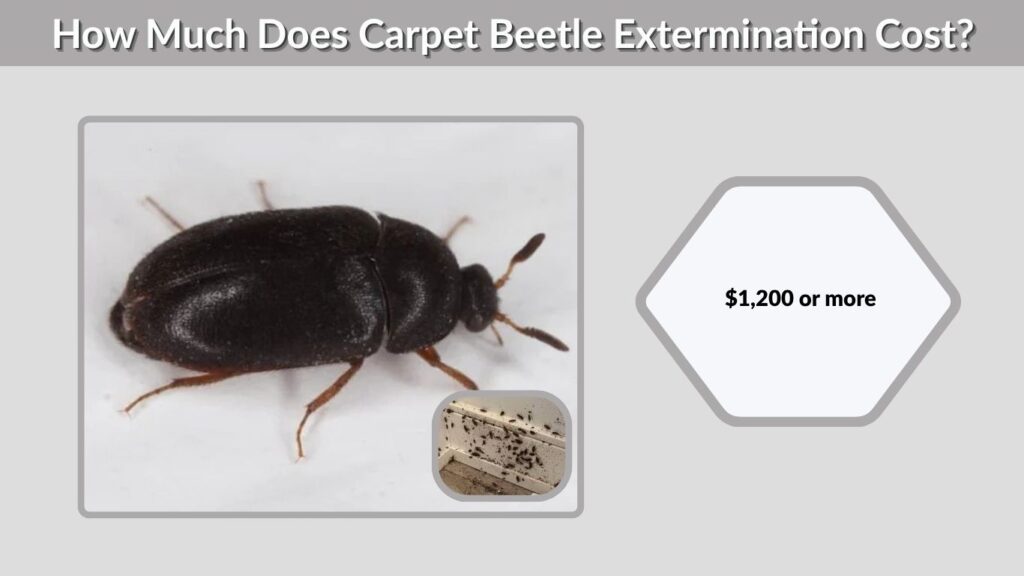
Carpet beetle extermination costs vary depending on property size, infestation severity, treatment methods, and location. In the United States, published 2026 pricing guides commonly estimate several hundred dollars for professional treatment. Severe infestations requiring multiple visits or extensive work may cost significantly more.
Average Carpet Beetle Extermination Cost
The following amounts are approximate U.S. cost estimates, not guaranteed service quotes.
| Treatment situation | Estimated cost (USD) |
| Small or localized infestation | 150–300 |
| Typical professional treatment | 200–600 |
| Larger or more extensive infestation | 500–1,200 |
| Severe, complex infestation | $1,200 or more |
Additional expenses may include follow-up treatments, fabric cleaning, or replacing damaged belongings.
Carpet Beetle Extermination Cost in Canada
Canadian extermination prices vary by province, city, and service provider. In Montreal, one local pest control provider has advertised carpet beetle treatment at approximately CAD 399–499 per visit, depending on the published service listing.
This is an example of local pricing rather than a Canadian national average. Requesting written estimates from multiple licensed companies is the best way to understand actual costs.
Factors Affecting Extermination Prices
Several factors influence the final price:
- Infestation severity: Extensive infestations may require additional treatments.
- Property size: Larger homes generally take longer to inspect and treat.
- Treatment type: Cleaning, targeted applications, and specialized services have different costs.
- Accessibility: Hidden infestations may require more investigative work.
- Follow-up visits: Some companies include them, while others charge separately.
Always confirm what is included before booking extermination services.
How to Prepare for Carpet Beetle Extermination
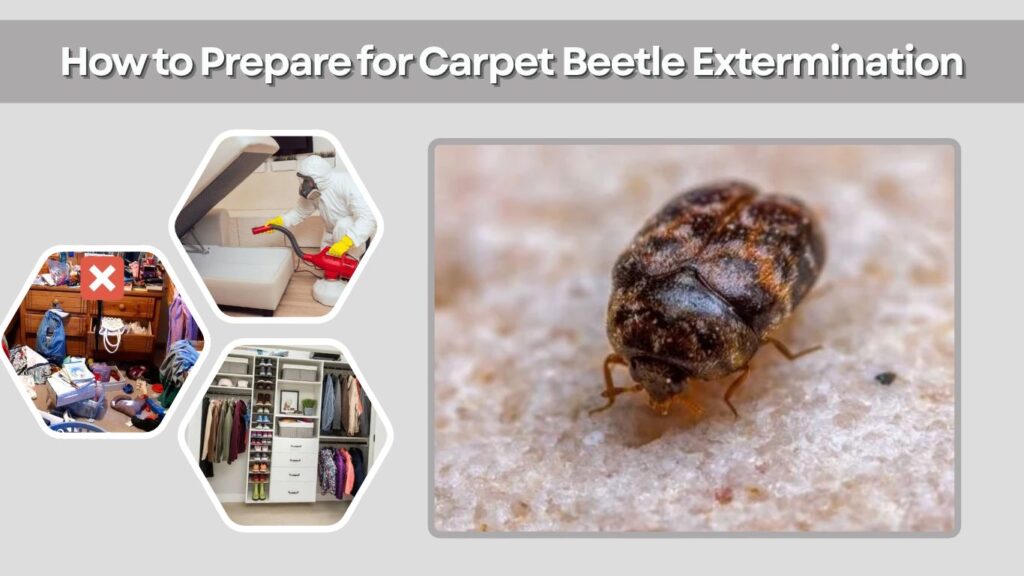
Proper preparation makes professional carpet beetle treatment more effective. An exterminator may provide specific instructions based on the products and areas being treated. Cleaning and organizing accessible spaces often help technicians identify hidden larvae and reach affected locations safely.
Carpet Beetle Extermination Preparation Checklist
Before the appointment:
- Identify and photograph areas with recurring beetle activity.
- Follow the exterminator’s instructions about vacuuming and cleaning.
- Remove unnecessary clutter from affected rooms.
- Prepare infested clothing and bedding for appropriate laundering.
- Make accessible closets and affected furniture areas available for inspection.
- Inform the technician about children, pets, aquariums, and relevant household concerns.
- Ask whether residents or pets must leave during treatment.
Do not apply additional pesticides immediately before the visit unless the exterminator specifically recommends doing so.
What to Do After Extermination
Follow the technician’s reentry, ventilation, and cleaning instructions carefully. Some treated surfaces should not be washed immediately because doing so could interfere with the intended treatment.
Continue inspecting closets, carpets, and storage areas for larvae. Remove any remaining food sources and arrange follow-up service if new activity persists.
How Long Does Carpet Beetle Extermination Take?
Carpet beetle extermination time depends on infestation severity and the treatment process. A professional visit may take a few hours, but completely controlling an established population can take longer. Larvae concealed in untreated materials or inaccessible spaces may continue emerging until their sources are eliminated.
Why Carpet Beetles May Return After Treatment
Carpet beetles sometimes reappear because a breeding source was overlooked, an infested item was not treated, or adults entered the property again.
Repeated spraying without removing food sources usually provides poor long-term control. Follow-up inspection and thorough cleaning are more useful than assuming every new beetle means the previous treatment failed.
How to Prevent Carpet Beetles After Extermination
Preventive maintenance helps protect your home from future infestations.
- Vacuum carpets, furniture, and baseboards regularly.
- Remove accumulated pet hair, lint, and dead insects.
- Store clean wool and other vulnerable fabrics in airtight containers.
- Inspect secondhand furniture and clothing.
- Repair damaged window screens and accessible entry gaps.
- Monitor closets and storage areas for larvae or shed skins.
FAQs
1. How Much Does an Exterminator Cost for Carpet Beetles?
Professional carpet beetle extermination often costs approximately 200–600 in the United States, although smaller treatments may cost less. Severe infestations can exceed $1,200. Actual prices depend on property size, treatment requirements, location, and whether follow-up visits are included.
2. Do Exterminators Get Rid of Carpet Beetles Permanently?
Exterminators can eliminate an existing carpet beetle infestation when breeding sources are identified and treated. However, permanent protection cannot be guaranteed because new adult beetles may enter from outdoors. Regular cleaning, fabric storage, and inspections help prevent future infestations.
3. Is Professional Carpet Beetle Extermination Worth It?
Professional extermination can be worthwhile when infestations persist, spread across multiple rooms, or damage expensive fabrics. Minor infestations often respond to thorough cleaning without pesticides. An exterminator can identify hidden sources and recommend targeted treatments when household control methods fail.
4. Can You Exterminate Carpet Beetles Yourself?
Yes, minor carpet beetle infestations can often be controlled through vacuuming, laundering, dry cleaning, and removing infested materials. Successful DIY treatment requires locating larvae and eliminating their food sources. Larger or recurring infestations may require professional inspection and targeted control.
5. Why Do I Still Have Carpet Beetles After Extermination?
Carpet beetles may reappear after extermination if untreated fabrics, hidden larvae, or overlooked breeding sources remain. New adults may also enter from outside. Continued sightings should prompt another inspection, careful cleaning, and a follow-up discussion with the exterminator.
