
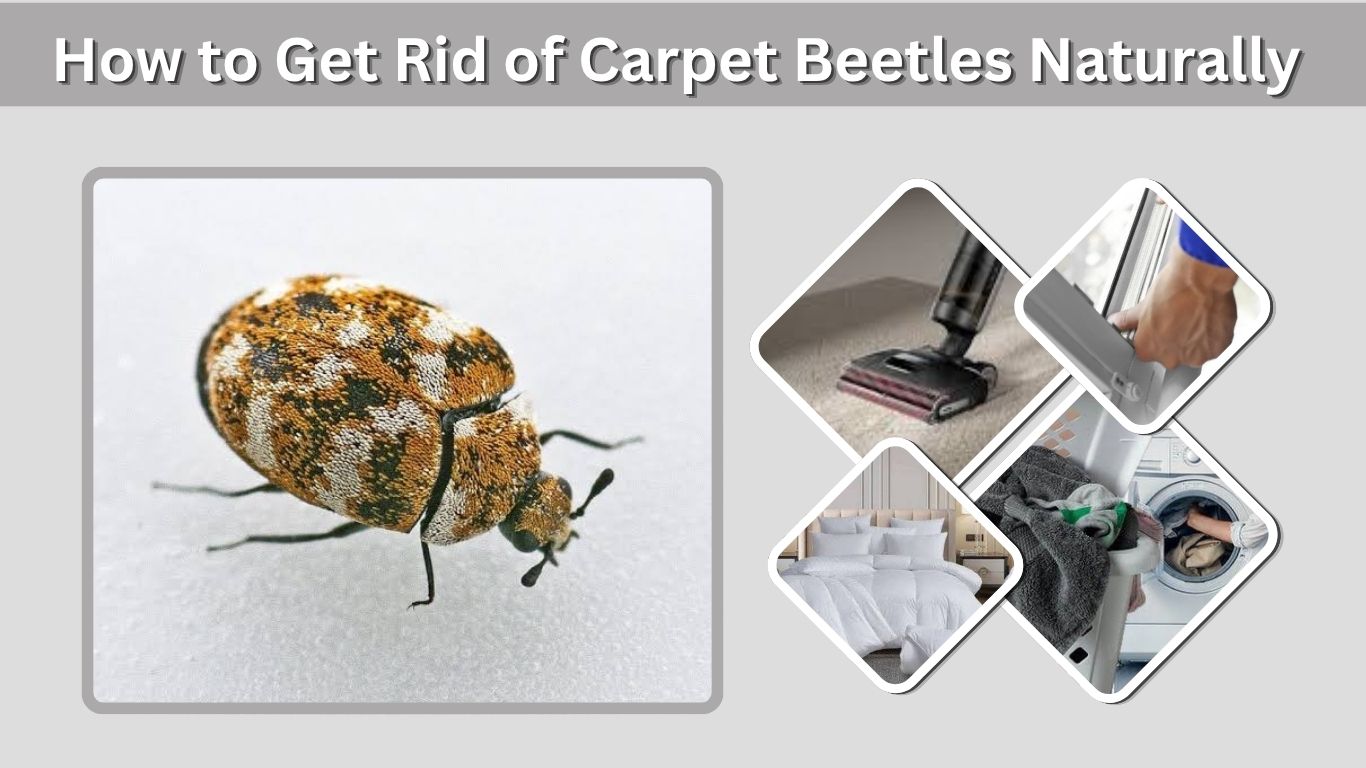
Carpet beetles can damage carpets, clothing, furniture, and other household materials, especially when their larvae remain hidden for long periods. If you want to eliminate these pests without harsh chemical treatments, several natural carpet beetle control methods can help. Regular vacuuming, hot-water washing, freezing infested fabrics, and removing food sources are among the most effective approaches. Although some homemade sprays and natural repellents are popular, not all provide reliable results. Understanding how to get rid of carpet beetles naturally can help protect your belongings and prevent future infestations.
How to Get Rid of Carpet Beetles Naturally
The most effective natural way to get rid of carpet beetles involves removing the insects, destroying their food sources, and treating infested materials. Carpet beetle larvae usually hide in dark, undisturbed areas containing wool, feathers, pet hair, and organic debris. Combining several cleaning methods provides better results than relying on a single homemade repellent.
1. Vacuum Carpets and Furniture Thoroughly
Vacuuming is one of the easiest and most effective natural carpet beetle treatments. It physically removes adult beetles, larvae, some eggs, shed skins, and food debris.
Focus on carpet edges, upholstered furniture, closets, and areas underneath beds. Use a crevice attachment to reach narrow spaces around baseboards and furniture seams.
Vacuum frequently while activity continues. Empty the vacuum container or dispose of the bag promptly, preferably outside your living area.
2. Wash Infested Clothes and Bedding
Hot-water washing can kill carpet beetles at different developmental stages when fabrics are thoroughly exposed to sufficient temperatures.
Wash suitable clothing, blankets, curtains, and bedding using the hottest water permitted by their care labels. A heated dryer can also help treat compatible fabrics.
For delicate wool, silk, and other sensitive materials, professional dry cleaning is often a safer option. Avoid exposing fabrics to temperatures that could cause shrinking or permanent damage.
3. Freeze Small Infested Items
Freezing provides a chemical-free method for treating certain carpet beetle-infested belongings. Suitable items include small fabrics and objects that cannot safely be washed.
Seal the affected materials in plastic bags and place them in a sufficiently cold freezer. As a conservative approach, maintain approximately -18°C (0°F) for around two weeks, allowing time for the entire item to reach the required temperature.
Freezing effectiveness depends on temperature, exposure time, and item thickness.
4. Remove Carpet Beetle Food Sources
Carpet beetle larvae cannot continue developing without suitable food. Removing accumulated organic material makes your home less attractive to them.
- Pet hair: Remove fur from carpets, furniture, and pet bedding.
- Wool fabrics: Inspect blankets, sweaters, rugs, and stored clothing.
- Dead insects: Clean windowsills, attics, and hidden corners.
- Dust and lint: Vacuum beneath furniture and along baseboards.
- Bird nests: Investigate abandoned nests near accessible building openings.
- Infested materials: Discard badly damaged items when necessary.
Removing these food sources is essential for long-term carpet beetle prevention.
How to Get Rid of Carpet Beetle Larvae Naturally
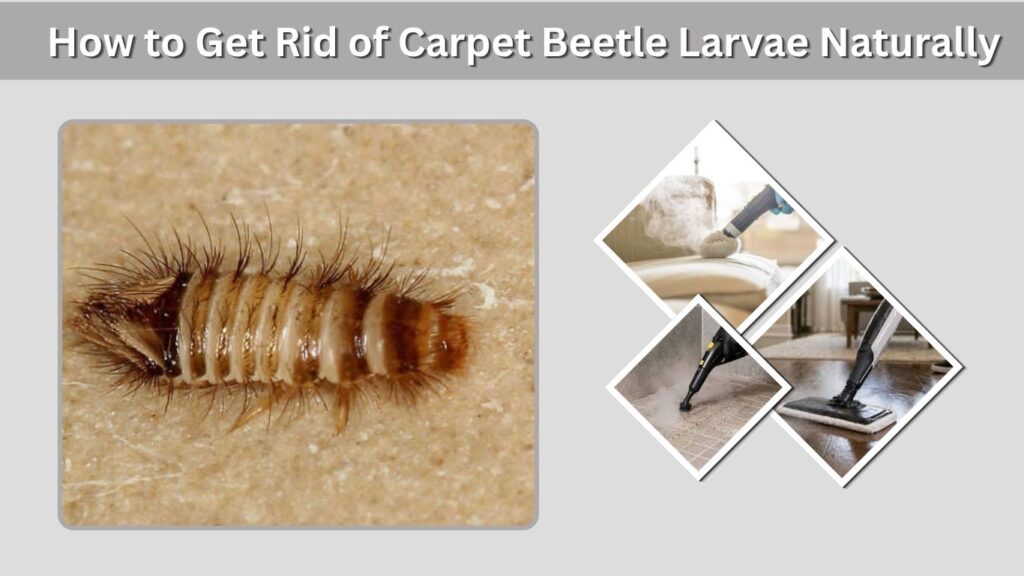
Carpet beetle larvae cause most household damage because they feed on animal-based fibers and other organic materials. Adult beetles generally feed on pollen and nectar. Therefore, natural treatment should primarily target larvae and their hiding places rather than only the adults visible around windows.
Use Steam Cleaning on Suitable Surfaces
Steam cleaning may help kill exposed larvae and eggs when sufficient heat reaches them. It can be useful for certain carpets and upholstered surfaces that tolerate moisture and high temperatures.
However, steam does not reliably reach every hidden insect, especially those deep inside furniture or carpet padding.
Always follow the manufacturer’s cleaning instructions. Allow treated materials to dry thoroughly to prevent moisture-related problems.
Brush and Inspect Natural-Fiber Fabrics
Brushing and inspecting woolen garments, rugs, and stored textiles can dislodge larvae, shed skins, and debris.
Take suitable fabrics outdoors and examine seams, folds, and damaged areas. Sunlight may encourage larvae to leave exposed materials, but ordinary sun exposure should not be considered a reliable way to kill every egg or larva.
Wash, dry-clean, or freeze infested items when appropriate before returning them to storage.
Do Natural Carpet Beetle Repellents Really Work?
Many homeowners search for natural carpet beetle repellents because they want to avoid conventional insecticides. Vinegar, essential oils, cedarwood, and diatomaceous earth are commonly discussed options. However, these methods differ considerably in effectiveness, and some lack convincing evidence for eliminating established infestations.
White Vinegar as a Natural Cleaning Solution
White vinegar is sometimes recommended as a homemade carpet beetle spray. However, there is insufficient evidence that diluted household vinegar reliably kills carpet beetles or their eggs.
Vinegar may help clean certain washable, vinegar-safe surfaces, but it should not replace vacuuming, laundering, and removing infested materials.
Avoid applying vinegar to delicate fabrics, natural stone, or surfaces that may be damaged by acidity.
Peppermint, Lavender, and Clove Essential Oils
Peppermint, lavender, and clove oils are frequently promoted as natural carpet beetle deterrents. Their odors may influence insect behavior, but reliable household control of carpet beetles using these oils has not been established.
Essential oils should not be treated as proven carpet beetle killers. Concentrated oils can irritate skin, damage fabrics, and pose risks to pets, particularly cats.
Cedarwood for Carpet Beetle Prevention
Cedarwood is traditionally used to protect stored clothing from fabric pests. However, its repellent effect is limited and may decline as the wood ages.
Older cedar chests are not reliable carpet beetle treatments. Storing clean, pest-free clothing in airtight containers provides more dependable protection than relying on cedar fragrance.
Does Diatomaceous Earth Kill Carpet Beetles Naturally?
Diatomaceous earth is a mineral-based dust that damages insects’ protective outer layers, causing dehydration. However, its effectiveness depends on proper application and direct insect exposure.
Airborne dust can irritate the lungs and eyes. Food-grade diatomaceous earth is not automatically safe to scatter around a home.
If considering this product, use only a pesticide formulation specifically labeled for the intended pest and location, and follow all safety instructions.
How to Get Rid of Carpet Beetles Naturally in Different Areas
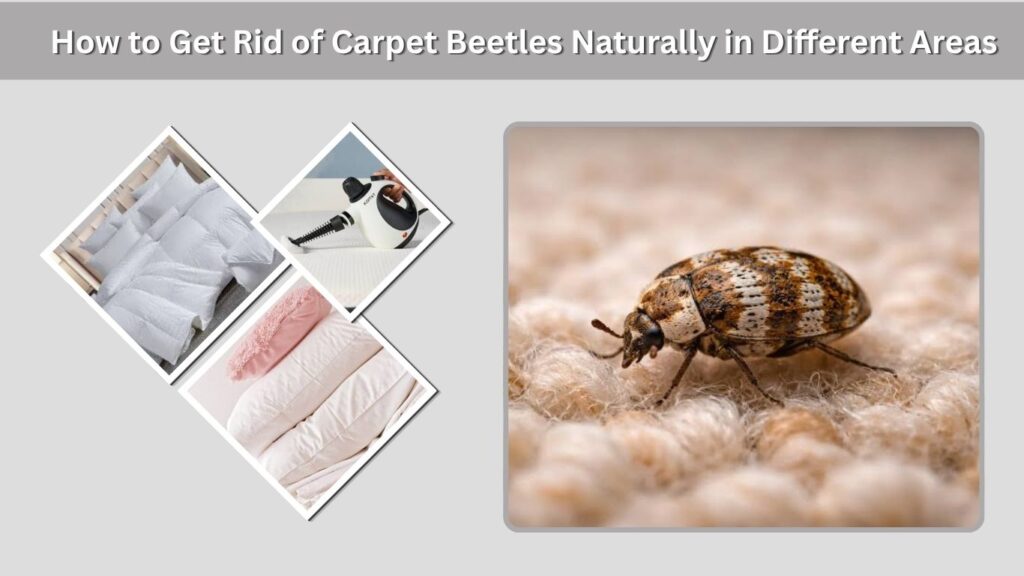
Natural carpet beetle removal requires slightly different approaches depending on where insects are discovered. Bedrooms, closets, and carpeted floors often provide hidden feeding locations. Inspecting the surrounding environment helps locate developing larvae and prevents repeated infestations.
Natural Carpet Beetle Treatment for Bedrooms
If you find carpet beetles or larvae around your bed, begin by cleaning the bedding and inspecting nearby materials.
- Remove and wash suitable sheets, pillowcases, and blankets.
- Vacuum mattress seams, bed frames, and surrounding carpets.
- Inspect feather-filled pillows and natural-fiber bedding.
- Remove hair, lint, and debris from underneath the bed.
- Check nearby closets and upholstered furniture for larvae.
Avoid spraying homemade insecticidal mixtures directly onto bedding or mattresses.
Natural Carpet Beetle Removal From Carpets
Inspect carpet edges, areas beneath furniture, and rug undersides for larvae or shed skins.
Vacuum thoroughly, including underneath removable rugs. Clean compatible carpets using appropriate methods and allow them to dry completely.
If a wool rug is heavily infested, professional rug cleaning may be necessary to eliminate insects without damaging its fibers.
Removing Carpet Beetles From Closets
Closets often contain undisturbed wool clothing, blankets, and other attractive materials. Inspect garments for irregular holes, larvae, and shed skins.
Clean affected clothing using suitable laundering or dry-cleaning methods. Vacuum closet corners and shelves before returning belongings.
Store clean, inspected natural-fiber garments in airtight bags or containers to prevent reinfestation.
Understanding the Carpet Beetle Natural Habitat
Understanding where carpet beetles naturally live makes prevention easier. Adult carpet beetles are commonly found outdoors on flowering plants, while larvae develop in protected areas containing animal-based materials. Inside homes, they may establish populations in carpets, stored clothing, abandoned nests, and concealed debris.
Where Do Carpet Beetles Naturally Live?
Outdoors, carpet beetle larvae help break down animal remains, feathers, dead insects, and materials found inside nests.
Adults may enter houses through open windows and doors or arrive on cut flowers. Once indoors, suitable food sources can support larval development.
This explains why even regularly cleaned homes occasionally experience carpet beetle activity.
How to Keep Carpet Beetles Away Naturally
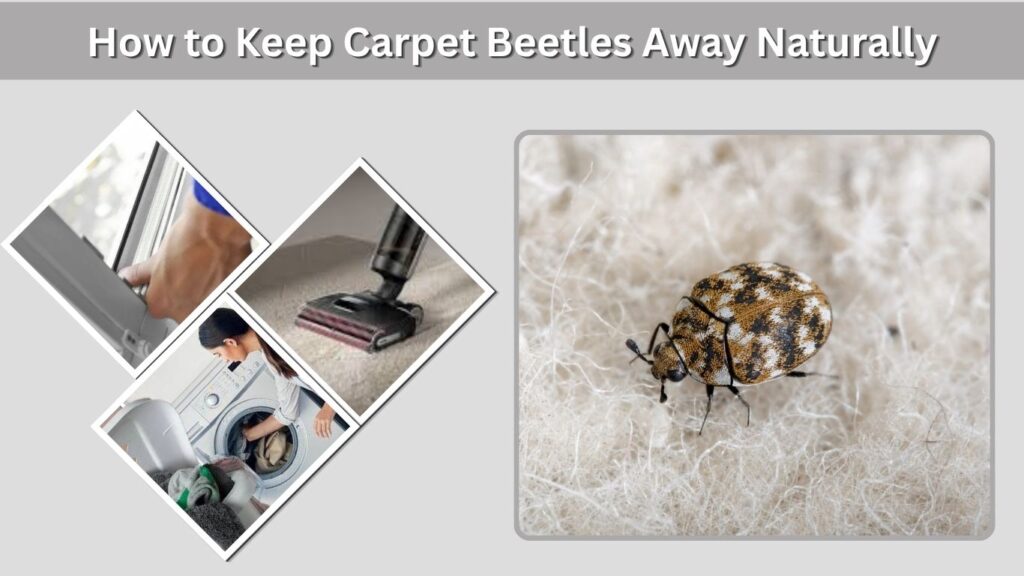
Preventing future infestations is just as important as removing existing carpet beetles. The most dependable natural approach combines regular cleaning, careful fabric storage, and early detection. These habits reduce food availability and make hidden infestations easier to discover before significant damage occurs.
Natural Carpet Beetle Prevention Tips
- Vacuum carpets, baseboards, and furniture regularly.
- Wash bedding and frequently used clothing.
- Store clean wool, fur, and silk items in sealed containers.
- Remove accumulated pet hair and organic debris.
- Inspect secondhand clothing and furniture before bringing them indoors.
- Repair damaged window screens and seal accessible gaps.
- Check closets and storage areas periodically.
- Remove abandoned nests when safe and legally permitted.
If carpet beetles continue appearing despite thorough cleaning and removing food sources, seek professional pest management assistance.
FAQs
1. What Kills Carpet Beetles Instantly Naturally?
Direct exposure to sufficiently high temperatures can kill carpet beetles, but there is no guaranteed instant homemade remedy. Effective natural methods include hot laundering, appropriate heat treatment, and vacuuming. Temperature, exposure time, and the insect’s location determine whether treatment succeeds.
2. Can You Get Rid of Carpet Beetles Permanently Naturally?
You can eliminate an existing infestation using thorough cleaning, appropriate fabric treatment, and food-source removal. However, no natural method guarantees permanent protection because adult beetles can enter from outdoors. Regular inspections and preventive cleaning help reduce the likelihood of reinfestation.
3. Does Vinegar Kill Carpet Beetle Larvae?
Household vinegar is not a proven or reliable treatment for killing carpet beetle larvae. Although vinegar may be useful for cleaning certain surfaces, it does not replace laundering, freezing, vacuuming, or removing infested materials. These methods are more dependable for household control.
4. What Is the Best Natural Repellent for Carpet Beetles?
There is no well-established natural repellent that reliably prevents carpet beetle infestations. Cedarwood and essential oils are often suggested, but their effectiveness is limited or uncertain. Cleaning, eliminating food sources, and storing vulnerable fabrics in sealed containers provide better protection.
5. How Do You Get Rid of Black Carpet Beetles Naturally?
Black carpet beetles can be controlled using the same nonchemical methods recommended for other carpet beetle species. Vacuum hiding places, wash or dry-clean affected fabrics, and remove accumulated organic debris. Carefully inspect closets and carpets to identify the larvae’s food sources.
