
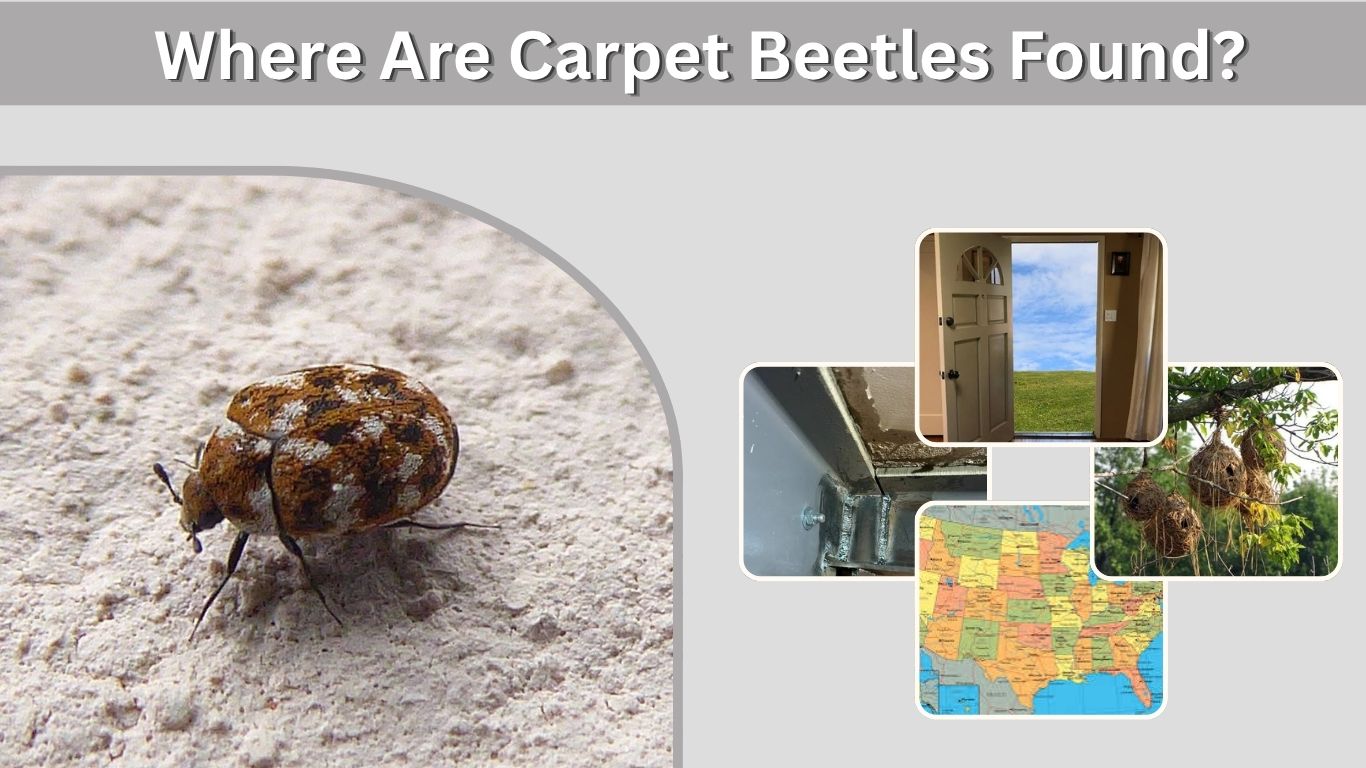
Carpet beetles are commonly found in homes, apartments, gardens, and other places where natural fibers and organic materials are available. These tiny insects often hide in carpets, closets, bedding, and furniture, making them difficult to notice until an infestation develops. Finding one carpet beetle in your house or on your bed does not necessarily mean you have a serious problem. However, discovering larvae or several beetles may require closer inspection. Understanding where carpet beetles are found, why they enter homes, and how to recognize their hiding places can help you prevent damage.
Where Are Carpet Beetles Found in Homes?
Carpet beetles can live in many parts of a house, especially areas containing wool, animal hair, feathers, and other organic materials. Adult beetles often appear around windows, while larvae prefer dark, undisturbed locations where they can feed. Bedrooms, closets, carpets, and upholstered furniture are among the most common places to inspect.
1. Carpets and Rugs
Carpets and rugs are common hiding places for carpet beetle larvae. They may feed on wool fibers, pet hair, lint, and other organic debris trapped beneath furniture or along carpet edges.
Larvae are particularly difficult to spot underneath rugs and near baseboards. Regular vacuuming helps remove accumulated debris, eggs, and developing insects before significant damage occurs.
2. Closets and Stored Clothing
Carpet beetle larvae frequently hide inside closets containing wool sweaters, fur accessories, blankets, and other natural-fiber materials. They prefer undisturbed clothing, especially items stored for long periods.
Infested fabrics may develop irregular holes or damaged patches. Inspecting stored clothing and keeping clean garments in sealed containers helps reduce the risk.
3. Beds, Mattresses, and Furniture
Carpet beetles can occasionally be found on beds, mattresses, upholstered chairs, and sofas. Larvae may gather where feathers, natural fibers, pet fur, or accumulated debris provide food.
Check mattress seams, bed frames, furniture crevices, and the areas underneath beds. A beetle crawling on your bed does not automatically mean it is living or reproducing inside your mattress.
4. Windows, Walls, and Baseboards
Adult carpet beetles frequently appear on windowsills because they are attracted to light. They may also crawl across walls while searching for suitable locations.
Larvae can hide behind baseboards, inside wall voids, or beneath furniture. Finding beetles near windows may simply indicate that adults entered from outdoors.
Where Are Carpet Beetles Found Outside?
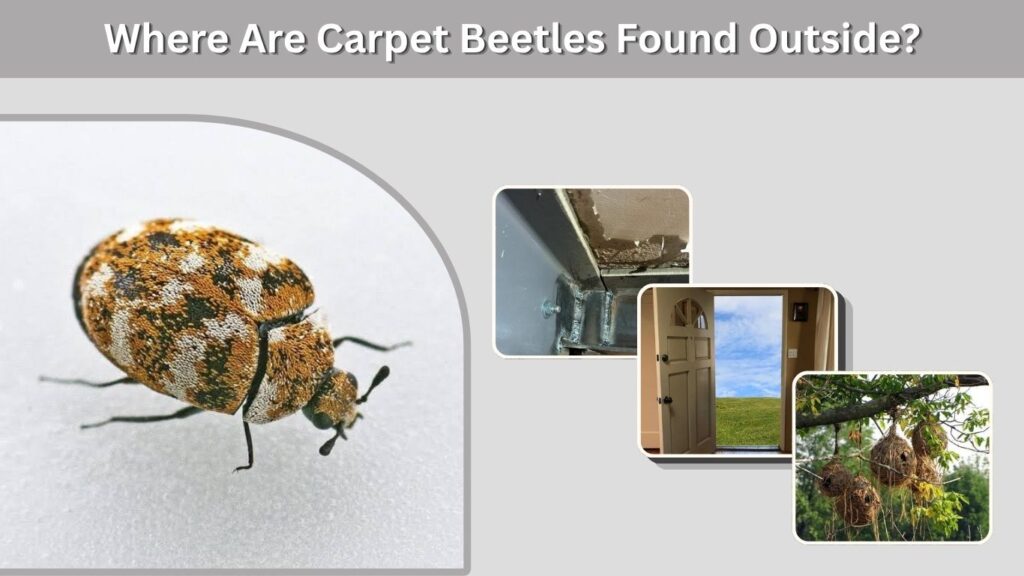
Carpet beetles are also common outdoor insects. Adult beetles feed on pollen and nectar from flowering plants, while larvae develop in locations containing suitable organic materials.
Outdoor populations can occasionally enter buildings through open doors, windows, or gaps around structural openings.
Flowers and Gardens
Adult carpet beetles visit flowering plants to feed on pollen and nectar. Gardens with abundant flowers may attract them during warmer months.
Beetles can accidentally enter homes through open windows or arrive on freshly cut flowers. This is one reason homeowners sometimes notice a single adult beetle indoors without finding an infestation.
Bird Nests and Animal Materials
Some carpet beetle species develop in bird nests, abandoned insect nests, and other places containing feathers, dead insects, or animal remains.
Nests near roofs, vents, or attics can sometimes become sources of indoor beetles. Removing old nests when safe and legally permitted may help eliminate hidden populations.
I Found a Carpet Beetle on My Bed: What Does It Mean?
Finding a carpet beetle on your bed can be surprising, but it does not necessarily indicate an established infestation. Adult beetles may accidentally land on bedding after flying indoors, while larvae may wander from nearby carpets, furniture, or stored materials.
Identifying whether you found an adult or a larva is an important first step.
Finding an Adult Carpet Beetle on Your Bed
An adult carpet beetle is typically small, oval-shaped, and black or patterned with brown, white, and yellowish scales.
Adults do not feed on bedding fabrics. A single adult on your bed may have arrived from outdoors or another part of the house. Remove it and inspect the surrounding area for additional activity.
Finding Carpet Beetle Larvae on Your Bed
Carpet beetle larvae are elongated, segmented, and often covered with visible bristles. They are more concerning than isolated adults because larvae are the stage responsible for damaging natural fibers.
If you find larvae on your bed, inspect:
- Pillowcases, blankets, and mattress seams.
- Feather-filled pillows and natural-fiber bedding.
- Carpets and rugs surrounding the bed.
- Upholstered headboards and bed frames.
- Pet sleeping areas and accumulated fur.
- Spaces beneath the mattress and nearby furniture.
Finding a larva does not prove it originated in the bed, but it is a reason to look for nearby feeding sites.
Found One Carpet Beetle: Should I Be Worried?

Finding one carpet beetle is generally not a reason to panic. Adult carpet beetles occasionally enter houses from outdoors and may appear near windows or furniture without reproducing indoors.
However, the type of insect, its developmental stage, and whether you continue finding more beetles can help determine if additional action is necessary.
Found One Adult Carpet Beetle
A single adult carpet beetle does not automatically indicate an infestation. It may have flown through an open window or entered with flowers.
Remove the beetle, inspect nearby windows and fabrics, and monitor the area. If you do not discover larvae, damaged materials, or repeated activity, extensive treatment may not be necessary.
Found One Carpet Beetle Larva
Finding one carpet beetle larva deserves closer attention because larvae usually develop near food sources.
Inspect carpets, closets, bedding, and nearby furniture for shed skins or additional larvae. One larva alone does not prove a large infestation, but it suggests that suitable food may exist somewhere nearby.
Found Two or Three Carpet Beetles
Finding two or three carpet beetles still does not confirm an established infestation, particularly if they are adults gathered near a sunny window.
However, discovering multiple larvae in different rooms is more concerning. Repeated sightings, fabric damage, and shed larval skins suggest you should investigate their source.
Found Carpet Beetle Larvae but No Adults: Why?
It is possible to discover carpet beetle larvae without seeing adult beetles. Adults may have already left the area, died, or remained unnoticed near windows.
Larvae often spend long periods developing in hidden locations and may be encountered while cleaning or moving furniture. Their presence is more useful for identifying an active fabric pest problem than spotting a single adult.
Signs of Carpet Beetle Larvae in Your House
Look for these signs when inspecting suspicious areas:
- Hairy larvae: Small, elongated insects with brownish bristles.
- Shed skins: Hollow, segmented shells left behind as larvae grow.
- Fabric damage: Irregular holes or worn patches in wool and other susceptible materials.
- Hidden activity: Larvae beneath furniture, along baseboards, or inside closets.
- Repeated sightings: Additional larvae appearing after an area has been cleaned.
These signs may indicate carpet beetle activity, although fabric damage alone cannot establish which pest caused it.
Where Are Carpet Beetles Found in the US?

Carpet beetles occur throughout much of the United States, including homes in both warm and cold climates. Different species, such as varied carpet beetles, black carpet beetles, and furniture carpet beetles, may be encountered in different regions.
Adults are often noticed during spring and summer, particularly around flowers and windows. Indoor larvae can remain active during other seasons when temperatures and food sources are suitable.
Carpet beetles are not limited to dirty houses. They can develop in well-maintained buildings when hidden natural-fiber materials, animal debris, or other food sources remain accessible.
What to Do After Finding Carpet Beetles
If you discover carpet beetles in your house, begin by identifying the insect and inspecting the surrounding area. Effective management depends on locating the material supporting larval development.
Thorough cleaning and removing infested materials are usually more important than immediately applying pesticides.
Steps to Remove Carpet Beetles
- Identify the insect: Determine whether it is an adult carpet beetle or a larva.
- Inspect nearby areas: Examine carpets, closets, furniture, and natural-fiber materials.
- Vacuum thoroughly: Clean floor edges, upholstered furniture, baseboards, and hidden corners.
- Wash affected fabrics: Launder suitable items using hot water according to their care labels, or dry-clean them.
- Remove food sources: Clear accumulated pet fur, dead insects, lint, and other organic debris.
- Discard heavily infested materials: Remove severely damaged items when cleaning cannot eliminate the problem.
- Monitor activity: Check previously affected locations for additional larvae and shed skins.
Avoid spraying insecticides directly onto bedding or clothing. If larvae continue appearing, professional pest inspection may be necessary.
How to Prevent Carpet Beetles in Your Home
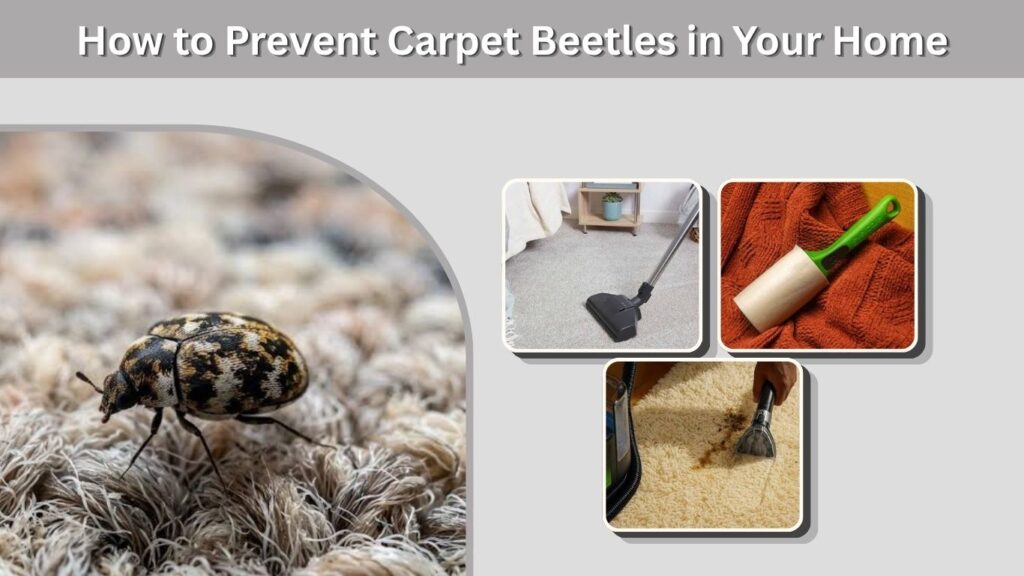
Preventing carpet beetles involves limiting access to food sources and keeping potential hiding places clean. Since larvae prefer undisturbed locations, regular inspections can help detect activity before widespread damage occurs.
Simple household maintenance practices can significantly reduce the chances of an established infestation.
Carpet Beetle Prevention Tips
- Vacuum carpets, rugs, and upholstered furniture regularly.
- Clean beneath beds, sofas, and heavy furniture.
- Store clean woolen clothing in airtight containers.
- Remove accumulated pet hair, lint, and dead insects.
- Inspect cut flowers before bringing them indoors.
- Repair damaged window screens and seal accessible gaps.
- Check closets and stored fabrics periodically.
- Investigate recurring larvae or unexplained fabric damage.
Consistent cleaning, proper storage, and early identification are the most effective ways to keep carpet beetles from becoming a persistent household problem.
FAQs
1. If I Found One Carpet Beetle, Is There More?
Not necessarily. A single adult carpet beetle may have flown indoors from outside. However, finding larvae, shed skins, or recurring beetles can suggest an indoor population. Inspect nearby natural-fiber materials and monitor the area before assuming you have an infestation.
2. Can Carpet Beetles Be Found in Your Bed?
Yes, carpet beetles may occasionally appear on beds, particularly if nearby bedding, carpets, or furniture contain suitable materials for larvae. However, carpet beetles do not feed on human blood like bed bugs, and finding one on your bed does not prove an infestation.
3. What Does It Mean If I Found a Dead Carpet Beetle?
A dead carpet beetle may have entered from outdoors or emerged from an indoor source. One dead adult is not proof of an infestation. Finding several dead beetles near windows, especially alongside live larvae or fabric damage, deserves closer investigation.
4. Should I Worry If I Found One Carpet Beetle Larva?
One carpet beetle larva does not necessarily mean a major infestation, but it deserves attention. Check nearby fabrics, carpeting, and hidden spaces for more larvae or shed skins. Removing debris and cleaning suspected areas can help prevent further development.
5. Why Do I Keep Finding Carpet Beetles in My Bedroom?
Repeated carpet beetle sightings may indicate a nearby source, such as stored wool clothing, natural-fiber bedding, accumulated pet hair, or debris beneath furniture. Adults may also enter through windows. Inspecting and cleaning these locations can help identify and reduce the problem.
