
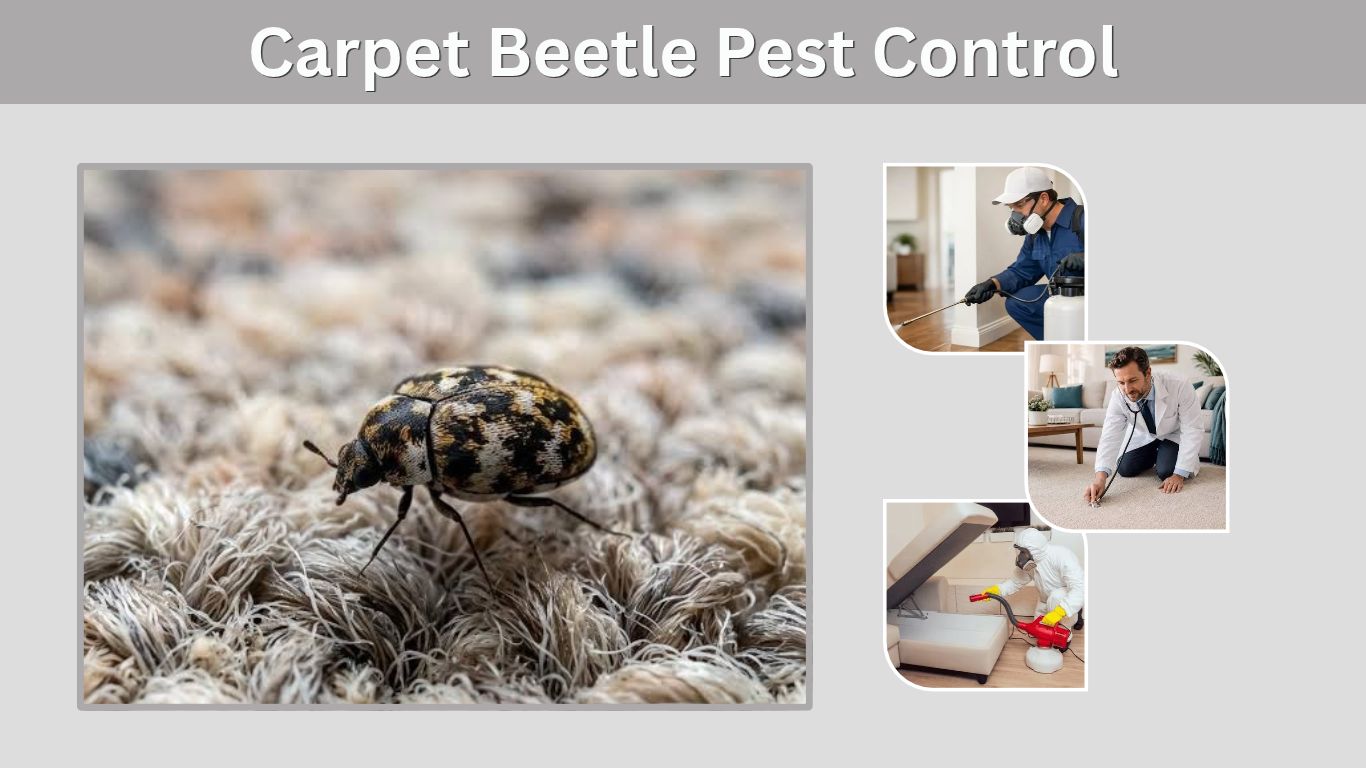
Carpet beetle pest control is important when these small household insects begin damaging clothing, carpets, furniture, and stored fabrics. Although adult carpet beetles are generally harmless, their larvae can cause significant damage by feeding on wool, feathers, fur, and other organic materials. Fortunately, both DIY cleaning methods and professional pest control treatments can help eliminate an infestation. The most effective approach involves identifying the source, removing larvae, and preventing future activity. This guide explains how pest control gets rid of carpet beetles, which treatments work, and when professional services are necessary.
What Is Carpet Beetle Pest Control?
Carpet beetle pest control involves identifying, removing, and preventing infestations of insects belonging to the family Dermestidae. These pests commonly enter homes through windows, doors, and infested materials. While adults usually feed on pollen and nectar, their larvae damage natural fibers and other animal-based materials. Successful treatment focuses on locating the larvae and eliminating their food sources.
Common Types of Carpet Beetles
Several carpet beetle species can infest residential buildings. The most common include black carpet beetles, varied carpet beetles, and furniture carpet beetles.
Black carpet beetles have dark, oval bodies, while varied carpet beetles display mottled patterns of white, brown, and yellowish scales. Their larvae usually prefer dark, undisturbed locations.
Proper identification helps homeowners choose effective treatment methods and distinguish carpet beetles from other household pests.
Signs of a Carpet Beetle Infestation
Carpet beetle infestations often develop unnoticed because larvae hide inside fabrics and furniture.
Common warning signs include:
- Small, irregular holes in wool clothing and carpets.
- Brownish, hairy larvae beneath furniture.
- Shed larval skins inside closets or drawers.
- Adult beetles gathering around windowsills.
- Damaged upholstery or stored natural-fiber materials.
- Repeated sightings of larvae near baseboards.
Finding several of these signs suggests that a closer inspection is necessary.
Best Pest Control for Carpet Beetles at Home
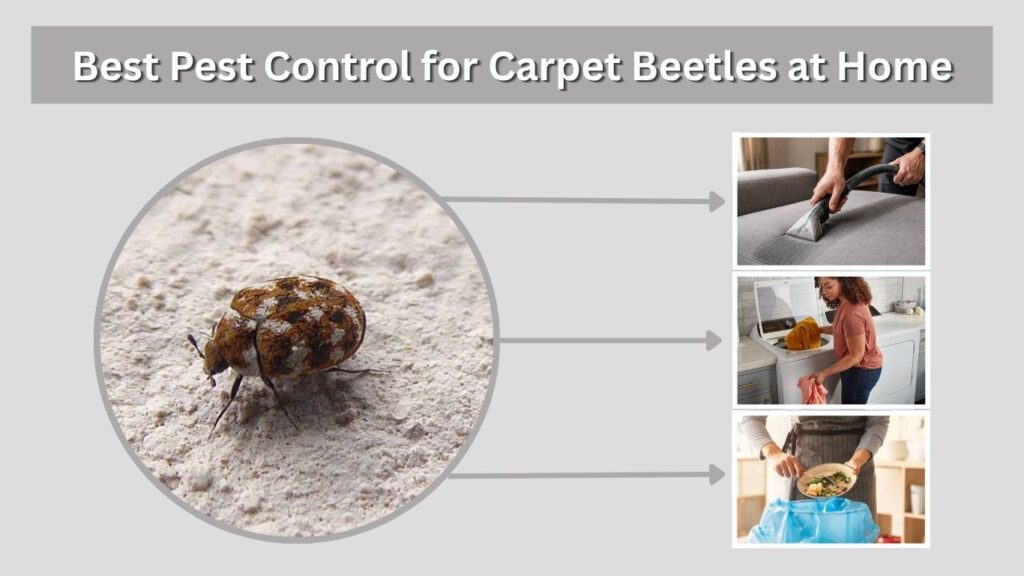
Effective household carpet beetle control begins with cleaning, removing infested materials, and eliminating food sources. These methods can control many small infestations without chemical treatment. Because larvae often hide beneath furniture and inside stored fabrics, treating visible beetles alone is insufficient. A complete approach should address both the insects and their environment.
Vacuum Carpets and Furniture Thoroughly
Vacuuming is one of the most important steps in controlling carpet beetles. It physically removes larvae, eggs, adult beetles, and the debris that supports their development.
Focus on carpets, upholstered furniture, floor edges, closets, and spaces underneath heavy furniture. Use a crevice attachment to reach baseboards and narrow gaps.
Dispose of collected vacuum debris promptly, preferably outside the home. Repeat cleaning regularly while beetle activity continues.
Wash and Clean Infested Fabrics
Hot-water washing and professional dry cleaning can eliminate carpet beetles from affected clothing and household fabrics.
Wash suitable bedding, curtains, blankets, and garments using the hottest temperature allowed by their care labels. Delicate items such as wool sweaters and silk fabrics may require professional cleaning.
Freezing certain infested items under sufficiently cold conditions for an adequate period can also help eliminate developing insects.
Remove Hidden Food Sources
Carpet beetle larvae survive by feeding on animal-based materials and accumulated organic debris.
Important food sources to remove include:
- Shed human hair and pet fur.
- Dead insects around windows and furniture.
- Woolen fabrics and damaged natural-fiber items.
- Feathers inside abandoned nests.
- Dust and lint beneath appliances.
- Heavily infested clothing or stored materials.
Removing these materials makes the environment less suitable for carpet beetle development.
How Does Professional Pest Control Get Rid of Carpet Beetles?
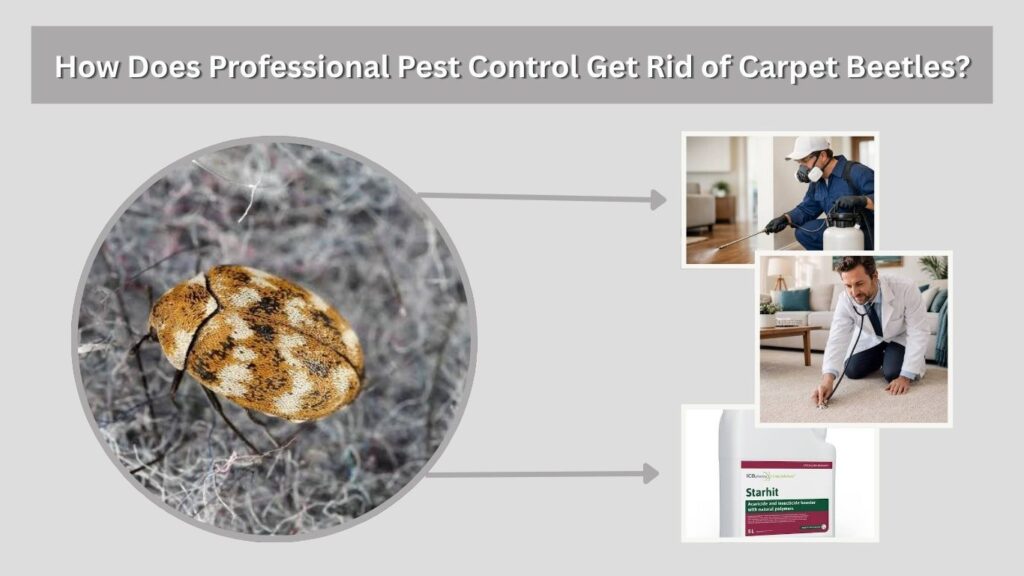
Professional carpet beetle pest control services use inspection, source removal, targeted treatments, and monitoring to control established infestations. Exterminators focus on hidden breeding areas where larvae develop rather than simply spraying every room. The exact treatment depends on the beetle species, infestation severity, affected materials, and accessibility of hiding places.
Professional Inspection and Identification
A pest control technician begins by identifying the insect and inspecting affected rooms. Common inspection locations include closets, carpets, furniture, baseboards, wall cavities, and storage areas.
The technician searches for larvae, shed skins, damaged fabrics, and potential breeding materials.
This examination helps identify the infestation source and determines whether sanitation alone will be sufficient or additional pest control treatment is necessary.
Targeted Pest Control Spray Treatment
When insecticides are necessary, professionals may apply products specifically labeled for carpet beetles to authorized treatment locations.
Applications may target carpet edges, cracks, crevices, closet surfaces, and other areas where larvae hide.
Treatment should follow pesticide label instructions and relevant safety regulations. Clothing, mattresses, and bedding should not be sprayed unless the product specifically authorizes that application.
Follow-Up Treatment and Monitoring
Some carpet beetle infestations require follow-up visits, particularly when larvae develop inside inaccessible spaces.
Technicians may inspect previously treated areas, monitor new activity, and recommend additional sanitation.
Sticky traps can help detect adult beetles, but they do not eliminate hidden larvae. Long-term control depends on removing breeding sources and preventing reinfestation.
Carpet Beetle Pest Control Sprays and Products
Several pest control products are marketed for carpet beetles, including insecticide sprays, insecticidal dusts, and monitoring traps. Their effectiveness depends on the product, application method, and location of the insects. Chemical treatments are generally most useful when combined with thorough cleaning and removal of infested materials.
What Pest Control Spray Works for Carpet Beetles?
Certain insecticides containing pyrethroid active ingredients may be labeled for carpet beetle control.
Examples include:
- Permethrin: Used in some insecticide formulations for specific indoor pest-control applications.
- Deltamethrin: Found in certain residual insecticide products.
- Bifenthrin: Used in some registered household pest control treatments.
- Cypermethrin: Available in selected insecticide formulations.
- Silica-based dusts: May be suitable for certain enclosed treatment locations when labeled for that use.
Always verify that the specific product is authorized for carpet beetles and the intended application surface. An active ingredient alone does not establish that a product is suitable for indoor use.
Do Pest Bombs and Ultrasonic Repellers Work?
Household bug bombs, also called total-release foggers, are generally ineffective for carpet beetle infestations because insecticide mist may not reach larvae concealed inside fabrics or crevices.
There is also insufficient reliable evidence that ultrasonic pest repellers effectively control carpet beetles.
Pesticide vapor strips can pose exposure risks and should never be used casually in occupied rooms. Targeted cleaning and properly selected treatments are preferable.
Natural and Eco-Friendly Carpet Beetle Control
Natural carpet beetle pest control primarily involves physical removal and environmental management.
Vacuuming, appropriate laundering, dry cleaning, and removing infested materials are effective nonchemical approaches.
Essential oils, vinegar, and cedarwood are sometimes promoted as repellents, but they are not reliable substitutes for established control methods. Even products advertised as natural can create health risks if used improperly.
DIY vs. Professional Carpet Beetle Pest Control
Choosing between DIY and professional treatment depends on the size and persistence of the infestation. Many minor carpet beetle problems can be resolved through cleaning and careful inspection. However, larger infestations involving inaccessible breeding sites may require specialized equipment and an experienced technician.
When DIY Pest Control Is Enough
Home treatment may be sufficient when:
- Only a few adult beetles have been found.
- Larvae are limited to one accessible location.
- Infested clothing or rugs can be cleaned.
- No significant fabric damage has occurred.
- Beetle sightings decrease after thorough sanitation.
Continue monitoring affected areas to confirm that larvae are no longer developing.
When to Call a Carpet Beetle Pest Control Company
Professional assistance may be appropriate if larvae continue appearing after repeated cleaning, infestations spread across multiple rooms, or expensive carpets and furnishings are being damaged.
A technician can also help investigate breeding sites inside wall voids, attics, or inaccessible furniture.
Professional treatment is most successful when homeowners cooperate with cleaning and source-removal recommendations.
How Much Does Carpet Beetle Pest Control Cost?
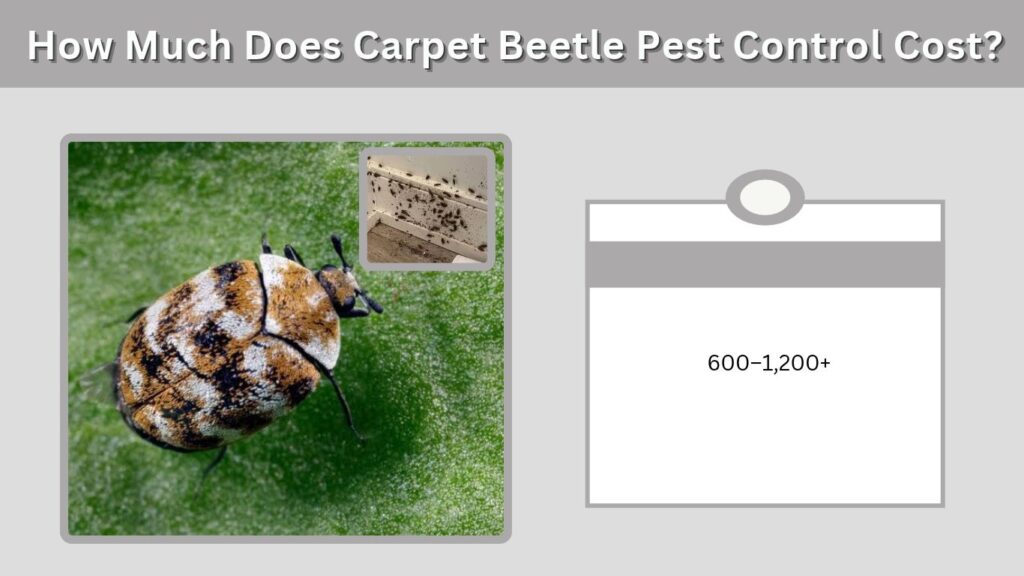
Carpet beetle pest control costs vary depending on the property’s size, infestation severity, location, and treatment requirements. Professional services may charge for individual visits or provide a complete treatment package. In the United States, published 2026 estimates commonly place typical professional carpet beetle treatments in the range of several hundred dollars.
Average Carpet Beetle Pest Control Prices
| Treatment scope | Estimated US cost |
| Small localized treatment | 150–300 |
| Typical professional service | 300–600 |
| Larger or extensive infestation | 600–1,200+ |
These figures are approximate market estimates, not guaranteed quotations. Complex infestations, extensive property sizes, and specialized treatments can cost more.
What Affects Carpet Beetle Treatment Costs?
Several factors determine the final service price, including the number of affected rooms, treatment methods, property accessibility, and whether follow-up visits are required.
Additional costs may involve professional fabric cleaning, removal of infested materials, or replacement of damaged belongings.
Before hiring a company, request a written estimate explaining inspection fees, treatment coverage, safety instructions, and follow-up policies.
How to Prepare for Carpet Beetle Pest Control
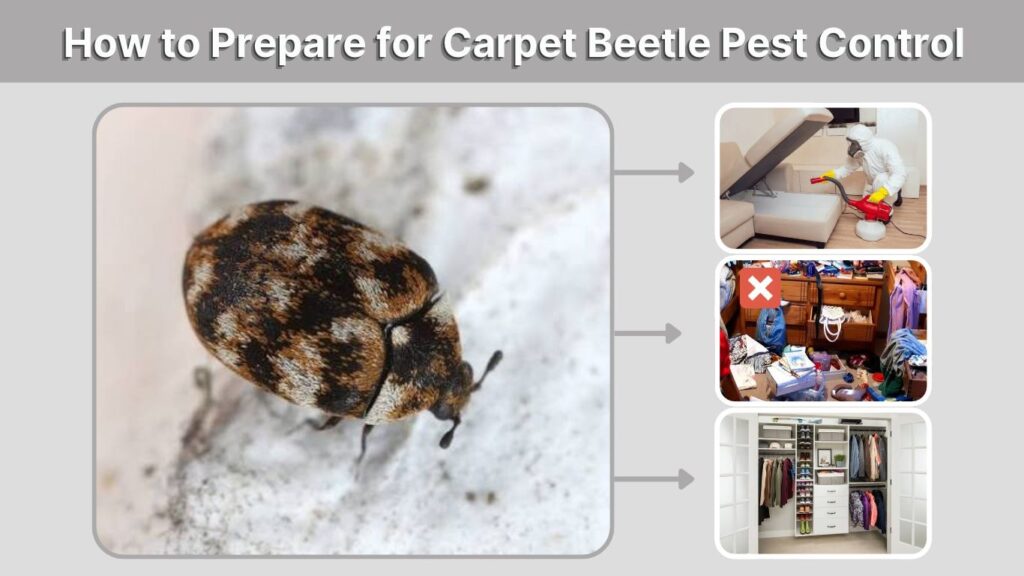
Preparing your home helps pest control technicians inspect affected locations and apply any necessary treatment efficiently. Because carpet beetle larvae often hide in cluttered or undisturbed spaces, improving access is important. Follow the company’s specific preparation instructions rather than independently applying pesticides before the scheduled service.
Preparation Checklist Before Treatment
- Identify locations where larvae or adult beetles were discovered.
- Save a specimen or photograph for accurate identification.
- Follow the technician’s instructions about vacuuming.
- Remove unnecessary clutter from closets and affected rooms.
- Launder or isolate infested clothing and bedding as directed.
- Make affected furniture and storage areas accessible.
- Inform the technician about pets, children, and sensitive household areas.
Ask about ventilation and reentry requirements before treatment begins.
How to Prevent Carpet Beetles After Treatment
Preventing reinfestation requires ongoing household maintenance. Carpet beetles can enter homes from outdoor environments, so even successful pest control cannot guarantee that another beetle will never appear.
Vacuum carpets and furniture regularly, store clean natural-fiber clothing in sealed containers, and inspect stored materials periodically.
Remove pet hair, lint, and dead insects before they accumulate. Repair damaged window screens and monitor previously infested areas for renewed larval activity.
FAQs
1. Can Pest Control Get Rid of Carpet Beetles?
Yes, professional pest control can eliminate an established carpet beetle infestation through inspection, sanitation, source removal, and targeted treatments when necessary. However, success depends on finding hidden larvae and removing their food sources. Additional monitoring may be required.
2. Do You Need Pest Control for Carpet Beetles?
Not always. A few adult carpet beetles may not require professional treatment. Thorough vacuuming, washing affected fabrics, and removing organic debris often control minor infestations. Professional assistance becomes more useful when larvae repeatedly appear or significant fabric damage develops.
3. How Much Is Pest Control for Carpet Beetles?
In the United States, typical professional carpet beetle treatments may cost approximately 300–600, although small localized services can cost less. Larger infestations may exceed $1,200. Final pricing depends on property size, treatment complexity, geographic location, and follow-up requirements.
4. Will Pest Control Spray Kill Carpet Beetle Larvae?
Properly selected and labeled insecticides can kill exposed carpet beetle larvae when applied according to instructions. However, sprays may not reach insects hidden deep inside materials. Vacuuming, laundering, and removing breeding sources remain essential parts of successful treatment.
5. How Long Does Carpet Beetle Pest Control Take?
An individual professional treatment visit may last a few hours, depending on the property and infestation. Complete control can take longer if hidden larvae remain. Follow-up inspections and continued cleaning help determine whether additional treatment is necessary.
