
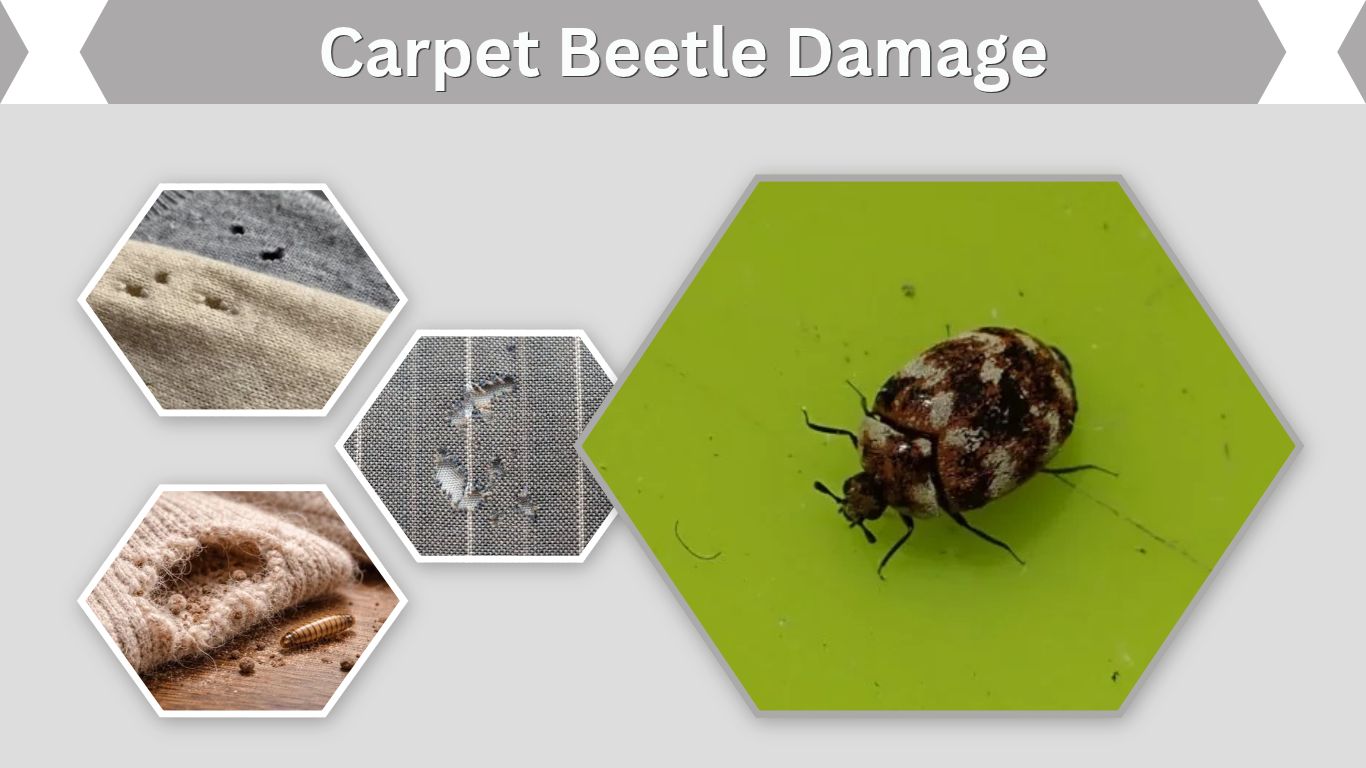
Carpet beetle damage can become a serious problem when these small household pests infest carpets, rugs, clothing, and upholstered furniture. Although adult carpet beetles are generally harmless to household fabrics, their larvae feed on animal-derived materials and can leave noticeable holes, bare patches, and weakened fibers. Damage often occurs in hidden areas, making infestations difficult to detect early. Understanding what carpet beetle damage looks like, which materials are most vulnerable, and how to identify the warning signs can help you prevent costly damage and protect your belongings.
What Does Carpet Beetle Damage Look Like?
Carpet beetle damage usually appears as irregular holes, thinning fibers, or bare patches on natural materials. Unlike insects that chew through wood, carpet beetle larvae feed primarily on animal-derived substances, including wool, silk, fur, feathers, and leather. Their feeding often goes unnoticed until the affected materials show visible deterioration.
Common Signs of Carpet Beetle Damage
- Irregular holes: Small or large openings may develop in wool sweaters, blankets, and other fabrics.
- Bald patches: Wool carpets and rugs may develop areas where fibers have been eaten away.
- Thinning fabric: Clothing and upholstery can become weak or noticeably thinner.
- Damaged seams: Larvae may feed inside folds, seams, and protected areas.
- Shed larval skins: Brownish, bristly skins near damaged materials suggest carpet beetle activity.
- Uneven fabric surfaces: Some affected materials develop rough or irregular areas from repeated feeding.
These signs can resemble damage caused by clothes moths, so identifying the insects or their shed skins is important.
Carpet Beetle Damage to Rugs and Carpets
Wool carpets and rugs are among the most vulnerable materials to carpet beetle infestations. Larvae feed on the natural animal proteins within wool fibers, causing gradual deterioration. Damage usually begins in dark, undisturbed areas, including beneath furniture and along carpet edges.
What Does Carpet Beetle Rug Damage Look Like?
Carpet beetle rug damage often appears as uneven patches where the wool pile has been partially or completely removed.
In severe cases, the underlying rug foundation may become visible. Larvae can also feed along carpet edges, underneath rugs, and near baseboards.
Damage may remain hidden beneath heavy furniture until the furniture is moved.
Can Carpet Beetles Damage Synthetic Carpets?
Carpet beetle larvae do not normally feed on clean synthetic fibers such as polyester, nylon, or acrylic.
However, synthetic carpets can contain accumulated pet hair, lint, dead insects, or animal-derived components that provide food.
Therefore, carpet beetles may still be found in synthetic carpeting without actually consuming its synthetic fibers.
Carpet Beetle Damage to Clothes and Fabrics
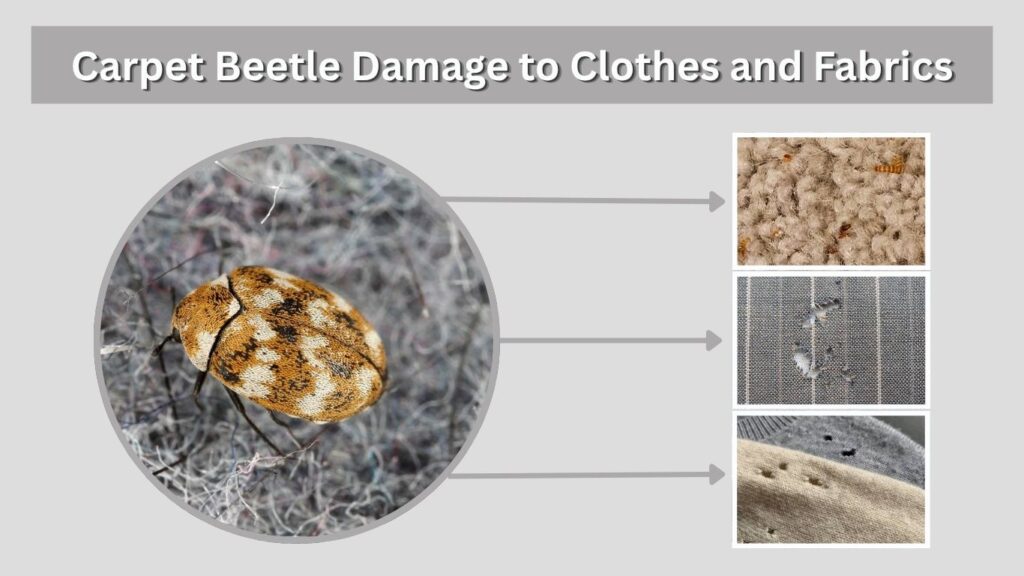
Carpet beetle clothing damage commonly affects wool, silk, fur, and other animal-derived textiles. Larvae may develop inside closets, drawers, or storage containers where clothing remains undisturbed for long periods. Damage can become extensive when infested garments are stored without regular cleaning or inspection.
Signs of Carpet Beetle Damage on Clothes
- Small or irregular holes in wool sweaters and scarves.
- Large damaged patches on stored garments.
- Thin or weakened sections of natural-fiber fabrics.
- Shed larval skins near collars, cuffs, and folded clothing.
- Damage concentrated in areas where clothing remains undisturbed.
Can Carpet Beetles Damage Cotton or Polyester?
Clean cotton and polyester are generally resistant to carpet beetle feeding because they do not contain the animal proteins larvae prefer.
However, blended fabrics containing wool or silk may be vulnerable.
Food stains, perspiration residues, and accumulated animal hair can also attract larvae to clothing made from otherwise resistant materials.
Washing garments before long-term storage helps reduce infestation risks.
Can Carpet Beetles Damage Furniture and Wood?
Carpet beetles can damage certain furniture materials, particularly upholstery containing wool, animal hair, or feathers. However, they do not feed on solid wood like termites or wood-boring beetles. Understanding this difference helps homeowners identify the actual source of furniture damage.
Carpet Beetle Damage to Upholstered Furniture
Upholstered chairs, sofas, and cushions may contain natural fibers that attract carpet beetle larvae.
The insects often hide inside seams, beneath cushions, and within furniture stuffing.
When infestations become established, larvae can damage fabric coverings, feather fillings, and other animal-derived components.
Surface cleaning alone may not eliminate larvae hidden deep inside furniture.
Do Carpet Beetles Damage Wood Furniture?
Carpet beetles do not eat solid wood or create tunnels inside wooden furniture.
However, they may infest animal-derived upholstery, felt, or other vulnerable materials attached to wooden furniture.
If wooden furniture develops holes or structural deterioration, another pest or environmental cause is more likely responsible.
Black Carpet Beetle vs. Varied Carpet Beetle Damage
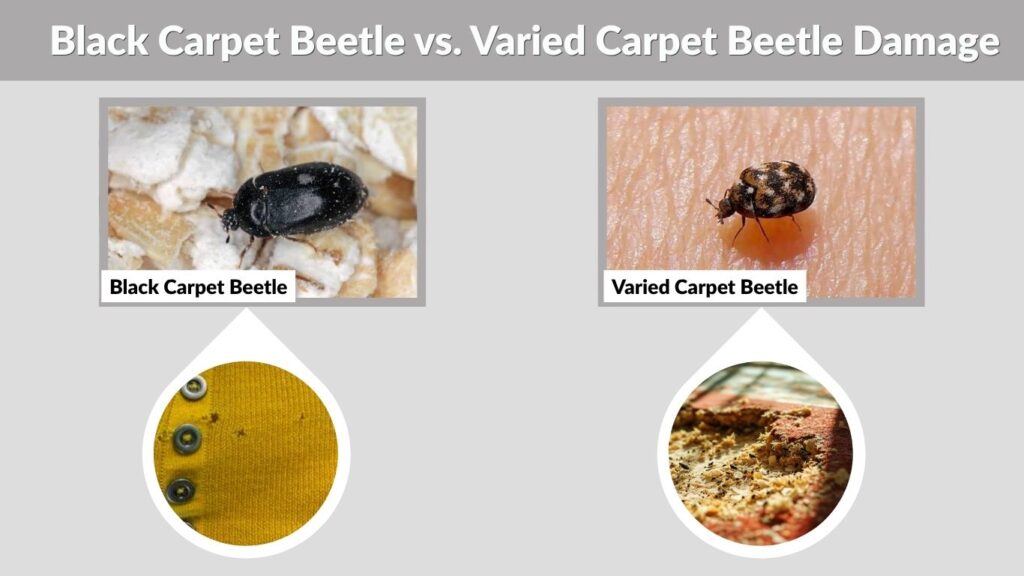
Black and varied carpet beetles are common household species that damage natural materials during their larval stages. Although their appearances differ, their feeding habits overlap considerably. Both can cause significant damage when larvae develop undisturbed in suitable materials.
Black Carpet Beetle Damage
Black carpet beetle larvae may feed on wool clothing, carpets, fur, feathers, and accumulated animal hair.
Some infestations also involve certain stored food products.
The larvae can remain hidden for months, gradually damaging vulnerable materials.
Varied Carpet Beetle Damage
Varied carpet beetle larvae commonly damage wool carpets, silk garments, animal skins, feathers, and preserved animal specimens.
Their feeding can create irregular patches rather than neatly defined holes.
Finding small, hairy larvae or discarded larval skins near affected materials is an important identification clue.
Carpet Beetle Damage vs. Clothes Moth Damage
Carpet beetles and clothes moths damage many of the same household materials. Both pests commonly attack wool, fur, and other animal-based fabrics. However, their feeding patterns and physical evidence can help distinguish them, although damage alone is not always conclusive.
Key Differences Between Carpet Beetle and Moth Damage
- Damage pattern: Carpet beetles often damage larger sections of fabric, while clothes moths frequently leave scattered holes.
- Larval appearance: Carpet beetle larvae are hairy or bristly, whereas clothes moth larvae are typically pale and caterpillar-like.
- Shed skins: Carpet beetles leave distinctive brownish, bristly larval skins.
- Silken webbing: Some clothes moth species leave silk webbing or cases; carpet beetle larvae do not produce these structures.
- Hiding locations: Both pests prefer protected areas, including closets, folded clothing, and spaces beneath furniture.
Finding the actual larvae provides a more reliable identification than examining holes alone.
How to Repair Carpet Beetle Damage
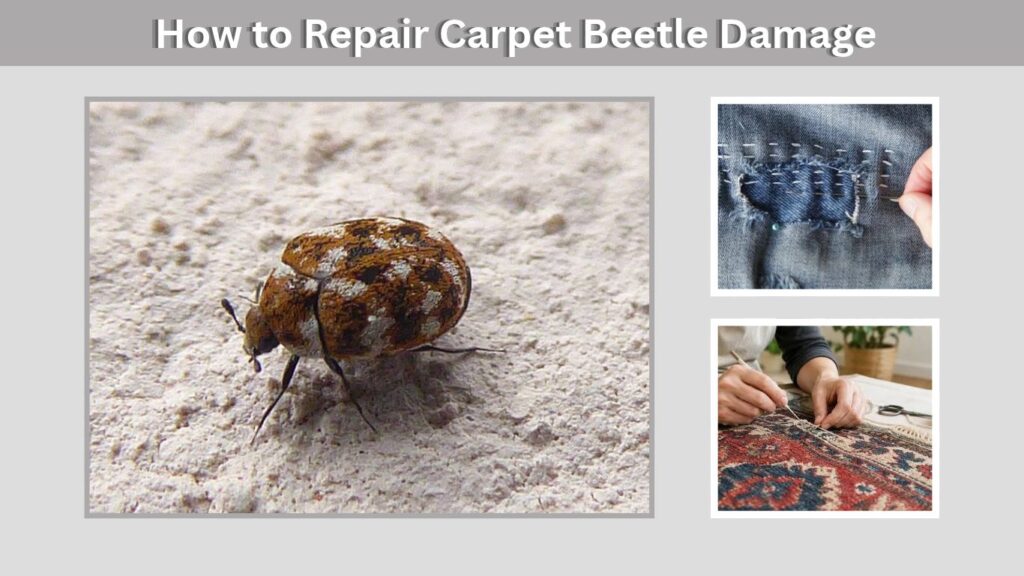
The possibility of repairing carpet beetle damage depends on the material and severity of the infestation. Minor fabric holes or localized carpet damage may be repairable, but extensively damaged items sometimes require replacement.
Before attempting repairs, eliminate the infestation to prevent additional damage.
Repairing Damaged Clothing
Small holes in wool sweaters and other garments may be repaired through darning, patching, or professional fabric restoration.
Delicate silk and valuable clothing should be assessed by an experienced textile repair specialist.
Cleaning the garment before repairing it also helps eliminate remaining larvae or eggs.
Repairing Carpet and Rug Damage
Localized carpet damage may be repaired by replacing damaged fibers or patching affected sections.
Professional rug restorers may be able to restore valuable wool rugs using specialized reweaving techniques.
However, widespread damage can make restoration impractical or more expensive than replacement.
How to Prevent Carpet Beetle Damage
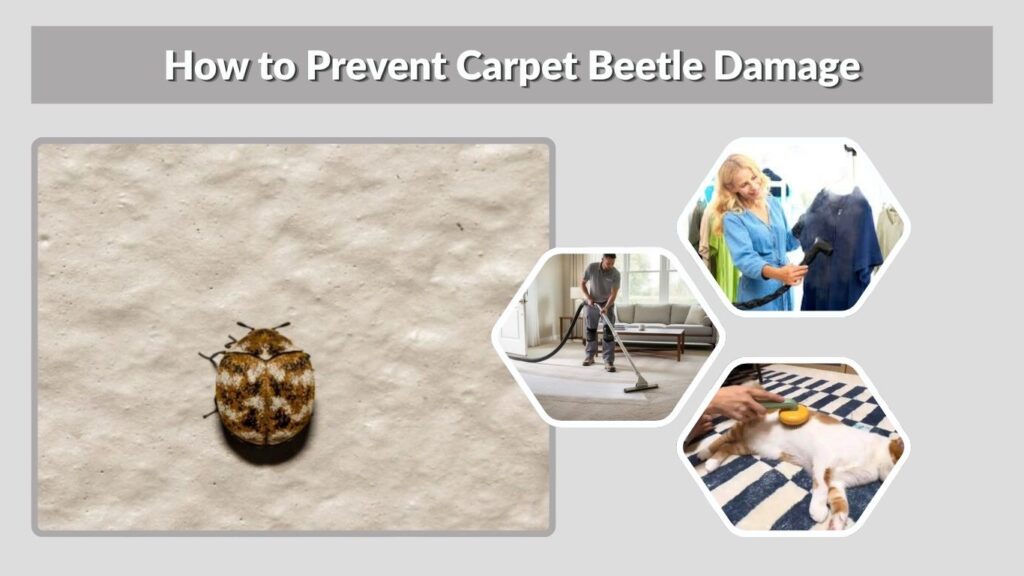
Preventing carpet beetle damage requires removing food sources, protecting vulnerable fabrics, and identifying infestations early. Regular cleaning is particularly important because larvae thrive in places where organic debris accumulates and disturbance is minimal.
Effective Carpet Beetle Prevention Methods
- Vacuum regularly: Clean carpets, rugs, baseboards, and areas underneath furniture to remove larvae and organic debris.
- Wash stored clothing: Clean wool, silk, and other vulnerable garments before placing them into long-term storage.
- Use sealed containers: Store valuable fabrics inside airtight bags or protective containers.
- Remove pet hair: Frequently clean areas where cats and dogs shed hair.
- Inspect furniture: Check upholstery seams, cushions, and hidden furniture spaces for larvae.
- Eliminate breeding sources: Remove accumulated lint, dead insects, and abandoned animal nests where safe and appropriate.
- Inspect secondhand materials: Examine used furniture, clothing, and rugs before bringing them indoors.
- Monitor suspicious areas: Look for new fabric damage, shed skins, and larvae in closets or storage spaces.
Thorough laundering or professional dry cleaning can eliminate carpet beetles from suitable infested fabrics.
If infestations continue despite cleaning, professional pest control may be necessary.
How Much Damage Can Carpet Beetles Cause?
The amount of damage depends on infestation size, available food, and how long the larvae remain undetected. A small number of larvae may cause limited damage, while a persistent infestation can affect multiple carpets, garments, and furniture pieces.
How Quickly Does Carpet Beetle Damage Happen?
Carpet beetle larvae develop over weeks or months, depending on the species and environmental conditions.
Because their feeding is gradual and often hidden, damage may accumulate before homeowners notice a problem.
There is no fixed period before damage begins. Early inspection and treatment are the best ways to prevent extensive deterioration.
FAQs
1. What Does Carpet Beetle Damage Look Like on Clothes?
Carpet beetle damage on clothes usually appears as irregular holes, thin fabric, or larger damaged patches. Wool and silk garments are especially vulnerable. Finding bristly larvae or shed skins near the affected clothing can help confirm an infestation.
2. Can Carpet Beetles Damage Wooden Furniture?
No, carpet beetles do not consume solid wood or bore tunnels into wooden furniture. However, their larvae may damage wool upholstery, feather stuffing, and other animal-derived materials attached to furniture. Actual wood damage usually indicates another cause.
3. Can Carpet Beetles Damage Books?
Carpet beetle larvae may damage books containing animal-derived materials, including leather bindings and certain traditional adhesives. They do not normally consume ordinary paper as their primary food source. Damage limited to paper may indicate another insect pest.
4. Can Carpet Beetles Damage Pillows and Mattresses?
Carpet beetle larvae can damage pillows and mattresses containing feathers, wool, or animal hair. They may also feed on accumulated organic debris around bedding. Regular vacuuming, washing suitable bedding, and inspecting vulnerable stuffing materials can help prevent infestations.
5. Is Carpet Beetle Damage Permanent?
Carpet beetle damage is usually permanent because larvae physically consume the affected fibers. Small clothing holes and localized rug damage may be repaired, but extensive deterioration can require replacement. Eliminating the infestation prevents additional feeding but cannot restore missing material.
