
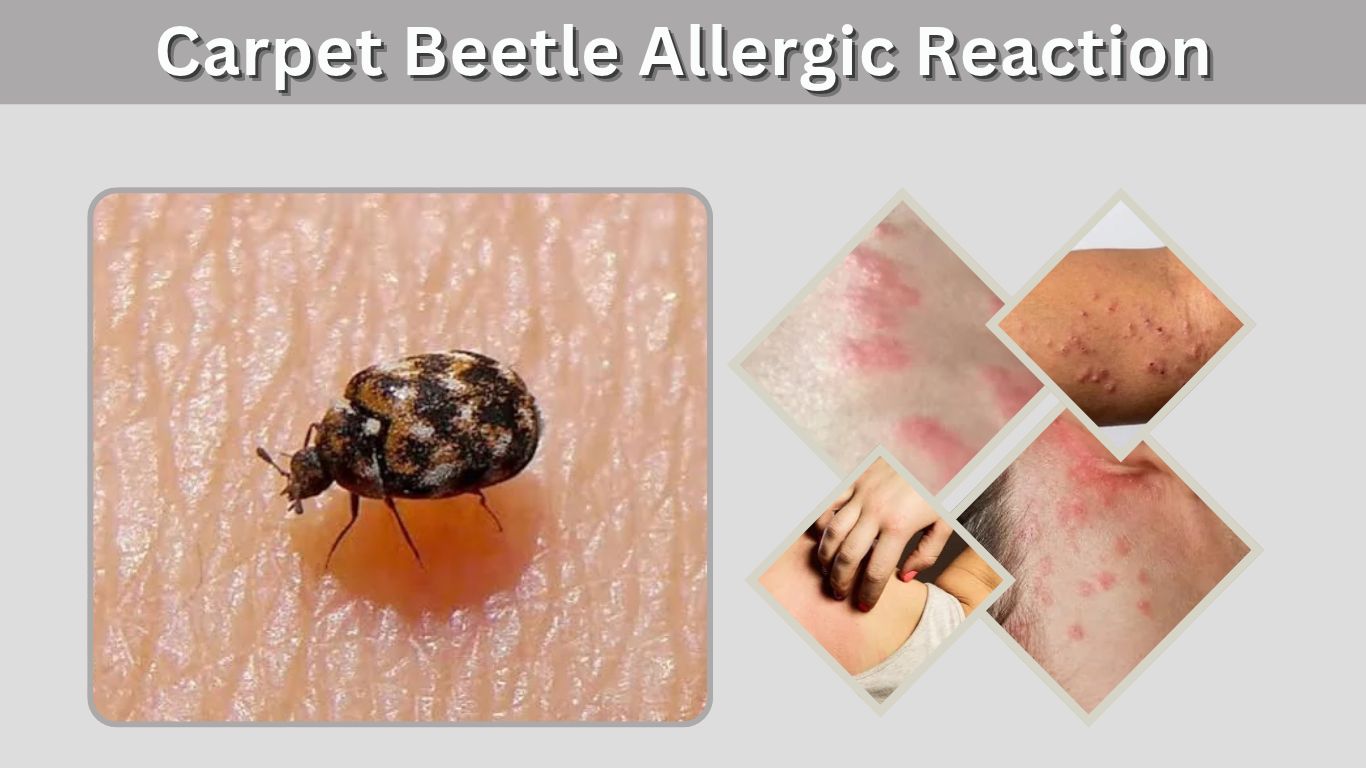
Carpet beetle allergic reactions can cause uncomfortable skin irritation, itching, redness, and rashes that resemble insect bites. Although carpet beetles do not bite humans, their larvae have tiny hairs capable of triggering allergic reactions in sensitive individuals. These reactions may occur after contact with infested clothing, bedding, carpets, or furniture. Some people develop symptoms quickly, while others experience delayed irritation. Understanding carpet beetle allergic reaction symptoms, identifying the cause, and choosing appropriate treatment methods can help relieve discomfort and prevent repeated exposure to these household pests.
Can Carpet Beetles Cause Allergic Reactions?
Yes, carpet beetles can cause allergic reactions, particularly when people come into contact with the tiny hairs of their larvae. This condition is commonly called carpet beetle dermatitis or dermestid dermatitis. Not everyone develops symptoms, and reactions depend on individual sensitivity and exposure.
What Causes Carpet Beetle Allergic Reactions?
Carpet beetle larvae have small, specialized hairs called hastisetae. These hairs can detach from their bodies and accumulate in clothing, bedding, carpets, and household dust.
When the hairs contact the skin, they may cause irritation or trigger an immune response in susceptible individuals.
The resulting symptoms can resemble insect bites, even though carpet beetles do not feed on human blood.
Can Adult Carpet Beetles Cause Allergies?
Adult carpet beetles are not usually responsible for allergic skin reactions.
Most reported reactions involve larval hairs or exposure to materials contaminated with those hairs.
Adults generally feed on pollen and nectar outdoors, while their larvae develop in protected indoor locations containing suitable food sources.
Carpet Beetle Allergic Reaction Symptoms
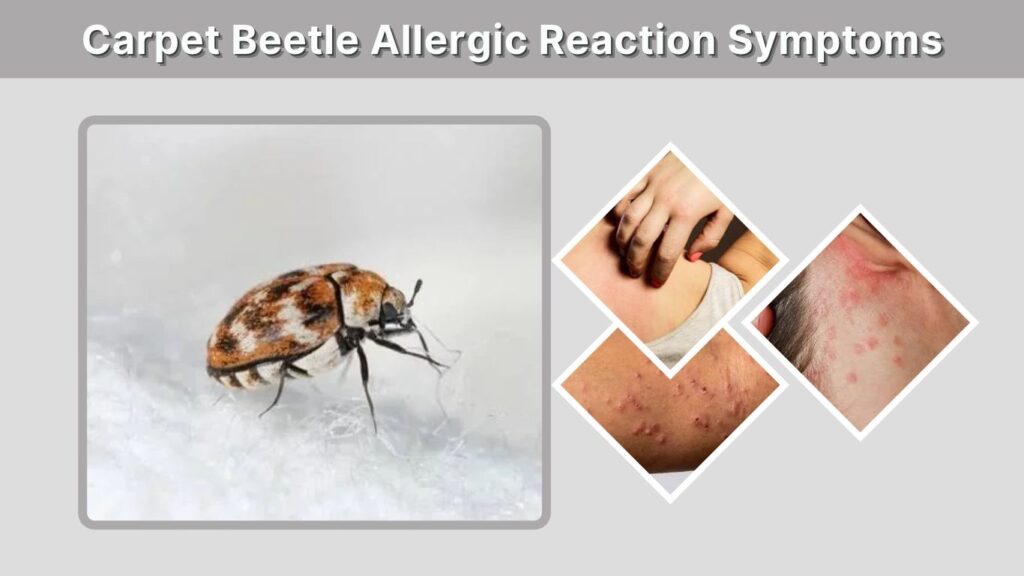
Carpet beetle allergic reaction symptoms vary depending on individual sensitivity and the extent of exposure. Some people experience mild itching, while others develop visible rashes or more persistent dermatitis. Symptoms are not specific to carpet beetles and can resemble several other skin conditions.
Common Symptoms of Carpet Beetle Allergy
- Itchy skin: Persistent itching may develop after contact with contaminated fabrics.
- Red bumps: Small, raised bumps can resemble mosquito bites or bed bug bites.
- Skin redness: Affected areas may become irritated or inflamed.
- Patchy rashes: Groups of red bumps or irritated patches can develop.
- Small blisters: Some individuals experience tiny fluid-filled lesions.
- Localized swelling: Mild swelling may occur around irritated areas.
- Eye irritation: Exposure to airborne larval hairs may occasionally irritate sensitive eyes.
Rare reports have also linked larval hair exposure to respiratory allergic symptoms.
Can Carpet Beetles Cause Hives?
Carpet beetle exposure can trigger allergic skin reactions, but not every raised or itchy rash is true hives.
Some reactions may resemble urticaria, while others represent contact dermatitis.
Because hives can result from numerous causes, their appearance alone cannot confirm carpet beetle exposure. A healthcare professional can help determine the underlying cause.
What Does a Carpet Beetle Allergic Reaction Look Like?
A carpet beetle skin reaction often appears as clusters of itchy, red bumps or inflamed patches. Some people develop small blisters or more widespread irritation. However, the appearance varies significantly, and a rash cannot be reliably identified as carpet beetle dermatitis from photographs alone.
Carpet Beetle Rash vs. Bed Bug Bites
Carpet beetle reactions and bed bug bites may look similar, but their causes are different.
Bed bugs bite humans to obtain blood, whereas carpet beetle larvae cause irritation through contact with their hairs.
Bed bug bites may appear on exposed skin after sleeping, while carpet beetle dermatitis can develop wherever contaminated clothing or materials contact the body.
Identifying the insects, shed skins, or other evidence in the surrounding environment provides more reliable clues than examining the rash alone.
Can Carpet Beetles Cause Eczema?
Carpet beetle larvae can cause contact dermatitis, which is sometimes described as an eczema-like reaction.
However, they are not an established direct cause of chronic atopic eczema.
In susceptible individuals, repeated exposure to larval hairs may contribute to ongoing irritation. Persistent eczema-like symptoms should be assessed by a dermatologist.
Carpet Beetle Larvae Allergic Reactions
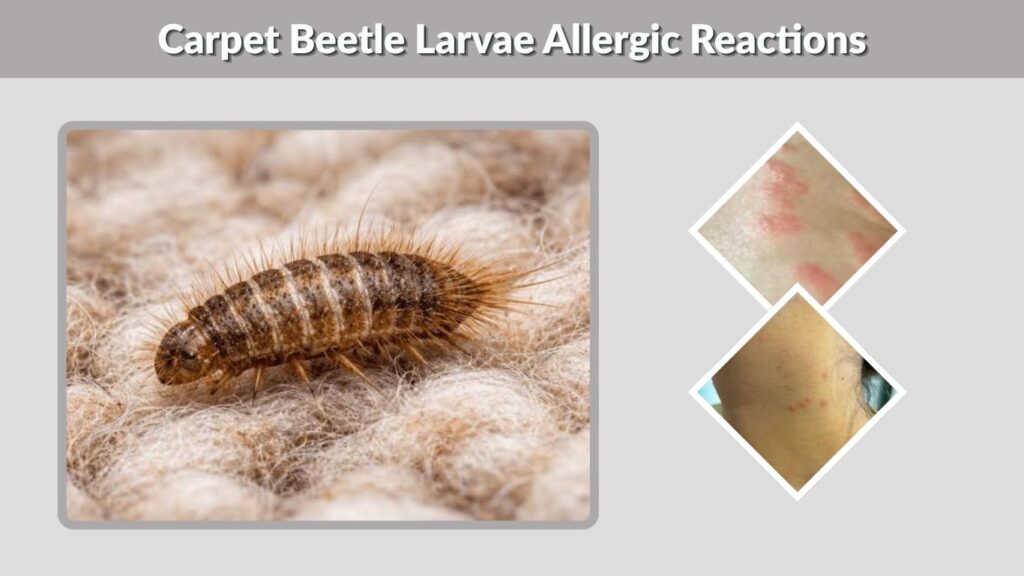
Carpet beetle larvae are the primary source of reactions associated with these insects. Their protective hairs can become detached and remain in household materials even after the larvae have moved elsewhere. Consequently, people may experience symptoms without seeing live carpet beetles.
Why Carpet Beetle Larvae Cause Skin Reactions
Larval hairs have specialized structures that can irritate the skin and trigger hypersensitivity responses.
These hairs may accumulate inside mattresses, upholstered furniture, closets, and clothing.
Sensitive individuals can experience reactions after direct contact or exposure to contaminated materials. A larva does not need to be crawling on the skin for a reaction to occur.
Black and Varied Carpet Beetle Reactions
Both black carpet beetles and varied carpet beetles belong to a family containing species associated with dermatitis.
However, reactions differ among species and individuals.
The presence of a particular carpet beetle species does not automatically mean someone will develop an allergy. Identifying larvae and possible exposure sources is more useful than relying on species identification alone.
How to Treat Carpet Beetle Allergic Reactions
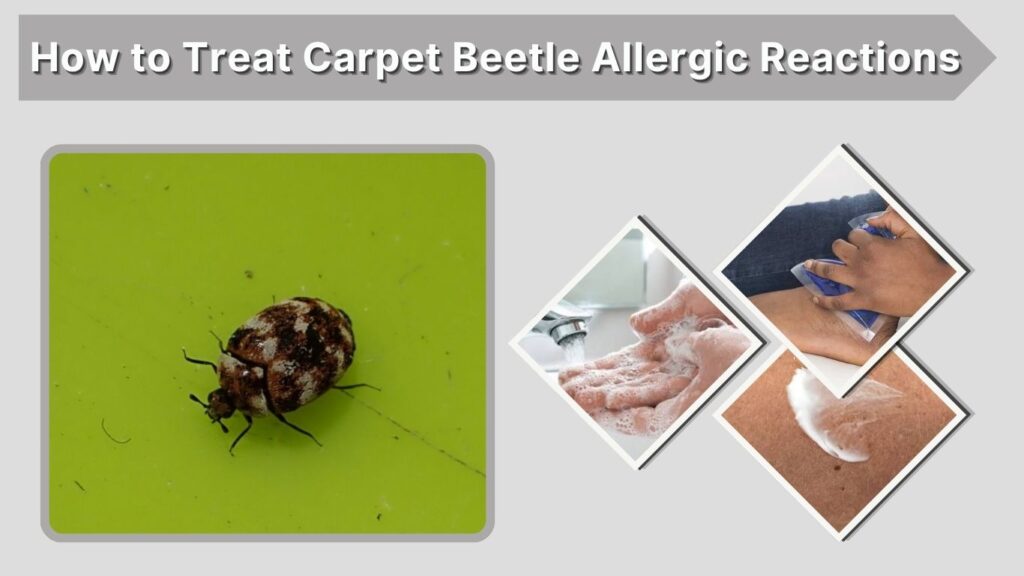
Treatment focuses on relieving skin irritation and reducing further exposure to carpet beetle hairs. Mild reactions may improve with simple skin care, but persistent, widespread, or severe symptoms require medical attention. Because similar rashes have many possible causes, avoid assuming every unexplained skin reaction comes from carpet beetles.
Home Treatment for Mild Skin Reactions
- Wash exposed skin: Gently clean affected areas with mild soap and water to remove possible irritants.
- Apply a cool compress: Hold a clean, cool, damp cloth against irritated skin for 10–15 minutes.
- Use gentle moisturizers: Fragrance-free moisturizers can help support irritated skin.
- Consider anti-itch products: Calamine lotion or short-term 1% hydrocortisone cream may help certain mild rashes when used according to product directions.
- Ask about antihistamines: A pharmacist or healthcare professional can recommend appropriate options for itching.
- Avoid scratching: Scratching can worsen inflammation and increase the risk of secondary skin infections.
Avoid applying harsh disinfectants, vinegar, insecticides, or essential oils to irritated skin.
When Should You See a Doctor?
Consult a healthcare professional if the rash spreads, becomes painful, develops pus, or fails to improve.
Medical evaluation is particularly important for young children, people with extensive skin reactions, and anyone experiencing repeated unexplained symptoms.
Seek emergency medical care for difficulty breathing, throat tightness, or sudden swelling of the tongue or throat. These symptoms may indicate a serious allergic reaction, regardless of the cause.
How Long Do Carpet Beetle Allergic Reactions Last?
The duration of carpet beetle dermatitis varies according to the individual’s sensitivity, severity of irritation, and whether exposure continues. Some reactions improve within several days after appropriate treatment and environmental cleaning, while others may persist longer.
Immediate vs. Delayed Carpet Beetle Reactions
Some individuals experience relatively rapid allergic symptoms after exposure, while delayed hypersensitivity reactions may develop over the following one to three days.
A delayed rash does not necessarily mean carpet beetles are still present on the skin.
Repeated exposure to contaminated bedding, clothing, or furniture may contribute to recurring symptoms.
Can Carpet Beetle Allergies Go Away on Their Own?
Mild reactions may resolve after exposure ends, particularly when affected fabrics and living spaces are thoroughly cleaned.
However, ongoing irritation can persist when larval hairs remain in the environment.
Medical treatment may be needed if symptoms are persistent, severe, or caused by another condition.
How to Prevent Carpet Beetle Allergic Reactions
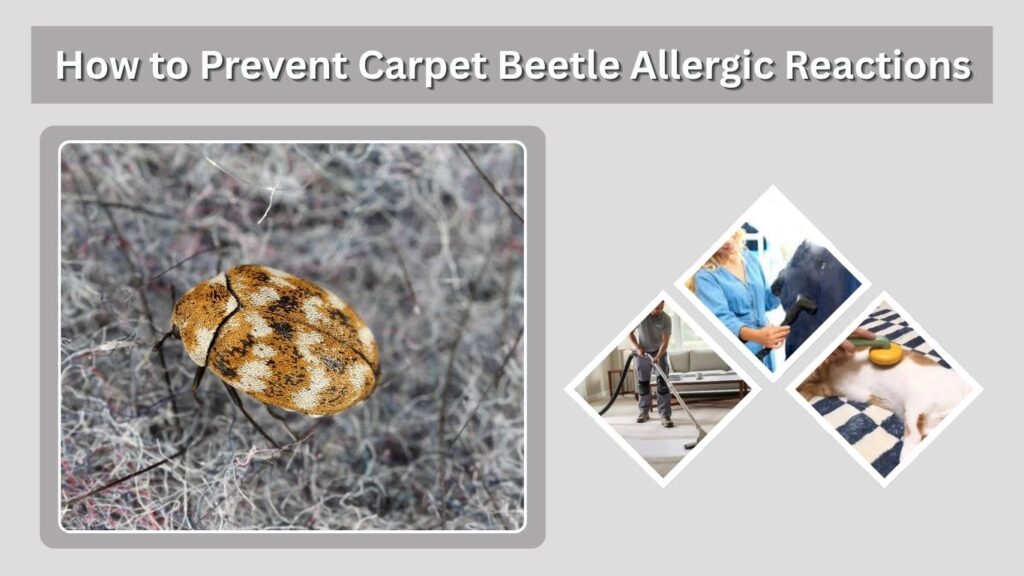
Preventing repeated allergic reactions requires reducing contact with larval hairs and controlling carpet beetle infestations. Cleaning contaminated areas is especially important because shed hairs can remain in fabrics and household dust after live insects have been removed.
Areas to Inspect for Carpet Beetle Larvae
- Mattresses and bedding: Check seams, blankets, and areas where hair or debris accumulates.
- Carpets and rugs: Inspect edges, corners, and spaces beneath furniture.
- Closets: Examine stored wool, silk, fur, and other natural materials.
- Upholstered furniture: Look beneath cushions and inside accessible seams.
- Pet resting areas: Check for accumulated fur, lint, and larval skins.
- Air vents: Inspect accessible areas where dust and loose hairs may collect.
Cleaning Methods to Reduce Allergens
Vacuum affected carpets, furniture, baseboards, and storage spaces thoroughly. Use a vacuum with effective filtration when possible to reduce the redistribution of dust.
Wash suitable bedding and clothing according to care labels. Professional dry cleaning may be appropriate for delicate fabrics.
Remove infested materials and accumulated organic debris, including pet hair and dead insects.
If insects are repeatedly found near ventilation equipment, consider having the affected system inspected and cleaned appropriately.
FAQs
1. How Do I Know If I Have a Carpet Beetle Allergic Reaction?
A carpet beetle allergic reaction may cause itchy red bumps, irritated patches, or small blisters. Finding larvae or their shed skins near clothing and bedding supports possible exposure. However, skin symptoms alone cannot confirm the diagnosis, so persistent reactions require medical assessment.
2. Can Carpet Beetle Larvae Cause Allergic Reactions Without Biting?
Yes, carpet beetle larvae can trigger skin reactions without biting. Their tiny, detachable hairs can contact human skin through infested fabrics or household dust. Sensitive individuals may develop itching, redness, or dermatitis despite never seeing a larva touching their body.
3. How Long Does a Carpet Beetle Skin Reaction Last?
Carpet beetle skin reactions may improve within a few days after exposure stops, although some cases take longer. Repeated contact with larval hairs may cause recurring symptoms. The duration depends on individual sensitivity, treatment, and whether the original exposure source remains.
4. Can Carpet Beetle Allergic Reactions Be Delayed?
Yes, carpet beetle exposure can cause immediate or delayed hypersensitivity reactions in susceptible individuals. Some delayed reactions may develop up to 72 hours after exposure. The timing alone cannot confirm the cause because other allergic and inflammatory conditions produce similar symptoms.
5. Can Carpet Beetle Allergies Cause Breathing Problems?
Rare reports have associated carpet beetle larval hairs with respiratory irritation and asthma-like allergic symptoms. However, breathing problems have many possible causes. Anyone experiencing unexplained wheezing should seek medical evaluation, while sudden severe breathing difficulty requires emergency care.
