
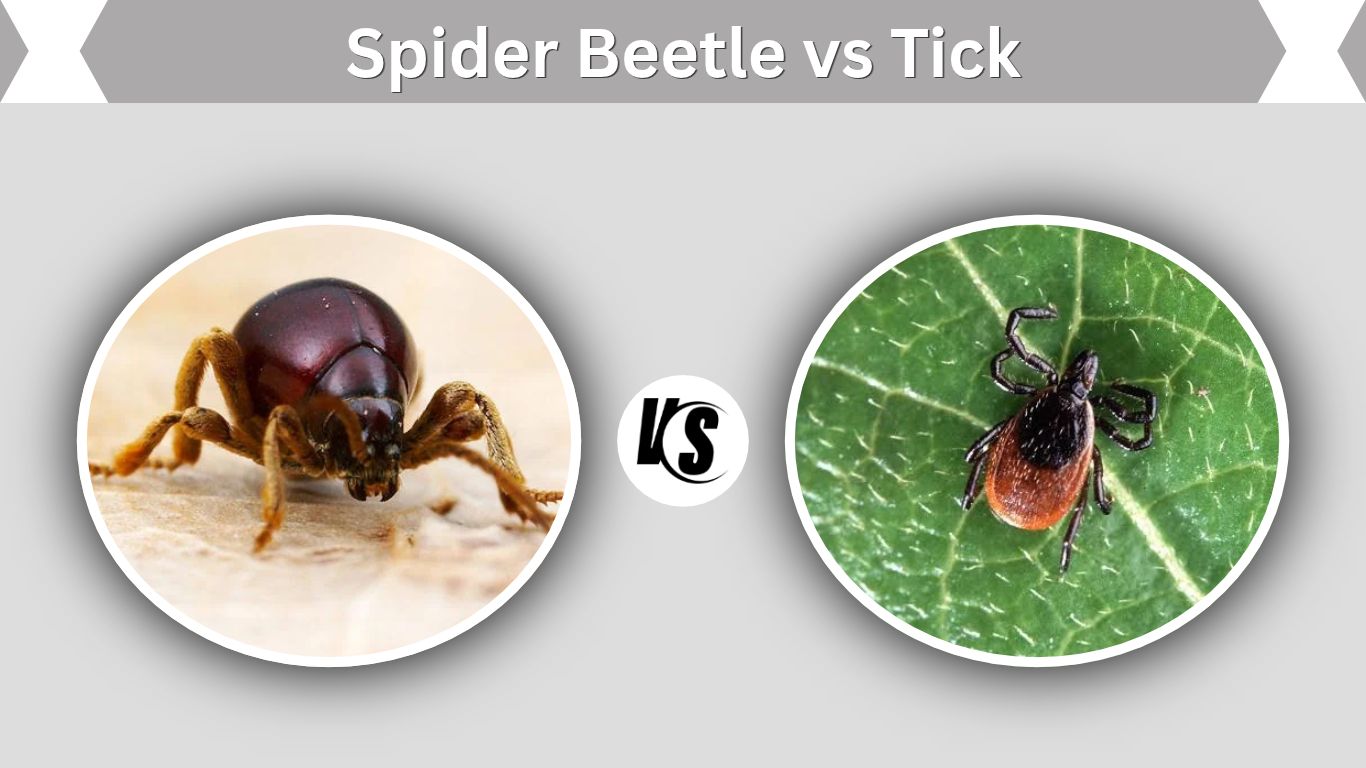
Spider beetles and ticks can look surprisingly similar, especially when they appear as tiny brown insects crawling around your home. Both have rounded bodies and small legs, making identification difficult without a closer look. However, spider beetles and ticks are completely different creatures with distinct feeding habits, behaviors, and health risks. Spider beetles are harmless scavengers, while ticks are blood-feeding parasites that may transmit diseases. Understanding the spider beetle vs tick differences helps you identify these pests correctly. This guide covers their appearance, habitats, bites, and common look-alikes, including bed bugs.
Spider Beetle vs Tick: Quick Identification
The easiest way to distinguish a spider beetle from a tick is to examine its legs, antennae, and body structure. Although both can be small and brown, spider beetles belong to the insect group, while ticks are arachnids. Their physical differences become clearer when examined under magnification.
Key Physical Differences
- Legs: Spider beetles have six legs, while adult and nymphal ticks have eight.
- Antennae: Spider beetles have two antennae, but ticks have none.
- Body shape: Spider beetles often have rounded, raised bodies, while unfed ticks are generally flatter.
- Color: Spider beetles are commonly reddish brown, while ticks range from pale brown to dark reddish brown.
- Body covering: Spider beetles have hardened wing covers, while ticks lack wings.
- Feeding habits: Spider beetles consume organic materials; ticks feed on blood.
Can Spider Beetles Look Exactly Like Ticks?
Smooth spider beetles are particularly easy to confuse with ticks because they have glossy, rounded bodies and long, thin legs.
However, their antennae and insect body structure provide important identification clues. Remember that larval ticks also have six legs, so leg count alone is not always conclusive.
How to Identify a Spider Beetle
Spider beetles belong to the family Ptinidae and commonly infest dried foods and organic materials. Their unusual appearance results from their rounded abdomens, narrow front bodies, and slender legs. Most species are relatively small, making detailed examination necessary. Unlike ticks, these beetles do not require animal hosts to survive.
Spider Beetle Appearance
Most spider beetles measure approximately 2–5 millimeters long. Their bodies may be smooth, shiny, or covered with fine hairs.
Smooth spider beetles resemble tiny reddish-brown beads, while other species have elongated front body sections and hairy surfaces.
Spider Beetle Behavior
Spider beetles often become active at night and hide in cracks or sheltered spaces during the day.
They feed on stored grains, dried foods, dead insects, feathers, and other organic debris. Repeated indoor sightings may indicate a hidden food source.
How to Identify a Tick
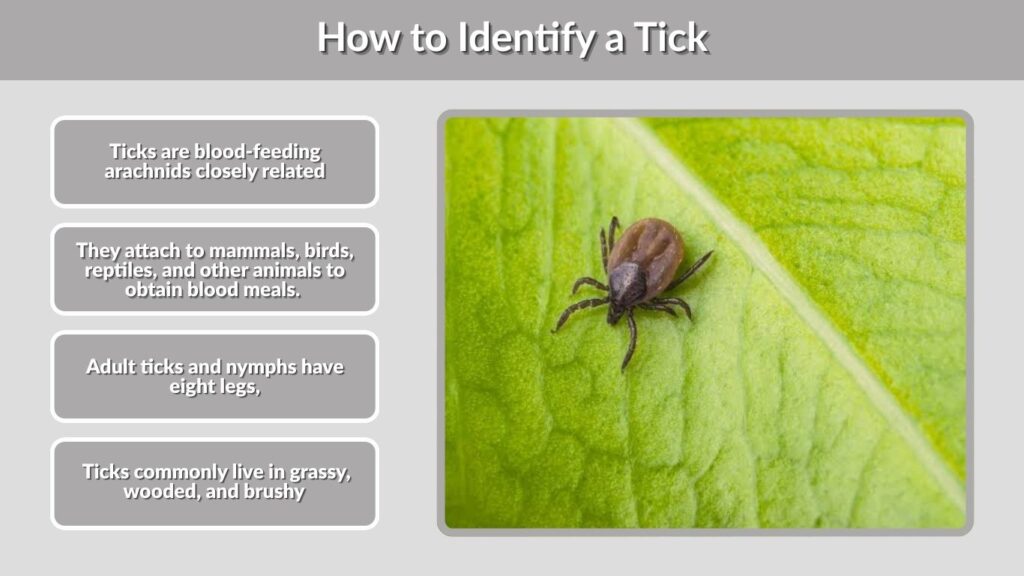
Ticks are blood-feeding arachnids closely related to mites and spiders. They attach to mammals, birds, reptiles, and other animals to obtain blood meals. Their appearance varies depending on species, life stage, and feeding status. Some ticks are extremely small, making them difficult to distinguish from other tiny household arthropods.
Tick Appearance
Unfed ticks generally have flattened, oval bodies with visible mouthparts at the front.
Adult ticks and nymphs have eight legs, while newly hatched larvae have six. After feeding, many ticks become noticeably swollen, sometimes developing rounded bodies resembling small beans.
Tick Behavior
Ticks commonly live in grassy, wooded, and brushy environments where animal hosts pass.
Unlike spider beetles, ticks attach to animals or humans to feed. Some species may enter homes on pets, clothing, or other transported materials.
Spider Beetle vs Bed Bug: Main Differences
Spider beetles are also commonly mistaken for bed bugs because both may appear reddish brown and crawl indoors. However, their body shapes and feeding habits are different. Bed bugs feed on blood and hide near sleeping areas, while spider beetles mainly search for stored food or decaying organic materials.
How to Tell Spider Beetles and Bed Bugs Apart
- Body shape: Spider beetles are rounded or dome-shaped; unfed bed bugs are flattened and oval.
- Size: Spider beetles are commonly 2–5 mm long; adult bed bugs are usually 5–7 mm.
- Legs: Both have six legs.
- Antennae: Both have antennae, but spider beetle antennae are often especially prominent.
- Food: Spider beetles eat dried organic materials; bed bugs feed on blood.
- Habitat: Spider beetles often occur near stored products; bed bugs concentrate around sleeping areas.
Why Are Spider Beetles Found in Beds?
Spider beetles may accidentally wander onto bedding from nearby furniture, storage areas, or hidden infestations.
Unlike bed bugs, they do not seek sleeping people for blood. Finding one on a mattress does not automatically indicate a bed bug infestation.
Do Spider Beetles, Ticks, and Bed Bugs Bite?
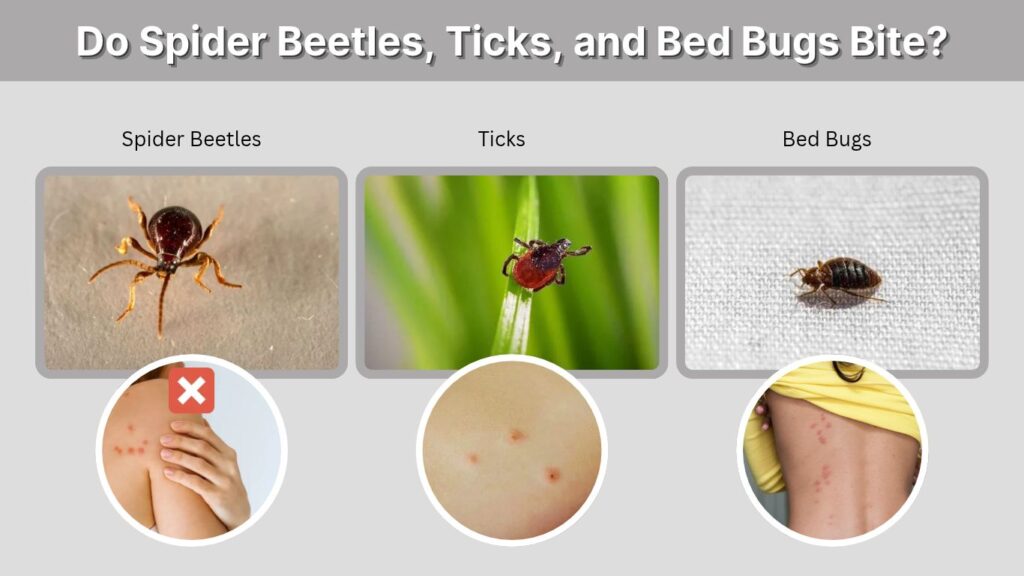
Biting behavior is one of the most important differences between these pests. Spider beetles are not considered medically significant biting insects. Ticks and bed bugs, however, depend on blood meals for survival and development. Understanding their feeding behavior can help identify potential health concerns and determine whether further action is necessary.
Do Spider Beetles Bite Humans?
Spider beetles do not normally bite humans or pets. Their mouthparts are adapted for consuming dried plant and animal materials.
If you notice unexplained skin irritation, consider other insects or possible skin conditions rather than assuming spider beetles caused the problem.
Tick Bites vs Bed Bug Bites
Ticks attach to the skin and may remain attached while feeding. Some species can transmit disease-causing pathogens.
Bed bugs typically feed briefly and then return to hiding places. Their bites may cause itchy skin reactions, but bite appearance alone cannot reliably identify the insect responsible.
Where Are Spider Beetles and Ticks Commonly Found?
Habitat provides another useful identification clue. Spider beetles are primarily scavengers associated with stored products and sheltered spaces. Ticks are more closely associated with animal hosts and outdoor vegetation. Although both may appear indoors, the circumstances surrounding their discovery can help distinguish them.
Common Locations to Check
- Spider beetles: Pantries, cupboards, warehouses, attics, and storage rooms.
- Ticks: Tall grass, wooded trails, shrubs, and animal resting areas.
- Bed bugs: Mattress seams, bed frames, headboards, and furniture cracks.
- Spider beetle larvae: Infested dried food products and accumulated organic debris.
- Tick hiding places indoors: Pet bedding, clothing, and sheltered areas, depending on the species.
Why Is Location Important?
Finding a small brown arthropod in stored flour suggests a different problem from discovering one attached to your skin.
However, location alone cannot confirm identification. Body features and behavior should also be examined.
What to Do If You Find a Spider Beetle or Tick
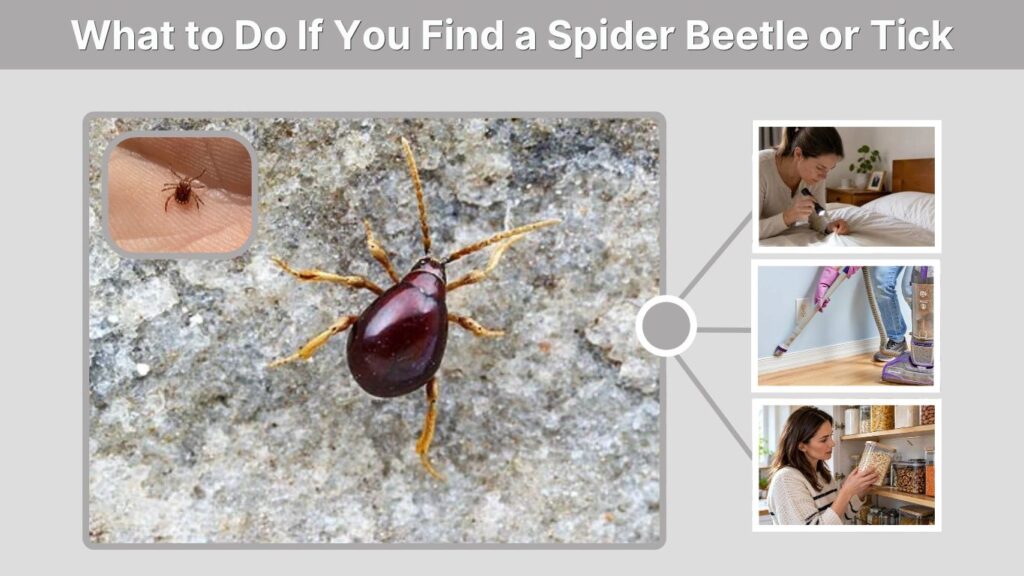
Correct identification helps determine the appropriate response. Spider beetle infestations usually require removing food sources and cleaning affected areas. Tick encounters require greater attention because attached ticks may transmit infections. Avoid applying random pesticides before identifying the organism.
Steps to Take After Finding an Unknown Pest
- Examine its appearance: Check the body shape, antennae, and number of legs.
- Take a clear photograph: Use a close-up image for identification.
- Check the surroundings: Look for stored food, bedding, pets, or outdoor exposure.
- Inspect for more insects: Repeated sightings may indicate an infestation.
- Choose appropriate treatment: Address the actual pest rather than relying on its appearance alone.
How to Handle an Attached Tick
If a tick is attached to your skin, remove it promptly using clean, fine-tipped tweezers. Grasp it close to the skin and pull steadily without twisting.
Clean the bite area afterward. Contact a healthcare professional if you develop a rash, fever, or other concerning symptoms.
FAQs
1. Are spider beetles more dangerous than ticks?
No. Spider beetles are generally harmless to people and mainly damage stored products. Ticks present greater health concerns because some species transmit infectious diseases through their bites. Correct identification is important when an unfamiliar insect is found on the skin.
2. Can a smooth spider beetle look like a tick?
Yes. Smooth spider beetles have rounded, shiny bodies that can resemble small ticks. However, spider beetles possess antennae and six legs, while tick nymphs and adults have eight legs and no antennae. Larval ticks are an important exception because they have six legs.
3. How can I tell a spider beetle from a bed bug?
Check the body shape and feeding behavior. Spider beetles usually have rounded, raised bodies, while unfed bed bugs are flat and broadly oval. Bed bugs feed on blood and hide near sleeping areas, whereas spider beetles typically feed on dried organic materials.
4. Do spider beetles attach to human skin?
No. Spider beetles do not attach themselves to people to obtain blood meals. They may accidentally crawl across skin or clothing, but they are not parasites. Ticks, however, use specialized mouthparts to attach to hosts while feeding.
5. Can spider beetles and ticks live in the same house?
Yes, both may appear in the same home, although their food sources and preferred habitats differ. Spider beetles may develop in stored organic materials, while ticks can enter on animals or clothing. Repeated tick sightings, especially around pets, deserve careful investigation.
