
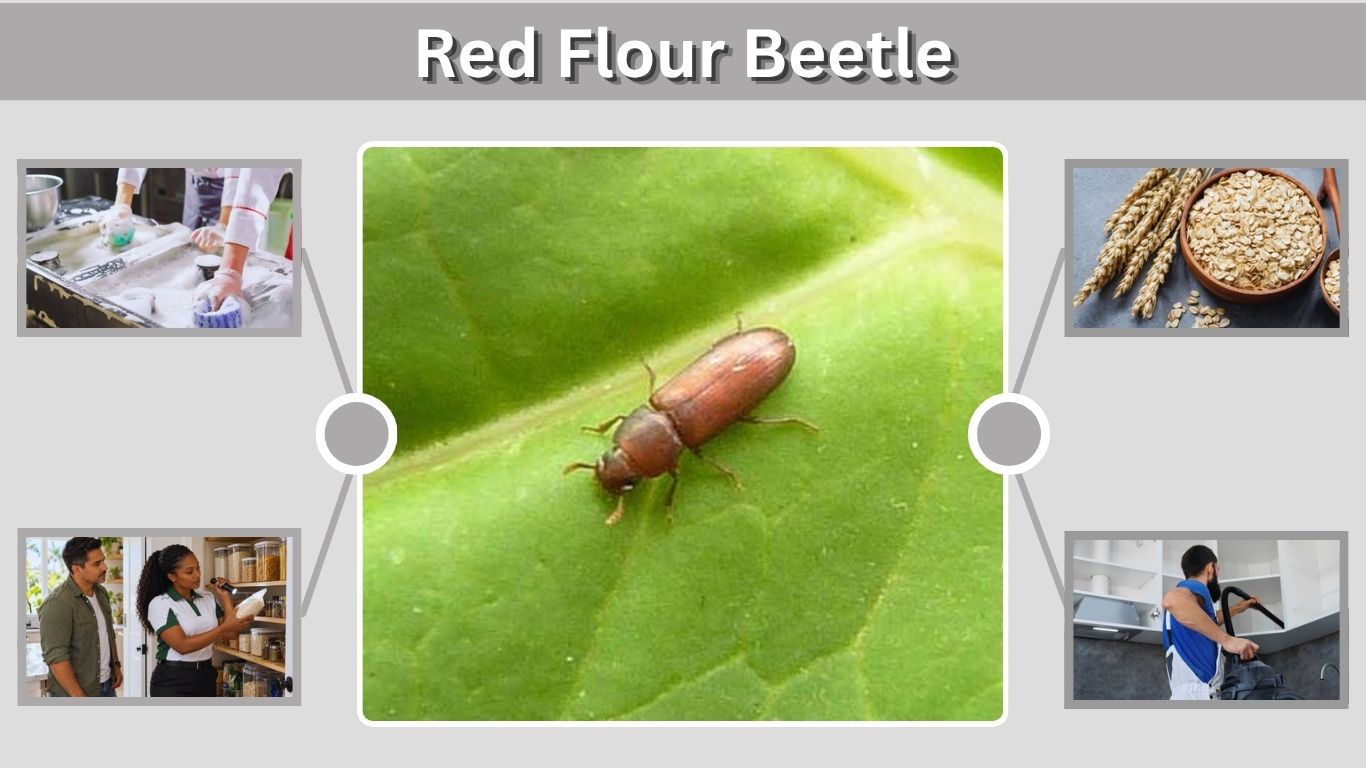
The red flour beetle (Tribolium castaneum) is a common stored-food pest that infests flour, cereals, grains, spices, and other dried products. Its small reddish-brown body makes it easy to overlook inside kitchen cabinets and food packages. Although these beetles do not bite people, their feeding activity can contaminate stored food and produce unpleasant odors. They reproduce quickly under favorable conditions, making infestations difficult to control without proper cleaning and food storage. Understanding their appearance, life cycle, feeding habits, and control methods helps prevent household infestations.
What Is a Red Flour Beetle?
The red flour beetle is a small insect belonging to the family Tenebrionidae. Its scientific name is Tribolium castaneum, and it is also called the rust-red flour beetle. It is widely distributed and commonly occurs in flour mills, grocery stores, food warehouses, and residential kitchens. Both adults and larvae feed on stored food products, particularly processed grains and damaged kernels.
Red Flour Beetle Scientific Classification
- Scientific name: Tribolium castaneum
- Common names: Red flour beetle, rust-red flour beetle
- Family: Tenebrionidae
- Order: Coleoptera
- Class: Insecta
- Genus: Tribolium
- Species: T. castaneum
Why Is It Called a Red Flour Beetle?
The name comes from its characteristic reddish-brown body color and its association with flour and other stored grain products. The word castaneum refers to its chestnut-like brown coloration.
Unlike insects that primarily attack living plants, this beetle commonly develops in stored food materials where damaged grains and processed products provide suitable food.
Red Flour Beetle Identification and Appearance
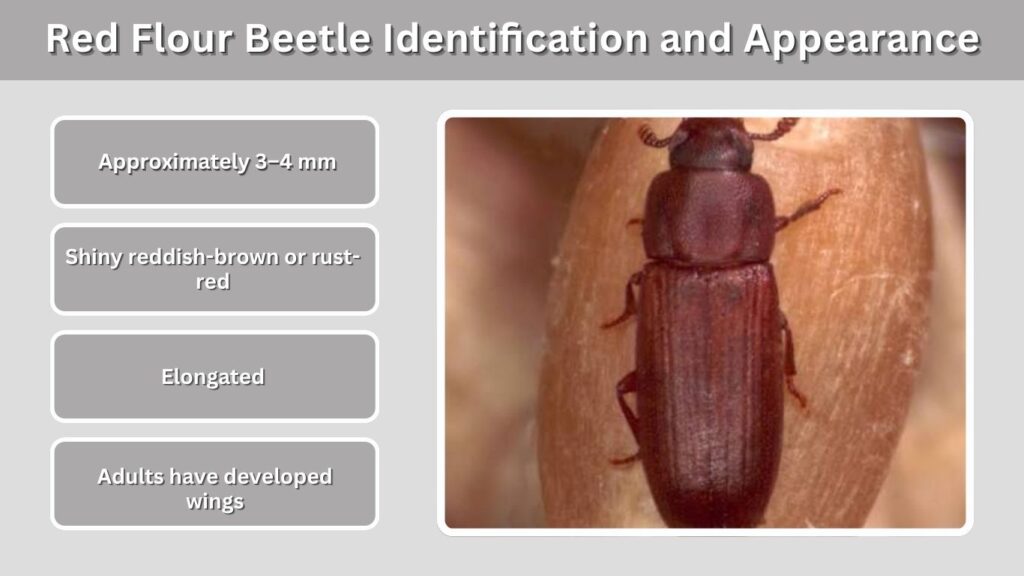
Identifying red flour beetles requires examining their body shape, coloration, size, and antennae. Adults are small, elongated, and flattened, with a shiny reddish-brown appearance. They move quickly across flour, shelves, and food packaging, making them relatively easy to notice once their population increases. Their antennae provide one of the most useful features for distinguishing them from confused flour beetles.
Red Flour Beetle Size and Characteristics
- Body length: Approximately 3–4 mm (0.12–0.16 inches).
- Color: Shiny reddish-brown or rust-red.
- Body shape: Elongated, narrow, and slightly flattened.
- Head: Visible from above, with chewing mouthparts.
- Antennae: End in a distinctive three-segmented club.
- Wings: Adults have developed wings and can fly short distances.
- Movement: Active crawlers that move quickly through stored food.
Red Flour Beetle vs. Confused Flour Beetle
The red flour beetle is frequently confused with the confused flour beetle (Tribolium confusum) because both species have similar body shapes, colors, and feeding habits.
The easiest identification difference is their antennae. Red flour beetles have three enlarged segments at the tips, creating a distinct club. Confused flour beetles have antennae that gradually enlarge toward the end.
Another important difference is flight ability. Red flour beetles can fly, although they are not particularly strong fliers. Confused flour beetles generally cannot fly.
Red Flour Beetle Diet and Food Sources
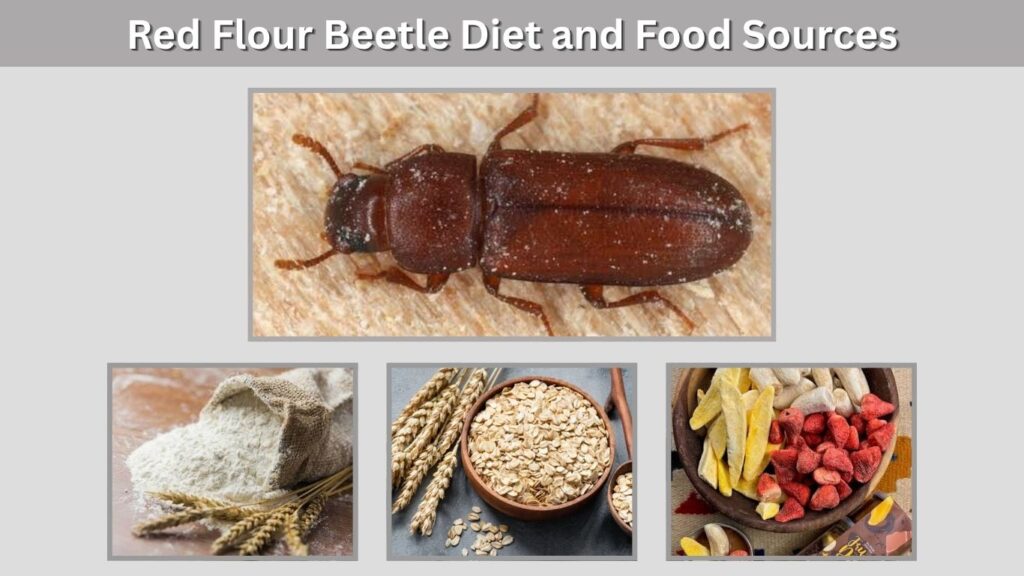
Red flour beetles feed on a wide range of stored food products, especially processed grains and materials containing broken kernels. They are particularly common in flour mills and household pantries where food particles accumulate. Their larvae and adults consume similar food sources, allowing infestations to continue inside stored products.
What Do Red Flour Beetles Eat?
Common food sources include:
- Flour: Wheat flour, cornmeal, and other milled grain products.
- Cereals: Oatmeal, breakfast cereals, and grain-based foods.
- Rice and grains: Broken rice, damaged kernels, and stored grain products.
- Spices: Dried herbs, seasoning powders, and other spices.
- Nuts and seeds: Shelled nuts, seeds, and oilseed products.
- Dried foods: Chocolate, dried fruits, crackers, and powdered ingredients.
- Pet food: Dry dog food, cat food, and birdseed.
Red flour beetles are generally secondary pests of whole grains because they prefer damaged kernels and processed materials. They can also feed on broken grain particles and other food residues.
Red Flour Beetle Life Cycle
The red flour beetle undergoes complete metamorphosis through four stages: egg, larva, pupa, and adult. Its development takes place mainly inside stored food products, where the larvae have access to suitable food. Under favorable warm conditions, the life cycle can be completed in approximately one to three months, although development may be considerably faster in ideal environments.
1. Egg Stage
Female red flour beetles lay tiny, white or translucent eggs directly in flour, grain dust, and other stored food materials. The eggs have a sticky outer coating that allows food particles to attach to their surfaces.
A female can produce hundreds of eggs during her lifetime. The eggs generally hatch within several days under favorable temperatures.
2. Larval Stage
The larvae are slender, creamy-white to light brown grubs with darker heads and two small pointed projections at the end of their bodies.
They feed on flour, broken grains, and other stored materials. As they grow, they pass through several developmental stages before preparing to pupate.
3. Pupal Stage
Mature larvae transform into pale white or yellowish pupae within the food material. Unlike some insect species, red flour beetles do not construct a protective cocoon around their pupae.
During this stage, the insect undergoes the transformation into an adult beetle.
4. Adult Stage
Adult red flour beetles emerge with soft, pale bodies that gradually develop their characteristic reddish-brown coloration.
They begin feeding, mating, and reproducing after becoming fully developed. Adults can survive for several years under favorable conditions, allowing infestations to persist if suitable food remains available.
Red Flour Beetle Damage and Infestation Signs
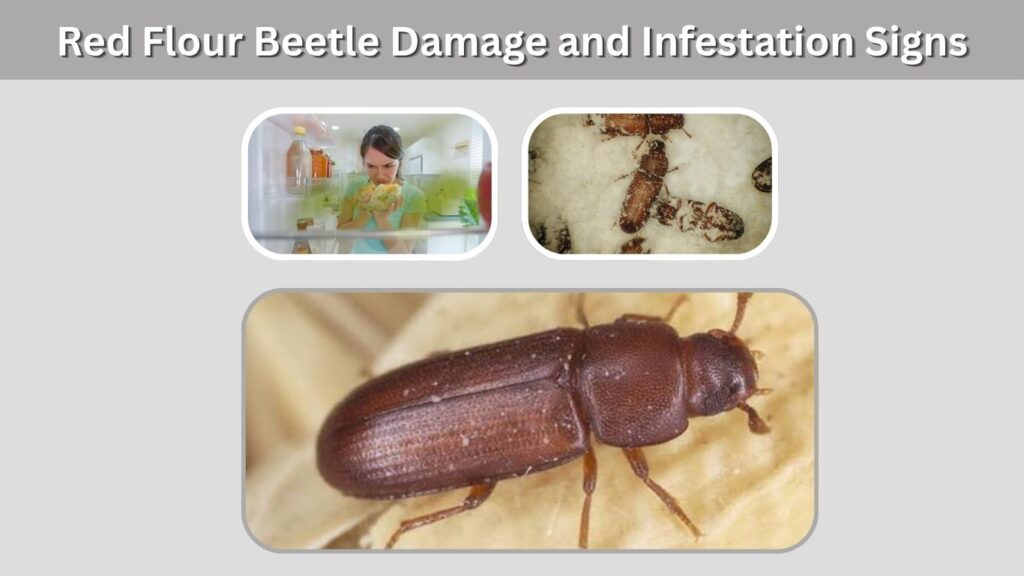
Red flour beetles damage stored food through feeding, contamination, and the accumulation of insect waste. Large populations can affect the quality, smell, and appearance of flour and other grain products. Their presence may also encourage microbial growth in heavily infested food. Recognizing early warning signs helps prevent the infestation from spreading to other storage areas.
Common Signs of Red Flour Beetle Damage
- Live beetles: Small reddish-brown insects crawling through flour or food containers.
- Larvae: Cream-colored grubs moving through stored products.
- Unpleasant odor: Infested food may develop a strong, unpleasant smell.
- Discoloration: Heavily infested flour may become grayish or pinkish.
- Food contamination: Insect fragments, eggs, shed skins, and waste may accumulate.
- Clumping: Contaminated flour may develop unusual texture and quality changes.
Red flour beetles can also release defensive chemicals called quinones when disturbed or crowded. These secretions contribute to unpleasant odors and may affect the quality of infested food.
Are Red Flour Beetles Harmful to Humans?
Red flour beetles do not bite or sting humans. They are not blood-feeding insects and do not normally attack people or pets. However, their presence in stored food creates sanitation concerns because infested products may contain insects, larvae, eggs, and waste. Some individuals may also experience allergic reactions associated with exposure to these beetles.
Do Red Flour Beetles Bite?
No. Red flour beetles have chewing mouthparts used for feeding on stored food materials. They do not use these mouthparts to attack humans.
If you find small reddish-brown beetles crawling on your skin or clothing, they are generally searching for food or moving through the environment rather than attempting to bite.
Can Red Flour Beetles Live in Your Bed?
Red flour beetles do not normally infest mattresses or bedding. They prefer stored food materials such as flour, cereals, spices, and pet food.
If you find them in your bedroom, inspect nearby food packages, dried decorative plants, and storage containers. Adult beetles can crawl away from their original food source and appear in unexpected rooms.
Red Flour Beetle Control and Treatment
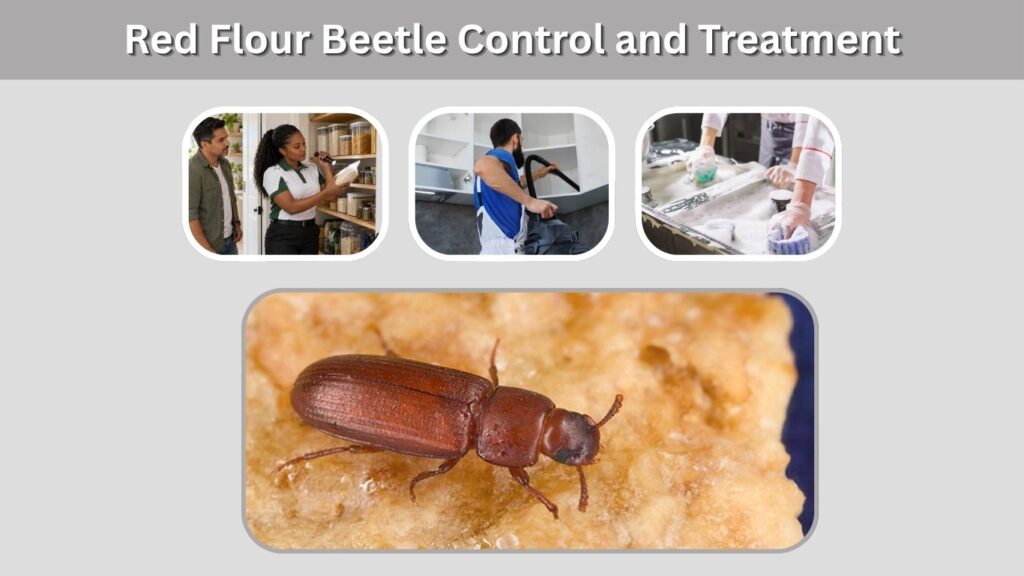
Controlling red flour beetles requires removing the food sources that support their development. Killing visible adults alone will not eliminate an infestation because eggs, larvae, and pupae may remain hidden in contaminated products. Thorough inspection, disposal, cleaning, and appropriate food storage are the most effective household control measures.
How to Get Rid of Red Flour Beetles
- Inspect food packages: Check flour, cereals, spices, rice, and pet food for insects and larvae.
- Discard contaminated products: Seal heavily infested food in a bag and dispose of it outside.
- Vacuum cabinets: Clean shelf corners, cracks, joints, and other areas where food particles collect.
- Wash storage areas: Use soap and water to remove food residues and insect remains.
- Freeze suitable products: Freeze salvageable dry goods at 0°F (-18°C) for approximately four days or longer, ensuring the contents reach the required temperature.
- Use airtight containers: Store uninfested foods in sealed glass, metal, or sturdy plastic containers.
- Monitor beetle activity: Use appropriate stored-product beetle traps to identify continuing activity.
Do Red Flour Beetle Traps Work?
Yes. Pheromone traps designed for red flour beetles can help detect and monitor adult activity. They attract beetles using chemical signals and capture them on sticky surfaces.
However, traps are monitoring tools rather than complete solutions. They cannot reliably eliminate eggs, larvae, and pupae hidden inside infested food packages.
How to Prevent Red Flour Beetle Infestations
Inspect newly purchased dry foods, keep pantry shelves clean, and avoid storing flour or cereals in open packaging. Regularly check pet food, spices, and forgotten pantry supplies. Proper food rotation and airtight storage reduce the chances of future infestations.
FAQs
1. Can Red Flour Beetles Fly?
Yes. Adult red flour beetles have developed wings and can fly short distances. They may move between nearby food storage areas and sometimes fly toward lights. However, they are relatively weak fliers compared with many other insects.
2. What Is the Scientific Name of the Red Flour Beetle?
The scientific name is Tribolium castaneum. It belongs to the family Tenebrionidae and is commonly known as the red flour beetle or rust-red flour beetle. It is an important pest of stored flour, cereals, and processed grain products.
3. How Long Do Red Flour Beetles Live?
Adult red flour beetles can survive for several months to multiple years under favorable conditions. Their complete development from egg to adult often takes approximately one to three months, depending on temperature, humidity, and food availability.
4. Are Red Flour Beetles Dangerous?
Red flour beetles are not considered dangerous biting insects. They do not sting or feed on human blood. However, they contaminate stored foods and may cause allergic reactions in some individuals. Heavily infested food should be discarded rather than consumed.
5. What Kills Red Flour Beetles?
Removing infested food, vacuuming storage areas, and washing shelves are effective control measures. Freezing suitable dry products can kill hidden life stages. Pheromone traps help monitor adult activity, while professional pest control may be necessary for persistent or extensive infestations.
