
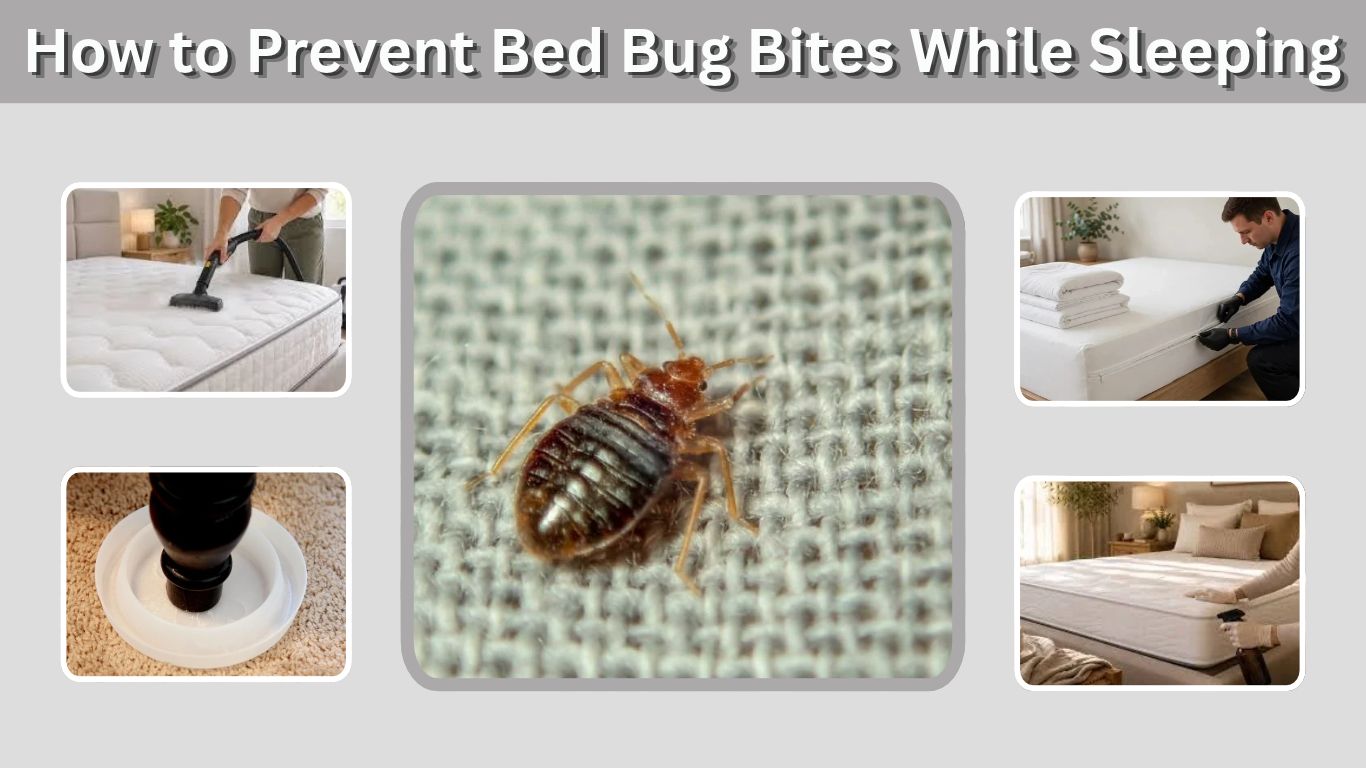
Bed bug bites can interrupt your sleep and leave behind itchy, red bumps that cause discomfort for several days. If you suspect bed bugs are hiding in your mattress or bedroom, knowing how to prevent bed bug bites while sleeping can help reduce your exposure until the infestation is eliminated. Effective prevention methods include using bed bug-proof mattress covers, installing interceptor traps, washing bedding, and keeping your bed away from walls. Although some people use lotions, essential oils, or insect repellents, these products do not provide dependable protection against bed bugs. This guide explains practical ways to prevent nighttime bites safely.
How to Prevent Bed Bug Bites While Sleeping
The most effective way to prevent bed bug bites is to stop the insects from reaching your body while addressing the infestation itself. Bed bugs typically emerge from hiding places to feed on sleeping people, then return to protected areas.
Creating physical barriers around your bed can help reduce bites. However, these precautions work best when combined with thorough inspection, cleaning, and appropriate treatment.
| Prevention Method | How It Helps |
| Mattress encasement | Traps bed bugs already inside the mattress |
| Bed bug interceptors | Catch insects attempting to climb bed legs |
| Moving the bed from walls | Reduces crawling access from nearby surfaces |
| Hot dryer treatment | Kills bed bugs and eggs in suitable fabrics |
| Vacuuming | Removes accessible insects and eggs |
| Protective sleepwear | Reduces exposed skin but does not guarantee protection |
| Professional pest treatment | Addresses hidden populations and infestations |
8 Ways to Prevent Bed Bug Bites at Night
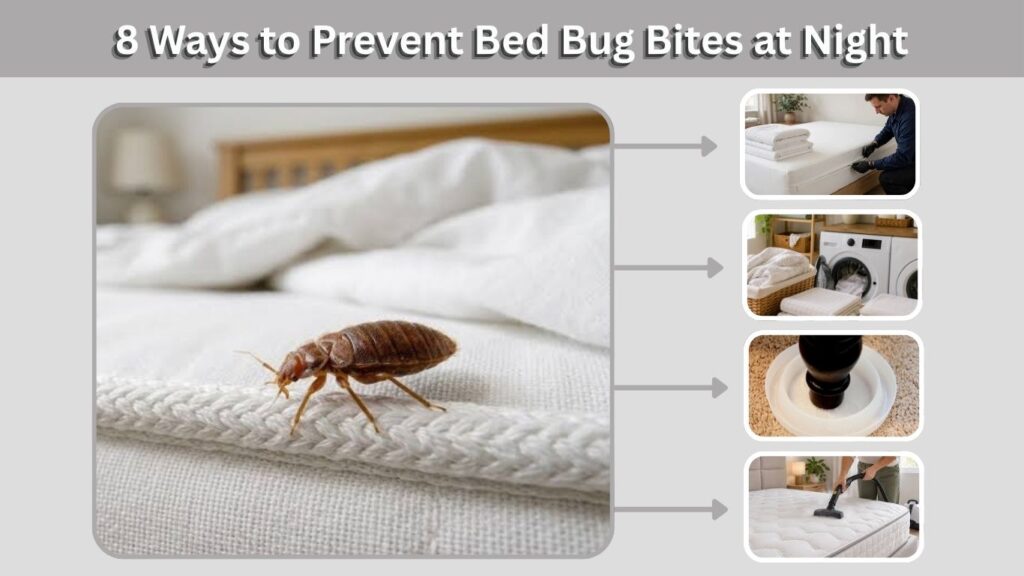
Several practical measures can reduce your chances of being bitten while sleeping. The following methods focus on removing insects, limiting their access to your bed, and preventing further infestation.
1. Use a Bed Bug-Proof Mattress Encasement
A specially designed bed bug-proof mattress encasement is one of the most useful protective measures.
These covers completely surround mattresses and prevent bed bugs trapped inside from escaping to feed.
Choose an encasement specifically designed and tested for bed bugs rather than an ordinary mattress protector.
Install it carefully, close the zipper completely, and inspect it regularly for tears.
A mattress encasement will not stop insects hiding elsewhere in the bedroom, so additional prevention methods are necessary.
2. Move Your Bed Away From Walls
Bed bugs cannot fly or jump, but they can crawl across walls, floors, furniture, and bedding.
Moving your bed slightly away from walls can help reduce their access.
Make sure the headboard does not touch the wall and that blankets, sheets, and bed skirts do not reach the floor.
Remove objects stored beneath the bed that could provide an alternative climbing route.
This arrangement is sometimes called creating a bed island because it reduces the number of pathways insects can use to reach sleeping people.
3. Install Bed Bug Interceptor Traps
Bed bug interceptors are small trapping devices designed to fit beneath bed legs.
They catch bed bugs attempting to climb onto or leave the bed.
Install a suitable interceptor beneath each bed leg and inspect the traps regularly.
These devices can help reduce nighttime bites while providing evidence of continuing bed bug activity.
However, interceptors will not protect you from bed bugs already hiding in your mattress, bed frame, or headboard.
They are most effective when combined with mattress encasements and careful inspection.
4. Wash and Heat-Dry Bedding Regularly
Bed bugs can hide in sheets, pillowcases, blankets, and clothing left near sleeping areas.
Regular cleaning helps reduce the number of insects present in these materials.
For items that can tolerate high temperatures, use a clothes dryer on high heat for at least 30 minutes.
The heat can kill bed bugs and their eggs when the items reach the necessary temperature.
After treatment, keep clean bedding away from infested furniture or untreated clothing.
Remember that washing alone may not eliminate every bed bug. The high-temperature drying process is particularly important.
5. Vacuum Your Mattress and Bedroom
Vacuuming can physically remove bed bugs, eggs, and shed skins from accessible hiding places.
Pay particular attention to mattress seams, bed frames, carpet edges, baseboards, and furniture joints.
Use a crevice attachment to reach narrow openings where insects commonly hide.
After vacuuming, immediately seal and dispose of the collected contents outside your home.
Vacuuming does not guarantee complete elimination because some insects may remain hidden deep inside furniture or structural cracks.
Nevertheless, it is a useful part of a broader bed bug prevention strategy.
6. Wear Protective Clothing While Sleeping
Wearing clothing that covers more skin may reduce the number of exposed areas available for bed bugs to bite.
Long-sleeved shirts, long pants, and socks can provide some physical coverage.
Choose comfortable sleepwear that fits reasonably well without restricting movement.
However, bed bugs may crawl beneath loose clothing or bite exposed areas such as the neck, hands, and face.
Clothing should therefore be considered a temporary precaution rather than a dependable solution.
7. Reduce Clutter Around Your Bed
Clutter provides additional hiding places for bed bugs, making infestations more difficult to identify and treat.
Remove unnecessary items from beneath beds, around furniture, and along bedroom walls.
Keep clean clothing in closed storage containers and avoid placing frequently used items directly on the floor.
Inspect belongings before moving them between rooms.
Reducing clutter does not kill bed bugs, but it makes inspections and treatments more effective.
8. Treat the Bed Bug Infestation
The most reliable long-term way to prevent bed bug bites is to eliminate the insects causing them.
Proper treatment may include professional heat treatment, targeted steam application, vacuuming, monitoring, and appropriately labeled pesticides.
Severe infestations often require assistance from an experienced pest control professional.
Avoid moving to another bedroom or sleeping on a couch without addressing the infestation, as this may encourage bed bugs to spread to additional locations.
Continue monitoring after treatment to confirm that the insects have been eliminated.
What Can You Put on Your Skin to Prevent Bed Bug Bites?
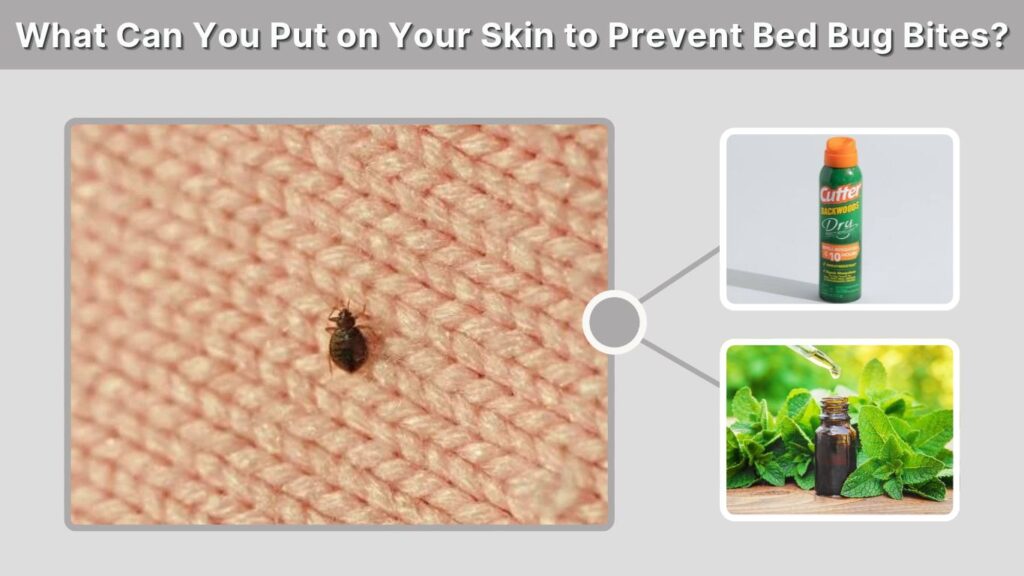
Many people search for creams, lotions, oils, and sprays that can prevent bed bugs from biting exposed skin.
However, there is no ordinary body lotion or home remedy proven to provide reliable protection against bed bug bites throughout the night.
Do Body Lotions or Vaseline Prevent Bed Bug Bites?
Regular moisturizers, petroleum jelly, and baby oil are not reliable bed bug repellents.
Although these products may create a temporary coating on the skin, there is insufficient evidence that they stop bed bugs from feeding.
Applying Vaseline or thick lotion before bedtime does not eliminate insects hiding in mattresses and furniture.
Does DEET or OFF! Bug Spray Prevent Bed Bug Bites?
DEET-based repellents are widely used against mosquitoes and certain other biting insects.
However, effectiveness against bed bugs is not guaranteed, and ordinary mosquito repellents should not be relied upon for bed bug bite prevention.
In the United States, the EPA has not registered skin-applied repellents specifically for protection against bed bugs.
Never apply household bed bug insecticides directly to your skin or use sprays on bedding unless their labels explicitly allow that application.
Do Essential Oils Prevent Bed Bug Bites Naturally?
Peppermint, lavender, tea tree, and eucalyptus oils are commonly suggested as natural bed bug repellents.
However, homemade essential oil mixtures have not been shown to provide dependable overnight protection.
Some concentrated oils can also irritate the skin or cause allergic reactions.
Physical barriers and proper pest treatment are more effective than relying on essential oils.
How to Prevent Bed Bug Bites in Hotels
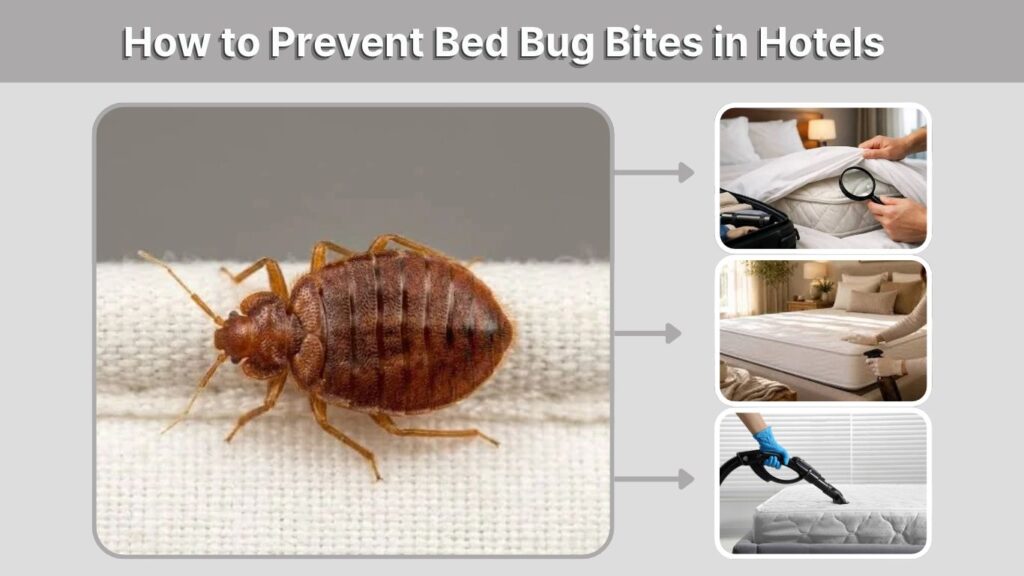
Bed bugs can occur in hotels, hostels, and other temporary accommodations, regardless of cleanliness or price.
Before unpacking, inspect the sleeping area for signs of infestation.
Pay attention to mattress seams, headboards, and nearby furniture.
Look for live bed bugs, small dark fecal spots, shed skins, and eggs.
Keep luggage on an inspected luggage rack or another suitable elevated surface rather than placing it on the bed or floor.
If you discover evidence of bed bugs, notify hotel management and request accommodation away from the affected area.
After returning home, inspect your luggage and heat-dry suitable clothing before placing it in your usual storage areas.
How to Prevent Bed Bug Bites From Itching and Scarring
Preventing additional bites is important, but caring for existing bites can also reduce discomfort and skin damage.
Most bed bug bites improve without extensive medical treatment.
Wash affected areas gently with soap and water, and avoid scratching.
A cool compress can help relieve temporary itching and swelling.
For troublesome itching, an appropriate over-the-counter anti-itch treatment may provide relief.
Scratching repeatedly can damage the skin and increase the risk of infection or lasting marks.
Seek medical attention if you develop spreading redness, pus, increasing pain, or a severe allergic reaction.
Treating bite symptoms does not prevent future bites. The underlying infestation must still be addressed.
FAQs
1. Does Sleeping With the Lights On Prevent Bed Bug Bites?
No. Sleeping with the lights on does not reliably prevent bed bugs from biting. Although bed bugs are generally more active at night, they can feed when people are resting, even in illuminated rooms.
2. What Clothes Should You Wear to Prevent Bed Bug Bites?
Long-sleeved shirts, long pants, and socks can reduce exposed skin while sleeping. However, bed bugs may crawl beneath clothing or bite uncovered areas. Protective clothing alone cannot guarantee prevention.
3. Is There a Cream That Prevents Bed Bug Bites?
No ordinary cream or body lotion has been proven to reliably prevent bed bug bites. Moisturizers, petroleum jelly, and homemade essential oil mixtures should not be considered dependable bed bug repellents.
4. Can Rubbing Alcohol Prevent Bed Bug Bites?
No. Rubbing alcohol is not a safe or reliable method for preventing bed bug bites. It evaporates quickly, provides no dependable lasting protection, and creates a fire hazard. Never apply it to bedding or sleeping surfaces for bed bug control.
5. What Is the Best Natural Way to Prevent Bed Bug Bites While Sleeping?
The most effective nonchemical approach combines bed bug-proof mattress encasements, interceptor traps, high-temperature drying of bedding, vacuuming, and keeping the bed isolated from walls and surrounding objects. These methods can reduce bites, but eliminating the infestation remains essential.
