
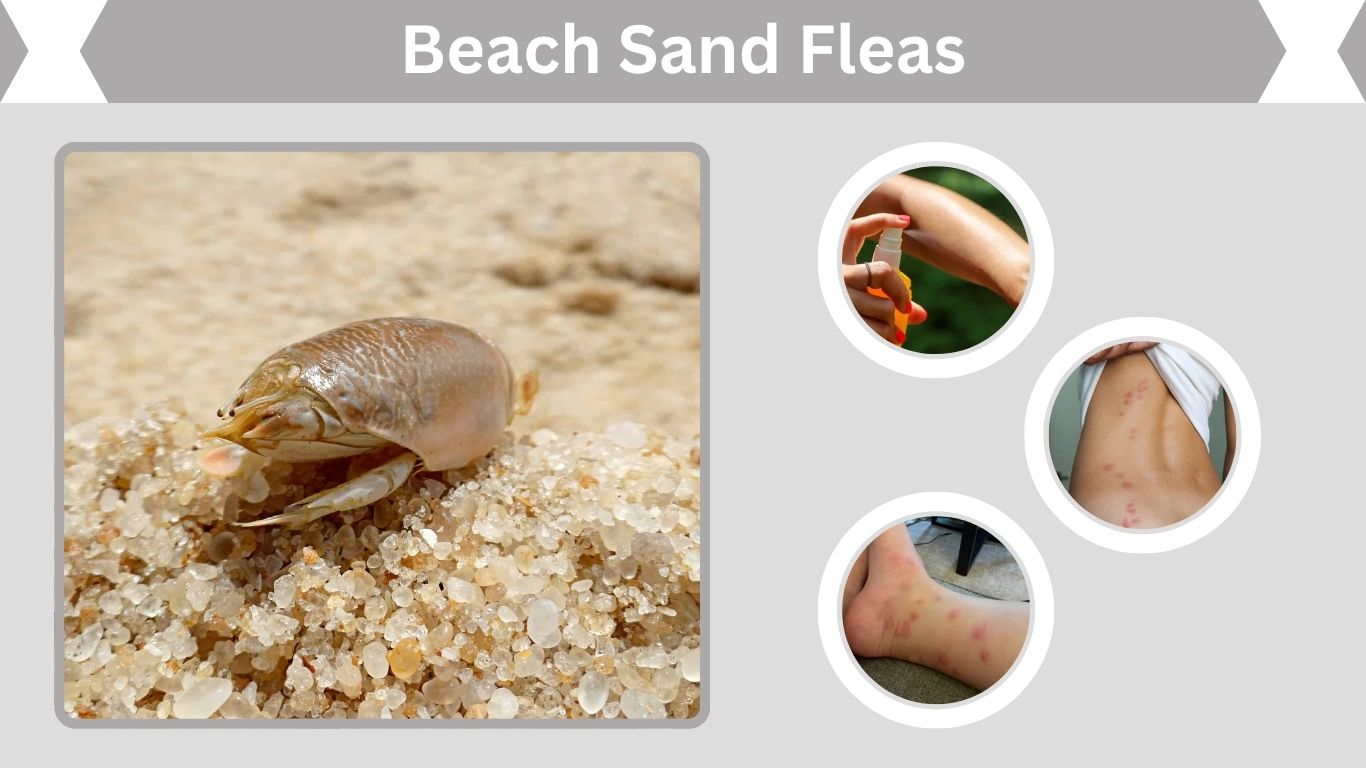
Have you ever noticed tiny creatures moving through wet beach sand or experienced itchy bumps after a relaxing day by the ocean? Beach sand fleas are commonly blamed for these encounters, but the name actually describes several different animals. Some are harmless crustaceans, while others can bite or cause skin irritation. Understanding what sand fleas at the beach look like, where they live, and how they behave can help you identify them and enjoy your next beach trip more comfortably.
What Are Beach Sand Fleas?
Beach sand fleas are small creatures commonly found in sandy coastal environments. However, the name does not refer to one specific species. It may describe mole crabs, jumping beach hoppers, or true parasitic fleas. These organisms differ in appearance, behavior, and their effects on humans, making proper identification essential.
Mole Crabs
Mole crabs are small, oval-shaped crustaceans that live beneath wet sand along the shoreline.
They have smooth, rounded bodies, short legs, and specialized appendages that help them burrow quickly.
Mole crabs feed on tiny organisms and organic particles carried by ocean waves. They are particularly familiar to surf anglers, who collect them as fishing bait.
Unlike true fleas, mole crabs do not bite humans or infest pets.
Beach Hoppers
Beach hoppers are small, shrimp-like crustaceans that often jump when disturbed.
They commonly inhabit damp sand, accumulated seaweed, and organic debris near the upper shoreline.
These animals feed primarily on decomposing vegetation and other organic material.
Their jumping movement explains why people call them sand fleas, even though they are not true fleas and do not normally bite humans.
True Sand Fleas
True sand fleas, including Tunga penetrans, are parasitic insects found in certain tropical and subtropical regions.
Female chigoe fleas can penetrate human or animal skin, causing a condition called tungiasis.
They are different from the harmless mole crabs commonly collected on American beaches.
What Do Sand Fleas at the Beach Look Like?
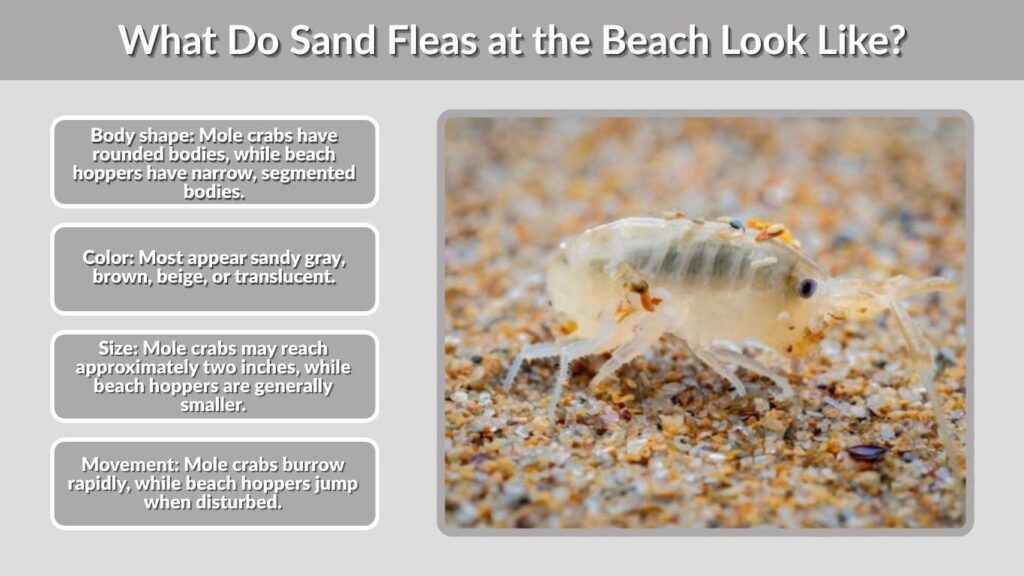
The appearance of beach sand fleas depends on which animal is being described. Mole crabs have smooth, rounded bodies, while beach hoppers resemble miniature shrimp. True parasitic fleas are much smaller and have a different body structure. Observing their appearance, movement, and location helps distinguish these creatures.
Common Identification Features
- Body shape: Mole crabs have rounded bodies, while beach hoppers have narrow, segmented bodies.
- Color: Most appear sandy gray, brown, beige, or translucent.
- Size: Mole crabs may reach approximately two inches, while beach hoppers are generally smaller.
- Movement: Mole crabs burrow rapidly, while beach hoppers jump when disturbed.
- Habitat: Mole crabs favor wave-washed sand, whereas beach hoppers often occur around stranded seaweed.
- Feeding: Mole crabs filter food from seawater, while beach hoppers consume organic debris.
Sand Fleas vs. Other Beach Creatures
| Creature | Appearance | Habitat | Bites Humans? |
| Mole crab | Small, rounded crustacean | Wet surf-zone sand | No |
| Beach hopper | Shrimp-like, segmented body | Damp sand and seaweed | Generally no |
| Biting midge | Tiny flying insect | Coastal and marshy areas | Yes |
| Chigoe flea | Very small parasitic flea | Sandy tropical environments | Yes; females can embed |
Where Are Sand Fleas Found on Beaches?
Sand fleas inhabit different parts of coastal environments depending on the species. Mole crabs prefer the constantly shifting sand along the water’s edge, while beach hoppers commonly remain beneath seaweed and damp debris. Geographic location, beach conditions, and seasonal changes influence which creatures visitors are likely to encounter.
Sand Fleas on Florida Beaches
Florida beaches support mole crabs that burrow beneath wet sand along the surf zone.
These creatures are particularly familiar to anglers who use them as bait for pompano and other coastal fish.
Popular beach destinations such as Daytona Beach, Cocoa Beach, Clearwater Beach, and Panama City Beach can provide suitable sandy habitats, although local abundance varies.
Beachgoers experiencing itchy bites may instead be encountering biting midges or other insects.
Sand Fleas at Myrtle Beach and Virginia Beach
Mole crabs also occur along suitable Atlantic coastal beaches, including areas of the Carolinas and Virginia.
At Myrtle Beach, visitors sometimes confuse harmless sand-dwelling crustaceans with biting midges, commonly called no-see-ums.
Conditions differ from beach to beach, so the presence of mole crabs does not necessarily mean biting insects will be abundant.
Are Sand Fleas on Every Beach?
No. Sand fleas are not equally distributed across every beach.
Their presence depends on water movement, sand composition, available food, climate, and suitable habitat.
Some beaches support numerous mole crabs, while rocky shorelines and heavily disturbed areas may have fewer.
Therefore, finding a beach without visible sand fleas does not necessarily indicate poor environmental conditions.
Do Beach Sand Fleas Bite Humans?
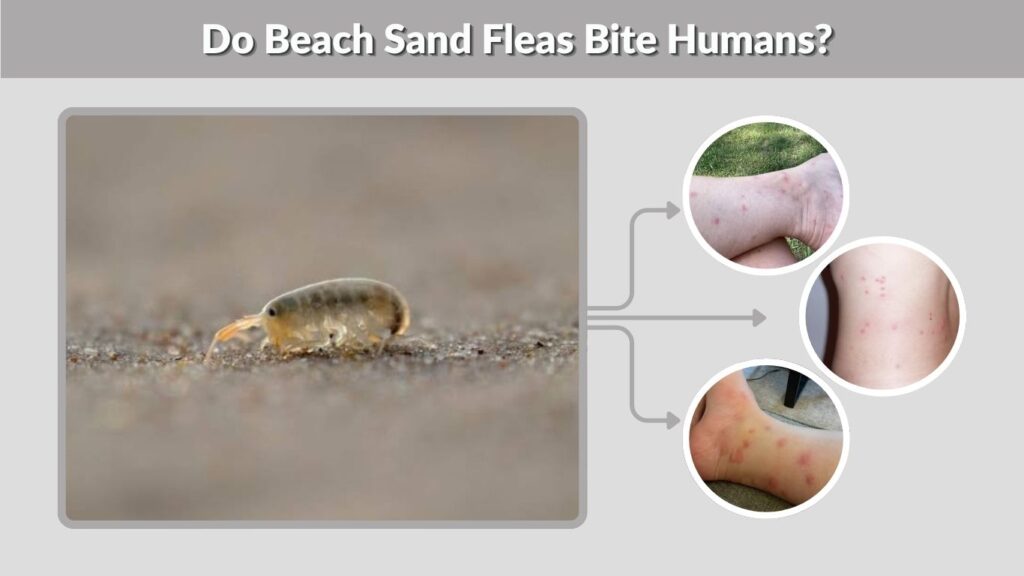
Many beach visitors associate sand fleas with small, itchy skin bumps. However, the common mole crabs and beach hoppers found along shorelines generally do not bite people. Biting insects living in coastal environments are often responsible for the irritation. True chigoe fleas present a different concern in regions where they occur.
What Causes Beach Sand Flea Bites?
Biting midges are tiny flies that feed on blood and may cause itchy, raised bumps.
Their bites often affect exposed skin, including ankles, legs, arms, and shoulders.
True chigoe fleas can cause more serious lesions when fertilized females embed themselves in the skin, particularly around the feet.
These two conditions require different approaches to treatment.
How to Treat Beach Sand Flea Bites
Ordinary itchy insect bites can usually be managed by gently washing the affected area with soap and water.
Applying a cool compress may reduce swelling and irritation. Calamine lotion or suitable hydrocortisone cream may also help relieve itching.
Avoid scratching because broken skin can develop secondary infections.
Seek medical attention for severe swelling, increasing pain, signs of infection, or a suspected embedded flea.
How to Find Sand Fleas at the Beach
Finding mole crabs at the beach can be an interesting activity, particularly for surf anglers and nature enthusiasts. These creatures live in the wave-washed sand, where they quickly bury themselves after each passing wave. Knowing where to look and recognizing their movements can make locating them considerably easier.
Look Along the Waterline
Walk along the wet sand where waves repeatedly wash onto the beach.
Observe the sand as water retreats. Mole crabs sometimes become briefly exposed before rapidly burrowing beneath the surface.
Small disturbances or subtle movements in the sand may reveal their presence.
Avoid disturbing sensitive nesting areas or protected coastal habitats during your search.
How to Catch Sand Fleas With a Rake
Surf anglers often collect mole crabs using a specialized sand flea rake.
This tool resembles a shallow metal scoop with openings that allow sand and water to pass through.
Place the rake into wet sand within the swash zone and gently lift it while waves retreat.
Inspect the material collected and return unwanted animals to the water promptly.
Always check local fishing and collection regulations before gathering mole crabs for bait.
How to Avoid Sand Fleas at the Beach
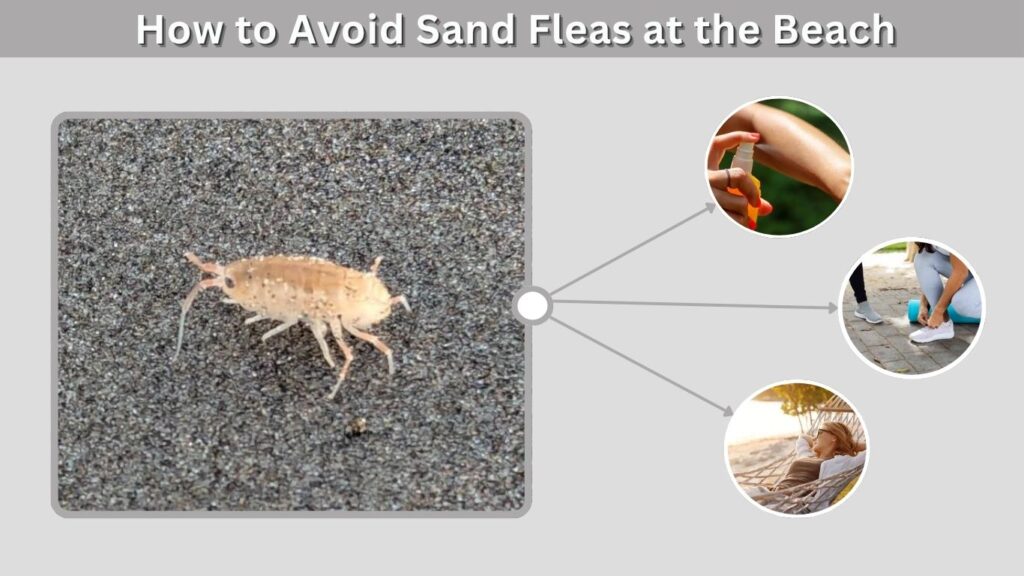
Preventing uncomfortable beach encounters begins with understanding which organisms actually cause bites. Harmless mole crabs generally require no preventive treatment, while biting midges may be active around coastal vegetation and marshes. Protective clothing, suitable repellents, and simple behavioral changes can help reduce exposure without unnecessarily disturbing beach wildlife.
Practical Prevention Tips
- Use insect repellent: Choose an appropriate registered product labeled for protection against biting flies or midges.
- Wear protective clothing: Cover exposed legs and arms when biting insects are particularly active.
- Avoid peak activity: Biting midges are often more troublesome around dawn and dusk, especially during calm weather.
- Choose suitable resting areas: Avoid sitting directly among dense, damp seaweed or insect-heavy coastal vegetation.
- Wear footwear: Closed shoes help protect feet in tropical regions where chigoe fleas occur.
- Protect children: Follow age-specific repellent instructions and supervise activities around the surf.
- Observe beach conditions: Move to another location if biting insects become especially troublesome.
Can Dogs Get Sand Fleas at the Beach?
Dogs can encounter various insects and crustaceans while exploring sandy beaches. However, ordinary mole crabs and beach hoppers do not establish flea infestations on pets. Skin irritation after a beach visit may instead involve biting insects, ordinary fleas, or environmental allergies. Identifying the cause is important before beginning treatment.
Sand Fleas and Dogs
Dogs occasionally investigate or dig around mole crabs in wet sand, but these crustaceans do not live in animal fur.
In regions where true chigoe fleas occur, dogs can develop tungiasis.
If your dog experiences persistent scratching, painful paw lesions, or unusual skin swelling after a beach trip, consult a veterinarian.
Can You Bring Sand Fleas Home From the Beach?
Mole crabs and beach hoppers are adapted to specialized coastal conditions and generally do not establish household infestations.
They may occasionally be carried home accidentally with beach equipment or sand.
True fleas and other insects present different risks, but ordinary beach sand fleas are not comparable to the fleas that infest dogs and cats.
FAQs
1. Are Sand Fleas Found on Every Beach?
No. Sand flea populations vary depending on beach conditions, geographic location, available food, and habitat suitability. Some sandy coastlines support larger populations than others.
2. Do Sand Fleas at the Beach Bite Humans?
Mole crabs and beach hoppers generally do not bite humans. Itchy bites attributed to sand fleas are often caused by biting midges or other coastal insects.
3. Where Can You Find Sand Fleas on the Beach?
Mole crabs usually inhabit wet sand where waves wash onto shore. Beach hoppers are more commonly found beneath seaweed and organic debris along the upper shoreline.
4. Can Sand Fleas From the Beach Infest Your Home?
Harmless mole crabs and beach hoppers do not normally establish indoor infestations because they require suitable coastal habitats to survive.
5. What Is the Best Way to Avoid Sand Flea Bites at the Beach?
Wear protective clothing, use an appropriately labeled insect repellent, and avoid areas where biting midges are especially active. Closed footwear is important in places where true chigoe fleas occur.
