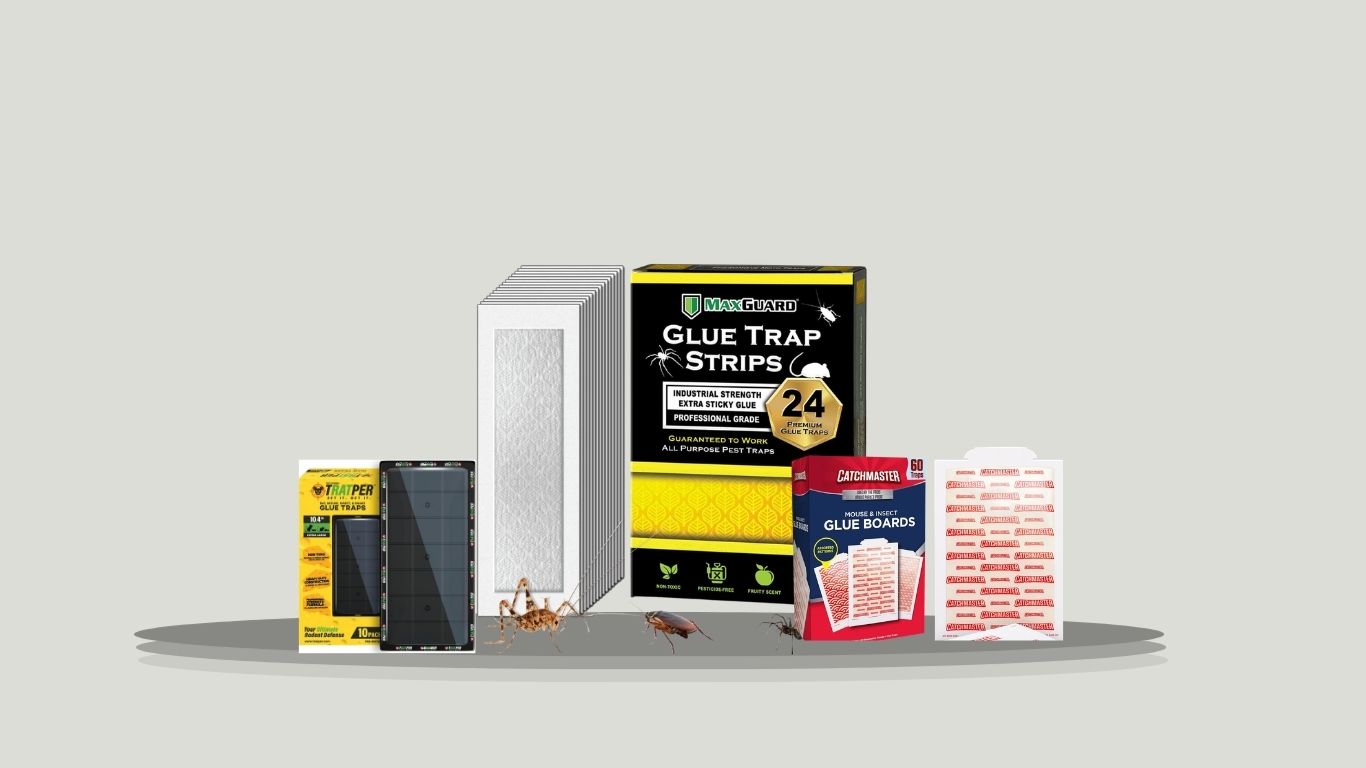
Earwigs often hide in dark, damp areas such as basements, garages, kitchens, bathrooms, and along walls or baseboards. Sticky traps provide a simple way to monitor and capture these crawling pests without sprays or complicated equipment. The best sticky traps for earwigs use strong adhesive surfaces, convenient placement designs, and enough coverage for problem areas around the home. In this guide, we review 10 useful sticky trap options that can help reduce earwig activity while also catching other crawling insects like spiders, crickets, and cockroaches.
1. Catchmaster Spider & Insect Glue Traps
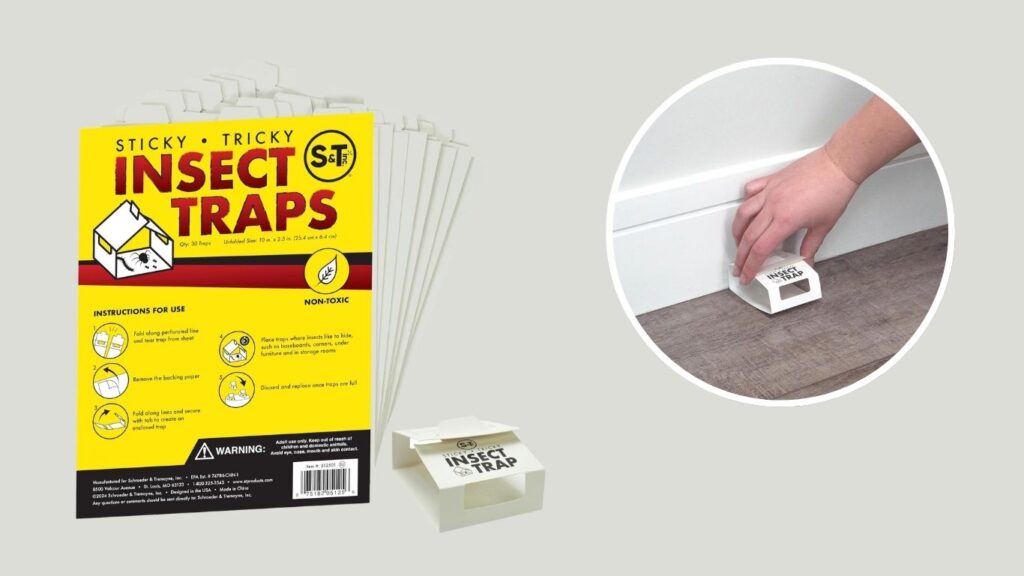
Catchmaster Spider & Insect Glue Traps are a practical option for monitoring and catching earwigs and other crawling pests indoors. They use professional-strength adhesive and can be placed along walls, baseboards, corners, basements, garages, and other areas where earwigs tend to travel. The traps are pesticide-free and can be used flat for maximum catching surface or folded into a tunnel for more discreet placement and better protection from dust.
Key Features
- Professional-strength sticky adhesive
- Pesticide-free pest-control design
- 30 traps included in the pack
- Can be used flat or folded into a tunnel
- Suitable for spiders, roaches, crickets, and other crawling pests
- Ready to use without additional bait
- Works well along walls, corners, and pest pathways
- Adhesive can remain effective for up to 12 months under normal indoor conditions
Why It Works Well for Earwig Monitoring
Earwigs often move along walls, baseboards, and dark sheltered areas while searching for food and moisture. Placing these glue boards directly across those pathways gives crawling pests a large adhesive surface to encounter.
Because the traps do not require sprays or complicated setup, several can be positioned around suspected activity areas at the same time. This also makes them useful for identifying where earwig activity is concentrated before taking additional control measures.
Strong Adhesive and Flexible Placement
One of the most useful features is the ability to use each trap either flat or folded into a tunnel. A flat board provides more exposed catching area, while the tunnel configuration fits neatly against walls, beneath furniture, or in sheltered locations. Catchmaster also notes that folding the trap can help protect the glue from dust and debris.
The strong adhesive is designed for crawling insects, making the boards useful beyond a single pest problem.
Best for Indoor Crawling Pest Control
These Catchmaster traps are especially suitable for homeowners who want a simple, low-maintenance method of monitoring earwigs without applying pesticide sprays throughout indoor spaces.
Their large pack size makes it easier to cover multiple rooms or suspected entry points at once. With flexible placement, strong adhesive, and no additional bait preparation, they offer a convenient option for ongoing earwig monitoring while also helping capture spiders, crickets, roaches, and other crawling pests.
2. Catchmaster Spider & Insect Glue Traps – 30 Pack
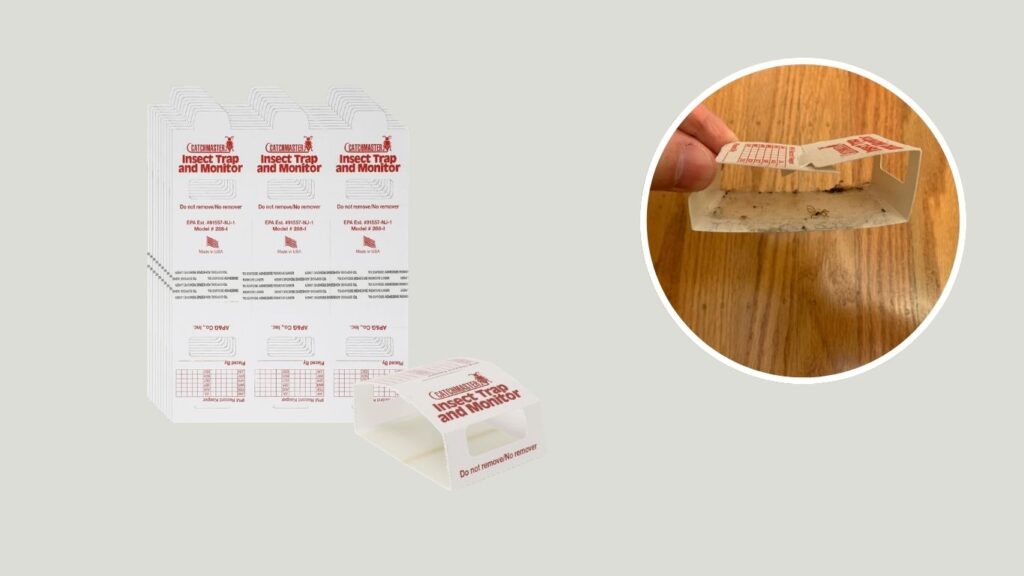
Catchmaster Spider & Insect Glue Traps provide broad indoor coverage for earwigs and other crawling pests. This set contains 30 individual traps and uses a strong adhesive surface that works without sprays or powered equipment. The boards can be positioned flat for a larger catching area or folded to form a covered tunnel, making them convenient for baseboards, cabinets, garages, basements, and other sheltered pest pathways.
Key Features
- 30 individual sticky traps
- Designed for crawling insects
- Useful for earwigs, spiders, crickets, and roaches
- Pesticide-free adhesive design
- Can be used flat or folded
- Suitable for indoor pest monitoring
- Folded design helps protect adhesive from dust
- Designed for long-term placement under normal indoor conditions
Why It Works Well for Earwig Pathways
Earwigs typically travel close to walls and through dark, protected spaces. These glue boards can be placed directly along those travel routes rather than depending on insects to locate a bait station.
Using several traps simultaneously can also help identify where earwig activity is strongest. A trap collecting multiple insects near one doorway or appliance may reveal a useful location for further inspection and moisture control.
Adhesive Strength and Flexible Placement
The flat-or-folded design adds considerable flexibility. Flat placement provides more exposed adhesive, which is useful behind appliances or inside larger storage areas. Folding creates a tunnel that fits neatly against baseboards and protects much of the sticky surface from dust.
Catchmaster markets this product for spiders, roaches, crickets, silverfish, earwigs, and other crawling pests, making it useful even when several insect species are present.
Best for Whole-Room Monitoring
This 30-trap package is particularly practical when earwigs appear in several areas rather than a single isolated location. Multiple traps can be distributed through bathrooms, basements, garages, kitchens, and entry points.
The combination of broad coverage, simple setup, and flexible positioning makes this option especially useful for ongoing indoor monitoring. Place adhesive traps where children and pets cannot contact them directly.
3. Catchmaster Max-Catch Mouse & Insect Glue Traps – 36 Pack
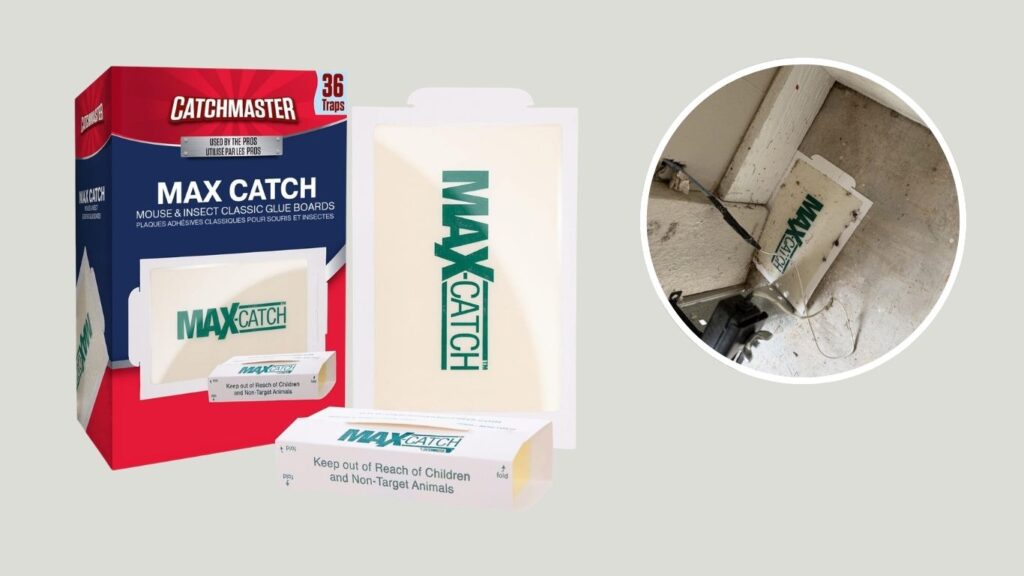
Catchmaster Max-Catch Glue Traps offer a larger adhesive surface that can capture both crawling insects and small rodents. The current 36-count version uses pre-scented, pesticide-free glue boards measuring approximately 8.5 by 5.25 inches. Although larger than many insect-only traps, that extra surface area can be useful in garages, basements, utility rooms, and other places where earwigs regularly move across open floor edges.
Key Features
- 36 glue boards per package
- Approximately 8.5 × 5.25 inches each
- Large adhesive catching area
- Designed for insects and small rodents
- Pesticide-free sticky construction
- Pre-scented design
- Suitable for indoor use
- Useful along walls and behind appliances
- Designed for long-term monitoring under normal conditions
Why the Larger Surface Helps With Earwigs
A larger glue board provides more opportunity to intercept insects moving through a problem area. This can be particularly useful near garage doors, basement walls, utility rooms, or storage spaces where earwigs may enter from outdoors.
Instead of targeting only one narrow pathway, the board creates a broader sticky zone. This makes strategic placement easier when the exact route of the insects is uncertain.
Performance for Multi-Pest Problems
These traps are not limited to earwigs. Current product descriptions also identify them for spiders, roaches, and other crawling insects, while the larger format can handle mice as well.
That versatility can be useful in garages or basements where several pest types may occur simultaneously. Checking boards regularly also provides a simple way to monitor whether pest activity is increasing or decreasing.
Best for Basements, Garages, and Utility Areas
The Max-Catch 36-pack is particularly suitable when broad coverage and a larger sticky surface are priorities. It can work well along wall edges, behind storage containers, beneath shelving, or close to suspected entry points.
For homeowners dealing with earwigs alongside other crawling pests, the generous pack size and multi-pest design provide a practical way to place traps throughout several problem zones.
4. Catchmaster Compact Sticky Mouse & Insect Traps – 75 Pack
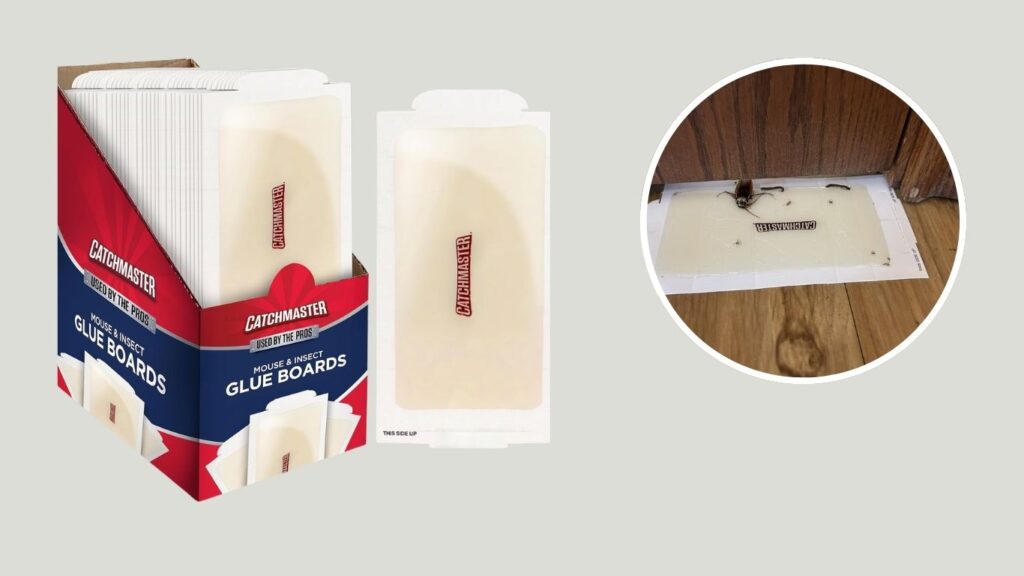
The Catchmaster Compact Sticky Mouse & Insect Traps are particularly useful when numerous small monitoring points are needed throughout a home or commercial space. This bulk package contains 75 compact glue boards measuring about 7 by 3.5 inches. Their smaller footprint makes them easier to position behind appliances, underneath cabinets, beside baseboards, or in narrow spaces where earwigs commonly hide and travel.
Key Features
- Large 75-trap bulk package
- Approximately 7 × 3.5-inch boards
- Compact design for narrow spaces
- Suitable for mice and crawling insects
- Foldable configuration
- Ready-to-use adhesive surface
- Pesticide-free pest-monitoring method
- Suitable for indoor placement
- Designed for extended use under suitable indoor conditions
Why It Is Best for Multiple Earwig Hotspots
Earwig problems are often scattered throughout damp areas rather than concentrated in one location. A 75-count package allows many potential pathways to be covered without repeatedly moving the same few traps.
This is useful around bathroom cabinets, basement walls, utility rooms, doorways, laundry areas, and garage edges. More monitoring points can make it easier to determine exactly where insects are entering or hiding.
Compact Size and Placement Flexibility
At roughly 7 by 3.5 inches, each board is smaller than many general-purpose glue traps. That can be advantageous when working behind refrigerators, under shelving, inside storage spaces, or beside plumbing penetrations.
The foldable construction also allows the adhesive to be partially enclosed. This can help reduce dust exposure while creating a sheltered passage that crawling insects may naturally travel through.
Best for Large-Scale Indoor Monitoring
This bulk pack is especially useful for homeowners, property managers, or anyone who wants to monitor numerous indoor locations simultaneously. Rather than concentrating several large boards in one place, smaller traps can be distributed strategically.
For persistent earwig activity across multiple rooms, the 75-count format offers excellent flexibility. Because the boards use strong adhesive, they should always be positioned away from children, pets, and locations where accidental contact is likely.
5. Catchmaster Brown Recluse Spider Giant Glue Boards – 6 Pack
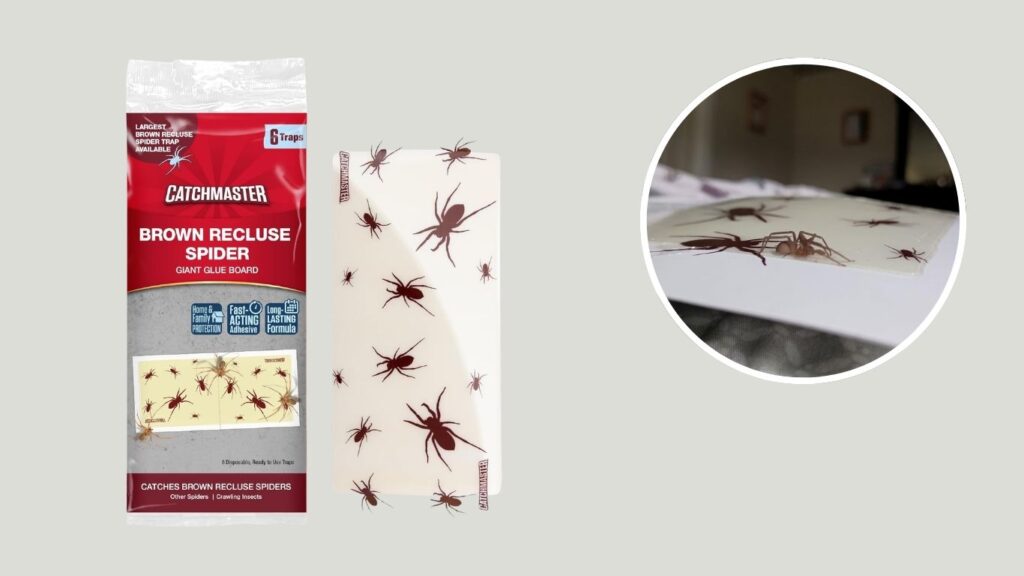
Catchmaster Brown Recluse Spider Giant Glue Boards are designed with a larger trapping area for spiders and other crawling pests. The six-pack comes ready to use without adding separate bait, and each board can be folded into a tunnel when placed in dusty or sheltered areas. While marketed primarily for spiders, the adhesive boards are also intended to capture cockroaches, crickets, scorpions, and other crawling insects that cross the surface.
Key Features
- Six large glue boards
- Strong adhesive catching surface
- Ready to use without adding bait
- Can be folded into a tunnel
- Pesticide-free design
- Suitable for spiders and other crawling pests
- Useful in homes, garages, and sheltered indoor areas
- Folded setup helps limit dust exposure
- Designed for long-term indoor monitoring
Why It Can Work for Earwig Control
Although the product is marketed heavily toward spiders, the trapping principle also works for earwigs. Earwigs are ground-moving insects, so a well-positioned adhesive board can intercept them as they travel along baseboards, storage areas, or garage edges.
The broad surface is particularly useful near suspected entry locations where the exact pathway may not be obvious.
Tunnel Design and Long-Term Performance
Catchmaster states that the trap can be folded into a tunnel, which creates a narrow sheltered space similar to the type of harborage many crawling pests seek.
This configuration also protects more of the adhesive from dust and debris. In clean indoor conditions, Catchmaster describes the traps as capable of remaining functional for extended periods, reducing the need for frequent replacement when pest activity is light.
Best for Targeted Problem Areas
Because this set contains only six boards, it makes more sense for focused placement than whole-house coverage. Good locations may include a basement entry point, behind an appliance, near garage walls, or beside cracks where earwigs have repeatedly appeared.
The large adhesive area and tunnel option give each trap substantial coverage. For a few known earwig hotspots rather than dozens of monitoring locations, this format offers a straightforward approach.
6. Safer Home Indoor Spider & Crawling Insect Traps
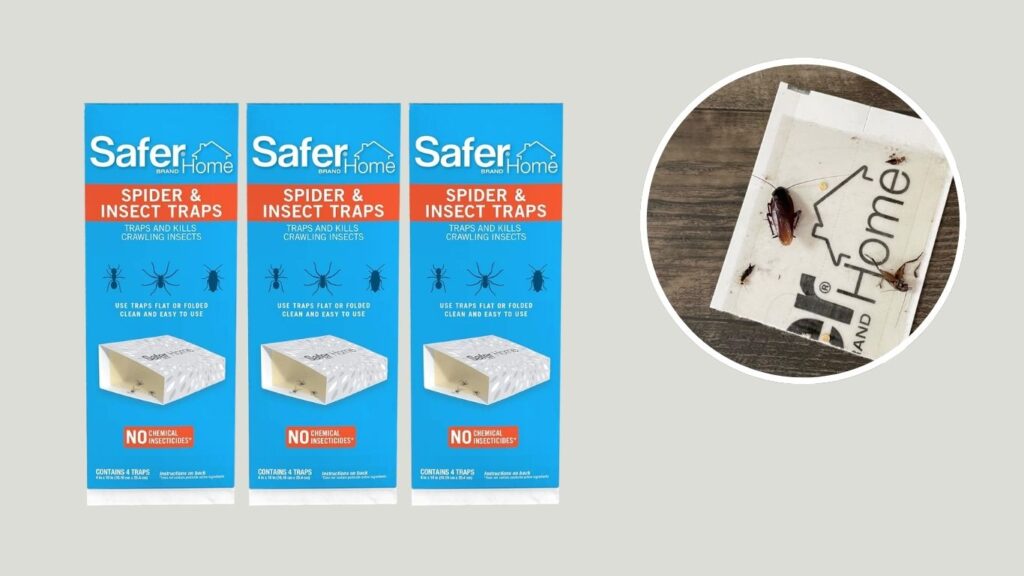
Safer Home Indoor Spider & Crawling Insect Traps provide a chemical-insecticide-free way to capture crawling pests in commonly affected indoor areas. The SH400SR package contains 12 traps, and each trap can be placed flat for maximum adhesive exposure or folded to create a more discreet enclosed design. They are intended for spiders, ants, cockroaches, centipedes, and other crawling insects, making them suitable for intercepting earwigs as well.
Key Features
- 12 indoor sticky traps
- No chemical insecticides
- Designed for crawling insects
- Flat or folded placement options
- Suitable along baseboards
- Useful beneath furniture and appliances
- Appropriate for kitchens, bathrooms, basements, and pantries
- Paper-based disposable design
- Multiple traps allow coverage in several rooms
Why It Is Best for Discreet Indoor Placement
One useful feature is the option to fold the trap. When folded, captured insects are less visible, which can be preferable in kitchens, bathrooms, finished basements, and other frequently used rooms.
Flat placement creates a larger exposed adhesive area, making it suitable for hidden locations such as behind refrigerators, beneath cabinets, or along basement walls where appearance is less important.
Flexible Coverage Around the Home
Safer Home specifically recommends placement along baseboards, under furniture and appliances, and in areas including kitchens, pantries, bathrooms, and basements. These locations overlap closely with areas where indoor earwig activity is often noticed.
Using several traps at once can reveal whether the insects are concentrated around moisture sources, exterior entry points, or certain rooms.
Best for Indoor Monitoring Without Insecticide Sprays
This Safer Home set is a convenient option for people who prefer mechanical trapping rather than applying insecticide sprays around indoor living spaces. Twelve traps provide enough coverage for several strategic locations while remaining simple to check and replace.
Its flat-or-folded design also allows the setup to be adapted according to visibility, space, and dust conditions. For indoor earwig monitoring alongside ants, roaches, spiders, or centipedes, it provides a versatile and low-maintenance trapping option.
7. Catchmaster Indoor Glue Boards
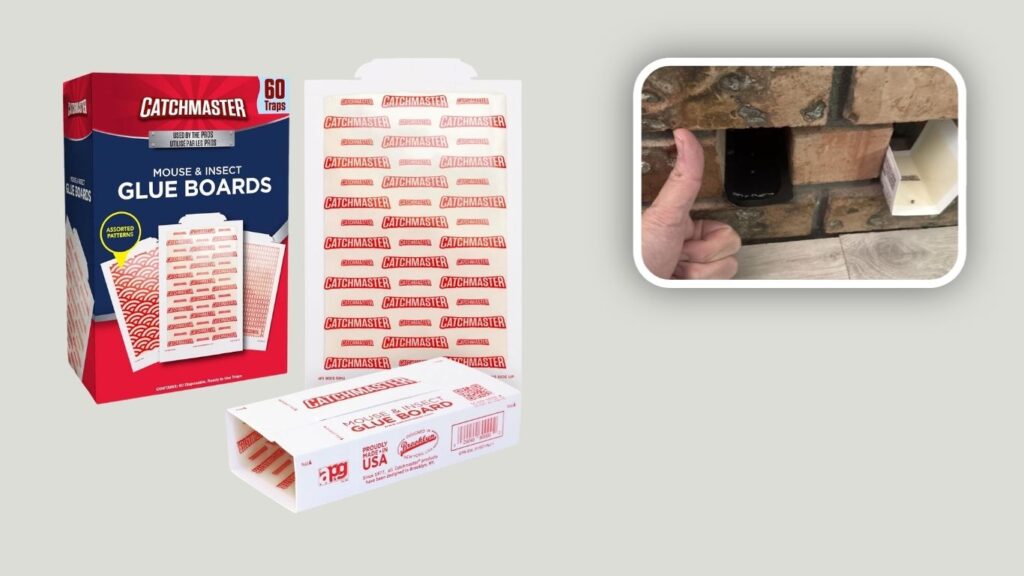
Catchmaster Indoor Glue Boards provide a straightforward solution for monitoring earwigs and other crawling pests in areas where they commonly travel. These adhesive traps can be positioned along baseboards, behind appliances, inside garages, and near damp indoor locations. Their broad sticky surface helps intercept insects without requiring sprays, electricity, or complicated setup, making them suitable for routine pest monitoring around the home.
Key Features
- Strong adhesive glue-board surface
- Suitable for crawling insects and small pests
- Ready to use with minimal setup
- Can be placed along walls and baseboards
- Useful behind appliances and furniture
- Pesticide-free trapping method
- Suitable for garages, basements, and utility areas
- Disposable design for convenient replacement
Why It Works Well for Earwig Activity
Earwigs generally move close to walls, cracks, and sheltered edges instead of crossing large open spaces. Positioning glue boards directly along these routes increases the chance that insects will walk onto the adhesive.
The boards are also useful as monitoring tools. If one trap repeatedly captures earwigs while others remain empty, that location may indicate a nearby entry point, moisture source, or hiding area that needs additional attention.
Strong Adhesive and Easy Placement
A simple glue-board design is useful when there is limited room for bulky traps. The flat profile allows these boards to slide beneath cabinets, shelving, appliances, or storage containers.
Multiple traps can be placed throughout a problem area without requiring additional equipment. Regular inspection makes it easy to see when a board needs replacement and whether earwig activity is declining over time.
Best for Simple Indoor Pest Monitoring
Catchmaster Indoor Glue Boards are particularly suitable for homeowners who want a low-maintenance way to monitor several crawling pest species at once.
They can be incorporated into a broader earwig-control strategy that also includes reducing indoor moisture, sealing exterior gaps, and removing hiding places. Their simple setup and flexible placement make them useful for ongoing monitoring in rooms where earwigs repeatedly appear.
8. Non-Toxic Pre-Baited Crawling Insect Sticky Traps
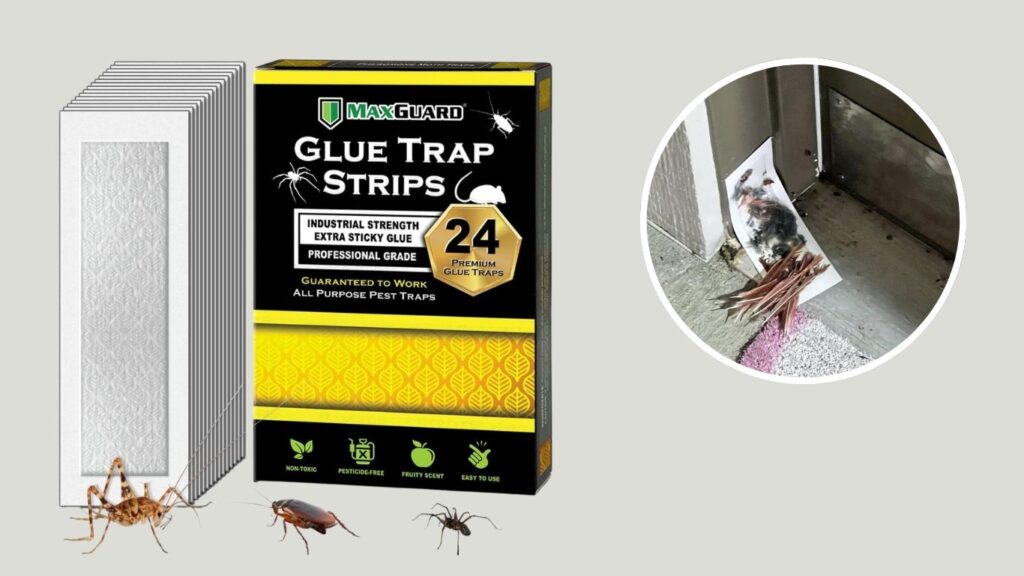
These Non-Toxic Pre-Baited Sticky Traps are designed to attract and capture crawling insects without requiring users to add separate bait. Their enclosed or foldable format makes them suitable for indoor locations where earwigs, cockroaches, centipedes, and other ground-moving pests may travel. For homeowners looking for an easy-to-position monitoring option, the pre-baited construction adds an extra level of convenience.
Key Features
- Pre-baited sticky-trap design
- Strong adhesive catching surface
- No additional bait preparation required
- Suitable for multiple crawling insects
- Can be positioned along pest pathways
- Useful in kitchens, bathrooms, and basements
- Low-profile design
- No powered equipment required
Why Pre-Baited Traps Can Be Convenient
Standard glue boards depend mainly on strategic placement, while pre-baited traps add an attractant intended to encourage pests toward the adhesive surface. This can be useful in areas where the exact earwig travel route is difficult to identify.
They still need careful positioning, however. Locations close to walls, moisture, plumbing, doorways, and known hiding areas generally provide better monitoring opportunities than placing traps randomly in open rooms.
Practical Performance Around Damp Areas
Earwigs are strongly associated with moisture, which means bathrooms, laundry areas, basements, and spaces near plumbing are often good locations for monitoring. These traps can be positioned close to those areas without spraying insecticides across floors or walls.
The adhesive surface also captures other crawling insects that enter the same space, making each trap useful for identifying broader pest activity rather than earwigs alone.
Best for Low-Maintenance Indoor Use
These pre-baited traps are best suited to users who want a ready-to-place option without preparing bait or operating mechanical equipment. Once positioned, they require little attention beyond periodic inspection and replacement.
For homes experiencing occasional earwig activity alongside roaches, centipedes, or similar pests, the combination of attractant and adhesive provides a practical monitoring tool.
9. Catchmaster Insect & Mouse Glue Traps
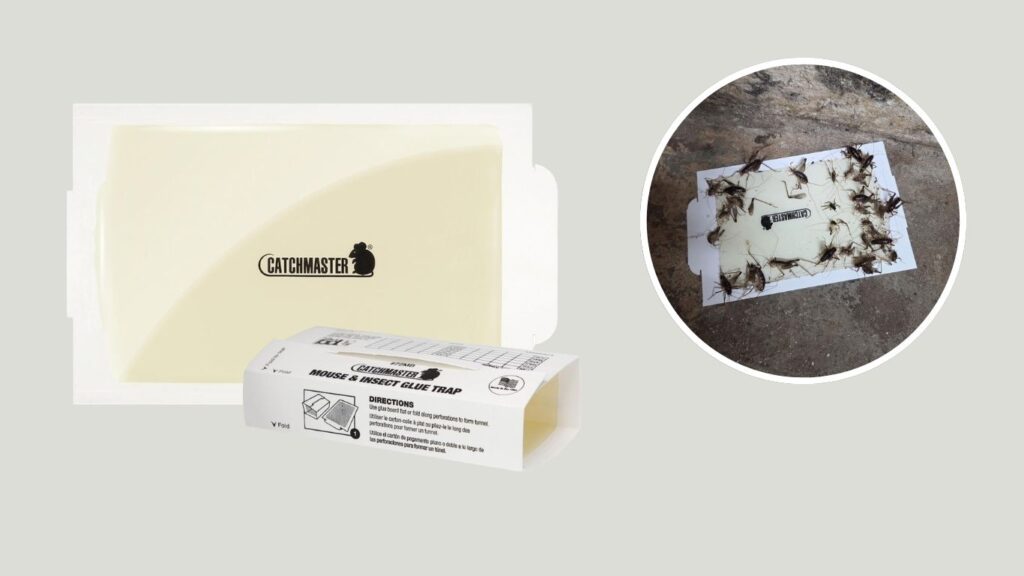
Catchmaster Insect & Mouse Glue Traps provide a larger adhesive platform that can be used against both crawling insects and small rodents. For earwig monitoring, the generous sticky area makes them particularly useful in garages, basements, storage spaces, and utility rooms where insects may enter through multiple pathways. Their simple design also allows several boards to be placed strategically without additional pest-control equipment.
Key Features
- Large adhesive glue-board surface
- Suitable for insects and small rodents
- Ready-to-use construction
- No electricity required
- Works along walls and sheltered edges
- Useful in garages, basements, and storage areas
- Broad surface for intercepting crawling pests
- Disposable after capture
Why the Large Surface Is Helpful for Earwigs
A broader adhesive area can improve coverage where earwig movement is not limited to a single narrow pathway. For example, garage corners or basement walls may contain several gaps or potential entry points.
Positioning a larger board across these areas creates more opportunity for wandering insects to encounter the sticky surface. It can also capture spiders, crickets, roaches, and other pests traveling through the same locations.
Placement and Monitoring Performance
For effective results, the traps should generally be placed flush against walls or near cracks rather than in the middle of an open floor. Earwigs frequently use edges and sheltered routes while moving between hiding places.
Checking traps regularly can provide useful information about pest activity. Repeated captures in one location may suggest that nearby cracks, moisture, vegetation, or exterior gaps need to be addressed as part of a longer-term control approach.
Best for Garages and Utility Spaces
These Catchmaster glue boards are especially appropriate for less-finished spaces where a larger trap is easy to position. Garages, workshops, basements, and storage rooms often provide ideal locations.
Their broad adhesive surface and multi-pest capability make them practical for homeowners dealing with more than just earwigs. When combined with moisture management and exclusion work, they can become a useful part of an ongoing monitoring system.
10. TRATPER Pre-Baited Heavy-Duty Glue Traps
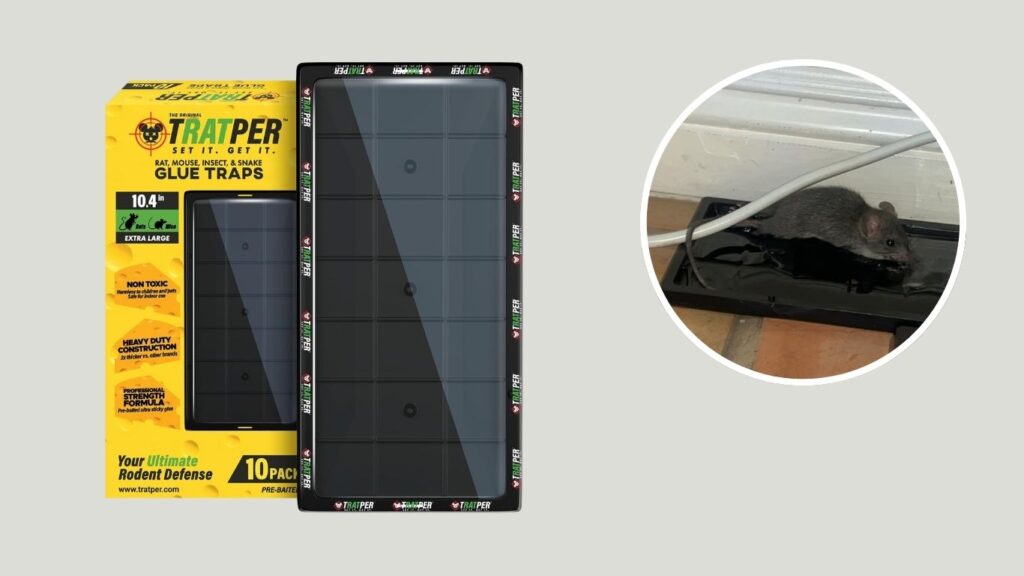
TRATPER Pre-Baited Heavy-Duty Glue Traps combine a sturdy tray design with strong adhesive and built-in attractant. They are intended for indoor pest monitoring without requiring sprays or powered equipment. The heavier tray construction can make placement easier in garages, basements, kitchens, and other areas where earwigs or additional crawling pests have been noticed.
Key Features
- Pre-baited adhesive trap
- Heavy-duty tray construction
- Strong sticky surface
- No electricity required
- Chemical-spray-free trapping method
- Suitable for indoor pest monitoring
- Useful along walls and pest pathways
- Ready to place without separate bait
Why the Heavy-Duty Tray Design Stands Out
Thin glue boards can occasionally curl, shift, or become difficult to position on uneven surfaces. A heavier tray provides a more stable base, which can be useful in utility rooms, garages, or other areas where the floor is not perfectly smooth.
That stability helps keep the adhesive surface positioned where crawling insects are most likely to encounter it. The built-in attractant also eliminates the need to add food or other bait manually.
Adhesive Performance and Convenient Setup
The trap is intended to work as a simple place-and-monitor system. Once positioned close to walls, cracks, doors, plumbing, or other suspected travel routes, the adhesive captures pests that cross the tray.
Because no spraying is involved, cleanup is straightforward: the entire trap can be removed and replaced when full, dirty, or no longer sufficiently sticky.
Best for Durable Indoor Placement
TRATPER is well suited to users who want a sturdier alternative to lightweight paper glue boards. Its tray-style construction can be especially useful in garages, basements, storage rooms, and other high-traffic pest areas.
For ongoing earwig monitoring, the combination of pre-baiting, strong adhesive, and a stable platform makes this trap a practical finishing option in the lineup.
FAQs
1. Do sticky traps work for earwigs?
Yes. Sticky traps can capture earwigs when they are placed directly along the insects’ normal travel routes. Good locations include baseboards, basement walls, bathroom corners, garage edges, and areas near doors or plumbing. They are especially useful for monitoring where earwig activity is concentrated.
2. Where should I place sticky traps for earwigs?
Place traps close to walls, beneath cabinets, behind appliances, near exterior doors, and in damp areas where earwigs have been seen. Avoid placing them randomly in the center of a room because earwigs usually prefer sheltered edges and cracks.
3. How often should earwig sticky traps be replaced?
Replace a trap when it becomes covered with insects, dust, moisture, or debris, or when the adhesive is no longer sticky. Some traps may remain usable for weeks or longer in clean indoor conditions, while traps in dusty garages or basements may need replacement sooner.
4. Can sticky traps eliminate an earwig infestation?
Sticky traps can reduce and monitor indoor earwig activity, but they may not solve the underlying cause by themselves. Long-term control usually also involves reducing moisture, sealing gaps around doors and foundations, removing outdoor hiding places, and correcting drainage or dampness problems.
5. Are earwig glue traps safe to use around pets and children?
Glue traps do not require airborne insecticide sprays, but the exposed adhesive can still stick to skin, hair, paws, or fur. Place them in locations that children and pets cannot reach, such as behind heavy appliances, inside protected corners, or beneath secured cabinets.