
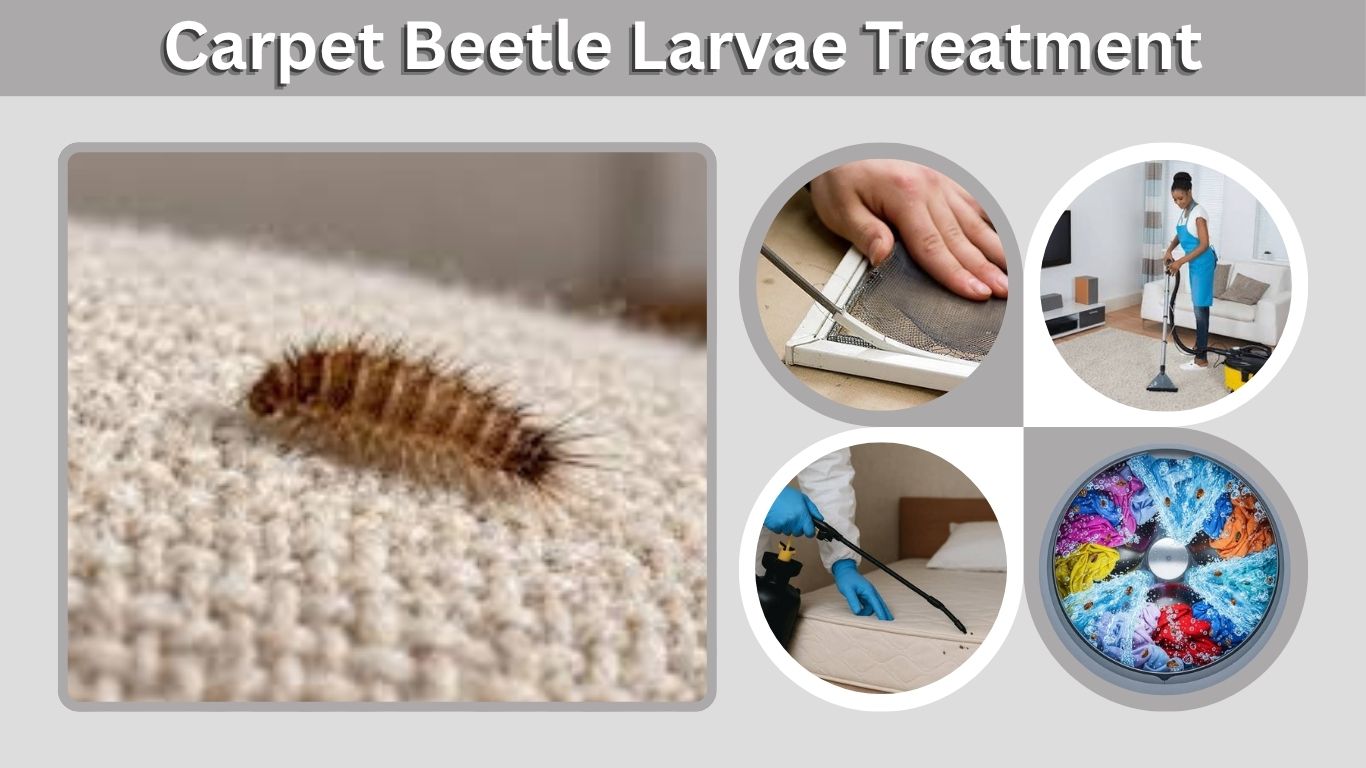
Carpet beetle larvae treatment is essential when these tiny household pests begin damaging carpets, clothing, furniture, and other natural materials. Unlike adult carpet beetles, the larvae feed on wool, fur, feathers, and organic debris, often hiding in dark, undisturbed areas. Their bristly hairs may also cause itchy skin reactions in sensitive individuals. Fortunately, effective treatment methods include vacuuming, hot washing, natural pest control, and targeted insecticides. Understanding how to identify, eliminate, and prevent carpet beetle larvae can help protect your home and belongings from further infestation.
How to Identify Carpet Beetle Larvae in Your Home
Before starting carpet beetle larvae treatment, identifying the insects and their hiding places is important. Carpet beetle larvae are small, brownish, elongated insects covered with tiny hairs. They usually prefer dark, undisturbed locations where food sources are available.
Common Signs of Carpet Beetle Larvae
- Small, hairy larvae: Brown, tan, or dark-colored insects measuring approximately 1/8 to 1/4 inch long.
- Damaged fabrics: Irregular holes or thinning patches in wool carpets, sweaters, rugs, and upholstery.
- Shed larval skins: Empty, brownish, bristly skins near carpets, baseboards, or stored clothing.
- Adult carpet beetles: Small, oval-shaped beetles occasionally appearing around windows.
- Skin irritation: Itchy bumps or rashes in sensitive people exposed to larval hairs.
These signs can help identify an infestation before extensive damage occurs.
Where Do Carpet Beetle Larvae Hide?
Carpet beetle larvae commonly hide beneath furniture, inside closets, along carpet edges, and near baseboards. They also inhabit air vents, upholstered furniture, and storage areas containing natural fabrics.
Accumulated pet hair, lint, dead insects, and abandoned bird nests can provide additional food sources. Inspecting these areas helps locate the infestation rather than simply eliminating visible larvae.
How to Get Rid of Carpet Beetle Larvae Effectively
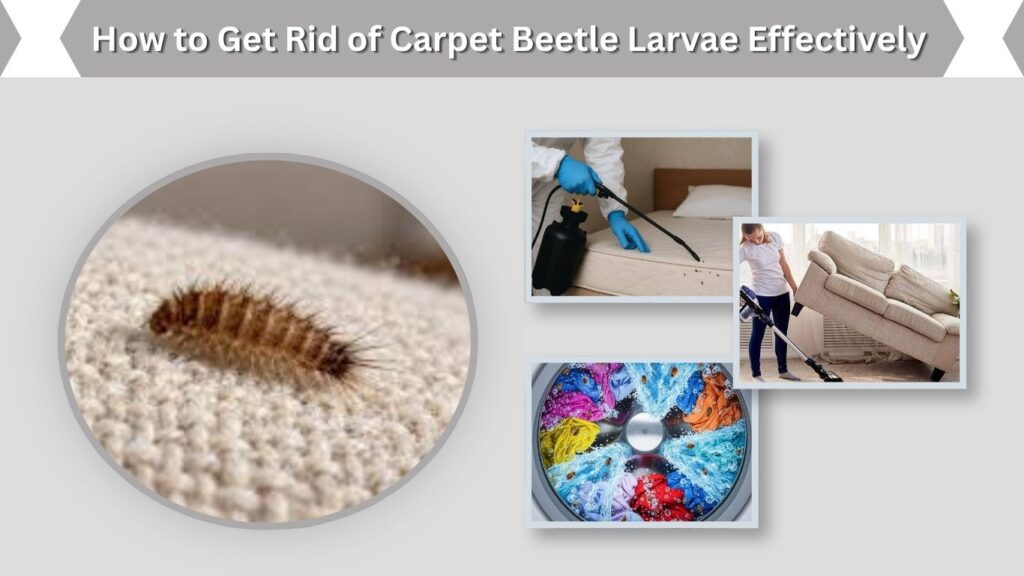
The most effective carpet beetle larvae treatment combines thorough cleaning, removal of infested materials, and careful monitoring. Chemical insecticides are not always necessary because removing larvae and their food sources can eliminate many infestations.
Step-by-Step Carpet Beetle Larvae Treatment
1. Vacuum Infested Areas Thoroughly: Vacuum carpets, rugs, upholstered furniture, and baseboards. Pay attention to corners and spaces beneath heavy furniture. Dispose of vacuum contents promptly in a sealed bag outside your home.
2. Wash Infested Clothing and Fabrics: Wash suitable clothing, bedding, and washable textiles in hot water according to their care labels. Dry cleaning is an effective alternative for delicate materials.
3. Remove Heavily Infested Items: Examine stored wool, fur, feathers, and other natural materials. Discard badly damaged items that cannot be cleaned, sealing them in bags before disposal.
4. Clean Hidden Spaces: Remove accumulated pet hair, lint, insect remains, and dust from closets, vents, shelves, and other secluded areas.
5. Apply Targeted Insecticide if Necessary: When cleaning alone is insufficient, use an insecticide specifically labeled for carpet beetles on approved surfaces, cracks, or crevices. Never spray insecticides directly onto clothing or bedding unless the product label explicitly permits that use.
6. Monitor for Additional Larvae: Reinspect previously affected areas regularly. Continue cleaning until new larvae and shed skins stop appearing.
Natural Carpet Beetle Larvae Treatment at Home
Natural carpet beetle larvae treatment focuses on controlling infestations without routine chemical spraying. Physical removal, laundering, and eliminating food sources are among the most dependable approaches.
Effective Natural Treatment Methods
- Regular Vacuuming: Frequent vacuuming removes larvae, shed skins, hair, and organic debris that supports infestations.
- Heat Treatment: Hot laundering or an appropriately heated clothes-dryer cycle can kill larvae and eggs in heat-tolerant fabrics.
- Professional Dry Cleaning: Dry cleaning treats delicate woolens and other susceptible fabrics without household insecticide application.
- Sealed Storage: Keep thoroughly cleaned clothes, wool blankets, and seasonal fabrics in airtight containers to prevent reinfestation.
Do Vinegar and Essential Oils Kill Carpet Beetle Larvae?
Vinegar and essential oils are frequently promoted as homemade carpet beetle treatments. However, they are not well-established methods for eliminating an infestation, especially larvae hidden deep inside fabrics or furniture.
Vinegar may help clean some compatible surfaces, but it should not replace vacuuming and laundering. Similarly, cedar products and scented repellents cannot reliably protect susceptible fabrics.
Black and Varied Carpet Beetle Larvae Treatment
Different carpet beetle species may vary in appearance, but their treatment methods are generally similar. The black carpet beetle (Attagenus unicolor) and varied carpet beetle (Anthrenus verbasci) are two common household species.
Black Carpet Beetle Larvae Treatment
Black carpet beetle larvae are typically elongated, brown to dark brown, and have a distinctive tuft of hairs at the rear.
Treatment involves inspecting carpets, closets, stored clothing, and areas containing lint or animal hair. Thorough vacuuming and cleaning affected materials usually form the foundation of successful control.
Varied Carpet Beetle Larvae Treatment
Varied carpet beetle larvae have segmented, hairy bodies with alternating light and dark markings.
They can infest woolen materials, upholstered furniture, carpets, and collections of dead insects. Treatment includes locating the feeding source, cleaning affected materials, and removing accumulated organic debris.
Carpet Beetle Larvae on Wall Treatment
Finding carpet beetle larvae crawling on walls may indicate that they are moving away from a feeding location or searching for a suitable place to pupate.
Remove visible larvae with a vacuum, then inspect nearby baseboards, closets, carpet edges, and wall openings. Repeated sightings may indicate an infestation in another area, such as an attic or wall void.
Treating the wall surface alone rarely solves the underlying problem.
Carpet Beetle Larvae Bites and Rash Treatment
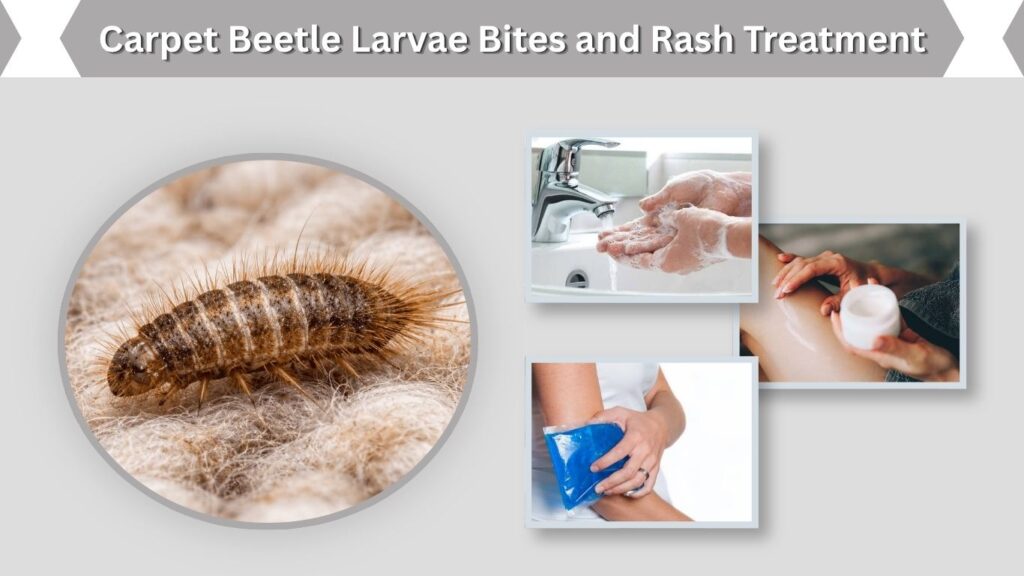
Carpet beetle larvae do not bite humans. However, their tiny bristly hairs can cause contact dermatitis in sensitive individuals. Symptoms may resemble insect bites, making the actual cause difficult to identify.
How to Treat Carpet Beetle Larvae Rash
Carpet beetle larvae rash treatment focuses on relieving irritation and reducing further exposure to larval hairs.
Gently wash the affected skin with mild soap and water. Apply a cool, damp compress to relieve itching and avoid scratching irritated areas.
Calamine lotion or an over-the-counter 1% hydrocortisone cream may help with minor irritation when used according to the product directions. Wash potentially contaminated bedding and clothing and vacuum the surrounding area.
Seek medical advice if the rash persists, spreads, becomes painful, or shows signs of infection. Do not assume every unexplained rash comes from carpet beetles.
Carpet Beetle Larvae Treatment: Home Remedies vs Professional
Home treatment is often sufficient for small infestations when you can identify and eliminate the feeding source. Consistent vacuuming, hot laundering, and improved fabric storage can produce lasting results.
Professional pest control becomes more appropriate when larvae repeatedly return, infestations spread across several rooms, or insects appear to be breeding inside inaccessible spaces.
A qualified pest control professional can identify hidden sources and apply targeted treatments where necessary. Professional services may also be useful for valuable rugs or furnishings requiring specialized care.
How to Prevent Carpet Beetle Larvae From Returning
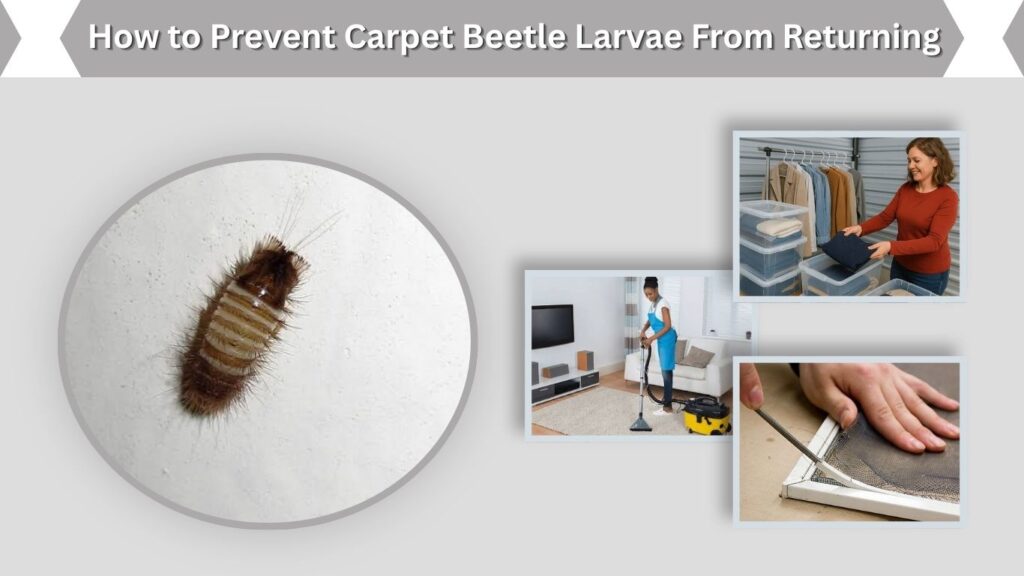
Preventing carpet beetle larvae requires regular household maintenance and protecting materials that are vulnerable to infestation.
Essential Prevention Tips
- Vacuum regularly: Clean carpets, baseboards, furniture edges, and hidden corners.
- Store clothing properly: Wash seasonal clothes before placing them in airtight containers.
- Remove food sources: Clear away lint, pet hair, spider webs, and dead insects.
- Inspect entry points: Repair damaged window screens and seal accessible gaps around doors.
- Check stored fabrics: Periodically inspect wool rugs, blankets, and natural-fiber clothing.
These habits reduce suitable feeding and breeding locations and help detect new infestations early.
FAQs
1. What Kills Carpet Beetle Larvae Instantly?
Direct contact with a suitable, label-approved insecticide can kill carpet beetle larvae, but results vary by product. Hot laundering and dry cleaning are effective ways to eliminate larvae in compatible fabrics.
2. Can Carpet Beetle Larvae Live in Mattresses?
Yes. Carpet beetle larvae may hide in mattress seams or surrounding bedding areas, particularly where hair, lint, feathers, or other suitable food sources accumulate. Finding larvae does not automatically mean the mattress must be replaced.
3. How Long Does Carpet Beetle Larvae Treatment Take?
Small infestations may improve after thorough cleaning, while established infestations can take longer. Successful treatment depends on finding the breeding source, removing affected materials, and preventing further egg laying.
4. Are Carpet Beetle Larvae Dangerous to Humans?
Carpet beetle larvae do not bite or feed on humans and are not known to transmit diseases. However, their bristly hairs can cause allergic skin irritation or dermatitis in susceptible people.
5. Can Carpet Beetle Larvae Come Back After Treatment?
Yes. Carpet beetle larvae can return if eggs, hidden food sources, or infested materials remain. Continued cleaning, inspection, and proper storage are important for preventing recurrence.
