
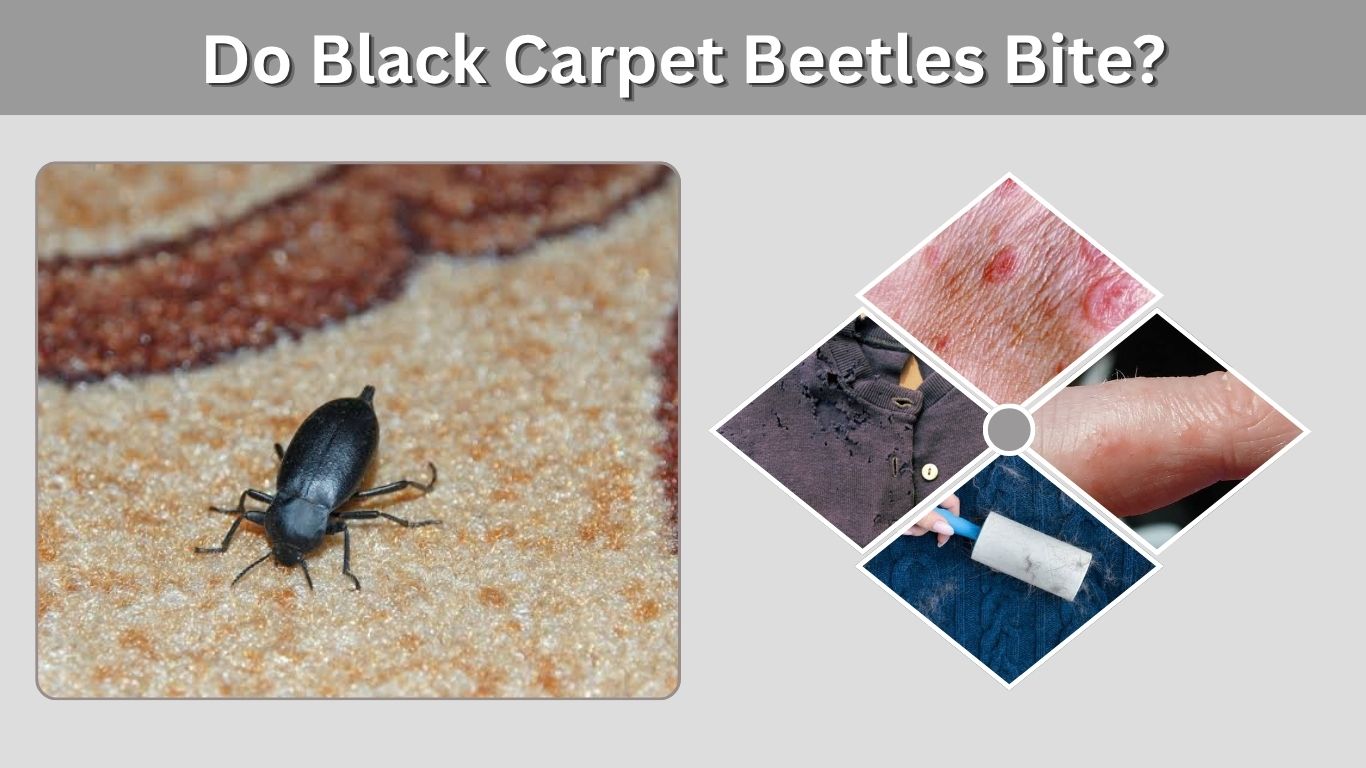
Do black carpet beetles bite humans, or can they cause a rash without biting? These small household beetles often appear near windows, carpets, and stored clothing, sometimes just as itchy bumps develop on the skin. Despite the name “black carpet beetle bites,” adults and larvae do not feed on people or bite them for blood. Instead, contact with larval hairs can trigger skin irritation in sensitive individuals. This guide explains the symptoms, how to recognize black carpet beetles, what to do about a rash, and how to prevent infestations.
Do Black Carpet Beetles Bite Humans?
No, black carpet beetles do not bite humans. Unlike bed bugs, mosquitoes, and fleas, they do not feed on blood or seek people as hosts. Both adults and larvae obtain nutrients from other sources.
Adult black carpet beetles generally feed on pollen and other plant materials. Their larvae consume wool, animal hair, feathers, dead insects, and certain stored food products.
However, the larvae have stiff body hairs that may cause allergic skin reactions. These reactions sometimes resemble insect bites, even though no actual biting occurs.
Can Black Carpet Beetles Hurt You?
Black carpet beetles are not considered dangerous biting pests. They do not sting, burrow into human skin, or spread disease through blood-feeding bites.
Their primary concerns are potential damage to household materials and skin irritation associated with larval hairs. Not everyone exposed to these hairs develops symptoms.
What Are Black Carpet Beetles?
Black carpet beetles (Attagenus unicolor) are small insects belonging to the family Dermestidae. They commonly enter buildings and may develop in carpets, closets, stored fabrics, and other locations containing suitable food.
Adult beetles usually measure approximately 3–5 millimeters long. Their bodies are oval, shiny, and dark brown to black.
What Do Black Carpet Beetle Larvae Look Like?
Black carpet beetle larvae are elongated and somewhat carrot-shaped, with brownish bodies covered in short hairs. A distinctive tuft of longer hairs extends from their rear end.
Unlike adults, larvae usually remain hidden in dark, undisturbed spaces where they feed and grow.
Why Do Black Carpet Beetles Cause Skin Irritation?
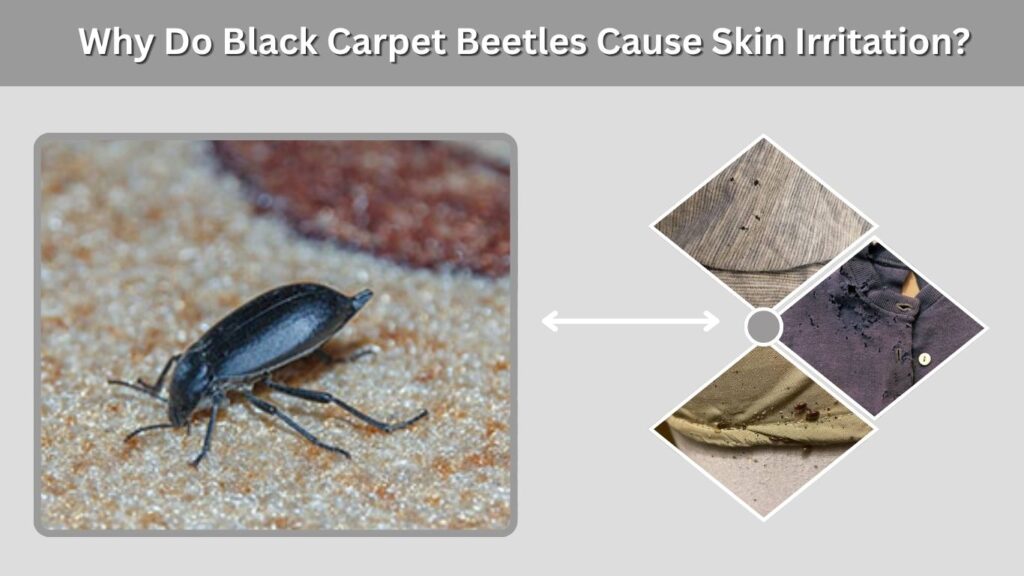
Skin irritation associated with black carpet beetles usually involves contact with the larvae rather than adults.
Larval hairs can detach and accumulate in carpets, blankets, clothing, and upholstered furniture. In susceptible individuals, contact with these hairs may trigger an allergic or inflammatory reaction.
How Carpet Beetle Dermatitis Develops
Carpet beetle dermatitis occurs when sensitive skin reacts to material associated with carpet beetle larvae.
The reaction can cause itching, inflamed patches, and small raised bumps. Continued contact with contaminated materials may contribute to recurring symptoms.
However, finding black carpet beetles indoors does not automatically mean they caused a rash. Other potential causes should be considered.
What Do Black Carpet Beetle Bites Look Like?
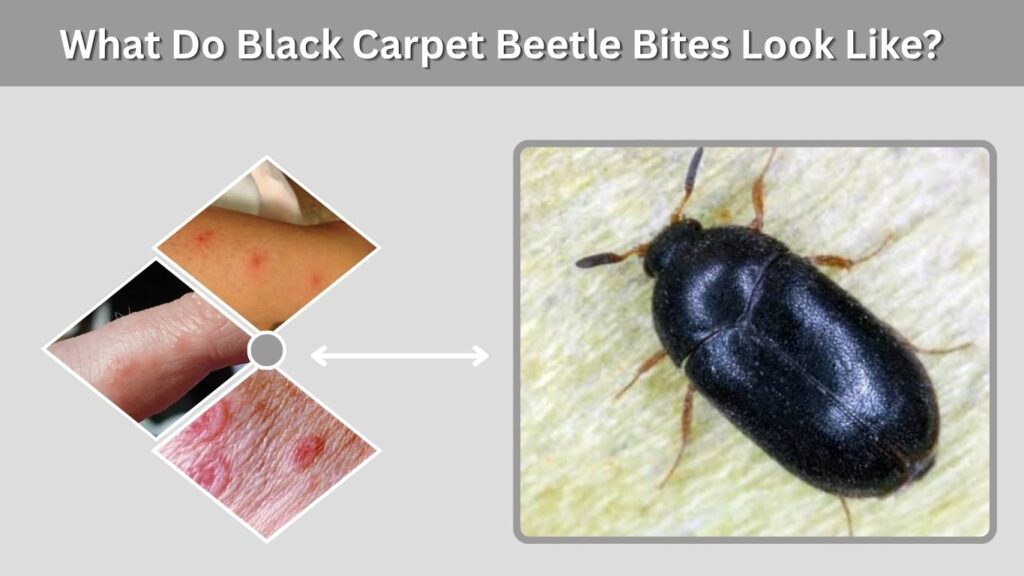
Although black carpet beetles do not bite, their larvae may cause skin reactions that resemble mosquito or bed bug bites.
The appearance varies depending on skin sensitivity, exposure, and individual inflammatory responses.
Common Symptoms of Black Carpet Beetle Rash
Possible symptoms include:
- Small itchy bumps: Raised spots resembling ordinary insect bites.
- Skin discoloration: Irritated areas may appear red, pink, purple, or darker than surrounding skin.
- Persistent itching: Discomfort may continue while exposure to larval hairs remains.
- Localized swelling: Some individuals experience mild inflammation.
- Tiny blisters: Small fluid-filled bumps may appear in certain reactions.
These symptoms are not specific to carpet beetles. Skin photographs alone cannot confirm the cause.
Do Black Carpet Beetle Larvae Bite?
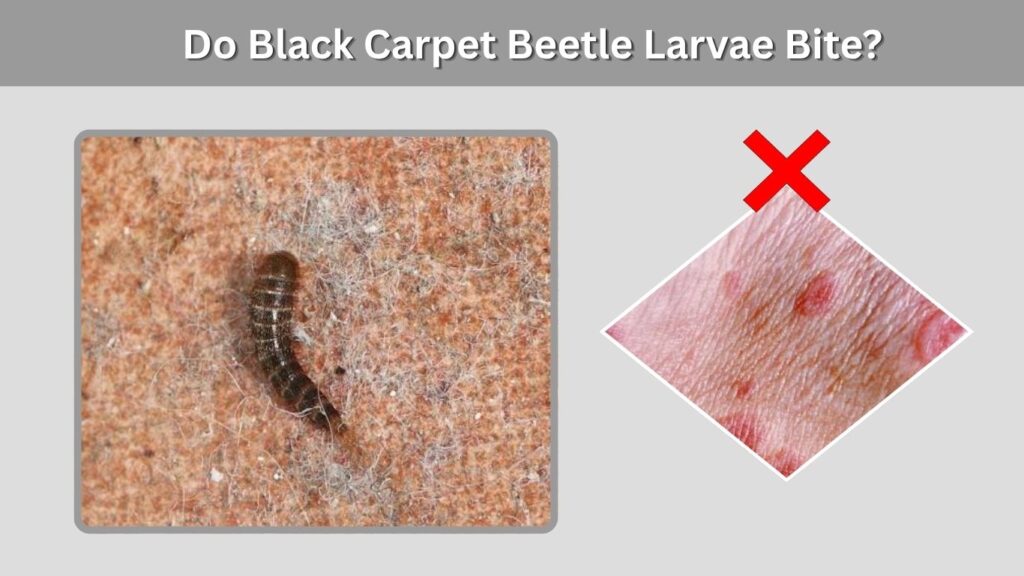
No, black carpet beetle larvae do not bite humans or feed on human blood. Their mouthparts are adapted for consuming suitable household materials rather than piercing human skin.
Larvae are responsible for most carpet beetle-related skin irritation because of their body hairs.
Why Larval Reactions Resemble Bites
When detached hairs contact sensitive skin, they may produce small bumps and itching similar to reactions caused by biting insects.
The irritation can occur after handling infested clothing or resting against contaminated furniture.
Unlike actual insect bites, these reactions do not involve insects puncturing the skin to feed.
Can Black Carpet Beetles Bite You at Night?
Black carpet beetles cannot bite humans at night or during the day. However, people may notice itching after sleeping near fabrics containing larval hairs.
Black carpet beetle larvae sometimes develop beneath beds, inside furniture, or around carpets near sleeping areas.
Contact with contaminated bedding or upholstery may contribute to irritation. Nevertheless, waking up with itchy marks does not prove that carpet beetles are responsible.
Black Carpet Beetle Rash vs. Bed Bug Bites
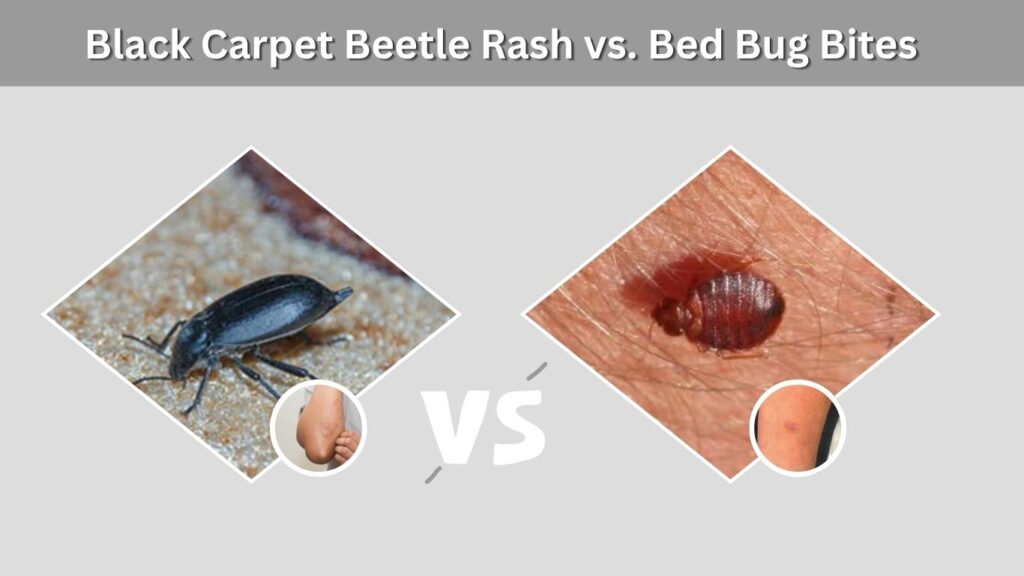
Black carpet beetle dermatitis and bed bug bites may produce similar skin symptoms, but their causes are different.
Bed bugs actively feed on human blood, usually while people are resting. Carpet beetles do not feed on humans.
How to Tell Them Apart
Look for environmental evidence rather than relying on skin marks. Bed bugs may leave dark fecal spots, shed skins, or blood stains around sleeping areas.
Black carpet beetle infestations are more commonly associated with hairy larvae, discarded larval skins, and damage to natural-fiber materials.
If the cause remains uncertain, professional pest identification or medical evaluation may be helpful.
How to Treat Black Carpet Beetle Rashes
Most mild reactions can be managed by relieving skin irritation and preventing further contact with larval hairs.
Treatment focuses on reducing inflammation and protecting affected skin.
Treatment Steps for Skin Irritation
- Wash affected skin: Gently clean the area with mild soap and lukewarm water.
- Apply a cold compress: Place a cool, damp cloth over irritated skin for 10–15 minutes.
- Use anti-itch products: Calamine lotion or 1% hydrocortisone cream may relieve mild symptoms when used as directed.
- Avoid scratching: Scratching can damage skin and increase the risk of infection.
Consult a healthcare professional if symptoms persist, worsen, or become painful. Seek emergency care for breathing difficulty or significant swelling of the tongue or throat.
Where Do Black Carpet Beetles Hide?
Black carpet beetle larvae prefer protected locations where suitable food sources accumulate. Finding their hiding places is important for preventing further exposure.
Common Hiding Places
- Carpets and rugs: Particularly along edges and underneath furniture.
- Closets: Stored wool clothing and other natural-fiber products may provide food.
- Upholstered furniture: Larvae may develop around animal-based stuffing and collected debris.
- Storage areas: Accumulated hair, dead insects, and certain dry food products can support larvae.
Finding a few adult beetles near windows does not necessarily indicate a serious infestation. Look for developing larvae and damaged materials.
How to Prevent Black Carpet Beetle Infestations
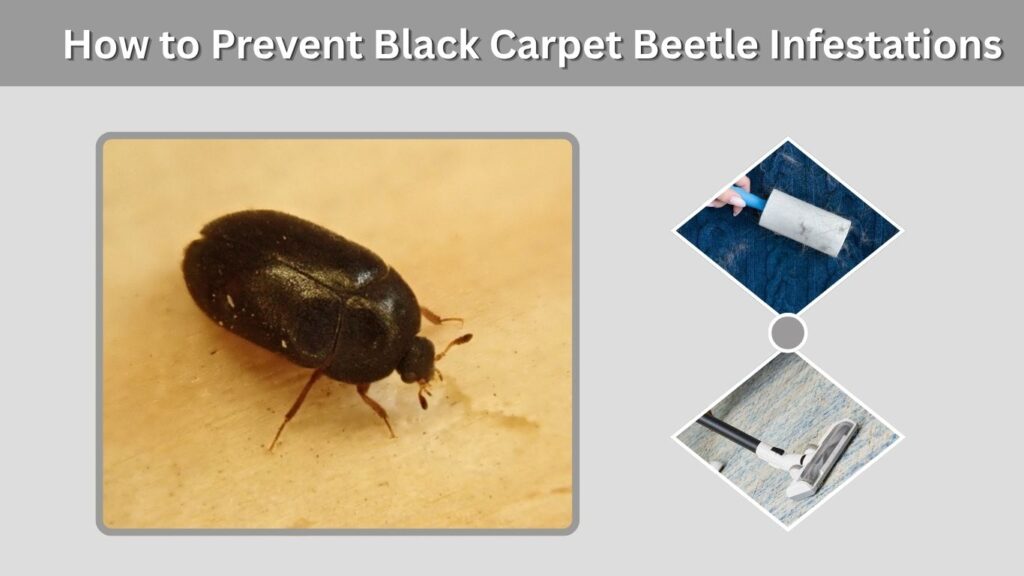
Preventing black carpet beetle problems requires regular cleaning, suitable fabric storage, and removal of potential larval food sources.
Effective Prevention Methods
- Vacuum regularly: Clean carpet edges, baseboards, upholstery, and spaces underneath furniture.
- Wash affected fabrics: Launder suitable clothing and bedding according to care labels, or professionally dry-clean delicate items.
- Store clothing securely: Keep clean wool and other vulnerable fabrics in sealed containers.
- Remove household debris: Regularly clear accumulated pet hair, lint, and dead insects.
Dispose of vacuum contents promptly after cleaning infested areas.
Avoid spraying pesticides directly onto clothing or bedding. Persistent infestations may require professional pest management.
FAQs
1. Do Black Carpet Beetles Bite Humans?
No, black carpet beetles do not bite humans or feed on blood. However, their larvae possess tiny body hairs that may cause allergic skin reactions. These reactions can produce itching, redness, and bumps resembling insect bites in sensitive individuals.
2. Can Black Carpet Beetle Larvae Bite?
Black carpet beetle larvae cannot bite humans to obtain blood. Their mouthparts are adapted for feeding on natural materials. However, contact with their body hairs may trigger carpet beetle dermatitis, causing itchy bumps and irritated skin in susceptible people.
3. Are Black Carpet Beetle Bites Dangerous?
Black carpet beetles do not actually bite people. Their larval hairs may trigger uncomfortable skin reactions, but most mild cases improve after exposure stops. Persistent symptoms, severe inflammation, or signs of infection should be evaluated by a healthcare professional.
4. Can Black Carpet Beetles Bite You at Night?
No, black carpet beetles cannot bite humans at night. However, larval hairs trapped in bedding or nearby fabrics may trigger itching during sleep. Unexplained nighttime skin irritation could also result from bed bugs, allergies, or other conditions.
5. How Long Does Black Carpet Beetle Dermatitis Last?
The duration varies depending on individual sensitivity and continued exposure to larval hairs. Mild skin reactions may improve within several days after removing the irritant. Persistent, recurring, or worsening symptoms should receive medical evaluation to identify the cause.
