
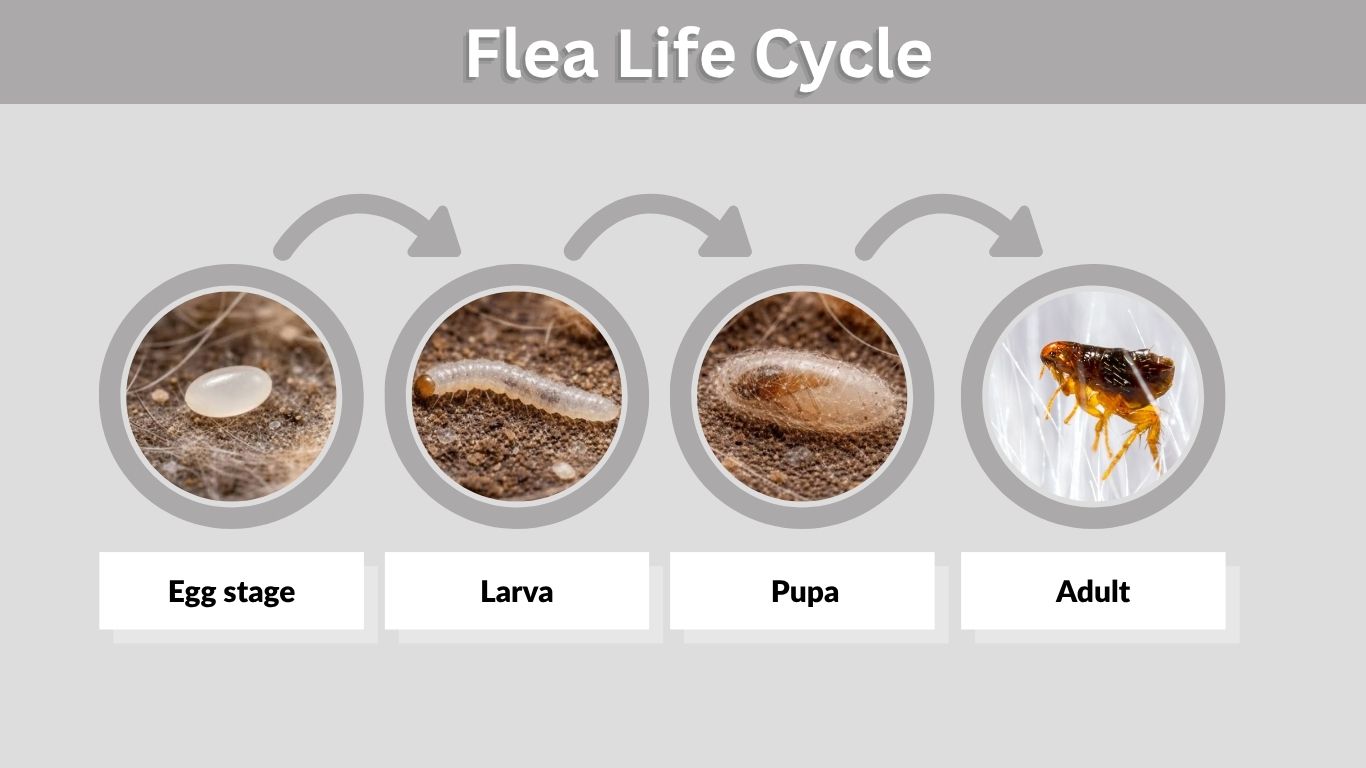
Fleas are tiny, blood-feeding insects that reproduce quickly and can become a serious problem for pets and homeowners. Understanding the flea life cycle is essential for controlling infestations because fleas develop through several stages, and not all stages live on animals. Their development depends on temperature, humidity, food availability, and environmental conditions. While some fleas complete their life cycle in just a few weeks, others remain protected for months. This guide explains the four flea life cycle stages, their development timeline, and how to break the cycle effectively.
What Is the Flea Life Cycle?
The flea life cycle consists of four stages: egg, larva, pupa, and adult. This process is called complete metamorphosis because fleas change significantly in appearance and behavior as they develop. Adult fleas feed on animal blood, while immature fleas usually develop in surrounding environments such as carpets, bedding, and soil.
4 Stages of the Flea Life Cycle
| Stage | Typical Duration | Main Characteristics |
| Egg | 1–10 days | Small, white, oval eggs |
| Larva | 5–20 days | Worm-like, feeds on organic debris and flea dirt |
| Pupa | Usually 1–2 weeks to develop | Protected inside a silken cocoon |
| Adult | Often several weeks on a host | Blood-feeding, reproducing flea |
Fully developed adults may remain inside pupal cocoons for additional weeks or months, extending the total life cycle.
1. Flea Egg Stage
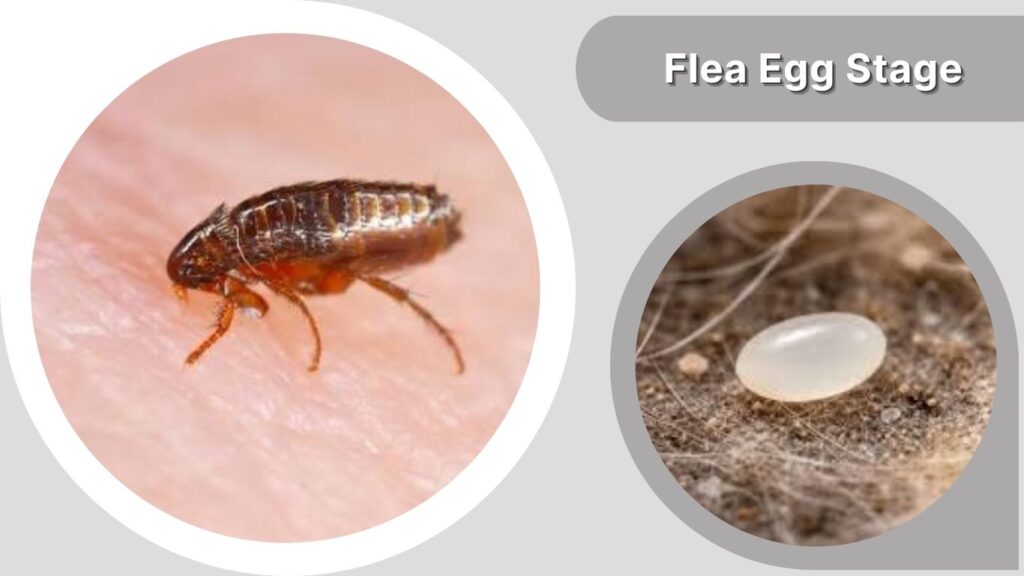
The flea life cycle begins when an adult female lays eggs after obtaining a blood meal. Female cat fleas can produce approximately 20–50 eggs daily under favorable conditions, allowing populations to increase rapidly.
Flea eggs are usually laid in an animal’s fur but readily fall into the surrounding environment.
What Do Flea Eggs Look Like?
Flea eggs are tiny, oval, pearly-white structures measuring approximately 0.5 millimeters long. They resemble small grains of salt and are difficult to notice without close inspection.
Unlike lice eggs, flea eggs are not firmly attached to animal hair. They fall into carpets, bedding, furniture, floor cracks, and outdoor resting areas.
How Long Do Flea Eggs Take to Hatch?
Flea eggs usually hatch within 1–10 days, depending on temperature and humidity.
Warm, moderately humid conditions favor successful development. Extremely dry conditions can reduce hatching success.
Once an egg hatches, a small larva emerges and begins searching for food in its surroundings.
2. Flea Larva Stage
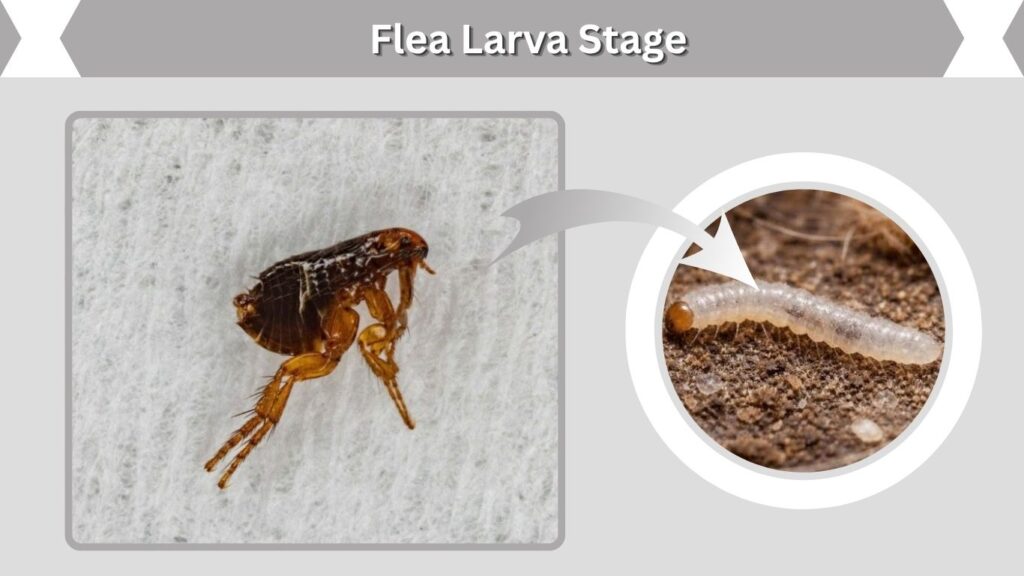
After hatching, fleas enter the larval stage. Unlike adult fleas, larvae do not feed directly on animals or bite humans. They live independently in protected environments and depend on available organic material for development.
This stage generally lasts 5–20 days, although unfavorable conditions can extend development.
What Do Flea Larvae Look Like?
Flea larvae are slender, whitish, segmented, worm-like creatures with small brownish heads. They lack legs and avoid bright light.
Young larvae are extremely small, but they gradually grow to several millimeters long.
Their preferred hiding places include carpet fibers, pet bedding, floor cracks, and shaded outdoor soil.
What Do Flea Larvae Eat?
Flea larvae primarily feed on flea dirt, the blood-containing droppings produced by adult fleas. They may also consume other organic debris and occasionally flea eggs.
They need sufficient humidity because their bodies dry out easily.
During development, larvae molt several times before spinning protective cocoons and entering the pupal stage.
3. Flea Pupa Stage
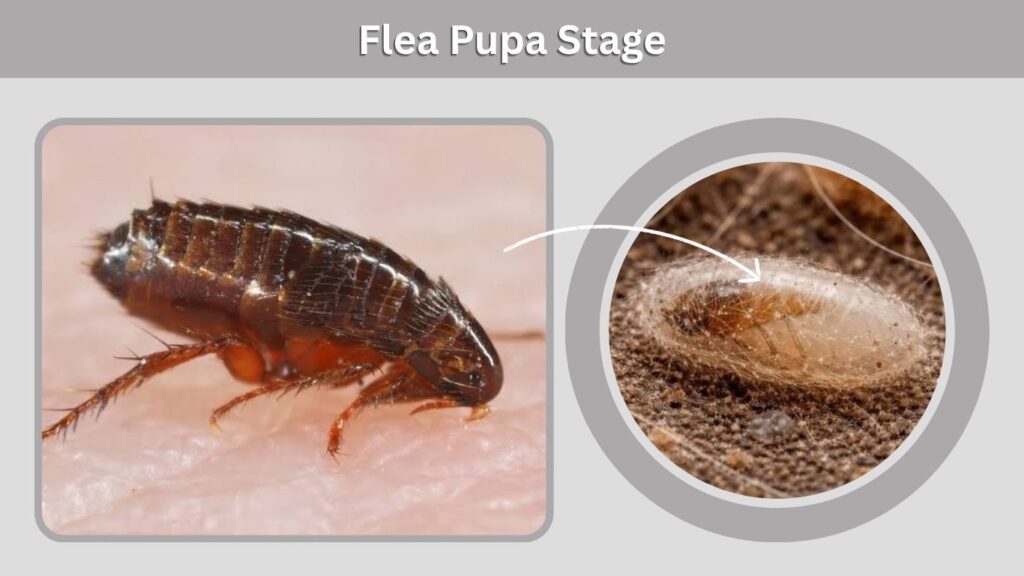
The pupal stage is one of the most important parts of the flea life cycle because it allows fleas to survive unfavorable conditions.
A mature larva spins a silken cocoon that often becomes covered with dust, soil particles, and carpet fibers.
Inside this protective structure, the flea transforms into an adult.
How Long Does the Flea Pupa Stage Last?
Pupal development typically takes around one to two weeks under favorable conditions. However, fully formed adult fleas may remain inside their cocoons for several weeks or months.
This extended waiting period helps fleas survive when suitable animal hosts are unavailable.
What Causes Adult Fleas to Emerge?
Several environmental signals can stimulate adult fleas to leave their cocoons:
- Vibrations: Walking or animal movement nearby.
- Body heat: Warmth suggesting a possible host.
- Carbon dioxide: Exhaled breath from nearby animals.
- Physical pressure: Disturbances around the cocoon.
Because cocoons provide protection, fleas may emerge even after a home has been cleaned or left unoccupied for an extended period.
4. Adult Flea Stage
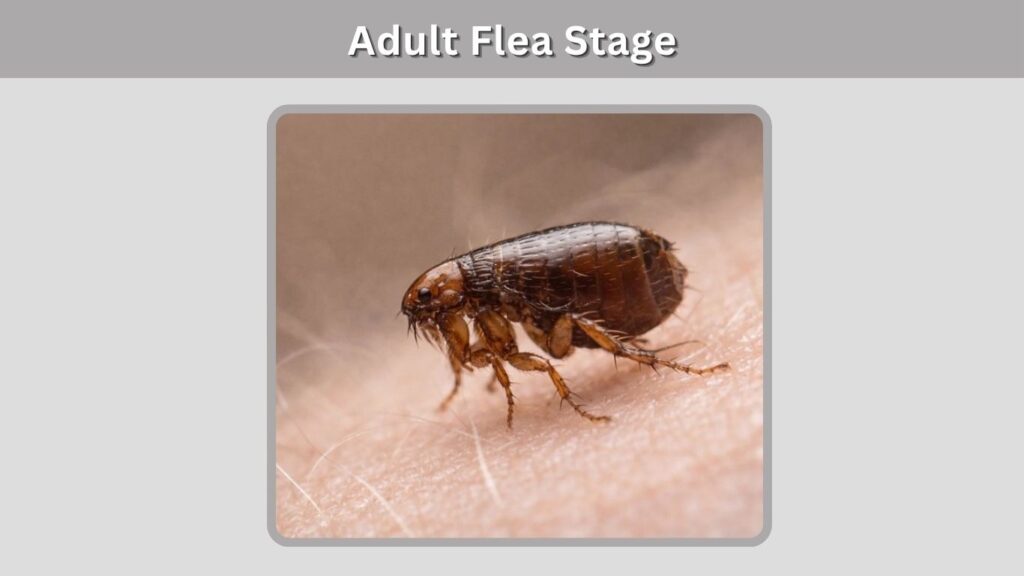
The final stage begins when a fully developed flea emerges from its cocoon and searches for a suitable host.
Adult fleas are small, dark brown, wingless insects with powerful hind legs adapted for jumping.
Once they find an animal, they begin feeding on blood and can reproduce rapidly.
How Long Do Adult Fleas Live?
Adult flea lifespan depends on host availability, temperature, humidity, and species.
Cat fleas commonly live for several weeks while feeding on a suitable host. Newly emerged fleas without access to blood often survive only a few days to approximately two weeks.
Female fleas generally begin producing eggs within 24–48 hours after their first blood meal, allowing another generation to develop.
How Long Is the Complete Flea Life Cycle?
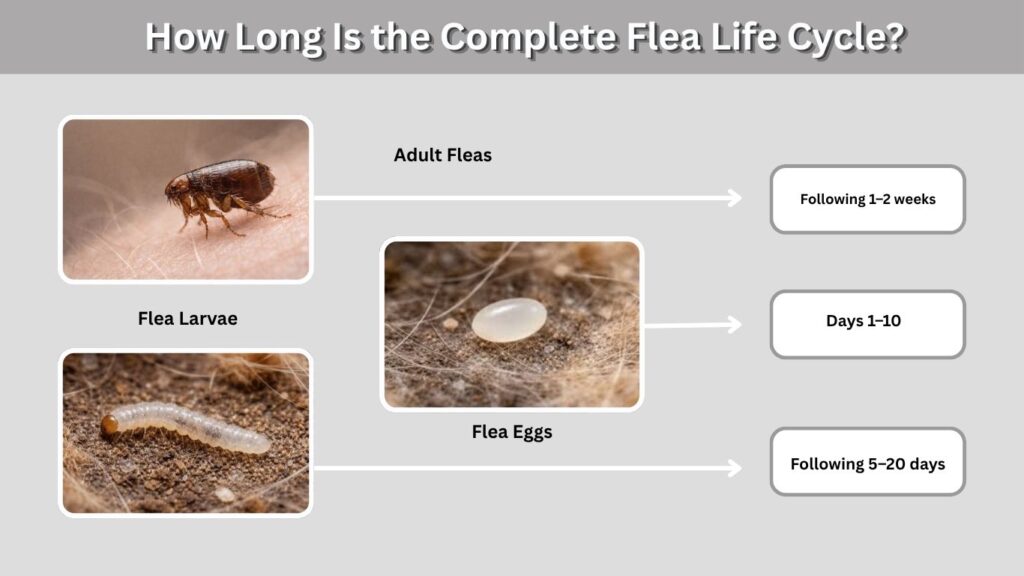
Under typical household conditions, the flea life cycle generally takes three to eight weeks, although it can be completed in approximately 12–14 days under ideal conditions.
When environmental conditions are unfavorable, delayed emergence from cocoons can extend the process for several months.
Flea Life Cycle Timeline
| Timeline | Development |
| Days 1–10 | Eggs hatch into larvae |
| Following 5–20 days | Larvae feed, grow, and spin cocoons |
| Following 1–2 weeks | Pupae develop into adults |
| Additional weeks or months | Developed adults may wait inside cocoons |
| After emergence | Adults find hosts, feed, and reproduce |
These are approximate stages, not a fixed calendar schedule. Individual fleas develop at different speeds depending on their surroundings.
What Factors Affect the Flea Life Cycle?
The speed of flea development depends heavily on environmental conditions. Understanding these factors helps explain why infestations can become more noticeable during warm, humid periods.
Temperature: Warm temperatures generally accelerate flea development. Extreme heat and prolonged cold can reduce survival.
Humidity: Larvae require relatively humid environments and are particularly vulnerable to dehydration. Protected carpet fibers and shaded soil provide suitable conditions.
Food availability: Developing larvae need flea dirt and other suitable organic material. Without adequate food, development may slow or fail.
Host availability: Adult fleas need blood meals to reproduce. Without a suitable host, emerging adults eventually die, although those protected inside cocoons can wait considerably longer.
Cat Flea Life Cycle vs. Dog Flea Life Cycle
Cat fleas (Ctenocephalides felis) and dog fleas (Ctenocephalides canis) follow the same four-stage development process.
Both species produce eggs, larvae, pupae, and adults. Their developmental speed depends on environmental conditions rather than simply whether their host is a cat or dog.
Interestingly, cat fleas are the most common fleas found on both domestic cats and dogs in many regions.
Adult fleas generally live on their hosts, while eggs, larvae, and pupae develop primarily in the surrounding environment.
How to Break the Flea Life Cycle
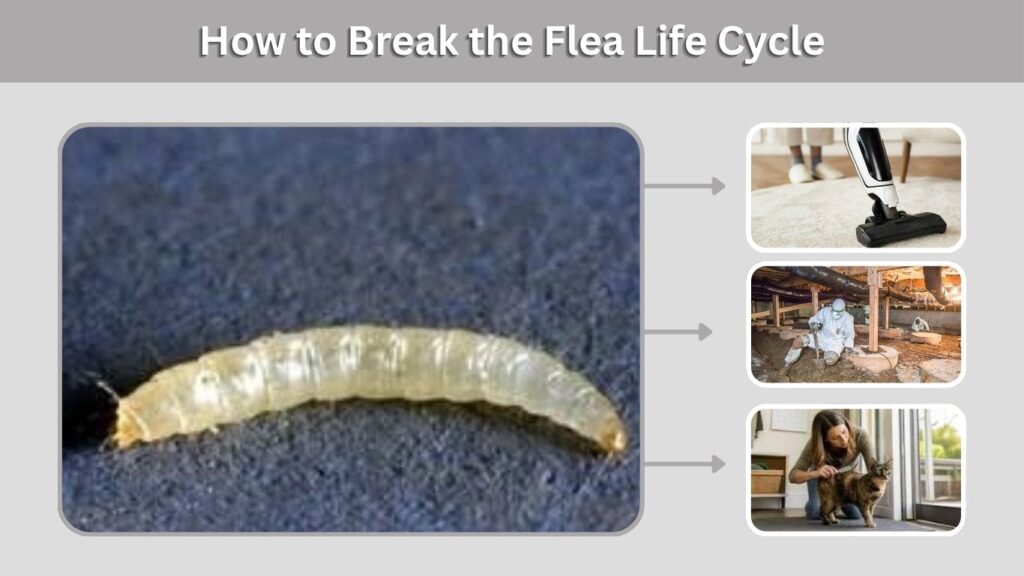
Breaking the flea life cycle requires eliminating adults and reducing the immature stages developing around your home. Treating pets alone may not immediately remove fleas hidden in carpets or furniture.
A combination of consistent pet treatment, environmental cleaning, and follow-up monitoring provides the most effective approach.
1. Treat All Household Pets
Use veterinarian-recommended flea prevention appropriate for each animal’s species, age, and weight.
Treat all susceptible household pets according to veterinary guidance. Never apply dog-only flea medication to cats because some ingredients are highly toxic to them.
2. Vacuum Carpets and Furniture
Vacuum carpets, rugs, upholstered furniture, floor cracks, and pet resting areas daily during an active infestation.
Vacuuming helps remove eggs, larvae, and adult fleas while stimulating some protected adults to emerge.
3. Wash Bedding and Clean Fabrics
Wash pet bedding, blankets, and suitable removable furniture covers regularly using hot, soapy water when fabric instructions allow.
Steam cleaning carpets can also help eliminate developing fleas in accessible areas.
4. Continue Treatment and Prevention
Fleas can remain protected inside cocoons after initial cleaning. Therefore, continue vacuuming and maintaining pet flea prevention even after visible flea activity decreases.
Severe infestations may require professional pest-control treatment. Products containing insect growth regulators can help interrupt immature flea development when used according to their labels.
Can the Flea Life Cycle Continue Without a Host?
Flea eggs, larvae, and pupae can develop or remain protected without directly feeding on an animal.
However, adult female fleas need blood meals to produce another generation.
Without suitable hosts, exposed adults eventually die, but adults waiting inside cocoons may survive much longer.
Consequently, removing pets or leaving a house empty does not guarantee that every flea has disappeared.
FAQs
1. How Many Stages Are in the Flea Life Cycle?
The flea life cycle has four stages: egg, larva, pupa, and adult. Fleas undergo complete metamorphosis, changing significantly in appearance and feeding behavior throughout development.
2. How Long Does the Flea Life Cycle Take?
The flea life cycle typically takes three to eight weeks. Under ideal conditions, development can finish in approximately two weeks, while delayed adult emergence can extend the process for months.
3. What Is the Hardest Flea Life Cycle Stage to Kill?
The cocoon stage is particularly difficult to control because it protects developing fleas from environmental conditions and some insecticide treatments. Adults may emerge after initial control measures have been completed.
4. Can You Break the Flea Life Cycle Naturally?
Regular vacuuming, washing bedding, steam cleaning, and flea combing can reduce flea populations without household insecticides. However, persistent infestations may require veterinarian-approved pet treatments or additional pest-control measures.
5. How Long Does It Take to Completely Break the Flea Life Cycle?
Effective flea elimination often takes several weeks, and moderate to severe household infestations may require two to three months or longer. Continuous cleaning, appropriate pet treatment, and follow-up monitoring help prevent new generations from developing.
