
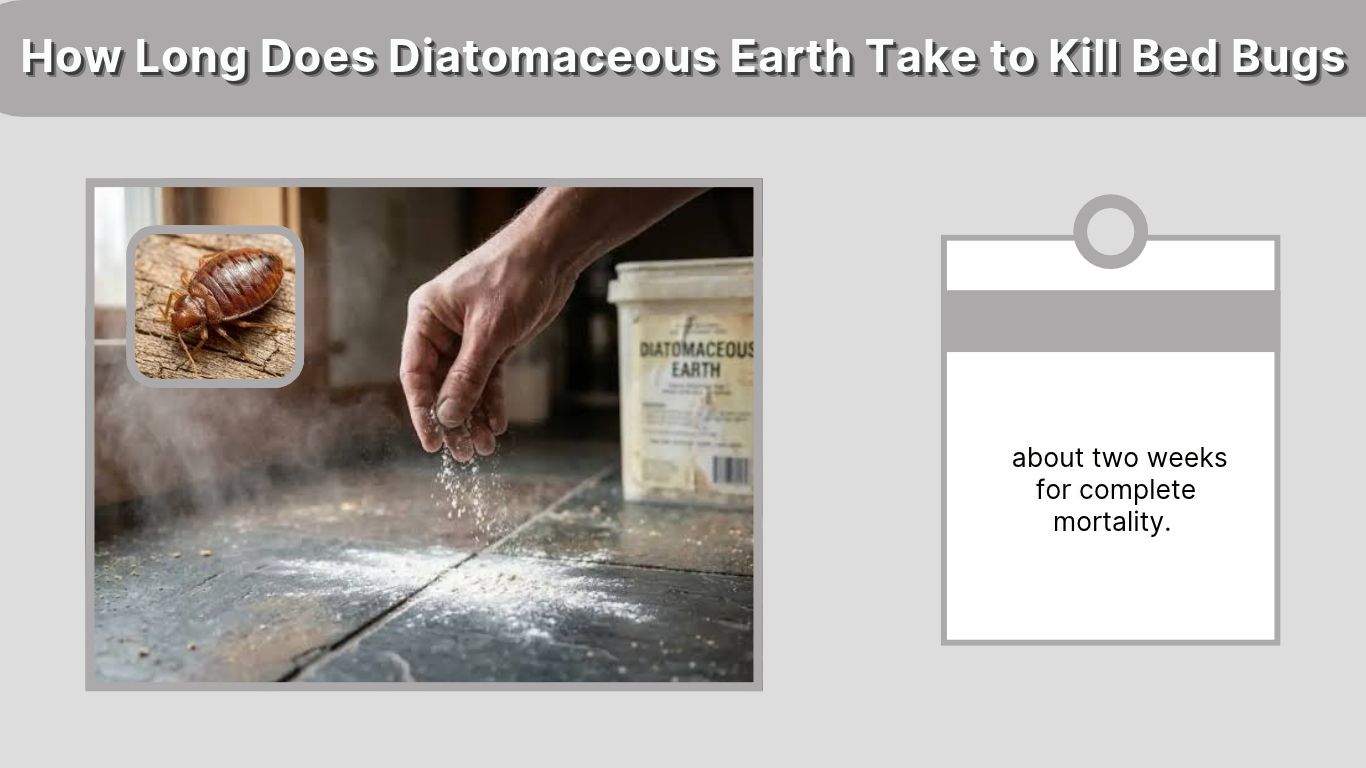
Diatomaceous earth can kill bed bugs without relying on a conventional nerve-targeting insecticide. But how long does diatomaceous earth take to kill bed bugs? Exposed bugs may die within days, while some laboratory tests have taken about two weeks for complete mortality. Clearing an infestation can take longer because hidden insects may never contact the powder. Product quality, placement, and hiding places affect results. This guide explains how DE works, realistic treatment times, safe application, and when other methods are necessary.
How Long Does Diatomaceous Earth Take to Work?
Diatomaceous earth, or DE, is a slow-acting insecticidal dust. Research shows different results depending on the product, bed bug species, and exposure. Expect days to weeks for exposed insects, not guaranteed overnight elimination.
Can Diatomaceous Earth Kill Bed Bugs in One Day?
Do not count on it. One laboratory study found that a DE product required about 14 days of exposure to kill all tested bugs. Another found complete mortality of tropical bed bugs after two days. Neither result guarantees the same timing inside a furnished home.
Why Does the Killing Time Vary?
Bed bugs need to encounter an effective product for it to work. The rate of death changes with several factors:
- Product formulation: Different forms of diatomaceous earth do not perform equally.
- Exposure: Bugs that avoid treated cracks may survive untouched.
- Humidity and conditions: Moisture and environmental conditions can affect some dusts.
- Infestation size: More hiding places mean more insects may escape contact.
- Application: A product used contrary to its label may be ineffective or unsafe.
How Long to Eliminate an Entire Infestation?
Eliminating all bed bugs may take weeks to months. Adults, nymphs, and eggs hide behind furniture or inside bed frames. Dust cannot kill insects it never reaches. Regular inspections and additional methods are essential.
How Does Diatomaceous Earth Kill Bed Bugs?
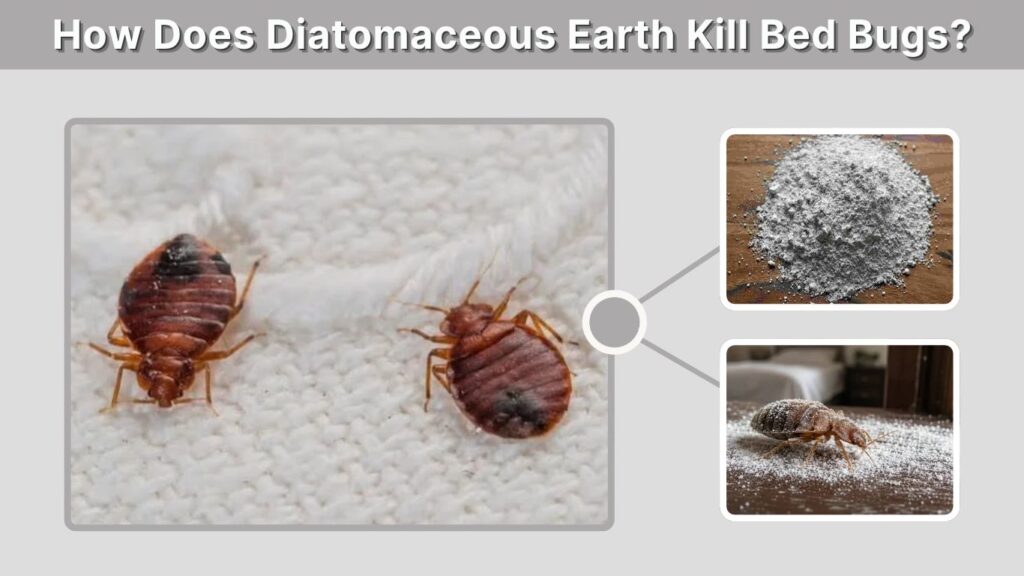
Diatomaceous earth consists of material derived from tiny fossilized aquatic organisms called diatoms. An appropriate insecticidal formulation damages the protective waxy coating of a bed bug’s body. The insect gradually loses moisture and dies from dehydration. This physical mode of action differs from conventional pesticides that act on an insect’s nervous system.
Does Diatomaceous Earth Kill Adult and Baby Bed Bugs?
It can affect both adults and immature bed bugs, called nymphs, when they contact an effective product. However, tiny nymphs are easy to miss, and both life stages can hide in narrow crevices. Finding fewer adult insects does not establish that the infestation has ended. Continue checking for live nymphs and new activities.
Does Diatomaceous Earth Kill Bed Bug Eggs?
Do not rely on DE to eliminate eggs. Eggs tucked into seams or cracks may avoid meaningful contact with the dust. Newly hatched nymphs could encounter a labeled treatment later, but that is uncertain. Heat treatment, careful inspection, and follow-up monitoring are important when eggs may remain.
How to Use Diatomaceous Earth for Bed Bugs Safely
Product selection matters as much as timing. In the United States, use only EPA-registered pesticides labeled for bed bugs. Other countries have their own rules. Follow instructions determining where and how dust may be applied indoors.
Choose the Correct Diatomaceous Earth Product
Do not assume that food-grade diatomaceous earth is suitable for bedroom pest treatment. Pool-filter and non-pesticide powders can pose inhalation hazards and are not substitutes for labeled bed bug products. Check the label for permitted application sites, precautions, and the appropriate amount. Keep the product away from children and pets.
Where Can Bed Bug Dust Be Applied?
Registered desiccant products are commonly restricted to specific cracks and crevices. Depending on the label, relevant areas may include:
- Gaps around bed frames and headboards.
- Approved cracks near baseboards or furniture joints.
- Other inaccessible hiding places expressly listed on the label.
Do not put powder into electrical outlets, ducts, or enclosed equipment unless the product explicitly permits that use. If the directions are unclear, ask a licensed pest professional.
Where Should You Never Spread DE?
Avoid sprinkling loose dust over mattresses, pillows, blankets, carpets, or exposed floors. These applications may increase airborne particles and contact with people or pets. More powder does not necessarily mean better results. Never apply pesticide dust directly to skin, and do not combine it with homemade chemical mixtures.
Diatomaceous Earth vs. Other Bed Bug Treatments
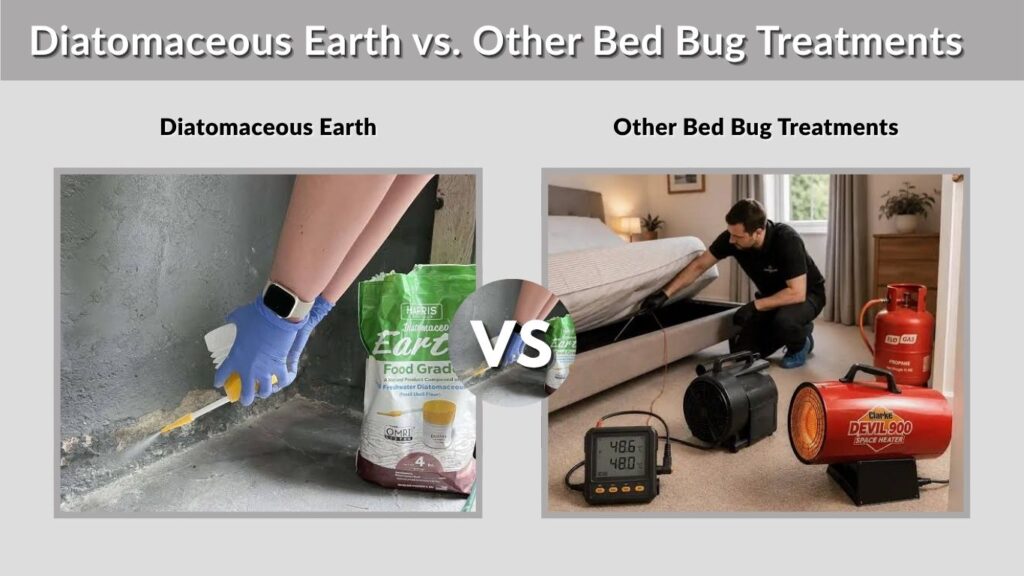
DE may help in labeled hiding places, but other methods kill exposed bugs faster. High heat treats fabrics and surfaces, while dust can affect bugs traveling through treated crevices. The methods complement each other but reach different places.
| Treatment | Typical timing | Main limitation |
| Diatomaceous earth | Days to weeks for exposed bugs; longer for infestations | Requires contact; product results vary |
| High-heat clothes dryer | At least 30 minutes on high heat | Only treats dryer-safe items |
| Controlled heat treatment | At least 120°F for 90 minutes in treated areas | Requires uniform heat and proper equipment |
| Steam | Can kill contacted bugs quickly | May not penetrate hidden areas |
| Commercial pesticides | Depends on product and label | Resistance, access, and application affect results |
Is Silica Gel Dust Faster Than Diatomaceous Earth?
Some insecticidal silica-based dusts have performed faster than DE in controlled experiments. One study observed complete mortality after approximately three to four days with a silica-gel product, compared with around 14 days for a tested DE product. These laboratory comparisons are not universal guarantees. Use only products authorized for bed bugs and follow their specific labels.
Do Bleach, Baking Soda, or Vinegar Work Faster?
Bleach may injure insects it directly contacts but is not a reliable method for eliminating hidden bed bugs. It can damage household surfaces and produce dangerous fumes if mixed with other cleaners. Baking soda has not shown dependable bed bug control, and vinegar cannot reach an infestation effectively. Rubbing alcohol is highly flammable and should not be used as a home bed bug treatment.
What to Do If Diatomaceous Earth Is Not Working
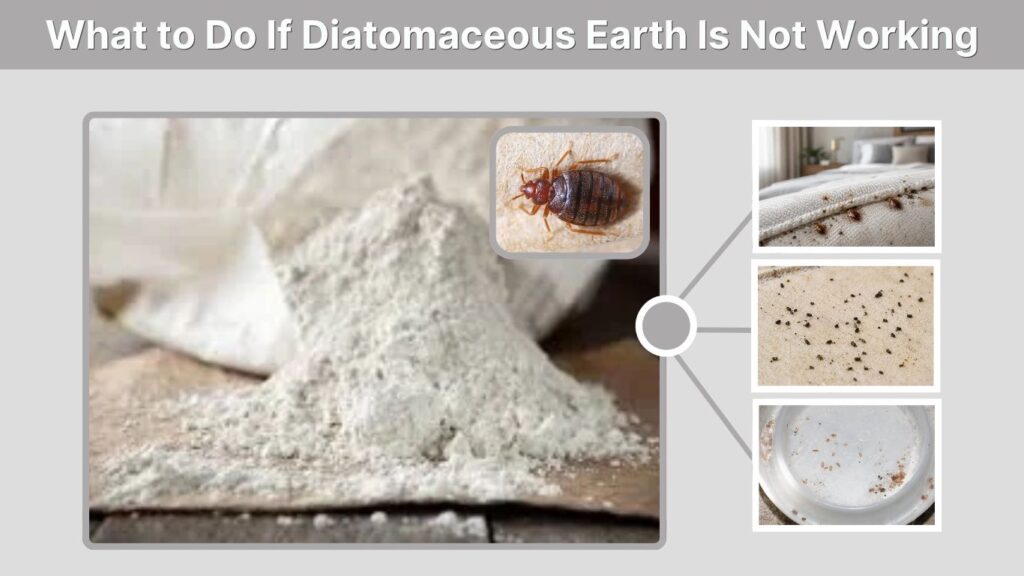
If you still find bugs after using a labeled product, the problem may be untreated hiding places rather than simply insufficient waiting time. Avoid repeatedly spreading more dust. A successful plan combines inspections, physical removal, appropriate heat treatment, mattress encasements, and targeted pesticide use when needed.
Signs That Treatment Needs Reassessment
- Live bugs continue appearing in bed frames or furniture.
- Fresh dark spotting or shed skins appear after cleanup.
- Interceptor traps keep catching bed bugs.
- Bugs appear in additional rooms or nearby apartments.
Vacuum accessible insects, seal and discard vacuum waste outdoors, and heat-treat suitable bedding in a dryer. Keep records of sightings and check at least weekly. Contact an experienced pest-control professional if activity persists or multiple rooms are affected.
FAQs
1. How Long Does DE Take to Kill Bed Bugs After Contact?
The timing depends on the product and exposure. Research has recorded deaths within days under controlled conditions, while another tested formulation took about 14 days to kill all exposed bugs. Household results may take longer.
2. Does Diatomaceous Earth Kill Bed Bugs Instantly?
No. Diatomaceous earth gradually damages the insect’s protective coating and causes dehydration. It is not an instant-contact treatment, and some bed bugs may never encounter the powder. Consider DE a supporting method, not a quick fix.
3. How Long Does CimeXa Take to Kill Bed Bugs?
CimeXa is a silica-gel-based insecticidal dust, not diatomaceous earth. Some laboratory tests have reported complete mortality within approximately three to four days under particular conditions. Actual results depend on exposure and proper labeled application.
4. Can You Sleep in a Room Treated With Diatomaceous Earth?
That depends on the exact registered product, where it was applied, and its label directions. Do not sleep near exposed dust or apply it to bedding. Follow all re-entry, ventilation, and other safety instructions.
5. Is Diatomaceous Earth Enough to Get Rid of Bed Bugs?
Usually, it should not be the only method. DE may miss eggs and insects in untreated spaces. Combine suitable labeled products with inspection, vacuuming, dryer heat, mattress encasements, and professional treatment when the infestation persists.
