
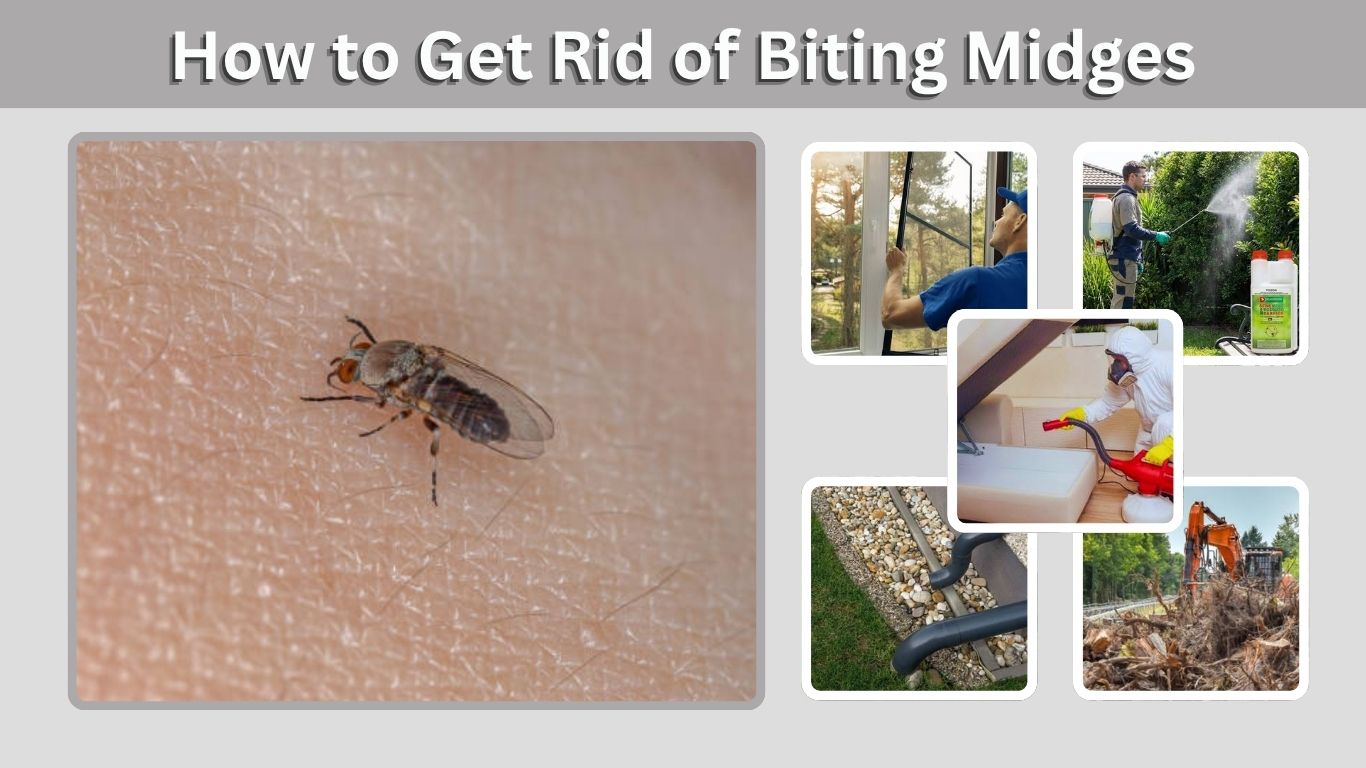
Biting midges are tiny flies that can turn time indoors or outdoors into an uncomfortable experience. Often called no-see-ums, these insects are small enough to pass through some ordinary window screens and may leave itchy bites on exposed skin. Getting rid of biting midges requires more than simply spraying visible adults. The most effective approach combines moisture management, entry prevention, airflow, personal protection, and targeted pest control. Here is how to reduce biting midges around your house and yard.
How to Get Rid of Biting Midges Quickly
Getting rid of biting midges starts with reducing the conditions that allow them to develop and limiting contact with adult insects. Their immature stages generally develop in moist or wet organic environments, and drying suitable habitats can help reduce some populations. Because breeding sites may extend beyond your property, however, complete elimination is not always practical.
Remove Moist Breeding Areas
Inspect the property carefully for places that remain wet for long periods. Improving drainage is particularly useful because biting midge larvae and pupae depend on moist habitats.
Key steps include:
- Repair leaking outdoor faucets, hoses, and irrigation systems.
- Improve drainage in areas where water regularly collects.
- Avoid continuously overwatering lawns and garden beds.
- Remove decaying wet vegetation where practical.
- Keep gutters and drainage channels flowing properly.
- Correct persistently muddy areas around patios and foundations.
- Empty unnecessary containers that retain water.
Unlike mosquitoes, some biting midges can develop in moist soil, mud, marshy areas, and other semi-aquatic habitats rather than only obvious containers of standing water. Therefore, simply emptying buckets may not solve a severe problem.
Reduce Adult Midge Activity
Adult biting midges are weak enough flyers that moving air can provide useful relief. CDC guidance specifically recommends fans as one method of helping keep midges away from people outdoors.
Position a strong fan near a porch, patio, doorway, or seating area. Air conditioning can also make indoor environments less favorable while allowing doors and windows to remain closed.
How to Get Rid of Biting Midges in the House
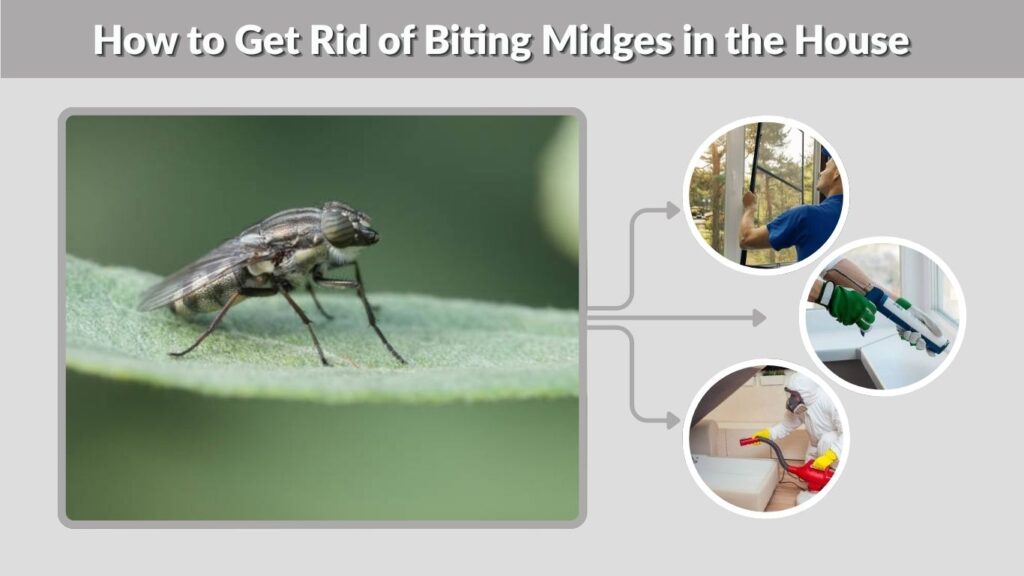
Biting midges normally originate outdoors, so repeated indoor activity often means adults are entering through doors, windows, damaged screens, or other openings. Mississippi State University Extension notes that no-see-ums breed outdoors and rarely originate inside homes. This means indoor control should concentrate heavily on stopping entry rather than searching for an indoor nest.
Stop Midges From Entering
Because biting midges are exceptionally small, standard insect screening may not always stop them. CDC recommends approximately 20-by-20 mesh screening for preventing biting midges from entering buildings.
Check these common entry points:
- Replace torn window and door screens.
- Consider fine no-see-um screening where infestations are severe.
- Seal gaps around window frames.
- Install weather stripping around exterior doors.
- Repair gaps around vents where appropriate.
- Keep unscreened doors and windows closed during heavy activity.
- Check screens carefully around porches and sleeping areas.
Fine screening can restrict airflow more than ordinary mosquito screening, so adequate ventilation may still be necessary.
Deal With Midges Already Indoors
Once midges have entered, vacuuming visible insects and using fans can help reduce nuisance activity. Keep exterior openings closed while dealing with those already inside.
If insects repeatedly appear near houseplants, drains, sinks, or continuously damp indoor areas without biting anyone, confirm their identity. Fungus gnats, drain flies, and other tiny flies are frequently mistaken for biting midges and require different control methods.
How to Get Rid of Biting Midges in the Yard
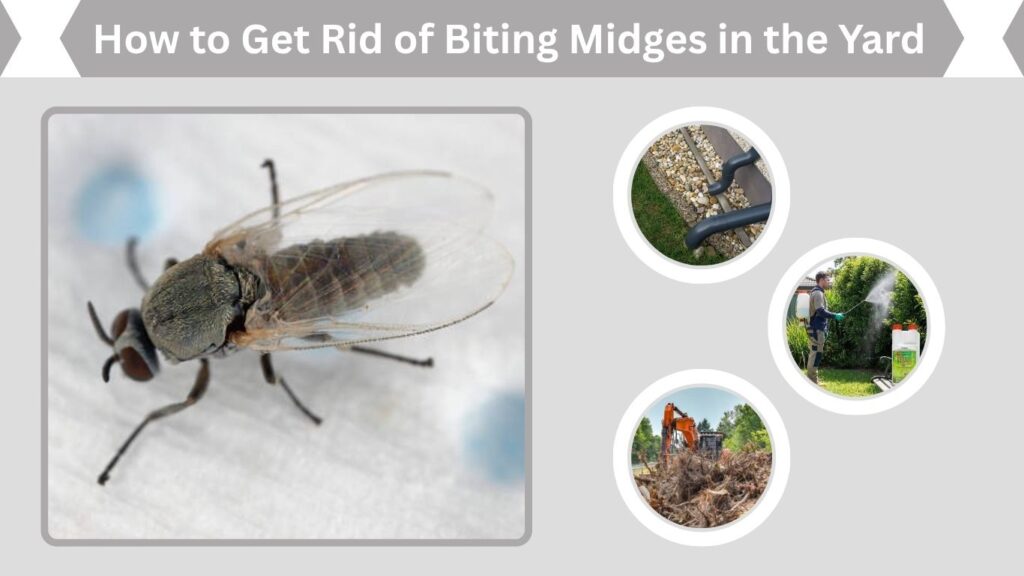
Outdoor control can be difficult because biting midges may fly into your yard from wetlands, shorelines, muddy areas, drainage systems, or neighboring properties. The goal should therefore be to make your immediate outdoor living area less favorable while reducing breeding habitat that you can reasonably control. Large natural wetlands generally should not be drained or altered simply for midge control.
Make Your Yard Less Midge-Friendly
Concentrate first on moisture and the places where people spend the most time.
A practical yard checklist includes:
- Fix poor drainage near the home.
- Allow excessively wet soil to dry where possible.
- Adjust sprinklers so they do not keep soil permanently saturated.
- Clean decomposing vegetation from problem areas.
- Keep patios and sitting areas away from consistently wet ground.
- Use outdoor fans around decks and porches.
- Maintain screens around enclosed patios.
- Identify nearby marshy or muddy areas that may explain recurring activity.
Reducing one tiny patch of moisture will not necessarily eliminate midges if extensive breeding habitat exists nearby, but improving conditions around frequently used areas can still make the yard more comfortable.
Use Outdoor Insecticides Carefully
Some insecticides used for mosquito management can kill biting midges, and research has found certain professionally applied barrier treatments can reduce adult populations. However, reaching all breeding and resting areas is difficult, so chemical treatment may provide temporary suppression rather than permanent elimination.
Only use a pesticide specifically labeled for the intended location and pest, and follow its directions exactly. Persistent or unusually severe infestations may justify contacting a licensed pest-management professional.
How to Get Rid of Non-Biting Midges
Non-biting midges require a different strategy. Chironomid midges resemble mosquitoes but do not bite people. They commonly develop in aquatic environments and may emerge in enormous numbers near ponds and lakes. Adults are strongly attracted to lights, which is why large groups sometimes collect around homes, windows, doors, and outdoor fixtures.
Reduce Non-Biting Midge Activity
Light management is one of the most useful ways to reduce large accumulations around buildings. Mississippi State University Extension describes managing exterior lighting as an effective approach during heavy chironomid midge flights.
Reduce unnecessary outdoor lighting near entrances and windows, particularly when midges are emerging heavily. Closing curtains at night can also reduce the amount of indoor light visible from outside.
Because these insects do not bite, extensive pesticide treatment may be unnecessary when the problem is temporary.
What Does Not Work Well Against Biting Midges?
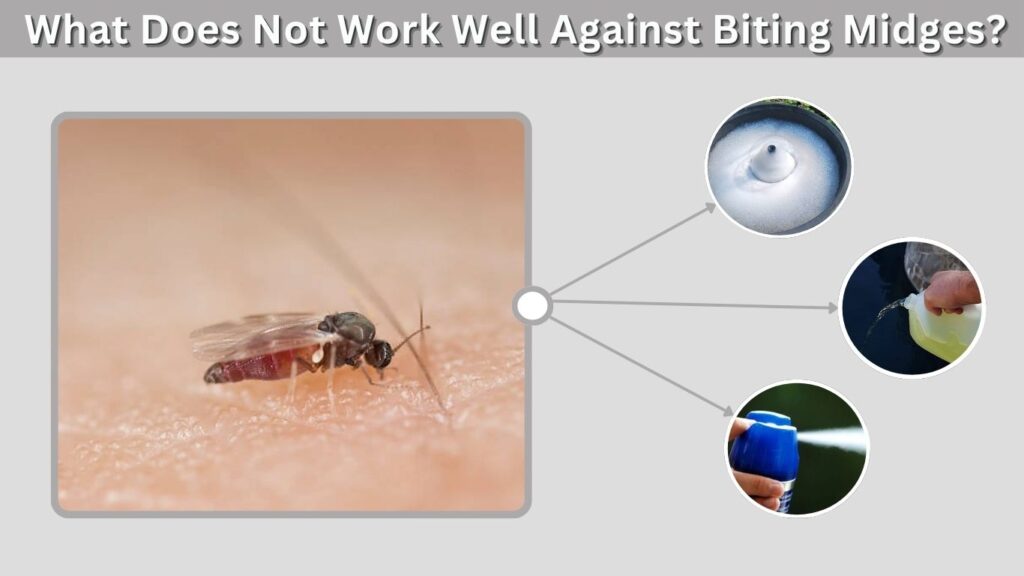
Several quick fixes are commonly recommended online, but they may fail because they do not address where midges originate. Effective control requires correctly identifying the insect and combining exclusion, habitat management, and protection rather than relying on one household chemical.
Do Not Pour Bleach Into Outdoor Water
Pouring bleach into ponds, drains, wet soil, or other outdoor water sources is not an appropriate general solution for biting midges. It can harm plants, aquatic organisms, and other wildlife while failing to address surrounding breeding habitats.
Instead, correct unnecessary moisture or drainage problems without contaminating natural water.
Why Mosquito Spray May Not Solve the Problem
People sometimes report that mosquito spray does not get rid of biting midges. One reason is that adult midges may continually arrive from untreated breeding areas. CDC also notes that mosquito-control chemicals can kill biting midges, but actual effectiveness can depend on whether treatment reaches locations where the midges occur.
This is why repeated spraying alone often produces disappointing long-term results.
How to Prevent Biting Midge Bites
Even when eliminating the local population is impossible, preventing bites can make a major difference. Biting midges may be active during daytime and evening periods, depending on the species, so protection should be based on observed activity rather than assuming they appear only after dark.
Protect Yourself Outdoors
For areas with persistent biting activity:
- Wear long sleeves and long pants when practical.
- Use an EPA-registered repellent labeled for biting flies, no-see-ums, or Culicoides.
- Look for appropriate products containing ingredients such as DEET or picaridin.
- Apply repellents according to the product label.
- Use outdoor fans around seating areas.
- Stay inside screened or air-conditioned areas during intense activity.
- Avoid spending long periods beside known breeding areas when midges are abundant.
CDC specifically recommends repellents labeled for flies, biting flies, or Culicoides when protection from biting midges is needed.
FAQs
1. What is the best way to get rid of biting midges?
The most dependable strategy combines moisture control, fine screens, fans, personal repellents, and targeted pest management when necessary. There is rarely one treatment that permanently eliminates every biting midge because adults may originate outside your property.
2. How do I get rid of biting midges in my bedding?
Wash bedding normally and inspect window screens and nearby entry points. Biting midges do not normally establish breeding populations in beds. If biting continues mainly while sleeping, consider other pests such as mosquitoes, fleas, or bed bugs and confirm the insect responsible.
3. Do biting midges get in your hair?
Yes. Adult biting midges are extremely small and may land around the scalp, hairline, ears, neck, or other exposed areas while searching for a blood meal. Finding one in your hair does not mean it lives or reproduces there.
4. How do you get rid of biting midges outside?
Improve drainage, reduce unnecessarily damp organic areas, use fans around outdoor living spaces, wear protective clothing, and apply an appropriately labeled repellent. Severe problems originating from extensive wetlands or neighboring habitat can be much harder to eliminate completely.
5. Are biting midges worse at night?
It depends on the species. Some are especially troublesome around dawn or dusk, while others may remain active during daytime or evening hours. CDC notes that biting midge activity can occur during both daytime and evening periods, so local conditions and species determine when biting is worst.
