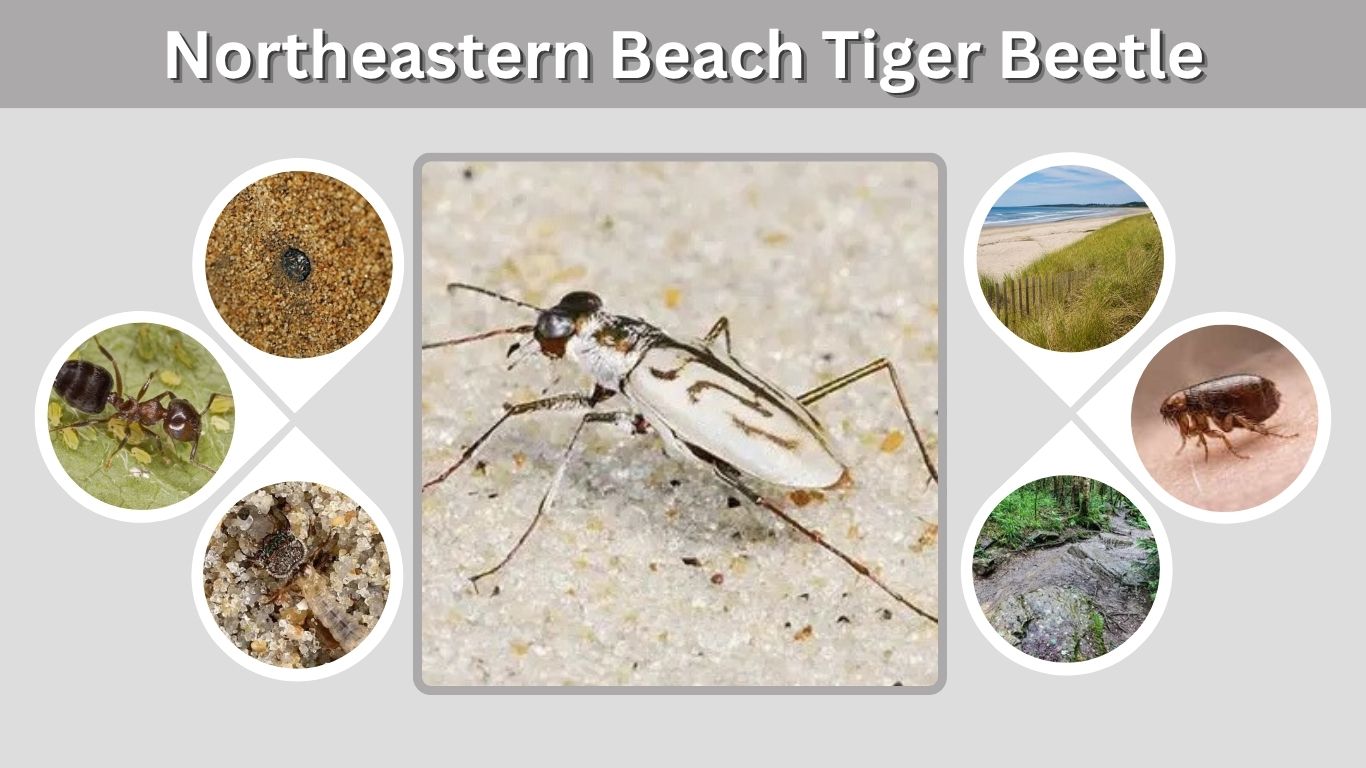
The northeastern beach tiger beetle is a small, fast-moving predator found on a limited number of sandy beaches along the eastern United States. Recognized by its pale body, long legs, large eyes, and powerful jaws, this beetle is specially adapted to life near the water’s edge. Once widespread along the Atlantic Coast, it has disappeared from much of its historical range because of shoreline development, heavy recreation, erosion, and other disturbances. Today, protecting undisturbed beach habitat is essential to its survival.
What Is a Northeastern Beach Tiger Beetle?
The northeastern beach tiger beetle is a coastal subspecies of the eastern beach tiger beetle. Its accepted scientific name is Cicindela dorsalis dorsalis, although some modern classifications place it in the genus Habroscelimorpha.
It belongs to:
- Kingdom: Animalia
- Phylum: Arthropoda
- Class: Insecta
- Order: Coleoptera
- Family: Carabidae
- Subfamily: Cicindelinae
- Scientific name: Cicindela dorsalis dorsalis
The U.S. Fish and Wildlife Service lists it as a threatened insect under the Endangered Species Act. It has held federal threatened status since 1990.
Northeastern Beach Tiger Beetle Identification
This beetle blends remarkably well with pale beach sand. Its camouflage helps it approach prey while avoiding birds and other predators.
Key Characteristics
- Usually light tan, cream, or nearly white
- Thin, irregular dark markings on the wing covers
- Shiny bronze, copper, or greenish head and thorax
- Large, prominent compound eyes
- Long, slender legs built for rapid running
- Curved jaws used for catching prey
- Long antennae
- Generally less than one inch long
Because its body resembles the surrounding sand, a resting beetle may be difficult to notice. Movement often reveals it first. Adults commonly run a short distance, stop, and then run or fly again when approached.
Where Does the Northeastern Beach Tiger Beetle Live?
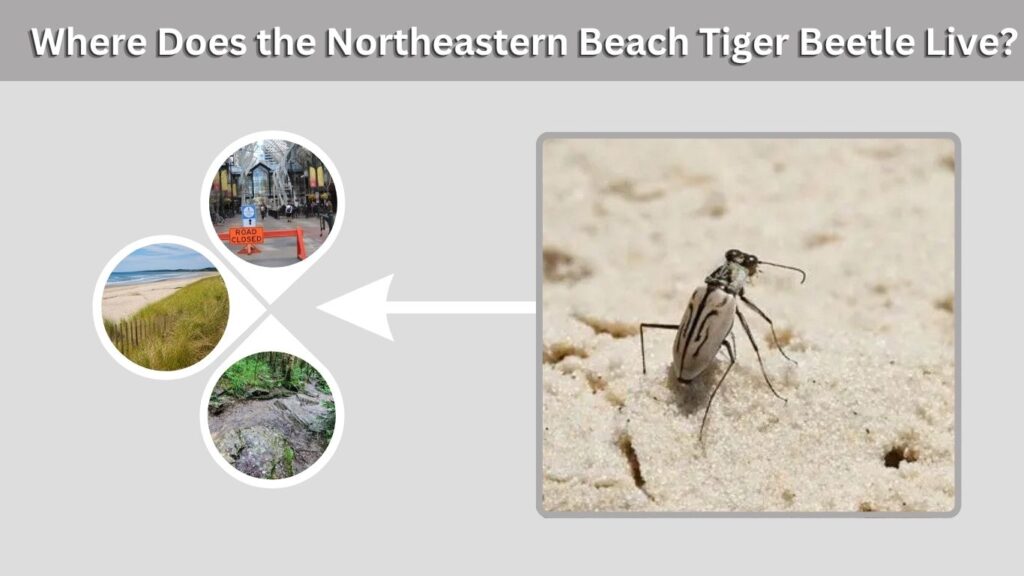
Northeastern beach tiger beetles require long, wide, relatively undisturbed sandy beaches. Both adults and larvae depend on areas where natural waves, tides, erosion, and sand deposition continually reshape the shoreline.
Current Range
Historically, the beetle occurred along Atlantic beaches from Massachusetts south to Virginia. It has since disappeared from many places where it was once abundant, including much of New York, New Jersey, Connecticut, and Rhode Island.
Remaining natural populations are concentrated around the Chesapeake Bay in Maryland and Virginia, with another important population area in Massachusetts. The U.S. Fish and Wildlife Service describes its present distribution as limited mainly to the Chesapeake Bay region and Massachusetts.
Habitat Requirements
Suitable habitat normally includes:
- Fine, moist sand
- A wide beach with a gradual slope
- Limited pedestrian and vehicle traffic
- Natural deposits of seaweed and animal remains
- An active shoreline that is not completely hardened
- Upper intertidal and drift-zone areas for larval burrows
The beetle cannot survive only on the dry upper dunes. It needs access to moist sand near the water, where its prey is most abundant.
Northeastern Beach Tiger Beetle in Virginia
Virginia supports some of the most important remaining populations of the northeastern beach tiger beetle. Suitable sites occur mainly along relatively undeveloped Chesapeake Bay shorelines and parts of Virginia’s Eastern Shore.
Virginia beaches can provide the combination of fine sand, natural shoreline movement, moist larval habitat, and plentiful prey that the beetles require. However, individual colonies may decline quickly when beaches are narrowed, armored, heavily visited, or damaged by vehicles.
Population surveys have found different trends among sites. Some Virginia Eastern Shore populations have increased, while several western Chesapeake Bay shoreline populations have experienced serious declines.
What Do Northeastern Beach Tiger Beetles Eat?
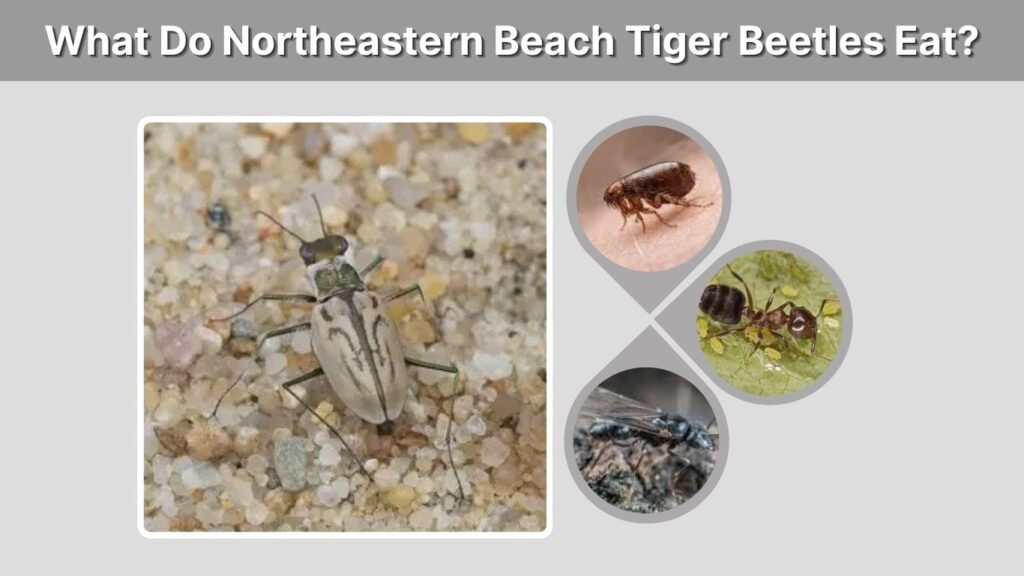
Both adults and larvae are predators, but they use very different hunting methods.
Adult Diet
Adult beetles run along the beach and capture small animals with their jaws. Common food includes beach fleas, flies, ants, lice, amphipods, and other small invertebrates. They may also scavenge dead fish, crabs, and other organic material washed ashore.
Adults often forage close to the waterline, where waves leave behind small prey and natural debris. Their speed allows them to pursue insects across open sand.
Larval Diet
Larvae are ambush predators. Instead of chasing prey, they wait near the entrance of a vertical sand burrow. When a small insect or amphipod passes, the larva suddenly lunges forward and pulls it into the burrow.
Sand fleas are especially important prey in some northern populations.
Northeastern Beach Tiger Beetle Larvae
The larvae look very different from the adults. They have pale, elongated bodies, a darker head, strong jaws, and hook-like structures that help anchor them inside their tunnels.
Larval Burrows
Larvae dig nearly vertical burrows in moist sand, often between the upper intertidal area and the high-tide drift zone. They position their heads at the opening and wait for prey.
Moisture is essential. Larvae have relatively soft bodies and may dry out when exposed to excessively hot or dry conditions. Their burrows may sometimes be covered by high tides, but the larvae are adapted to temporary flooding.
Beach grooming, vehicles, digging, sand replenishment, and heavy foot traffic can crush larvae or destroy their burrows.
Life Cycle and Reproduction
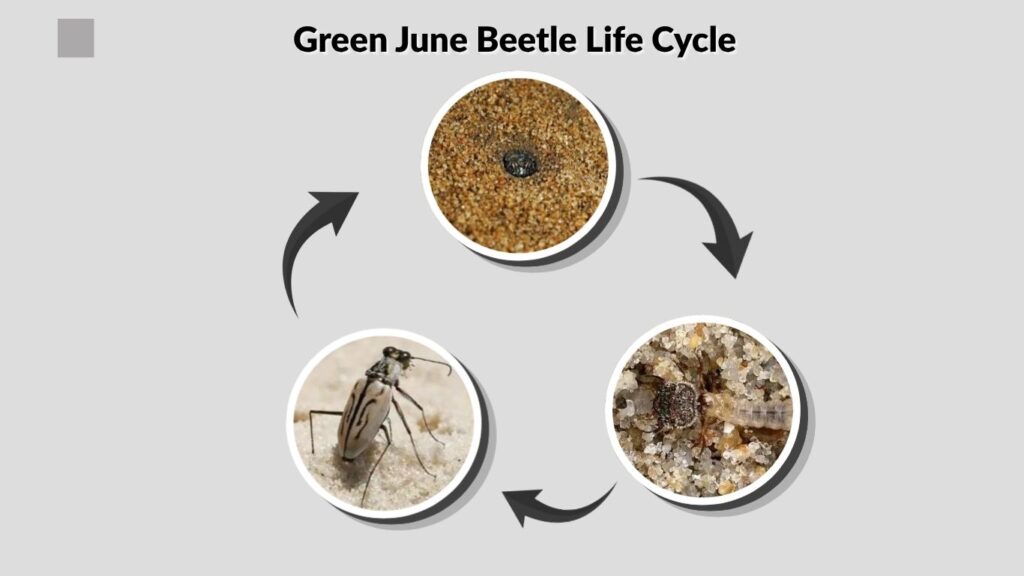
The northeastern beach tiger beetle undergoes complete metamorphosis with four stages: egg, larva, pupa, and adult.
Mating and Egg Laying
Adults generally become active during warm weather. In much of their range, they can be seen from June through September on sunny days. During this period, they feed, mate, and bask near the shoreline.
Females place eggs individually in moist beach sand. The location must provide enough moisture for the developing larva without being continually washed away.
Larval Development
After hatching, the larva constructs a burrow and remains there through several growth stages. Larval development may take roughly two years, depending on temperature, weather, food availability, and local conditions.
The mature larva eventually closes its burrow and forms a pupal chamber. After pupation, the adult emerges and begins hunting on the open beach.
Do Beach Tiger Beetles Bite?
Northeastern beach tiger beetles possess strong jaws, but they are not considered dangerous to people. A beetle may try to pinch if trapped, squeezed, or handled roughly. Such a defensive bite would normally be minor.
They do not seek people, feed on blood, spread known human diseases, or infest homes. Because the beetles are protected and highly sensitive to disturbance, they should be observed without being captured or handled.
Why Is the Northeastern Beach Tiger Beetle Threatened?
The beetle’s decline is closely connected to the loss and alteration of natural sandy beaches.
Shoreline Development
Homes, seawalls, bulkheads, roads, marinas, and other structures can eliminate habitat or interrupt the natural movement of sand. Hardened shorelines may also increase erosion in nearby areas.
Recreational Disturbance
Large numbers of visitors can trample larvae and compact the sand. Off-road vehicles are particularly harmful because their tires may crush adults, destroy burrows, and alter the beach surface.
Beach Grooming
Removing seaweed, drift material, dead fish, and other natural debris makes beaches look cleaner but takes away feeding areas and prey. Mechanical grooming may also damage eggs and larval tunnels.
Erosion and Rising Water Levels
Severe storms and erosion can wash away breeding areas. Rising sea levels may further reduce suitable habitat, especially where development prevents beaches from shifting inland naturally.
Pollution, pesticides, habitat fragmentation, and poorly planned shoreline stabilization can add further pressure.
Why Is the Northeastern Beach Tiger Beetle Important?
The beetle is both a predator and prey species in the coastal food web. It helps control populations of flies, beach fleas, and other small invertebrates. In turn, adults and larvae may be eaten by birds, robber flies, dragonflies, and other predators.
Its presence can also indicate a functioning natural beach. A shoreline capable of supporting the beetle usually retains moist sand, natural debris, prey animals, tidal processes, and relatively low disturbance. Protecting its habitat therefore benefits many other coastal plants and animals.
Northeastern Beach Tiger Beetle Conservation
Conservation programs focus primarily on protecting and restoring suitable beach habitat.
Important actions include restricting off-road vehicle use, reducing beach grooming, protecting larval zones, conserving natural shoreline movement, monitoring populations, and educating beach visitors. Reintroduction projects have also been explored in parts of the beetle’s former range.
Visitors can help by staying on established paths, respecting fenced conservation areas, keeping vehicles off sensitive beaches, avoiding insecticides near shorelines, and leaving natural seaweed and drift material in place.
FAQs
Is the northeastern beach tiger beetle endangered?
It is federally classified as threatened, rather than endangered, under the U.S. Endangered Species Act. However, it is rare and has disappeared from much of its historical Atlantic Coast range. Some states may give it additional endangered or threatened status.
How fast can a northeastern beach tiger beetle run?
Exact speed varies, but tiger beetles are among the fastest-running insects relative to their body size. The northeastern beach tiger beetle uses quick bursts of speed to chase prey and escape threats across open sand.
What predators eat northeastern beach tiger beetles?
Adults may be captured by birds, robber flies, dragonflies, spiders, and other insect predators. Larvae can be attacked by parasitic wasps and other animals capable of locating or entering their sand burrows.
How long does a northeastern beach tiger beetle live?
Much of its life is spent in the larval stage, which can last close to two years. Adult life is considerably shorter and is generally concentrated during the warm summer activity season.
Can northeastern beach tiger beetles fly?
Yes. Adults can fly, although they frequently escape by running first. When disturbed, a beetle may fly a short distance, land on the sand, and quickly resume running or hunting.