
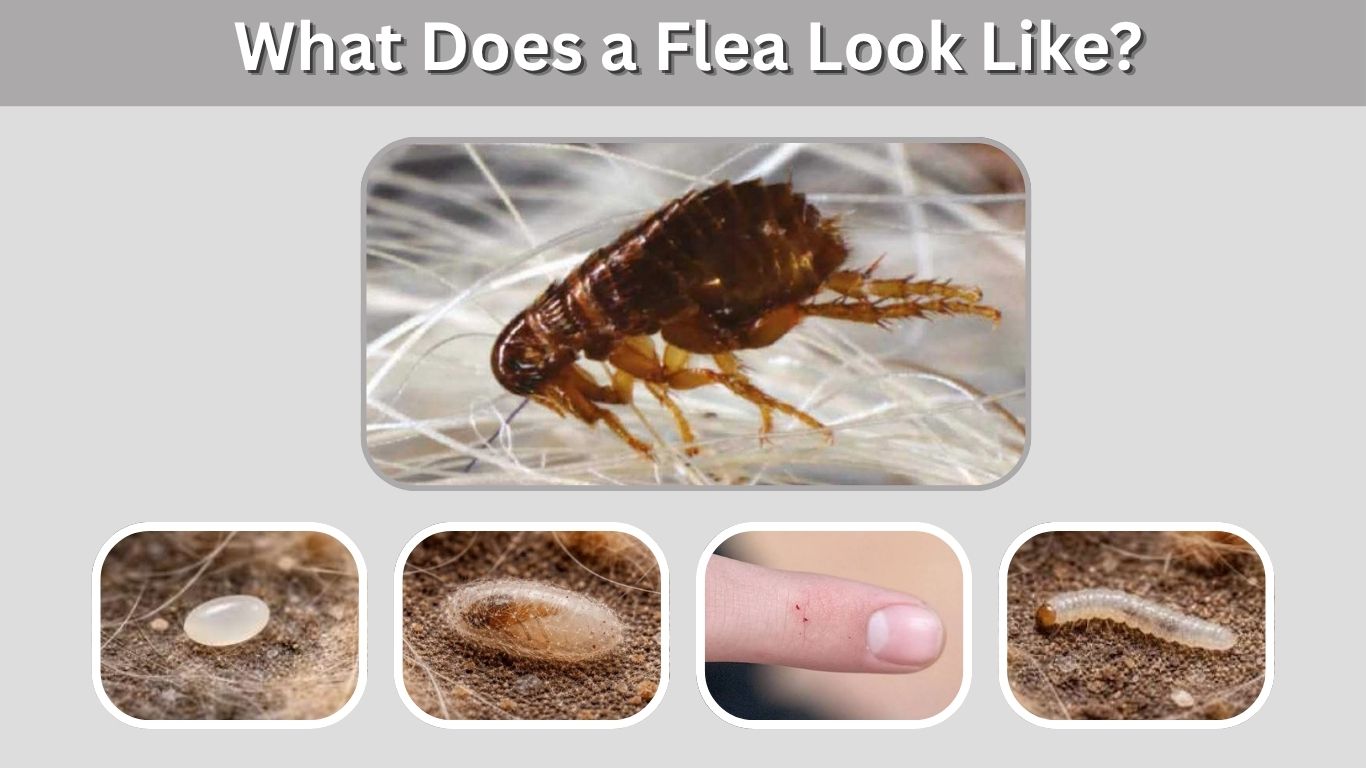
Have you noticed tiny, dark insects jumping around your home or hiding in your pet’s fur? You might be dealing with fleas, small blood-feeding parasites that can cause itching, skin irritation, and uncomfortable bites. But what does a flea look like, and how can you identify one without a microscope? Adult fleas have distinctive body shapes, powerful jumping legs, and dark coloring. This guide explains their appearance, size, eggs, larvae, bites, and common infestation signs to help you recognize fleas accurately.
What Does a Flea Look Like to the Human Eye?
Adult fleas are tiny, wingless insects that typically measure around 1–4 millimeters long, depending on the species. They have narrow, flattened bodies designed to move easily through animal fur. Their reddish-brown or dark brown coloring can make them difficult to notice, particularly on dark-haired pets. However, their sudden jumping movements often make them easier to recognize.
Flea Identification: Key Physical Features
- Size: Usually 1–4 millimeters long.
- Color: Reddish-brown, dark brown, or nearly black.
- Body shape: Narrow and compressed from side to side.
- Legs: Six legs, including powerful hind legs for jumping.
- Wings: Completely wingless throughout adulthood.
- Movement: Quick crawling movements and sudden jumps.
Can You See Fleas Without a Microscope?
Yes, adult fleas are visible to the naked eye. They may resemble tiny, dark specks moving through animal fur or jumping across light-colored surfaces.
However, their small size makes detailed identification difficult without magnification. A flea comb or magnifying glass can help reveal their body shape and legs more clearly.
What Does a Flea Look Like Up Close?
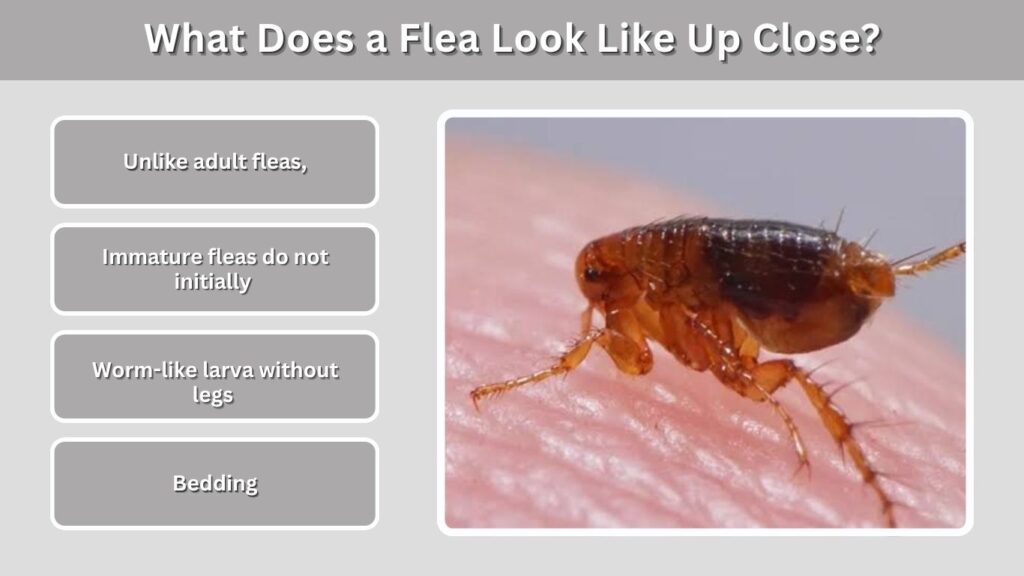
Under magnification, fleas appear more complex than ordinary dark specks. Their bodies are covered with backward-pointing bristles that help them move through hair and resist being dislodged. They also have piercing mouthparts used to obtain blood from mammals and birds. Several anatomical features distinguish fleas from other household pests.
Flea Body Structure
An adult flea has a distinct head, thorax, and abdomen. Its abdomen contains several segments and may expand after feeding.
The hind legs are noticeably larger than the front legs because they are adapted for jumping.
Cat fleas and dog fleas also possess specialized comb-like spines near their heads and thoraxes. These structures are useful for distinguishing species under a microscope.
What Does a Baby Flea Look Like?
Unlike adult fleas, immature fleas do not initially resemble tiny jumping insects.
A newly hatched flea is a pale, worm-like larva without legs. It moves through carpets, bedding, and other protected environments while feeding on organic debris, including flea feces.
Larvae develop into pupae before emerging as recognizable adult fleas.
What Do Flea Eggs, Larvae, and Cocoons Look Like?
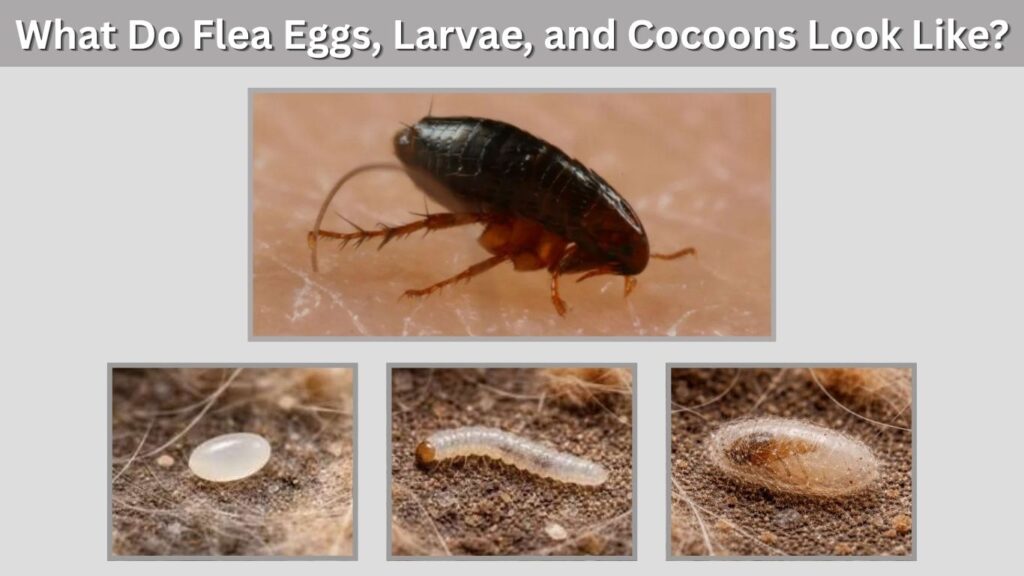
Fleas pass through four developmental stages: egg, larva, pupa, and adult. Each stage has a different appearance and requires different environmental conditions. Recognizing these stages helps homeowners understand why an infestation may continue even after visible adult fleas disappear. Eggs and immature fleas often remain hidden around an animal’s resting areas.
What Do Flea Eggs Look Like?
Flea eggs are tiny, smooth, oval structures measuring approximately 0.5 millimeters. They are usually white or translucent.
Unlike some parasites’ eggs, flea eggs are not strongly attached to animal fur. They commonly fall into carpets, pet bedding, and floor cracks shortly after being laid.
Their small size makes them difficult to distinguish from dust or other pale debris.
What Do Flea Larvae and Pupae Look Like?
Flea larvae resemble small, whitish worms and may reach several millimeters in length.
They avoid bright light and usually remain concealed in protected areas.
After developing, the larvae spin cocoons and enter the pupal stage. These cocoons may collect surrounding dust and debris, making them difficult to spot.
Adult fleas eventually emerge when environmental conditions and host-related signals are suitable.
What Do Fleas Look Like on Dogs and Cats?
Fleas commonly infest household pets, especially dogs and cats. The cat flea (Ctenocephalides felis) is widespread and can infest both animal species. Adult fleas may be difficult to detect because they move quickly through dense fur. Observing the animal’s skin, grooming behavior, and resting areas often reveals important clues.
Signs of Fleas on Your Pet
- Tiny, dark insects crawling through the fur.
- Black, pepper-like particles near the skin.
- Frequent scratching, biting, or excessive grooming.
- Redness, irritation, or small scabs.
- Hair loss or irritated patches in sensitive animals.
What Does Flea Dirt Look Like?
Flea dirt consists mainly of flea feces containing digested blood. It resembles tiny black or reddish-brown pepper flakes.
To check suspicious particles, place them on a damp white paper towel. Flea dirt often produces reddish-brown stains as the blood-containing material dissolves.
This can help distinguish flea dirt from ordinary soil, although examining the pet for actual fleas remains important.
What Does a Flea Bite Look Like on Human Skin?
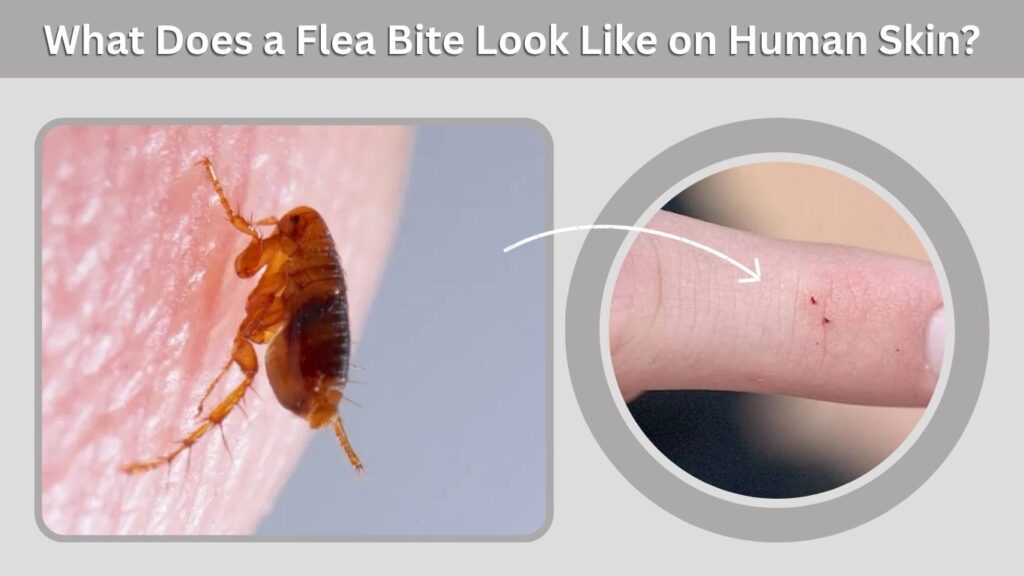
Flea bites often appear as small, intensely itchy bumps, commonly affecting the ankles, feet, and lower legs. Several bites may occur close together, forming clusters. Their appearance varies according to skin tone and individual sensitivity. Identifying flea bites requires considering the surrounding environment because other insects and skin conditions can cause similar reactions.
Common Appearance of Flea Bites
Flea bites can produce small, raised bumps with a central puncture mark.
On lighter skin, surrounding inflammation may appear pink or red. On darker skin, affected areas may look violet, brown, or darker than the surrounding skin.
Some people develop more pronounced swelling or allergic reactions, while others experience only mild irritation.
Bite appearance alone cannot confirm that fleas are responsible.
How to Identify a Flea Infestation in Your Home
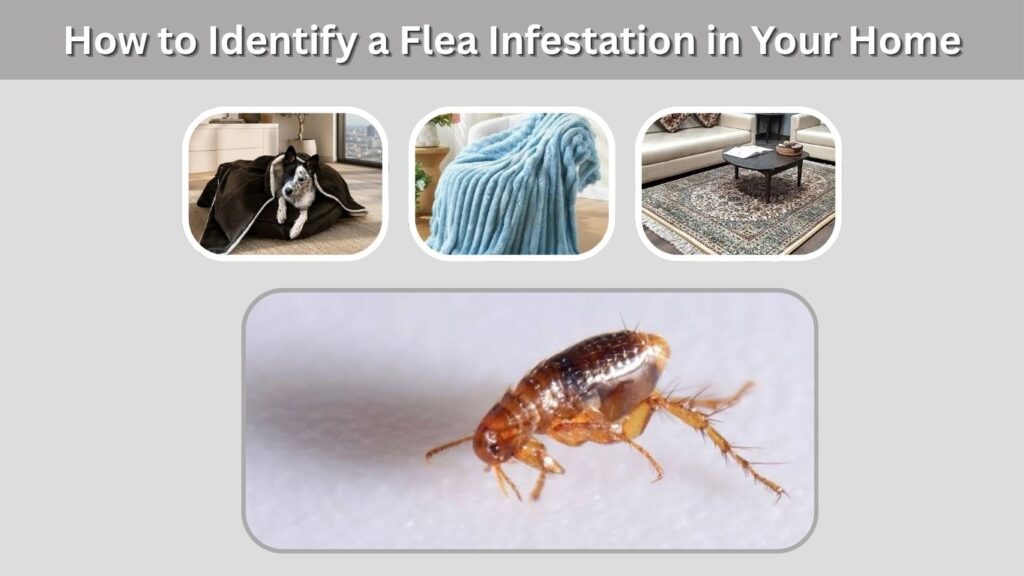
Fleas do not build organized nests like ants or wasps. Instead, adults live primarily on suitable animal hosts, while eggs, larvae, and pupae accumulate in nearby environments. Carpets, upholstered furniture, and pet bedding are common areas where immature fleas develop. Identifying these hidden stages is essential for controlling a persistent household infestation.
Common Places to Find Fleas
- Pet beds, blankets, and sleeping areas.
- Carpets and rugs near frequently used furniture.
- Cracks along baseboards and flooring.
- Upholstered couches and chairs.
- Protected outdoor areas regularly visited by pets.
What Should You Do If You Find Fleas?
Begin by checking all household pets with a flea comb. Contact a veterinarian for an effective treatment appropriate to each pet’s species, age, and weight.
Wash pet bedding, vacuum carpets and furniture thoroughly, and continue cleaning regularly to reduce developing flea populations.
Never apply a flea product intended for dogs to cats, as certain ingredients can be highly toxic to felines.
FAQs
1. What does a flea look like to the naked eye?
A flea typically appears as a tiny, dark brown or reddish-brown insect with a narrow body. Most adults measure only a few millimeters long. Fleas are often recognized by their quick movements and powerful jumps, especially when disturbed on carpets, clothing, or animal fur.
2. What does a flea egg look like?
Flea eggs are very small, oval, and whitish or translucent. They measure approximately half a millimeter and can resemble tiny grains of salt. Unlike some insect eggs, they are not firmly attached to fur and commonly fall into carpets, bedding, and floor crevices.
3. What is the difference between a flea and a tick?
Fleas have six legs, narrow bodies, and powerful jumping abilities. Adult ticks have eight legs and do not jump. Ticks usually attach to a host’s skin for extended feeding periods, while fleas move through fur and frequently take blood meals.
4. What does a flea bite look like on a person?
Flea bites usually form small, itchy bumps, sometimes appearing in groups around the ankles or legs. The affected skin may look red, pink, purple, or brown depending on skin tone. However, similar reactions can result from other insects, so bites alone cannot reliably identify fleas.
5. What does a flea infestation look like?
A flea infestation may involve visible jumping insects, dark flea dirt, repeated bites, and pets scratching excessively. Flea eggs and larvae may also be present in bedding, carpeting, and furniture. Because immature fleas are difficult to see, an infestation can continue even when few adults are visible.
