
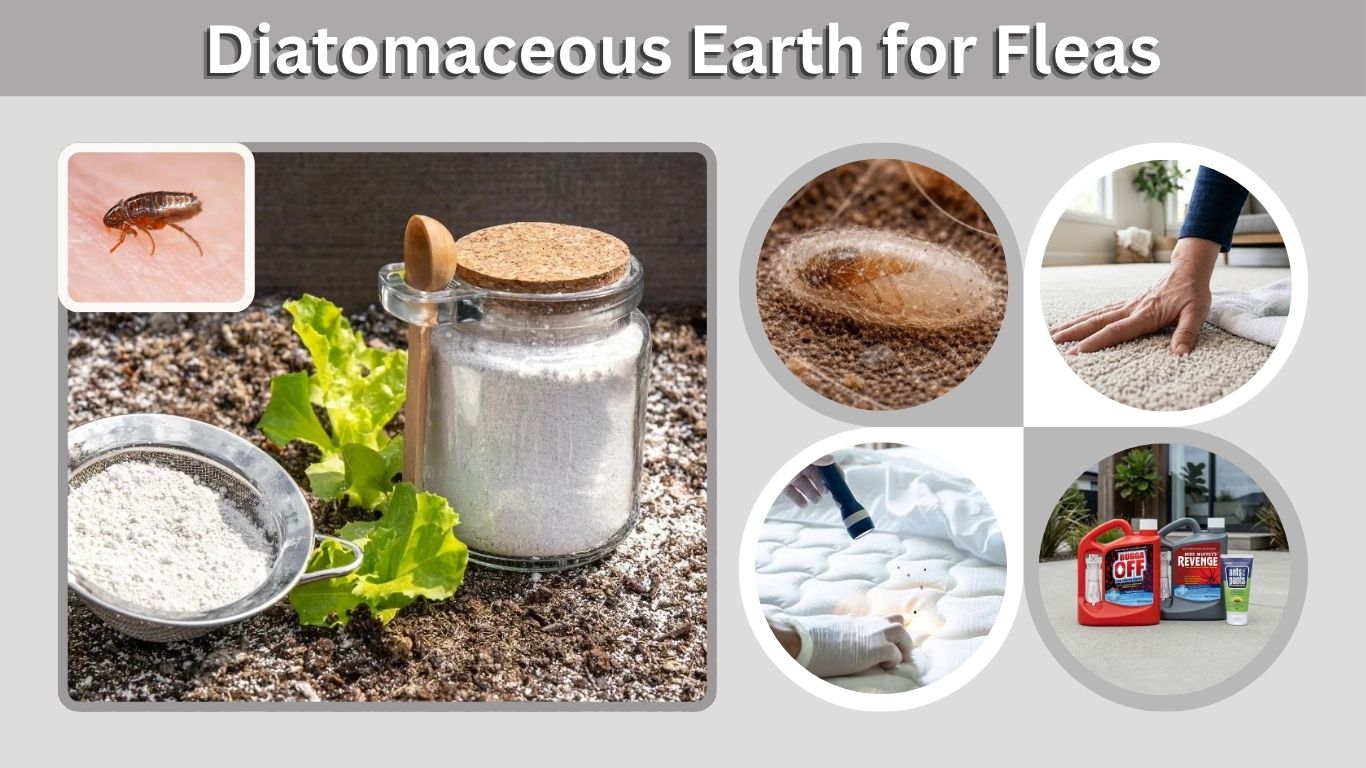
Fleas can quickly become a frustrating problem, especially when they spread through carpets, furniture, and pet bedding. Many homeowners consider diatomaceous earth for fleas because it is a mineral-based powder that can kill certain insects without conventional chemical insecticides. However, its effectiveness depends on proper application, dry conditions, and direct contact with pests. Is diatomaceous earth really effective against fleas, and is it safe around cats and dogs? This guide explains how it works, how to use it responsibly, potential risks, and alternative flea-control methods.
What Is Diatomaceous Earth for Fleas?
Diatomaceous earth, commonly called DE, is a fine powder made from the fossilized remains of microscopic aquatic organisms known as diatoms. Their silica-rich skeletons form a naturally occurring mineral material with insecticidal properties. Some diatomaceous earth products are registered for pest control and can be used in specific indoor or outdoor locations according to their labels.
How Does Diatomaceous Earth Kill Fleas?
Diatomaceous earth works primarily through physical contact rather than chemical poisoning.
Its particles damage the protective waxy layer of an insect’s outer covering and absorb oils and fats. As moisture escapes, susceptible insects become dehydrated and eventually die.
However, fleas must contact the dry powder for this process to work. DE does not attract fleas or provide reliable protection against new infestations.
Does Diatomaceous Earth Really Work for Fleas?
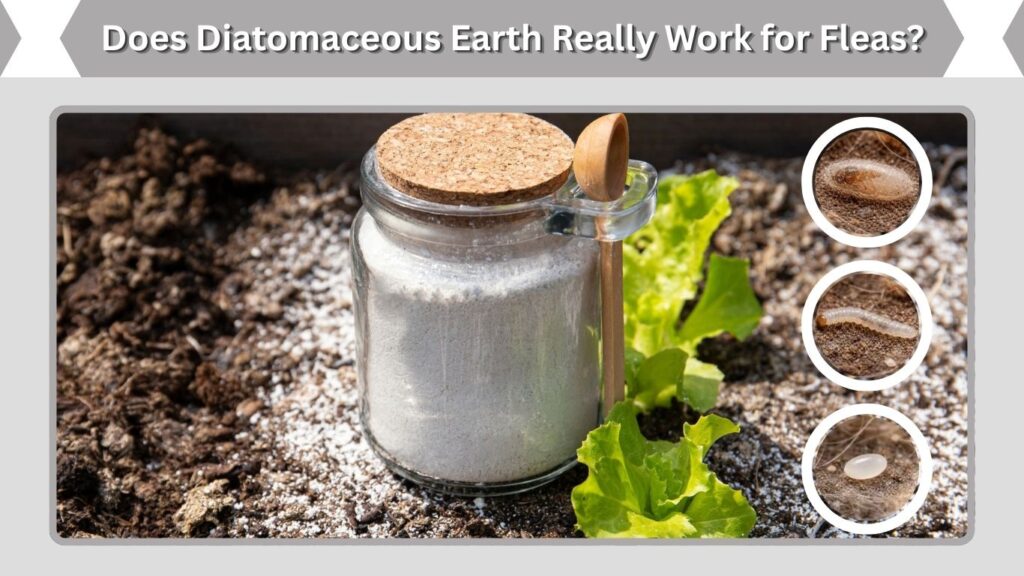
Diatomaceous earth can kill exposed fleas under suitable conditions, but its performance is inconsistent in real-world environments. Results depend on humidity, application technique, insect contact, and the flea’s developmental stage. Although certain pesticide-labeled DE products are registered for flea control, the powder should be considered a supplementary treatment rather than a complete solution.
Effectiveness Against Different Flea Stages
Fleas develop through four life stages, and diatomaceous earth does not affect all stages equally.
- Adult fleas: May die after sufficient contact with dry DE.
- Flea larvae: May be vulnerable in dry, treated environments.
- Flea eggs: DE is not a reliable egg treatment.
- Flea pupae: Protective cocoons make this stage particularly difficult to control.
How Long Does Diatomaceous Earth Take to Kill Fleas?
DE is not an instant flea killer. Dehydration takes time, and fleas must encounter enough dry powder for treatment to work.
There is no universal number of hours that guarantees results. Humidity, dust distribution, and flea activity all affect effectiveness.
A persistent infestation may require repeated cleaning and other control measures over several weeks or longer.
How to Use Diatomaceous Earth for Fleas in the House
Using diatomaceous earth indoors requires careful product selection and controlled application. The powder can become airborne and irritate the respiratory system when disturbed. Choose an EPA-registered product specifically labeled for fleas and the intended indoor surface. Applications should target permitted locations while minimizing unnecessary exposure to people, pets, and household air.
Safe Application Guidelines
Before using diatomaceous earth, read the entire pesticide label and confirm that your intended treatment area is listed.
- Remove children and pets from the treatment area.
- Wear the respiratory and eye protection specified on the label.
- Apply only the labeled quantity to approved locations.
- Avoid ventilation openings, fans, and frequently disturbed surfaces.
- Keep food, water bowls, and children’s belongings free from dust.
- Follow all reentry, cleanup, and disposal instructions.
Where Should You Apply Diatomaceous Earth?
Depending on the specific product label, permitted treatment locations may include cracks, crevices, carpet edges, and other protected areas where fleas develop.
Avoid spreading powder indiscriminately across rooms. Heavy applications increase dust exposure without necessarily improving flea control.
Concentrate on treating confirmed infestation areas through the methods permitted by the label.
How to Use Diatomaceous Earth on Carpets for Fleas
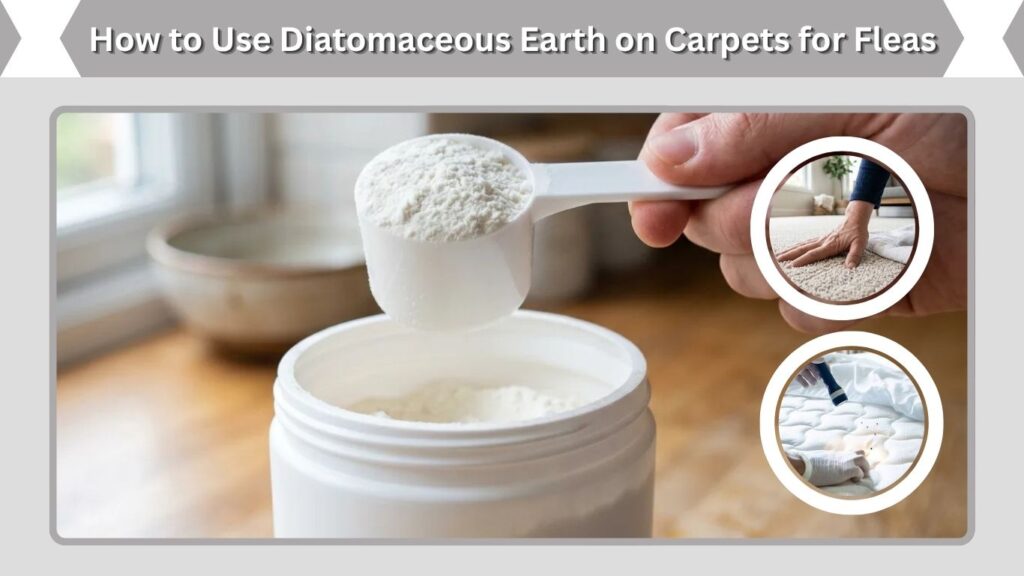
Carpets provide sheltered environments where flea eggs, larvae, and pupae can develop. Some EPA-registered diatomaceous earth products allow carpet applications, but others do not. Applying large amounts of loose dust creates unnecessary inhalation risks, particularly when carpets are walked on or vacuumed. Effective flea management also requires regular cleaning and appropriate treatment of household pets.
How Long Should You Leave DE on Carpets?
The correct contact time depends on the product’s label. There is no single recommended duration that applies to every diatomaceous earth formulation.
If carpet treatment is permitted, follow the specified application and removal instructions.
Do not leave thick layers of powder on carpets for days based solely on internet recommendations. Normal household activity can release fine particles into the air.
Can You Put DE on Beds and Furniture?
Avoid applying loose diatomaceous earth directly to mattresses, pillows, sofas, or pet bedding unless the product specifically permits that use.
People and animals have prolonged contact with these surfaces, increasing opportunities for dust exposure.
Washing removable bedding and vacuuming upholstered furniture are generally preferable initial measures.
Is Diatomaceous Earth Safe for Cats and Dogs?
Diatomaceous earth is often described as natural, but natural materials are not automatically harmless. Fine dust can irritate the eyes, skin, and respiratory tract of animals. Some registered DE products permit direct application to particular pets, while others are intended only for environmental treatment. The exact product label and veterinary advice are essential.
Diatomaceous Earth for Fleas on Cats
Applying ordinary food-grade DE directly to a cat’s fur is not recommended as a substitute for veterinary flea treatment.
Cats groom themselves frequently, increasing the possibility of ingesting powder. They may also inhale dust during application.
Choose veterinarian-recommended flea control instead. If considering a DE product specifically labeled for cats, consult your veterinarian and follow its directions precisely.
Diatomaceous Earth for Fleas on Dogs
Dogs can also experience irritation from airborne diatomaceous earth.
Avoid sprinkling general-purpose powder over your dog’s coat, bedding, or feeding area.
A registered product expressly labeled for use on dogs may have specific instructions, but veterinary-approved flea preventatives usually provide more dependable ongoing protection.
Never feed diatomaceous earth to dogs or cats as a flea treatment without veterinary direction.
Food-Grade Diatomaceous Earth vs Pest-Control Products
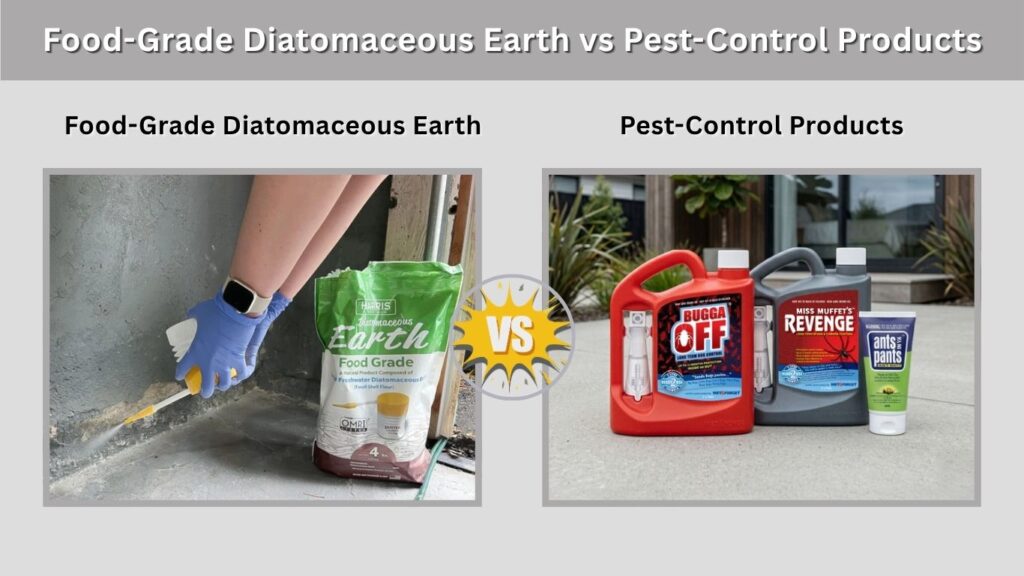
Not all diatomaceous earth products are suitable for the same purpose. Food-grade DE is processed for particular food or feed applications, while registered pesticide products are evaluated for specified pest-control uses. Products intended for pool filtration can contain substantially more crystalline silica and should never be substituted for household flea-control dust.
Which Diatomaceous Earth Is Best for Fleas?
For household flea control, select a product that is registered as a pesticide and specifically labeled for fleas and the intended treatment location.
Food-grade labeling alone does not establish effectiveness or safety when the powder is spread throughout a house.
A registered product provides application instructions, exposure precautions, and restrictions that are important for responsible use.
Can You Use Diatomaceous Earth for Fleas in the Yard?
Outdoor flea infestations commonly develop in shaded, protected areas where pets rest or wildlife visits. Diatomaceous earth works best when dry, making outdoor applications less dependable. Rainfall, irrigation, dew, and humidity can reduce its effectiveness. Outdoor use also requires attention to beneficial insects and environmental exposure, so broad lawn treatment is generally undesirable.
Applying DE Outdoors
Only consider outdoor treatment when the product label explicitly permits it.
Avoid applying DE across entire lawns, flowering plants, or locations visited by pollinators.
Keeping grass trimmed, removing leaf litter, limiting wildlife access, and reducing excessive moisture can make outdoor environments less favorable for flea development.
Other Effective Ways to Control Flea Infestations
Diatomaceous earth alone rarely addresses every stage of an established flea infestation. Successful control requires treating the animals that support flea reproduction and removing developing fleas from their surroundings. The Centers for Disease Control and Prevention recommends coordinated pet treatment, sanitation, environmental management, and follow-up to interrupt the flea life cycle.
Practical Flea Control Methods
- Treat pets: Use veterinarian-recommended flea medication appropriate to each animal.
- Vacuum regularly: Clean carpets, furniture, baseboards, and pet resting areas.
- Wash bedding: Launder pet blankets and washable fabrics frequently.
- Use a flea comb: Check pets for adult fleas and flea dirt.
- Monitor activity: Continue inspections because pupae can survive initial treatments.
- Seek professional help: Consider pest-control services for persistent or severe infestations.
Combining these methods is generally more effective than relying exclusively on one household powder.
FAQs
1. Is diatomaceous earth effective for fleas?
Yes, diatomaceous earth can kill exposed fleas when they contact sufficient dry powder. However, its effectiveness decreases in humid conditions, and it does not reliably eliminate every flea life stage. For complete control, combine appropriate environmental treatments with veterinary flea prevention, regular vacuuming, and cleaning of pet bedding.
2. Can I put diatomaceous earth directly on my cat?
Do not apply ordinary food-grade diatomaceous earth to your cat as a homemade flea treatment. Dust exposure may irritate the respiratory tract, eyes, or skin. Although some registered products have pet-specific labeling, a veterinarian can recommend safer and more reliable treatment based on your cat’s age, weight, and health.
3. How long should diatomaceous earth stay on carpets?
Follow the instructions on the specific EPA-registered product because recommended treatment periods vary. Not every DE product permits carpet use. Avoid leaving excessive loose powder on frequently used surfaces, as it can become airborne. Continue vacuuming and other flea-control measures according to your overall treatment plan.
4. Does food-grade diatomaceous earth kill flea eggs?
Diatomaceous earth is not considered a reliable treatment for flea eggs. Its primary insecticidal action involves damaging the protective outer layer of susceptible insects and causing dehydration. Eggs and protected pupae may survive environmental treatments, making vacuuming, cleaning, and appropriate pet flea prevention essential for controlling the infestation.
5. Can diatomaceous earth eliminate fleas permanently?
No. Diatomaceous earth does not provide permanent flea protection. New fleas may enter the home through untreated pets, wildlife, or contaminated environments. Long-term control depends on maintaining veterinary flea prevention, regularly cleaning animal resting areas, monitoring for renewed activity, and addressing outdoor habitats that support flea development.
