
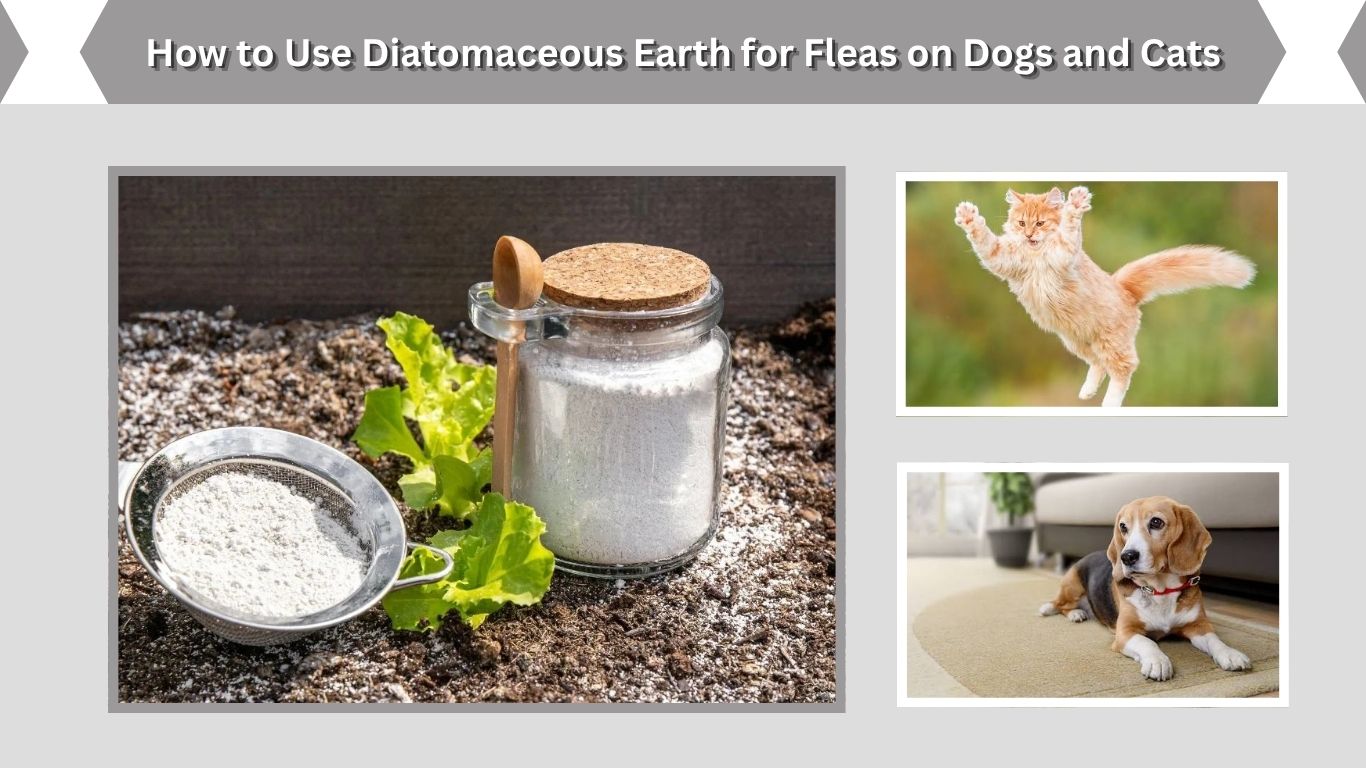
Fleas can make dogs and cats uncomfortable, causing constant scratching, irritated skin, and sometimes allergic reactions. Many pet owners consider diatomaceous earth as a natural flea-control option, but using it incorrectly may create additional health risks. Understanding how to use diatomaceous earth for fleas on dogs and cats is essential before applying any powder around your pets. Although this mineral substance can kill exposed fleas, it is not always suitable for direct animal treatment. This guide explains safe application considerations, potential risks, effectiveness, and alternative flea-control methods.
Can You Use Diatomaceous Earth for Fleas on Dogs and Cats?
Diatomaceous earth, commonly called DE, is a fine powder made from fossilized microscopic aquatic organisms called diatoms. It contains silica particles that can damage the protective outer covering of susceptible insects. However, a substance that kills fleas is not necessarily safe for unrestricted use on pets. Understanding the difference between environmental treatment and direct application is particularly important.
How Does Diatomaceous Earth Kill Fleas?
Diatomaceous earth works through a physical process rather than conventional chemical poisoning.
When fleas contact dry DE, the particles damage their protective waxy coating and absorb oils and fats. This causes the insects to lose moisture and eventually become dehydrated.
However, the powder must contact fleas directly. It does not repel them reliably or provide continuous protection against new infestations.
Is Diatomaceous Earth Safe for Pets?
Diatomaceous earth is not automatically harmless simply because it is naturally occurring.
Fine particles may irritate an animal’s eyes, skin, and respiratory tract. Cats and dogs may also ingest powder while grooming themselves.
Veterinarians generally discourage using ordinary DE powder directly on pets. Although some registered products permit specific animal applications, those products must be used according to their labels and veterinary guidance.
How to Use Diatomaceous Earth for Fleas: 4 Steps
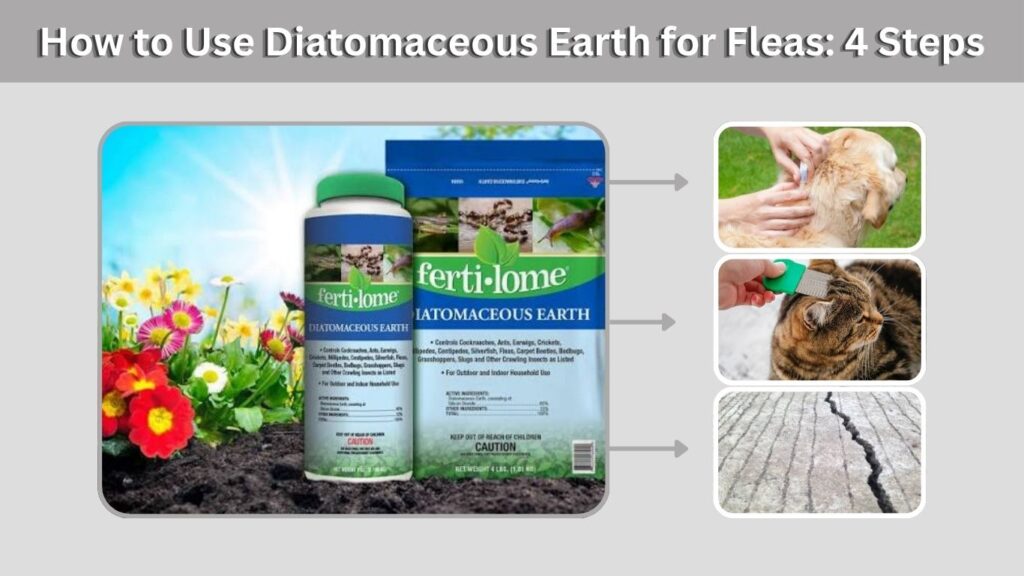
Responsible flea control begins with choosing an appropriate product and identifying where fleas are developing. Adult fleas usually feed on pets, while immature stages accumulate in surrounding environments. Diatomaceous earth may help control exposed insects in approved locations, but it cannot replace proper pet treatment. These four steps explain how to approach its use while minimizing unnecessary exposure.
Step 1: Choose an Appropriate Product
There are several forms of diatomaceous earth, and they are not interchangeable.
- Pesticide-labeled DE: Registered for particular pest-control uses and accompanied by application instructions.
- Food-grade DE: Purified for certain food or feed uses but not automatically approved for flea treatment.
- Pool-grade DE: Intended for filtration and unsuitable for pet or household flea control.
- Pet-labeled DE: Certain registered products specifically permit application to particular animals under stated conditions.
For flea control in the United States, choose an EPA-registered product labeled for the intended use.
Step 2: Treat Your Pets Appropriately
Before applying any environmental powder, speak with your veterinarian about effective flea treatment for your dogs and cats.
Veterinary-approved products may include oral medications, topical solutions, or other species-appropriate formulations.
Treat all affected household pets according to professional recommendations. Untreated animals can continue supporting flea reproduction and reinfestation.
Avoid combining products without veterinary approval because certain ingredients may interact or cause excessive pesticide exposure.
Step 3: Treat Approved Household Areas
If using a registered DE pesticide for environmental treatment, inspect locations where flea eggs and larvae may develop.
Depending on the product label, treatment may be permitted in selected cracks, crevices, or protected floor areas.
Apply only the specified amount, avoid creating airborne dust, and keep children and animals away as directed.
Do not spread thick layers of powder throughout your home or into ventilation systems.
Step 4: Monitor and Clean Regularly
Flea infestations rarely disappear after one treatment because eggs, larvae, and pupae can remain hidden.
Vacuum carpets, clean furniture, and wash removable pet bedding regularly.
Monitor your pets with a flea comb to check whether adult fleas remain.
Follow the DE product’s cleanup and reapplication instructions. Continue veterinarian-recommended flea prevention even after visible activity decreases.
How to Use Diatomaceous Earth for Fleas on Dogs
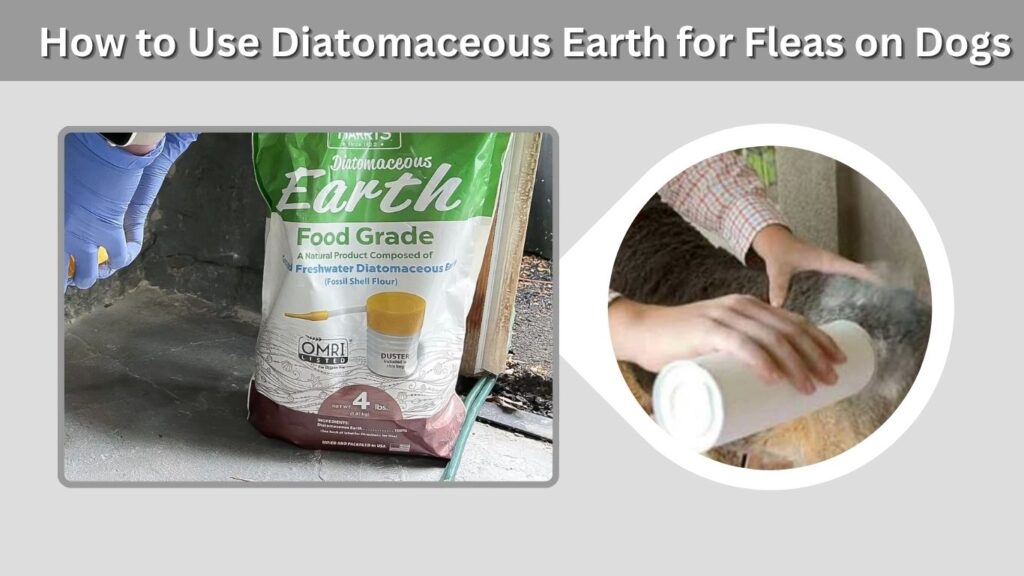
Dogs commonly acquire fleas through contact with infested animals or environments. These parasites can cause itching, skin inflammation, and flea allergy dermatitis. Although diatomaceous earth can kill exposed fleas, applying powder directly to a dog’s coat may cause irritation. Effective treatment should prioritize a veterinary-recommended product while addressing the dog’s surroundings.
Can You Apply DE Directly to a Dog?
Avoid using ordinary food-grade or household diatomaceous earth as a homemade powder treatment on your dog.
Loose particles may enter the nose or eyes during application, particularly if the dog shakes its body.
Some registered DE products are labeled for direct use on dogs. If your veterinarian considers one appropriate, follow its exact instructions concerning application, age restrictions, and frequency.
Never assume a product labeled for environmental flea control is suitable for animal fur.
Safer Flea Control for Dogs
A comprehensive dog flea-control plan usually involves:
- Using veterinarian-recommended flea prevention.
- Checking the coat regularly with a flea comb.
- Washing bedding and washable blankets.
- Vacuuming carpets and frequently used sleeping areas.
- Monitoring for persistent scratching, redness, or hair loss.
Dogs showing severe irritation or signs of flea allergy dermatitis should receive veterinary attention.
How to Use Diatomaceous Earth for Fleas on Cats
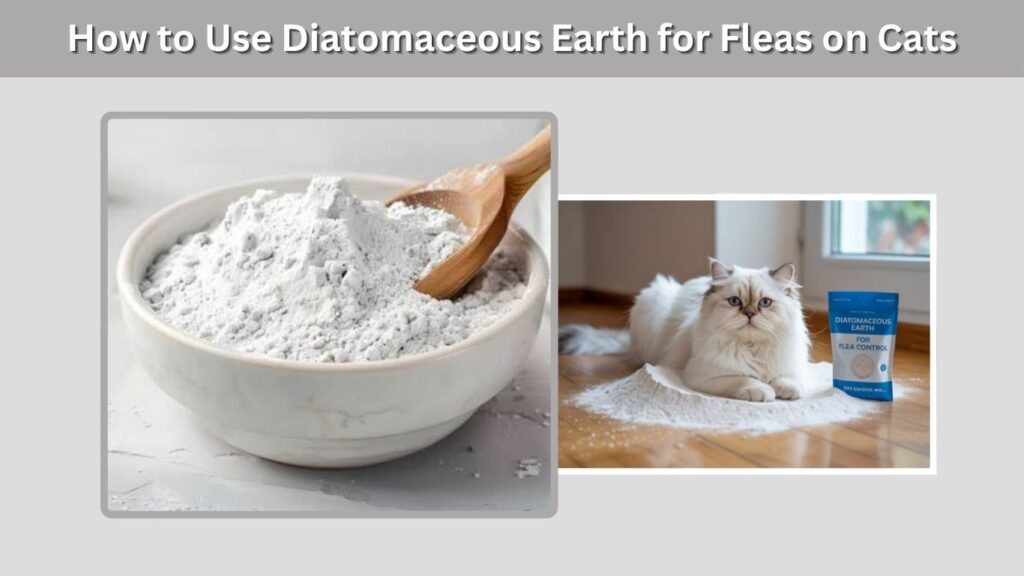
Cats require particular caution because they frequently lick and groom their coats. Applying loose powder increases the possibility of inhalation and ingestion. Cats can also be sensitive to certain pest-control ingredients that are tolerated by dogs. Therefore, product selection, veterinary guidance, and careful environmental management are especially important when treating cat flea infestations.
Can You Put Diatomaceous Earth on Cats?
Ordinary diatomaceous earth powder should not be sprinkled over a cat’s fur as a homemade flea remedy.
The particles can irritate the eyes and respiratory tract, and frequent grooming increases the likelihood of swallowing powder.
Even when a registered product specifically permits feline application, discuss its suitability with your veterinarian.
Never use a flea product intended exclusively for dogs on cats. Some dog treatments contain ingredients that can cause serious poisoning in felines.
What About Kittens With Fleas?
Young kittens are particularly vulnerable to flea infestations and inappropriate pest treatments.
Heavy infestations can cause anemia because fleas feed on blood. Kittens may also be more sensitive to dehydration, skin irritation, and pesticide exposure.
Avoid using DE powder as an improvised kitten treatment.
Consult a veterinarian promptly for an age-appropriate flea-control plan, particularly if a kitten appears weak, pale, or lethargic.
Using Diatomaceous Earth Around Pet Bedding and Carpets
Flea control involves more than removing insects from animal fur. Flea eggs commonly fall into carpets, furniture, and sleeping areas, while larvae hide in protected locations. Some diatomaceous earth products permit environmental applications, but loose dust can create exposure concerns for animals and people. Careful product selection and regular cleaning are essential for successful household management.
How to Use DE on Carpets
If a registered product specifically permits carpet application, follow its instructions for coverage, exposure time, and cleanup.
Do not spread uncontrolled amounts of powder over carpeting. Walking, playing, and vacuuming may disturb loose particles.
Regular vacuuming remains one of the most useful ways to reduce developing flea populations. Empty the collected debris outside whenever practical.
Can You Use DE on Pet Beds?
Avoid dusting pet bedding with diatomaceous earth unless a specific product explicitly permits that application.
Dogs and cats spend considerable time resting on bedding and may inhale particles or transfer powder to their coats.
Instead, wash removable bedding according to its care instructions and dry it thoroughly.
Maintain veterinary flea treatment to prevent adult fleas from continually depositing new eggs.
How Long Does Diatomaceous Earth Take to Kill Fleas?
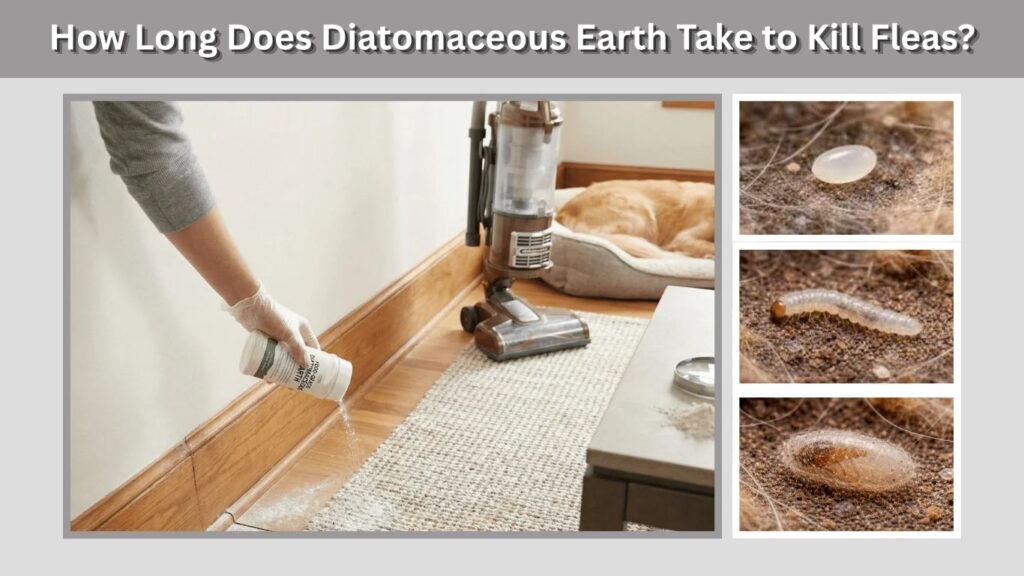
Diatomaceous earth does not work immediately. Its effectiveness depends on direct insect contact, the surrounding humidity, and the duration of exposure. Dry conditions are important because moisture interferes with its dehydrating action. Furthermore, flea eggs and pupae can survive environmental treatments, making complete infestation control more complicated than killing visible adult fleas.
Why Does Flea Treatment Take Time?
Fleas develop through four stages: eggs, larvae, pupae, and adults.
DE may affect exposed adults and larvae, but eggs and protected pupae are more difficult to control.
New adult fleas may continue emerging after environmental treatment, particularly when pupae survive in carpet fibers or floor crevices.
Moderate or severe infestations can require several weeks or months of coordinated treatment and prevention.
Common Mistakes When Using Diatomaceous Earth
Many problems arise when pet owners assume that natural powders are completely safe or that more powder produces faster results. In reality, excessive application can increase dust exposure without eliminating hidden flea stages. Understanding common mistakes helps protect household animals while supporting more effective and responsible pest management.
Mistakes to Avoid
- Applying ordinary DE directly to cats or dogs without veterinary guidance.
- Assuming food-grade labeling means a product is safe to inhale.
- Using pool-grade diatomaceous earth for flea treatment.
- Spreading excessive powder across carpets or bedding.
- Feeding DE to pets as an unproven flea-control remedy.
- Relying on DE alone while leaving pets untreated.
A coordinated treatment plan is generally more reliable than relying on a single powder.
FAQs
1. Can I use food-grade diatomaceous earth on my dog for fleas?
Food-grade diatomaceous earth is not automatically suitable for direct application to dogs. It can produce airborne dust that irritates the respiratory tract and eyes. Consult your veterinarian and choose a product specifically labeled for the intended animal and treatment method rather than using ordinary food-grade powder.
2. Is diatomaceous earth safe for cats with fleas?
Diatomaceous earth can irritate cats’ eyes, skin, and respiratory systems, especially when loose powder is applied directly to their coats. Cats may also ingest particles through grooming. Veterinary-recommended flea treatments are generally preferable, and any DE product considered for feline use must specifically permit that application.
3. How often should you use diatomaceous earth on pets?
There is no universal application schedule for diatomaceous earth on dogs or cats. Some registered products have species-specific instructions, while others are intended only for environmental use. Never repeat applications based on homemade treatment schedules. Ask your veterinarian about suitable flea prevention and follow the exact product label.
4. Can diatomaceous earth kill flea eggs on dogs and cats?
Diatomaceous earth is not a dependable treatment for flea eggs. Most flea eggs fall from animal fur into the surrounding environment, including carpets and bedding. Because DE primarily affects susceptible insects through contact and dehydration, comprehensive flea control requires appropriate pet treatment and regular environmental cleaning.
5. What is the safest way to eliminate fleas on dogs and cats?
The safest approach is to use veterinarian-recommended flea medications designed for each pet’s species, age, and weight. Combine treatment with regular vacuuming, laundering pet bedding, and monitoring for new fleas. Treating all household pets appropriately helps interrupt reproduction and reduces the likelihood of continuing infestations.
