
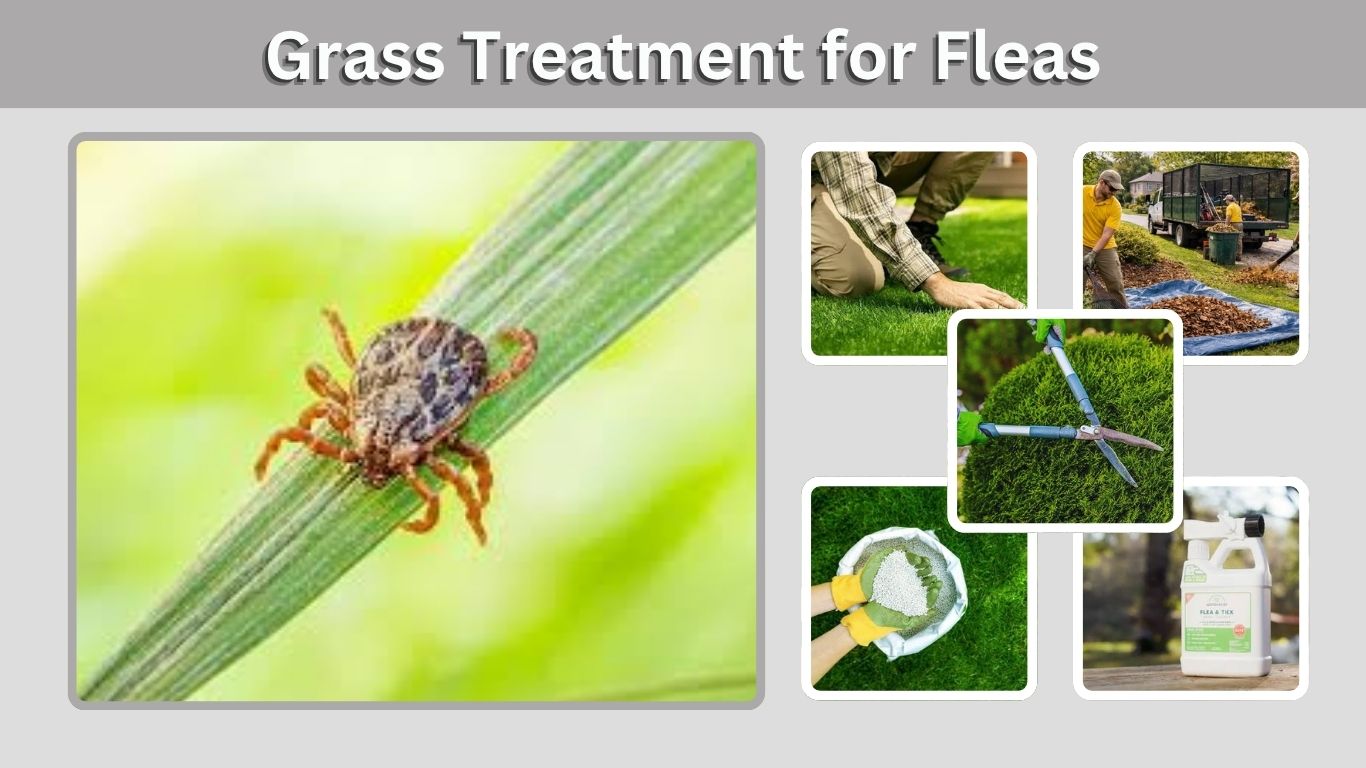
Fleas can turn a beautiful backyard into an uncomfortable place for pets and family members. These tiny, blood-feeding insects often hide in shaded grass, moist soil, and areas where animals regularly rest. Choosing the right grass treatment for fleas can help reduce infestations and prevent these pests from entering your home. However, treating the entire lawn is not always necessary. This guide explains seven effective flea-control tips, suitable lawn treatments, pet safety precautions, and practical methods for keeping fleas and ticks away from your outdoor spaces.
7 Effective Grass Treatment Tips for Fleas
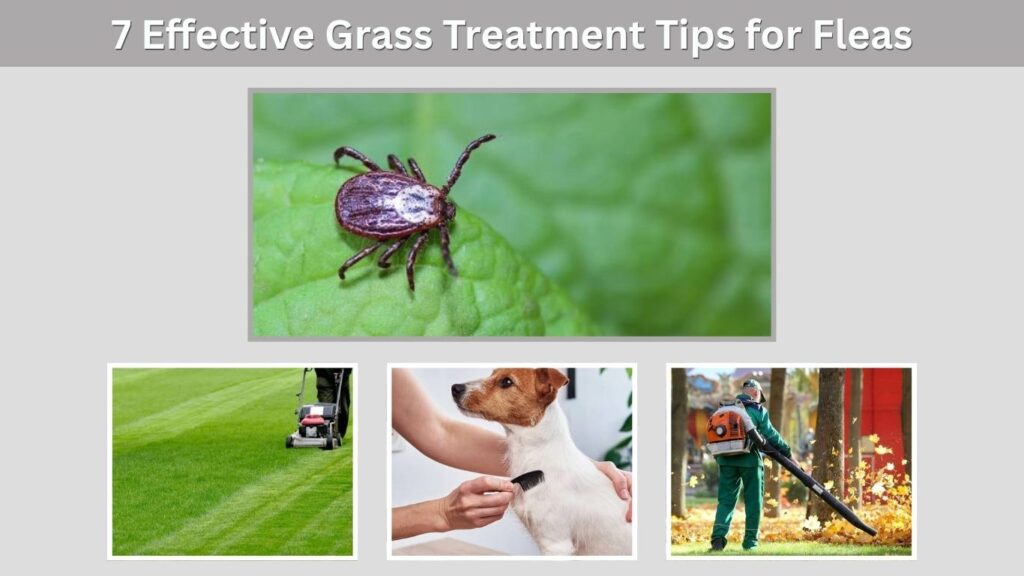
Controlling fleas in grass requires more than simply spraying insecticides across your yard. Fleas have several developmental stages, and many immature fleas remain hidden in protected outdoor environments. The most effective approach combines regular lawn maintenance, targeted treatments, and proper pet protection. These seven practical tips can help reduce flea populations while minimizing unnecessary pesticide exposure.
1. Identify Flea-Infested Areas
Before applying any treatment, inspect your lawn for possible flea activity. Fleas prefer shaded, protected environments rather than dry grass exposed to direct sunlight.
Common flea habitats include:
- Shaded grass beneath trees and shrubs.
- Areas underneath decks and porches.
- Outdoor doghouses and kennels.
- Places where pets regularly sleep or rest.
- Moist soil covered with leaves or debris.
Walking through suspected areas while wearing tall white socks may help reveal jumping adult fleas.
2. Keep Your Grass Properly Mowed
Regular mowing is one of the simplest methods for making lawns less favorable for fleas.
Shorter grass allows more sunlight to reach the soil and reduces the cool, sheltered conditions that immature fleas prefer.
Maintain your lawn at an appropriate height for its grass species. Avoid cutting it excessively short because this may weaken the turf.
Regularly trim overgrown vegetation near fences, patios, and pet resting areas.
3. Remove Leaves and Outdoor Debris
Flea larvae develop in protected environments containing organic debris and sufficient moisture.
Fallen leaves, thick plant litter, and accumulated vegetation can provide suitable hiding places.
Rake shaded areas regularly and remove unnecessary clutter around outdoor animal shelters.
Keep woodpiles organized and eliminate debris near building foundations.
These improvements reduce potential breeding sites while making it easier to inspect your property for persistent flea activity.
4. Reduce Excessive Lawn Moisture
Fleas develop more successfully in humid, sheltered environments. Although adult fleas feed on animals, their immature stages may develop in protected outdoor soil.
Avoid excessive watering and repair irrigation systems that leave areas constantly damp.
Improve drainage where water collects, and adjust sprinklers to meet your lawn’s actual needs.
A well-maintained lawn with appropriate moisture levels is generally less favorable for flea development than persistently wet, shaded ground.
5. Treat Your Pets for Fleas
Treating the grass alone will not solve an infestation if dogs or cats continue carrying adult fleas.
Consult your veterinarian about an appropriate flea preventative based on your pet’s species, age, and weight.
Regular grooming and flea-comb inspections can help detect problems early.
Wash pet bedding and clean outdoor resting areas frequently.
Never apply insecticides designed for lawns directly to animals, and never use dog-only flea products on cats.
6. Apply Targeted Lawn Flea Treatments
When flea populations remain high, an insecticide specifically labeled for outdoor flea control may be necessary.
Products containing an insect growth regulator, such as pyriproxyfen, can help interrupt immature flea development when used according to their labels.
Focus on confirmed flea habitats rather than spraying the entire property.
Follow the manufacturer’s instructions concerning:
- Approved application locations and rates.
- Required protective equipment.
- Weather and watering restrictions.
- Pet and child reentry precautions.
- Reapplication intervals.
Avoid treatment near ponds, drains, and flowering plants when prohibited by the label.
7. Monitor the Lawn After Treatment
Flea control requires continued monitoring because developing fleas may survive initial treatments.
Check your pet’s resting areas and other previously infested locations regularly.
Continue mowing, removing debris, and maintaining veterinary flea prevention.
Do not automatically apply additional insecticides whenever a flea appears. Some flea pupae are protected inside cocoons and may emerge after earlier treatments.
Follow product-specific retreatment instructions or consult a pest-control professional when infestations persist.
What Is the Best Grass Treatment for Fleas?
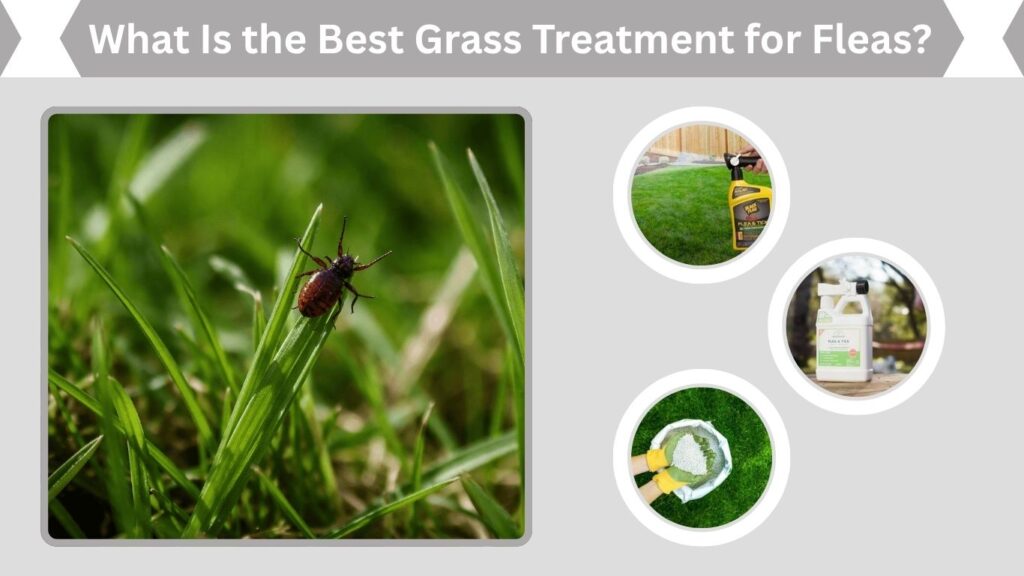
The best lawn flea treatment depends on infestation severity, pet activity, environmental conditions, and the presence of suitable breeding sites. Many flea problems can be managed through veterinary flea protection and yard maintenance without widespread pesticide use. However, heavily infested kennels or shaded resting areas may benefit from carefully selected products registered for outdoor flea control.
Chemical Lawn Treatments
Some outdoor flea-control products contain ingredients that kill exposed insects, while insect growth regulators interfere with immature flea development.
Pyriproxyfen is one ingredient used in certain registered flea treatments.
Choose a product labeled specifically for outdoor flea control and your intended application site.
Never assume a general lawn insecticide is effective against fleas or safe around household pets.
Natural Lawn Flea Control
Natural lawn management focuses on modifying the environment rather than relying on homemade pesticide mixtures.
Keeping grass trimmed, reducing excessive shade, removing accumulated leaves, and managing moisture can discourage flea development.
Diatomaceous earth is sometimes promoted as a natural solution, but moisture reduces its effectiveness, and airborne dust creates exposure concerns.
Avoid relying on vinegar, essential oils, or dish soap mixtures as substitutes for proven flea-control methods.
Grass Treatment for Ticks and Fleas
Fleas and ticks may both occur in residential lawns, but their biology and preferred habitats differ. Fleas commonly develop around animal resting areas, while many tick species wait for hosts in vegetation, leaf litter, and brushy environments. Reducing both pests requires habitat management, appropriate pet prevention, and targeted pesticide applications only when necessary.
How to Reduce Ticks in Grass
Ticks are more common in areas with dense vegetation, accumulated leaves, and nearby woodland or brush.
Remove leaf litter, maintain grass regularly, and clear overgrown vegetation along yard boundaries.
In areas where blacklegged ticks are a concern, a three-foot-wide gravel or wood-chip barrier between lawns and wooded areas may help reduce contact with tick habitats.
Check pets for ticks after outdoor activities.
Can One Lawn Treatment Control Both?
Some registered outdoor insecticides list both fleas and ticks on their labels.
However, effectiveness depends on the active ingredients, application method, and target species.
Products designed for fleas may not adequately control ticks, and vice versa.
Always verify both pests are listed on the product label. Treating the relevant habitats is generally more useful than making unnecessary applications across an entire lawn.
How to Prevent Fleas From Returning to Your Lawn
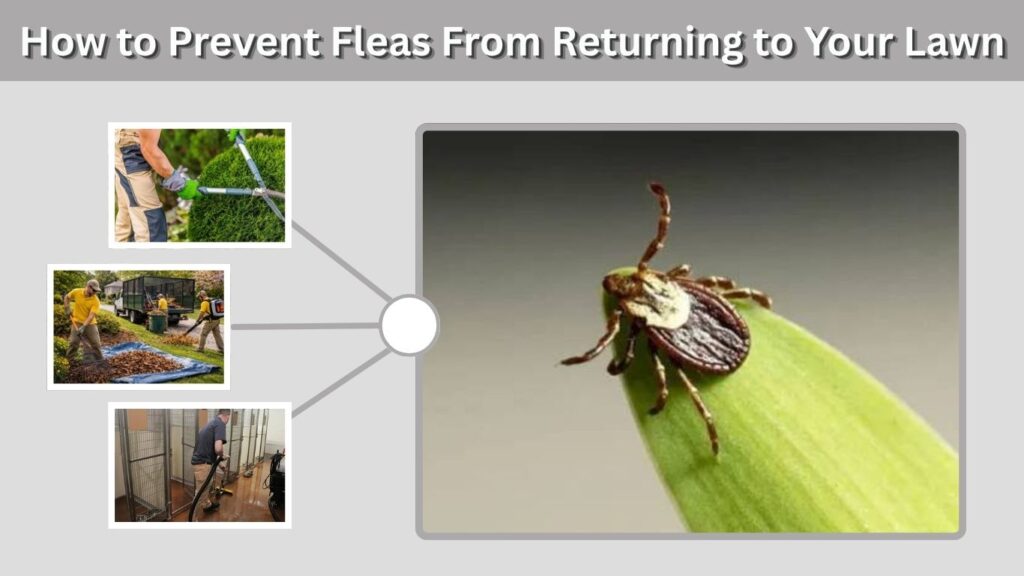
Preventing recurring flea infestations requires managing both animals and their surrounding environment. Fleas can return when untreated pets, stray animals, or wildlife introduce new populations. Routine lawn maintenance reduces favorable breeding conditions, while veterinary flea prevention limits reproduction on household animals. Combining these approaches provides more dependable protection than occasional lawn spraying alone.
Long-Term Flea Prevention Tips
- Maintain regular flea prevention for household pets.
- Mow grass and trim shrubs as needed.
- Remove unnecessary leaves and yard debris.
- Avoid leaving pet food outdoors overnight.
- Limit access by stray animals and wildlife.
- Wash pet bedding and clean kennels regularly.
- Inspect shaded outdoor resting locations for flea activity.
Consistent prevention can significantly reduce the need for repeated lawn insecticide applications.
FAQs
1. What is the best treatment for fleas in grass?
The best treatment combines regular mowing, debris removal, appropriate moisture management, and veterinarian-recommended flea prevention. For confirmed outdoor infestations, a registered insecticide labeled for fleas may provide additional control. Focus treatment on shaded areas where pets rest instead of automatically spraying the entire lawn.
2. Can you naturally get rid of fleas in your lawn?
Natural flea management involves maintaining shorter grass, removing leaf litter, reducing excessive moisture, and keeping outdoor pet areas clean. These practices make the environment less suitable for immature fleas. However, established infestations may still require veterinary flea treatment and carefully targeted environmental pest control.
3. Is grass flea treatment safe for dogs and cats?
Safety depends on the specific product, application method, and label restrictions. Keep pets away during treatment and until the label permits reentry. Never use lawn insecticides directly on animals. Cats can be particularly sensitive to certain pesticide ingredients, making correct product selection especially important.
4. How often should you treat grass for fleas?
There is no universal treatment schedule for every lawn or insecticide. Reapplication depends on the product label, infestation level, environmental conditions, and whether fleas continue developing. Some products require follow-up treatment, while others provide longer control. Avoid unnecessary spraying and continue regular pet protection and lawn maintenance.
5. Does mowing grass help get rid of fleas and ticks?
Regular mowing helps reduce sheltered, humid environments that support flea development and some tick habitats. However, mowing alone cannot eliminate every flea or tick. Combining lawn maintenance with leaf removal, brush management, appropriate pet prevention, and targeted treatments provides more effective long-term pest control.
