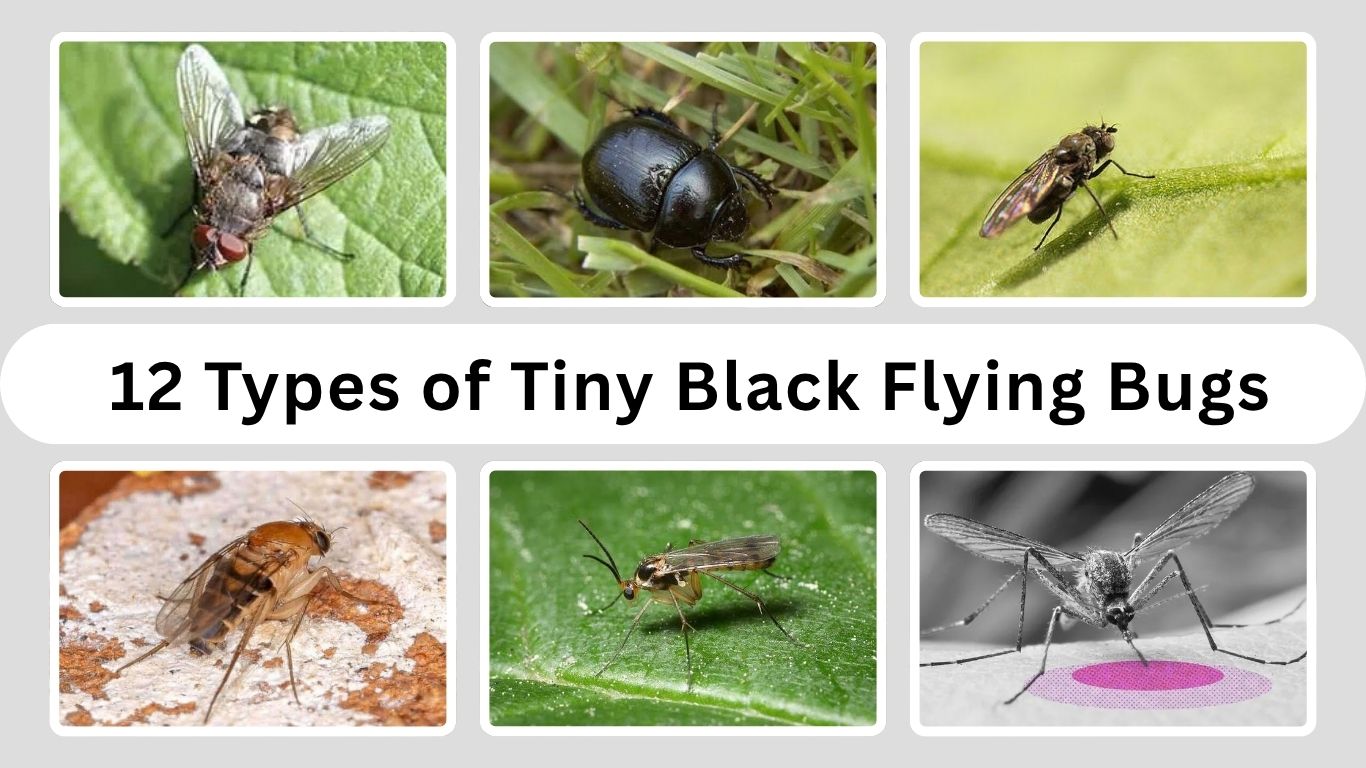
Tiny black flying bugs are a common problem in many homes, especially in warm and humid conditions. These insects are often seen around plants, drains, food sources, or damp areas. While some are harmless, others can become a nuisance or even cause damage to plants and hygiene issues indoors.
In this guide, you’ll discover 12 common types of tiny black flying bugs found in homes. Each one is explained with simple details about identification, size, habitat, and diet, helping you easily recognize and understand these small but troublesome insects.
1. Fungus Gnat
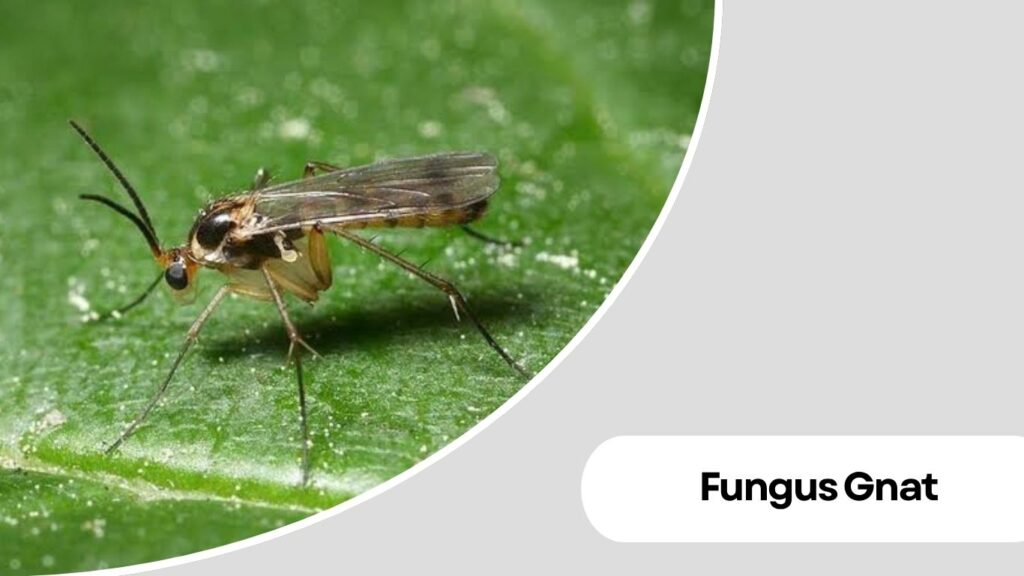
Fungus gnats are tiny black flying insects commonly found indoors, especially around houseplants. They are often seen hovering near moist soil and can quickly become a nuisance if their population increases.
Identification
Fungus gnats have a delicate, mosquito-like appearance with slender bodies and long legs. They move slowly in the air and are often seen flying close to the surface of plant soil. Their weak flight makes them easy to spot indoors.
Size & Color
These insects are very small, usually about 2–4 mm in length. They are typically dark black or dark gray in color, with transparent wings. Their tiny size and dark color make them appear like small black dots flying around.
Habitat
Fungus gnats thrive in damp environments, especially in indoor plant pots with overwatered soil. They are commonly found in homes, greenhouses, and gardens. Moist soil provides the perfect breeding ground for their larvae.
Diet
Adult fungus gnats mainly feed on organic matter and fungi found in soil. Their larvae live in the soil and feed on plant roots and decaying material. While adults are mostly harmless, larvae can damage plant roots if present in large numbers.
2. Black Fly

Black flies are small, dark-colored flying insects known for their compact bodies and biting behavior. They are often found near water sources and can sometimes enter homes, especially in areas close to rivers or streams.
Identification
- Small, stout body
- Dark black or dark gray color
- Short antennae
- Broad wings
- Hump-backed appearance
Size & Color
Black flies are tiny, usually about 3–6 mm in length. They have a dark black or grayish body, which gives them their name. Their compact size and dark color make them noticeable as small black flying bugs.
Habitat
Black flies prefer environments near running water such as rivers and streams, where they breed. Indoors, they may enter through open windows or doors. They are more common in humid and warm regions.
Diet
Adult black flies feed on nectar, but female black flies require blood to produce eggs. Their larvae live in water and feed on organic material. Their biting habit makes them both a nuisance and a concern for humans and animals.
3. Drain Fly

Drain flies are tiny black flying insects often found in bathrooms and kitchens. They are commonly seen near sinks, drains, and other damp areas. Their fuzzy appearance and slow flight make them easy to recognize indoors.
Identification
- Very small, fuzzy body
- Dark gray or black color
- Wings covered with tiny hairs
- Moth-like shape
- Weak flying ability
Size & Color
Drain flies are usually about 2–5 mm in length. They appear dark gray to black and have a slightly hairy look. Their wings give them a dusty or fuzzy appearance when resting on surfaces.
Habitat
They thrive in moist, dirty environments such as drains, pipes, and sewage systems. Indoors, they are mostly found in bathrooms, kitchens, and basements where organic buildup is present.
Diet
Drain flies feed on organic matter, bacteria, and slime found in drains. Their larvae develop in the buildup inside pipes, feeding on decaying material, which helps them grow quickly in such environments.
4. Phorid Fly
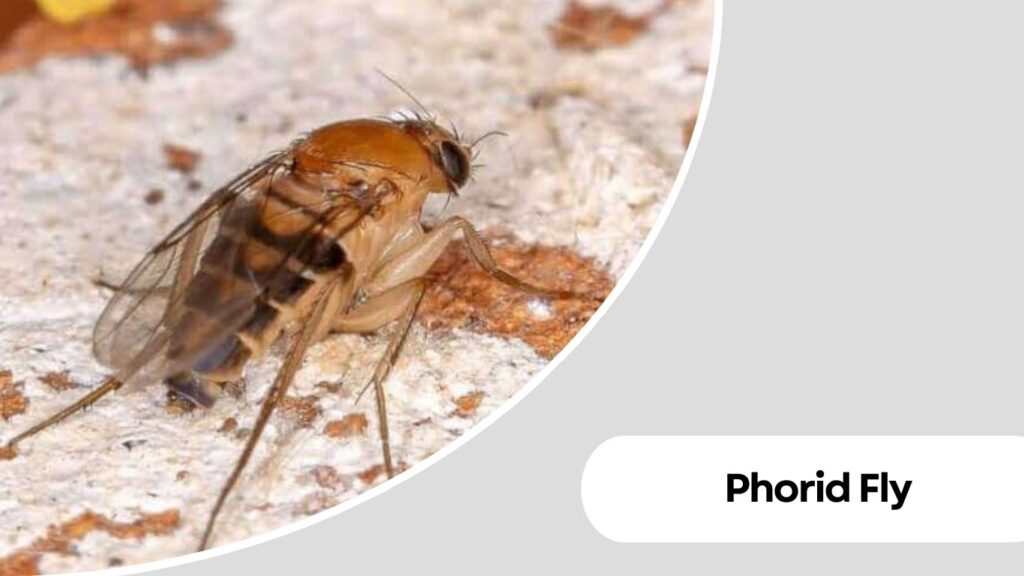
Phorid flies, also known as scuttle flies, are small black flying insects often seen running quickly across surfaces. They are common indoors and are attracted to decaying organic matter.
Identification
- Small body with hump-backed shape
- Dark brown or black color
- Short wings
- Quick, jerky movement
- Often runs more than flies
Size & Color
Phorid flies are very small, typically around 2–4 mm long. They are usually black or dark brown, making them appear as tiny black flying bugs in the home.
Habitat
They are commonly found in kitchens, garbage areas, drains, and places with decaying material. They prefer moist environments and can breed in hidden organic matter such as food waste or even inside walls.
Diet
Phorid flies feed on decaying organic material, fungi, and waste. Their larvae grow in moist, decomposing matter, which provides the nutrients needed for their development.
5. Fruit Fly (Dark Variety)

Fruit flies are tiny flying insects often seen around ripe or rotting fruits. Some varieties appear darker in color, making them look like small black flying bugs in the home.
Identification
- Small, soft-bodied insect
- Rounded body shape
- Short antennae
- Transparent wings
- Slow, hovering flight
Size & Color
Dark fruit flies are very small, usually about 2–4 mm long. While many are tan, some appear dark brown or nearly black, especially in dim light, making them look like tiny black bugs.
Habitat
They are commonly found in kitchens, near fruit bowls, garbage bins, and drains. They prefer moist areas with fermenting or decaying food. Warm indoor environments help them reproduce quickly.
Diet
Fruit flies feed on sugary, fermenting substances like fruits, vegetables, and liquids such as juice or vinegar. Their larvae develop inside these materials, which allows infestations to spread rapidly.
6. House Fly (Small Black Type)
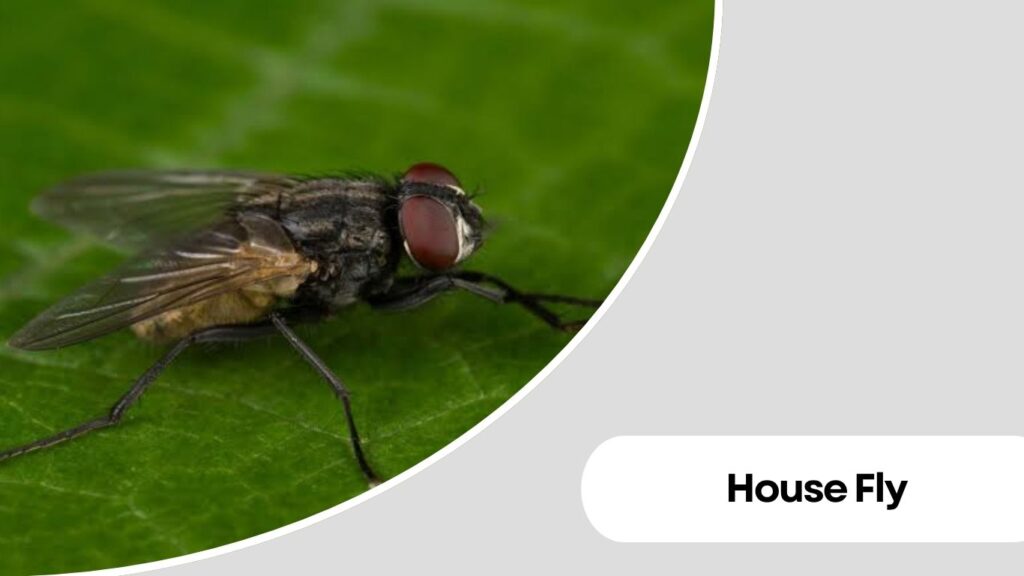
House flies are common indoor insects, and smaller dark-colored varieties may appear as tiny black flying bugs. They are frequently seen around food and waste.
Identification
- Small, compact body
- Dark gray to black color
- One pair of wings
- Large compound eyes
- Quick movement
Size & Color
Smaller house flies are typically around 3–5 mm in length. They appear dark gray or black, especially when young, making them resemble tiny black flying insects indoors.
Habitat
They are commonly found in kitchens, garbage areas, and near food sources. House flies prefer warm indoor spaces and often rest on walls, ceilings, and surfaces close to food.
Diet
House flies feed on liquid and semi-liquid substances, including food scraps and decaying matter. They dissolve food using digestive fluids before consuming it, which increases the risk of contamination.
7. Biting Midge
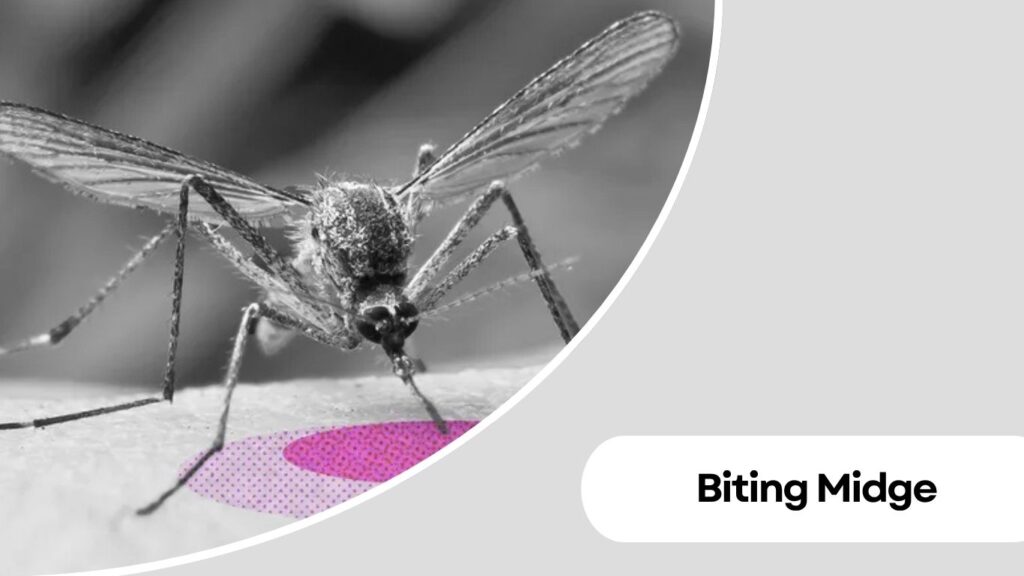
Biting midges are extremely small black flying insects, often called “no-see-ums” because they are hard to notice. Despite their tiny size, they can bite and cause irritation.
Identification
- Very tiny, slender body
- Dark black or gray color
- One pair of wings
- Delicate legs
- Weak but persistent flight
Size & Color
Biting midges are very small, usually around 1–3 mm in length. They are dark in color, often appearing black, which makes them look like tiny black specks when flying.
Habitat
They prefer moist and humid environments, often found near water sources, damp soil, or indoor areas with moisture. They may enter homes through windows and gather in humid spaces.
Diet
Female biting midges feed on blood, while males feed on nectar and plant juices. Their larvae develop in moist environments where organic matter is available.
8. Dark-winged Gnat

Dark-winged gnats are common tiny black flying insects often found indoors, especially around houseplants. They are similar to fungus gnats and are frequently seen hovering near soil.
Identification
- Slender, mosquito-like body
- Dark-colored wings
- Long legs
- Small head
- Weak flying pattern
Size & Color
These gnats are very small, about 2–4 mm long. They are typically black or dark gray, with darker wings that give them a more noticeable black appearance.
Habitat
Dark-winged gnats are commonly found in moist soil, especially in potted plants. They thrive in damp indoor environments and are often seen in homes, greenhouses, and gardens.
Diet
Adult gnats feed on organic matter and fungi. Their larvae live in soil and feed on plant roots and decaying material, which can sometimes harm indoor plants if infestations grow large.
9. Shore Fly
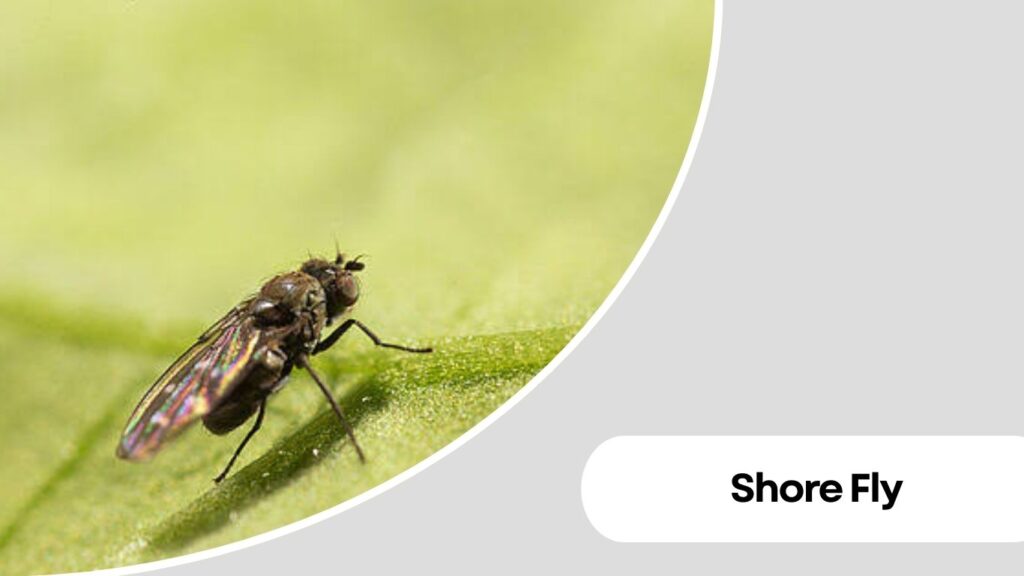
Shore flies are small black flying insects often found around moist areas and indoor plants. They are commonly mistaken for fungus gnats but are less harmful to plants.
Identification
- Small, compact body
- Dark black color
- Short antennae
- Clear wings with light spots
- Quick, short flight
Size & Color
Shore flies are tiny, usually about 2–5 mm in length. They are dark black in color, making them appear as small black flying bugs around wet surfaces or soil.
Habitat
They prefer damp environments such as overwatered plant soil, drains, and areas with algae or moisture. Indoors, they are often seen around potted plants, trays, and wet surfaces.
Diet
Shore flies feed on algae, microorganisms, and organic matter found in moist environments. Unlike fungus gnats, their larvae do not damage plant roots, making them less harmful to plants.
10. Black Beetle (Flying Type)
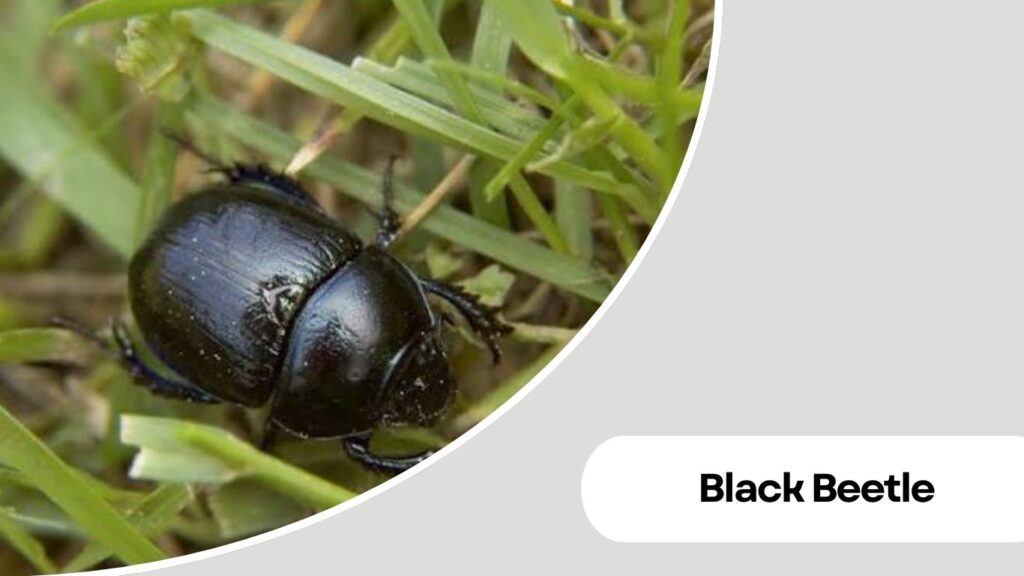
Some small beetles appear black and are capable of flying, especially during certain stages of their life cycle. These insects may enter homes and are often attracted to light.
Identification
- Small, hard-bodied insect
- Shiny black color
- Hardened wing covers (elytra)
- Six legs
- Capable of flight
Size & Color
These beetles are usually small, around 3–6 mm long. Their bodies are shiny black, making them easy to identify as tiny black flying bugs indoors.
Habitat
They are commonly found in gardens, under soil, or around plants. Indoors, they may enter through windows or doors, especially at night when attracted to lights.
Diet
Black beetles feed on a variety of materials depending on the species. Some eat plant matter, while others feed on organic debris or small insects. Their diet helps them survive in different environments.
11. Cluster Fly
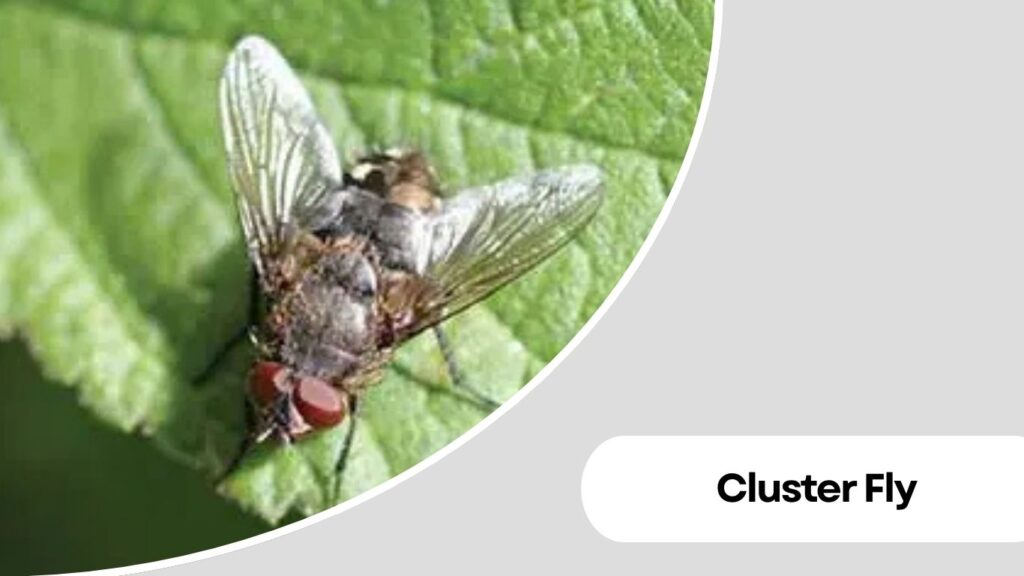
Cluster flies are small black flying insects often found inside homes, especially during cooler seasons. They tend to gather in large numbers, particularly in attics or unused rooms.
Identification
- Slightly larger than common house flies
- Dark gray to black color
- Slow-moving
- Covered with fine hairs
- Buzzing flight
Size & Color
Cluster flies are usually about 6–10 mm long. They appear dark gray or black with a slightly dull and hairy body, which distinguishes them from regular house flies.
Habitat
They are commonly found in walls, attics, and hidden indoor spaces. During colder months, they enter homes to seek warmth and shelter. They prefer quiet, undisturbed areas.
Diet
Adult cluster flies feed on nectar and plant juices. Their larvae develop in soil and feed on earthworms, making them different from many other indoor flies.
12. Scuttle Fly
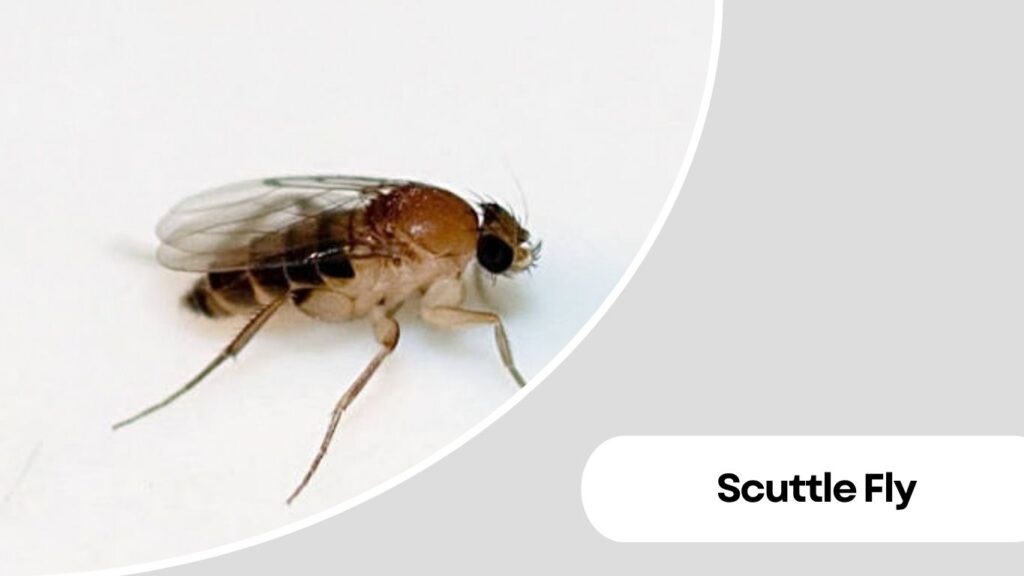
Scuttle flies, also known as humpbacked flies, are tiny black insects often seen running quickly across surfaces. They are common in homes and are attracted to decaying organic matter.
Identification
- Very small body
- Hump-backed shape
- Dark brown or black color
- Short wings
- Rapid, jerky movement
Size & Color
Scuttle flies are tiny, usually around 2–4 mm in length. They are dark in color, often appearing black, which makes them look like tiny black flying bugs indoors.
Habitat
They are commonly found in kitchens, drains, garbage areas, and damp places. They prefer moist environments where organic material is present, including hidden sources like food waste or decay.
Diet
Scuttle flies feed on decaying organic matter, food waste, and sometimes fungi. Their larvae develop in moist, decomposing material, which supports their rapid growth and reproduction.
FAQs
What are tiny black flying bugs in my house?
Tiny black flying bugs in your house are usually insects like fungus gnats, drain flies, or phorid flies. They are often attracted to moisture, food waste, or indoor plants. Identifying the source, such as damp soil or dirty drains, helps determine the exact type.
Are tiny black flying bugs harmful?
Most tiny black flying bugs are not directly harmful to humans, but they can be annoying and unhygienic. Some may contaminate food or damage plants. A few, like biting midges, can bite and cause skin irritation, depending on the species.
Why do I have tiny black bugs around my plants?
These bugs are often fungus gnats or similar insects attracted to moist soil. Overwatering plants creates the perfect environment for them to breed. Their larvae live in the soil and feed on organic matter or plant roots.
How can I get rid of tiny black flying bugs?
To get rid of them, reduce moisture, clean drains, and remove food waste. Let plant soil dry out between watering and use proper ventilation. You can also use traps or natural repellents to control their population indoors.
Do tiny black flying bugs go away on their own?
They usually do not go away on their own if the conditions remain favorable. As long as moisture, food, or breeding sites are present, they will continue to reproduce. Eliminating their source is the most effective way to stop them permanently.