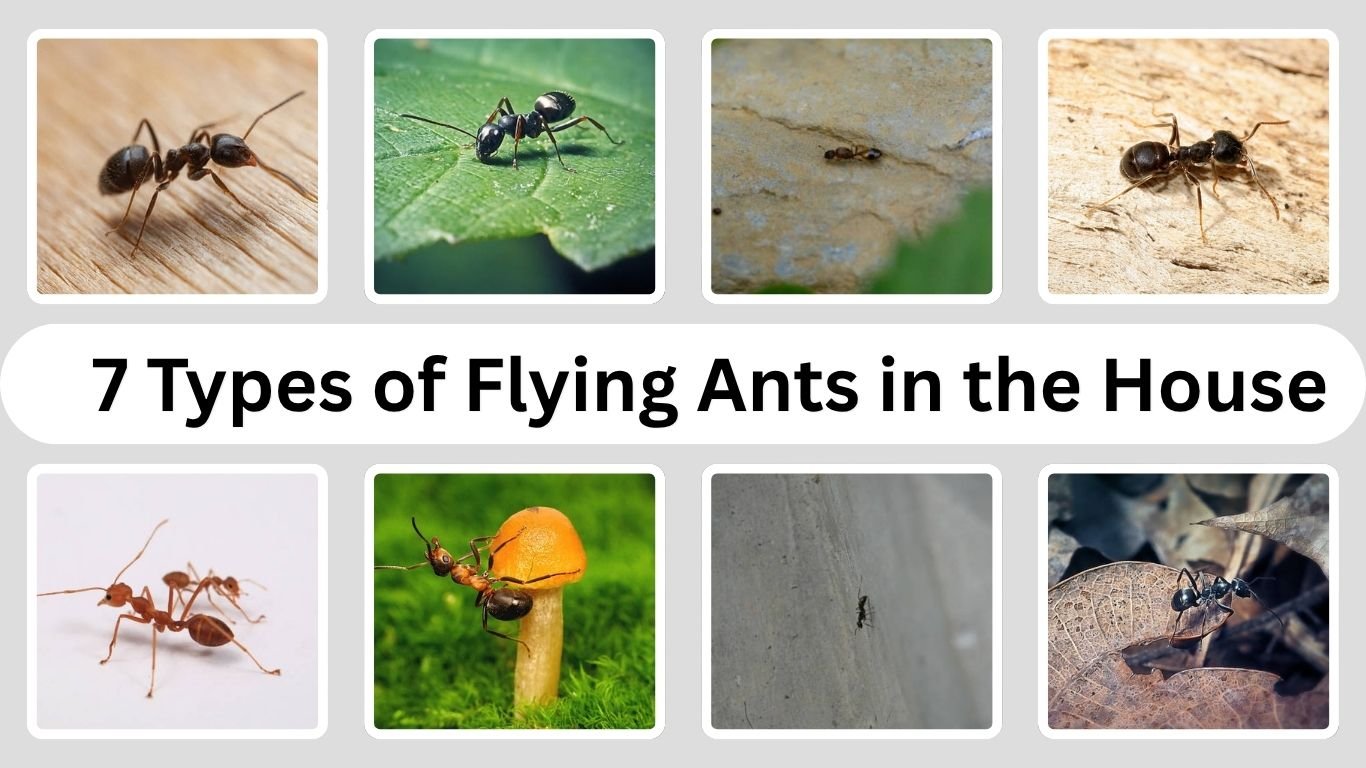
Flying ants inside the house can be surprising and sometimes alarming. These ants are not a different species but the winged reproductive stage of common ants, usually appearing during swarming seasons to mate and form new colonies. Their sudden presence indoors often indicates a nearby nest or favorable conditions inside the home.
In this guide, you’ll discover 7 common types of flying ants found in houses. Each type is explained with simple details about identification, size, habitat, and diet, helping you understand where they come from and how to recognize them easily.
1. Carpenter Ant (Winged)

Winged carpenter ants are flying ants that appear during their reproductive stage. They are commonly seen indoors when they swarm to mate and establish new colonies. These ants are often associated with wood structures and can indicate a nearby infestation.
Identification
- Large ant with a strong body
- Black or dark brown color
- Two pairs of wings (front wings larger)
- Elbowed antennae
- Narrow waist
Size & Color
Winged carpenter ants are relatively large compared to other ants, usually measuring about 6–12 mm in length. They are typically black, but some may appear reddish-black depending on the species.
Habitat
These ants prefer to nest in damp or decaying wood. Inside homes, they are often found in wooden structures, walls, roofs, or near moisture-damaged areas. They may also come from outdoor nests located in trees or logs.
Diet
Carpenter ants do not eat wood but tunnel through it to build nests. They feed on sugars, insects, and other organic materials. Indoors, they are often attracted to sweet foods and protein sources.
2. Black Garden Ant (Flying)

Flying black garden ants are the winged reproductive form of common garden ants. They are usually seen indoors during swarming season when they leave their nests to mate and start new colonies. Their sudden appearance inside homes can be surprising but is often temporary.
Identification
- Medium-sized ant
- Black or very dark brown color
- Two pairs of wings (front pair longer)
- Elbowed antennae
- Distinct narrow waist
Size & Color
Flying black garden ants are typically around 4–9 mm long. Their bodies are dark black or deep brown, and their wings are slightly transparent. The contrast between their dark body and lighter wings makes them easy to recognize when flying.
Habitat
These ants usually live outdoors in soil, gardens, lawns, and under stones. However, during their flying stage, they may enter homes through windows, doors, or cracks. They are often seen near light sources indoors, especially during warm and humid weather conditions.
Diet
Black garden ants mainly feed on sugary substances such as nectar, honeydew, and food scraps. They may also consume small insects and organic matter. Indoors, they are attracted to sweets, spills, and uncovered food, which can draw them inside during their active period.
3. Pharaoh Ant (Winged)

Winged pharaoh ants are the reproductive form of pharaoh ants, which are tiny household pests. They may appear indoors when colonies grow large and produce flying ants for mating. Their presence often indicates an established infestation inside the home.
Identification
- Very small ant
- Light yellow to reddish color
- Two pairs of wings (during reproductive stage)
- Elbowed antennae
- Thin, delicate body
Size & Color
Winged pharaoh ants are quite small, usually about 2–4 mm in length. Their bodies are pale yellow to light brown, sometimes appearing almost transparent. Their wings are clear and delicate, making them less noticeable than darker flying ants.
Habitat
Pharaoh ants prefer warm indoor environments and are commonly found in kitchens, walls, cabinets, and behind appliances. They build nests in hidden areas such as cracks, electrical outlets, and insulation. They rarely survive outdoors in cooler climates.
Diet
These ants are omnivorous and feed on a wide range of foods, including sweets, greasy substances, proteins, and organic waste. Indoors, they are attracted to food crumbs, spills, and stored food, which helps sustain large colonies.
4. Odorous House Ant (Winged)

Winged odorous house ants are the reproductive form of a common household ant species. They are often seen indoors during swarming periods when they leave their nests to mate and expand their colonies. Their name comes from the unpleasant smell they produce when crushed.
Identification
- Small to medium-sized ant
- Dark brown or black color
- Two pairs of wings (front wings longer)
- Elbowed antennae
- Emits a rotten, coconut-like smell when crushed
Size & Color
Winged odorous house ants are usually about 3–5 mm long. Their bodies are dark brown to black, while their wings are light and slightly transparent. Their small size makes them easy to overlook until they gather in groups.
Habitat
These ants commonly nest in walls, under floors, and near moisture sources indoors. Outdoors, they live under rocks, logs, and soil. Inside homes, they are often found in kitchens, bathrooms, and other damp areas, especially during rainy or humid conditions.
Diet
Odorous house ants prefer sweet foods like sugar, syrup, and honeydew. They may also feed on greasy or protein-rich foods. Indoors, they are attracted to food spills, crumbs, and open containers, which provide an easy food source for the colony.
5. Fire Ant (Winged)

Winged fire ants are the reproductive form of fire ants and appear during mating swarms. They may enter homes while searching for new nesting sites. These ants are known for their aggressive behavior and painful stings, making them more dangerous than many other ant species.
Identification
- Small to medium-sized ant
- Reddish-brown body
- Two pairs of wings (front wings larger)
- Elbowed antennae
- Narrow waist
Size & Color
Winged fire ants typically range from 3–6 mm in length. Their bodies are reddish-brown, sometimes with darker shades on the abdomen. Their wings are transparent and slightly longer than their body.
Habitat
Fire ants usually build nests outdoors in soil, lawns, and garden areas. However, during swarming, they may enter homes through cracks, doors, or windows. They prefer warm environments and are more common in hot climates.
Diet
Fire ants are omnivores and feed on a variety of foods. They consume insects, plant material, and sugary substances. Indoors, they may be attracted to food crumbs, sweets, and protein-rich items, which can draw them inside.
6. Acrobat Ant (Winged)

Winged acrobat ants are the reproductive form of acrobat ants and are sometimes seen indoors during swarming periods. They get their name from their unique behavior of raising their abdomen over their head when disturbed, giving them an “acrobat-like” posture.
Identification
- Small ant with heart-shaped abdomen
- Light brown to black color
- Two pairs of wings (during reproductive stage)
- Elbowed antennae
- Abdomen often raised when threatened
Size & Color
Winged acrobat ants are usually about 3–5 mm in length. Their color can vary from light brown to dark brown or black. Their wings are transparent and slightly longer than their body, making them visible during flight.
Habitat
These ants commonly nest in damp or decaying wood, both outdoors and indoors. Inside homes, they may be found in wall voids, wooden structures, insulation, or near moisture-damaged areas. They often move indoors from outdoor nests.
Diet
Acrobat ants feed on a variety of foods, including sweets, plant secretions, and small insects. Indoors, they are attracted to sugary foods, crumbs, and spills. Their flexible diet helps them survive in different environments.
7. Pavement Ant (Winged)

Winged pavement ants are the reproductive form of pavement ants and are often seen during swarming seasons. They may enter homes while searching for new nesting locations, especially through cracks in floors, walls, or foundations.
Identification
- Small, dark-colored ant
- Brown to black body
- Two pairs of wings (front wings longer)
- Elbowed antennae
- Parallel lines on head and thorax (fine grooves)
Size & Color
Winged pavement ants are typically about 3–4 mm long. Their bodies are dark brown to black, while their wings are light and transparent. Their small size makes them easy to confuse with other flying ants.
Habitat
Pavement ants usually build nests outdoors under sidewalks, driveways, and building foundations. Indoors, they may appear in kitchens, basements, or near cracks in walls and floors. They often enter homes in search of food or during swarming periods.
Diet
These ants are omnivorous and feed on a wide variety of foods. They consume sugary substances, grease, seeds, and small insects. Inside homes, they are attracted to crumbs, food spills, and stored food items.
FAQs
Why are flying ants suddenly appearing in my house?
Flying ants usually appear during swarming season when they leave their nests to mate and start new colonies. Their sudden presence indoors often means there is a nearby nest or they have entered through open windows, doors, or cracks.
Are flying ants dangerous?
Most flying ants are not dangerous and do not bite or sting aggressively. However, some types like fire ants can sting and cause pain. Others, like carpenter ants, can damage wood structures, which may lead to long-term problems in homes.
Do flying ants mean I have an infestation?
Not always, but it can be a sign of a nearby colony. If you see flying ants repeatedly inside your home, it may indicate that ants are nesting within walls, wood, or hidden areas, and further inspection may be needed.
How do flying ants get into the house?
Flying ants enter homes through open windows, doors, vents, and small cracks in walls or foundations. They are often attracted to light and may come inside during their swarming period, especially in warm and humid weather.
How can I get rid of flying ants indoors?
To control flying ants, seal entry points, keep your home clean, and remove food sources. Fix moisture issues and inspect wooden areas for nests. Using ant baits or professional pest control can help eliminate the source effectively.