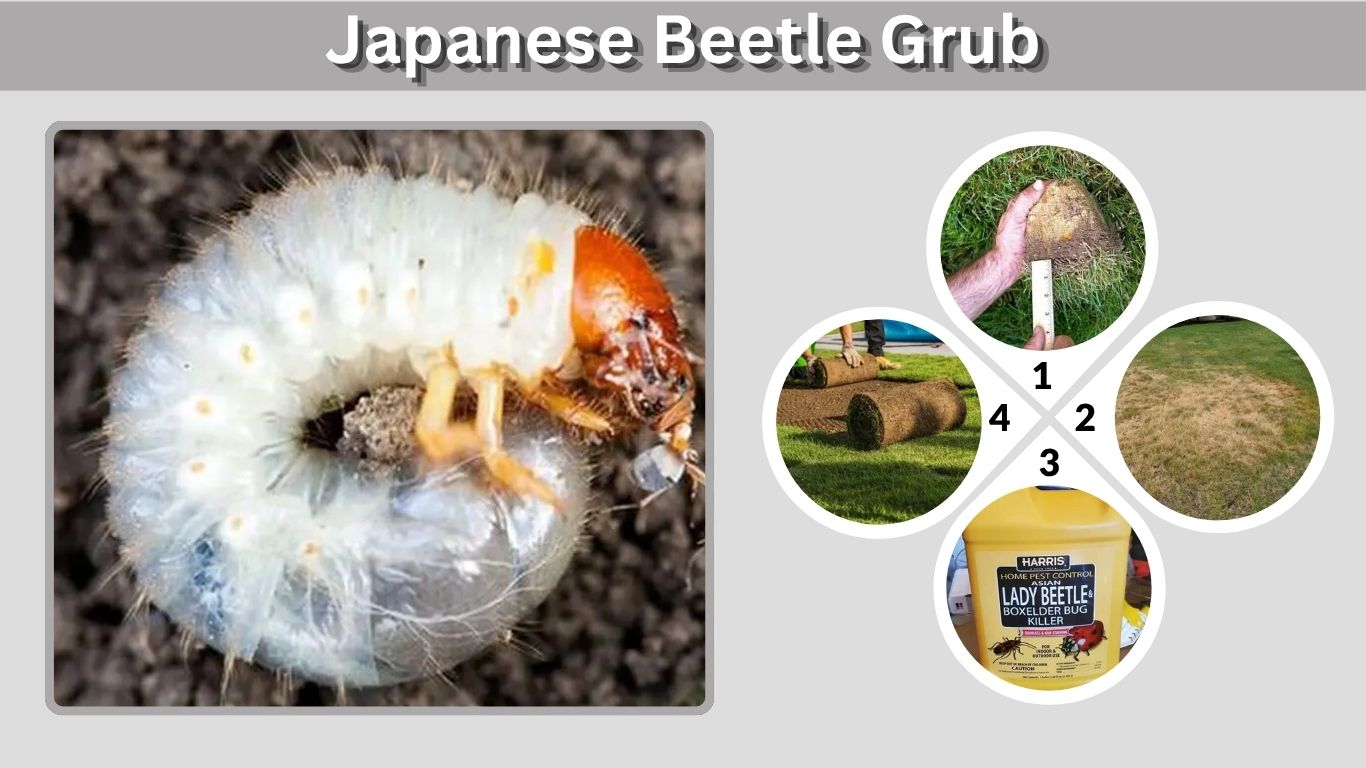
Japanese beetle grubs are white, C-shaped larvae that live under the soil and feed on grass roots. They are one of the main reasons lawns develop brown patches, loose turf, and animal digging. These grubs later become adult Japanese beetles, which feed on leaves, flowers, and fruit plants. Understanding their life cycle, signs of damage, and best treatment timing helps control them before serious lawn problems begin.
What Is a Japanese Beetle Grub?
A Japanese beetle grub is the larval stage of the Japanese beetle, Popillia japonica. The adult beetle is metallic green with coppery wing covers, but the grub looks completely different. It is soft-bodied, pale white, and usually curled into a C-shape in the soil.
These grubs live below the lawn surface and feed on grass roots. When the roots are damaged, grass cannot take up water properly. This causes thinning, yellowing, brown patches, and turf that lifts easily from the soil.
Japanese beetle grubs are part of a complete life cycle: egg, larva, pupa, and adult. The grub stage is the most damaging stage for lawns, while the adult stage is more damaging to garden plants, flowers, trees, and crops.
Japanese Beetle Grub Identification
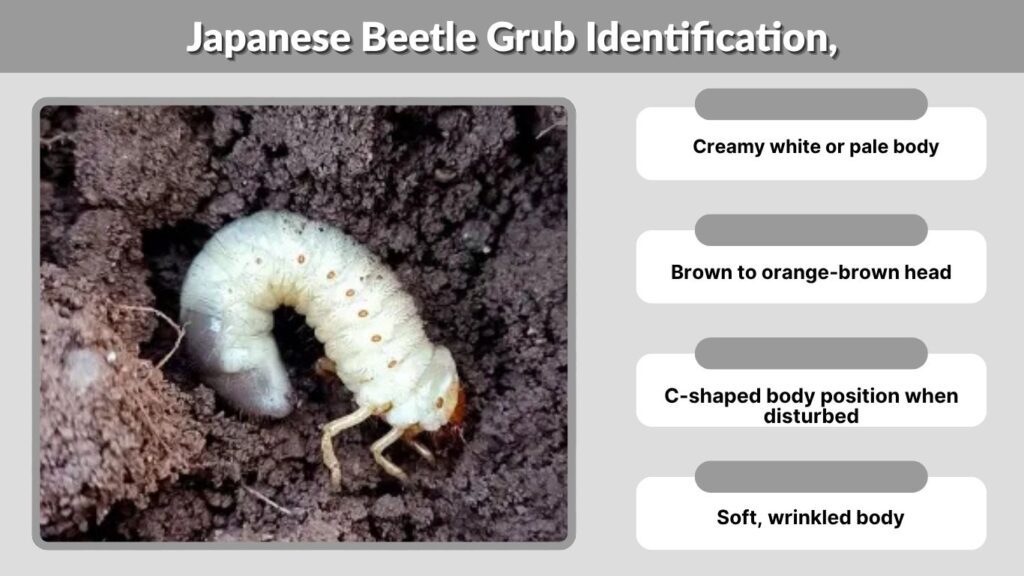
Japanese beetle grubs look similar to other white grubs, such as June beetle grubs and masked chafer grubs. Because of this, simple appearance is helpful but not always enough for exact identification. Still, there are several signs that can help you recognize them.
Key Identification Features
- Creamy white or pale body
- Brown to orange-brown head
- C-shaped body position when disturbed
- Three pairs of small legs near the head
- Soft, wrinkled body
- Usually found in the root zone of turfgrass
- Often less than 1 inch long when mature
- Darker area near the rear from gut contents
For exact identification, specialists may look at the raster pattern, which is the arrangement of tiny hairs near the end of the grub’s body. Most homeowners do not need to check this unless they are trying to separate Japanese beetle grubs from other lawn grubs.
If your lawn has white grubs and adult Japanese beetles are common nearby, Japanese beetle grubs are a strong possibility. However, several grub species can damage lawns in the same way.
Quick Facts About Japanese Beetle Grubs
Japanese beetle grubs are important lawn pests because their feeding happens underground. Many homeowners do not notice them until the lawn starts to turn brown or animals begin digging.
| Feature | Details |
| Insect stage | Larva of Japanese beetle |
| Scientific name | Popillia japonica |
| Appearance | White, C-shaped grub with brown head |
| Main food | Grass roots |
| Main damage | Brown patches and loose turf |
| Adult form | Metallic green and copper Japanese beetle |
| Life cycle | Usually one generation per year |
| Best control period | When young grubs are active near the surface |
| Natural options | Beneficial nematodes, milky spore in some areas |
| Chemical options | Preventive or curative grub-control products |
Do Grubs Turn Into Japanese Beetles?
Yes, Japanese beetle grubs turn into adult Japanese beetles. The grub is not a separate insect. It is the immature stage of the same species. After feeding underground, the grub eventually pupates and emerges as an adult beetle.
The adults are the shiny green and copper beetles often seen feeding on roses, grapes, fruit trees, ornamental plants, and garden crops. After mating, females lay eggs in the soil. Those eggs hatch into new grubs, and the cycle begins again.
Not all lawn grubs become Japanese beetles. Some become June bugs, chafers, or other scarab beetles. This is why identification matters if you want to choose the most effective control method.
Japanese Beetle Grub Life Cycle
Japanese beetles usually complete one generation per year. Timing can vary by region, weather, and soil conditions, but the basic pattern is similar in many areas.
Egg Stage
Adult female Japanese beetles lay eggs in the soil during summer. They often choose moist, grassy areas because the young larvae need grass roots to survive. Eggs hatch into small grubs after a short period.
Larval Stage
The newly hatched grubs begin feeding on grass roots. At first, they are small and easier to control. As they grow, they become larger and more damaging. This is the stage that causes the most visible lawn injury.
Overwintering Stage
As temperatures drop, grubs move deeper into the soil to survive winter. During this period, they feed less or stop feeding. Because they are deeper in the ground, treatments are usually less effective in cold weather.
Pupal and Adult Stage
In spring, grubs move closer to the surface again and resume feeding for a short time. Later, they pupate and become adult beetles. Adults emerge in late spring or summer, feed on plants, mate, and lay eggs.
Signs of Japanese Beetle Grub Damage
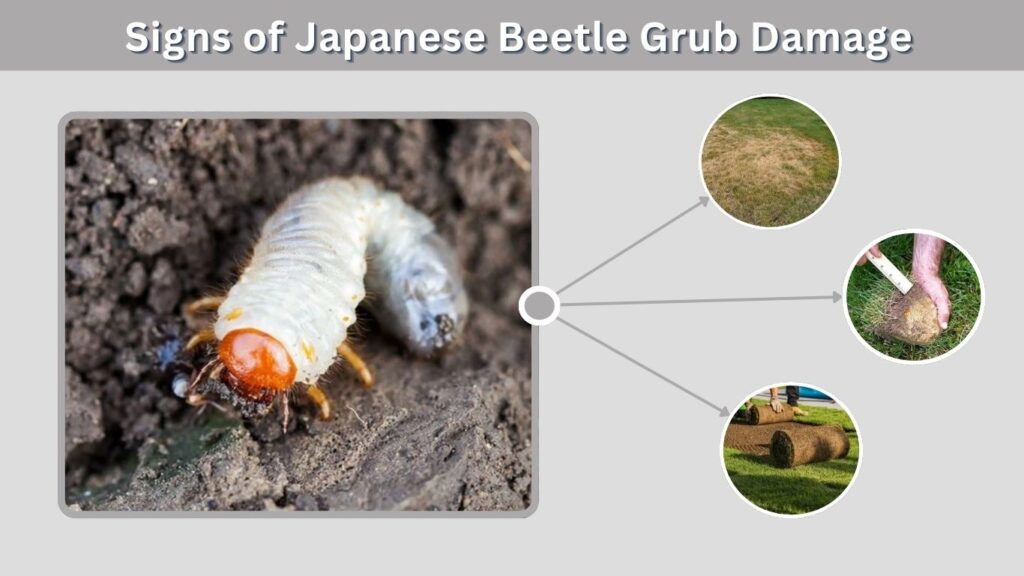
Grub damage can look like drought stress, disease, or poor soil conditions. The best way to confirm the problem is to inspect the root zone. If the turf pulls up easily and grubs are present underneath, root feeding is likely.
Common Lawn Damage Signs
- Irregular brown patches in the lawn
- Grass that feels loose or spongy
- Turf that peels back like a loose carpet
- Increased skunk, raccoon, mole, or bird activity
- Thin grass even after watering
- Dead patches during late summer or early fall
- Visible white grubs under damaged turf
Animals digging in the lawn often make the problem worse. They are usually searching for grubs as food. If you see sudden digging, flipped turf, or holes in areas with weak grass, check for grubs below the surface.
How to Check for Japanese Beetle Grubs in Lawn
You can inspect your lawn with a simple soil check. Choose areas where the grass is brown, weak, or easy to pull up. Use a shovel to cut a square section of turf and fold it back carefully.
Look through the top few inches of soil and root zone. Count the number of grubs in the area you inspect. A few grubs do not always mean treatment is needed. Healthy lawns can tolerate low numbers, but higher populations can cause serious damage.
Check more than one spot because grubs are not always spread evenly. Some parts of the lawn may have many grubs, while other areas have none. Focus on sunny, moist, well-watered lawn areas because female beetles often prefer these places for egg laying.
Best Time to Control Japanese Beetle Grubs
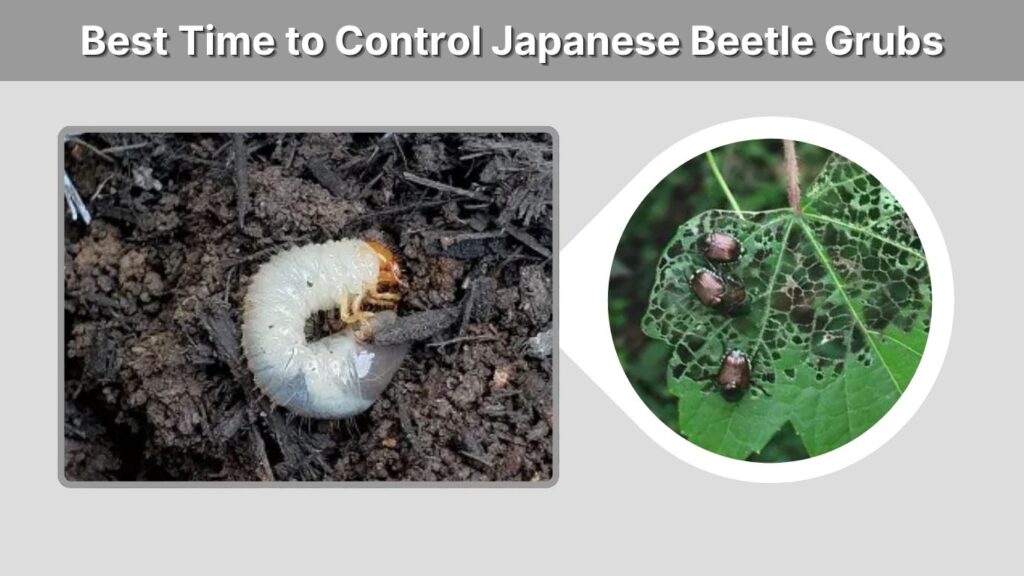
Timing is one of the most important parts of grub control. Young grubs near the soil surface are easier to manage than large, older grubs deep in the ground. Treatment applied at the wrong time may give poor results.
Preventive grub control is usually applied before or during the early grub period, depending on the product label and local climate. Curative grub killers are used when active grubs are already present and damaging the lawn.
In many areas, late summer to early fall is a key time to inspect for grubs because young larvae are feeding near the surface. Spring treatments may not always prevent adult beetle emergence because older grubs can be harder to kill before pupation.
Always follow the product label for timing, rate, watering instructions, and safety rules. Local extension services can also give region-specific timing for your area.
Japanese Beetle Grub Control Methods
Japanese beetle grub control works best when you combine lawn monitoring, proper timing, healthy turf care, and the right treatment method. One method alone may not solve the problem if the lawn keeps attracting beetles each year.
Main Control Options
- Hand inspection and monitoring
- Healthy lawn maintenance
- Beneficial nematodes
- Milky spore in suitable regions
- Preventive grub-control products
- Curative grub killers for active infestations
- Reducing adult beetle populations nearby
- Avoiding overwatering during egg-laying periods
The best option depends on the season and severity of the problem. Preventive products are not the same as curative products. Some products work only on young grubs, while others are made for active infestations. Read labels carefully before applying anything.
Natural Control for Japanese Beetle Grubs
Natural grub control is useful for homeowners who want to reduce pesticide use. These options may work more slowly than chemical treatments, but they can be part of a long-term lawn-care plan.
Beneficial nematodes are microscopic organisms that attack soil-dwelling pests. They are usually applied with water and need moist soil to survive. They work best when grubs are present and soil temperatures are suitable.
Milky spore is a biological control that targets Japanese beetle grubs specifically. It may take time to build up in the soil and may not work equally well in all climates. It is not a quick rescue treatment for heavy lawn damage.
Natural methods still require correct timing and good conditions. If soil is too dry, too cold, or treated incorrectly, results may be weak.
Chemical Treatment for Japanese Beetle Grubs
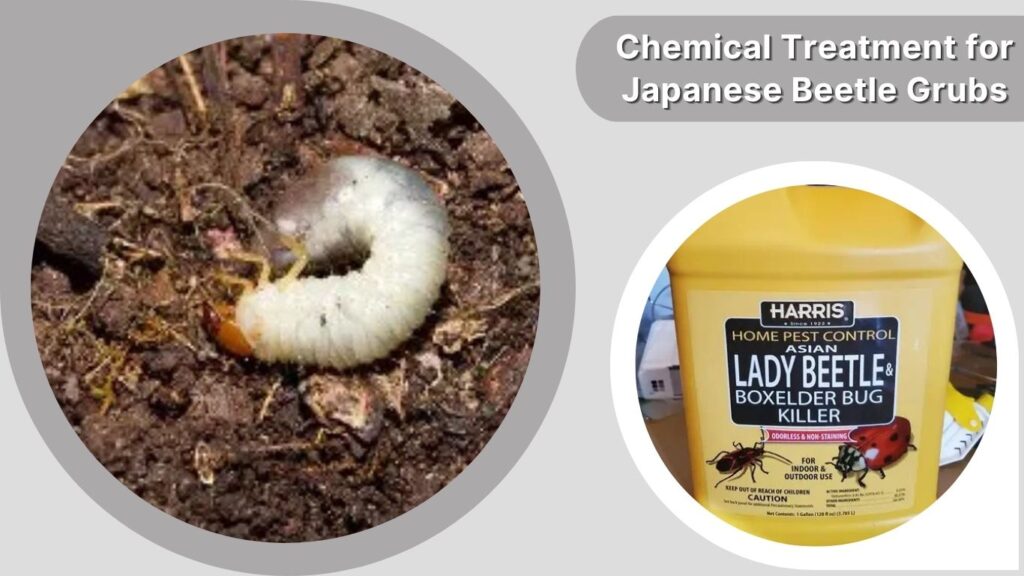
Chemical grub-control products are usually divided into preventive and curative treatments. Preventive products target young grubs before major damage appears. Curative products are used when grubs are already present and feeding.
The best product depends on the time of year. Some ingredients are designed for early application and will not work well after grubs are large. Others work faster but may have shorter activity. This is why reading the label is essential.
Watering after application is often needed to move the product into the root zone where grubs are feeding. Avoid applying insecticides before heavy rain, near water bodies, or when pollinators may be exposed. Keep pets and children away according to the label directions.
If damage is severe or repeated every year, a local lawn professional or extension office can help confirm the grub species and recommend timing.
Japanese Beetle Grub vs June Bug Grub
Japanese beetle grubs and June bug grubs are both white grubs, and both can damage lawns. They look very similar to the naked eye. The main differences are often found in size, life cycle timing, adult beetle appearance, and the raster pattern under magnification.
Japanese beetle adults are metallic green and copper. June bugs are usually brown, reddish-brown, or dark beetles. If you see many adult Japanese beetles in summer and then lawn grub damage later, Japanese beetle grubs may be involved.
However, a lawn can have more than one grub species. Because control methods are often similar, exact species identification is not always necessary for basic lawn management. It becomes more important when using species-specific options like milky spore.
Japanese Beetle Grubs in Ohio and Northeast Lawns
Japanese beetles are common in many eastern and Midwestern states, including Ohio. Lawns in places such as Cleveland and Northeast Ohio can experience grub issues when conditions support egg laying and larval survival.
In Ohio and similar climates, adult beetles are often noticed in summer. Grub feeding damage may become more noticeable later in the season when larvae grow and feed heavily on roots. Local weather can shift exact timing from year to year.
For Ohio lawns, it is smart to inspect turf in late summer and early fall if you had adult beetle problems earlier. If grubs are present in damaging numbers, choose a treatment that matches the grub size and season.
Do Chickens, Moles, and Birds Eat Japanese Beetle Grubs?
Yes, some animals may eat grubs. Chickens, birds, skunks, raccoons, moles, and other animals may dig or forage for them. However, relying on animals is not a complete control method.
Moles and skunks can damage the lawn while searching for grubs. Their activity may alert you to a grub problem, but it can also make the turf look worse. Chickens may eat exposed grubs, but they can scratch soil and damage garden beds if unmanaged.
Predators are part of natural control, but they rarely remove every grub. A balanced plan still needs inspection, proper lawn care, and targeted treatment when needed.
Preventing Future Japanese Beetle Grub Problems
Prevention is easier than repairing a damaged lawn. A thick, healthy lawn tolerates some root feeding better than weak turf. Proper mowing, watering, aeration, and soil care can reduce stress and improve recovery.
Avoid overwatering during adult beetle egg-laying periods. Moist, soft soil can attract females looking for egg-laying sites. Deep but less frequent watering is usually better than constant shallow watering.
Keep records of when adult beetles appear and when lawn damage begins. If the same areas suffer every year, those zones may need preventive attention. Regular inspection helps you treat before the grubs become large and harder to manage.
FAQs
Are grubs and Japanese beetles the same thing?
They are the same insect at different life stages if the grub is specifically a Japanese beetle grub. The grub is the larval stage, and the adult is the shiny green and copper beetle. However, not all white grubs become Japanese beetles because some are June beetles or chafers.
What do Japanese beetle grubs look like?
Japanese beetle grubs are creamy white, soft-bodied, and usually curled into a C-shape. They have a brown head and three pairs of small legs near the front. They live in soil and feed on grass roots, so they are often found under damaged turf.
When should I apply grub control for Japanese beetles?
The best timing depends on the product and your region. Young grubs near the soil surface are usually easier to control than older grubs. Many preventive treatments are used before serious damage appears, while curative products are used when active grubs are already present.
Does milky spore kill Japanese beetle grubs?
Milky spore can target Japanese beetle grubs, but it is not a fast rescue treatment. It may take time to establish in the soil and may work better in some climates than others. It is most useful as part of a long-term biological control plan.
Do Japanese beetle grubs damage vegetable gardens?
They can live in soil around lawns, gardens, and grassy areas, but they are best known for feeding on grass roots. Adult Japanese beetles cause more obvious damage to many garden plants by chewing leaves and flowers. If grubs are found in garden soil, identify them before treatment.