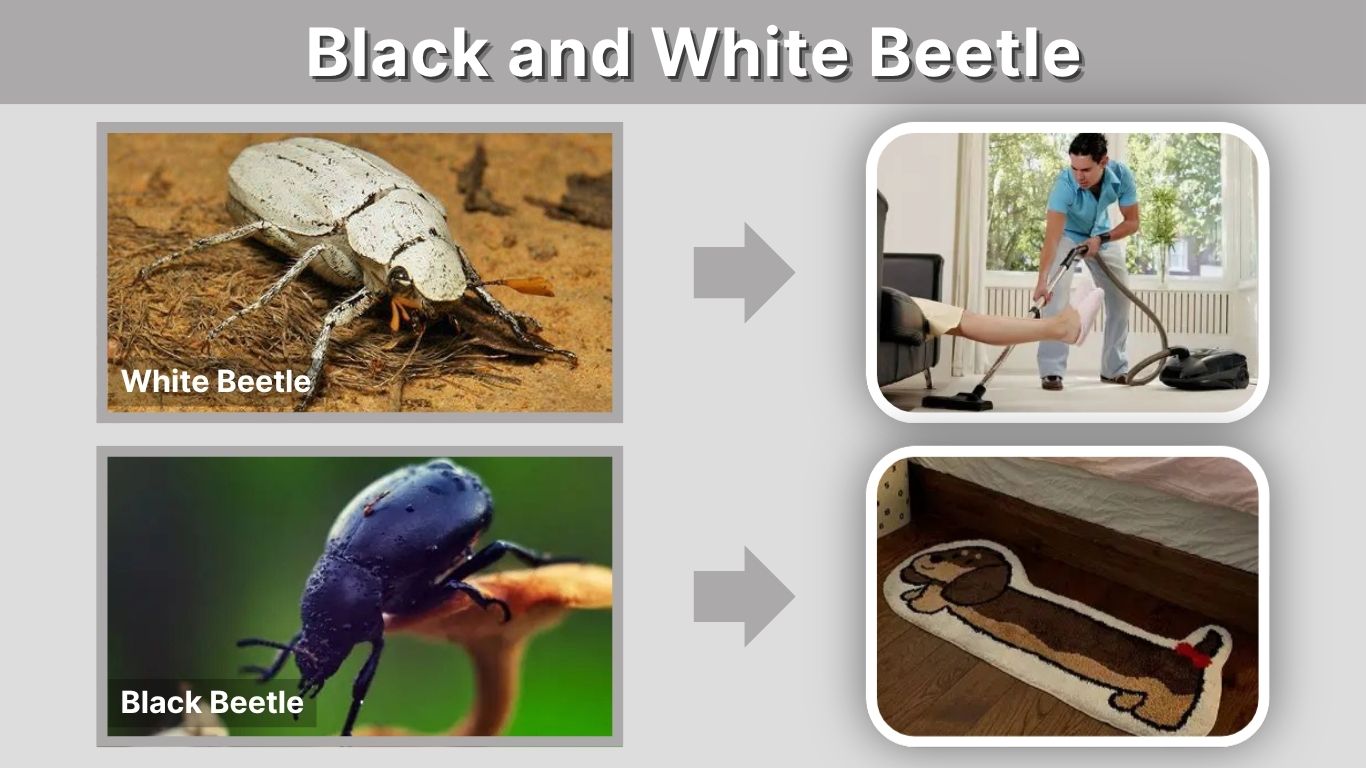
A black and white beetle can look striking because of its spots, stripes, bands, or checkered pattern. Some are tiny household beetles, while others are larger outdoor insects with long antennae. Most are harmless, but a few can damage fabrics, stored items, or weakened wood. Learning the body shape, markings, size, and habitat helps you identify the beetle correctly.
What Is a Black and White Beetle?
A black and white beetle is not one single species. It is a general description for many beetles that have black bodies with white spots, white stripes, pale bands, or mixed black-and-white patterns. These markings can appear on the wing covers, head, thorax, legs, or antennae.
Some black and white beetles are small and round. Others are long, flat, or narrow. A few have very long antennae, while others look like tiny carpet pests. Because many beetles share similar colors, identification should focus on size, pattern, body shape, and where the insect was found.
Main Identification Features
A black and white beetle usually has a hard outer shell and a divided body. The hard wing covers, called elytra, often hold the main pattern. Spots may look round, uneven, dusty, or scale-like. Stripes may run lengthwise, cross the body, or form pale bands.
Check these features first:
- Body size and shape
- White spots, dots, bands, or stripes
- Antenna length
- Whether it flies or only crawls
- Location, such as house, garden, tree, carpet, or pantry
- Whether it is round, oval, long, or flat
A small round beetle with white patches may be a carpet beetle. A large black and white beetle with long antennae may be a longhorn beetle. A black beetle with a white stripe may be a click beetle, checkered beetle, or another outdoor beetle.
Why the Pattern Matters
The pattern helps narrow the identification. White dots on a black beetle may point to carpet beetles, checkered beetles, or longhorn beetles. Black and white stripes may suggest a longhorn beetle or another wood-associated species. White patches on a tiny beetle in a house often suggest a carpet beetle adult.
However, color alone is not enough. Many beetles change appearance with age, wear, dust, or lighting. Some white markings are actually tiny scales or hairs that can rub off. That is why body shape and location are just as important as color.
Are Black and White Beetles Common?
Yes, black and white beetles are common in many places. They may appear in gardens, forests, homes, fields, flowers, firewood piles, or near lights. Some feed on pollen, nectar, fungi, plant material, insects, or decaying organic matter.
A single beetle indoors is often an accidental visitor. Repeated sightings inside the house may mean there is a food source, fabric issue, pantry problem, or hidden entry point.
Common Types of Black and White Beetles
Several beetles can match the black and white description. Some are tiny and easy to miss, while others are large and easy to recognize. Knowing the most common types can help you decide whether the beetle is harmless or needs attention.
| Beetle Type | Common Look | Usual Place | Main Concern |
|---|---|---|---|
| Varied carpet beetle | Tiny, round, black with white/tan patches | Windows, carpets, closets | Larvae damage fabrics |
| Black and white longhorn beetle | Long body, pale bands, long antennae | Trees, wood, outdoors | Some larvae bore into wood |
| Checkered beetle | Black and white patterned body | Flowers, bark, stored products | Depends on species |
| Click beetle | Narrow body, sometimes pale stripes | Soil, lights, gardens | Usually harmless indoors |
| Cottonwood borer | Large black and white beetle | Cottonwood and poplar trees | Larvae affect trees |
Varied Carpet Beetle
The varied carpet beetle is one of the most common small black and white beetles found indoors. Adults are tiny, rounded, and patterned with black, white, brown, and yellowish scales. They may appear on windowsills because they are attracted to light.
The adult beetles do not damage fabrics. The larvae are the problem. They feed on wool, silk, feathers, fur, pet hair, lint, dead insects, and other natural materials. If you see tiny black and white beetles in a bedroom, closet, or living room, inspect rugs, clothing storage, pet bedding, and baseboards.
Black and White Longhorn Beetle
A black and white longhorn beetle usually has a longer body and very long antennae. Some species have bold white spots or pale bands across a black body. These beetles are often seen outdoors on trees, logs, flowers, or firewood.
Many longhorn beetles are harmless to people, but their larvae may develop inside wood. Some species attack dead, dying, or weakened trees. Others can damage living trees. If one enters the house, it may have come from firewood or an open door.
Cottonwood Borer
The cottonwood borer is a large black and white beetle known for its bold pattern and long antennae. It is often associated with cottonwood, poplar, and willow trees. Adults may be seen on tree trunks, roots, or nearby ground.
This beetle is not a household pest. It does not bite people or infest clothing. The main concern is tree health because larvae can bore into roots and lower trunks. If these beetles are common around your yard, check nearby host trees for stress or damage.
Black and White Beetles in the House

Finding a black and white beetle indoors can be worrying, especially when it is small or appears more than once. In most cases, the beetle is either a carpet beetle, an outdoor beetle that entered by accident, or a beetle attracted to light.
The room where you find it gives a strong clue. Beetles near windows may be adult carpet beetles or outdoor visitors. Beetles near closets may be linked to fabrics. Beetles in kitchens may require pantry inspection.
Small Black and White Beetle in House
A small black and white beetle in the house is often a carpet beetle adult. These beetles may look round, speckled, or patchy. They can enter from outside or develop indoors if larvae have food.
Look around these areas:
- Window sills and sunny rooms
- Carpet edges and baseboards
- Closets and stored clothing
- Under beds and furniture
- Pet bedding and rugs
- Air vents and quiet corners
- Stored blankets, wool, feathers, or leather
If you only see one beetle, clean the area and monitor. If you see many adults or larvae, inspect deeper because the source may be hidden.
Black and White Carpet Beetle
A black and white carpet beetle is usually a varied carpet beetle or a related species. Adults are small and may look harmless, but larvae can damage natural fabrics. Larvae are usually brownish, hairy, and slow-moving.
Common signs include shed larval skins, small holes in wool clothing, damaged rugs, and beetles near windows. Vacuuming is important because larvae often feed on lint, hair, and debris in hidden areas. Clean under furniture, along edges, and inside closets.
Beetles Near Windows and Lights
Many beetles move toward light. This is why adults may collect on windowsills or around lamps. Outdoor beetles may also fly inside at night if doors or windows are open.
If black and white beetles appear near windows only once or twice, they may not be breeding inside. If they keep appearing in the same room, inspect nearby carpets, plants, stored clothing, and cracks around the window.
Do Black and White Beetles Bite?
Most black and white beetles do not bite people. They are not like mosquitoes, fleas, or bed bugs. Many beetles may pinch if handled roughly, but they do not seek humans for blood. The bigger issue is usually fabric damage, pantry contamination, or tree damage, depending on the species.
A carpet beetle can cause skin irritation, but it is not a true bite. The irritation usually comes from contact with larval hairs or shed skins.
Skin Irritation from Carpet Beetles
Carpet beetle larvae have tiny hairs that may irritate sensitive skin. Some people may notice itchy bumps, redness, or rash-like marks after contact with infested bedding, clothing, or carpets.
To reduce irritation, wash affected fabrics, vacuum thoroughly, and remove larvae and shed skins. If skin symptoms continue, check for other biting pests too. Bed bugs, fleas, mites, and mosquitoes are more likely to cause actual bites.
Are They Harmful to Pets?
Black and white beetles usually do not harm cats or dogs directly. However, pet hair and bedding can support carpet beetle larvae. Pet sleeping areas often collect hair, dander, lint, and small crumbs.
Wash pet bedding regularly. Vacuum around pet resting areas and under nearby furniture. If pets are scratching, check for fleas as well because fleas are a more common cause of pet irritation than beetles.
When to Worry
You should worry when beetles appear repeatedly, when you find larvae, or when fabrics show small holes. A large outdoor beetle inside the house is usually not serious. A tiny patterned beetle appearing in many rooms may need closer inspection.
The key is finding the source. Killing visible adults does not solve the problem if larvae remain hidden in carpets, closets, stored fabrics, or old organic debris.
How to Identify a Black and White Beetle Correctly
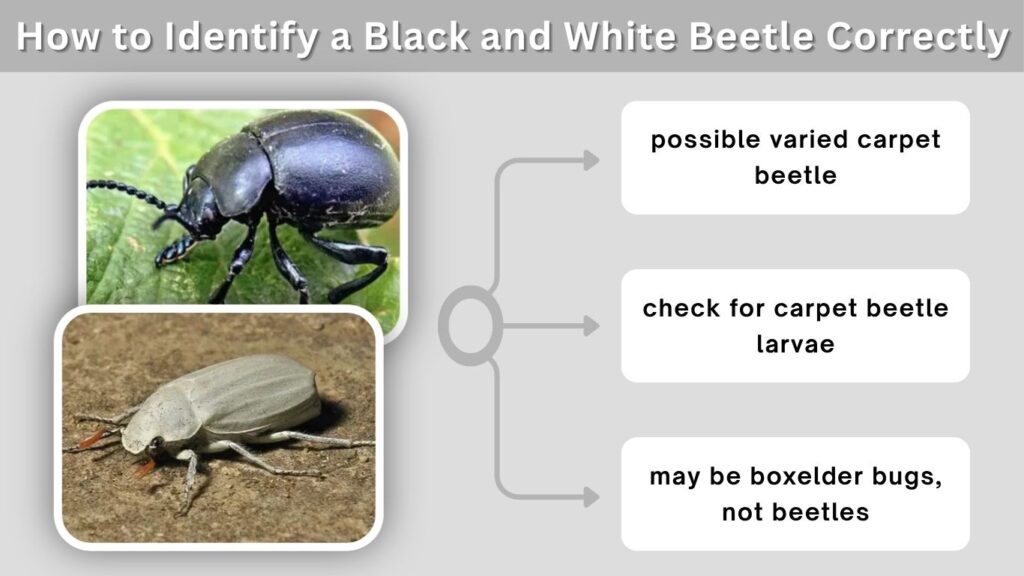
To identify a black and white beetle, start with basic observation. Take note of size, body form, markings, and location. A beetle found on a tree is very different from a beetle found in a closet.
A clear close-up photo can help later, but you can still make a good first guess by checking simple traits.
Simple Identification Checklist
Use this quick guide:
- Tiny and round: likely carpet beetle
- Black with white or tan patches: possible varied carpet beetle
- Long body with long antennae: possible longhorn beetle
- Large black and white beetle near trees: possible cottonwood borer or related species
- Narrow body near lights: possible click beetle
- Found in closet or rug: check for carpet beetle larvae
- Found on firewood: may be a wood-boring beetle
- Found in kitchen food: inspect dry pantry goods
This checklist gives a starting point. For exact identification, compare body shape and pattern with local beetle species in your region.
Spotted vs Striped Beetles
Spotted beetles have dots, patches, or irregular pale markings. Striped beetles have lines or bands. A black beetle with white spots may be a carpet beetle, longhorn beetle, or checkered beetle. A beetle with black and white stripes may be a longhorn beetle, click beetle, or leaf beetle.
Pattern placement also matters. White spots on the wing covers are different from white bands on the antennae. Long antennae often point toward longhorn beetles.
Large vs Tiny Beetles
Large black and white beetles are usually outdoor insects. They may be linked to trees, logs, flowers, or garden areas. Tiny black and white beetles inside the home are more often carpet beetles or small stored-product pests.
Size helps separate serious indoor pests from accidental visitors. A large beetle indoors may simply need removal. Tiny beetles appearing repeatedly may need cleaning, inspection, and prevention.
How to Get Rid of Black and White Beetles
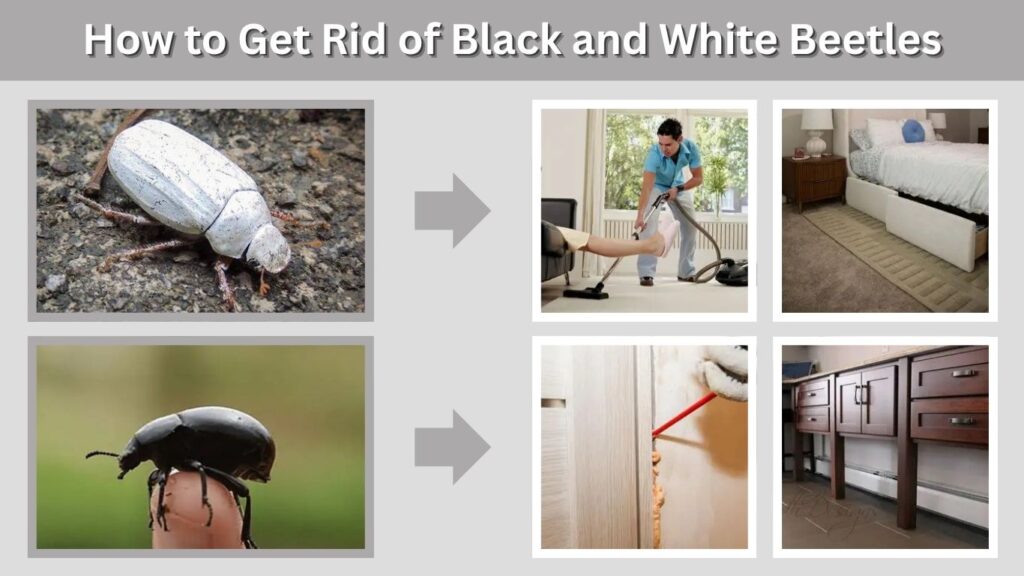
The right removal method depends on the beetle. For outdoor beetles, exclusion is enough. For carpet beetles, cleaning and source removal are essential. For wood-associated beetles, inspect firewood, lumber, and nearby trees.
Avoid random spraying before identification. It may not reach larvae or the real source.
Indoor Removal Steps
Follow these steps if black and white beetles are inside your home:
- Vacuum carpets, rugs, closets, baseboards, and under furniture.
- Wash bedding, curtains, and washable fabrics.
- Inspect wool, silk, feathers, fur, and stored clothing.
- Clean pet bedding and remove pet hair buildup.
- Check pantry foods if beetles appear in the kitchen.
- Throw away infested items in sealed bags.
- Store dry foods and fabrics in airtight containers.
- Seal cracks around windows, doors, vents, and utility gaps.
- Use sticky traps to monitor activity.
Repeat cleaning weekly until beetles disappear. Carpet beetle control often takes patience because larvae hide in quiet places.
Outdoor Prevention
Outdoor beetles can enter through lights, open doors, damaged screens, and gaps. Keep doors closed at night, repair window screens, and reduce bright lights near entryways when possible.
Do not store firewood indoors for long periods. Beetles can emerge from logs and crawl around the house. Keep firewood outside and away from walls.
When Professional Help Is Needed
Professional help may be needed if beetles keep returning, larvae are widespread, or fabric damage continues. A pest control expert can identify the beetle, find hidden sources, and suggest targeted treatment.
For large beetles around trees, an arborist may be more useful than indoor pest control. Tree-boring beetles are managed by improving tree health, removing badly damaged wood, or treating vulnerable trees when needed.
FAQs
What is a black and white beetle?
A black and white beetle is any beetle with black-and-white spots, stripes, bands, or patches. It may be a carpet beetle, longhorn beetle, checkered beetle, click beetle, or another species. Body shape, size, antennae, and location help identify it correctly.
What is the small black beetle with white spots in my house?
A small black beetle with white spots in the house is often a carpet beetle, especially a varied carpet beetle. Adults may appear near windows, while larvae hide in carpets, closets, pet bedding, and fabric storage areas. Check for shed skins and fabric damage.
Are black and white beetles harmful?
Most black and white beetles are not harmful to people. They usually do not bite or sting. However, carpet beetle larvae can damage natural fabrics, and some longhorn beetle larvae can affect trees or wood. The level of concern depends on the species.
Do black and white carpet beetles bite?
Black and white carpet beetles do not bite humans. Their larvae may cause skin irritation because of tiny hairs on their bodies. This reaction can look like small itchy bumps. Cleaning fabrics, bedding, carpets, and hidden lint helps reduce the problem.
How do I get rid of black and white beetles?
First identify where they are coming from. Vacuum hidden areas, wash fabrics, inspect stored clothing, clean pet bedding, seal entry points, and store dry goods properly. If they are carpet beetles, focus on removing larvae and food sources rather than only killing adults.