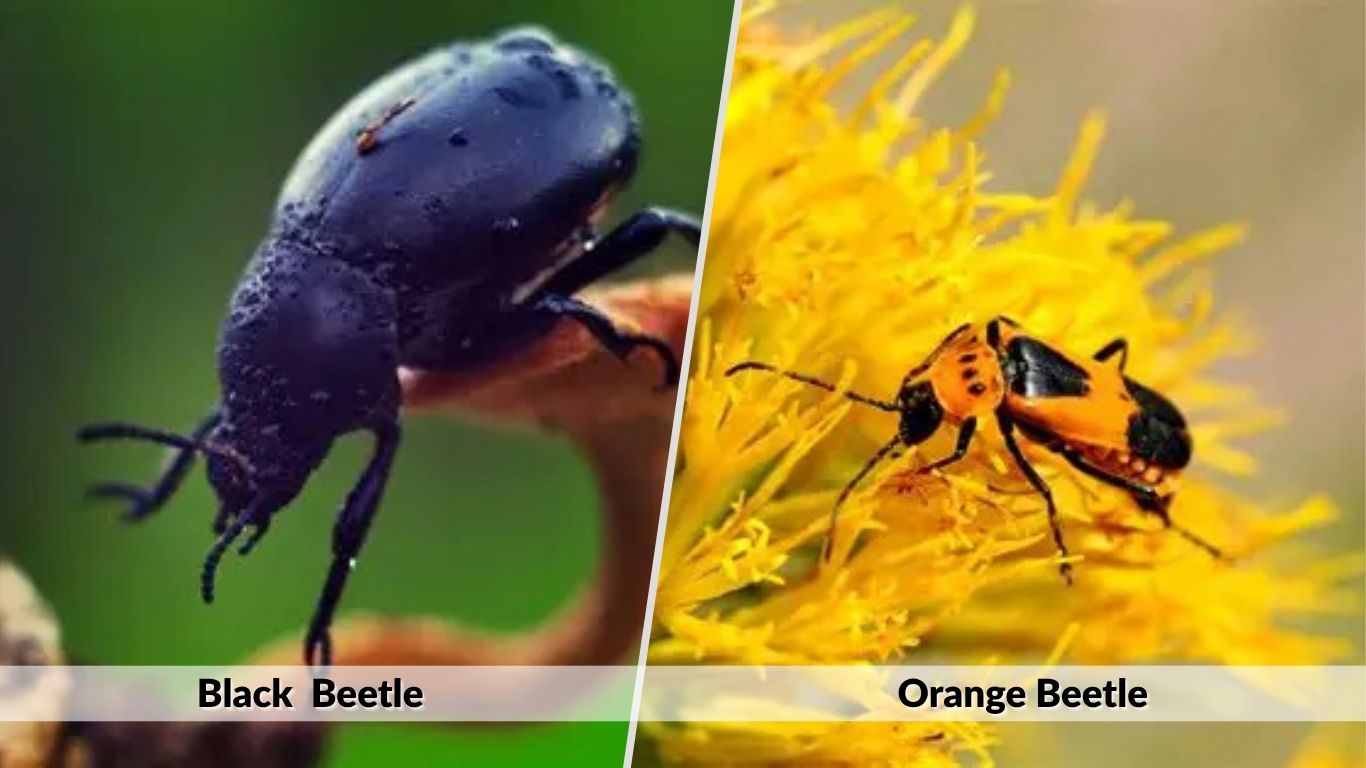
A black and orange beetle can be easy to notice because of its bright markings, striped body, spotted wings, or orange head. Some are harmless garden visitors, while others may feed on plants or enter homes by accident. Correct identification depends on size, shape, pattern, wings, and location. This guide explains common types, where they live, and what to do if you find one.
What Is a Black and Orange Beetle?
A black and orange beetle is not one exact species. It is a broad description used for many beetles with black bodies and orange spots, stripes, wings, legs, heads, or markings. Some are tiny, while others are large and easy to see in gardens, fields, woodlands, or around homes.
Many black and orange beetles are outdoor insects. They may feed on plants, pollen, nectar, seeds, fungi, or smaller insects. A few species are linked to milkweed plants, flowers, tree bark, or garden crops. When one appears indoors, it is often an accidental visitor rather than a serious household pest.
Key Identification Features
The easiest way to identify a black and orange beetle is to look at its pattern and body shape. A beetle with orange stripes is different from one with orange spots or orange wings. The size and location also matter.
Check these details:
- Body length and shape
- Orange spots, stripes, bands, or head
- Long or short antennae
- Hard wing covers
- Flying or crawling behavior
- Found indoors, garden, milkweed, tree, or soil
- Round, oval, long, or flat body
These clues help separate beetles from true bugs, wasps, or other insects that may also have black and orange colors.
Why So Many Beetles Have These Colors
Black and orange colors often work as warning colors in nature. Some insects use bright colors to show predators that they may taste bad or contain defensive chemicals. Others simply use the pattern for camouflage, mimicry, or species recognition.
Not every black and orange beetle is toxic or dangerous. Many are harmless to humans. Still, bright markings can make them look more alarming than they really are.
Are They Common?
Black and orange beetles are common in gardens, fields, forests, and areas with flowering plants. Some are seen on milkweed, while others appear near lights, porches, windows, or outdoor walls. They may be more noticeable in warm months when beetle activity increases.
If you see many of them on one plant, they may be feeding, mating, or laying eggs there. If you find only one inside the house, it likely came in through a door, window, plant, or small crack.
Common Types of Black and Orange Beetles
Several beetles can match this color pattern. Some have orange stripes, some have orange spots, and some have orange wings with black markings. The table below gives a simple comparison.
| Beetle Type | Common Look | Usual Location | Main Concern |
|---|---|---|---|
| Milkweed beetle | Black and orange or red-orange body | Milkweed plants | Usually plant feeder |
| Lady beetle | Orange body with black spots | Gardens, plants, windows | Helpful predator, sometimes indoors |
| Soldier beetle | Soft body, orange and black pattern | Flowers and gardens | Usually beneficial |
| Blister beetle | Long body, black/orange markings | Fields and crops | Can irritate skin |
| Longhorn beetle | Long body, orange head or markings | Trees, wood, flowers | Some larvae bore in wood |
Milkweed Beetles
Milkweed beetles are among the most common orange and black beetles seen on milkweed plants. They often have bright orange or reddish-orange bodies with black markings. Their colors can look similar to other milkweed insects, including milkweed bugs, but beetles have hard wing covers.
These beetles feed on milkweed. They may chew leaves, stems, flowers, or seed pods depending on the species. They are usually not a problem unless the plant is small or heavily covered with insects. In most gardens, they are part of the natural milkweed ecosystem.
Lady Beetles
Lady beetles, also called ladybugs, are often orange with black spots. Some may look more red-orange, while others may appear yellowish-orange. They are usually round or oval and have a smooth, dome-shaped body.
Many lady beetles are beneficial because they eat aphids, scale insects, and other soft-bodied pests. However, some species may gather indoors during cooler weather. They do not damage wood, clothing, or food, but large groups can become annoying inside homes.
Soldier Beetles
Soldier beetles are soft-bodied beetles often seen on flowers. Many species have orange, yellow, brown, or black markings. They may look a little like wasps from a distance, but they are beetles and do not sting.
These beetles are usually helpful in gardens. Adults visit flowers and may feed on pollen, nectar, or small insects. Their larvae can also feed on pests in soil or leaf litter. If you see them on flowers, they usually do not need control.
Black Beetle with Orange Stripes or Spots
A black beetle with orange stripes or spots can belong to several groups. The pattern is one of the most important clues. Stripes may run along the back, across the wings, or around the body. Spots may appear as small dots, large patches, or four clear marks on the wing covers.
Look at the full insect before deciding what it is. A black beetle with orange spots on milkweed may be different from one found on a porch light, tree trunk, or bedroom wall.
Orange Stripes on the Body
Orange stripes can appear on the wing covers, thorax, or edges of the body. Some striped beetles are plant feeders, while others are predators or flower visitors. If the beetle is on milkweed, it may be a milkweed beetle or a related milkweed insect.
Striped patterns may also appear on long-bodied beetles. If the beetle has very long antennae, it may be a longhorn beetle. These beetles are more often linked to trees, wood, or flowers than to indoor spaces.
Orange Spots on the Back
Orange spots on a black beetle can make the insect look like a lady beetle, blister beetle, or checkered beetle. A tiny black beetle with orange spots may also be a small garden beetle or plant-feeding beetle.
Use these clues:
- Round body with spots: often lady beetle group
- Long body with spots: possible blister beetle or longhorn beetle
- Found on flowers: may be soldier beetle or checkered beetle
- Found on crops: inspect for plant damage
- Found indoors once: likely accidental visitor
Spots alone are not enough for exact identification, but they are useful when combined with shape and location.
Orange Head and Black Body
A beetle with an orange head and black body may be a longhorn beetle, blister beetle, or another outdoor species. Longhorn beetles often have long antennae and may appear around trees, logs, or firewood. Blister beetles usually have softer-looking bodies and can be found in fields, gardens, or weedy areas.
Avoid handling unknown beetles with bare hands. Some beetles can release irritating chemicals, especially blister beetles.
Black and Orange Beetles in the House
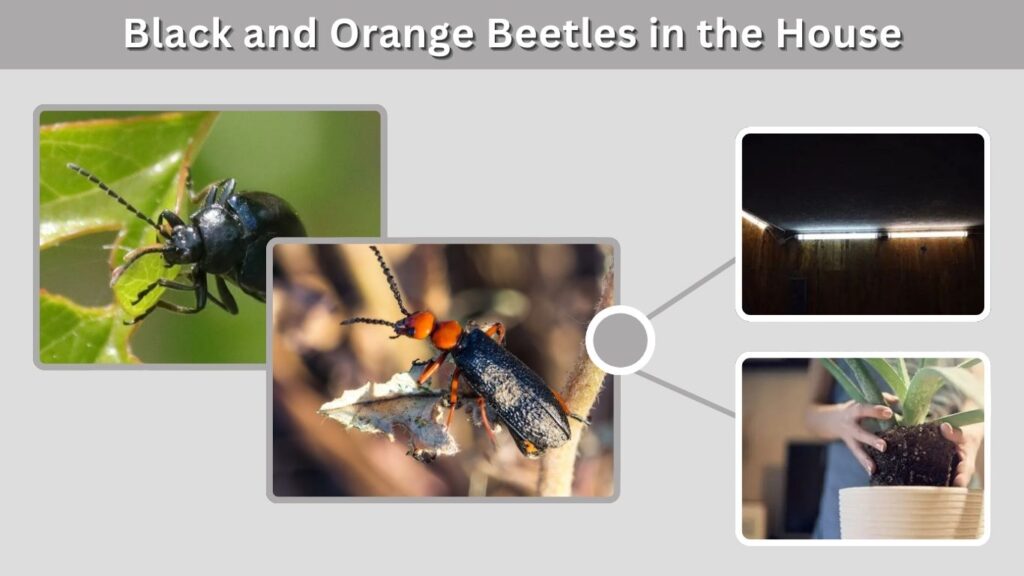
A black and orange beetle in the house is usually not a major infestation sign. Many enter accidentally through open doors, windows, damaged screens, potted plants, flowers, firewood, or outdoor items.
Still, repeated sightings should be checked. If beetles appear again and again, there may be an entry point, plant source, or light attraction problem.
Why They Come Indoors
Black and orange beetles may enter homes for several reasons:
- Attracted to indoor lights
- Flying through open doors or windows
- Hiding in flowers or plants brought inside
- Crawling in through damaged screens
- Emerging from firewood
- Seeking shelter during weather changes
- Accidentally entering through cracks or vents
Most do not breed indoors. Unlike carpet beetles or pantry beetles, many black and orange beetles need outdoor plants or soil to complete their life cycle.
What to Do If You Find One
If you find one black and orange beetle indoors, capture it gently and release it outside. You can use a cup and paper instead of touching it. Then check nearby doors, windows, lights, or plants.
For prevention, repair screens, seal gaps, and keep outdoor lights away from open entries when possible. If beetles are coming from houseplants, inspect leaves, soil, and stems for eggs or larvae.
When It May Be a Problem
It may be a problem if you see many beetles indoors, find larvae, or notice plant damage. Beetles around indoor plants may be connected to soil or foliage. Beetles near firewood may have emerged from wood.
If many insects gather near windows, they may be attracted to light or trying to move outdoors. Vacuuming and sealing entry points usually helps.
Are Black and Orange Beetles Harmful?
Most black and orange beetles are not harmful to humans. They usually do not bite, sting, or spread disease. Many are harmless visitors, and some are beneficial predators or pollinators.
However, a few can cause problems. Some feed on garden plants. Some may irritate skin if handled. Others may damage crops or trees in large numbers. The risk depends on the species.
Beetles That Help Gardens
Some black and orange beetles are useful in gardens. Lady beetles eat aphids and other plant pests. Soldier beetles visit flowers and may help reduce soft-bodied insects. Some checkered beetles are predators of other insects.
If a beetle is not damaging plants, it is often best to leave it alone. Beneficial beetles help balance garden ecosystems and reduce the need for chemical control.
Beetles That Feed on Plants
Some orange and black beetles feed on leaves, stems, flowers, or seeds. Milkweed beetles feed on milkweed. Other species may feed on crops, weeds, or ornamental plants.
Plant-feeding is not always harmful. A healthy plant can usually tolerate light feeding. Control is only needed when leaves are heavily damaged, young plants are weakened, or beetles appear in large groups.
Beetles That Can Irritate Skin
Blister beetles are the main concern when discussing skin irritation. Some species contain chemicals that can cause blisters or irritation if crushed against the skin. They should not be handled with bare hands.
If you need to remove an unknown beetle, use gloves, a container, or paper. This simple step prevents unnecessary contact.
How to Identify Them in the Garden
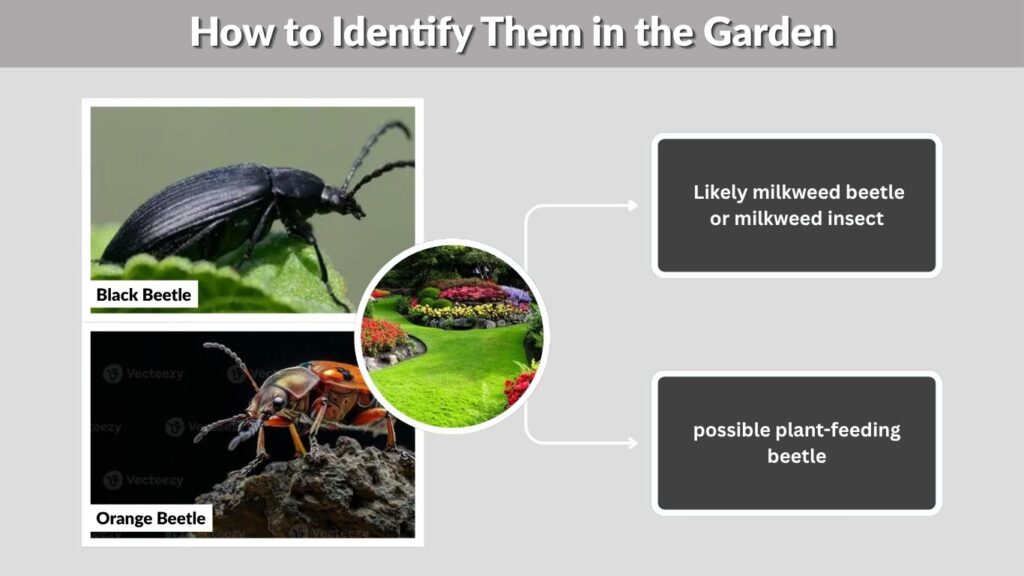
Garden identification is easier when you look at the host plant. A beetle on milkweed, roses, vegetables, flowers, or tree bark may point to different species. The plant gives context.
Watch what the beetle is doing. Is it chewing leaves, visiting flowers, flying around lights, or resting on bark? Behavior can help with identification.
Check the Host Plant
The plant can tell you a lot:
- On milkweed: likely milkweed beetle or milkweed insect
- On flowers: possible soldier beetle, checkered beetle, or lady beetle
- On vegetables: possible plant-feeding beetle
- On trees or logs: possible longhorn beetle
- Near soil: possible ground beetle or root-feeding species
- Around lights: may be an outdoor flying beetle
Take note of both the beetle and the plant. This gives a better identification than color alone.
Look at the Antennae
Antennae length is very useful. Longhorn beetles have long antennae, sometimes as long as the body or longer. Lady beetles have short antennae and rounded bodies. Soldier beetles have softer, longer bodies with moderate antennae.
If the insect has long antennae and a narrow body, it is less likely to be a lady beetle. If it is round and dome-shaped, lady beetle is more likely.
Notice the Wing Covers
Beetles have hard front wings that cover the softer flying wings underneath. These hard covers often show the orange or black pattern. Spots, stripes, bands, or outlines may appear on this part of the body.
A black beetle with orange wings may flash brighter color when it flies. Some beetles look mostly black when resting but show orange or reddish wings in movement.
How to Manage Black and Orange Beetles
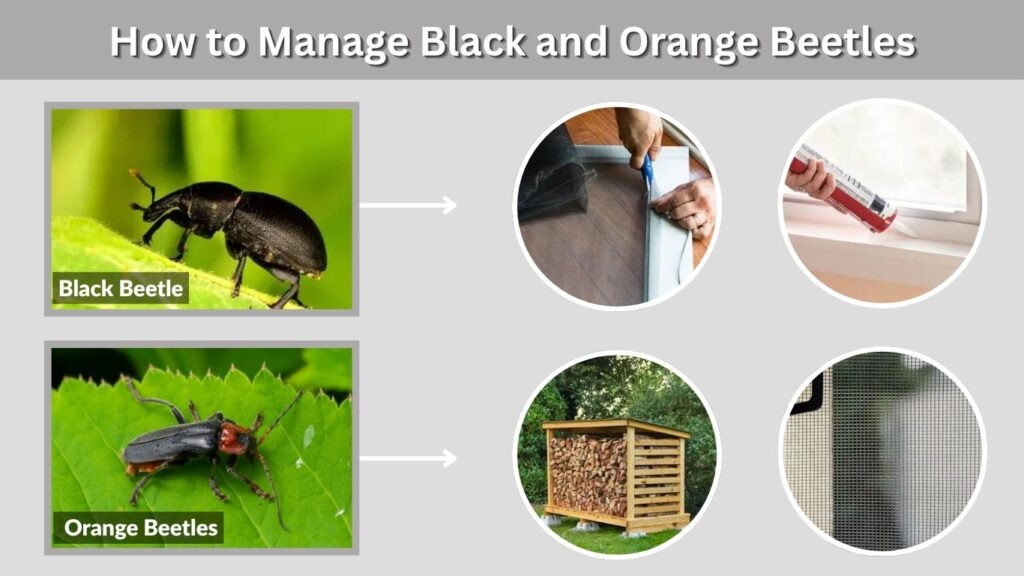
Control depends on whether the beetle is indoors, in the garden, or on specific plants. Many black and orange beetles do not need control. They only need removal or prevention when they become annoying or damaging.
Start with identification before using sprays. Helpful beetles can be killed by unnecessary treatments.
Indoor Prevention Steps
To keep them out of the home:
- Repair torn window screens
- Seal cracks around doors and windows
- Keep doors closed at night
- Reduce bright lights near entryways
- Check flowers before bringing them inside
- Store firewood outside
- Inspect potted plants before moving them indoors
- Use a vacuum for beetles already inside
These steps work well for accidental indoor beetles.
Garden Control Tips
If beetles are damaging plants, remove them by hand with gloves or knock them into soapy water. For small gardens, this is often enough. You can also prune heavily damaged leaves and keep plants healthy with proper watering.
Avoid broad insecticides when beneficial insects are present. Many orange and black beetles are helpful or harmless, so treatment should be targeted only when damage is clear.
FAQs
What is a black and orange beetle?
A black and orange beetle is any beetle with black and orange markings, stripes, spots, wings, or body parts. It may be a milkweed beetle, lady beetle, soldier beetle, blister beetle, longhorn beetle, or another outdoor species. Shape and location help with identification.
Are black and orange beetles dangerous?
Most black and orange beetles are not dangerous to people. They usually do not bite or sting. Some can feed on plants, and blister beetles may irritate skin if handled or crushed. It is best to avoid touching unknown beetles with bare hands.
Why are black and orange beetles on milkweed?
Milkweed attracts several orange and black insects, including milkweed beetles. These insects feed, mate, and lay eggs on the plant. Their bright color may warn predators. A few beetles usually do not harm healthy milkweed plants badly.
What does a black beetle with orange spots mean?
A black beetle with orange spots may be a lady beetle, blister beetle, checkered beetle, or another garden beetle. The meaning depends on its body shape and location. Round spotted beetles are often lady beetles, while long spotted beetles need closer inspection.
How do I get rid of black and orange beetles in my house?
Remove single beetles with a cup, paper, or vacuum. Then check windows, doors, screens, lights, plants, and firewood. Seal entry points and reduce lights near open doors. Most black and orange beetles do not breed indoors, so prevention is usually enough.