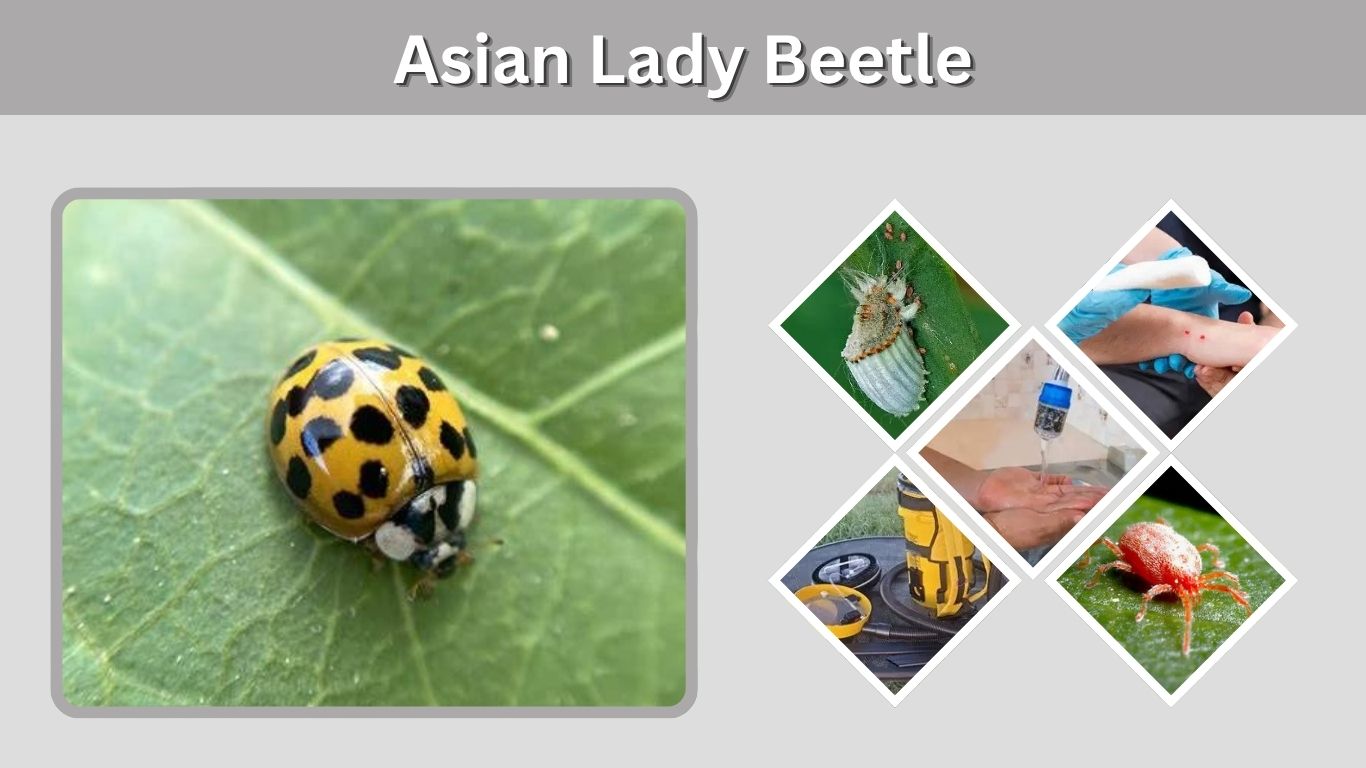
The Asian lady beetle is a small, dome-shaped beetle often mistaken for a regular ladybug. It can be helpful outdoors because it eats aphids and other soft-bodied garden pests. However, it can become a nuisance when it gathers on homes and enters buildings in large numbers during fall and winter. Many people notice Asian lady beetles around windows, ceilings, lights, siding, and attics. They do not usually cause serious structural damage, but they can bite lightly, release a smelly yellow fluid, and stain indoor surfaces.
What Is an Asian Lady Beetle?
The Asian lady beetle, also called the multicolored Asian lady beetle, is a type of lady beetle. Its scientific name is Harmonia axyridis. It was introduced in several places as a natural pest-control insect because it feeds on aphids, scale insects, and other small plant pests.
Outdoors, Asian lady beetles can be beneficial. In gardens, orchards, farms, and landscapes, they help reduce insects that damage plants. The problem is their overwintering behavior. When temperatures drop, they search for protected places to spend the cold months. Homes, garages, sheds, attics, and wall voids often become shelter.
Unlike many native ladybugs that usually stay outside, Asian lady beetles are famous for gathering on sunny walls and sneaking indoors through small cracks and gaps.
What Does an Asian Lady Beetle Look Like?
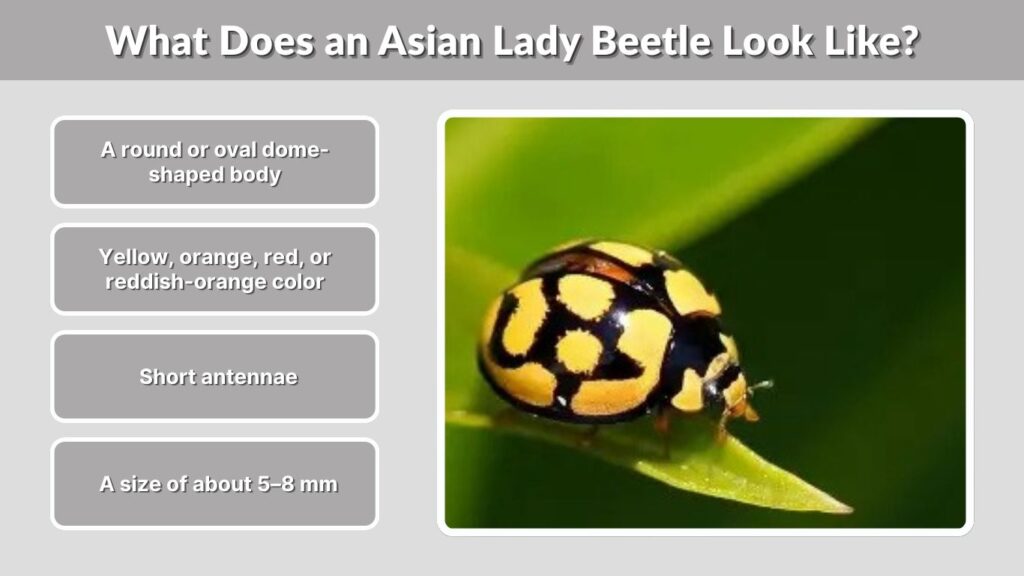
Asian lady beetles are small, rounded beetles with hard wing covers. They are usually orange, yellow, red, or reddish-orange, but their color can vary. Some have many black spots, some have only a few, and some may have almost no spots at all.
One of the best identification marks is the black marking behind the head. Many Asian lady beetles have a black “M” or “W” shaped mark on the pale area just behind the head. This mark is one of the easiest ways to tell them apart from many common ladybugs.
Identification Features
Asian lady beetles may have:
- A round or oval dome-shaped body
- Yellow, orange, red, or reddish-orange color
- Black spots, faint spots, or no visible spots
- A pale area behind the head
- A black “M” or “W” marking near the head
- Short antennae
- Small black legs
- A size of about 5–8 mm
Because their color and spot pattern vary so much, do not rely on color alone. The head marking, indoor behavior, and seasonal appearance are often better clues.
| Feature | Asian Lady Beetle |
|---|---|
| Common color | Orange, yellow, red, reddish-orange |
| Spots | None, few, or many |
| Key marking | Black “M” or “W” behind the head |
| Body shape | Oval and dome-shaped |
| Common season indoors | Fall and winter |
| Main outdoor food | Aphids and soft-bodied insects |
Asian Lady Beetle vs Ladybug
Asian lady beetles and ladybugs are closely related. In casual language, many people call both of them ladybugs. However, the Asian lady beetle is often more troublesome indoors.
Native ladybugs are usually welcomed in gardens because they eat pests and do not commonly invade houses in large groups. Asian lady beetles also eat pests outdoors, but they are more likely to gather on buildings and enter homes when the weather cools.
| Difference | Asian Lady Beetle | Common Ladybug |
|---|---|---|
| Indoor invasion | Common | Less common |
| Odor | Can release strong smell | Usually less noticeable |
| Yellow fluid | Common when disturbed | Less common |
| Bite risk | Can lightly bite | Rare |
| Color | Highly variable | Depends on species |
| Head marking | Often has “M” or “W” | Usually no clear “M” |
The easiest practical difference is behavior. If dozens or hundreds of orange beetles appear around windows, ceilings, and walls in fall, they are probably Asian lady beetles.
Where Do Asian Lady Beetles Live?
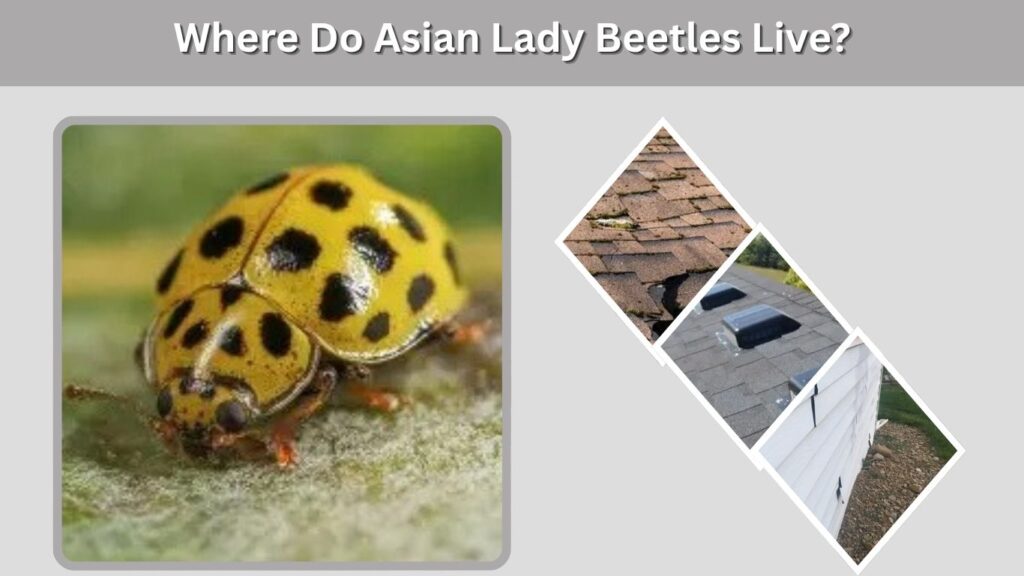
Asian lady beetles live in gardens, fields, forests, orchards, farms, parks, and residential landscapes. They are especially common where aphids and other plant-feeding insects are available.
During warm months, they usually stay outdoors on plants. In fall, they begin looking for warm, protected spaces. They are attracted to sunny, light-colored surfaces and may gather on the south or west sides of buildings.
Common places they enter include:
- Window frames
- Door gaps
- Attic vents
- Roofline cracks
- Siding gaps
- Utility openings
- Chimneys
- Wall voids
- Garages and sheds
Once inside, they may hide for weeks or months. On warm winter days, they may become active and appear around windows or lights.
What Do Asian Lady Beetles Eat?
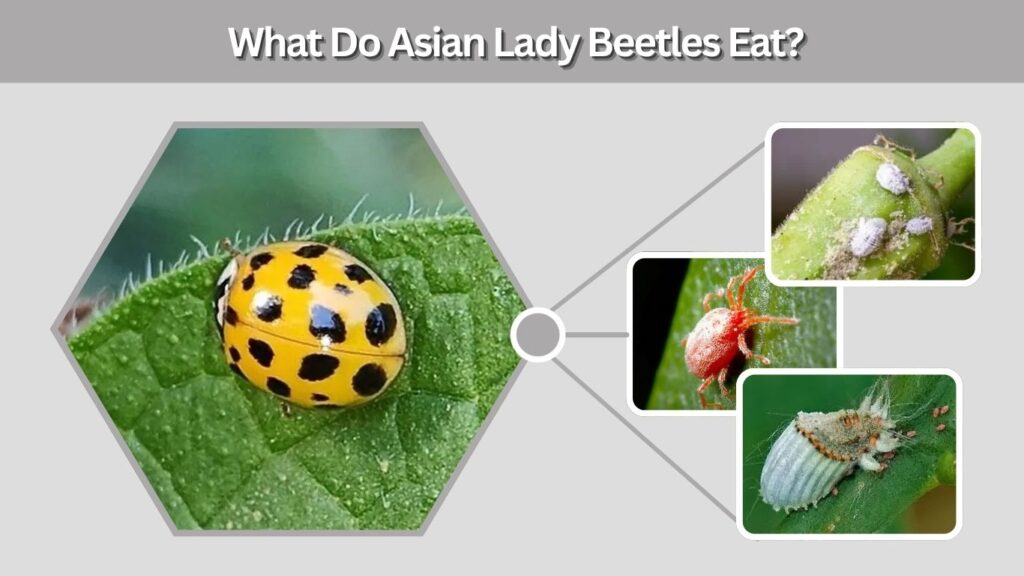
Asian lady beetles are predators. Their main food is soft-bodied insects, especially aphids. This makes them useful in gardens and farms because aphids can damage leaves, flowers, stems, and crops.
They may eat:
- Aphids
- Scale insects
- Mealybugs
- Mites
- Small insect eggs
- Tiny larvae
- Other soft-bodied pests
Both adult beetles and larvae feed on pests. The larvae look very different from adults. They are long, dark, and somewhat spiky, often looking like tiny alligators. Although they may look scary, they are active pest hunters.
Asian lady beetles do not eat wood, clothing, carpet, furniture, or stored food. If they are indoors, they are usually hiding for winter, not feeding on household materials.
Are Asian Lady Beetles Good or Bad?
Asian lady beetles are both helpful and annoying. Outdoors, they can be beneficial because they reduce aphid populations. Gardeners may appreciate them when they are controlling plant pests.
Indoors, they are usually considered a nuisance pest. They do not damage the structure of a house, but they can gather in large numbers, crawl on walls and ceilings, release odor, and leave yellow stains.
Benefits
Asian lady beetles can help by:
- Eating aphids
- Reducing garden pest pressure
- Protecting some plants from soft-bodied insects
- Acting as natural biological control outdoors
Problems
Asian lady beetles can cause problems by:
- Entering homes in large numbers
- Releasing a yellow, smelly fluid
- Staining walls, curtains, and furniture
- Lightly biting people
- Gathering around windows and lights
- Becoming a repeated seasonal nuisance
The key is to leave them alone outdoors when possible but keep them out of the house.
Do Asian Lady Beetles Bite?
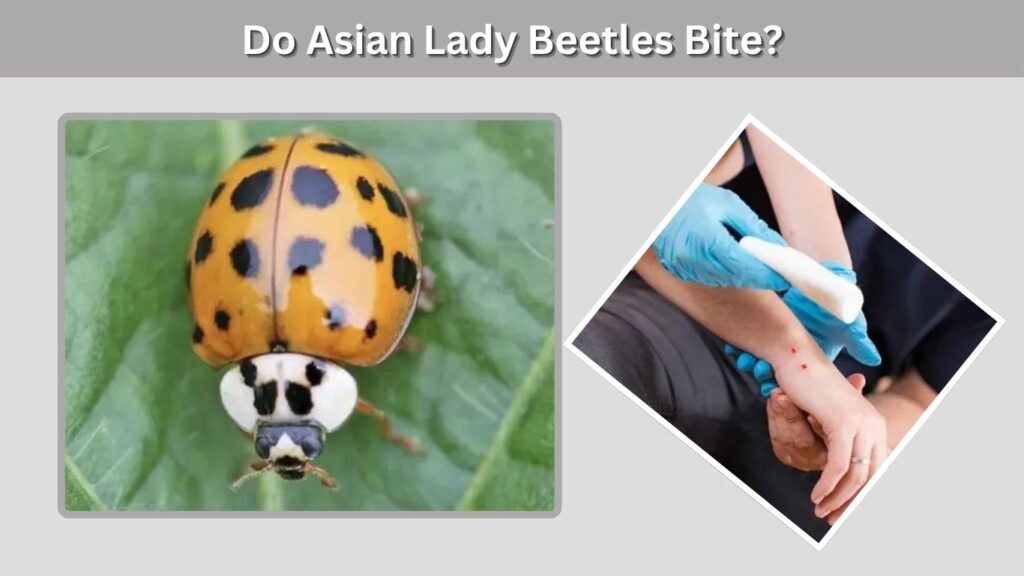
Yes, Asian lady beetles can bite, but the bite is usually mild. It may feel like a small pinch. They do not sting, inject venom, or spread serious disease through biting.
Most bites happen when beetles land on skin or are trapped against the body. The bite may cause slight redness or irritation, especially for sensitive people. The bigger issue is often the yellow fluid they release when stressed.
This yellow liquid is a defensive fluid. It can smell unpleasant and may stain light-colored surfaces. Avoid crushing Asian lady beetles indoors because that can make the odor and staining worse.
Are Asian Lady Beetles Harmful to Pets?
Asian lady beetles are not usually a major danger to pets, but dogs and cats should not eat them. If a pet tries to chew several beetles, the bitter defensive fluid may irritate the mouth. Some pets may drool, paw at the mouth, vomit, or act uncomfortable.
Large numbers of beetles can be more irritating. If beetles are stuck in a pet’s mouth or your pet seems sick after eating them, contact a veterinarian.
To reduce pet problems, vacuum indoor beetles promptly and prevent large groups from gathering inside.
Why Are Asian Lady Beetles in My House?
Asian lady beetles enter houses because they are looking for a warm, protected place to survive winter. Your home may attract them if it has sunny exterior walls, light-colored siding, cracks, gaps, or easy entry points.
They often gather outside first. You may see them on siding, windows, porch columns, doors, or exterior walls. After that, they move into cracks and may end up inside rooms.
They are often seen indoors:
- In fall
- On warm winter days
- Near windows
- Around lamps and ceiling lights
- In attics
- Along baseboards
- Near wall cracks
They are not usually breeding inside the house. They are overwintering and trying to find warmth.
How to Get Rid of Asian Lady Beetles Indoors
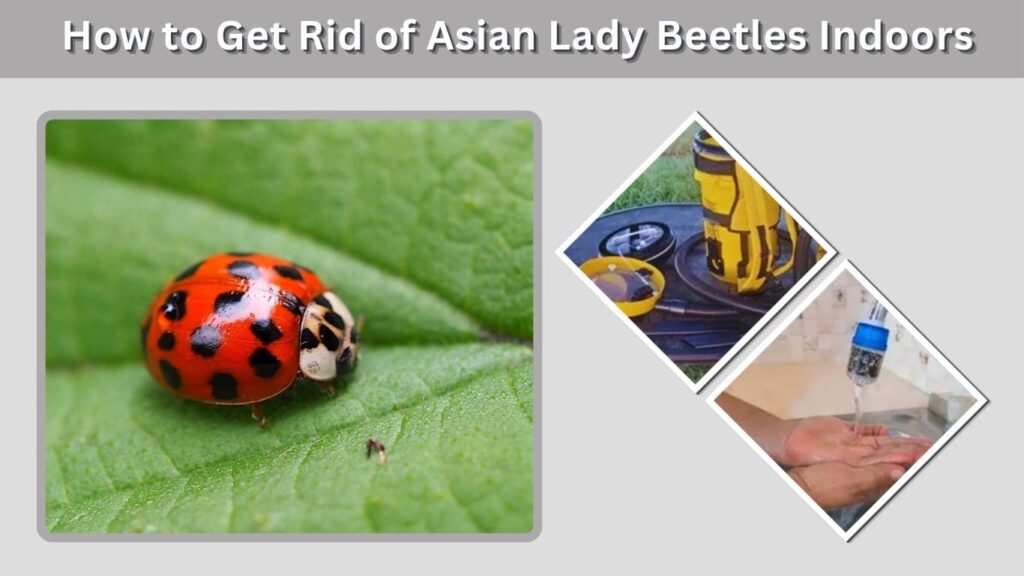
The best indoor method is physical removal. Vacuuming is usually the easiest and cleanest option. Avoid crushing them because they can release odor and yellow stains.
Use a vacuum hose to collect beetles from windows, walls, ceilings, and corners. Empty the vacuum outside soon after, or use a disposable bag if your vacuum has one. You can also place a nylon stocking inside the hose attachment to catch beetles before they enter the vacuum canister.
Indoor Removal Steps
- Vacuum beetles gently
- Empty the vacuum outdoors
- Avoid crushing beetles
- Wipe stains with mild soap and water
- Use a light trap if beetles gather near windows
- Seal visible indoor cracks after removal
- Keep pets away from beetle clusters
Indoor insecticide sprays are usually not the best long-term solution. They may kill some beetles, but more may continue emerging from wall voids or hidden spaces. Prevention works better than repeated indoor spraying.
How to Prevent Asian Lady Beetles
Prevention should start before fall. Once beetles are already inside walls or attics, they are harder to control. The most effective strategy is exclusion, which means sealing entry points so they cannot get inside.
Check the outside of your home carefully. Look around windows, doors, vents, siding, rooflines, pipes, wires, and foundation cracks.
Prevention Checklist
To prevent Asian lady beetles:
- Seal cracks around windows and doors
- Repair torn screens
- Install door sweeps
- Caulk gaps in siding and trim
- Seal spaces around utility pipes and wires
- Cover attic vents with proper mesh
- Check roofline gaps and soffits
- Keep windows closed during fall swarming
- Reduce unnecessary outdoor lights near entry points
- Vacuum early before beetles spread indoors
If you have heavy beetle problems every year, sealing should be done in late summer or early fall before beetles begin gathering.
Asian Lady Beetle Larvae
Asian lady beetle larvae look nothing like adult beetles. They are dark, long, and rough-looking, with orange or yellow markings. Some people mistake them for harmful insects, but they are usually beneficial predators.
Larvae crawl on leaves and stems looking for aphids and other small prey. They are active hunters and can eat many plant pests before becoming adults.
| Life Stage | Appearance | Behavior |
|---|---|---|
| Egg | Small yellow clusters | Laid near aphid colonies |
| Larva | Dark, spiky, alligator-like | Eats aphids and small insects |
| Pupa | Attached to leaves or stems | Transformation stage |
| Adult | Dome-shaped beetle | Eats pests and may overwinter indoors |
If you see larvae in the garden, they are usually helping your plants.
Asian Lady Beetle Eggs
Asian lady beetle eggs are small, yellow to orange, and usually laid in clusters on leaves or stems. Females often place eggs near aphid colonies so the larvae have food after hatching.
The eggs may look like tiny upright grains of rice. If you find them on plants with aphids, they may belong to lady beetles or another beneficial insect. Avoid removing them unless you are sure they are from a harmful pest.
Common Look-Alikes
Asian lady beetles are often confused with other beetles. Some look-alikes are beneficial, while others are pests.
| Insect | How It Differs |
|---|---|
| Native ladybug | Usually less likely to invade homes in large groups |
| Japanese beetle | Metallic green and copper; eats plant leaves |
| Carpet beetle | Much smaller; larvae damage fabric and natural fibers |
| Boxelder bug | Longer black body with red lines |
| Stink bug | Shield-shaped body; larger and brown or green |
Correct identification helps you choose the right control method. For example, carpet beetles require checking fabrics and stored items, while Asian lady beetles require exclusion and vacuuming.
Should You Kill Asian Lady Beetles?
Outside, it is usually better not to kill Asian lady beetles unless they are causing a specific problem. They eat aphids and can help plants. Indoors, it is reasonable to remove them because they are a nuisance.
The best indoor control is not crushing or spraying every beetle. Instead, vacuum them and seal entry points. This keeps your home cleaner and reduces future infestations.
If beetles gather outside your home every fall, focus on prevention. Once they are already inside, you may keep seeing them until spring.
FAQs
Are Asian lady beetles the same as ladybugs?
Asian lady beetles are a type of lady beetle, so many people call them ladybugs. However, they are different from many native ladybugs because they often invade homes, release odor, and may bite lightly.
How do I identify an Asian lady beetle?
Look for a small dome-shaped beetle that may be orange, yellow, or red. Many Asian lady beetles have a black “M” or “W” marking on the pale area behind the head.
Do Asian lady beetles bite humans?
Yes, they can bite or pinch lightly, but the bite is usually mild. They do not sting or inject venom. Some people may notice slight irritation after a bite.
Why are Asian lady beetles in my house?
They enter homes in fall to find a warm, protected place to spend winter. They often come through cracks around windows, doors, siding, vents, and rooflines.
How do I get rid of Asian lady beetles?
Vacuum them gently and empty the vacuum outside. Do not crush them because they can release odor and yellow stains. To prevent future problems, seal cracks, repair screens, and close entry gaps before fall.