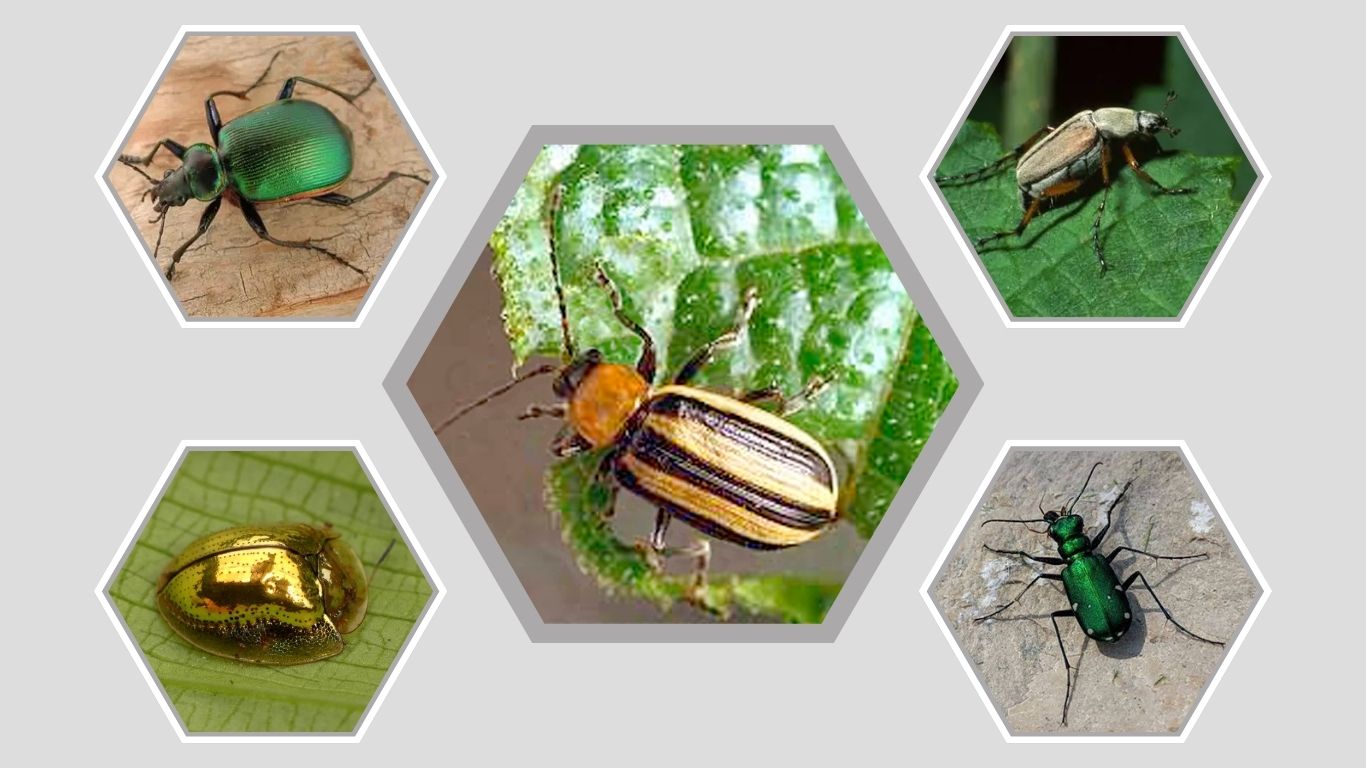
Green beetles are some of the most eye-catching insects found in gardens, forests, lawns, and fields. Their bright metallic colors can range from emerald green to bronze, gold, or bluish-green. Some green beetles are harmless pollinators or helpful predators, while others can damage plants, lawns, fruits, or trees. Learning their names and basic features can help you identify which green beetle you are seeing and understand whether it is beneficial, harmless, or a garden pest.
1. Green June Beetle
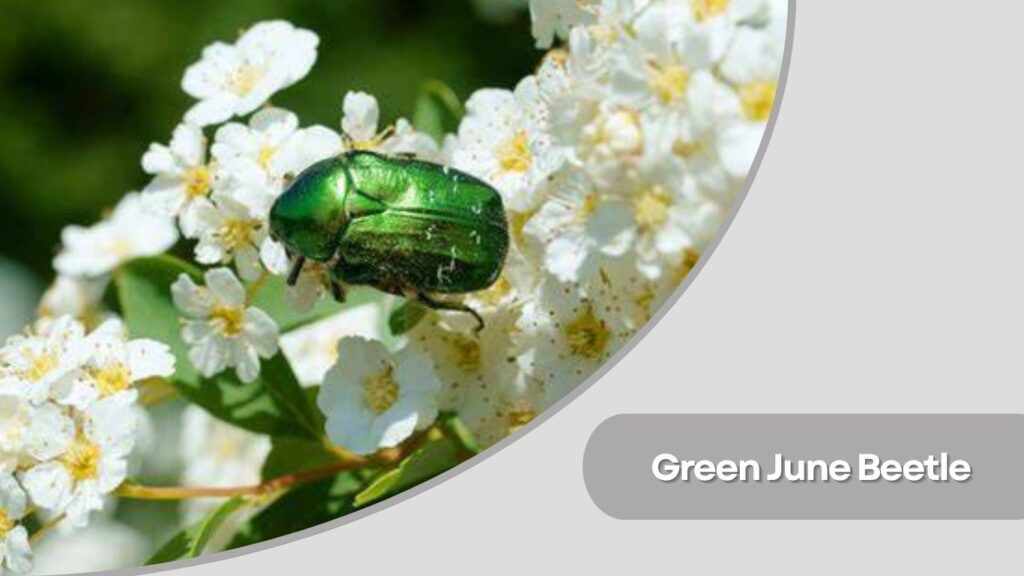
The green June beetle is a shiny, metallic-green beetle often seen flying during warm summer days. It is common in gardens, lawns, orchards, and areas with rich soil. Although adults are attractive, their larvae can sometimes damage grass roots and organic matter in the soil.
Identification
Green June beetles are medium-sized beetles with a bright green body and golden or bronze edges. Their bodies are oval and slightly flattened. Adults usually look glossy in sunlight, making them easy to notice when they fly around plants or lawns.
Habitat and Distribution
These beetles are commonly found in the eastern and southeastern United States. They prefer grassy areas, gardens, pastures, fruit trees, and compost-rich soil. Adults are most active in summer, especially on sunny days.
Diet and Behavior
Adult green June beetles feed on ripe fruits, plant sap, and sometimes flowers. They may visit peaches, figs, grapes, and berries. Larvae, often called grubs, live underground and feed on decaying organic matter and grass roots.
Life Cycle
The life cycle starts when females lay eggs in moist soil. The eggs hatch into white grubs, which grow underground. After pupating, adults emerge in summer. Their loud buzzing flight often makes them noticeable around yards and gardens.
2. Japanese Beetle
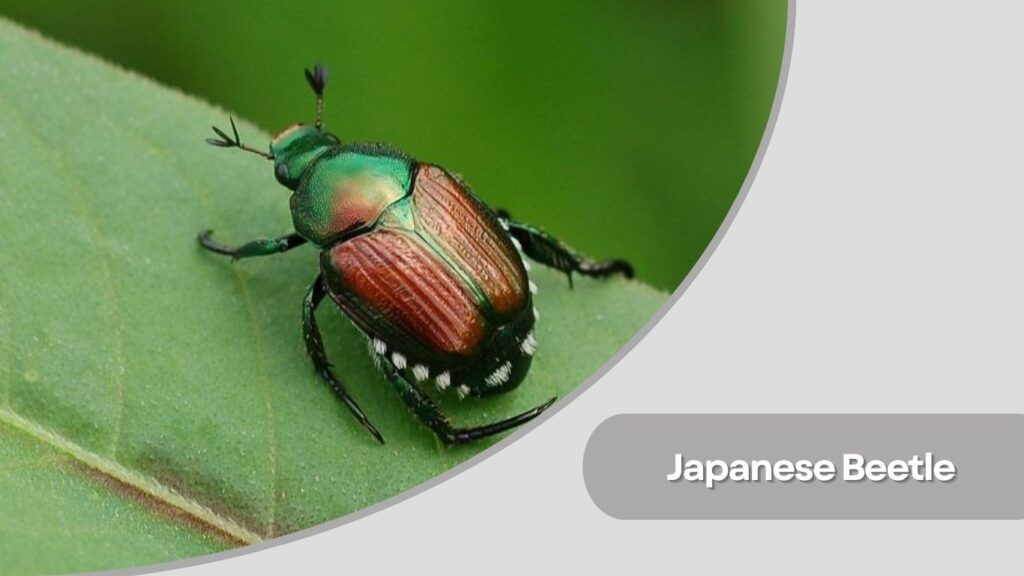
The Japanese beetle is a small but destructive green beetle known for feeding on many garden plants. Its metallic green body and copper-colored wing covers make it easy to identify. Although it looks attractive, it can damage leaves, flowers, fruits, and lawns.
Identification
Japanese beetles are about half an inch long. They have a shiny green head and body with copper-brown wing covers. Small white hair patches along the sides of the body are one of their key identifying features.
Habitat and Distribution
Japanese beetles are common in many parts of the United States, especially in gardens, lawns, farms, parks, and orchards. They are often found where roses, grapes, fruit trees, and ornamental plants grow.
Diet and Behavior
Adult Japanese beetles feed in groups and chew leaves between the veins, creating a skeleton-like pattern. They also eat flowers and soft fruits. Their grubs live in the soil and feed on grass roots, which can cause brown patches in lawns.
Life Cycle
Females lay eggs in moist soil during summer. The eggs hatch into white grubs that feed underground. They overwinter in the soil, pupate in spring, and emerge as adults in early summer.
3. Emerald Ash Borer
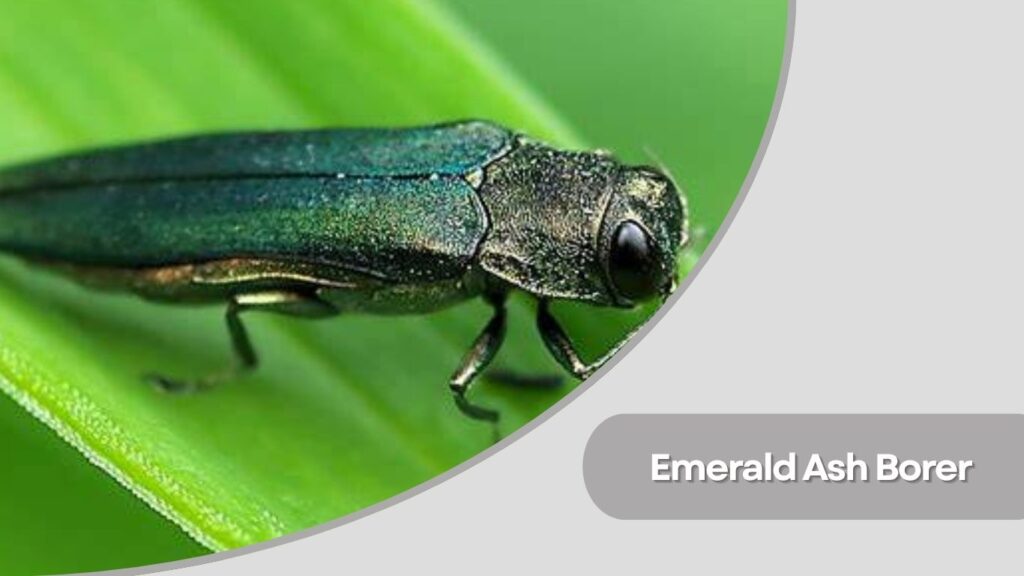
The emerald ash borer is a bright metallic-green beetle best known for attacking ash trees. It is small, but it can cause serious damage because its larvae tunnel under bark and disrupt the tree’s ability to move water and nutrients.
Identification
Adult emerald ash borers are narrow, shiny green beetles. They are usually about half an inch long with a slender body. When their wing covers open, a coppery-red or purple abdomen may be visible underneath.
Habitat and Distribution
This beetle is found in areas where ash trees grow. It has spread across many parts of North America. It often lives in forests, neighborhoods, parks, and landscapes with green, white, black, or blue ash trees.
Diet and Behavior
Adults feed lightly on ash leaves, but the main damage comes from larvae. The larvae tunnel beneath the bark in winding galleries. These tunnels block the flow of nutrients and can eventually kill the tree.
Life Cycle
Females lay eggs in bark cracks. After hatching, larvae bore into the tree and feed under the bark. They pupate inside the tree, and adults later emerge through small D-shaped exit holes.
4. Green Tiger Beetle
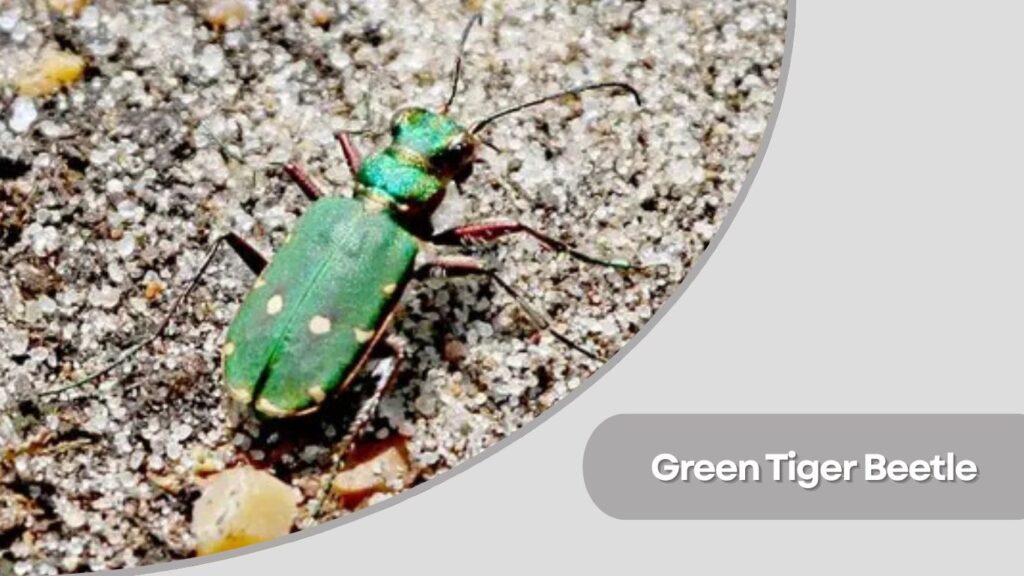
The green tiger beetle is a fast-moving beetle with a bright metallic-green body. It is a skilled predator and is often seen running quickly across sandy paths, open ground, and sunny areas while hunting smaller insects.
Identification
Green tiger beetles have long legs, large eyes, and strong jaws. Their bodies are usually metallic green, sometimes with pale markings on the wing covers. Their quick movement and alert behavior help separate them from many other beetles.
Habitat and Distribution
These beetles prefer open, sunny habitats such as sandy trails, fields, forest edges, riverbanks, and dry ground. They are often found in areas with loose soil where they can run and hunt easily.
Diet and Behavior
Green tiger beetles are active predators. Adults chase and catch ants, flies, small beetles, and other tiny insects. Their larvae also hunt from burrows, grabbing passing prey with their strong jaws.
Life Cycle
Females lay eggs in soil. The larvae hatch and dig small vertical burrows, where they wait for prey. After growing through several stages, they pupate underground and later emerge as fast-running adults.
5. Six-Spotted Tiger Beetle
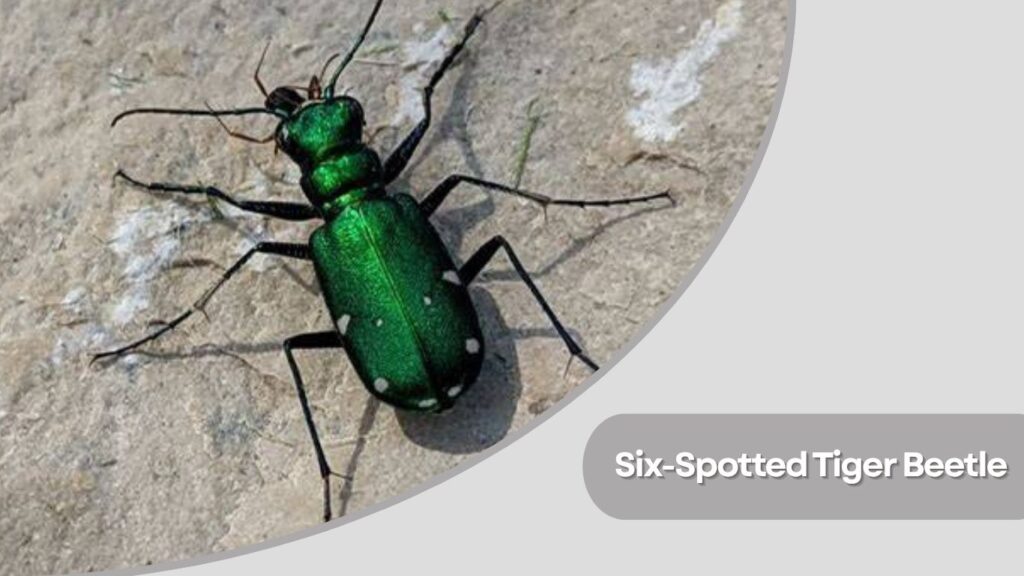
The six-spotted tiger beetle is a brilliant green beetle often seen on woodland trails. Despite its name, the six white spots on its wing covers may be faint or even missing. It is known for speed, sharp vision, and predatory behavior.
Identification
This beetle has a shiny emerald-green or blue-green body with long legs and large eyes. Some individuals have six small white spots on the wing covers, but others may have fewer or no visible spots.
Habitat and Distribution
Six-spotted tiger beetles are commonly found in eastern North America. They prefer sunny forest paths, woodland edges, dirt trails, and open patches near trees. They are often active during spring and early summer.
Diet and Behavior
Adults are hunters that chase small insects on the ground. They use speed and strong jaws to catch prey. They may fly short distances when disturbed, then land nearby and continue running.
Life Cycle
Females lay eggs in soil. The larvae live in small burrows and wait near the entrance to catch passing insects. After feeding and growing, they pupate in the soil and emerge as adults.
6. Green Dock Beetle
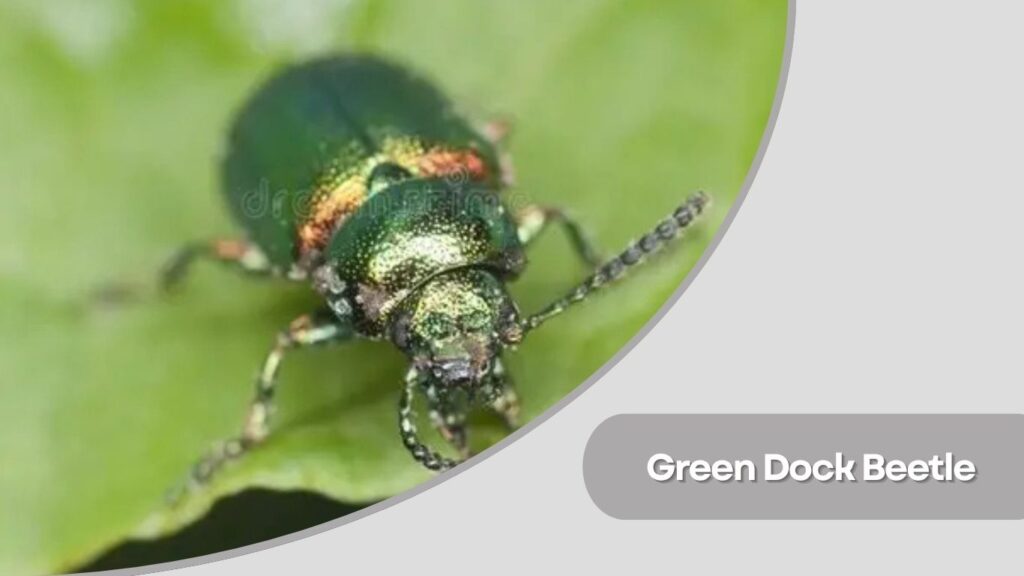
The green dock beetle is a small, shiny leaf beetle often found on dock and sorrel plants. Its metallic green color makes it stand out on leaves, especially in sunny areas. Although it is tiny, it can be noticeable when several beetles gather on the same plant.
Identification
Green dock beetles have oval, rounded bodies with a bright metallic-green shine. Some may look blue-green or bronze-green depending on the light. Their smooth wing covers and small size help identify them on host plants.
Habitat and Distribution
These beetles are usually found in fields, gardens, meadows, roadsides, and damp grassy areas. They prefer places where dock, sorrel, and related plants grow. Adults are most active during warmer months.
Diet and Behavior
Adults feed on the leaves of dock and sorrel plants. They may chew small holes in the foliage, but they usually do not cause serious damage unless they appear in large numbers. Larvae also feed on similar host plants.
Life Cycle
Females lay eggs on the leaves of host plants. The larvae hatch and begin feeding on foliage. After growing, they pupate and later emerge as adults, continuing the cycle during the growing season.
7. Green Dock Beetle
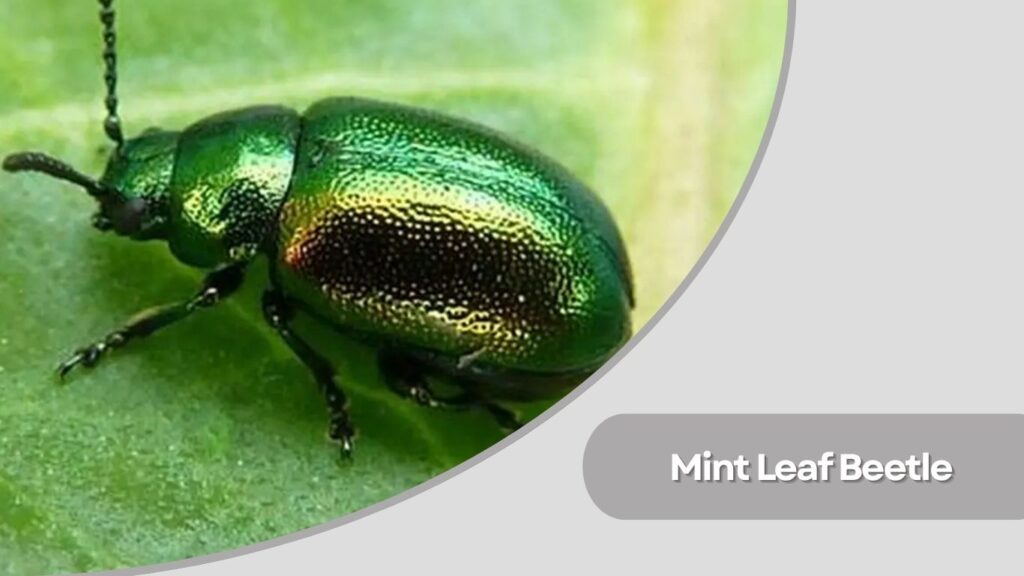
The mint leaf beetle is a colorful green beetle commonly found on mint plants. It has a rounded, shiny body that may appear metallic green, blue, or purple. Gardeners may notice it on spearmint, peppermint, and other aromatic herbs.
Identification
Mint leaf beetles are small, rounded beetles with a smooth metallic body. Their color can vary from bright green to bluish-green or purple-green. They have short legs and a compact shape, making them easy to spot on mint leaves.
Habitat and Distribution
These beetles are often found in gardens, herb beds, damp meadows, and areas where wild mint grows. They prefer moist places with plenty of mint plants. Adults are more active in warm weather.
Diet and Behavior
Adults and larvae feed on mint leaves. They chew holes in the foliage and may weaken plants if many are present. However, light feeding usually does not destroy healthy mint plants.
Life Cycle
Females lay eggs on or near mint plants. The larvae hatch and feed on the leaves before pupating. Adults emerge later and continue feeding, mating, and laying eggs during the growing season.
8. Dogbane Beetle
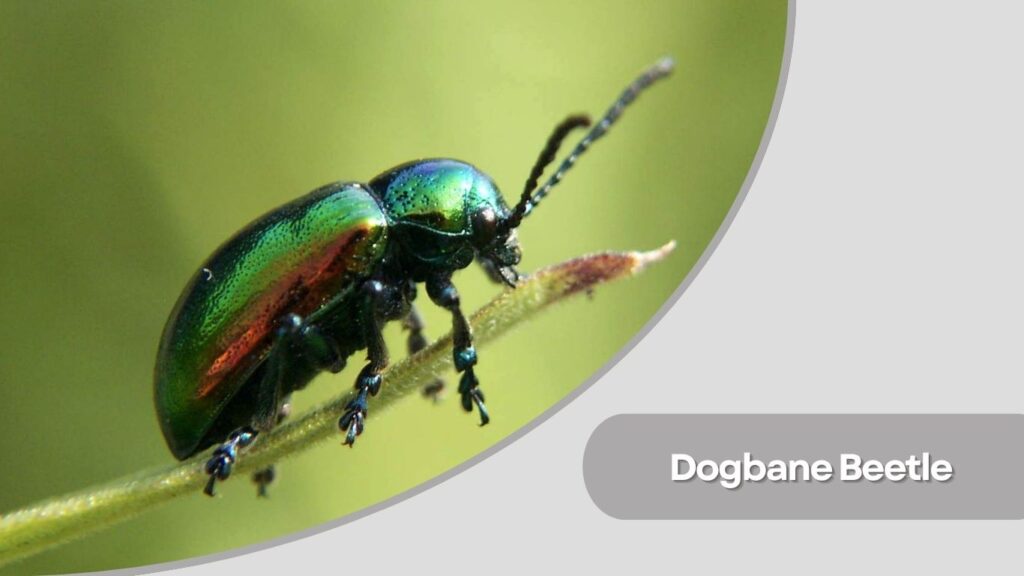
The dogbane beetle is one of the most beautiful green beetles in North America. Its body shines with metallic green, blue, copper, and gold colors. It is commonly found on dogbane plants, where it feeds and lays eggs.
Identification
Dogbane beetles are small, rounded leaf beetles with a highly reflective body. Their color changes in the light, often showing green, gold, copper, and blue shades. Their metallic appearance is their most noticeable feature.
Habitat and Distribution
These beetles live in fields, roadsides, meadows, and open areas where dogbane plants grow. They are common in many parts of North America. Adults are often seen resting or feeding on dogbane leaves.
Diet and Behavior
Dogbane beetles mainly feed on dogbane plants. Adults chew the leaves, while larvae feed on roots underground. They are closely tied to their host plant and are rarely seen far from it.
Life Cycle
Females lay eggs near dogbane plants. After hatching, larvae move into the soil and feed on the plant roots. They later pupate underground and emerge as shiny adults during warm months.
9. Green Stink Beetle
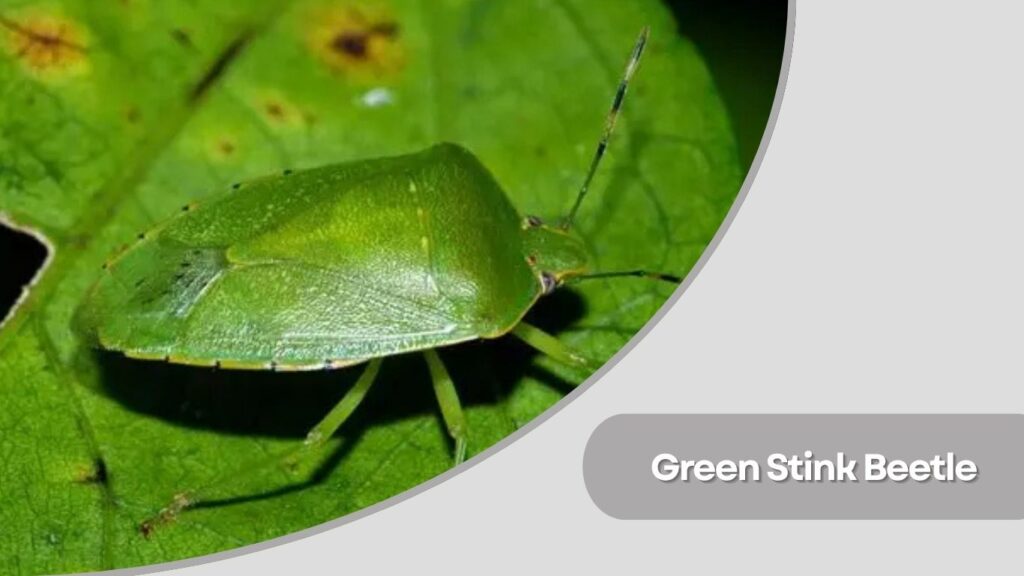
The green stink beetle is a ground-dwelling beetle known for releasing a strong odor when threatened. Its greenish body can help it blend into vegetation and soil. Unlike plant-feeding beetles, many stink beetles are scavengers or feed on decaying material.
Identification
Green stink beetles may have a dark green, olive, or metallic-green body. They usually have a firm, oval shape and strong legs for walking on the ground. When disturbed, they may release an unpleasant smell as a defense.
Habitat and Distribution
These beetles are commonly found under logs, stones, leaf litter, and loose soil. They may live in gardens, forests, fields, and dry open habitats. They often hide during the day and become active when conditions are suitable.
Diet and Behavior
Many stink beetles feed on decaying plant matter, fungi, seeds, or small organic material. Their odor helps protect them from predators. They usually move slowly compared with tiger beetles or leaf beetles.
Life Cycle
Females lay eggs in soil or protected places. Larvae hatch and live close to the ground, feeding on available organic matter. After pupation, adults emerge and continue the cycle in suitable habitats.
10. Fig Beetle
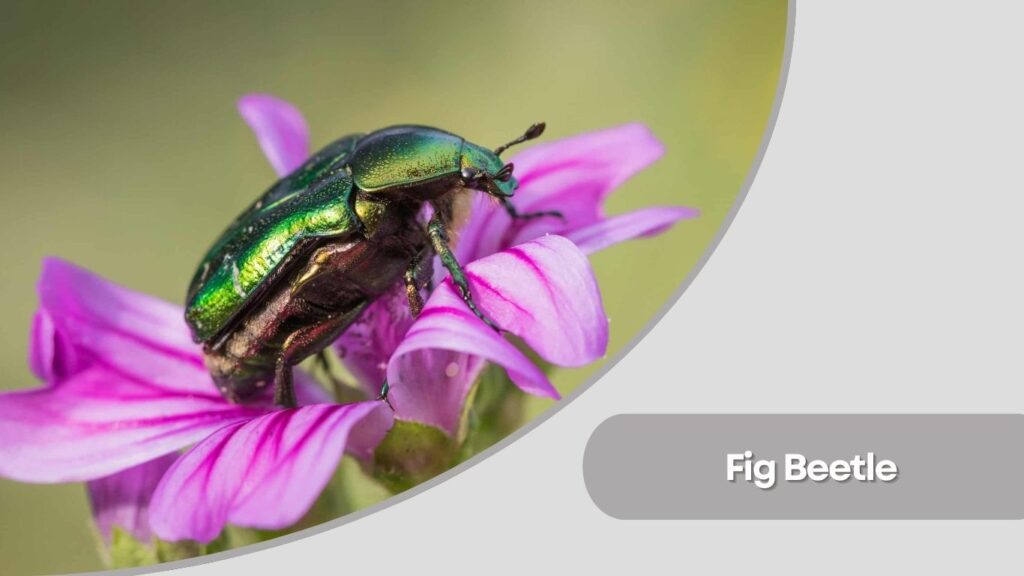
The fig beetle, also called the figeater beetle, is a large green beetle often seen flying around ripe fruit. It has a loud buzzing flight and a shiny green body. Despite its size, it is usually not dangerous to people.
Identification
Fig beetles are large, oval beetles with a glossy green body. The wing covers may look duller green or olive, while the underside is often brighter and more metallic. Their loud, clumsy flight makes them easy to notice.
Habitat and Distribution
These beetles are common in warm regions, especially in the southwestern United States and nearby areas. They are often found in gardens, orchards, compost piles, and places with ripe or fermenting fruit.
Diet and Behavior
Adult fig beetles feed on soft, ripe fruits such as figs, peaches, grapes, and berries. They are attracted to damaged or overripe fruit. Their larvae live in soil and compost, feeding on decaying organic matter.
Life Cycle
Females lay eggs in soil rich in organic material. The larvae develop as white grubs and feed underground. After pupation, adults emerge during warm months and search for ripe fruit.
11. Rose Chafer
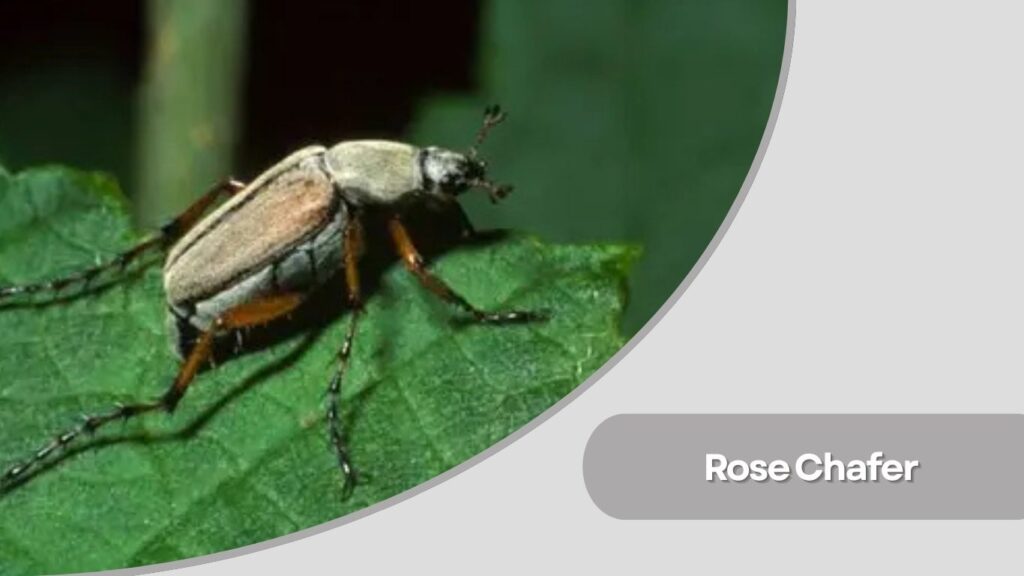
The rose chafer is a slender beetle that may appear greenish, tan, or yellow-brown depending on the species and light. It is often found on roses, grapes, fruit trees, and garden flowers. Although small, it can cause noticeable damage when many adults feed together.
Identification
Rose chafers have narrow, soft-looking bodies with long legs. Their color may be pale green, yellowish-green, tan, or brownish. They often have a slightly dull appearance compared with shiny metallic beetles like the Japanese beetle.
Habitat and Distribution
Rose chafers are commonly found in gardens, fields, orchards, vineyards, and sandy areas. They are especially common where roses, grapes, and flowering plants grow. Adults are most active in late spring and early summer.
Diet and Behavior
Adults feed on flowers, leaves, and fruit. They may chew holes in rose petals, grape leaves, and soft fruits. When many beetles gather, they can quickly damage ornamental plants and crops.
Life Cycle
Females lay eggs in sandy or loose soil. The larvae hatch and feed underground, often on grass roots and organic matter. After pupating in the soil, adults emerge and begin feeding on plants.
12. Green Ground Beetle
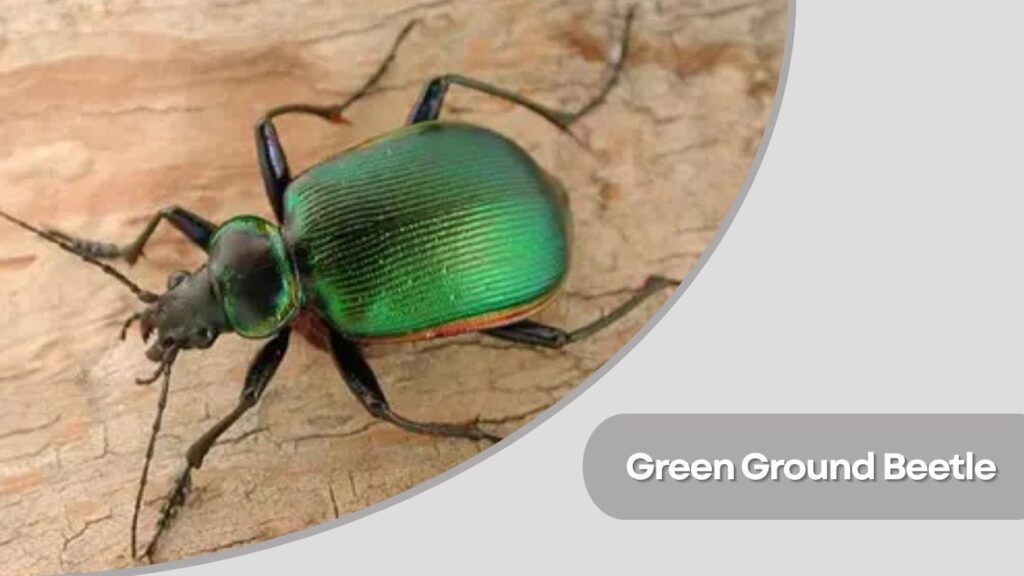
The green ground beetle is a fast-running beetle often seen on soil, under stones, or near garden beds. Many ground beetles are helpful predators because they feed on pests. Their metallic green color makes some species easy to recognize.
Identification
Green ground beetles usually have long legs, strong jaws, and a flattened body. Their color may be shiny green, bronze-green, or dark metallic green. They often move quickly when disturbed and may hide under objects during the day.
Habitat and Distribution
These beetles live in gardens, forests, fields, lawns, and farmland. They prefer ground-level shelters such as leaf litter, logs, stones, mulch, and loose soil. Some species are active at night.
Diet and Behavior
Green ground beetles are mostly predators. They feed on caterpillars, small insects, slugs, insect eggs, and other soft-bodied pests. Because of this, they can be beneficial in gardens and natural habitats.
Life Cycle
Females lay eggs in soil or hidden ground areas. The larvae hatch and hunt small insects or other prey. After developing underground or in protected places, they pupate and later emerge as adult beetles.
13. Green Click Beetle
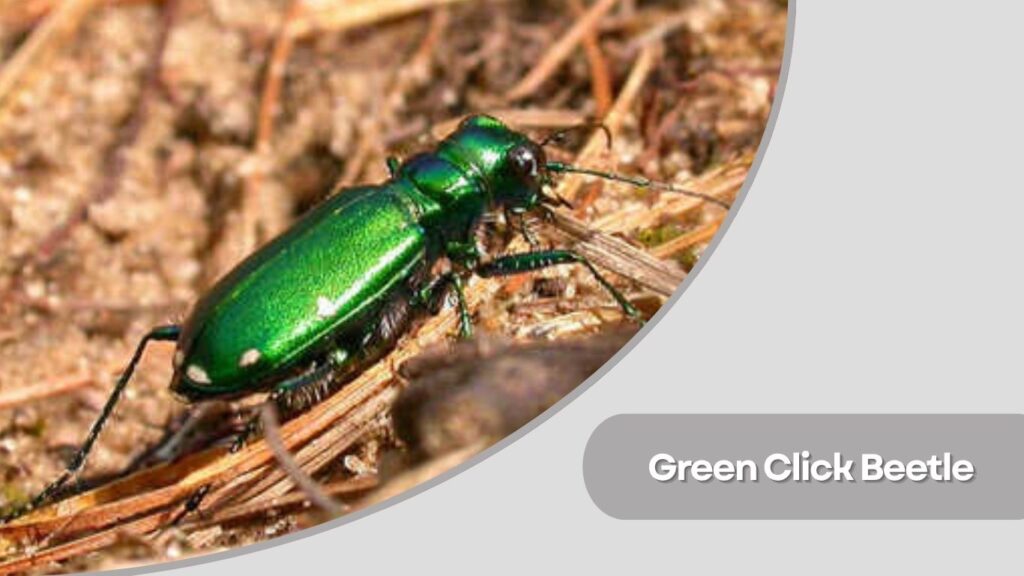
The green click beetle is named for its special clicking ability. When flipped onto its back or threatened, it can snap a body joint and jump into the air. Some species have a green, metallic, or greenish-brown appearance.
Identification
Green click beetles have long, narrow bodies with pointed rear corners behind the head. Their color may be metallic green, olive green, or brownish-green. Their clicking motion is one of the easiest ways to recognize them.
Habitat and Distribution
These beetles are found in fields, gardens, forests, grasslands, and areas with soil or decaying wood. Adults may rest on plants, logs, or walls. Larvae usually live underground or in rotting wood.
Diet and Behavior
Adult click beetles may feed lightly on plant material, nectar, or pollen, depending on the species. Their larvae, known as wireworms, may feed on roots, seeds, or decaying organic matter.
Life Cycle
Females lay eggs in soil, leaf litter, or decaying wood. The larvae develop slowly and may remain underground for a long time. After pupation, adults emerge and use their clicking ability to escape danger.
14. Cucumber Beetle
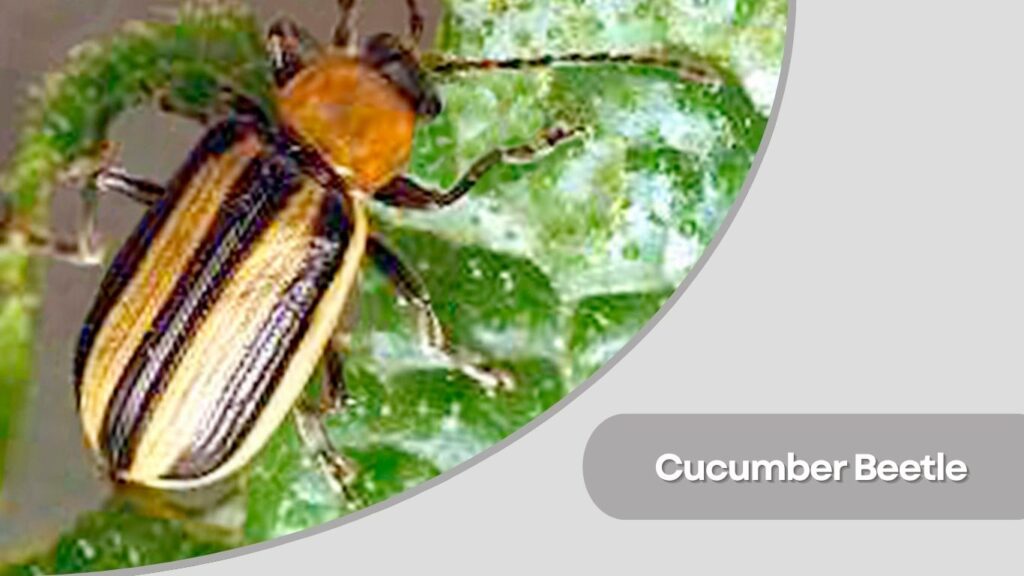
The cucumber beetle is a small garden beetle that may be greenish-yellow with black spots or stripes. It is a common pest of cucumbers, squash, melons, and pumpkins. Even a few beetles can damage young plants and spread plant diseases.
Identification
Cucumber beetles are small and oval-shaped. Spotted cucumber beetles are yellow-green with black spots, while striped cucumber beetles have yellow bodies with black stripes. Their bright color makes them easy to see on leaves and flowers.
Habitat and Distribution
They are common in vegetable gardens, farms, fields, and places where cucurbit plants grow. Adults are often seen on cucumber, squash, pumpkin, melon, and gourd plants during warm weather.
Diet and Behavior
Adults feed on leaves, stems, flowers, and fruit. Larvae feed on plant roots underground. These beetles can also spread bacterial wilt and other plant problems, making them a serious concern for gardeners.
Life Cycle
Females lay eggs in soil near host plants. Larvae hatch and feed on roots before pupating underground. Adults emerge and continue feeding, mating, and laying eggs during the growing season.
15. Golden Tortoise Beetle
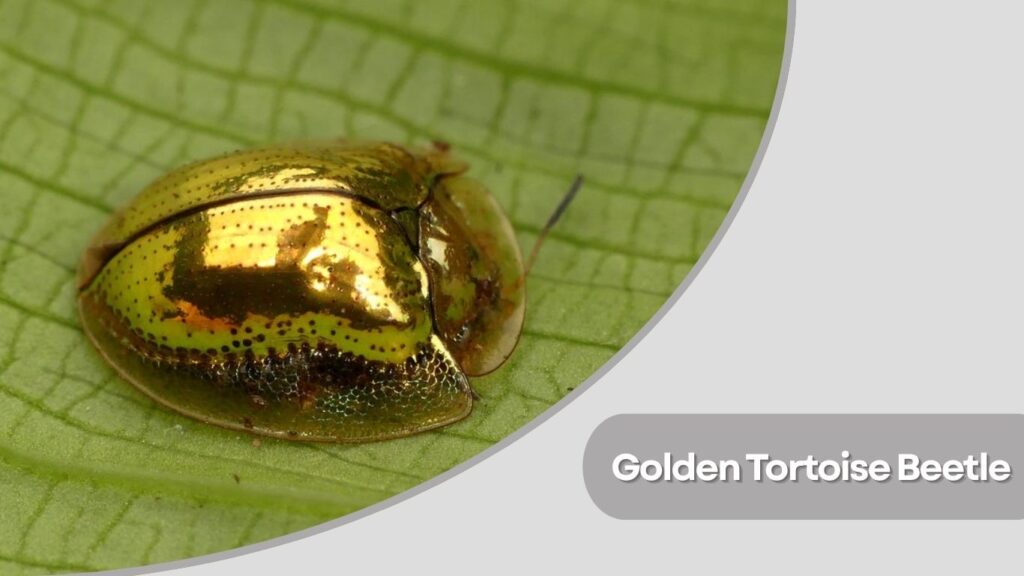
The golden tortoise beetle is a small, rounded beetle that can look golden, greenish-gold, or bronze. It is known for its turtle-like shape and shiny surface. This beetle is often found on plants in the morning glory family.
Identification
Golden tortoise beetles have a round, flattened body with clear edges that cover the legs from above. Their color can change from bright gold to reddish, bronze, or greenish-gold. This color change often happens when they are disturbed or aging.
Habitat and Distribution
These beetles live in gardens, fields, roadsides, and weedy areas where morning glory, bindweed, and sweet potato plants grow. They are most active during warm months and are usually found on leaves.
Diet and Behavior
Adults and larvae feed on leaves of host plants. They may create small holes or patches in the foliage. In most cases, they do not cause serious damage unless many beetles are present on the same plant.
Life Cycle
Females lay eggs on host plants. The larvae hatch and feed on leaves while carrying waste material on their backs for protection. After pupation, adults emerge and continue the life cycle.