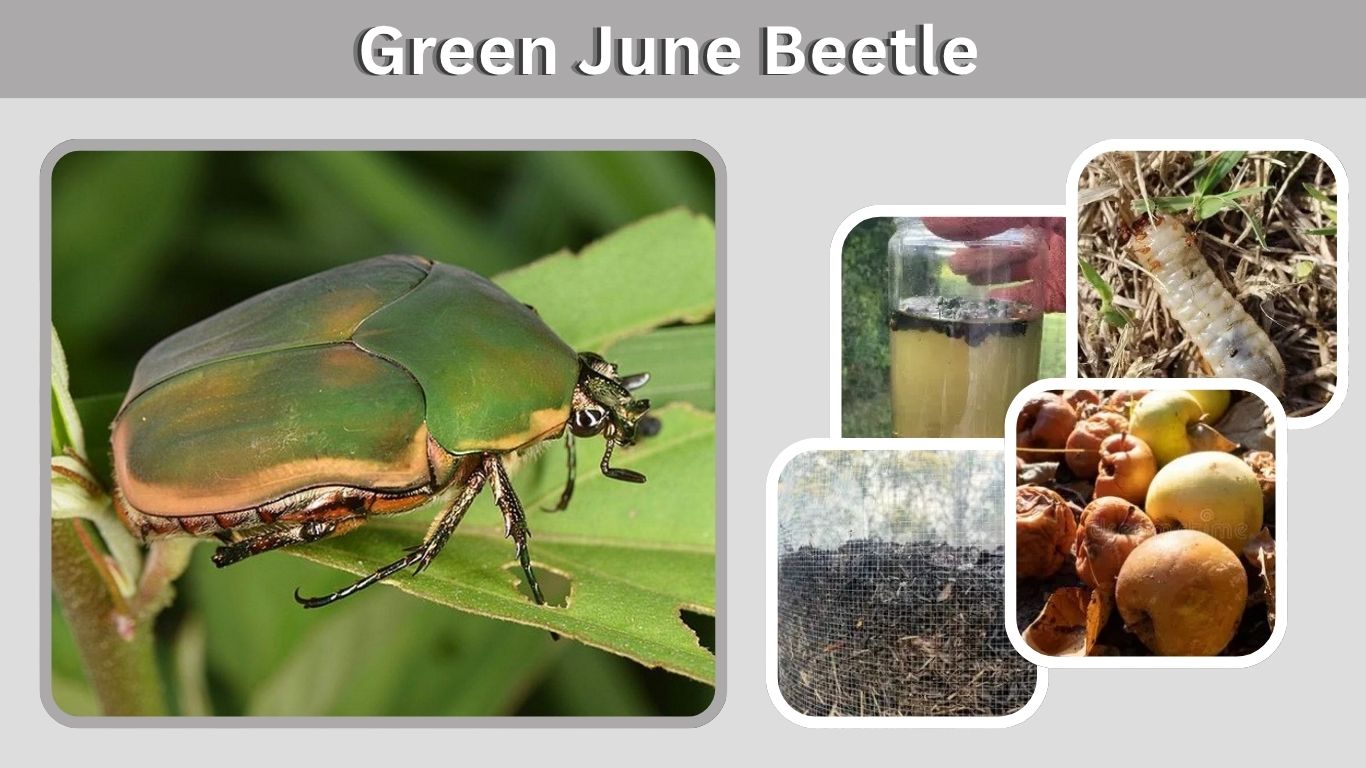
The green June beetle is a large metallic-green scarab beetle often seen flying over lawns, gardens, orchards, and fields in summer. Its scientific name is Cotinis nitida, and it is native to the eastern United States. While adult beetles are mostly known for feeding on ripe fruit, their larvae can damage lawns by disturbing soil and feeding around grass roots. Understanding its life cycle, diet, behavior, and control methods can help you manage this beetle safely.
What Is a Green June Beetle?
The green June beetle is a scarab beetle known for its shiny green body, loud buzzing flight, and summer activity. Adults are usually noticed during warm daylight hours as they fly low over lawns or gather around ripe fruit. NC State Extension describes adults as metallic green and nearly 1 inch long, with bronze to yellow body margins.
Scientific Name and Classification
The scientific name of the green June beetle is Cotinis nitida. It belongs to the family Scarabaeidae, which includes many familiar beetles such as June bugs, chafers, and flower beetles. It is sometimes called the June beetle, green June bug, or common green June beetle.
Green June Beetle Size and Appearance
Adult green June beetles are large compared with many garden beetles. They are usually around 3/4 to 1 inch long. Their upper body may look velvety green, dull green, or brownish-green, while the underside is often more metallic. Oklahoma State University notes that the margins of the body are usually light brown to orange-yellow, and the lower surface may appear metallic greenish or yellow.
Key identification features include:
- Large oval body
- Metallic green or dull green color
- Yellowish or bronze body edges
- Loud, clumsy flying behavior
- Shiny green underside
- Short antennae and strong legs
Green June Beetle Wings and Flying Behavior
Green June beetles are strong but clumsy fliers. They often fly low over grass during the day and may bump into people, walls, windows, or outdoor objects. Their flight looks uncontrolled, which is why some people wonder if green June beetles are blind. They are not blind, but they are not precise fliers.
Green June Beetle Underside
The underside is one of the easiest ways to recognize this insect. While the top may look dull green or bronze-green, the underside is usually brighter and more metallic. If you safely observe one closely, you may see a shiny green, yellow-green, or metallic brown lower surface.
Green June Beetle Habitat and Native Range
Green June beetles are commonly found in lawns, gardens, orchards, pastures, compost-rich areas, and grassy fields. They are especially common where soil contains plenty of organic matter. Kansas State Extension states that green June beetles are native to the eastern United States and are widely distributed through many states east of the Mississippi River and parts of the Midwest.
They are reported in many states, including Texas, Florida, North Carolina, Maryland, Missouri, Ohio, Illinois, Indiana, and other eastern or southern states.
Green June Beetle in Lawns
Lawns are common places to find green June beetle larvae. The grubs live underground and may create small mounds or loosened soil as they move. In heavy infestations, turf may feel spongy or become damaged.
Green June Beetle in Gardens and Orchards
Adults are attracted to ripe, damaged, or fermenting fruit. They may gather on peaches, figs, grapes, apples, berries, plums, and other soft fruits. Oklahoma State University notes that adults can damage fruit by feeding on ripening fruits and may ruin fruit with feeding damage, odor, and waste.
Green June Beetle Life Cycle
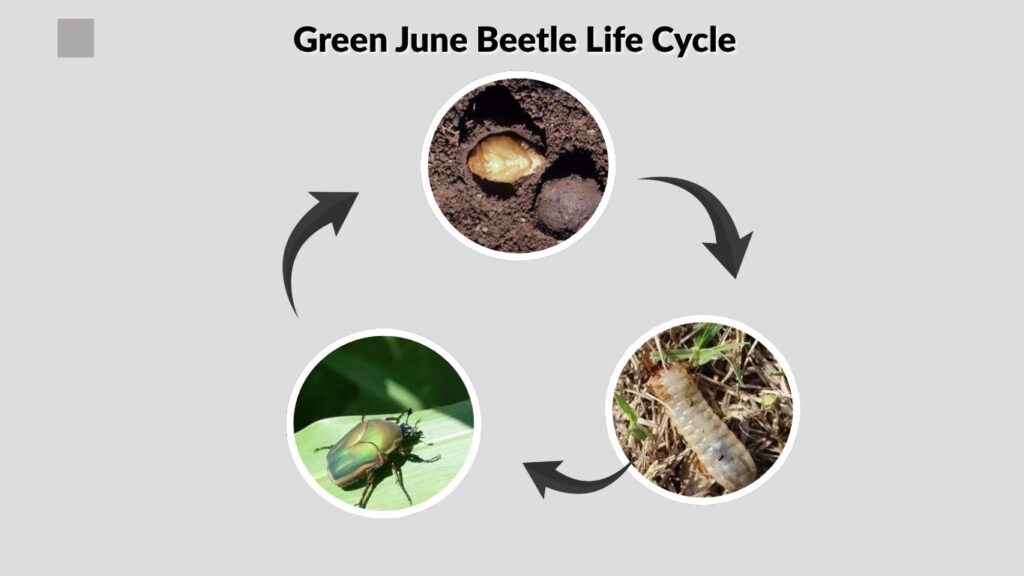
The green June beetle has a complete life cycle: egg, larva, pupa, and adult. Many sources describe it as having one generation per year. Golf Course Superintendents Association of America notes that eggs, larvae, and pupae are found in soil, while adults are found above ground.
Eggs
Females lay eggs in moist soil, often in areas rich in organic material. Eggs are usually laid in clusters. NC State Extension reports that eggs are round and laid in walnut-sized clusters of 10 to 30.
Green June Beetle Larvae
The larvae are large white grubs with a cream-colored body and orange-brown head. They are often called green June beetle grubs. A unique behavior is that they may crawl on their backs, especially at night or after rain. University of Maryland Extension notes that green June beetle grubs may be seen at night crawling across the soil surface by undulating on their backs.
Pupae
After the larval stage, the grub pupates in the soil. During this stage, it changes into the adult beetle form. Pupae are usually hidden underground and are not commonly seen unless soil is dug up.
Adults
Adults emerge during warm months, especially summer. They fly during the day, mate, feed, and lay eggs. Many people notice them in June, July, and August, depending on location and weather.
| Life Stage | Where It Lives | Main Activity |
|---|---|---|
| Egg | Moist soil | Develops before hatching |
| Larva/grub | Soil and turf | Feeds and moves through soil |
| Pupa | Underground | Changes into adult form |
| Adult | Lawns, gardens, fruit trees | Flies, feeds, mates, lays eggs |
What Do Green June Beetles Eat?
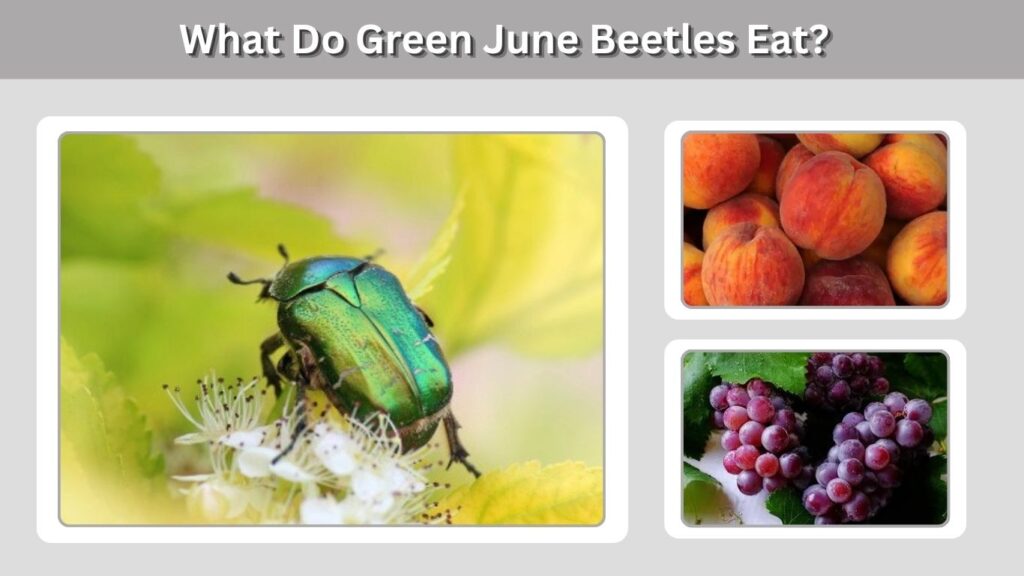
Green June beetles have different diets depending on their life stage. Adults mostly feed above ground, while grubs live in the soil.
Adult Diet
Adult green June beetles feed on ripe or overripe fruit, fruit juices, plant sap, and sometimes soft plant material. They are especially attracted to damaged fruit because it is easier to feed on.
Common foods include:
- Figs
- Peaches
- Grapes
- Apples
- Pears
- Plums
- Blackberries
- Raspberries
- Nectarines
Green June Beetle Grub Diet
Green June beetle larvae feed mainly on decaying organic matter in the soil, but they may also feed around grass roots. Kansas State notes that larvae mainly feed on humus but can feed on grass roots.
Are Green June Beetles Harmful?
Green June beetles are not usually harmful to people, but they can be harmful to lawns, fruits, and some plants when populations are high. They are more of a nuisance and plant pest than a direct danger.
Do Green June Beetles Bite?
Green June beetles do not normally bite people. They do not sting, and they are not aggressive. If handled roughly, a beetle may scratch with its legs or mouthparts, but it is not considered a dangerous biting insect.
Are Green June Beetles Poisonous?
Green June beetles are not considered poisonous to humans. However, it is still best not to let pets eat large numbers of beetles. A dog or cat that eats beetles may experience mild stomach upset, especially if it eats many insects.
Are Green June Beetles Harmful to Plants?
Adults can damage ripe fruit, and grubs can disturb lawns. Adult feeding is most serious in orchards, vineyards, and gardens where fruit is ripening. Grubs are more noticeable in turfgrass areas, where they may loosen soil and create mounds.
Green June Beetle Damage
Green June beetle damage depends on whether the problem comes from adults or grubs. Adults damage fruit, while larvae damage turf and soil structure.
Lawn Damage from Grubs
Green June beetle grubs can create tunnels, push soil upward, and disturb turf roots. Lawns may show thinning, loose soil, or small mounds. Skunks, birds, raccoons, and other animals may dig in lawns to feed on grubs, making the damage worse.
Fruit Damage from Adults
Adult beetles may feed on ripe fruit and leave behind damaged flesh, odor, and waste. They often gather in groups on soft fruit, especially when fruit is overripe or already cracked.
| Problem Area | Cause | Common Signs |
|---|---|---|
| Lawn | Grubs in soil | Loose turf, mounds, surface crawling grubs |
| Fruit trees | Adult feeding | Holes, damaged ripe fruit, beetles gathered on fruit |
| Garden beds | Adult activity | Beetles flying, landing, or feeding near plants |
| Compost-rich soil | Larval activity | Grubs developing in organic matter |
How to Get Rid of Green June Beetles
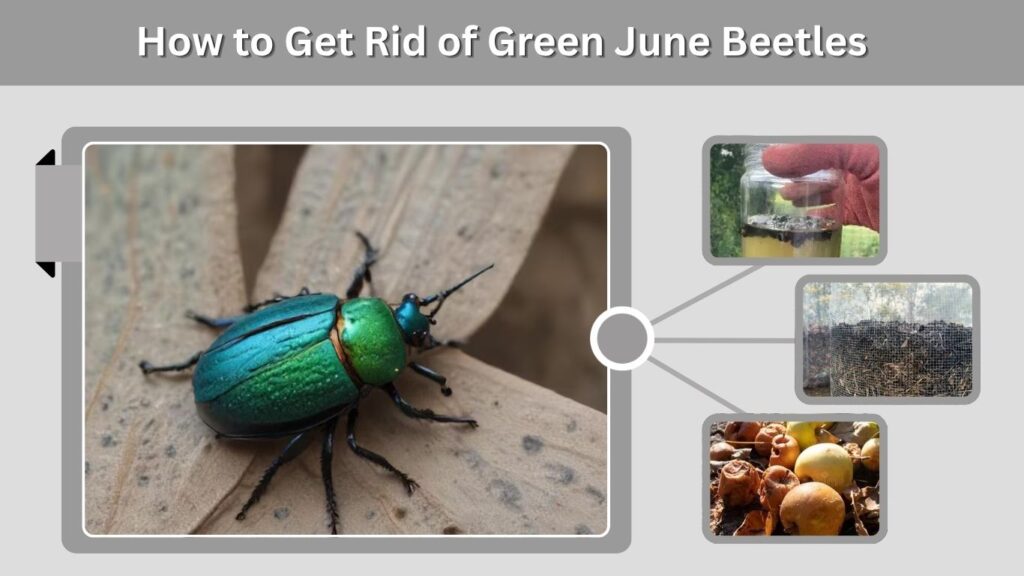
Green June beetle control works best when you target the right life stage. Adults are visible, but grubs are often the main source of recurring problems.
Natural Control Methods
For light infestations, natural control may be enough.
Useful steps include:
- Pick adult beetles off fruit trees by hand when practical.
- Remove overripe, fallen, or damaged fruit quickly.
- Keep compost piles managed and away from sensitive lawn areas.
- Encourage birds and natural predators.
- Avoid overwatering lawns, since moist soil can favor egg-laying.
- Rake or level small soil mounds caused by grubs.
Green June Beetle Traps
Traps may catch some adult beetles, but they do not always solve the problem. In some cases, traps may attract more beetles into the area. Use traps carefully and place them away from fruit trees, patios, or garden plants.
Lawn and Grub Control
If grubs are damaging turf, control is usually most effective when larvae are young and active near the soil surface. University of Georgia Extension says the best time to control green June beetles is July through September, and early spring treatments often do not work as well.
For serious lawn infestations, contact a local extension office or licensed pest professional before using pesticides. Product choice and timing can vary by region.
Green June Beetle vs Japanese Beetle
Green June beetles and Japanese beetles are often confused because both can look shiny and feed on plants. However, they are different in size, shape, and damage pattern.
Main Differences
Green June beetles are much larger and usually fly with a loud buzzing sound. Japanese beetles are smaller, with a metallic green head and copper-brown wing covers. Japanese beetles often skeletonize leaves, while green June beetles are more strongly attracted to ripe fruit.
| Feature | Green June Beetle | Japanese Beetle |
|---|---|---|
| Size | Larger, about 3/4 to 1 inch | Smaller, about 1/2 inch |
| Color | Green with yellow/bronze edges | Green body with copper wing covers |
| Main damage | Ripe fruit and turf grubs | Leaves, flowers, fruit, turf grubs |
| Flight | Loud and clumsy | More controlled |
| Feeding style | Often feeds on soft ripe fruit | Often skeletonizes leaves |
Figeater Beetle vs Green June Beetle
The figeater beetle and green June beetle are close relatives and look very similar. The figeater beetle is more common in the western and southwestern United States, while the green June beetle is more common in the eastern and southern United States. Figeater beetles are often associated with figs and other soft fruits, but they are generally considered less destructive than green June beetles in many areas.
Green June Beetle Meaning and Spiritual Meaning
Some people search for the spiritual meaning of green June beetles because their bright green color and sudden summer appearance feel symbolic. In general symbolism, green is often linked with growth, renewal, abundance, and nature. However, there is no scientific meaning behind seeing a green June beetle. In practical terms, its appearance usually means warm weather, active insects, ripe fruit, and suitable soil conditions for its life cycle.
FAQs
Are green June beetles dangerous?
Green June beetles are not dangerous to people. They do not sting and rarely bite. However, they can become a nuisance when many adults fly around lawns or gather near ripe fruit.
Do green June beetles bite humans?
Green June beetles do not normally bite humans. They may feel scratchy if handled because of their legs, but they are not aggressive biting insects.
Are green June beetles harmful to dogs?
A single green June beetle is unlikely to seriously harm a dog, but eating many beetles may cause stomach upset. If a pet vomits, drools, or acts sick after eating insects, contact a veterinarian.
How long do green June beetles live?
The full life cycle usually lasts about one year. Adults are most noticeable during the summer, while larvae spend much of their time underground.
How do you get rid of green June beetles naturally?
Remove fallen fruit, pick adults from plants, reduce overripe fruit odors, manage compost, avoid excess lawn moisture, and encourage natural predators. For heavy grub problems, professional or extension-based treatment advice may be needed.