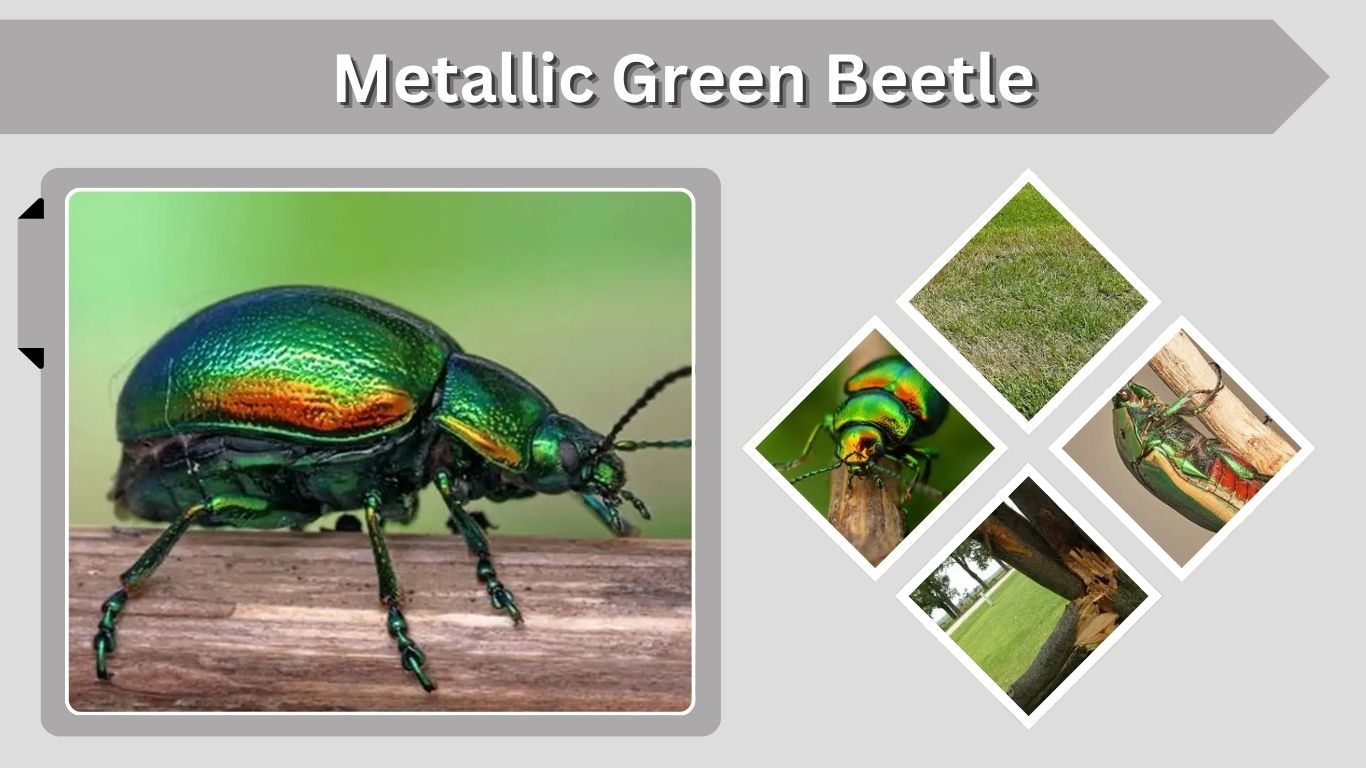
A metallic green beetle is any beetle with a shiny green, blue-green, gold-green, or bronze-green body. These beetles are often noticed because their hard wing covers reflect light like polished metal. Some are harmless garden visitors, some are helpful predators, and others can damage plants, fruit, trees, or lawns. If you find a bright green metallic beetle flying around your yard, sitting on flowers, or crawling on plants, its size, shape, markings, and location can help you identify it.
What Is a Metallic Green Beetle?
A metallic green beetle is not one single species. It is a general description for many beetles that have a shiny green shell or metallic-looking body. The green color often comes from the structure of the beetle’s outer covering, which reflects light in different shades.
Some metallic green beetles look emerald green, while others may appear blue-green, gold-green, copper-green, or green with red, orange, yellow, or white markings.
Why Do Some Beetles Look Metallic Green?
Many beetles look metallic because their exoskeleton reflects and bends light. This shiny color may help them blend into leaves, confuse predators, attract mates, or signal that they are not easy prey. The color can also look different depending on sunlight, angle, age, and species.
Common Colors and Patterns
Metallic green beetles may appear in several color combinations, such as:
- Bright emerald green
- Blue-green metallic
- Green and gold
- Green and brown
- Green and orange
- Green with white spots
- Green with black spots
- Green with red stripes
- Green and purple
- Green with yellow edges
These patterns are useful for identification, especially when comparing scarab beetles, tiger beetles, longhorn beetles, ground beetles, and leaf beetles.
Are All Metallic Green Beetles the Same?
No. A large metallic green flying beetle may be a green June beetle or fig beetle, while a small metallic green beetle on leaves may be a leaf beetle or flea beetle. A long metallic green beetle may be a metallic wood-boring beetle or longhorn beetle. Shape is often more important than color.
Metallic Green Beetle Identification Guide
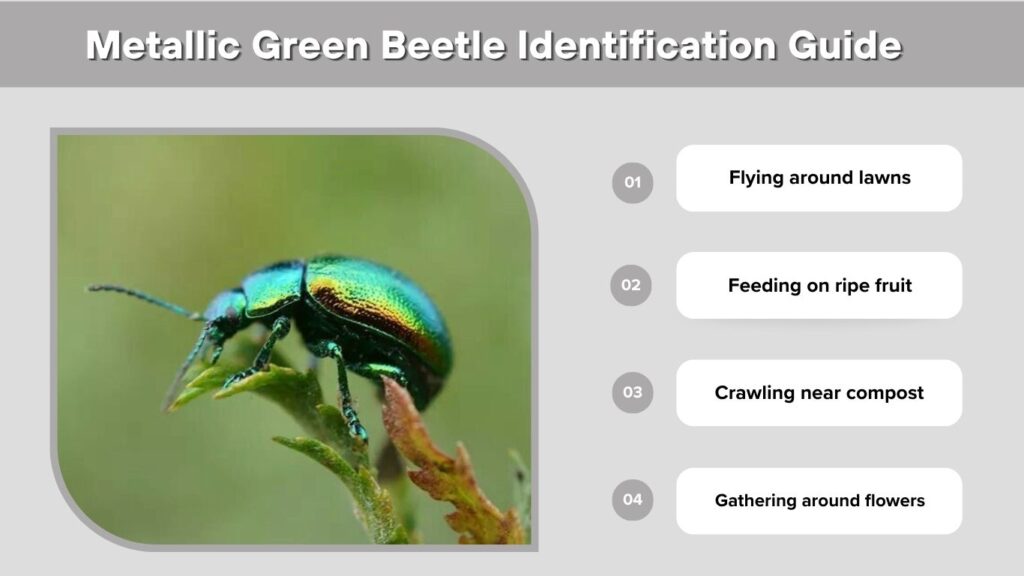
To identify a metallic green beetle, look closely at its size, body shape, legs, antennae, markings, and behavior. Where you found it also matters. A beetle on a rose bush may be different from one flying around a lawn or boring into wood.
Big Metallic Green Beetle
A big metallic green beetle is often a scarab beetle. Common examples include green June beetles, fig beetles, and some flower chafers. These beetles usually have oval bodies, strong legs, and loud flying behavior.
Large metallic green beetles are often seen:
- Flying around lawns
- Feeding on ripe fruit
- Crawling near compost
- Gathering around flowers
- Bumping into outdoor lights or walls
Small Metallic Green Beetle
A small metallic green beetle may be a leaf beetle, flea beetle, tiger beetle, or small ground beetle. These beetles are usually found on plants, flowers, trails, or soil. Some feed on leaves, while others hunt tiny insects.
Small metallic green beetles are often seen:
- On mint, dock, or garden leaves
- On flowers
- Running across bare soil
- Jumping when disturbed
- Feeding in groups on plant foliage
Long Metallic Green Beetle
A long metallic green beetle may be a longhorn beetle, jewel beetle, or metallic wood-boring beetle. These beetles often have narrow bodies. Some have long antennae, while others have a smooth bullet-shaped body.
If the beetle is long and found near trees, logs, or firewood, it may be linked to wood-boring behavior. Some species are harmless, but others can damage trees.
Flying Metallic Green Beetle
A flying metallic green beetle is commonly a scarab, June beetle, fig beetle, Japanese beetle, or flower beetle. Many are active during warm months and fly during the day. Some are clumsy fliers and may bump into people, which can make them seem aggressive even though they are not attacking.
Common Types of Metallic Green Beetles
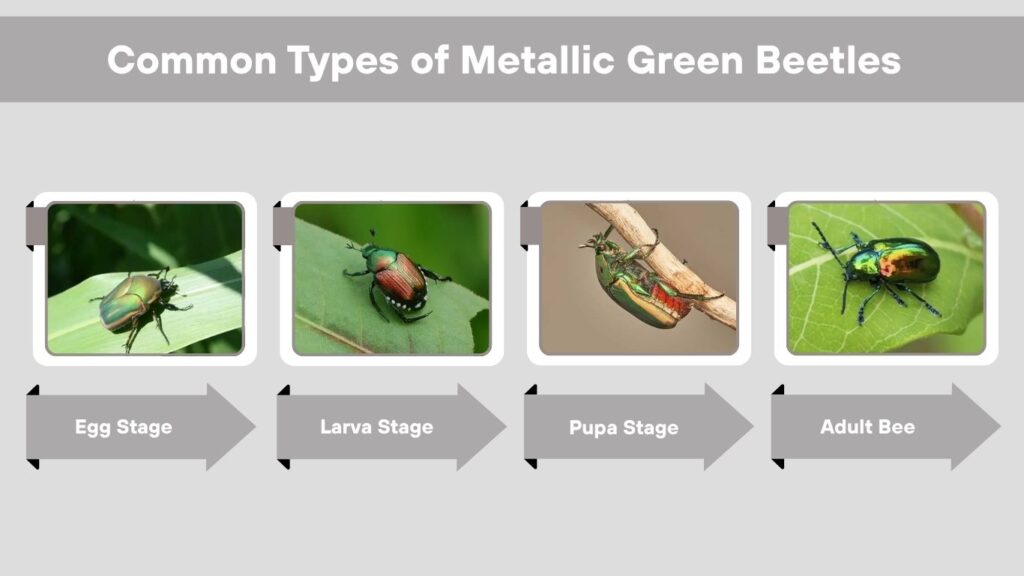
There are many shiny green beetles around the world. The exact species depends on your country, state, climate, and habitat.
| Beetle Type | Appearance | Common Place Found |
|---|---|---|
| Green June Beetle | Large green scarab with bronze edges | Lawns, orchards, ripe fruit |
| Japanese Beetle | Green body with copper wing covers | Gardens, roses, grapes |
| Figeater Beetle | Large green fruit-feeding beetle | California, Arizona, fruit trees |
| Emerald Ash Borer | Small narrow metallic green beetle | Ash trees |
| Six-Spotted Tiger Beetle | Bright green fast-running beetle | Woodland trails |
| Dogbane Beetle | Green, gold, copper, and blue shine | Dogbane plants |
| Green Ground Beetle | Metallic green predatory beetle | Soil, gardens, leaf litter |
| Metallic Wood-Boring Beetle | Narrow shiny green body | Trees, wood, bark |
| Green Longhorn Beetle | Long body, often long antennae | Flowers, woodlands |
| Green Dock Beetle | Small shiny green leaf beetle | Dock and sorrel plants |
Green June Beetle
The green June beetle is a large metallic green scarab beetle often seen flying over lawns in summer. Adults feed on ripe fruit, while the larvae live in soil as grubs. It is common in many eastern and southern parts of the United States.
Japanese Beetle
The Japanese beetle has a shiny green head and body with copper-brown wing covers. It is smaller than the green June beetle and is a major garden pest. Adults feed on roses, grapes, fruit trees, flowers, and many ornamental plants.
Figeater Beetle
The figeater beetle is a large green metallic beetle common in the western and southwestern United States, especially California and Arizona. It often feeds on figs, peaches, grapes, and other soft ripe fruits.
Emerald Ash Borer
The emerald ash borer is a small metallic green wood-boring beetle. It is known for attacking ash trees. Adults are narrow and shiny, but the larvae cause the most damage by tunneling under bark.
Metallic Green Tiger Beetle
A metallic green tiger beetle is usually fast, alert, and predatory. It may run across trails, sandy soil, or open ground. Tiger beetles have long legs, large eyes, and strong jaws for catching small insects.
Metallic Green Beetle by Location
Location can make identification easier because different regions have different common species. A metallic green beetle in Texas may not be the same species as one in the UK, Australia, or South Africa.
Metallic Green Beetle in Texas
In Texas, a large metallic green beetle may be a green June beetle, fig beetle, or related scarab. Smaller shiny green beetles may include tiger beetles, ground beetles, or leaf beetles. If it is feeding on fruit, it may be a fruit-loving scarab.
Metallic Green Beetle in Arizona
In Arizona, a large metallic green flying beetle is often confused with the figeater beetle. These beetles are commonly seen in warm areas with fruit trees, compost, gardens, and irrigated landscapes.
Metallic Green Beetle in California
In California, the figeater beetle is one of the most common large metallic green beetles. It is often seen flying during warm weather and feeding on figs, grapes, peaches, and other ripe fruit.
Metallic Green Beetle in Florida
In Florida, shiny green beetles may include scarab beetles, flower beetles, leaf beetles, and tiger beetles. Because Florida has many insects, identification should focus on size, markings, and host plant.
Metallic Green Beetle in the UK
In the UK, a green metallic beetle may be a rose chafer, green tiger beetle, mint leaf beetle, dock beetle, or green ground beetle. Rose chafers are especially noticeable because of their shiny green bodies and flower-feeding habits.
Metallic Green Beetle in Australia
Australia has many metallic green beetles, including jewel beetles, scarabs, leaf beetles, and Christmas beetles. Some are very colorful and may appear green, gold, blue, or bronze.
Are Metallic Green Beetles Dangerous?
Most metallic green beetles are not dangerous to people. They do not chase humans, they do not sting, and most do not bite unless handled roughly. However, some can be pests in gardens, lawns, orchards, or trees.
Do Metallic Green Beetles Bite?
Most metallic green beetles do not bite people in a harmful way. Some have chewing mouthparts and may pinch if trapped in your hand, but they are not aggressive. Large beetles may feel scratchy because of their legs and claws.
Are Metallic Green Beetles Poisonous?
Most shiny green beetles are not poisonous to humans. Still, you should avoid handling unknown insects too much, and pets should not be allowed to eat many beetles. Eating insects can sometimes cause mild stomach upset in dogs or cats.
Are Metallic Green Beetles Harmful to Plants?
Some metallic green beetles are harmful to plants, but others are harmless or beneficial. Japanese beetles can skeletonize leaves, green June beetles may damage ripe fruit, and emerald ash borers can kill ash trees. On the other hand, tiger beetles and ground beetles often help by eating smaller insects.
Metallic Green Beetle Damage
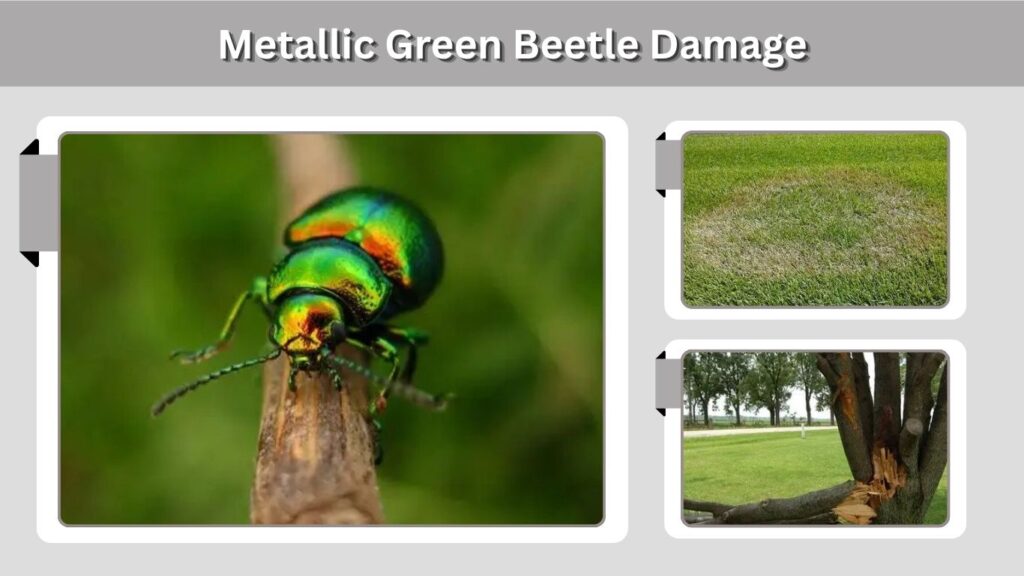
Damage depends on the beetle species. A shiny green beetle on flowers may only be feeding on pollen, while one under tree bark may be more serious.
Lawn Damage
Large green scarab larvae may live in the soil as grubs. These grubs can loosen turf, feed around roots, and attract birds or animals that dig up lawns.
Fruit Damage
Green June beetles and figeater beetles may feed on ripe or damaged fruit. They are often attracted to figs, peaches, grapes, berries, and plums. The damage is usually worse when fruit is overripe or split.
Tree Damage
Metallic green wood-boring beetles can be more serious. Emerald ash borer, for example, attacks ash trees. Other jewel beetles may attack weakened or stressed trees.
Garden Plant Damage
Small metallic green leaf beetles may chew holes in leaves. Japanese beetles can cause heavy leaf damage by eating the soft tissue between leaf veins.
| Damage Type | Possible Beetle | Main Sign |
|---|---|---|
| Lawn damage | Green June beetle grub | Loose soil, turf thinning |
| Fruit damage | Green June beetle, figeater beetle | Holes in ripe fruit |
| Leaf damage | Japanese beetle, leaf beetle | Chewed or skeletonized leaves |
| Tree damage | Emerald ash borer, jewel beetle | Bark damage, branch dieback |
| Pest control benefit | Ground beetle, tiger beetle | Predation on small insects |
How to Identify a Metallic Green Beetle at Home
You can narrow down the identification by asking a few simple questions. You do not need to know every beetle species to understand whether it is harmless, helpful, or a possible pest.
Check the Size
A large beetle over half an inch long may be a scarab, June beetle, or fig beetle. A tiny metallic green beetle may be a leaf beetle, flea beetle, or small ground beetle.
Look at the Shape
Oval beetles are often scarabs or leaf beetles. Long narrow beetles may be longhorn beetles or jewel beetles. Fast-running beetles with long legs may be tiger beetles or ground beetles.
Notice the Markings
White spots may suggest a six-spotted tiger beetle. Copper wing covers may suggest a Japanese beetle. Orange legs, red stripes, or black spots can point to specific leaf beetles or longhorn beetles.
Observe the Behavior
A beetle feeding on ripe fruit may be a fruit beetle. A beetle running fast on soil may be a predator. A beetle coming from wood or bark may be a wood-boring beetle.
Metallic Green Beetle Spiritual Meaning
Some people connect metallic green beetles with growth, renewal, luck, transformation, and nature because of their green color and shining appearance. In many personal interpretations, green can symbolize abundance or fresh energy. However, this is symbolic rather than scientific. If you see many beetles around your home, the practical meaning is usually that food, plants, moisture, soil, wood, or fruit is attracting them.
FAQs
What is the most common metallic green beetle?
The answer depends on location. In the United States, common examples include green June beetles, Japanese beetles, figeater beetles, emerald ash borers, dogbane beetles, tiger beetles, and green ground beetles.
Is a metallic green beetle dangerous?
Most metallic green beetles are not dangerous to people. They usually do not bite or sting. Some species, however, can damage lawns, fruit, garden plants, or trees.
What is a small metallic green beetle?
A small metallic green beetle may be a leaf beetle, flea beetle, tiger beetle, dogbane beetle, or emerald ash borer. Look at the host plant, body shape, and markings for better identification.
What is a large metallic green flying beetle?
A large metallic green flying beetle may be a green June beetle, figeater beetle, rose chafer, or another scarab beetle. These beetles are often active in warm weather and may feed on fruit or flowers.
Do metallic green beetles bite?
Most metallic green beetles do not bite humans. They may pinch or scratch if handled, but they are not aggressive. It is best to observe them without touching them.