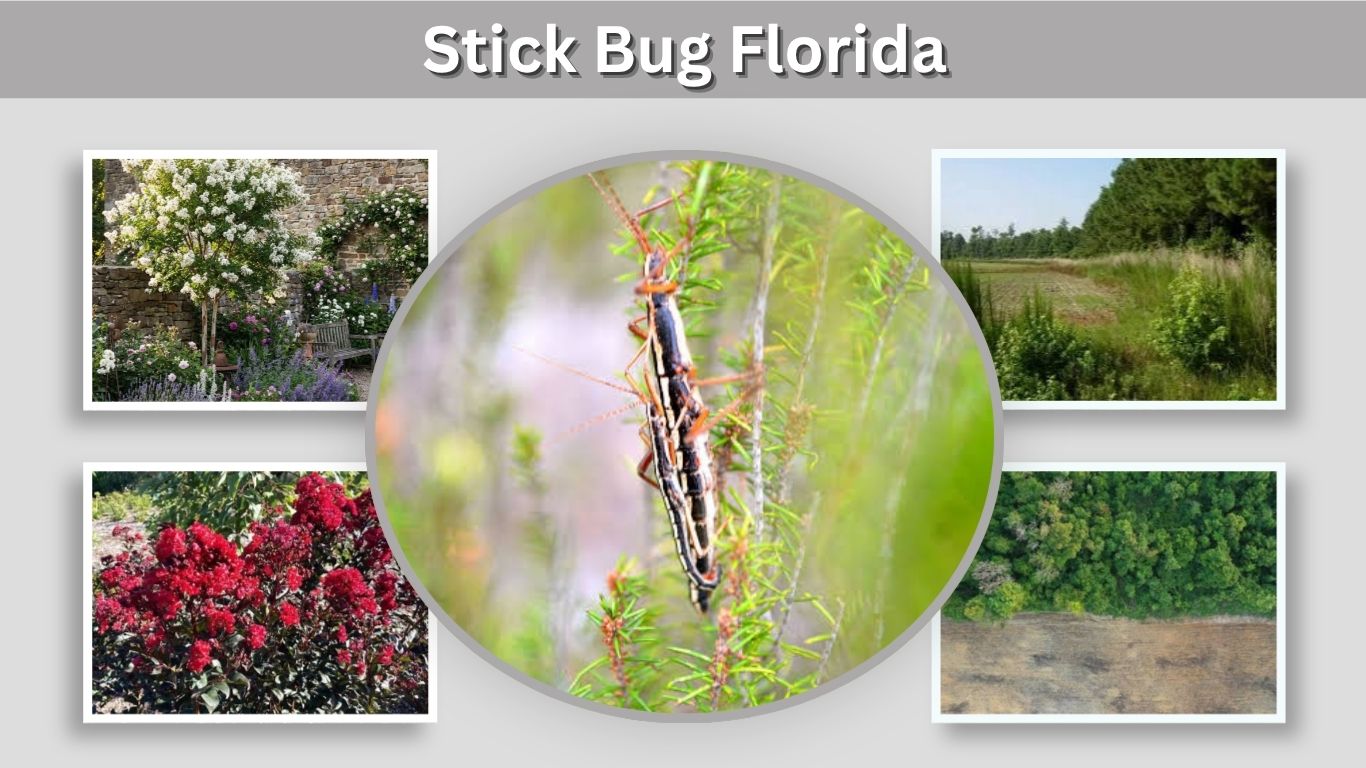
Florida is home to some unusual insects, and walking sticks are among the easiest to recognize once they start moving. A Florida stick bug can resemble a twig so closely that it may remain unnoticed on a shrub, tree trunk, or garden plant for hours. These insects belong to the order Phasmatodea and rely heavily on camouflage for survival.
One species is particularly important in Florida: the twostriped walkingstick (Anisomorpha buprestoides). Although walking sticks are generally peaceful plant-eaters, this Florida species has a defensive spray that makes it worth identifying before you pick one up.
What Is a Florida Stick Bug?
The terms stick bug, walking stick bug, and stick insect generally refer to insects whose elongated bodies resemble twigs or stems. Their shape, coloration, and slow movements make them exceptionally difficult for predators—and people—to notice among vegetation.
Florida’s warm climate and abundant plant life provide suitable habitat for walking sticks. The twostriped walkingstick is considered the most common stick insect in Florida and occurs throughout much of the state. citeturn199943view0
How to Identify a Walking Stick Bug in Florida
Look for these characteristics:
- Six long legs
- Long or moderately elongated antennae
- A narrow or somewhat stout stick-like body
- Brown, tan, black, or striped coloration
- Slow, deliberate movements
- No obvious jumping legs
- A tendency to remain motionless when approached
A walking stick may also gently sway from side to side. This behavior can make the insect resemble a branch moving in the breeze.
Most Common Florida Walking Stick Bug
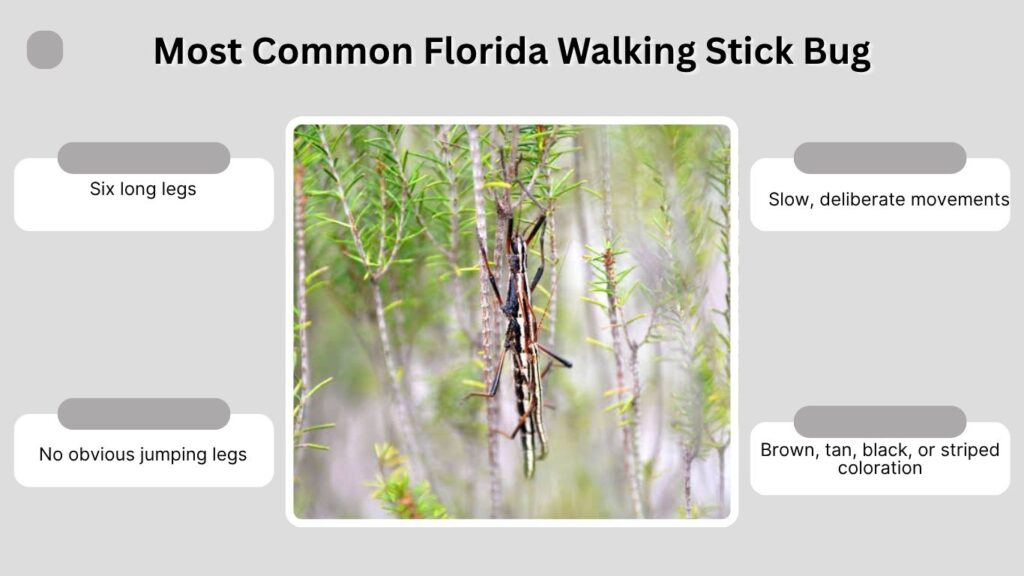
If you find a distinctive walking stick in Florida, one of the most likely possibilities is the twostriped walkingstick, scientifically known as Anisomorpha buprestoides.
Unlike extremely thin walking sticks, this species has a relatively stout body. The University of Florida describes typical individuals as brown with conspicuous dark longitudinal stripes. citeturn199943view0
Twostriped Walkingstick Identification
Typical features include:
- Scientific name: Anisomorpha buprestoides
- Brown to dark body
- Prominent lengthwise stripes
- Wingless adults
- Females noticeably larger than males
- Males frequently seen riding on females
Adult females average about 67.7 mm, or 2⅔ inches, while males average about 41.7 mm, or 1⅔ inches. citeturn199943view0
That size difference explains why people sometimes think two mating walking sticks are a single strange insect with several body sections.
Black and Striped Stick Bugs in Florida
Not every Florida walking stick has exactly the same coloration. A striking black-and-white form of the twostriped walkingstick has been documented in scrub habitat within Ocala National Forest. citeturn199943view0
Therefore, a dark or black stick bug in Florida is not automatically a different species. Color alone is usually not enough for a reliable identification.
Where Do Stick Bugs Live in Florida?
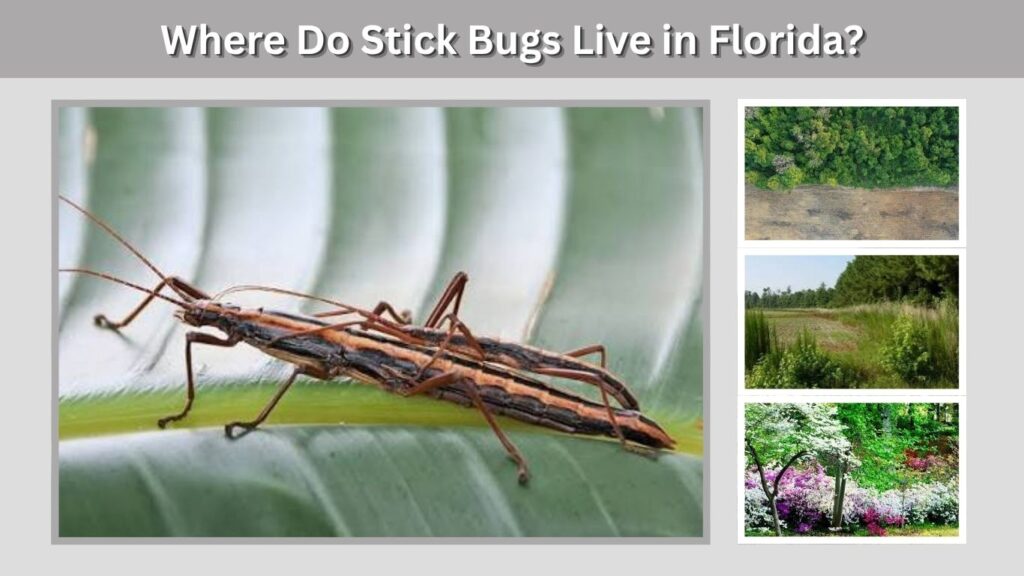
The twostriped walkingstick has been recorded across Florida, including locations from northern parts of the state into South Florida and the Keys. Florida records include counties such as Alachua, Broward, Collier, Escambia, Highlands, Marion, Miami-Dade, Monroe, Orange, and others. citeturn199943view0
Walking sticks depend on vegetation for both food and camouflage, so wooded and shrubby environments are ideal.
Common Places to Find Them
You may encounter a Florida walking stick around:
- Oak-dominated woodland
- Scrub habitat
- Forest edges
- Shrubs
- Gardens
- Landscaped areas
- Tree bark and sheltered crevices
The twostriped walkingstick may sometimes gather beneath loose bark or in other protected locations. Adults are particularly noticeable during fall, when mating and egg laying occur. citeturn199943view0
What Do Florida Walking Stick Bugs Eat?
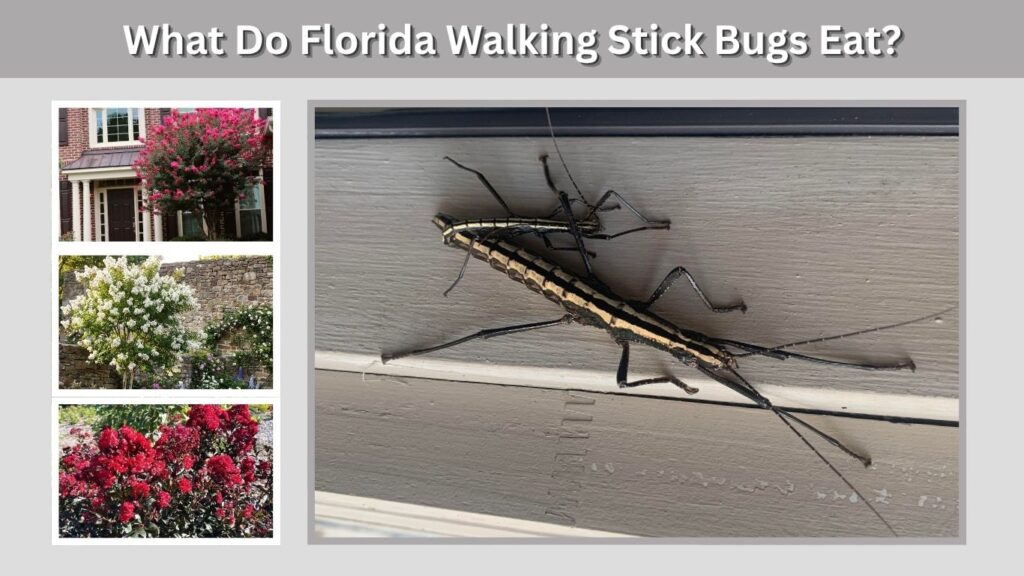
Walking sticks are herbivores. Their mouthparts are adapted for eating plant material rather than capturing insects.
Florida’s twostriped walkingsticks have been observed feeding on several trees and shrubs. Reported food plants include oak, rose, crepe myrtle, rosemary, lyonia, and privet under captive conditions. citeturn199943view0
Do Stick Bugs Damage Florida Plants?
An occasional walking stick chewing a few leaves is rarely a reason for concern. Even though A. buprestoides can sometimes occur in large numbers, the University of Florida notes that there are no reports of this species causing the serious defoliation associated with some other walking sticks. citeturn199943view0
For most homeowners, seeing one in a garden is therefore more of an interesting wildlife encounter than a pest emergency.
Is a Stick Bug in Florida Poisonous?
Calling Florida walking sticks “poisonous” is misleading. They do not have venomous stingers and do not inject venom through a bite.
However, the twostriped walkingstick can defend itself by spraying an irritating chemical secretion, so it should not be treated as completely harmless.
The defensive glands are located on the thorax near the head, and the insect can direct the spray toward a perceived threat. University of Florida researchers report that it may accurately spray approximately 30–40 cm. citeturn199943view0
Can the Spray Hurt Your Eyes?
Yes. Contact with the eyes can cause significant irritation and pain. Reported symptoms have included burning, redness, sensitivity to light, and temporary visual problems. citeturn199943view0
For this reason:
- Do not place your face close to the insect.
- Avoid squeezing or repeatedly touching it.
- Keep children from handling unidentified walking sticks.
- Wash exposed skin if sprayed.
- Flush affected eyes immediately with plenty of clean water.
UF/IFAS advises seeking medical attention if more serious symptoms such as reduced vision or light sensitivity occur. citeturn199943view0
Do Florida Stick Bugs Have a Stinger?
No. A Florida walking stick does not have a wasp-like stinger on its rear end.
Some people mistake pointed abdominal structures, legs, or reproductive anatomy for a stinger. The main defensive concern with the common twostriped walkingstick is its chemical spray near the front of the body, not a sting from the abdomen. citeturn199943view0
| Feature | Florida Walking Stick |
|---|---|
| Bites people | Generally no |
| Has a stinger | No |
| Venomous | No |
| Eats plants | Yes |
| Can camouflage as a twig | Yes |
| Defensive spray | Twostriped walkingstick can spray |
| Eye irritation possible | Yes |
Can Florida Stick Bugs Harm Dogs or Cats?
Walking sticks do not chase or attack pets, but the defensive spray of the twostriped walkingstick can be a concern if a curious dog or cat gets too close.
UF/IFAS cites a veterinary case involving eye injury in a dog following exposure to a walkingstick’s defensive secretion. citeturn199943view0
If a pet receives spray in its eyes, prevent rubbing if possible and rinse the area thoroughly with clean water. Contact a veterinarian when redness, squinting, pain, cloudiness, or other eye symptoms persist.
Why Do Florida Walking Sticks Look Like Twigs?
Camouflage is the walking stick’s primary survival strategy. Rather than relying on speed, armor, or powerful jaws, these insects make themselves difficult to detect.
Their bodies can resemble:
- Thin branches
- Dead twigs
- Dark stems
- Bark
- Dried vegetation
Remaining still increases the effect. A predator searching visually for an insect can easily overlook a walking stick sitting along a branch.
The twostriped walkingstick adds another layer of protection with its chemical defense, giving it both visual camouflage and an active way to discourage predators.
Florida Stick Bug Life Cycle
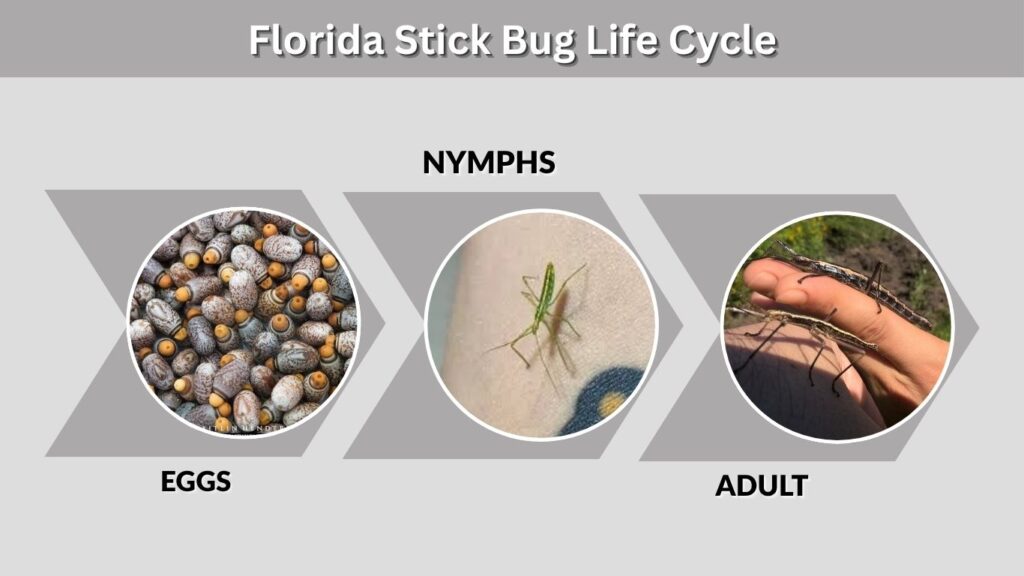
Walking sticks undergo incomplete metamorphosis, so they do not have a caterpillar or pupal stage. Instead, they develop from eggs into nymphs and finally adults.
Eggs and Young Walking Sticks
Twostriped walkingstick females have been observed digging shallow pits in sandy soil, depositing several eggs, and covering them again. Other observations have recorded females placing eggs into sheltered crevices. citeturn199943view0
After hatching, young walking sticks resemble smaller versions of adults. They molt repeatedly as they grow.
Florida Stick Bug Mating
One of the easiest ways to recognize mating twostriped walkingsticks is their unusual size difference. The small male frequently rides on top of the much larger female. citeturn199943view0
Adults are particularly abundant during fall in Florida, which is also an important period for reproduction and egg laying.
Is the Bug on Your Florida Wall Really a Stick Bug?
Not necessarily. Searches for “Florida bugs that stick to walls” or a “bug covered in tiny sticks” often describe completely different insects.
A true walking stick has clearly visible legs, antennae, and a complete insect body. It walks freely rather than carrying a portable case made of debris.
If the object on your wall looks like a small bag, cocoon, or case covered with fibers and debris, it is probably not a walking stick. Correct identification is important before deciding whether an insect needs to be removed.
What Should You Do If You Find a Walking Stick?
In most cases, nothing needs to be done. A walking stick outdoors can simply be left alone.
If one enters a house, avoid grabbing it directly—especially when you cannot identify the species. Place a container over it, carefully slide stiff paper underneath, and move the insect outdoors without squeezing or stressing it.
Because Florida’s twostriped walkingstick can spray defensively, keeping your face away from the insect is the safest approach.
FAQs
Are there stick bugs in Florida?
Yes. Florida has walking stick insects, and the twostriped walkingstick (Anisomorpha buprestoides) is considered the state’s most common stick insect. It occurs across much of Florida and can be found around forests, scrub habitat, shrubs, gardens, and other areas with suitable vegetation. citeturn199943view0
Are Florida stick bugs dangerous?
Most encounters do not result in injury, but the twostriped walkingstick should not be handled carelessly. It can release a defensive spray that strongly irritates the eyes and mucous membranes. It does not have a stinger and does not normally attack people.
How big do stick bugs get in Florida?
Size varies by species and sex. In the common twostriped walkingstick, adult females average about 2⅔ inches long, while males average around 1⅔ inches. Females are also noticeably thicker, which can make mating pairs appear much larger. citeturn199943view0
What do Florida walking stick bugs eat?
Florida walking sticks are plant-eaters. Twostriped walkingsticks have been recorded feeding on leaves from plants such as oak, rose, crepe myrtle, rosemary, and lyonia. They do not prey on mosquitoes, spiders, or other insects. citeturn199943view0
Should I kill a stick bug in my Florida yard?
Usually, there is no reason to kill one. Walking sticks are naturally occurring herbivorous insects and generally do not create serious problems around homes. If you need to move one, avoid direct handling because Florida’s common twostriped walkingstick can release an irritating defensive spray.