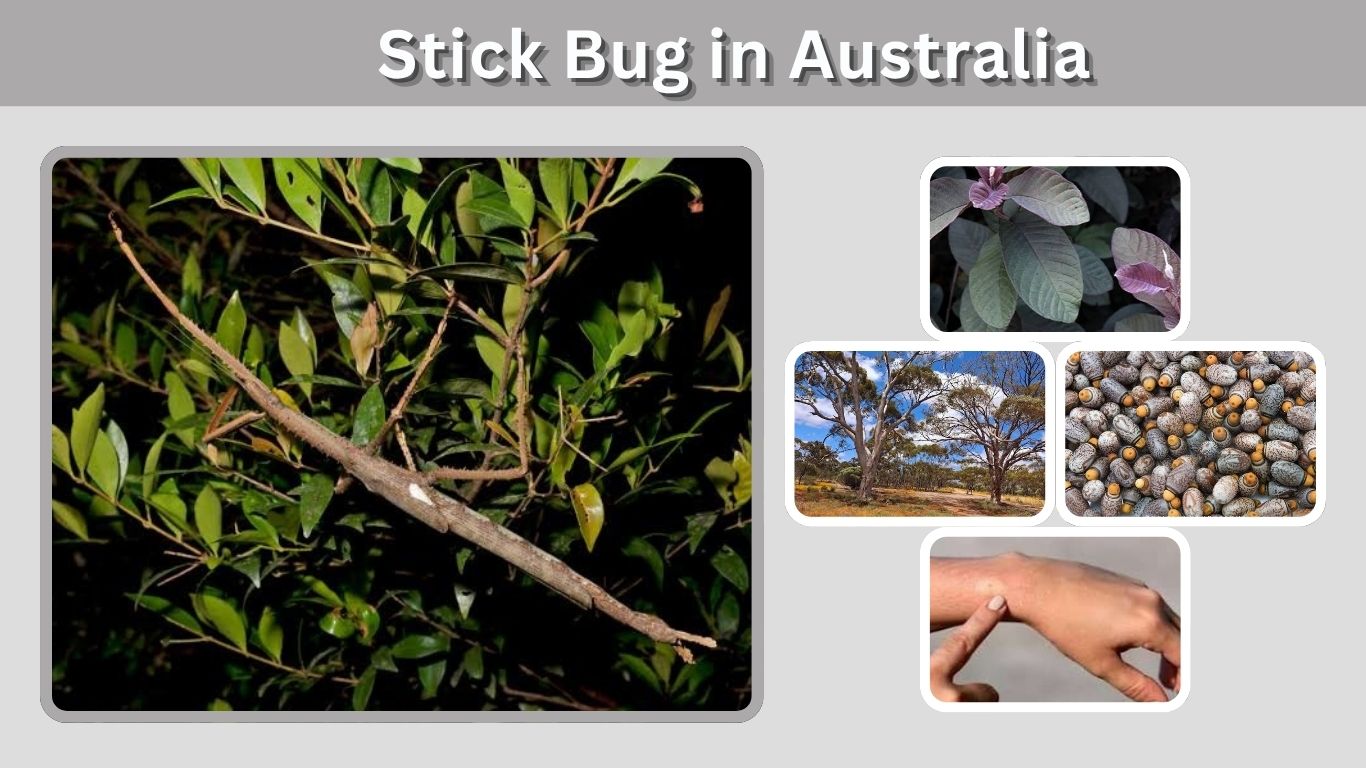
Australia is home to some of the most fascinating stick insects in the world. Commonly known as stick bugs, walking sticks, or phasmids, these insects are famous for their incredible ability to camouflage themselves among branches, leaves, and trees. A stick bug in Australia can often be mistaken for a small twig because of its long, thin body and slow movements.
From the giant prickly stick insect to newly discovered Australian stick bugs, these insects show some of the most impressive survival adaptations found in nature. Their unique appearance, peaceful behavior, and unusual life cycle make them a popular subject among insect researchers and nature enthusiasts.
What Is a Stick Bug in Australia?
A stick bug is an insect from the order Phasmatodea, a group known for their plant-like appearance and camouflage abilities. Australian stick bugs have evolved to blend perfectly into their surroundings, helping them avoid predators such as birds, reptiles, and small mammals.
Unlike many insects that rely on speed or aggression for protection, stick bugs survive by staying hidden. They often remain completely still during the day and move slowly through vegetation at night when they feed.
Australia has a large variety of stick insects, ranging from small twig-like species to giant walking sticks that can grow longer than a human hand.
Key Features of Australian Stick Bugs
- Long, narrow bodies that resemble sticks or branches
- Excellent natural camouflage
- Herbivorous diet
- Slow-moving behavior
- Mostly active at night
- Harmless to humans
- Some species have wings
- Ability to regenerate lost legs
These characteristics help Australian stick bugs survive in forests and woodlands where hiding is their greatest advantage.
Types of Stick Bugs Found in Australia
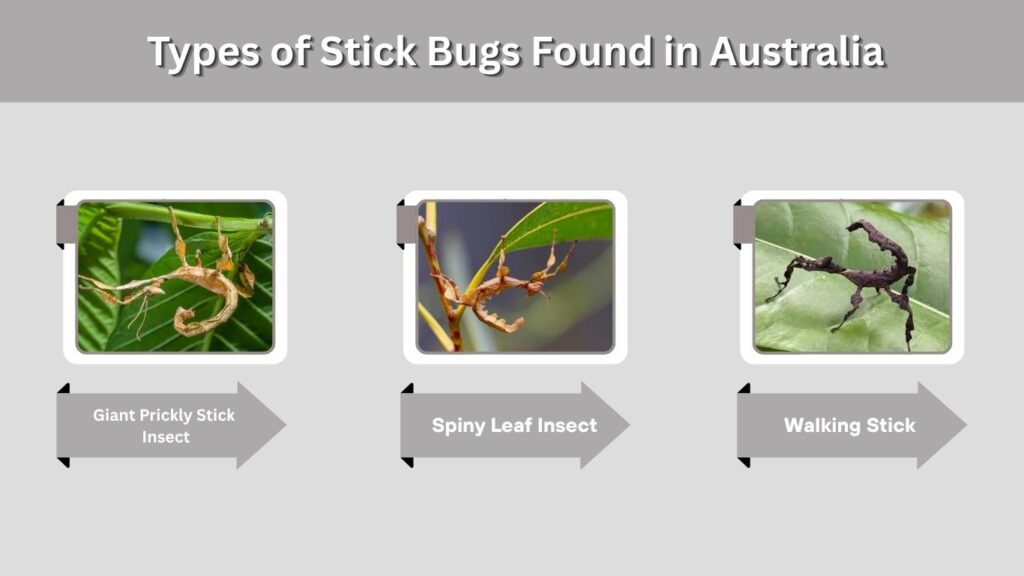
Australia contains many unique stick insect species, including some of the largest and most recognizable walking sticks in the world.
Giant Prickly Stick Insect (Extatosoma tiaratum)
The giant prickly stick insect is one of the most famous Australian stick bugs. It is often called the Australian giant stick bug because of its large size and unusual appearance.
This species is especially popular among insect keepers because it is relatively easy to care for and has an impressive appearance. Adult females can grow up to 15–20 centimeters long and have a thick body covered with small spines.
The giant prickly stick insect usually has brown, gray, or green coloring, allowing it to disappear among tree branches and dry leaves.
Some important features include:
- Large body size
- Spiny appearance
- Excellent branch-like camouflage
- Curved abdomen resembling a scorpion tail
Although it may look dangerous, this stick bug does not have a stinger and cannot harm humans.
Australian Spiny Leaf Insect
The spiny leaf insect is another famous Australian species. Instead of looking like a stick, this insect resembles a dried leaf. Its body shape and coloring help it hide among foliage.
Female spiny leaf insects are larger than males and are often unable to fly. Males usually have longer antennae and functional wings.
They are commonly found in forests where they feed on different types of leaves.
Other Australian Walking Stick Species
Australia has many other walking stick species that vary in size, color, and appearance. Some have smooth bodies, while others have bumps, spines, or leaf-like structures.
Researchers continue to study Australian stick bugs, and new species are occasionally identified in remote habitats.
New Stick Bug Discoveries in Australia
Searches for “new stick bug Australia” and “newly discovered stick bug in Australia” have increased as scientists continue exploring Australia’s diverse ecosystems.
Many new insect discoveries happen in areas that are difficult to access, including:
- Tropical rainforests
- Mountain forests
- Remote islands
- Northern Australian habitats
Scientists identify new stick bug species by studying differences in body structure, behavior, geographic location, and DNA.
Because stick insects often look very similar, modern genetic testing has helped researchers discover species that were previously overlooked.
Where Do Stick Bugs Live in Australia?
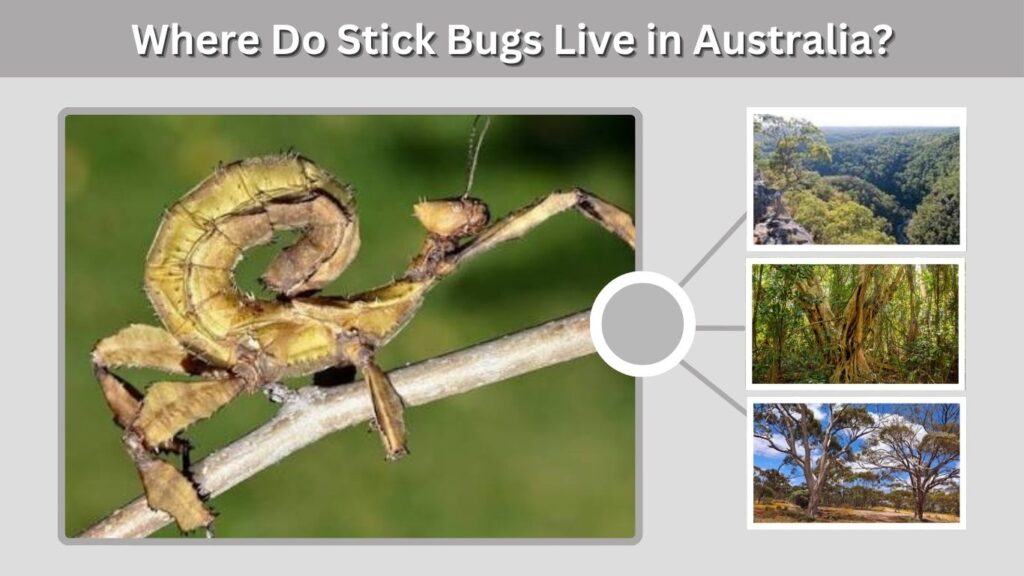
Australian stick bugs live in areas with plenty of vegetation because they depend on plants for both food and protection.
Common habitats include:
- Rainforests
- Eucalyptus forests
- Coastal woodlands
- Bushlands
- Tropical areas
Queensland and New South Wales are especially known for their diverse stick insect populations.
Many species prefer warm and humid environments because these conditions support plant growth and help eggs and young insects survive.
Some rare Australian stick bugs are only found in specific locations, making habitat protection important for their survival.
What Do Australian Stick Bugs Eat?
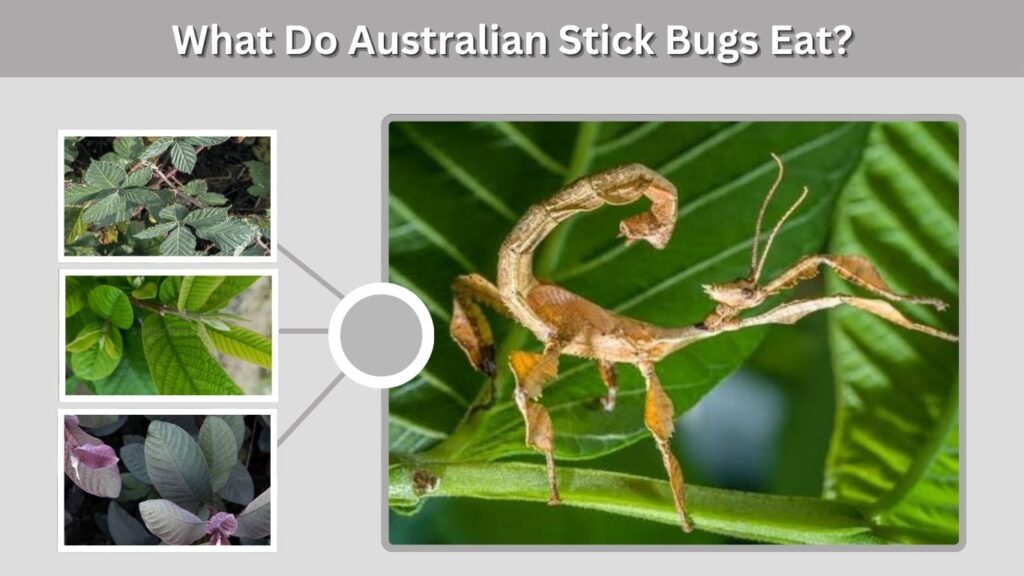
Stick bugs are herbivores, meaning they only eat plant material. They do not hunt other insects or animals.
Their diet commonly includes:
- Eucalyptus leaves
- Rose leaves
- Blackberry leaves
- Guava leaves
- Other soft plant foliage
Different species prefer different plants depending on their natural habitat.
Pet stick bugs are usually fed fresh leaves from safe, pesticide-free plants. Providing the correct food is important because poor nutrition can affect their growth and lifespan.
Do Australian Stick Bugs Have Wings?
Not all Australian stick bugs have wings. Some species are completely wingless, while others have small or fully developed wings.
Male stick insects are generally more likely to have wings because they use them to search for females. Females are usually larger and heavier, but many have limited flying ability.
When people search for “Australian stick bug with wings,” they are usually referring to species where males can fly.
Even winged stick bugs usually prefer walking and hiding rather than flying because camouflage is their main defense.
Are Australian Stick Bugs Dangerous?
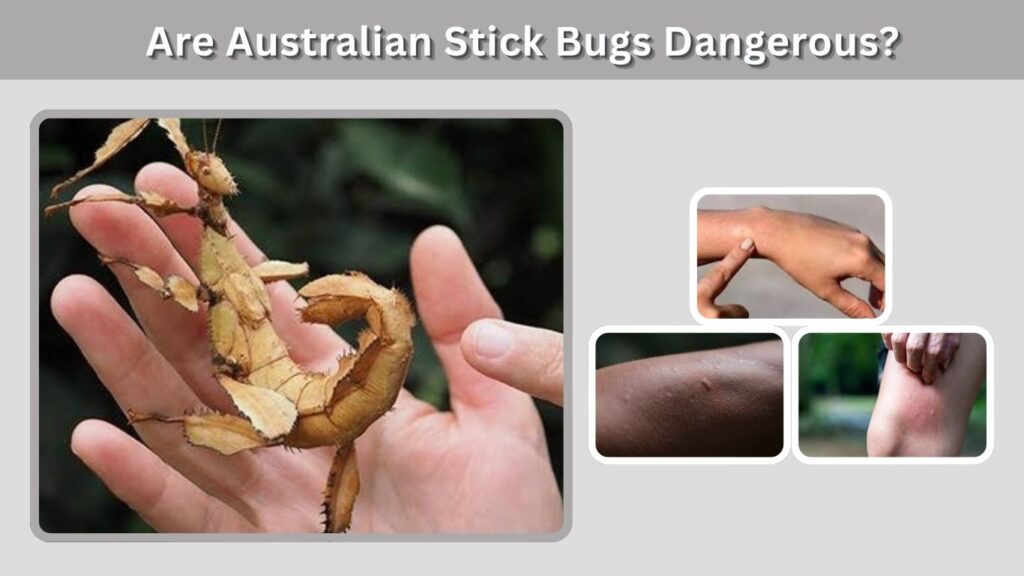
Australian stick bugs are completely harmless to humans.
They do not:
- Bite people
- Sting people
- Carry dangerous venom
- Attack animals
Some species may look frightening because of their large size, spines, or scorpion-like posture. However, these features are only designed to confuse predators.
The curved tail of the giant prickly stick insect is not a weapon. It is simply part of its natural body shape.
How Do Stick Bugs Protect Themselves?
Stick bugs have developed several impressive defense methods.
Camouflage
Their most important survival tool is their appearance. Their bodies often match nearby branches, leaves, or bark.
Staying Still
When threatened, a stick bug may freeze completely. Predators often overlook them because they appear to be part of the plant.
Swaying Movement
Some stick insects slowly move back and forth, copying the movement of branches in the wind.
Dropping to the Ground
When attacked, some species drop from vegetation and remain motionless until the danger disappears.
Chemical Defense
Certain stick bugs can release unpleasant-smelling chemicals to discourage predators.
Australian Stick Bug Life Cycle
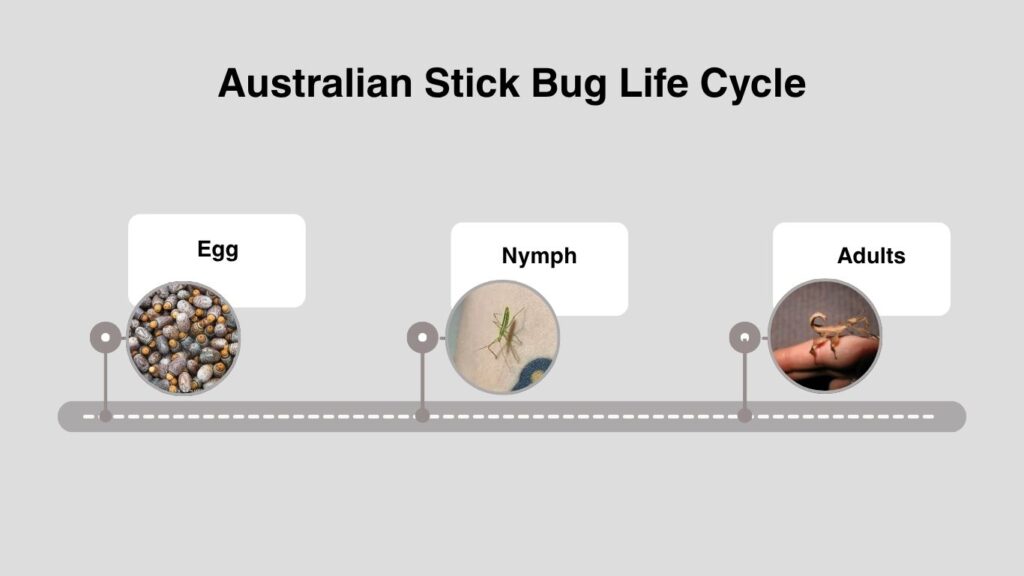
The life cycle of an Australian stick bug includes three main stages: egg, nymph, and adult.
Eggs
Female stick bugs lay small eggs that often look like plant seeds. Some species drop their eggs onto the ground, while others attach them to plants.
Interestingly, some stick insect eggs resemble seeds that attract ants. Ants may carry these eggs underground, where they receive protection before hatching.
Nymph
Young stick bugs are called nymphs. They look similar to adults but are smaller and usually have less developed features.
As they grow, they shed their outer skin several times through a process called molting.
Adult
Adult stick bugs focus on feeding and reproduction. Their lifespan depends on the species, but many live several months to over a year.
Can You Keep an Australian Stick Bug as a Pet?
Some Australian stick bugs are popular pets, especially the giant prickly stick insect (Extatosoma tiaratum).
They are considered suitable for beginners because they are:
- Quiet
- Easy to care for
- Harmless
- Interesting to observe
A proper enclosure should include:
- Good airflow
- Fresh leaves
- Climbing branches
- Suitable humidity
- Safe temperatures
However, collecting wild stick bugs may not be allowed in some areas, so people should check local regulations before keeping native species.
Interesting Facts About Australian Stick Bugs
- Some stick bugs can reproduce without males through parthenogenesis.
- They can regrow lost legs during early life stages.
- Some Australian species are among the longest insects in the country.
- Many species are active mostly at night.
- Their eggs can survive harsh environmental conditions.
- Their camouflage is among the best in the insect world.
- They depend on plants for both food and shelter.
Frequently Asked Questions
Are Australian stick bugs poisonous?
No, Australian stick bugs are not poisonous. They are harmless insects that do not bite or sting humans.
What is the biggest stick bug in Australia?
The giant prickly stick insect (Extatosoma tiaratum) is one of the largest Australian stick bugs and can reach around 15–20 centimeters in length.
Where can stick bugs be found in Australia?
Stick bugs are commonly found in forests, rainforests, eucalyptus woodlands, and coastal habitats, especially in eastern Australia.
Can Australian stick bugs fly?
Some male stick bugs have wings and can fly, while many species are wingless or have limited flying ability.
Are stick bugs good pets?
Yes, certain Australian stick bugs, especially the giant prickly stick insect, are popular pets because they are easy to care for and harmless.