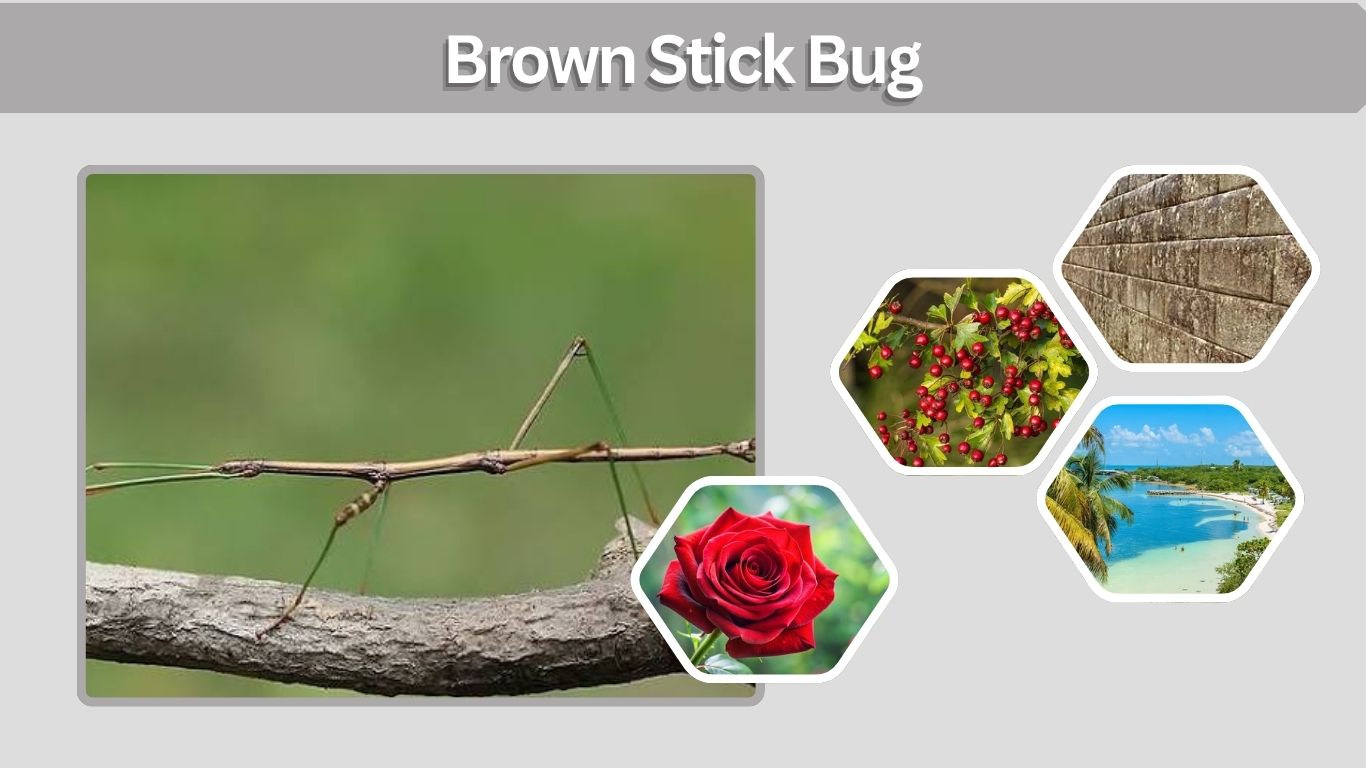
A brown stick bug, also called a brown stick insect or walking stick, is a plant-eating insect famous for looking almost exactly like a twig. Most have long, narrow bodies, thin legs, long antennae, and brown or gray-brown coloration that helps them disappear among branches and dead vegetation. “Brown stick bug” does not refer to one species; many members of the insect order Phasmatodea can be brown. Most are harmless to people, although a few species—especially Florida’s two-striped walkingstick—can release an irritating defensive spray.
What Is a Brown Stick Bug?
Stick bugs belong to Phasmatodea, an insect group specialized for camouflage. Their bodies frequently imitate sticks, twigs, bark, or leaves so closely that predators may overlook them completely.
Smithsonian describes stick insects as typically long and brown with surfaces resembling bark, whereas leaf insects tend to be broader and flatter to resemble leaves.
Brown coloration is particularly useful on:
- Dead branches
- Tree bark
- Dry vegetation
- Fallen leaves
- Woody shrubs
- Forest-floor debris
Some species can also be green, gray, tan, reddish-brown, or combinations of several colors.
How to Identify a Brown Stick Insect
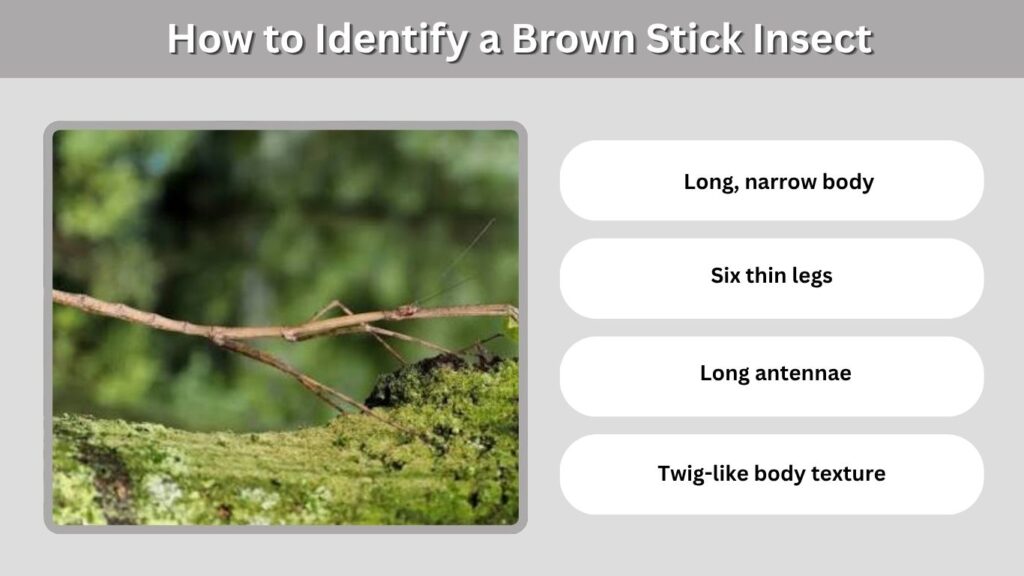
The most obvious characteristic is its extremely elongated, twig-like shape.
Brown Stick Bug Identification
Look for:
- Long, narrow body
- Six thin legs
- Long antennae
- Brown, tan, or gray-brown coloration
- Twig-like body texture
- Slow walking behavior
- Front legs that may stretch forward alongside the head
- Little or no obvious wing development in some species
The common walkingstick (Diapheromera femorata), for example, is wingless and may range from brown to green. University of Minnesota Extension notes that it can reach about 3 inches long.
| Feature | Typical Brown Stick Bug |
| Color | Brown, tan, gray-brown or greenish-brown |
| Shape | Long and twig-like |
| Legs | Six, very slender |
| Antennae | Usually long |
| Wings | Present in some species, absent in others |
| Diet | Leaves |
| Movement | Usually slow |
| Main defense | Camouflage; varies by species |
Why Do Stick Bugs Look Like Brown Sticks?
Their unusual appearance is an adaptation known as mimicry or camouflage.
A stick insect resting motionless along a branch can become extremely difficult to distinguish from the surrounding vegetation. Smithsonian notes that phasmids are named for this remarkable ability to disappear visually into leaves and twigs.
Some walking sticks strengthen the illusion by positioning their legs along the body or swaying gently while moving, giving them an appearance similar to vegetation shifting in the breeze.
Can Brown Stick Bugs Change Color?
Color variation occurs among species and life stages. It does not necessarily mean an individual can instantly change from green to brown like a chameleon.
For the northern walkingstick, young insects can mature through lighter, green, and eventually browner coloration as they pass through developmental stages.
Environment, age, sex, and species all contribute to differences in appearance.
Brown Walking Stick Bug Size
Size varies dramatically throughout Phasmatodea.
Common North American walkingsticks may be several inches long. Texas A&M describes walkingsticks as slow-moving, stick-like insects whose young develop through several nymphal stages before becoming adults.
The common northern walkingstick is particularly long and slender. Females tend to be larger than males, and their extended legs and antennae make them appear even longer.
A very long brown insect on a tree or shrub is therefore more likely to be a walkingstick if it has a thin twig-shaped body rather than the broad body of a beetle or true bug.
Brown Stick Bug in Florida
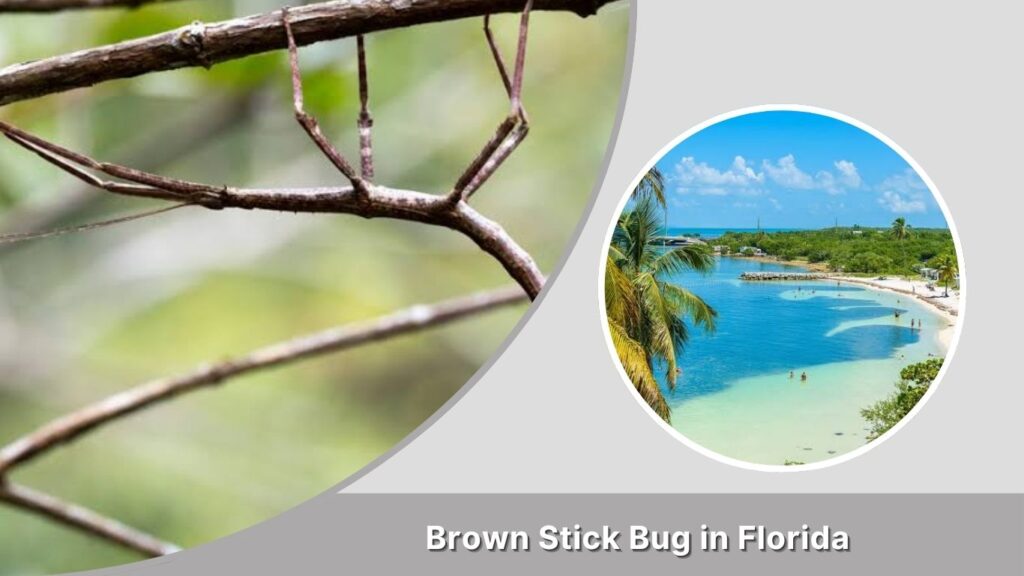
Florida has one particularly important brown walkingstick to recognize: the southern two-striped walkingstick (Anisomorpha buprestoides).
Unlike many extremely slender walkingsticks, this species has a relatively thick body. Brown forms have contrasting longitudinal stripes extending along their bodies.
University of Florida describes it as one of Florida’s common stick insects and warns about its unusual chemical defense.
Is the Florida Brown Stick Bug Poisonous?
It is better described as chemically defensive rather than poisonous.
When threatened, the two-striped walkingstick can spray a strong-smelling secretion that causes severe irritation if it reaches the eyes or mucous membranes.
Documented human eye injuries have occurred following exposure to this secretion.
Therefore, do not place your face close to an unfamiliar striped walkingstick, and avoid unnecessarily handling one.
Most ordinary walkingstick encounters do not involve this type of irritating spray.
Brown Stick Bugs in Texas
Texas supports several walkingstick species.
Texas A&M’s insect guide describes walkingsticks as wingless or stick-like insects that feed on foliage. Females may drop small black or brown, seed-like eggs beneath host plants during fall, and nymphs hatch the following spring.
One large Texas example is Megaphasma denticrus, a particularly impressive walkingstick.
The presence of a brown walkingstick in a Texas yard usually indicates nearby vegetation rather than a household infestation.
Do Brown Stick Bugs Damage Plants?
Walkingsticks are herbivores and eat leaves.
Normally, a small number cause little noticeable harm. Unusually high populations, however, can remove significant amounts of foliage from trees and shrubs. University of Minnesota Extension notes that common walkingsticks can sometimes defoliate trees.
They do not eat clothing, furniture, stored food, or wooden houses.
Brown Stick Bug With Wings
Some stick insects have functional wings, while others are completely wingless or possess reduced wings.
Therefore, seeing a flying brown stick-like insect does not automatically rule out a phasmid.
Wing development depends on species and sometimes sex. The familiar northern walkingstick, for example, is wingless.
If an insect has a short, thick body and very powerful jumping hind legs, however, it may instead be a grasshopper or katydid.
Bug That Looks Like a Brown Leaf
An insect that resembles a brown leaf rather than a narrow twig may belong to a different camouflage specialist.
Possibilities include:
Leaf Insects
True leaf insects are relatives of walkingsticks within Phasmatodea. Their bodies are broad and flattened, with structures resembling leaf edges and veins. Smithsonian contrasts their flattened leaf-like appearance with the twig-like bodies of ordinary stick insects.
Katydids
Some katydids have wings shaped like green or dead leaves. Their large hind legs usually separate them from stick insects.
Dead-Leaf Butterflies and Moths
When their wings are closed, certain butterflies and moths resemble dry brown leaves remarkably well.
Therefore, “brown leaf bug” describes an appearance rather than one particular insect.
Green vs. Brown Stick Bugs
Both colors provide camouflage, but they work in different surroundings.
A green stick insect disappears among fresh leaves and stems, whereas a brown stick insect blends particularly well against woody branches, bark, and dried vegetation.
Some populations naturally show more than one color form. Age and sex can also influence coloration.
Color alone is rarely enough to identify the exact species.
What Do Brown Stick Bugs Eat?
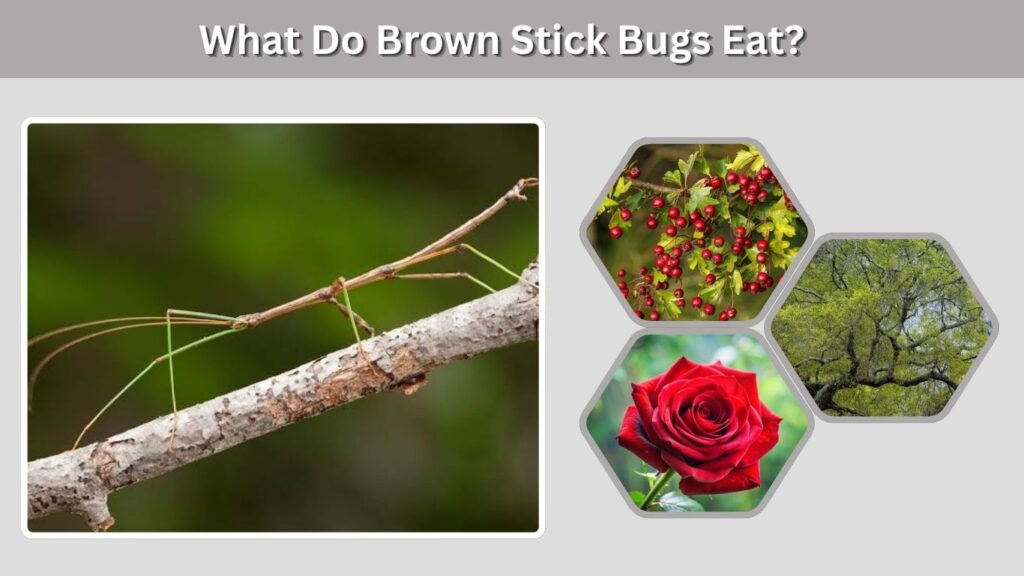
Walkingsticks are plant feeders.
Depending on species, they may consume foliage from trees and shrubs such as:
- Oak
- Hazelnut
- Rose
- Blackberry
- Other broadleaf trees and shrubs
The common walkingstick is known to eat various plant leaves, with oak among its important hosts.
They use chewing mouthparts to remove sections of leaves rather than hunting other insects.
Are Brown Stick Bugs Dangerous?
Most brown stick bugs are harmless to people.
They do not have venomous stingers and are not blood-feeding insects. Their principal survival strategy is avoiding detection rather than attacking predators.
However, defensive abilities vary among species. Some use:
- Chemical secretions
- Spiny legs
- Startle displays
- Defensive kicking
- Dropping from vegetation
- Remaining completely motionless
The southern two-striped walkingstick deserves particular caution because its spray can seriously irritate the eyes.
Why Is a Brown Stick Bug Around My House?
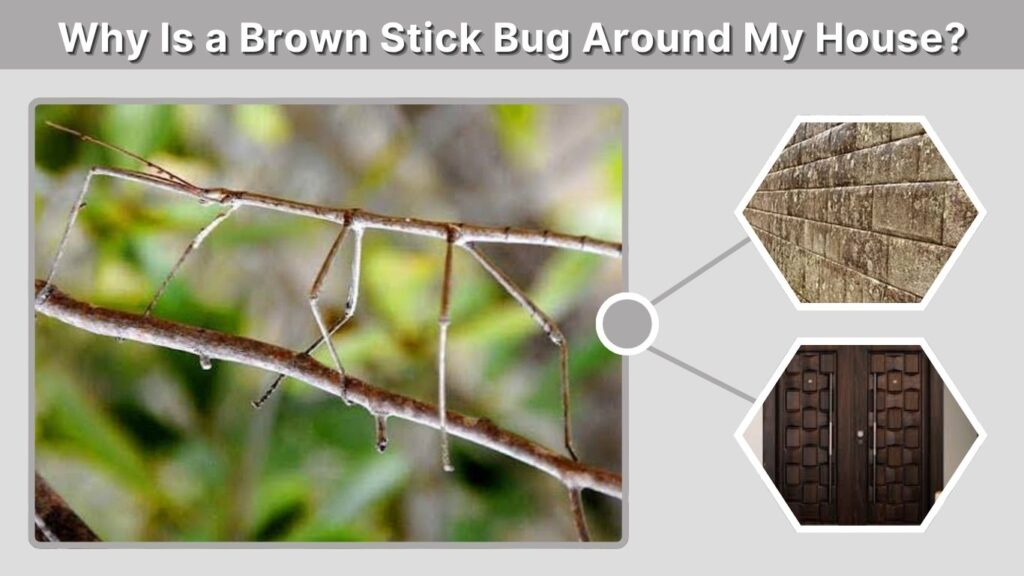
A walking stick found on a wall, porch, door, or window probably wandered there from nearby vegetation.
These insects normally belong outdoors, where they feed and camouflage themselves among plants. A single walking stick indoors does not indicate an infestation.
If one enters your house, you can usually guide it into a container and move it back outside without touching it directly. If it is a stout, striped walkingstick in the southeastern U.S., extra caution is appropriate because of the defensive spray discussed above.
Brown Stick Bug Spiritual Meaning
Stick insects sometimes receive symbolic interpretations associated with patience, stillness, camouflage, adaptability, or blending into one’s surroundings.
These are cultural or personal interpretations rather than scientific characteristics of the insect. Biologically, their stillness and twig-like appearance evolved primarily as defenses against predators.
FAQs
Are brown stick bugs poisonous?
Most brown walkingsticks are not poisonous or dangerous to people. However, certain species have chemical defenses. Florida’s southern two-striped walkingstick can spray a secretion that causes painful irritation, particularly if it reaches the eyes or other mucous membranes.
What is the long brown bug that looks like a stick?
It may be a walkingstick or stick insect, a member of Phasmatodea. These insects have long bodies, thin legs, and brown or green camouflage that makes them resemble twigs. Several different species occur across North America.
Can brown stick bugs fly?
Some stick insect species can fly, while many others have reduced wings or none at all. The common northern walkingstick is wingless. Therefore, whether a brown stick bug can fly depends on its species and sometimes its sex.
What is the brown stick bug in Florida?
One notable Florida species is the southern two-striped walkingstick (Anisomorpha buprestoides). It is relatively stout and may have brown coloration with prominent longitudinal stripes. It should not be disturbed because it can release an irritating defensive spray.
Are brown walking sticks bad for gardens?
Usually not. Walkingsticks naturally eat foliage, but a few individuals rarely cause serious damage. Large localized populations can occasionally remove substantial foliage from trees or shrubs, especially favored host plants such as oak.