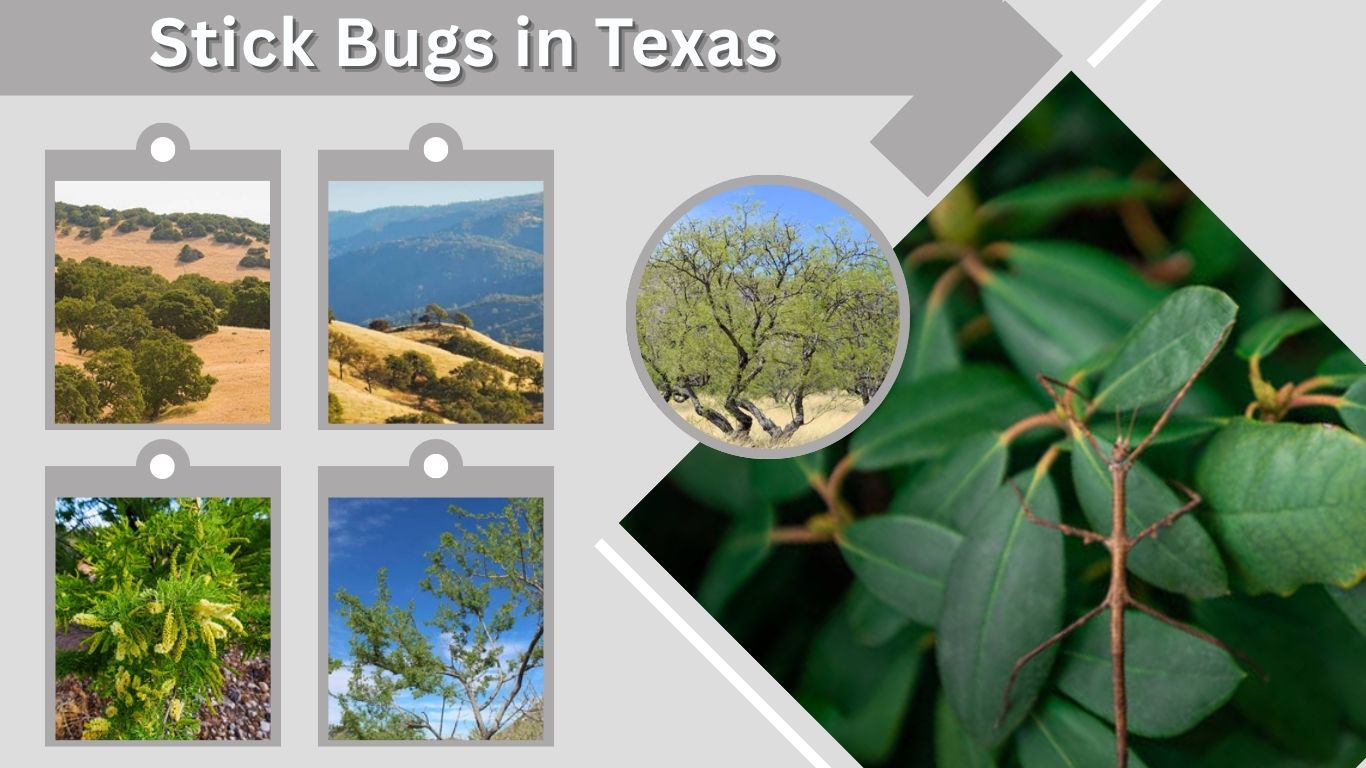
Stick bugs in Texas are unusual insects known for bodies that closely resemble twigs, branches, or stems. Also called walking sticks, these insects are found in forests, grasslands, gardens, and shrub-covered areas across different parts of the state. Texas is home to several walking stick species, including some impressively large insects. Most are harmless plant-eaters, although certain species can defend themselves with spiny legs or irritating chemical secretions. Understanding their appearance and behavior makes Texas stick bugs much easier to identify.
Are There Stick Bugs in Texas?
Yes, Texas has several species of stick insects belonging to the order Phasmatodea. The state’s warm climate, diverse vegetation, woodlands, and long growing season provide suitable habitat for walking sticks.
They may be encountered from East Texas forests to drier central and western regions, although the exact species present varies by location.
Common Types of Stick Bugs in Texas
Walking sticks that may be encountered in Texas include:
- Giant walking stick
- Common walking stick
- Prairie walking stick
- Two-striped walking stick
- Various smaller brown or green walking sticks
Some species are widespread, while others are concentrated in particular habitats.
Texas residents often notice them during warmer months when adults become larger and more active.
Giant Stick Bug in Texas
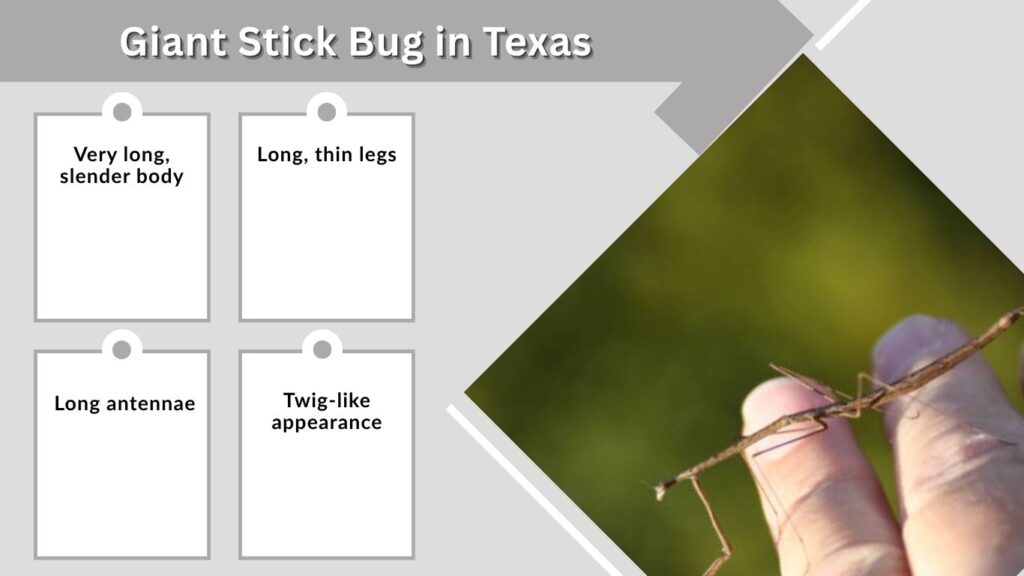
One of the most impressive walking sticks found in Texas is the giant walking stick, Megaphasma denticrus. It is among the longest insects found in North America and can be surprisingly large when fully grown.
Despite its intimidating appearance, it is primarily a leaf-eating insect that depends on camouflage for protection.
Texas Giant Walking Stick Identification
Look for the following characteristics:
- Very long, slender body
- Long, thin legs
- Brown, tan, gray, or greenish coloration
- Small head compared with body
- Long antennae
- Twig-like appearance
- Slow, deliberate movement
- No stinger
Females are generally larger and heavier than males.
A large individual resting among branches can be extremely difficult to notice because its body blends almost perfectly with woody vegetation.
How Big Do Texas Stick Bugs Get?
The giant walking stick can reach approximately 6 to 7 inches in body length, with the legs making the insect appear even larger.
Other Texas walking sticks are considerably smaller.
Size depends on species, sex, age, and environmental conditions.
Large females are usually responsible for reports of enormous stick-like insects appearing on porches, trees, fences, or house walls.
Brown Stick Bug in Texas
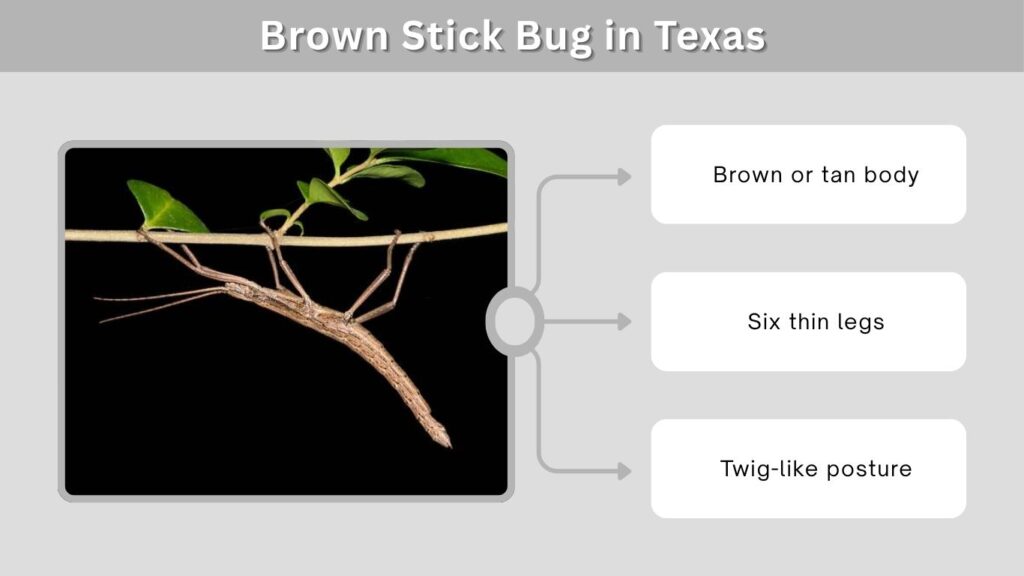
Brown is one of the most common colors seen among Texas walking sticks. This coloration allows them to blend with dry twigs, bark, fallen branches, and dead vegetation.
Brown walking sticks may be particularly difficult to see when they remain completely still.
How to Identify a Brown Walking Stick
Common characteristics include:
- Brown or tan body
- Extremely narrow abdomen
- Six thin legs
- Long antennae
- Twig-like posture
- Slow movements
- Lack of enlarged mantis-like front legs
Color can vary within the same species.
An individual may be light tan, reddish-brown, gray-brown, or almost dark chocolate depending on its species and surroundings.
Green Stick Bugs in Texas
Some walking sticks have green coloration that helps them disappear among fresh leaves and stems.
Green individuals are often easier to overlook than brown ones because their body lines closely resemble plant stems.
Brown vs. Green Stick Bugs
| Feature | Brown Stick Bug | Green Stick Bug |
| Main camouflage | Bark and dry branches | Leaves and stems |
| Typical color | Brown, tan, gray | Green to yellow-green |
| Diet | Leaves | Leaves |
| Danger to humans | Very low | Very low |
| Activity | Mostly slow-moving | Mostly slow-moving |
Color alone should not be used to identify the exact species because individual walking sticks can vary considerably.
Where Do Stick Bugs Live in Texas?
Walking sticks occur anywhere suitable host plants and hiding places are available. They are most frequently associated with vegetation because they depend on plants for both food and camouflage
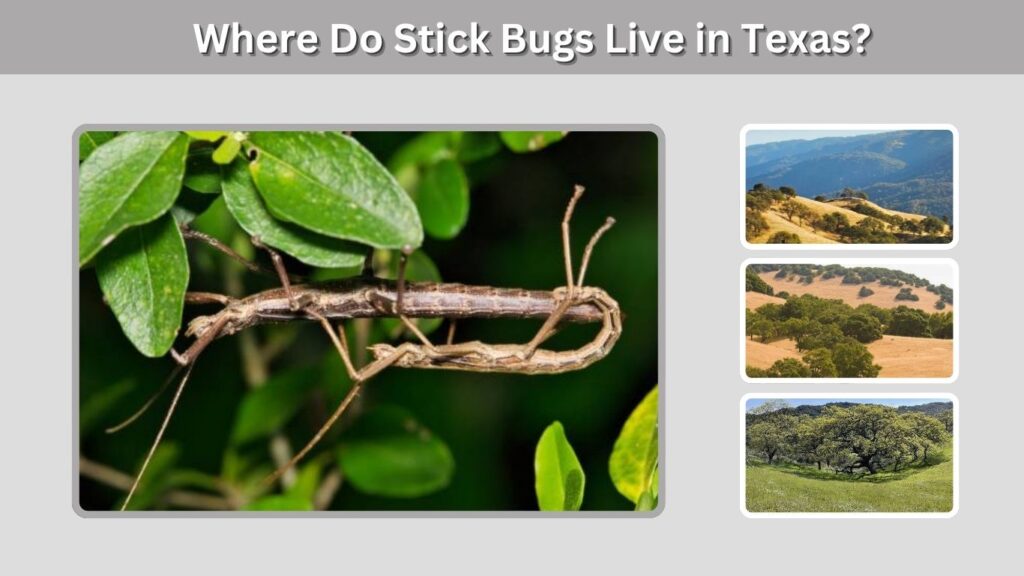
They may spend much of their lives hidden in trees and shrubs without being noticed.
Common Texas Habitats
Stick bugs may occur in:
- Hardwood forests
- Oak woodlands
- Brushy areas
- Grasslands
- Gardens
- Parks
- Shrublands
- Rural properties
- Woodland edges
- Vegetated suburban yards
East and Central Texas can provide particularly suitable conditions because of the abundance of trees and shrubs.
Species adapted to drier vegetation can also occur farther west.
What Do Texas Stick Bugs Eat?
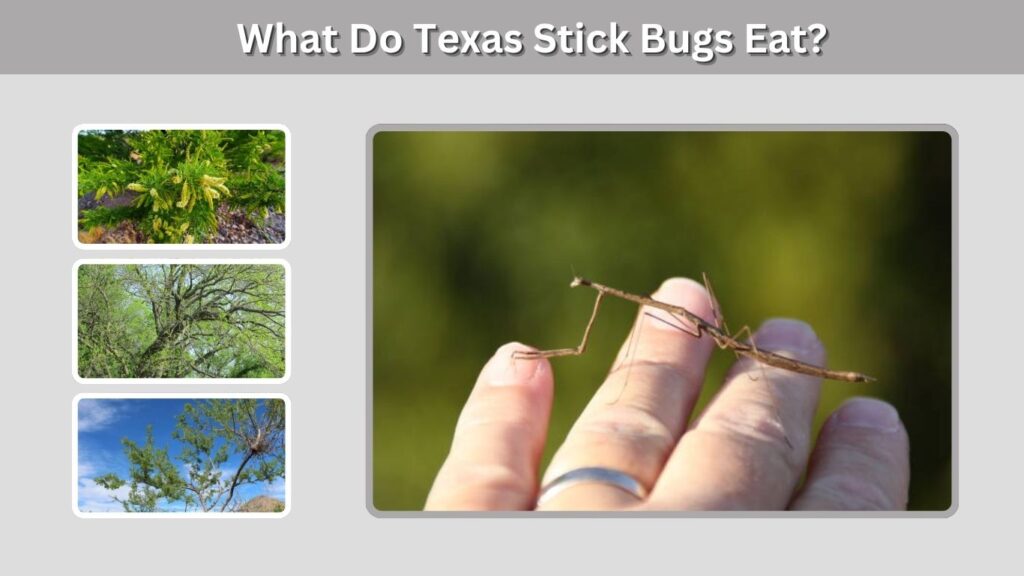
Texas stick bugs are herbivores. Unlike praying mantises, they do not hunt insects or other animals.
They use chewing mouthparts to remove pieces from leaves and often feed at night when predators are less active.
Common Foods
Depending on the species, walking sticks may eat leaves from:
- Oak
- Elm
- Mesquite
- Hackberry
- Rose
- Blackberry
- Various shrubs
- Other broadleaf plants
Different species have different host preferences.
Large populations can occasionally remove significant amounts of foliage, although a single walking stick usually causes little noticeable damage.
Are Texas Stick Bugs Dangerous?
Most Texas walking sticks are harmless to people. They do not normally bite, sting, chase, or attack humans.
Their primary defense is camouflage. When threatened, they often freeze, sway like a twig, drop to the ground, or attempt to crawl away.
However, certain walking sticks have additional defenses.
Possible Defensive Behaviors
Depending on species, a walking stick may:
- Freeze completely
- Drop from a branch
- Kick with its legs
- Use spiny legs to pinch
- Release an unpleasant odor
- Produce irritating defensive chemicals
These behaviors are intended to discourage predators rather than attack humans.
Do Texas Walking Stick Bugs Have a Stinger?
No. Walking stick insects do not have stingers like wasps, bees, or certain ants.
People sometimes mistake the end of a female’s abdomen for a stinger, but this structure is associated with reproduction rather than injecting venom.
Can Texas Stick Bugs Bite?
Walking sticks possess chewing mouthparts for eating vegetation, but human bites are extremely uncommon.
Most species would rather escape than defend themselves directly.
Large species can sometimes pinch or scratch with their legs if grabbed roughly, but serious injuries are highly unlikely.
Handling wild insects unnecessarily is still best avoided.
Can Texas Stick Bugs Spray Chemicals?
Some walking sticks can produce defensive secretions when threatened. This ability is especially notable in certain species related to two-striped walking sticks.
The chemicals can irritate sensitive tissues, particularly the eyes.
Signs of Defensive Spray Exposure
Possible effects include:
- Burning eyes
- Watering
- Redness
- Temporary blurred vision
- Skin irritation
- Strong or unusual odor
Do not hold an unidentified walking stick close to your face.
If material enters the eyes, rinse with plenty of clean water. Persistent or severe eye irritation should receive medical attention.
Texas Stick Bug vs Praying Mantis
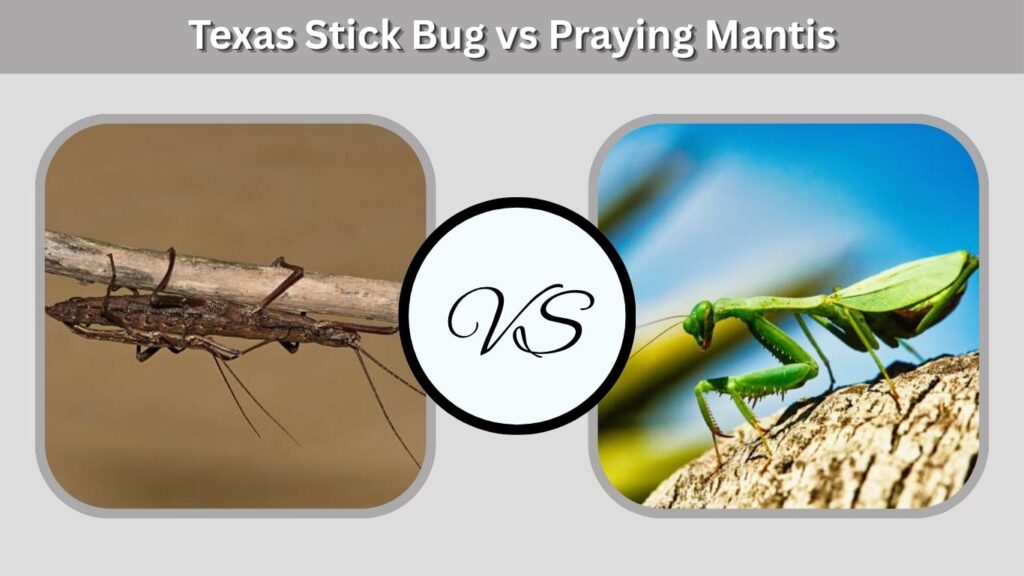
Walking sticks and praying mantises are often confused because both have elongated bodies and use camouflage.
However, their anatomy and diet are very different.
How to Tell Them Apart
A stick bug usually has:
- A straight, twig-like body
- Six relatively similar legs
- A smaller head
- Leaf-eating behavior
- Slow movement
A praying mantis usually has:
- A triangular head
- Large eyes
- Enlarged grasping front legs
- A flexible neck
- Predatory behavior
If the insect has prominent folded front legs that look designed for grabbing prey, it is most likely a mantis rather than a walking stick.
Texas Stick Bug Life Cycle
Walking sticks undergo incomplete metamorphosis. They do not pass through a caterpillar or pupal stage.
Their life cycle consists of egg, nymph, and adult stages.
From Egg to Adult
The general process is:
- A female lays or drops eggs.
- Eggs remain hidden in soil or leaf litter.
- Small nymphs hatch.
- Nymphs begin feeding on suitable leaves.
- They molt repeatedly as they grow.
- After several molts, they become adults.
- Adult females eventually produce another generation of eggs.
Nymphs resemble miniature adults rather than larvae.
Some stick insect eggs can take many months to hatch.
When Are Stick Bugs Most Active in Texas?
Walking sticks are usually most noticeable during the warmer part of the year.
Many species spend much of their time feeding after sunset or during the night, while daylight hours are used for remaining motionless among vegetation.
Adults may become particularly noticeable in late summer and fall after spending earlier months growing through multiple nymph stages.
Warm Texas weather can support a relatively long period of activity.
Why Is a Stick Bug on Your Texas House?
Walking sticks occasionally appear on doors, windows, patios, garages, fences, and exterior walls.
Their presence usually does not indicate an indoor infestation.
They may simply wander from nearby plants or be attracted to sheltered surfaces.
What Should You Do?
If one enters the house:
- Place a container over it.
- Slide cardboard underneath.
- Carry it outside.
- Release it near vegetation.
- Avoid pesticides for a single insect.
- Do not squeeze or grab it.
Walking sticks do not normally establish household colonies like cockroaches or bed bugs.
Are Texas Stick Bugs Good or Bad?
Walking sticks are normal members of Texas ecosystems. They serve as plant consumers and provide food for birds, reptiles, spiders, and other predators.
Although they eat foliage, a small number typically causes little harm.
Large populations can occasionally damage shrubs or trees through heavy feeding, but most homeowners who find a single walking stick have no reason for concern.
Their remarkable camouflage also makes them some of the most interesting insects to observe in Texas.
FAQs
What Is the Largest Stick Bug in Texas?
The giant walking stick, Megaphasma denticrus, is one of the largest walking sticks found in Texas and North America. Large females can reach around 6 to 7 inches in body length and appear even longer when their legs are fully extended.
Are Texas Walking Stick Bugs Dangerous?
Most Texas walking sticks are harmless. They do not have stingers and rarely attempt to bite. Some species may use spiny legs or defensive chemical secretions when threatened, so unfamiliar walking sticks should not be held close to the eyes or face.
What Do Texas Stick Bugs Eat?
Texas walking sticks primarily eat leaves from trees and shrubs. Depending on species and location, their host plants may include oak, elm, mesquite, hackberry, rose, and other broadleaf vegetation. They usually feed slowly and may be more active at night.
Do Stick Bugs Live in West Texas?
Yes, walking sticks can occur in parts of West Texas where suitable vegetation exists, although the species and abundance differ from wetter areas of Central and East Texas. They are most likely to occur around shrubs, woodland patches, and other areas providing suitable host plants.
Can Texas Stick Bugs Fly?
Flight ability varies among species and sexes. Some walking sticks possess functional wings and can fly short distances, while others have reduced wings or no useful wings at all. Large females are often less capable of flight than smaller males.