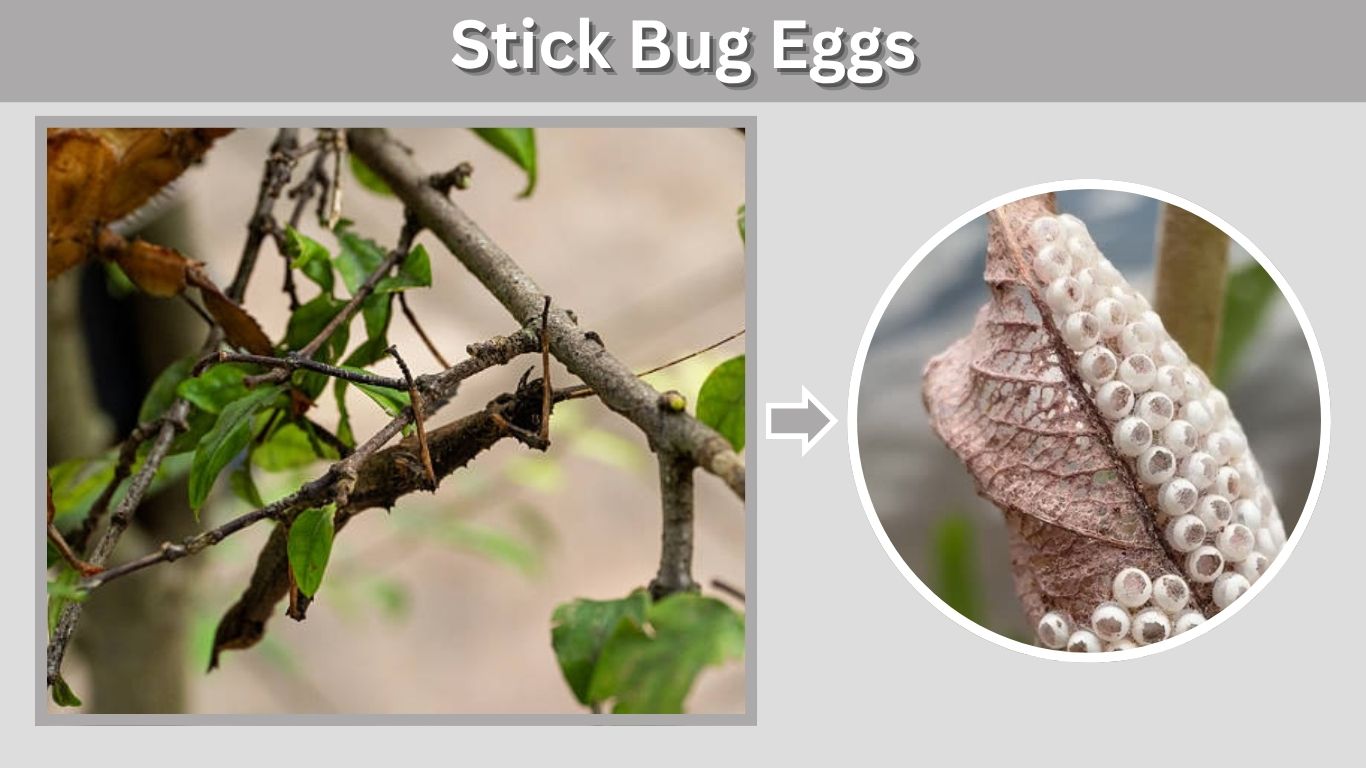
Stick bug eggs are surprisingly unusual and often look more like tiny seeds than insect eggs. Depending on the species, they may be round, oval, brown, gray, black, or patterned, and many have a small cap-like structure at one end. Female stick insects may drop their eggs onto the ground, bury them, or attach them to plants. If you keep walking sticks as pets, understanding how to identify, store, and hatch their eggs is important for successfully raising the next generation.
What Do Stick Bug Eggs Look Like?
Stick bug eggs vary considerably between species, but most are small, hard-shelled, and seed-like. Their camouflage helps protect them from predators while they rest among soil, leaf litter, and plant debris.
Some eggs look so much like plant seeds that they can easily be overlooked when cleaning an enclosure.
Stick Bug Egg Identification
Typical features include:
- Round, oval, or barrel-shaped form
- Hard outer shell
- Brown, gray, tan, cream, or black coloration
- Speckled or textured surface
- Small cap-like structure at one end
- Usually only a few millimeters long
- Seed-like appearance
The small cap is called an operculum. When the young stick insect is ready to hatch, it pushes through this section of the egg.
How Big Are Stick Bug Eggs?
Most stick insect eggs are only a few millimeters long.
Their exact dimensions vary according to species. Large tropical walking sticks may produce noticeably larger eggs than smaller species such as Indian stick insects.
Despite their size, the shell is relatively tough and designed to protect the developing embryo for many months.
Do Stick Bugs Lay Eggs?
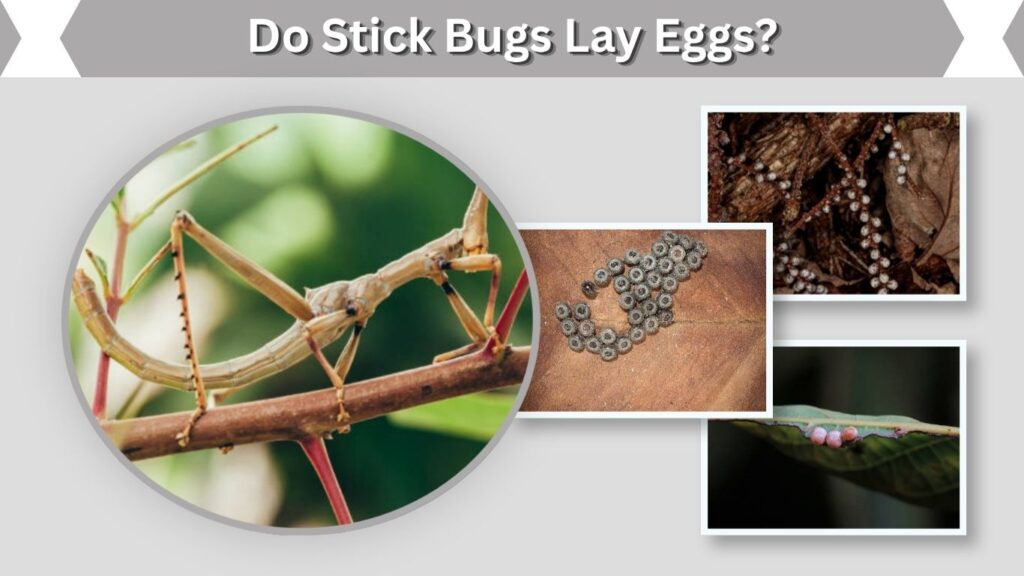
Yes. Female stick insects reproduce by laying eggs. Depending on the species, they can produce dozens or even hundreds of eggs during their adult lives.
Different walking sticks have developed different ways of depositing their eggs.
How Stick Bugs Lay Eggs
A female may:
- Drop eggs individually onto the ground
- Flick eggs away from her body
- Bury eggs in soil
- Insert eggs into plant tissue
- Glue eggs onto branches or leaves
- Place eggs in protected cracks
Many commonly kept pet stick insects simply release their eggs from branches, allowing them to fall onto the enclosure floor.
This behavior resembles seeds dropping from a plant and may help distribute the offspring over a wider area.
How Many Eggs Do Stick Bugs Lay?
The number depends greatly on species, age, diet, temperature, and the health of the female.
Some females produce only a modest number, while others may lay several hundred eggs throughout adulthood.
Typical Egg Production
A female may lay:
- A few eggs each week
- One or more eggs per day in highly productive species
- Dozens of eggs during adulthood
- Several hundred eggs in some species
Egg laying generally begins after a female reaches maturity.
Production can continue for weeks or months, depending on lifespan and species.
Can Stick Bugs Lay Eggs Without a Male?
Some stick insects can reproduce through parthenogenesis, meaning females can produce viable eggs without mating with a male.
This ability is especially well known among several species commonly kept as pets.
Parthenogenesis in Stick Bugs
When reproduction occurs without mating:
- The female lays fertile eggs without a male.
- Offspring are usually female.
- Development may take longer in some species.
- Genetic diversity is lower.
- Multiple generations can sometimes be produced without males.
Indian stick insects are especially famous for reproducing this way.
Other species require males for successful fertilization, so reproductive biology should always be checked for the particular species being kept.
How Long Do Stick Bug Eggs Take to Hatch?
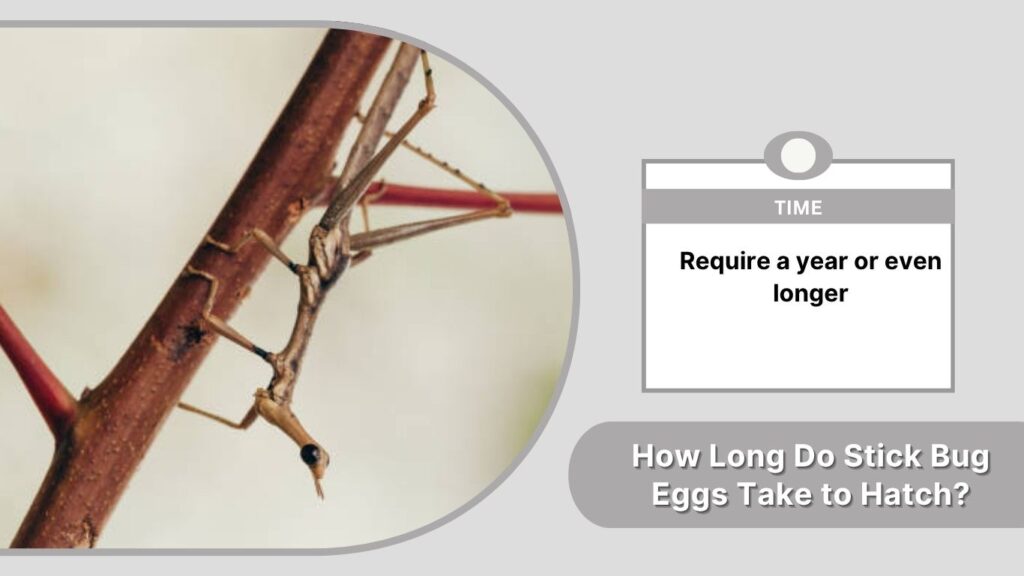
Stick bug eggs are known for taking a surprisingly long time to develop.
Some hatch within a few months, while others may require a year or even longer.
Typical Hatching Time
Approximate development periods include:
| Stick Bug Type | Approximate Hatching Time |
| Indian stick insect | 2–4 months |
| Common captive species | 3–9 months |
| Giant tropical species | 6–12 months |
| Slow-developing species | 12+ months |
Temperature and humidity can affect development.
Even eggs laid at the same time may hatch weeks apart, so apparently inactive eggs should not be discarded too quickly.
Stick Bug Egg Care
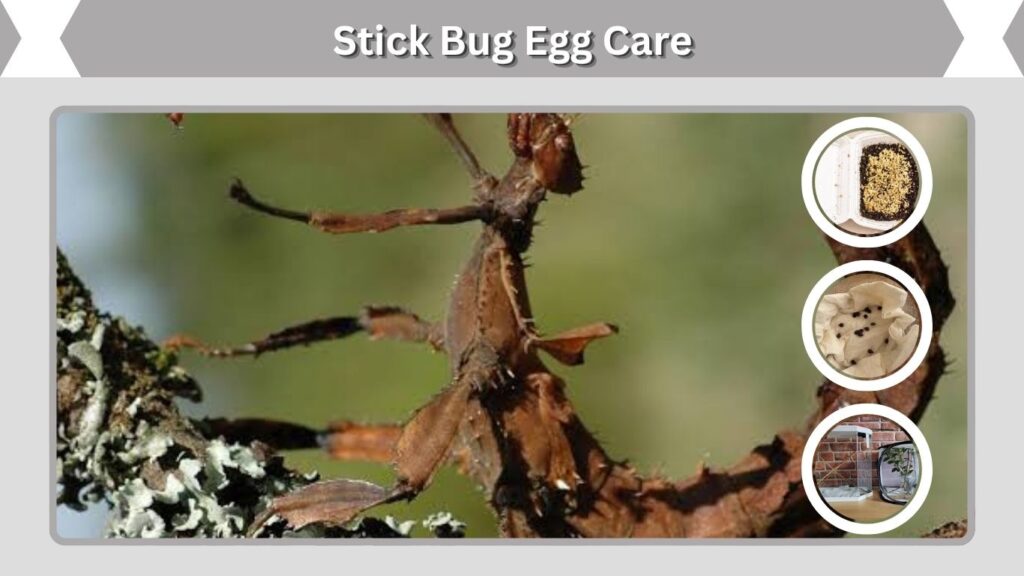
Caring for stick insect eggs is usually easier than caring for nymphs, but moisture and ventilation must be carefully balanced.
Eggs should not be allowed to become excessively wet or completely desiccated.
Basic Stick Bug Egg Care
For successful incubation:
- Keep eggs in a ventilated container.
- Use a slightly moist incubation material if required.
- Maintain appropriate humidity for the species.
- Avoid soaking the eggs.
- Prevent mold growth.
- Keep temperatures stable.
- Check eggs regularly.
- Remove visibly moldy material when necessary.
- Avoid handling eggs repeatedly.
Species from humid tropical environments often require more moisture than species adapted to drier habitats.
Should Stick Bug Eggs Be Kept Dry?
Not completely.
Many stick insect eggs require some humidity to prevent them from drying out, but constant wetness can encourage mold and fungal growth.
A slightly moist substrate such as vermiculite, sand, soil, or paper towel may work depending on the species.
The goal is generally humid rather than soaking wet conditions.
How to Hatch Stick Bug Eggs
Hatching requires patience because development may continue for months with very little visible change.
Stable conditions are more important than constantly moving or inspecting the eggs.
Simple Hatching Method
- Collect the eggs from the enclosure.
- Separate them from droppings and old food.
- Place them in a ventilated incubation container.
- Provide the humidity required by the species.
- Keep them at an appropriate stable temperature.
- Check periodically for mold.
- Wait until nymphs emerge naturally.
- Move hatchlings into a suitable rearing enclosure.
Never attempt to open an egg manually.
Healthy nymphs should emerge through the operculum without assistance.
What Happens When Stick Bug Eggs Hatch?
A newly hatched stick insect is called a nymph.
Nymphs often look like miniature versions of adults, although their coloration, body proportions, and patterns may change as they mature.
Newly Hatched Stick Bugs
After hatching, nymphs typically:
- Begin climbing quickly
- Search for fresh foliage
- Eat tender leaves
- Drink moisture from leaf surfaces
- Shed their skin repeatedly
- Increase in size with each molt
Young stick insects can be delicate and need access to appropriate host plants almost immediately.
Ventilation is also important because stagnant, excessively humid conditions can lead to health problems.
Indian Stick Bug Eggs
Indian stick insects are among the most popular beginner species because they are relatively easy to keep and reproduce readily.
Their eggs are small, brown, and seed-like.
What Do Indian Stick Bug Eggs Look Like?
Indian stick insect eggs generally appear:
- Small
- Oval or rounded
- Brown or mottled
- Hard-shelled
- Similar to tiny seeds
- Equipped with a visible cap at one end
Females typically drop them onto the enclosure floor.
Because females can reproduce through parthenogenesis, owners may suddenly find themselves with many eggs even when only female insects are present.
Australian Stick Bug Eggs
Australian stick insects include many species, and their eggs vary significantly in appearance.
Some are large, textured, and strongly resemble seeds.
Certain Australian species rely on ants as part of their natural reproductive strategy.
An Interesting Relationship With Ants
Some stick insect eggs have a specialized structure that resembles a nutritious seed attachment.
Ants may carry these eggs into their nests, consume the edible portion, and leave the egg protected underground.
The nymph later hatches and eventually leaves the ant nest.
This remarkable relationship may protect the egg from predators, wildfire, and harsh environmental conditions.
Do Stick Bugs Die After Laying Eggs?
Female stick bugs do not normally die immediately after laying eggs.
Instead, most continue feeding and laying additional eggs over an extended period.
A female may gradually produce eggs throughout much of her adult lifespan.
What Happens After Egg Laying?
The female usually continues normal activities such as eating, climbing, resting, and laying additional eggs.
Eventually she dies as part of her natural life cycle.
Because stick insects generally provide no parental care, eggs develop independently after being deposited.
The mother does not guard, feed, or care for the hatchlings.
Are Stick Bug Eggs Easy to Hatch?
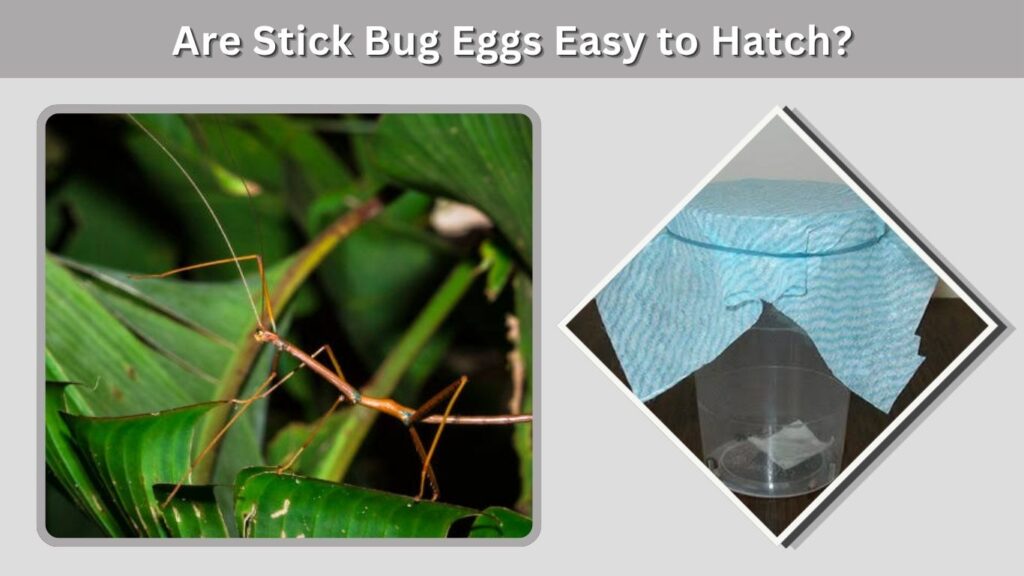
Many species can be successfully hatched in captivity, making stick insects relatively easy to breed compared with some exotic insects.
However, the main difficulty is patience.
Eggs may appear unchanged for months before suddenly producing healthy nymphs.
Incorrect moisture, mold, extreme temperatures, or poor ventilation can reduce hatching success.
Knowing the exact species makes incubation much easier because tropical, temperate, and dry-climate walking sticks may require different conditions.
Can You Buy Stick Bug Eggs?
Stick insect eggs are sometimes available from specialist insect breeders and hobbyists where ownership and shipping are legal.
Buying eggs can be less expensive than purchasing adult insects, but there is no guarantee that every egg will hatch.
Before obtaining eggs, identify the exact species and learn about its adult size, food plants, humidity needs, incubation time, and local regulations.
Some stick insects can become invasive outside their native range and may be regulated in certain locations.
FAQs
What Do Stick Bug Eggs Look Like?
Stick bug eggs usually resemble tiny seeds. They can be round, oval, or barrel-shaped and are commonly brown, gray, black, or mottled. Many have a hard shell and a small cap called an operculum through which the young insect eventually emerges.
How Long Do Stick Bug Eggs Take to Hatch?
Most stick bug eggs take several months to hatch. Depending on the species, development may last about two months to more than a year. Temperature, humidity, genetics, and species all affect the incubation period, and eggs laid together may hatch at different times.
Do Stick Bugs Lay Eggs Without Mating?
Some species can. This process is called parthenogenesis, in which a female produces viable eggs without mating with a male. Indian stick insects are a well-known example. Offspring produced through parthenogenesis are typically female.
Should Stick Bug Eggs Be Kept Dry?
Stick bug eggs generally should not be completely dry, but they should not remain soaking wet either. Many species require moderate humidity during incubation. Excessive moisture encourages mold, while conditions that are too dry may reduce successful development.
Do Stick Bugs Die After Laying Eggs?
No. Female stick insects normally continue living after laying eggs and may produce many additional eggs throughout adulthood. They do not usually provide parental care, so the eggs remain on the ground, in soil, or attached to vegetation until they hatch.