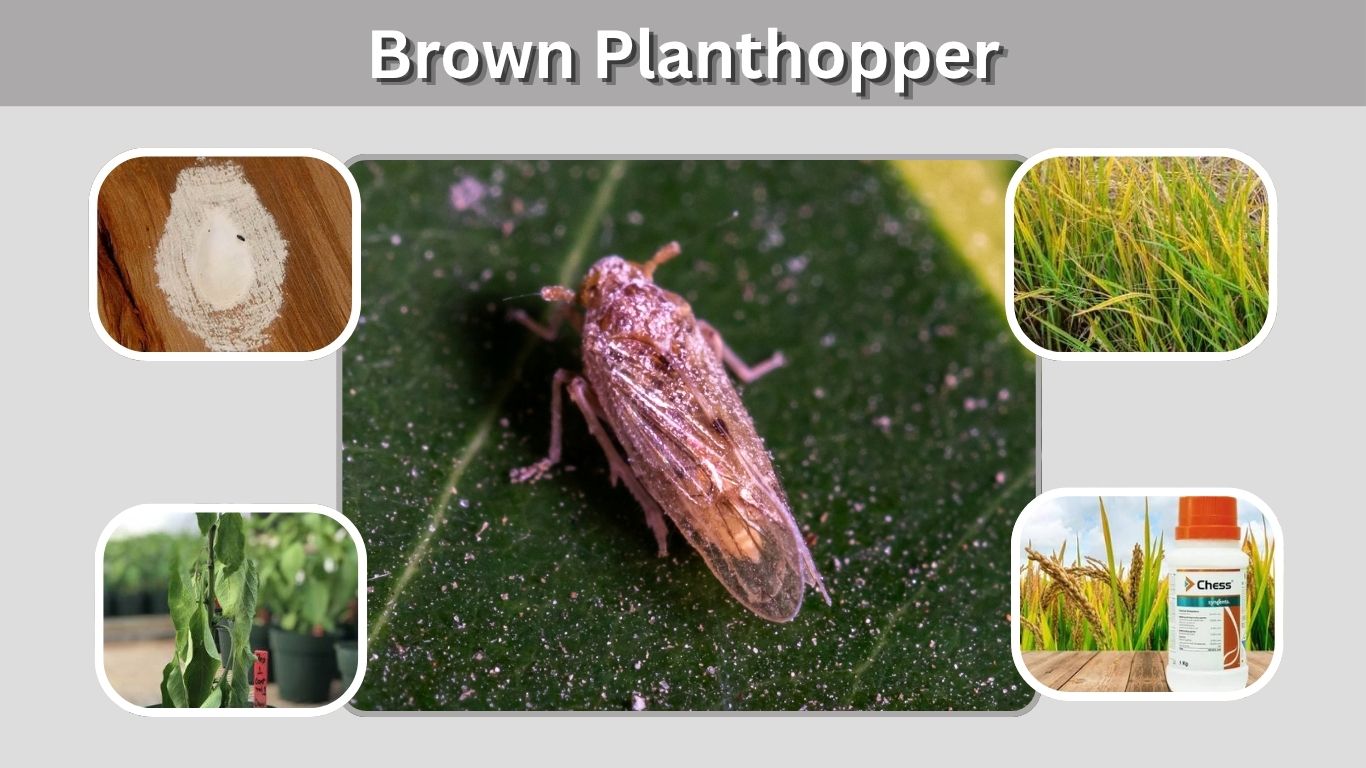
The brown planthopper (Nilaparvata lugens) is a small sap-feeding insect and one of the most important pests of rice in Asia. Both adults and nymphs feed near the base of rice plants by extracting phloem sap. Heavy infestations can cause yellowing, wilting, and complete drying known as hopperburn. Brown planthoppers can also transmit rice grassy stunt and ragged stunt viruses. Effective management relies on monitoring, resistant rice varieties, conserving natural predators, and avoiding unnecessary insecticide applications.
What Is a Brown Planthopper?
The brown planthopper, commonly abbreviated as BPH, belongs to the family Delphacidae. Its scientific name is Nilaparvata lugens. It is closely associated with rice and feeds mainly on the lower portions of plants. The insect can multiply quickly when conditions are favorable, especially when ecological balance in rice fields has been disrupted.
Brown Planthopper Identification
Look for these characteristics:
- Small brown or brownish-black body
- Adults occurring in short-winged and long-winged forms
- Pale to brown nymphs
- Wedge-shaped appearance
- Piercing-sucking mouthparts
- Adults and nymphs concentrated near the plant base
- Quick hopping behavior when disturbed
- Honeydew around heavily infested plants
IRRI recommends checking the lower parts of rice tillers because adults and nymphs frequently feed there.
Brown Planthopper vs. Brown Leafhopper
A brown planthopper should not automatically be called a brown leafhopper.
Planthoppers and leafhoppers are related sap-feeding insects, but they belong to different groups. Brown planthoppers such as Nilaparvata lugens are particularly associated with rice and typically remain around the base of tillers.
Leafhoppers are generally more wedge-shaped and often move rapidly across leaves. Correct identification is important because the pests can transmit different plant diseases and may require different management strategies.
Brown Planthopper Nymph
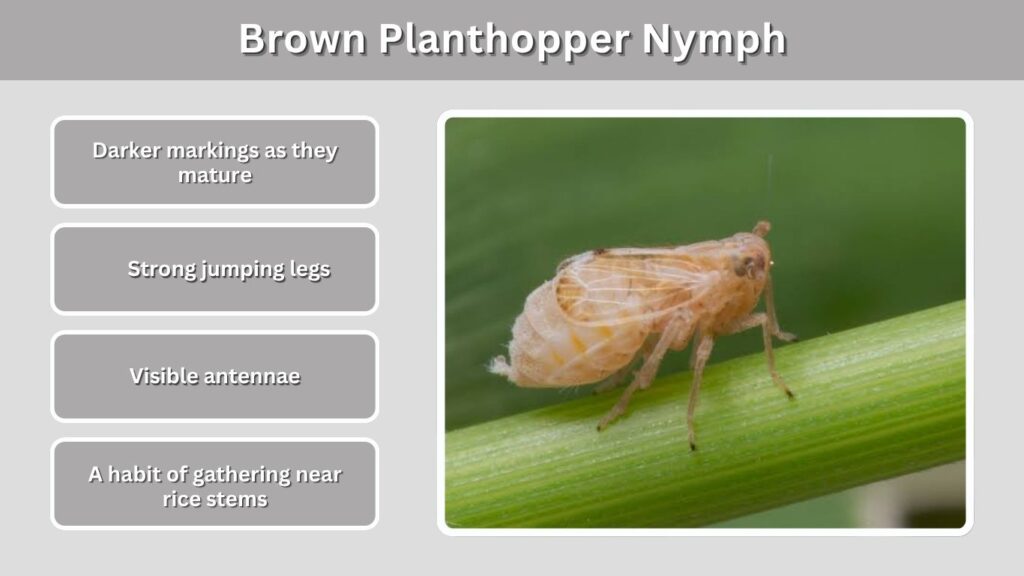
Young brown planthoppers are called nymphs rather than larvae. Brown planthoppers undergo incomplete metamorphosis, so there is no caterpillar-like larval or pupal stage. Nymphs resemble small adults but initially lack functional wings. Both nymphs and adults can damage rice by continuously removing plant sap.
What Does a Brown Planthopper Nymph Look Like?
Brown planthopper nymphs typically have:
- Small, wingless bodies
- Pale white to brown coloration
- Darker markings as they mature
- Strong jumping legs
- Visible antennae
- A habit of gathering near rice stems
- Increasingly adult-like appearance after each molt
According to FAO information on rice IPM, the species passes through five nymphal stages before becoming an adult.
Brown Planthopper Life Cycle
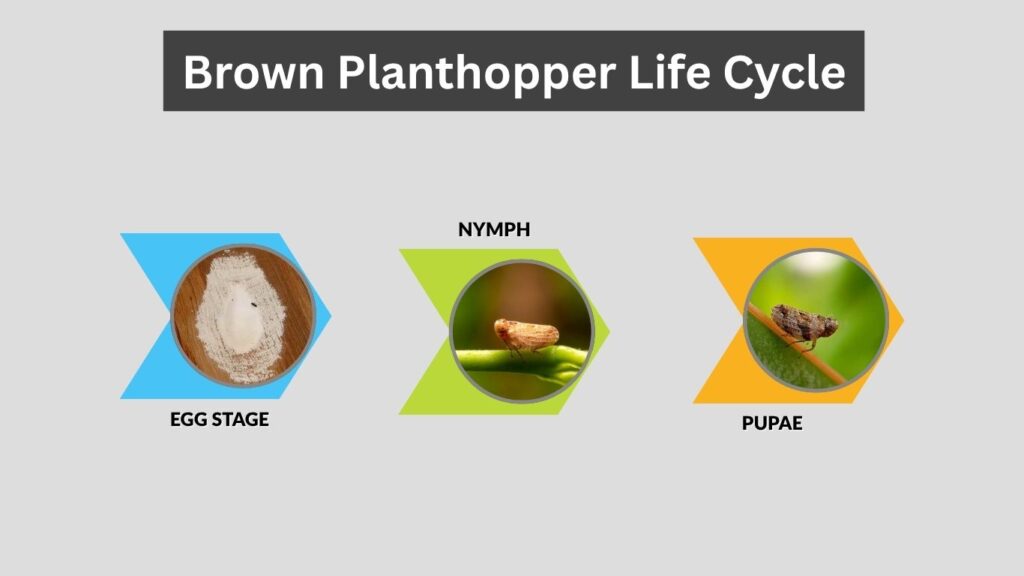
Brown planthoppers can reproduce quickly, allowing populations to increase rapidly in favorable rice fields. Females insert eggs into plant tissue, protecting them from many environmental hazards and some surface pesticide applications. Development then proceeds through several nymphal stages before adulthood.
Egg Stage
Females lay eggs inside rice stems and leaf sheaths.
The eggs are therefore less visible than eggs deposited openly on leaf surfaces. IRRI describes planthopper eggs as whitish and often arranged within plant tissue.
FAO reports that the egg stage of brown planthoppers commonly lasts approximately 6–8 days.
Nymph Stage
After hatching, the insects pass through five nymphal stages.
Nymphs remain close to the base of rice plants and feed by sucking sap. They grow through repeated molts until the final stage produces an adult.
Because nymphs and adults feed in the same general area, heavy populations can place substantial stress on an individual rice plant.
Adult Stage
Adults may develop either long wings or shorter wings.
Long-winged adults are important for migration and can colonize new rice fields. When suitable food is abundant, short-winged adults may become common and invest heavily in reproduction.
Under favorable conditions, the complete life cycle can take approximately 23–25 days, allowing multiple generations to develop during a rice-growing season.
Brown Planthopper Damage in Rice
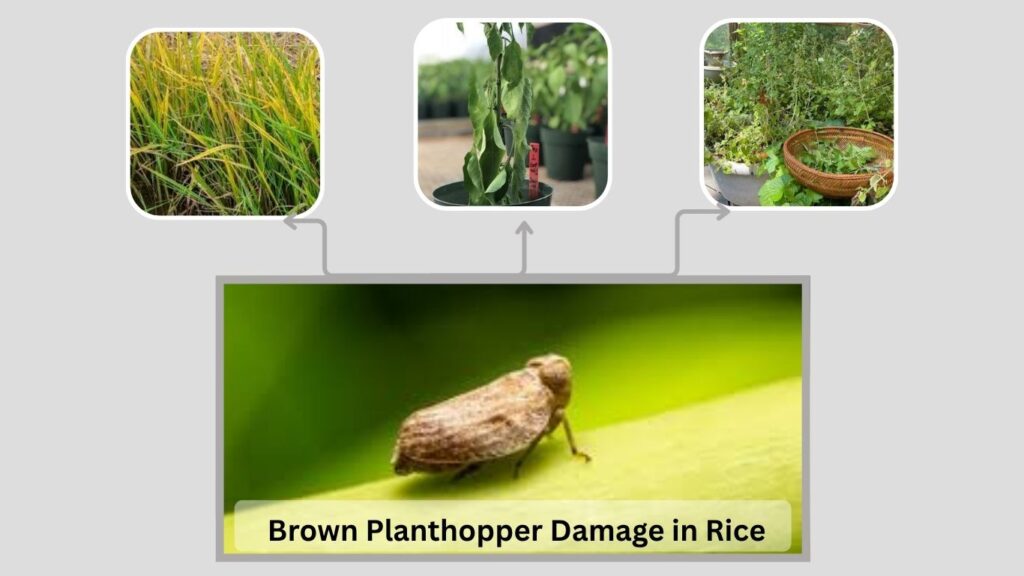
Both adult and immature brown planthoppers insert their mouthparts into rice tissue and feed on phloem sap. Small populations may cause little obvious damage, but large infestations can rapidly weaken plants. The insects may also indirectly damage crops by transmitting viral diseases.
Brown Planthopper Damage Symptoms
Important symptoms include:
- Yellowing rice plants
- Reduced plant vigor
- Wilting
- Browning of leaves
- Drying plants
- Honeydew around the plant base
- Sooty mold associated with honeydew
- Circular patches of dead plants
- Symptoms of grassy stunt or ragged stunt disease
These signs should be considered alongside the presence of actual planthoppers because several other stresses can also cause yellow or drying rice.
What Is Hopperburn?
Hopperburn is one of the most recognizable signs of severe brown planthopper infestation.
As large numbers of insects continuously remove sap, affected rice plants become yellow, brown, wilted, and eventually dry out. Damage often begins in localized areas and may develop into conspicuous patches within a field.
Severe hopperburn can result in major crop losses when populations are not naturally or actively suppressed.
Brown Planthopper and Rice Diseases
Brown planthoppers cause more than direct feeding damage. They also act as vectors of important rice viruses. Consequently, even fields without dramatic hopperburn can face problems when infected insects spread disease between plants.
Rice Grassy Stunt Virus
Brown planthoppers transmit rice grassy stunt virus.
Affected plants may remain stunted and produce excessive small tillers. Management therefore includes reducing the vector population and limiting sources of virus between rice crops.
Rice Ragged Stunt Virus
Brown planthoppers can also transmit rice ragged stunt virus.
The combination of sap feeding and virus transmission makes BPH particularly important in rice production. Preventing large populations is generally easier than attempting to recover a field after severe damage has developed.
How to Control Brown Planthoppers
Brown planthopper management works best as an integrated approach rather than depending automatically on insecticides. Rice ecosystems naturally contain spiders, parasitoids, pathogens, and other organisms that suppress BPH populations. Broad-spectrum pesticide use can eliminate these beneficial organisms and sometimes contribute to planthopper resurgence.
Brown Planthopper Control Measures
Useful management practices include:
- Monitor rice fields regularly.
- Check plant bases rather than only upper leaves.
- Use locally recommended resistant rice varieties.
- Conserve spiders and other natural enemies.
- Maintain healthy crop-growing conditions.
- Avoid unnecessary early insecticide sprays.
- Remove or manage infected crop residues where appropriate.
- Follow local integrated pest management recommendations.
- Apply insecticides only when justified by local guidance.
FAO emphasizes conserving natural enemies and carefully considering pesticide use because insecticide-induced resurgence has historically contributed to severe BPH outbreaks.
Natural Enemies of Brown Planthoppers
Rice fields contain many organisms capable of attacking planthoppers.
Important natural enemies include predatory spiders, parasitoids, and insect pathogens. Hunting spiders are particularly valuable because they occupy areas near the lower rice canopy where brown planthoppers feed.
Protecting these predators can keep populations below damaging levels without disrupting the entire rice-field ecosystem.
Insecticide for Brown Planthopper
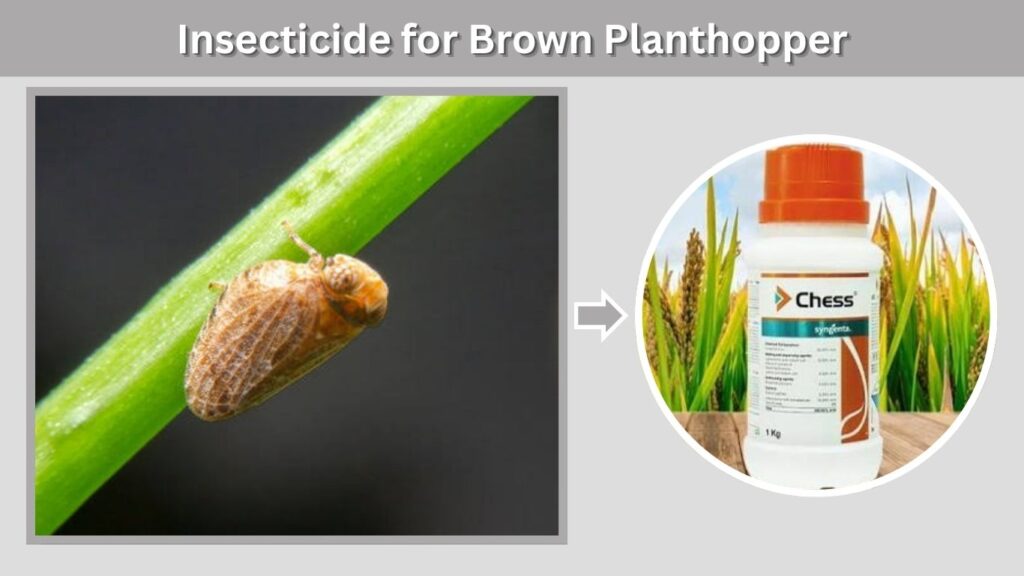
Insecticides may sometimes be necessary, but choosing and applying them requires care. Repeated or unnecessary applications can kill predators while leaving protected eggs relatively unaffected, potentially allowing BPH numbers to rebound afterward.
For that reason, chemical control should be part of an integrated management program rather than treated as the automatic first response.
Why Insecticide Resistance Matters
Brown planthopper populations can adapt under repeated pesticide pressure.
Using the same chemical repeatedly may reduce its effectiveness over time. Farmers should follow current local agricultural recommendations regarding treatment thresholds, approved products, application timing, and rotation of insecticide modes of action rather than relying on a single chemical year after year.
FAQs
What Is the Scientific Name of the Brown Planthopper?
The scientific name of the brown planthopper is Nilaparvata lugens. It belongs to the family Delphacidae and is strongly associated with rice. Both adults and nymphs feed on phloem sap, primarily near the lower portion of rice plants.
What Damage Does Brown Planthopper Cause?
Brown planthoppers remove sap from rice plants, causing yellowing, wilting, reduced vigor, and eventually hopperburn during severe infestations. They can also transmit rice grassy stunt and ragged stunt viruses, increasing their potential impact on rice production.
What Is Hopperburn in Rice?
Hopperburn occurs when large numbers of planthoppers continuously feed on rice plants. Affected plants become yellow, then brown and dry. Severe infestations may create obvious patches of dying rice within a field.
How Long Is the Brown Planthopper Life Cycle?
Under suitable conditions, the complete brown planthopper life cycle can take about 23–25 days. Eggs generally hatch after approximately 6–8 days, followed by five nymphal stages before the insect becomes an adult.
How Can Brown Planthoppers Be Controlled?
Integrated pest management is recommended. Farmers can monitor fields, use resistant varieties when appropriate, conserve spiders and other natural enemies, maintain healthy crops, and avoid unnecessary insecticide applications. Chemical treatment should follow current local agricultural recommendations.