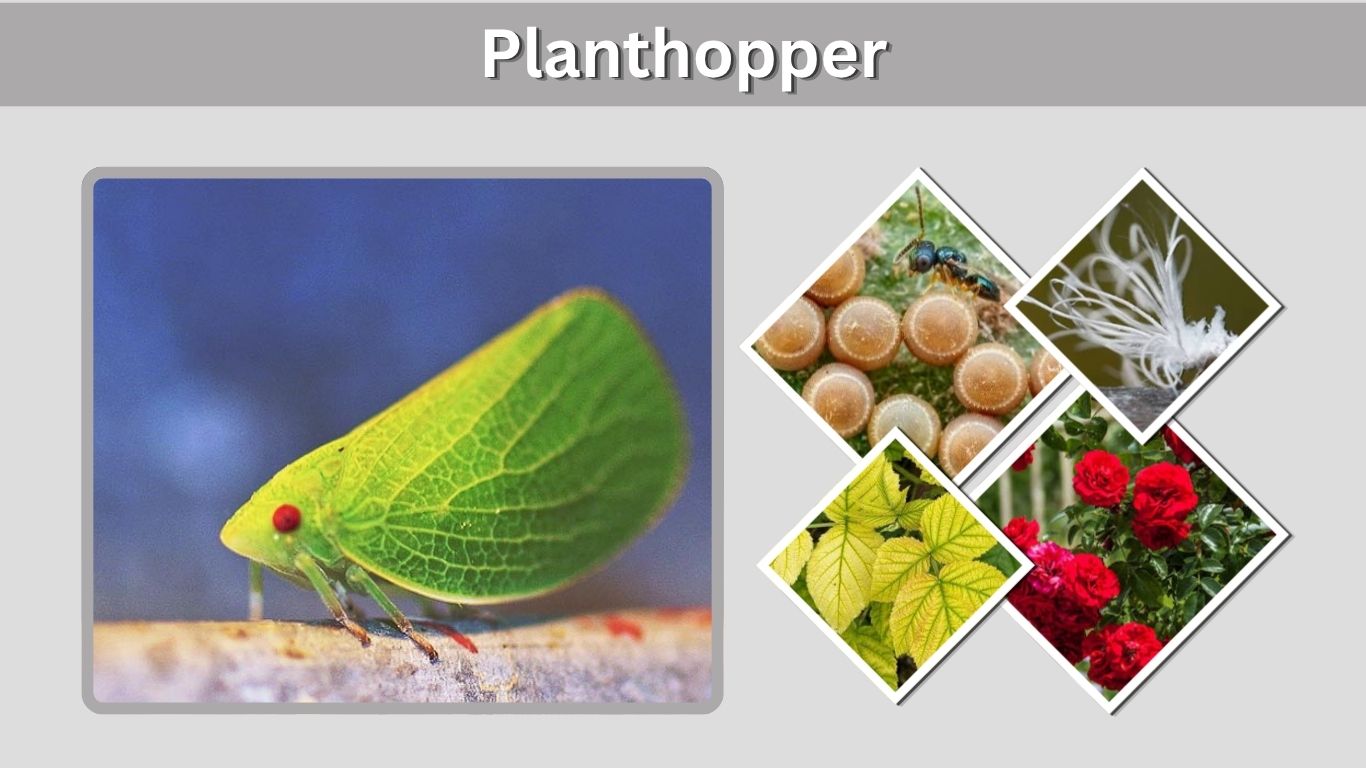
Planthoppers are small sap-feeding insects known for their impressive jumping ability, unusual shapes, and sometimes wax-covered nymphs. They occur on grasses, shrubs, trees, crops, and garden plants throughout much of the world. Most species cause little noticeable damage, although certain planthoppers, especially the brown planthopper of rice, can become serious agricultural pests. From fuzzy white nymphs to brightly colored adults, planthoppers are surprisingly diverse. Learning their appearance, life cycle, feeding habits, and differences from leafhoppers makes them much easier to recognize.
What Is a Planthopper?
A planthopper is an insect belonging to the group Fulgoromorpha within the true bugs. Planthoppers feed by inserting specialized mouthparts into plant tissue and drinking sap. Thousands of species exist, ranging from tiny brown insects hidden among grasses to colorful tropical species with unusual heads, wings, or waxy tails.
Planthopper Identification
Common characteristics include:
- Small to medium-sized body
- Piercing-sucking mouthparts
- Powerful hind legs
- Ability to jump suddenly
- Wings held roof-like over the body in many adults
- Green, brown, gray, white, or patterned coloration
- Large or prominent eyes
- Plant-feeding behavior
Some species are difficult to identify without examining wing patterns, body shape, and other small features.
Why Are They Called Planthoppers?
Their name describes both where they live and how they escape danger.
Planthoppers spend much of their time on plants. When approached, many suddenly launch themselves into the air rather than simply crawling away.
Some can jump many times their own body length. Adults may also fly after jumping, making them difficult to catch.
What Does a Planthopper Nymph Look Like?
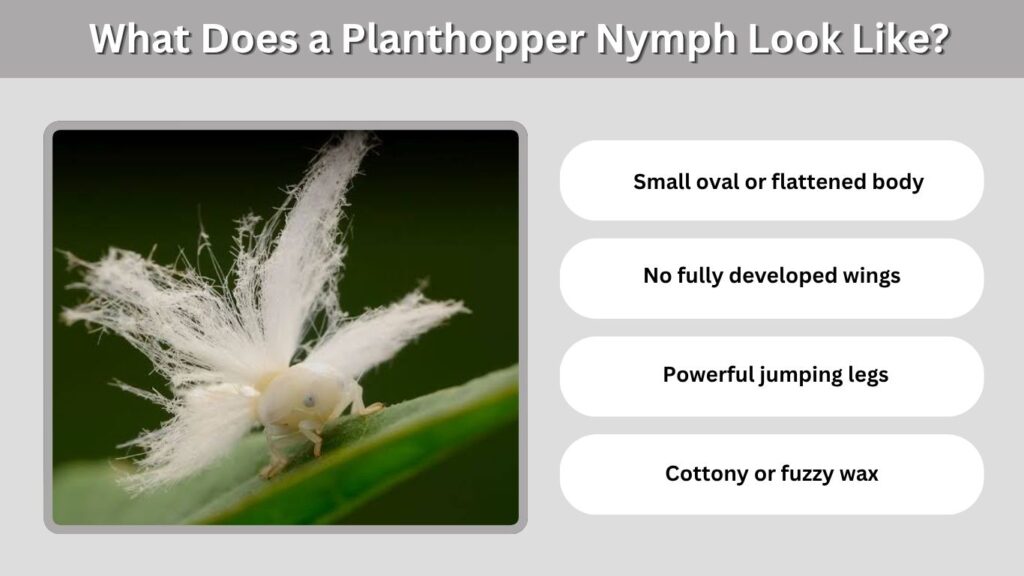
Planthopper nymphs are immature insects that have not yet developed full adult wings. Depending on the family, they can look dramatically different from adults. Flatid planthopper nymphs are especially noticeable because they may be coated with white wax and carry long waxy filaments behind their bodies.
Planthopper Nymph Identification
A nymph may have:
- Small oval or flattened body
- No fully developed wings
- Powerful jumping legs
- White, green, brown, or pale coloration
- Cottony or fuzzy wax
- Long wax filaments extending backward
- Slow walking followed by sudden jumping
- A tendency to remain on stems or leaf undersides
The strange waxy covering often makes people mistake them for mealybugs or pieces of fluff.
Why Are Some Planthopper Nymphs White and Fuzzy?
Many planthopper nymphs produce wax from glands on their abdomen.
This wax can:
- Help reduce moisture loss
- Make predators less able to grab them
- Help camouflage the insect
- Prevent sticky plant secretions from coating the body
- Provide some protection from environmental conditions
The wax may look like cotton, feathers, or a miniature fluffy tail.
Common Types of Planthoppers
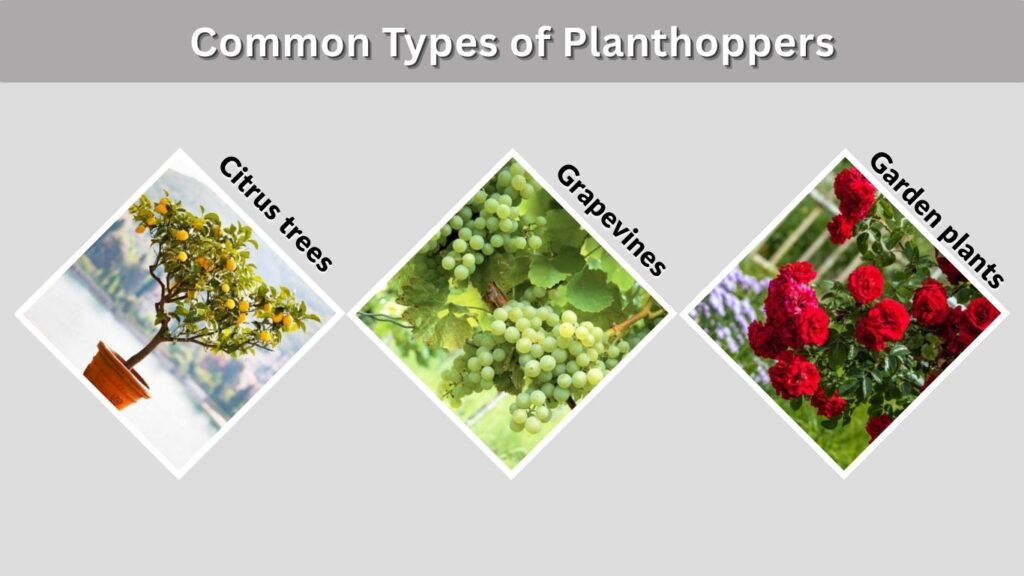
Planthoppers are not a single species. They include numerous families and thousands of species with very different appearances and host plants. Some are primarily interesting garden visitors, while others can damage economically important crops.
Citrus Flatid Planthopper
The citrus flatid planthopper (Metcalfa pruinosa) is a small grayish or whitish planthopper that feeds on many plants.
Its nymphs are easier to recognize than the adults because they frequently appear covered in white wax.
They may occur on:
- Citrus trees
- Grapevines
- Ornamental shrubs
- Fruit trees
- Garden plants
- Woody vegetation
Heavy populations can contribute to sticky honeydew deposits and sooty mold.
Brown Planthopper
The brown planthopper (Nilaparvata lugens) is an important pest of rice.
Unlike many relatively harmless garden planthoppers, large brown planthopper populations can seriously weaken rice plants by removing sap.
Infested fields can develop patches of dried, brown plants known as hopperburn.
The species can also transmit important plant diseases, making it a major agricultural concern in rice-growing regions.
Green Planthoppers
“Green planthopper” can describe several different green species rather than one particular insect.
Green coloration provides camouflage among leaves and grasses. Many green planthoppers are small and difficult to notice until they jump.
Seeing an occasional green planthopper usually does not mean a plant is in danger.
Fulgorid Planthoppers
Fulgoridae contains some of the most visually impressive planthoppers.
Species may have:
- Long or enlarged heads
- Bright wing patterns
- Large bodies
- Unusual projections
- Camouflage resembling bark
Some tropical fulgorids are considerably larger and more colorful than common garden planthoppers.
Planthopper Life Cycle
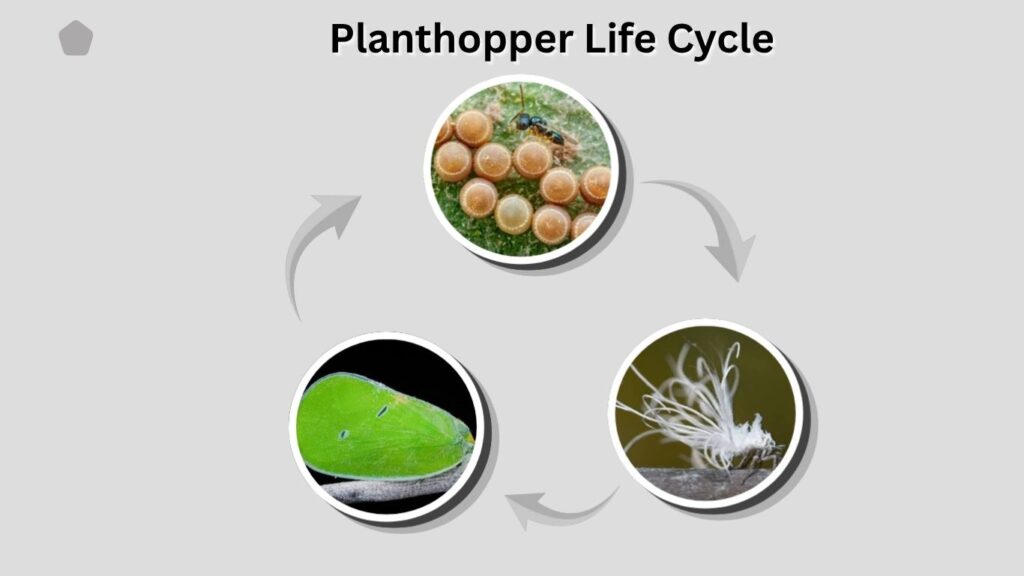
Planthoppers undergo incomplete metamorphosis. This means there is no caterpillar-like larval stage or pupal stage. Instead, young insects resemble simplified versions of adults and gradually develop their mature features through a series of molts.
Eggs
Females generally place eggs in or on plant tissues.
Depending on the species, eggs may be deposited in stems, leaves, bark, or other protected plant structures.
After development, tiny nymphs emerge and begin feeding.
Nymphs
Nymphs pass through several developmental stages called instars.
With each molt, they grow larger and begin developing structures that will eventually become adult wings.
Nymphs can already jump effectively, which helps them escape predators even before they can fly.
Adults
After the final molt, the planthopper has functional wings and mature reproductive organs.
Adults continue feeding on plant sap, mate, and eventually produce another generation of eggs.
Climate can determine how many generations occur within a year.
Planthopper vs. Leafhopper
Planthoppers and leafhoppers are frequently confused because both are small, jumping, sap-feeding insects found on vegetation. However, they belong to different evolutionary groups and can usually be separated by examining their shape and behavior.
Main Differences
Planthoppers often:
- Have broader or more unusual body shapes
- Hold wings in a roof-like position
- Include wax-covered nymphs
- Have antennae positioned differently around the eyes
- Include many species with elaborate head structures
Leafhoppers usually:
- Have narrow, wedge-shaped bodies
- Move quickly sideways across leaves
- Have rows of small spines on their hind legs
- Look more streamlined
- Commonly remain on leaves and grasses
Both groups can transmit plant diseases, although the importance varies greatly by species.
Are Planthoppers Bad for Plants?
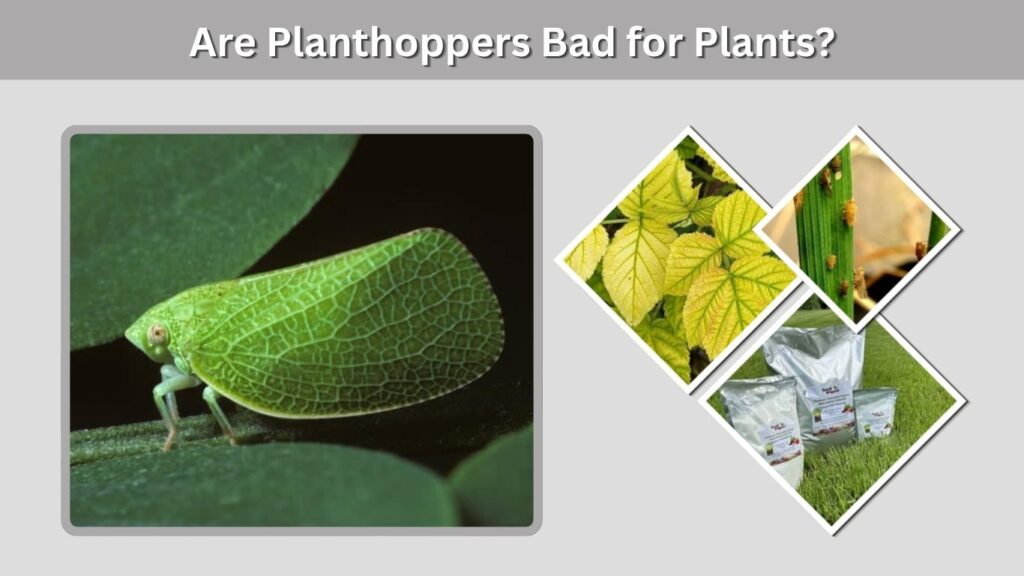
Most planthoppers feed by removing small quantities of sap. A few individuals usually cause little visible damage to healthy plants. Problems become more likely when populations grow large or when a species is capable of transmitting a plant pathogen.
Signs of Planthopper Damage
Possible signs include:
- Yellowing leaves
- Reduced plant vigor
- Wilting
- Sticky honeydew
- Sooty mold growth
- Distorted young growth
- Large numbers of nymphs
- Premature drying of heavily infested plants
Brown planthoppers in rice can cause much more serious damage than the occasional flatid planthopper seen in a garden.
Are Planthopper Nymphs Bad for Plants?
A few nymphs are generally not a major problem.
However, both nymphs and adults feed on sap, so a large infestation can weaken susceptible plants.
Waxy nymphs clustered along stems may look alarming, but identifying the species and checking the actual level of plant damage is more useful than treating every planthopper immediately.
How to Get Rid of Planthoppers
Control should depend on the number of insects and the amount of damage. Many garden infestations can be handled without aggressive chemical treatments, particularly when only a few insects are present.
Planthopper Control Methods
Helpful approaches include:
- Spray plants with a strong stream of water.
- Remove heavily infested leaves or stems.
- Control excessive weeds around affected plants.
- Encourage predatory insects and spiders.
- Avoid unnecessary broad-spectrum insecticides.
- Use insecticidal soap when appropriate.
- Apply horticultural oil according to its label.
- Monitor new plant growth for returning nymphs.
Large agricultural infestations, particularly brown planthoppers in rice, may require integrated pest-management strategies specifically designed for the crop and pest species.
Are Planthoppers Dangerous to Humans?
Planthoppers are plant-feeding insects and do not consider humans a food source. Their mouthparts are specialized for piercing plant tissue rather than feeding on people.
Do Planthoppers Bite?
Planthoppers do not normally bite humans.
If one lands on your skin, it will generally attempt to jump or fly away. They are not blood-feeding insects and do not have a reputation for attacking people.
Are Planthoppers Poisonous?
Planthoppers are not considered poisonous to humans.
The waxy material produced by certain nymphs may look strange, but it is not a dangerous poison. Simply finding a fuzzy white planthopper nymph on a garden plant is not normally a health concern.
Interesting Planthopper Facts
Planthoppers have several unusual adaptations that make them much more interesting than their small size might suggest.
Planthopper Nymphs Have Remarkable Jumping Mechanisms
Some young planthoppers possess specialized structures that help coordinate their hind legs during a jump.
This precise synchronization lets both legs push almost simultaneously, helping the tiny insect launch itself rapidly away from danger.
Adults coordinate their movements differently after they mature.
Some Species Look Completely Different as Adults
A fuzzy white nymph can eventually develop into an adult that looks gray, green, brown, or patterned.
This dramatic change often causes people to assume that the nymph and adult are unrelated insects.
Although they do not undergo complete metamorphosis like butterflies, their appearance can still change considerably.
FAQs
Are Planthoppers Harmful?
Planthoppers are generally harmless to humans. Their impact on plants depends on species and population size. A few insects usually cause little damage, but pests such as the brown planthopper can severely damage crops when populations become large.
What Is the White Fuzzy Planthopper Nymph?
White fuzzy insects on stems and leaves are often flatid planthopper nymphs. They produce waxy secretions that form fluffy strands around their bodies. When disturbed, the nymphs can suddenly jump away, which is a useful clue for identification.
Do Planthoppers Bite Humans?
No, planthoppers do not normally bite people. They use piercing mouthparts to feed on plant sap rather than blood. A planthopper that lands on a person is much more likely to jump away than attempt to feed.
What Is the Difference Between a Planthopper and Leafhopper?
Both insects feed on plant sap and jump, but leafhoppers usually have narrow, wedge-shaped bodies and spiny hind legs. Planthoppers show greater variation in shape, and some species have wax-covered nymphs or adults with unusual head structures.
How Do You Get Rid of Planthoppers?
Small infestations can often be managed by washing insects from plants with water, pruning heavily infested growth, and encouraging natural predators. Insecticidal soap or horticultural oil may help when numbers become troublesome, provided the product is suitable for the affected plant.