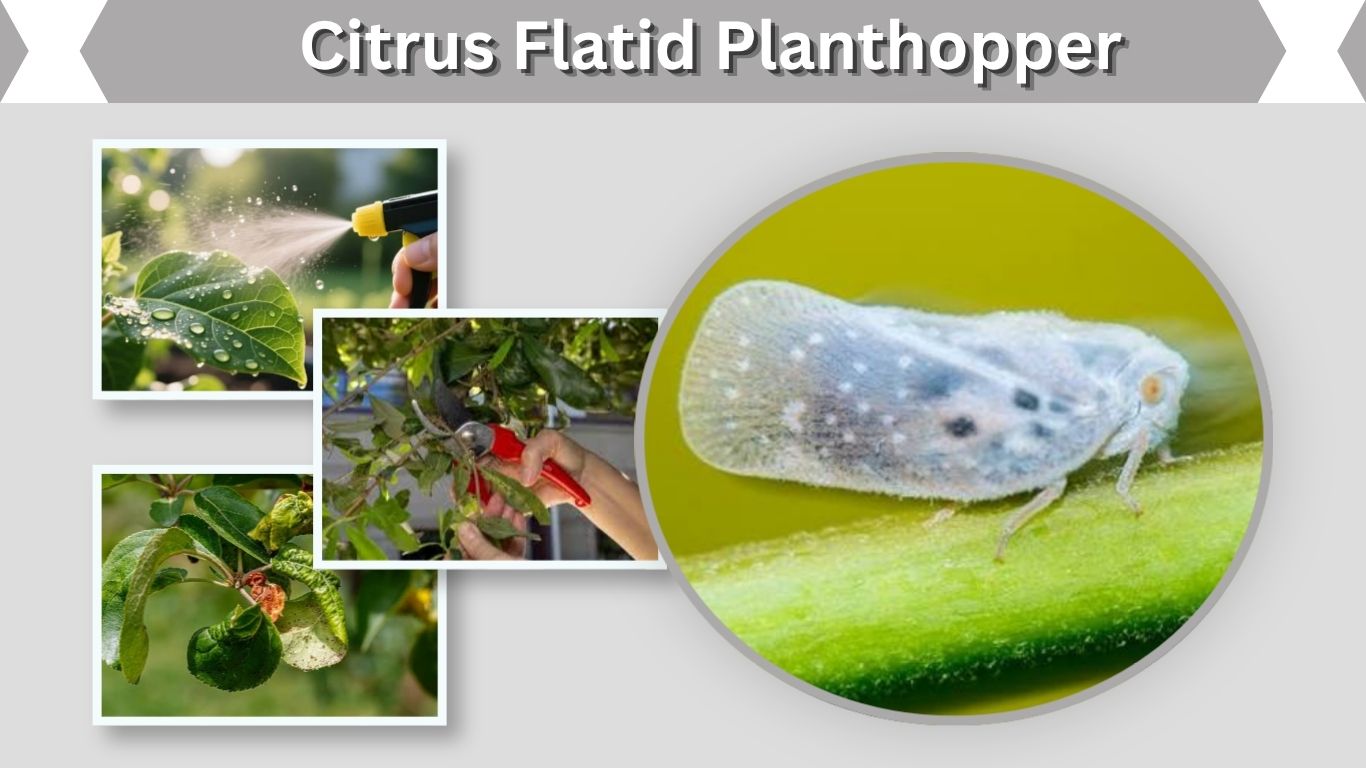
The citrus flatid planthopper is a small sap-feeding insect commonly found on citrus, fruit trees, shrubs, ornamentals, and many other plants. Its scientific name is Metcalfa pruinosa. Adults are usually grayish and moth-like, while the nymphs are much more noticeable because they often appear white, fuzzy, and covered in waxy filaments. Light infestations usually cause limited damage, but large populations can produce honeydew, encourage sooty mold, and weaken plants. Knowing its appearance, life cycle, and control methods makes management easier.
What Is a Citrus Flatid Planthopper?
The citrus flatid planthopper is a member of the planthopper family Flatidae. Although its common name mentions citrus, this insect can feed on a very wide range of plants. Both adults and nymphs use piercing-sucking mouthparts to remove sap from stems, shoots, and leaves.
Citrus Flatid Planthopper Identification
Common identifying features include:
- Small gray or bluish-gray adult body
- Broad, triangular appearance when resting
- Wings held roof-like over the body
- Powdery or waxy coating
- Strong jumping ability
- White, fuzzy nymphs
- Presence on stems and young shoots
- Honeydew around heavy infestations
Adults may resemble tiny moths at first glance, but they are true bugs rather than moths.
Scientific Name
The scientific name of the citrus flatid planthopper is Metcalfa pruinosa.
It belongs to the family Flatidae and is sometimes called the frosted moth-bug because the adult’s waxy coating can give it a pale, frosted appearance.
What Does a Citrus Flatid Planthopper Nymph Look Like?
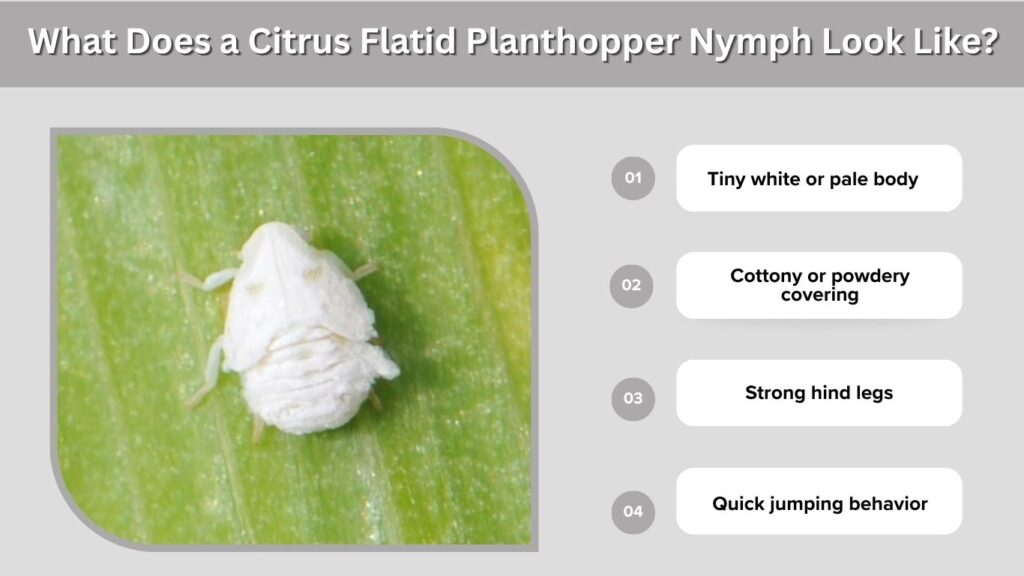
The nymph is often easier to notice than the adult. Young citrus flatid planthoppers produce white wax that can cover much of their body and extend backward as fluffy filaments.
They are especially distinctive when they suddenly jump from a plant after being disturbed.
Citrus Flatid Planthopper Nymph Identification
Look for:
- Tiny white or pale body
- Cottony or powdery covering
- Long waxy tail-like filaments
- Strong hind legs
- Quick jumping behavior
- Clusters on stems or leaf undersides
- White wax deposits on plants
The wax sometimes makes them look like mealybugs, woolly aphids, or pieces of fluff.
Why Are the Nymphs White and Fuzzy?
The fuzzy appearance comes from wax produced by glands on the insect’s body.
This wax may help:
- Reduce moisture loss
- Make the nymph harder for predators to grab
- Protect it from sticky plant substances
- Provide camouflage
- Help prevent contamination from honeydew
The long filaments are not true hairs or tails.
Citrus Flatid Planthopper Life Cycle
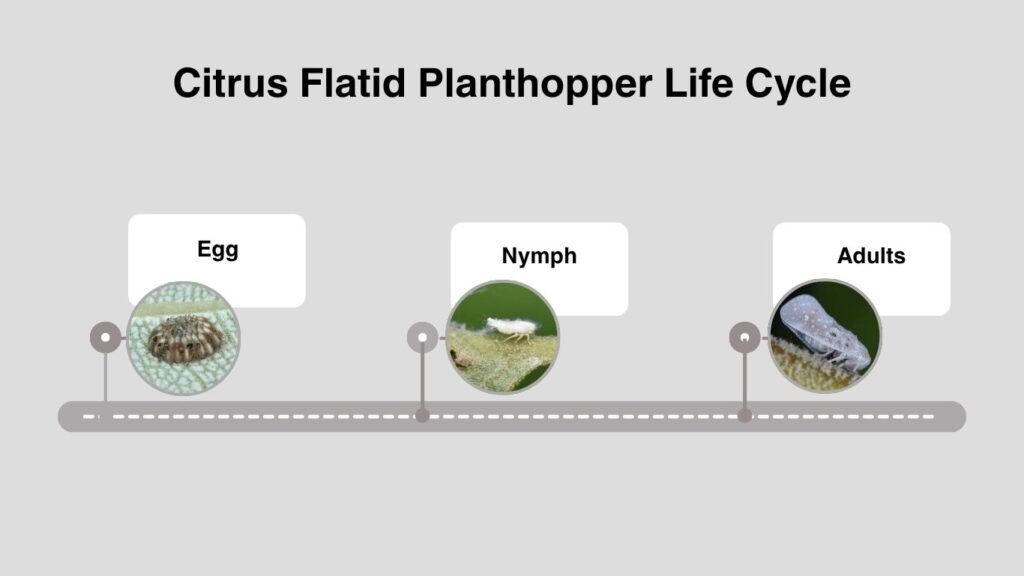
Citrus flatid planthoppers undergo incomplete metamorphosis. This means they develop from eggs into nymphs and then into adults without a pupal stage.
Their development is closely tied to seasonal temperatures and the availability of suitable host plants.
Egg Stage
Females lay eggs in protected plant tissue, often within bark or young stems.
The eggs remain relatively well hidden, making them difficult to spot during normal garden inspection.
Depending on climate, eggs may remain dormant through unfavorable periods before hatching.
Nymph Stage
After hatching, the young insects begin feeding on plant sap.
Nymphs pass through several developmental stages, becoming larger each time they molt. Their distinctive white wax becomes increasingly noticeable during this period.
They cannot fly yet, but they are excellent jumpers.
Adult Stage
The final molt produces a winged adult.
Adults are usually grayish, pale brown, or bluish-gray and have a broader, flatter appearance than the nymphs.
They continue feeding on plants, mate, and eventually produce the next generation of eggs.
What Plants Do Citrus Flatid Planthoppers Attack?
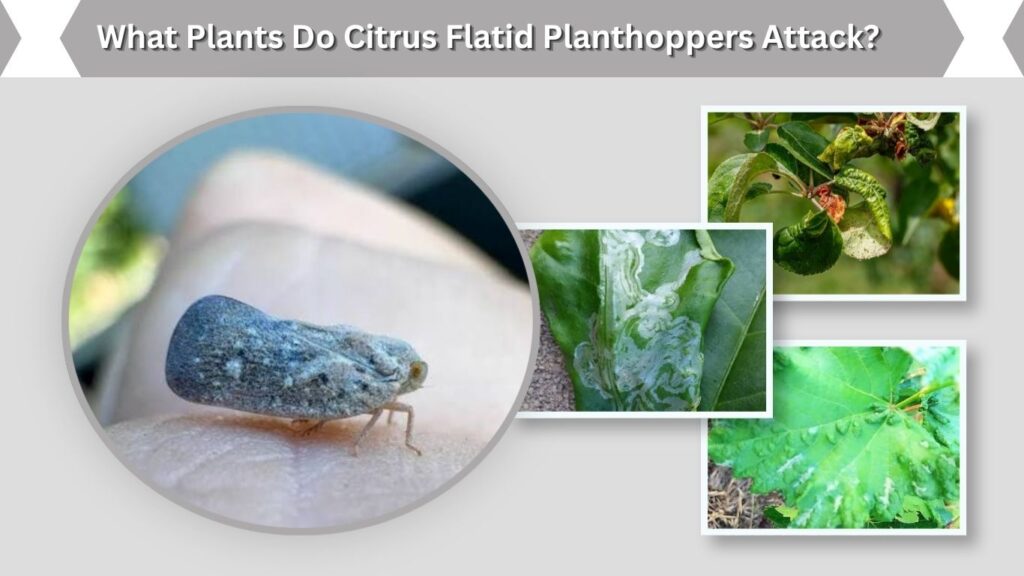
Despite the name, citrus trees are only part of their host range. Citrus flatid planthoppers can feed on many cultivated and wild plants, which helps them spread through gardens, orchards, and landscapes.
Common Host Plants
They may be found on:
- Citrus trees
- Grapevines
- Apple trees
- Peach trees
- Pear trees
- Ornamental shrubs
- Roses
- Maples
- Garden vegetables
- Weeds
- Woody landscape plants
Their broad diet means finding them on a non-citrus plant is completely normal.
Are Citrus Flatid Planthoppers Harmful?
A small number of planthoppers usually does not seriously harm a healthy plant. Problems are more likely when large numbers gather on young stems and repeatedly remove plant sap.
Their honeydew can also create secondary problems.
Signs of Citrus Flatid Planthopper Damage
Possible symptoms include:
- Reduced plant vigor
- Yellowing leaves
- Stressed young shoots
- Sticky leaves and branches
- White wax on stems
- Large numbers of nymphs
- Black sooty mold
- Reduced appearance of ornamental plants
Most established plants can tolerate a limited population without serious long-term damage.
Honeydew and Sooty Mold
Like many sap-feeding insects, flatid planthoppers can excrete sugary honeydew.
This sticky material coats leaves, stems, fruit, or objects beneath an infested plant. Fungi may grow on the honeydew and create a black coating called sooty mold.
Sooty mold does not directly infect plant tissue, but heavy coverage can interfere with photosynthesis and make ornamental plants look unhealthy.
How to Get Rid of Citrus Flatid Planthoppers
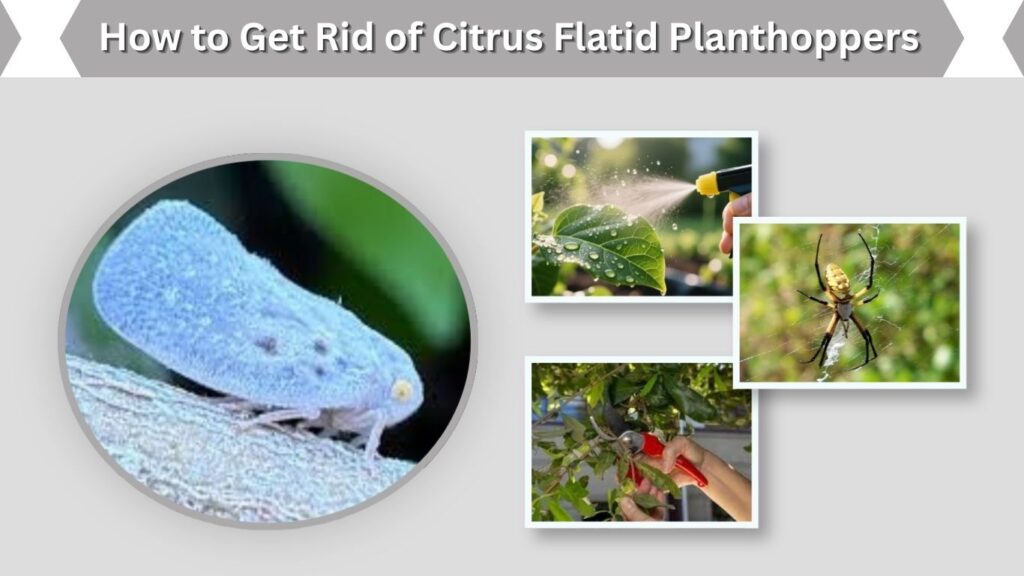
Control is usually easiest when nymphs are still young and concentrated on plants. Mild infestations often do not require aggressive treatment.
Physical removal and natural predators may be enough in many gardens.
Citrus Flatid Planthopper Control Methods
Useful options include:
- Spray nymphs off with a strong stream of water.
- Prune heavily infested shoots when practical.
- Remove excessive weeds around important plants.
- Encourage spiders and predatory insects.
- Inspect stems for recurring nymphs.
- Use insecticidal soap when necessary.
- Consider horticultural oil for suitable plants.
- Avoid unnecessary broad-spectrum insecticides.
Repeated monitoring is useful because mobile adults may return after the first treatment.
Natural Control
Predators and parasitoids can help suppress flatid planthoppers naturally.
Spiders, predatory bugs, and other insect-eating animals may feed on nymphs and adults. Avoiding unnecessary pesticide use helps preserve these beneficial organisms.
A balanced garden ecosystem often prevents minor infestations from becoming serious.
Is the Citrus Flatid Planthopper Invasive?
Citrus flatid planthoppers are native to North America but have been introduced to other parts of the world, where they may be considered invasive.
Their ability to feed on many plant species makes them particularly good at establishing in new environments.
Why They Spread Easily
Several characteristics help them spread:
- Very broad host range
- Adults can fly
- Nymphs can jump efficiently
- Eggs are hidden in plant tissues
- They can survive on wild and cultivated plants
- Plant movement can transport eggs or insects
Once established, they can be difficult to eliminate entirely from a region.
Northern Flatid Planthopper vs. Citrus Flatid Planthopper
The northern flatid planthopper is a different species and should not automatically be confused with the citrus flatid planthopper.
The northern flatid planthopper is commonly known as Flatormenis proxima. Both belong to the family Flatidae and may look similar from a distance.
Main Differences
The two can differ in:
- Wing markings
- Adult coloration
- Body shape
- Geographic distribution
- Host associations
- Fine structural features
Exact identification may require a close photograph or examination of the adult’s wings and body markings.
Are Citrus Flatid Planthoppers Poisonous?
Citrus flatid planthoppers are not considered poisonous or dangerous to humans.
Their waxy nymphs may look strange, but the wax is a defensive secretion rather than a dangerous toxin.
Do They Bite Humans?
Citrus flatid planthoppers are plant feeders.
They do not normally bite, sting, or attack people. Their mouthparts are adapted to pierce plant tissue and consume sap.
When disturbed, their typical response is to jump or fly away.
Interesting Flatid Planthopper Facts
Flatid planthoppers are easy to overlook as adults, but their nymphs are among the most unusual-looking garden insects.
Why They Look Like Walking Snowflakes
The white wax coating and long filaments of young flatid planthoppers create the appearance of tiny moving snowflakes.
When several nymphs occupy the same branch, the plant may appear to be covered in bits of cotton until the insects suddenly begin jumping.
Adults Look Very Different
Adult citrus flatid planthoppers lose much of the fuzzy appearance seen in nymphs.
Instead, they develop full wings and a grayish, wedge-like body. This dramatic difference often causes people to assume that the adult and nymph are entirely different insects.
FAQs
What Is a Citrus Flatid Planthopper?
A citrus flatid planthopper is a sap-feeding insect scientifically known as Metcalfa pruinosa. It feeds on citrus trees and many other plants. Adults are usually gray and winged, while nymphs are white, fuzzy, and covered with wax.
Are Citrus Flatid Planthoppers Harmful to Plants?
Small populations usually cause limited damage. Heavy infestations can weaken plants through sap feeding and produce large quantities of honeydew. The honeydew may encourage black sooty mold on leaves, stems, and fruit.
Are Flatid Planthopper Nymphs Poisonous?
No. Flatid planthopper nymphs are not considered poisonous to humans. Their strange white waxy coating is primarily defensive. They do not normally bite or sting people and usually jump away when disturbed.
How Do You Get Rid of Citrus Flatid Planthoppers?
Small infestations can often be managed by spraying plants with water, pruning heavily infested growth, and encouraging natural predators. Insecticidal soap or horticultural oil may be useful for persistent infestations when applied correctly.
What Does a Citrus Flatid Planthopper Nymph Look Like?
The nymph is small, pale, and commonly covered with white wax. Long waxy filaments may project from the rear of its body, giving it a fluffy or cotton-like appearance. When disturbed, it can jump quickly from the plant.