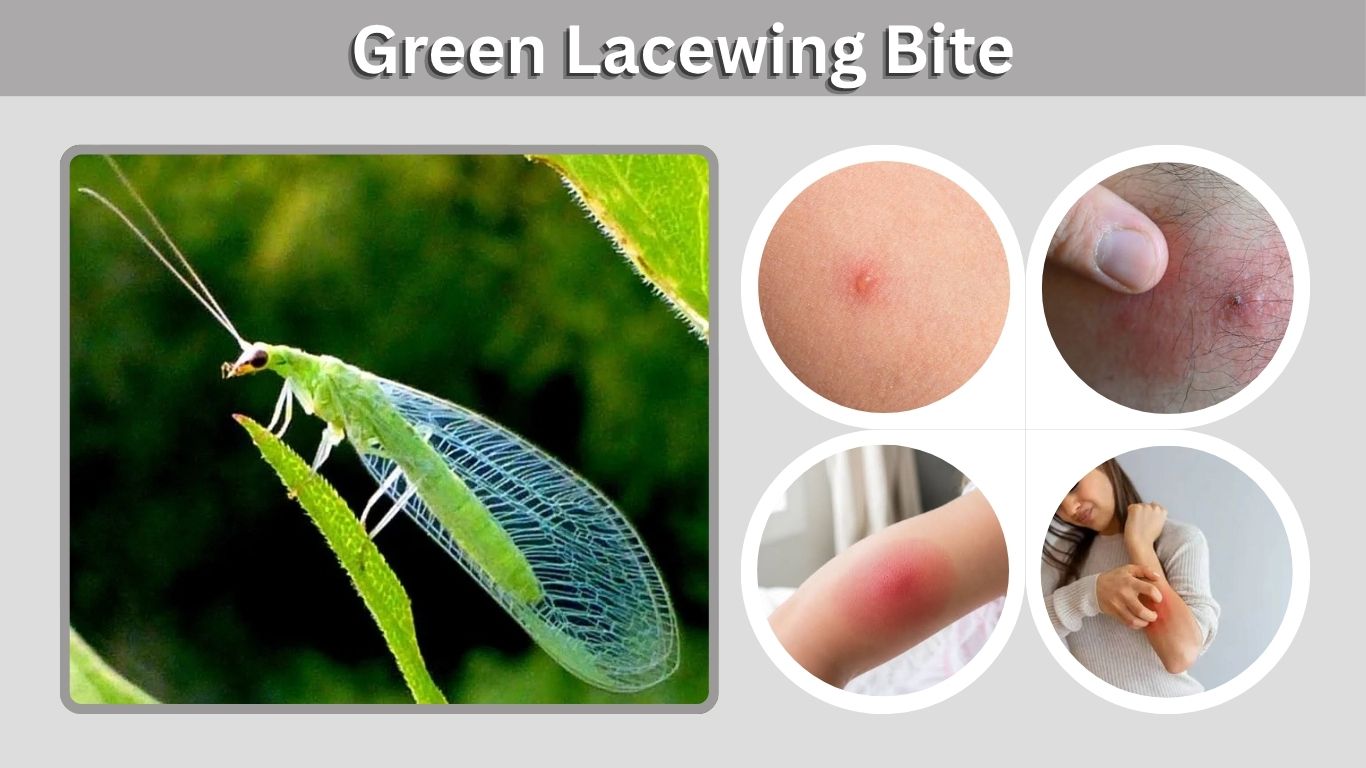
A green lacewing bite is uncommon, but it can happen when a lacewing larva comes into contact with human skin. Green lacewing larvae are beneficial predators equipped with curved jaws for catching aphids and other small insects. Occasionally, those jaws can pinch a person, producing brief pain, redness, itching, or a small bump. These insects do not normally seek out humans, and their bites are generally minor. Knowing what a green lacewing bite looks like, how to treat it, and when symptoms need attention can prevent unnecessary concern.
Do Green Lacewings Bite Humans?
Green lacewings are beneficial insects rather than human pests. Adult lacewings are generally harmless, while the predatory larvae possess sickle-shaped jaws for capturing prey. Documented larval bites are uncommon but can occur, particularly when a larva is handled, trapped against the skin, or encountered while someone is working among plants.
Do Adult Green Lacewings Bite?
Adult green lacewings are delicate insects often seen around vegetation or outdoor lights. They are not known for actively attacking people.
Most reports involving a “green lacewing bite” concern the larval stage, not the winged adult.
Adults spend their time searching for mates and food such as nectar, pollen, honeydew, or small arthropods, depending on the species. If an adult lands on you, there is generally no reason for concern.
Why Do Green Lacewing Larvae Bite?
Lacewing larvae are predators. Their long, curved jaws are designed to seize small insects such as aphids, mites, and mealybugs.
A larva may occasionally pinch human skin when accidentally pressed against the body or disturbed. Mississippi State University Extension notes that such encounters may occur when larvae are pressed against tender skin.
The behavior should not be interpreted as a lacewing deliberately hunting humans.
What Does a Green Lacewing Bite Look Like?
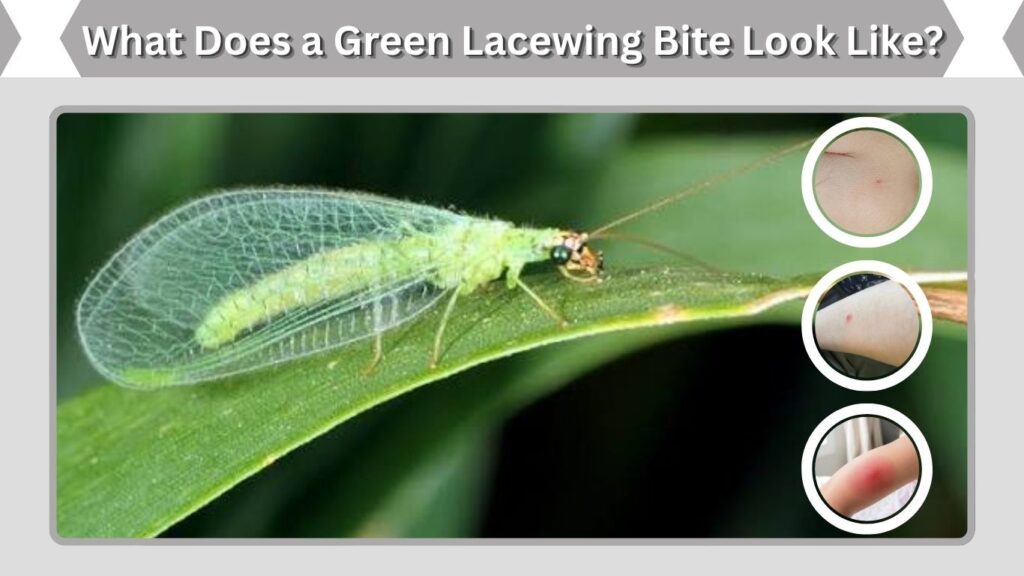
A green lacewing larva bite usually causes a small, localized skin reaction rather than a serious injury. Published reports describe immediate discomfort, redness, and a small raised area that generally resolves relatively quickly. Individual reactions vary, so appearance alone cannot always confirm that a lacewing caused the mark.
Common Green Lacewing Bite Symptoms
Possible symptoms include:
- Sudden pinching or stinging sensation
- Small red spot
- Localized redness
- Mild swelling
- Small raised bump or papule
- Mild itching
- Tenderness around the bite
- Temporary skin irritation
A medical report concerning larval Neuroptera described local pain, redness, and a papule, generally lasting hours to about a day.
Green Lacewing Bite Pictures
A lacewing bite may resemble many other minor insect bites. It might appear as a small red bump with mild surrounding redness.
There is no unique skin pattern that reliably identifies every green lacewing bite. Mosquito bites, small fly bites, contact irritation, and several other minor skin reactions can look similar.
If you actually saw a lacewing larva biting or attached to the affected area, identification becomes much easier than relying on the skin mark alone.
Green Lacewing Larvae Bite Symptoms
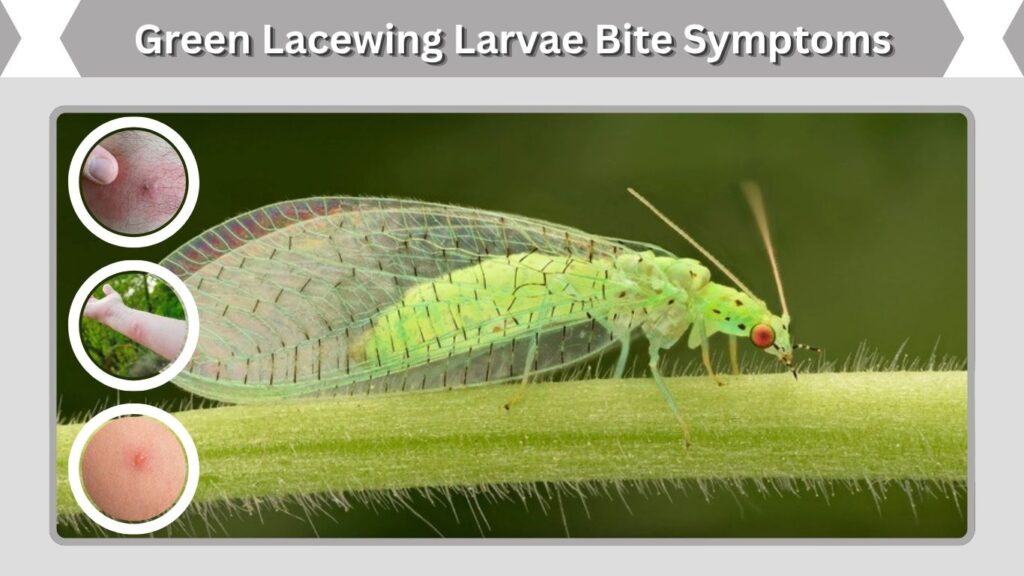
Lacewing larvae possess piercing mouthparts that they normally use on small arthropods. Texas A&M explains that their feeding process involves saliva that helps break down prey tissues, and this saliva may contribute to persistent itching or redness when a larva bites a person.
How Long Do Symptoms Last?
Most reported reactions are short-lived. They may include:
- Pain lasting several minutes
- Redness lasting several hours
- A small bump lasting into the following day
- Mild itching around the affected area
- Temporary localized swelling
A published review described effects lasting from several hours to roughly a day in typical cases.
Avoid repeatedly scratching the area, since broken skin can increase the possibility of secondary infection.
Can You Have an Allergic Reaction?
More pronounced skin reactions are possible with many types of insect exposure, although severe reactions specifically from green lacewing larvae appear to be unusual.
One published report described papular reactions from green lacewing larvae resembling reactions caused by small biting flies.
Seek urgent medical attention if an insect bite is followed by difficulty breathing, swelling of the lips or tongue, faintness, widespread hives, or rapidly worsening symptoms.
How to Treat a Green Lacewing Bite
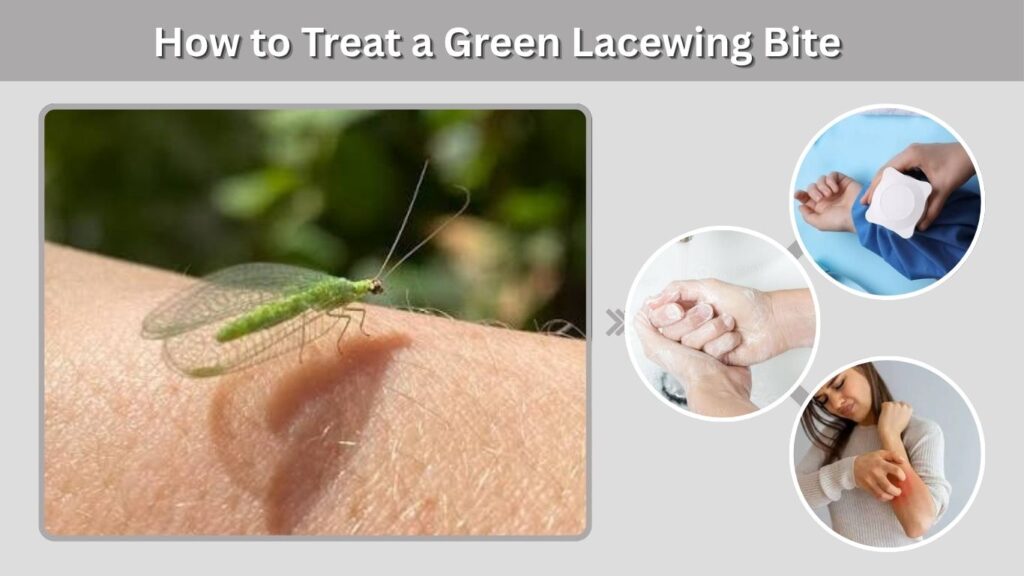
Most minor lacewing bites can be managed with basic skin care. Because reactions are usually localized and temporary, complicated treatment is generally unnecessary. A medical review of larval Neuroptera bites reported that typical local reactions did not require specific treatment.
Green Lacewing Bite Treatment
For a minor reaction:
- Wash the area gently with soap and water.
- Apply a cool compress if swelling or discomfort develops.
- Avoid scratching the irritated skin.
- Keep the area clean while it heals.
- Monitor the bite for unusual changes.
- Seek medical advice if symptoms become severe or continue worsening.
For persistent itching or swelling, a pharmacist or healthcare professional can advise whether an appropriate over-the-counter treatment is suitable for you.
When Should You See a Doctor?
Medical evaluation may be appropriate when the affected area becomes increasingly painful, hot, extensively swollen, or produces drainage.
You should also seek medical care if symptoms persist unexpectedly or you are uncertain about what actually caused the injury.
Emergency help is appropriate for signs of a severe allergic reaction, especially breathing difficulty, facial or throat swelling, dizziness, or widespread hives.
Are Green Lacewing Bites Dangerous?
For most people, green lacewing larval bites are considered minor. University of Kentucky entomology information describes rare larval bites as typically producing little more than small skin irritation. These insects are therefore far more important as predators of garden pests than as a threat to people.
Are Green Lacewing Larvae Venomous?
Green lacewing larvae should not be confused with medically important venomous insects. Their jaws are primarily feeding tools that allow them to capture and consume small arthropods.
Texas A&M notes that lacewing larvae use saliva containing enzymes during feeding, which may help explain irritation following a bite.
A brief painful pinch therefore does not mean that the insect represents a significant danger to humans.
Do Green Lacewings Carry Diseases?
Green lacewings are not recognized as important vectors of human disease. Extension guidance notes that although larvae occasionally bite people, their bites do not have lasting effects and lacewings are not known for transmitting diseases to humans.
Their ecological role is primarily beneficial because larvae prey heavily on insects that damage plants.
How to Avoid Green Lacewing Larvae Bites
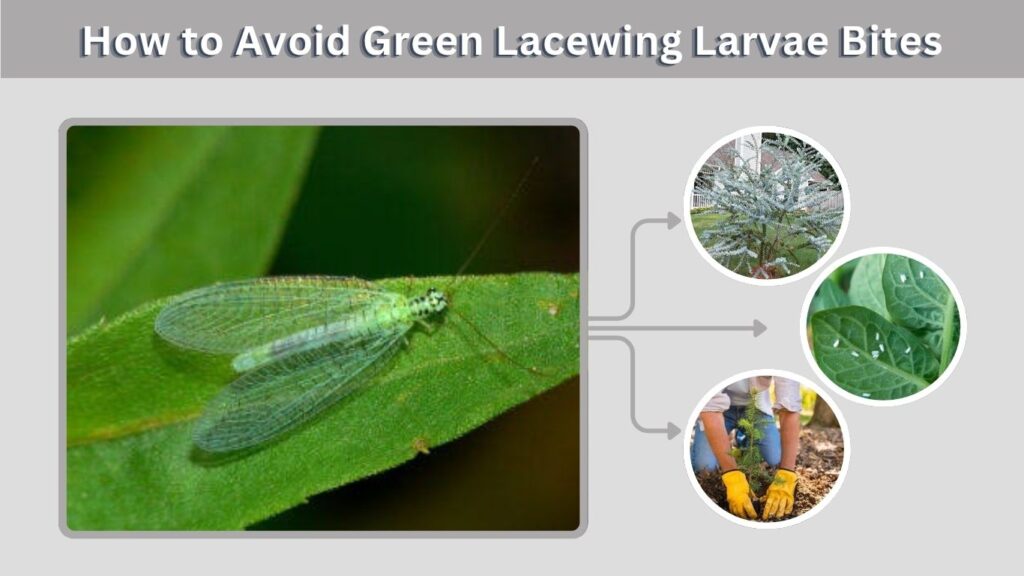
There is usually no reason to eliminate green lacewings from a garden. Their larvae help suppress aphids and other pests. Instead, simple precautions can minimize accidental contact while allowing these beneficial insects to continue providing natural pest control.
Preventing Accidental Bites
You can reduce the chance of being pinched by:
- Wearing gloves while gardening
- Checking leaves before handling plants
- Avoiding picking up lacewing larvae with bare fingers
- Brushing insects gently off clothing
- Wearing long sleeves when working in dense vegetation
- Avoiding crushing larvae against your skin
- Moving larvae with a leaf or container when necessary
Larvae are small and may sometimes camouflage themselves with debris, making accidental contact possible.
Should You Kill Green Lacewings?
Usually, no. Green lacewing larvae are important natural predators. They consume aphids and numerous other soft-bodied pests and are deliberately used in biological pest-control programs.
If you find one indoors or on your clothing, gently move it outside rather than using insecticide.
Their occasional ability to pinch humans does not outweigh their value to gardens and agricultural ecosystems.
FAQs
1. Do green lacewings bite humans?
Green lacewing larvae can occasionally bite or pinch humans with their curved jaws. Such encounters are uncommon and usually happen during accidental contact or handling. Adult green lacewings are not normally associated with biting people. Larval bites typically cause only temporary localized irritation.
2. What does a green lacewing bite feel like?
A lacewing larva bite may initially feel like a sharp pinch or mild sting. A small red bump, itching, tenderness, or localized redness may follow. Published reports indicate that typical symptoms are limited to the bite area and generally disappear within a relatively short period.
3. Are green lacewing bites poisonous?
Green lacewing larvae are not considered a significant venomous threat to humans. Their mouthparts are designed for capturing insect prey. Their feeding saliva contains enzymes that may contribute to redness or itching after an accidental bite, but typical reactions are minor.
4. How long does a green lacewing bite last?
A minor reaction may last several hours, while a small bump or redness can sometimes remain into the following day. A published review reported that typical local effects lasted only a few hours or about a day. Persistent or worsening symptoms should be medically evaluated.
5. Should I worry if a green lacewing larva bites me?
Usually, there is little reason for concern. Wash the area, avoid scratching it, and monitor the skin. Seek medical attention if severe swelling, widespread hives, breathing problems, signs of infection, or other unusual symptoms develop. Most documented lacewing larval bites cause only minor irritation.