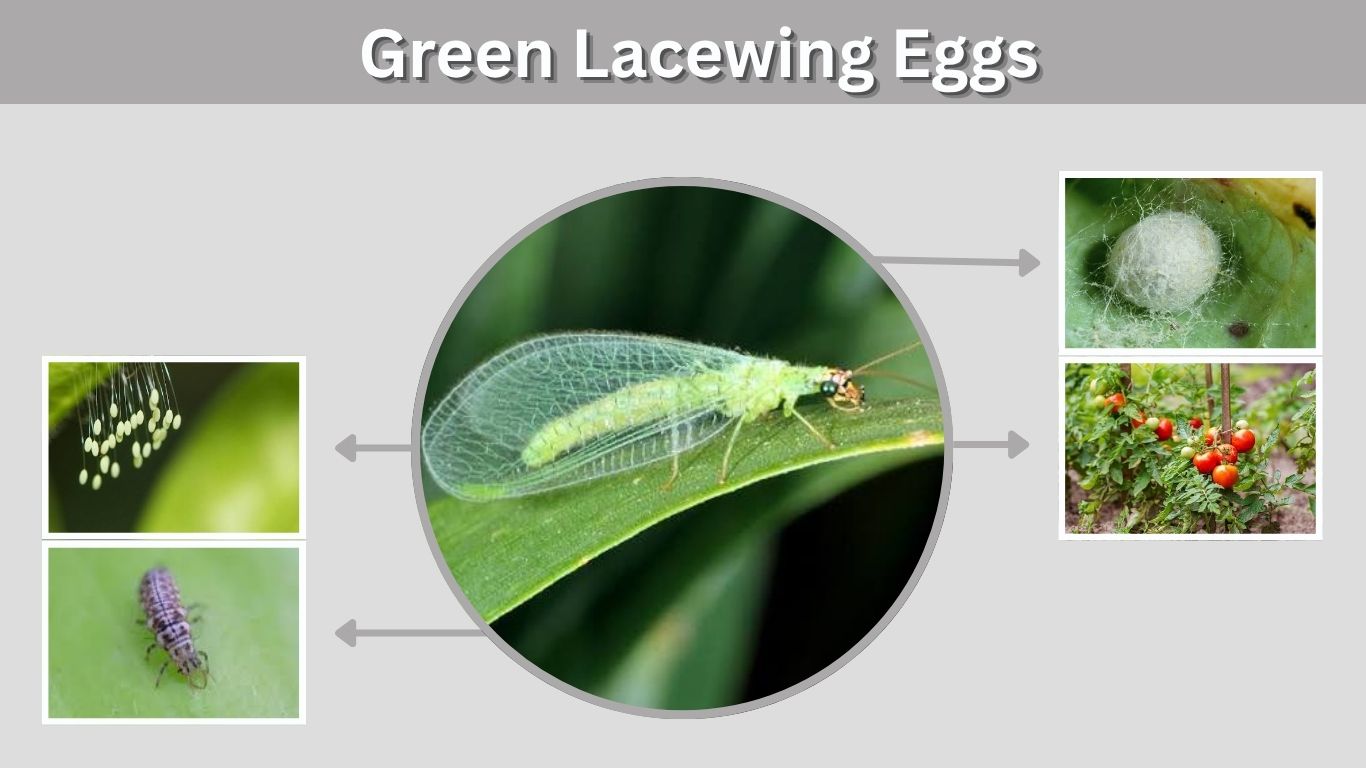
Green lacewing eggs are easy to recognize because they are usually attached to leaves by thin, threadlike stalks. These tiny eggs eventually hatch into predatory larvae that feed on aphids, mealybugs, whiteflies, thrips, and other garden pests. Gardeners often purchase green lacewing eggs as a natural biological control method for protecting plants without heavy pesticide use. Understanding what the eggs look like, how long they take to hatch, where females lay them, and how to release purchased eggs can improve their survival and pest-control effectiveness.
What Do Green Lacewing Eggs Look Like?
Green lacewing eggs have one of the most distinctive appearances among common garden insects. Female lacewings generally place each egg at the end of a slender stalk attached to leaves, stems, or other surfaces. This unusual arrangement helps separate the eggs from one another and may protect them from hungry newly hatched larvae.
Green Lacewing Egg Identification
Common identifying features include:
- Tiny oval or elongated eggs
- Pale green, white, or cream coloration
- Eggs attached to long, hairlike stalks
- Usually found on leaves or stems
- May occur singly or in small groups
- Color may darken before hatching
- Often located close to aphid colonies
- Each stalk is firmly attached to the plant surface
The stalked appearance is usually the easiest feature for distinguishing lacewing eggs from many other insect eggs.
Why Are Lacewing Eggs on Stalks?
The thin stalk helps keep individual eggs separated from one another. Green lacewing larvae are active predators immediately after hatching and may attack other eggs or newly emerged larvae when food is scarce.
By raising each egg above the plant surface, the female reduces direct contact among siblings and may improve their chances of survival.
The elevated position may also help protect the egg from some predators and environmental hazards.
Where Do Green Lacewings Lay Eggs?
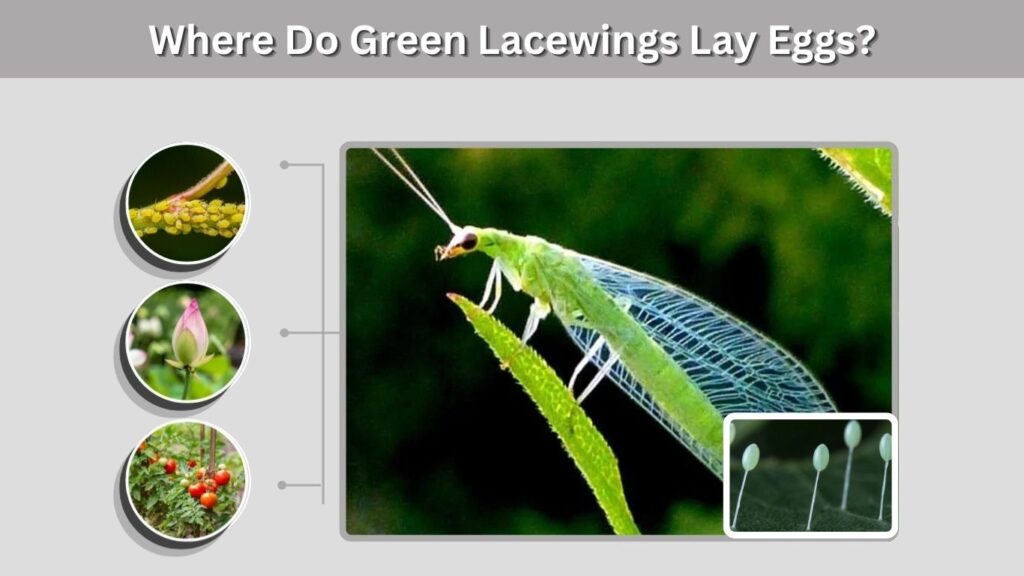
Female green lacewings carefully choose locations where their young are likely to find food shortly after hatching. Eggs are frequently placed near populations of aphids and other soft-bodied insects. Gardens, vegetable crops, greenhouses, fruit trees, ornamental plants, and shrubs can all provide suitable egg-laying sites.
Common Places to Find Lacewing Eggs
Look for eggs in areas such as:
- Undersides of leaves
- Plant stems
- Near aphid colonies
- Around flower buds
- Vegetable plants
- Fruit trees
- Shrubs and ornamental plants
- Greenhouse crops
- Areas containing whiteflies or mealybugs
Finding lacewing eggs around pest-infested plants is generally a positive sign because their larvae will soon begin hunting.
Green Lacewing Eggs on Plants
The eggs themselves do not harm plants. They do not feed on leaves, stems, flowers, or plant sap.
Once larvae emerge, they begin searching for prey instead of consuming plant tissue. This makes green lacewings beneficial residents in vegetable gardens and landscaped areas.
If you notice stalked eggs on a healthy plant, leaving them undisturbed is usually the best option.
Green Lacewing Eggs Hatching
Development time depends on species, temperature, humidity, and other environmental conditions. Under warm, suitable conditions, green lacewing eggs commonly hatch within several days. Cooler temperatures can slow development. As hatching approaches, the egg may change color as the developing larva becomes more visible inside.
How Long Do Green Lacewing Eggs Take to Hatch?
Many green lacewing eggs hatch in approximately 3 to 10 days, although the exact period varies according to conditions.
Factors affecting hatching include:
- Temperature
- Lacewing species
- Humidity
- Egg age
- Storage conditions
- Exposure to direct sunlight
- General environmental conditions
Warm but moderate temperatures typically encourage faster development than cold conditions.
What Happens After Green Lacewing Eggs Hatch?
After emerging, the tiny larva climbs down from the egg stalk and begins searching for prey.
Newly hatched larvae are very small but already equipped with curved jaws designed to catch soft-bodied insects. They may begin feeding on aphids, mites, whiteflies, thrips, insect eggs, or mealybugs soon after hatching.
The empty egg shell may remain attached to its stalk after the larva leaves, so seeing empty stalked shells can indicate that hatching has already occurred.
Green Lacewing Egg Life Cycle
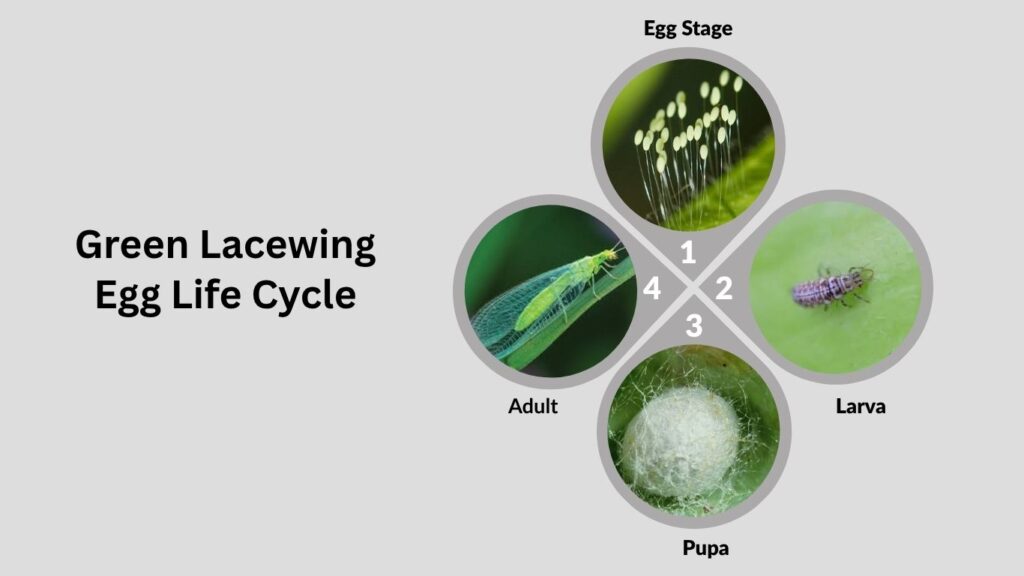
Green lacewings undergo complete metamorphosis through four major stages: egg, larva, pupa, and adult. Their egg stage is relatively brief, while the larval stage is responsible for most of their pest-control activity. The entire development period varies with temperature, food availability, and species.
Four Stages of Development
The lacewing life cycle includes:
- Egg: Females deposit stalked eggs near potential prey.
- Larva: Predatory larvae actively consume small insects.
- Pupa: Mature larvae form protective silk cocoons.
- Adult: Delicate winged lacewings emerge, reproduce, and begin another generation.
The larvae are frequently called aphid lions because of their strong appetite for aphids.
Green Lacewing Laying Eggs
Adult females generally search for areas that provide adequate food for their future larvae. Plants heavily populated with aphids can therefore attract egg-laying lacewings.
Depending on the species and conditions, one female may produce numerous eggs throughout her adult life.
Providing flowering plants, avoiding unnecessary insecticides, and allowing some natural insect populations to remain can make gardens more attractive to adult lacewings.
Green Lacewing Eggs for Pest Control
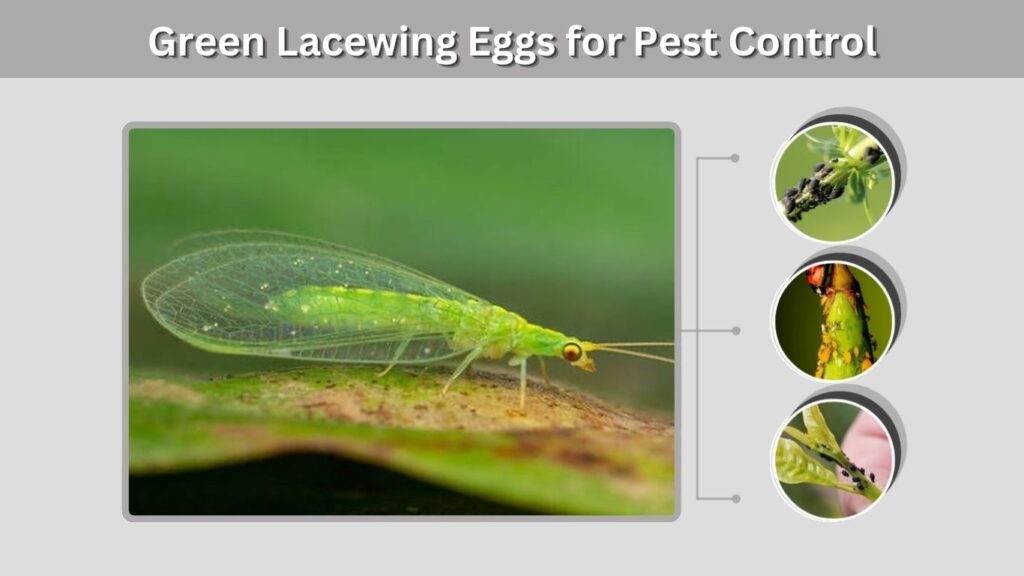
Green lacewing eggs are sold commercially for biological pest management. Gardeners and greenhouse growers can introduce them to plants suffering from infestations of aphids and other small pests. After the eggs hatch, larvae disperse around nearby vegetation and begin hunting available prey.
Pests Lacewing Larvae Can Control
After hatching, larvae may prey on:
- Aphids
- Mealybugs
- Whiteflies
- Thrips
- Spider mites
- Scale crawlers
- Moth eggs
- Small caterpillars
- Leafhopper nymphs
- Other soft-bodied insects
Their broad diet makes them useful for controlling several pests simultaneously.
Advantages of Using Lacewing Eggs
Potential benefits include:
- Natural pest reduction
- No chemical residue
- Suitable for many garden plants
- Useful in greenhouses
- Effective against several pests
- Compatible with many biological-control programs
- Easy distribution across affected plants
Their success is usually best when eggs are released before pest populations become extremely severe.
How to Release Green Lacewing Eggs
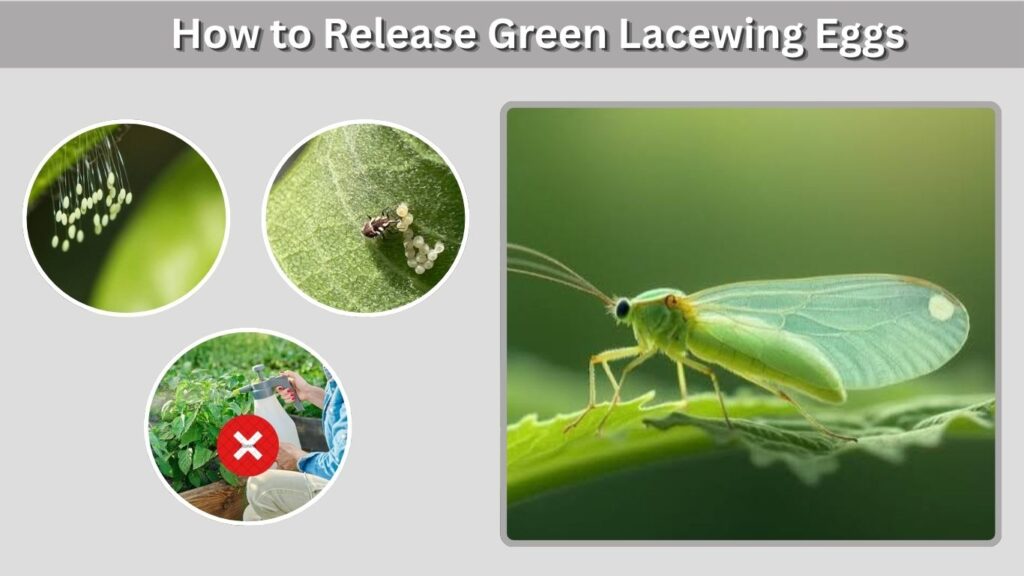
Purchased lacewing eggs may arrive mixed with a carrier material, attached to cards, or supplied in special hanging release packs. Always follow the instructions from the specific supplier, because handling and release methods can differ between products.
How to Use Green Lacewing Eggs
For a successful release:
- Release eggs soon after receiving them.
- Place them near active pest populations.
- Spread eggs across multiple affected plants.
- Protect them from heavy rain where possible.
- Avoid extremely hot surfaces.
- Keep them away from direct intense sunlight.
- Do not spray broad-spectrum insecticides nearby.
- Follow the supplier’s recommended quantity.
- Monitor plants after several days for emerging larvae.
Distributing eggs instead of placing all of them in one location helps larvae reach more pest colonies.
When to Release Green Lacewing Eggs
Release timing is important. Eggs perform best when prey such as aphids, mealybugs, or whiteflies are already present but have not reached overwhelming levels.
Morning or evening conditions are often preferable to extremely hot midday temperatures.
For ongoing infestations, repeated releases may sometimes be necessary because a single generation cannot always eliminate every pest.
Buying Green Lacewing Eggs
Green lacewing eggs are available from biological-control suppliers, garden retailers, and some online stores. Products may contain eggs alone, eggs mixed with carrier material, or hanging cards designed for easier distribution.
What to Check Before Buying
Consider the following:
- Number of eggs included
- Lacewing species
- Expected hatch rate
- Shipping conditions
- Recommended coverage area
- Release instructions
- Storage requirements
- Estimated delivery time
Because lacewing eggs are living organisms, freshness matters considerably.
Storing Green Lacewing Eggs
Avoid keeping purchased eggs longer than necessary. Excessive heat, freezing conditions, or improper storage can reduce survival.
Follow the supplier’s specific storage directions. In most situations, planning your release area before the eggs arrive makes it easier to introduce them quickly.
Never assume ordinary household refrigeration is appropriate unless the supplier specifically recommends it.
FAQs
1. What do green lacewing eggs look like?
Green lacewing eggs are tiny, oval eggs attached to long, thin stalks. They are usually pale green, cream, or whitish when first laid and may darken as they develop. The distinctive stalk separates them from many other insect eggs commonly found on plants.
2. How long do green lacewing eggs take to hatch?
Green lacewing eggs commonly hatch within about 3 to 10 days under suitable conditions. Temperature, species, humidity, and egg age can affect development. Warmer conditions generally speed up hatching, while cooler weather may extend the amount of time required.
3. Are green lacewing eggs harmful to plants?
No. Green lacewing eggs do not feed on or damage plants. After hatching, the larvae primarily prey on aphids, mealybugs, whiteflies, mites, and other small pests. Their presence on plants is generally beneficial rather than a reason for concern.
4. When should I release green lacewing eggs?
Release green lacewing eggs when pest insects such as aphids, whiteflies, or mealybugs are present on plants. Releasing them early in an infestation gives newly hatched larvae an immediate food source and may help prevent pest populations from becoming more difficult to manage.
5. Can I buy green lacewing eggs for my garden?
Yes. Green lacewing eggs are commonly sold by biological pest-control companies and garden suppliers. They may come loose in carrier material or attached to cards. Choose fresh eggs from a reliable supplier and follow the included release and storage directions carefully.