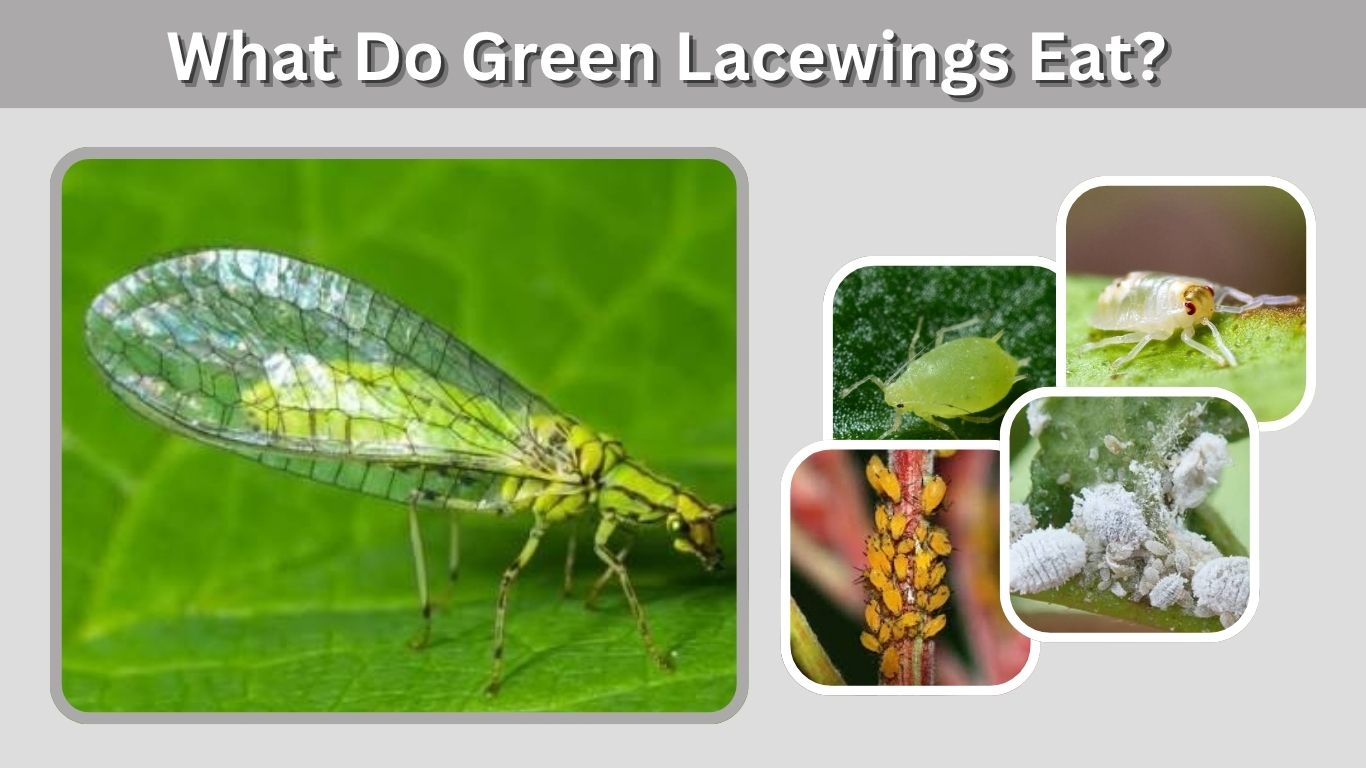
What do green lacewings eat? The answer depends largely on their life stage. Green lacewing larvae are active predators that feed on aphids, whiteflies, mealybugs, thrips, mites, insect eggs, and other small pests. Adults of many species rely more heavily on nectar, pollen, and honeydew, although some also eat small insects. This varied diet makes green lacewings valuable beneficial insects in gardens and farms. Below are 10 common foods green lacewings eat and how their feeding habits change from larvae to adults.
What Do Green Lacewings Eat?
Green lacewings belong to the family Chrysopidae and are widely recognized for their delicate green bodies, transparent wings, and golden or copper-colored eyes. Their larvae are often called aphid lions because they are aggressive predators of soft-bodied insects.
Green Lacewing Diet at a Glance
- Aphids
- Whiteflies
- Mealybugs
- Thrips
- Spider mites
- Insect eggs
- Small caterpillars
- Scale insects
- Nectar and pollen
- Honeydew
Larvae eat mainly animal prey, while adults of many common species consume sugary plant-derived foods. This difference is important when attracting or using green lacewings for natural pest control.
10 Foods Green Lacewings Eat
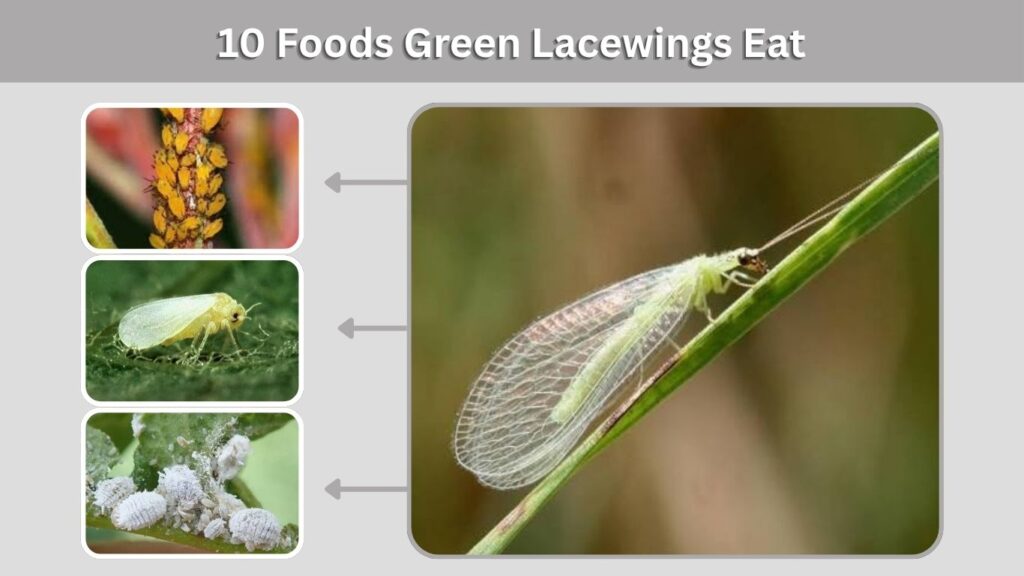
Green lacewings are considered beneficial insects largely because their larvae consume many common garden pests. A single larva may attack numerous small insects during development. Adults often shift toward nectar, pollen, and honeydew, which provide energy for flying, mating, and reproduction.
1. Aphids
Aphids are among the best-known foods of green lacewing larvae. In fact, the nickname “aphid lion” comes from their ability to hunt these small sap-sucking insects.
A lacewing larva approaches an aphid and grabs it with its curved, sickle-shaped mouthparts. It then feeds on the prey’s body fluids.
Because aphids can multiply quickly on vegetables, flowers, fruit trees, and ornamental plants, lacewing larvae can be useful natural predators wherever aphid populations develop.
2. Whiteflies
Whiteflies are another important food source, particularly their immature stages.
Whitefly nymphs remain attached to the undersides of leaves while feeding on plant sap, making them accessible to searching lacewing larvae. The larvae move across leaves and consume whitefly eggs and young stages when they encounter them.
This makes green lacewings useful in gardens and protected growing environments where whiteflies damage tomatoes, peppers, ornamentals, and other plants.
3. Mealybugs
Green lacewing larvae can also eat mealybugs, recognizable by their soft bodies and white, waxy covering.
Mealybugs feed on plant sap and often cluster around stems, leaf joints, and other protected parts of plants. Lacewing larvae can crawl into these areas and attack smaller individuals.
Their ability to consume mealybugs adds to the value of lacewings as generalist predators rather than insects that specialize only in aphids.
4. Thrips
Thrips are tiny, narrow insects that feed by damaging plant tissues and sucking out the contents. Heavy infestations may result in distorted leaves, flowers, or fruit.
Young thrips are small enough to become prey for green lacewing larvae.
Lacewings may not eliminate every thrips infestation by themselves, but their predatory larvae can help reduce populations when used alongside other biological and cultural pest-management methods.
5. Spider Mites
Despite their name, spider mites are not insects; they are tiny arachnids related to spiders and ticks. However, they can still become food for green lacewing larvae.
Spider mites commonly feed on the undersides of leaves and can cause stippling, discoloration, and webbing.
Lacewing larvae searching plant surfaces may eat mites as well as their eggs. This broad prey range allows them to remain useful even when several different plant pests occur together.
6. Insect Eggs
Green lacewing larvae do not always wait for prey to hatch. They may eat the eggs of other insects when suitable eggs are found on leaves and stems.
Eggs are particularly convenient prey because they cannot escape. Depending on availability, lacewing larvae may consume the eggs of moths, butterflies, leafhoppers, and various other small insects.
Eating eggs can help reduce pest numbers before damaging larvae or nymphs have a chance to emerge.
7. Small Caterpillars
Very small caterpillars can also become prey.
Freshly hatched moth or butterfly larvae are much easier for lacewing larvae to overpower than large, mature caterpillars. When a young caterpillar is encountered on a leaf, the lacewing may seize it with its specialized mouthparts.
Lacewings should not be expected to control large caterpillars, but their ability to attack newly hatched individuals increases the range of pests they can consume.
8. Scale Insects
Scale insects are plant-feeding pests that attach themselves to stems, branches, and leaves. Many are covered by waxy or protective coverings, but young stages are considerably more vulnerable.
Green lacewing larvae may prey on young scale insects, particularly mobile crawler stages.
These crawlers are small, soft-bodied, and exposed while searching for feeding locations. This makes them more suitable prey than mature scales protected beneath thick coverings.
9. Nectar and Pollen
Many adult green lacewings feed quite differently from their predatory larvae. Adults commonly visit flowers to obtain nectar and pollen.
Nectar supplies carbohydrates needed for energy, while pollen can provide proteins and other nutrients.
Flowering plants therefore play an important role in supporting adult lacewings. Gardens containing a variety of small, accessible flowers can provide adults with food and encourage them to remain in the area long enough to reproduce.
10. Honeydew
Honeydew is a sugary liquid produced by sap-feeding insects such as aphids, whiteflies, scale insects, and mealybugs.
Adult green lacewings may consume this sweet substance directly from leaves and stems.
Interestingly, the pests that become prey for lacewing larvae can indirectly provide food for adult lacewings through honeydew production. This allows different life stages to use the same pest-infested plants in different ways.
What Do Green Lacewing Larvae Eat?
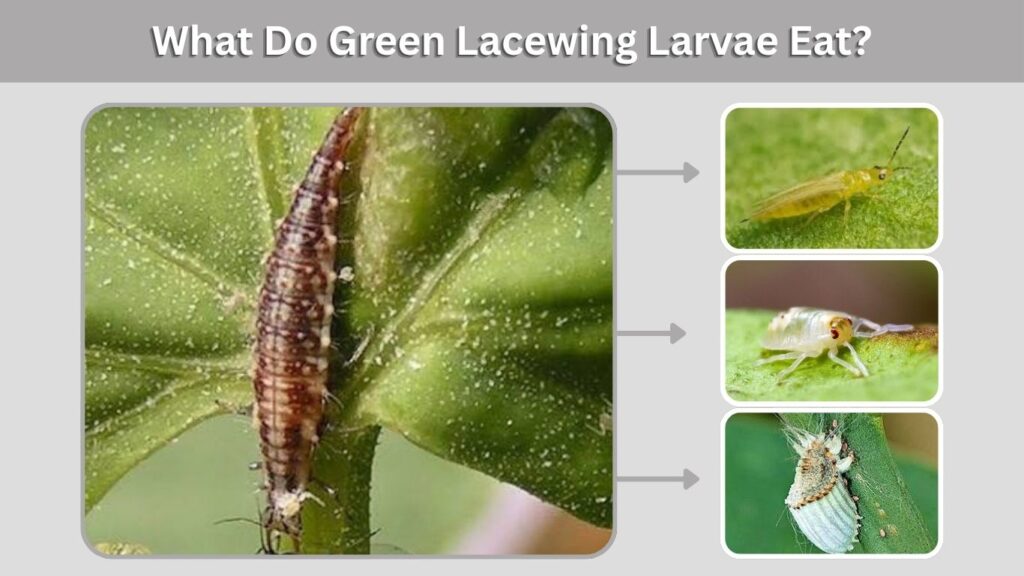
The larval stage is responsible for most of the green lacewing’s reputation as a beneficial predator. Larvae are highly mobile and actively search vegetation for prey.
Common Foods of Lacewing Larvae
Green lacewing larvae commonly consume:
- Aphids
- Whitefly eggs and nymphs
- Mealybugs
- Thrips
- Spider mites
- Scale crawlers
- Insect eggs
- Small caterpillars
- Psyllids
- Other soft-bodied arthropods
Their curved jaws are adapted for capturing and feeding on small prey rather than chewing leaves.
Because larvae eat many different pests, they can continue feeding even when one particular prey species becomes scarce.
What Do Adult Green Lacewings Eat?
Adult diet varies among lacewing species. Many common adult green lacewings are primarily interested in foods rich in sugar and pollen rather than actively hunting large numbers of pests.
Adult Green Lacewing Food
Adults may feed on nectar, pollen, and honeydew. Some species are also predatory and can consume aphids, mites, and other small arthropods.
Access to flowering plants can therefore be important if you want lacewings to remain around a garden. Adults need reliable food sources to survive, mate, and produce eggs that eventually hatch into pest-eating larvae.
Do Green Lacewings Eat Aphids?
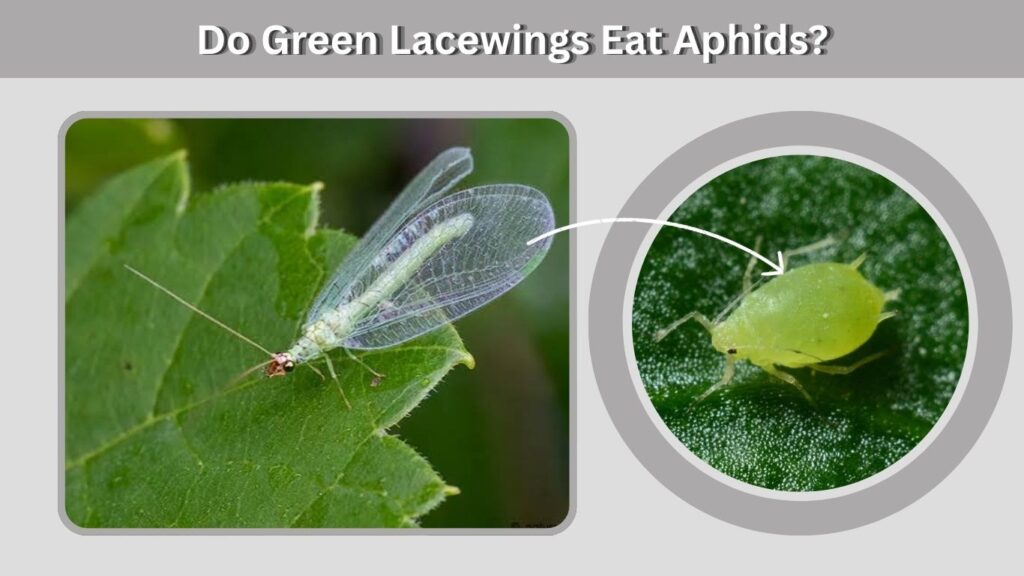
Yes. Green lacewing larvae eat aphids and are among their most familiar natural predators.
Larvae may consume aphids through much of their development, particularly when infestations provide abundant prey. Because they can also eat mites, mealybugs, whiteflies, and insect eggs, they remain useful even when aphids are not the only pest present.
This broad diet is one reason lacewing eggs or larvae are sometimes used in biological pest-control programs.
Are Green Lacewings Good for Gardens?
Green lacewings are generally considered highly beneficial garden insects. The larvae naturally attack several pests that damage vegetables, fruit plants, flowers, and ornamentals.
Benefits of Green Lacewings
- Feed on aphids
- Attack whiteflies
- Consume mealybugs
- Eat mites and thrips
- Feed on pest insect eggs
- Reduce some young caterpillars
- Do not normally damage healthy garden plants
- Help support natural pest control
Avoiding unnecessary broad-spectrum insecticides can help preserve lacewings along with other beneficial predators.
How to Attract Green Lacewings

A garden that provides food and shelter for adults is more likely to support reproducing populations. Flower diversity can be especially useful because adult lacewings often need nectar and pollen.
Ways to Attract Lacewings
Planting small-flowered plants and allowing several species to bloom throughout the growing season can provide reliable adult food. Maintaining some natural vegetation and minimizing pesticide use may also help.
Completely eliminating every aphid is not always necessary. Small populations can provide prey for lacewing larvae and honeydew for adults, helping beneficial insects establish themselves naturally.
FAQs
1. What is the main food of green lacewings?
Green lacewing larvae primarily eat soft-bodied arthropods such as aphids, whiteflies, mealybugs, thrips, and mites. Many adult lacewings switch to nectar, pollen, and honeydew, although the exact adult diet differs between species.
2. Do green lacewings eat plants?
Green lacewing larvae generally hunt other small arthropods rather than feeding on healthy plants. Many adults consume nectar and pollen from flowers, but this normally does not cause damaging plant feeding.
3. How many aphids can a green lacewing eat?
A green lacewing larva can consume many aphids during its development, but the exact number varies widely with lacewing species, temperature, prey size, prey availability, and other environmental conditions.
4. Do adult green lacewings eat mosquitoes?
Mosquitoes are not considered a major or dependable part of the typical adult green lacewing diet. Lacewings are much more closely associated with aphids and other small plant pests, while many adults feed predominantly on nectar, pollen, and honeydew.
5. Do green lacewings eat spider mites?
Yes. Green lacewing larvae can prey on spider mites and their eggs. Their ability to eat mites alongside aphids, thrips, whiteflies, and other pests makes them useful generalist predators in gardens and agricultural environments.